Toronto
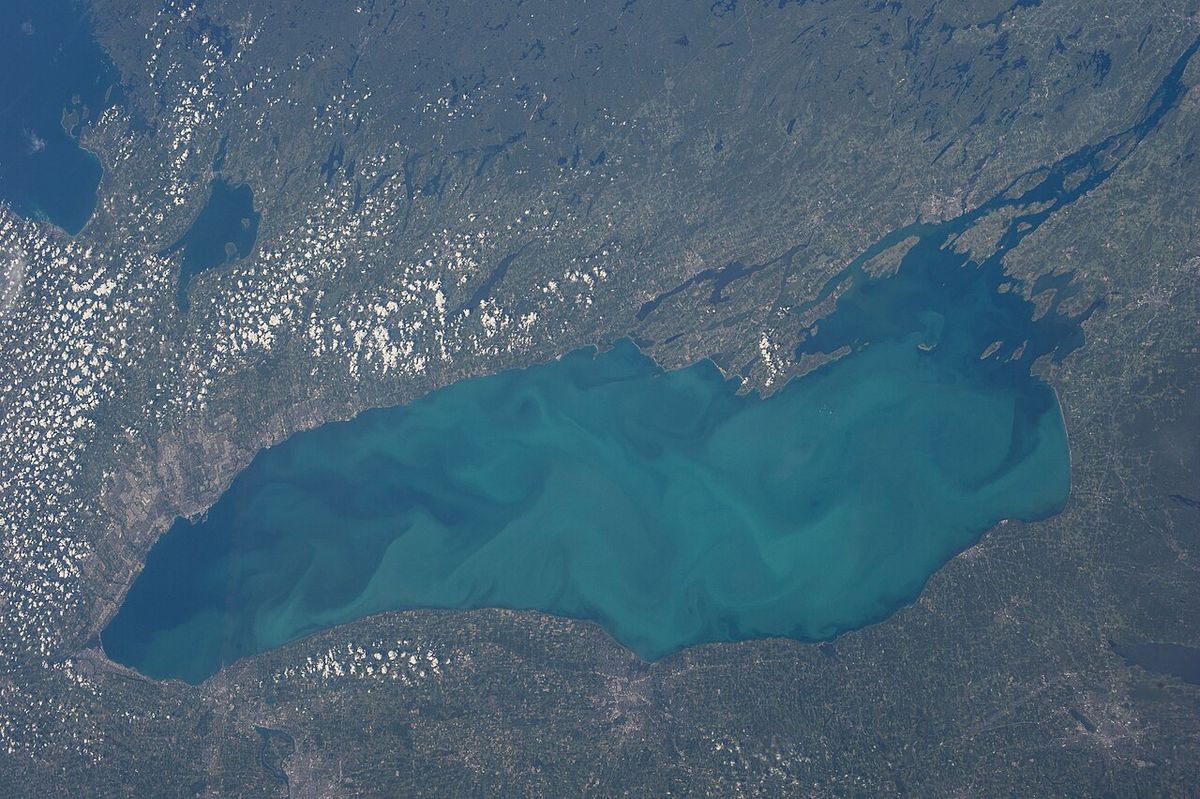
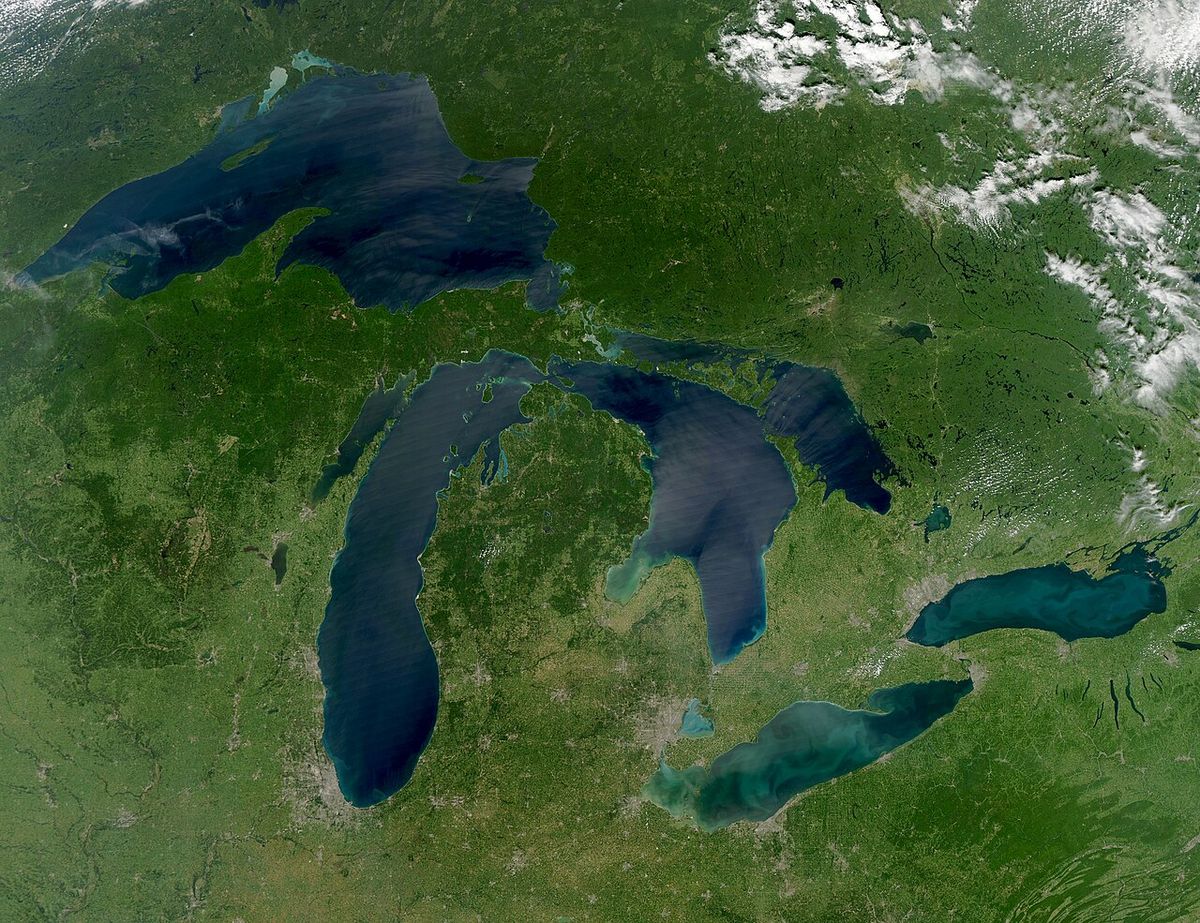
Toronto is the most populous city in Canada and the capital of the province of Ontario. Located on the northwestern shore of Lake Ontario, it is a global centre for business, finance, arts and culture, recognized for its highly diverse and multicultural population. The city proper, with a 2021 census population of 2,794,356, anchors a much larger metropolitan region of over seven million people. As the country's leading economic hub, Toronto is home to the Toronto Stock Exchange, major corporate headquarters, and a vast array of cultural institutions that draw millions of visitors annually.
Etymology and Indigenous History
The name Toronto has its origins in the Mohawk word 'tkaronto', meaning 'where there are trees standing in the water'. This referred specifically to the Mnjikaning Fish Weirs at a narrows between Lake Simcoe and Lake Couchiching, where the Wendat people used saplings to corral fish. The word also appears in a 1632 French lexicon of the Wendat language with the meaning 'plenty'. Over time, the name became associated with the crucial Toronto Carrying-Place Trail, a portage route linking Lake Ontario to Lake Huron that was widely used by Indigenous peoples and early European traders. Archaeological evidence shows human occupation of the area for over 10,000 years. The Wendat, an Iroquoian agricultural people, farmed the land until they were invaded and displaced by the Haudenosaunee between 1648 and 1650. The Haudenosaunee established villages like Teiaiagon on the Humber River before being displaced themselves by the Mississaugas, an Anishinaabe people, by 1701 following the Beaver Wars.
From Colonial Outpost to Provincial Capital
Following the Toronto Purchase with the Mississaugas of the New Credit First Nation in 1787, the British established the Town of York in 1793 as the new capital of Upper Canada. Governor John Graves Simcoe moved the capital from Newark (Niagara-on-the-Lake) believing the new site on a sheltered harbour would be less vulnerable to American attack. The initial settlement formed near the present-day intersection of Parliament Street and Front Street. In 1813, as part of the War of 1812, American forces captured and plundered York in the Battle of York, burning the parliament buildings during a five-day occupation which prompted British retaliation later with the burning of Washington, D.C. The town was incorporated and renamed the City of Toronto on March 6, 1834, with reformer William Lyon Mackenzie as its first mayor. Toronto grew rapidly as a major destination for immigrants, particularly Irish Catholics fleeing the Great Famine in the 1840s, who soon became the largest single ethnic group in the city. The city served briefly as the capital of the united Province of Canada from 1849 to 1851 and again from 1855 to 1859. It was permanently designated the capital of Ontario upon Canadian Confederation in 1867, with the seat of government moving to the Ontario Legislative Building at Queen's Park in 1893.
19th Century Growth and Industrialization
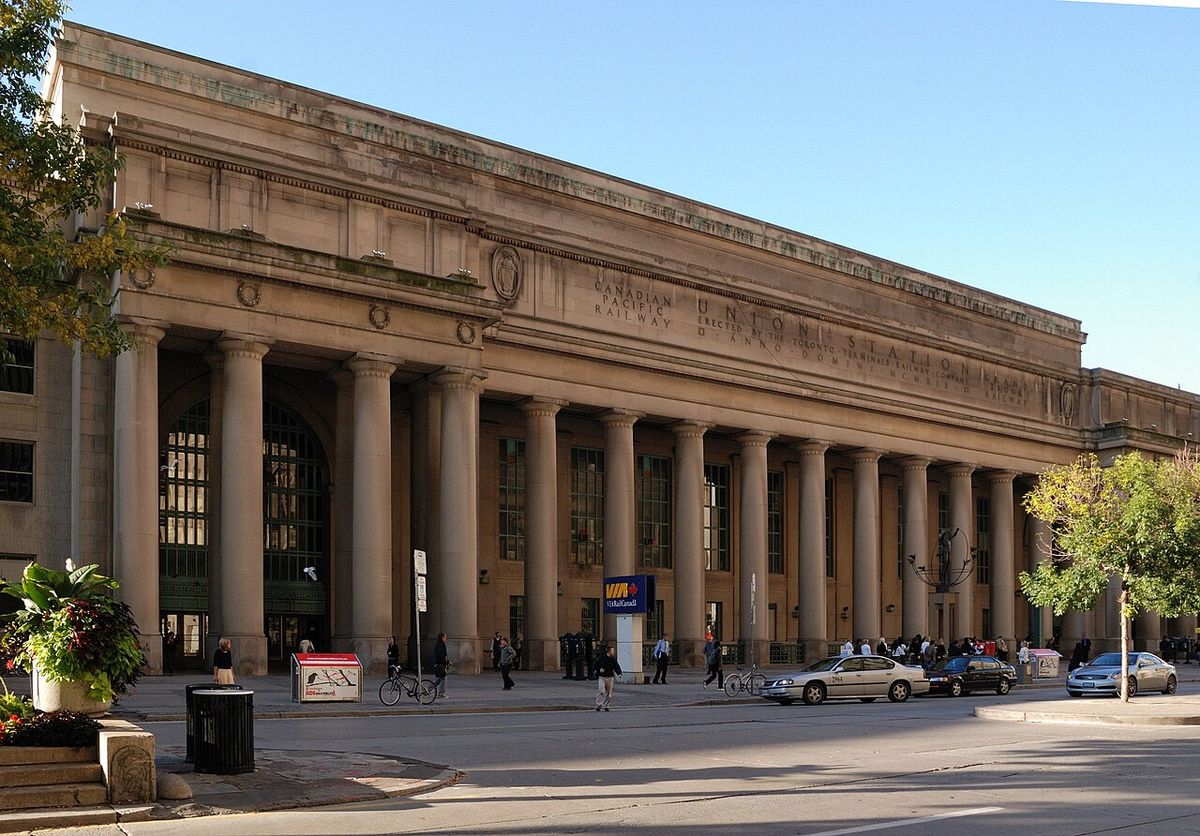
The 19th century was a period of massive expansion and modernization for Toronto. The city built an extensive sewage system for sanitation and introduced gas lighting for its streets. The completion of long-distance railway lines, like the 1854 link to the Upper Great Lakes and the construction of the first Union Station, transformed Toronto into a major gateway to the continent's interior. The harbour facilitated the import of Pennsylvania coal and the export of northern timber, and industry came to dominate the waterfront. Toronto became the largest alcohol distillation centre in North America, with the Gooderham and Worts distillery, built between 1859 and 1861, growing into the largest whisky factory in the country. The city's transit system evolved from horse-drawn streetcars to electric streetcars in 1891 under the Toronto Railway Company, later becoming the publicly owned Toronto Transportation Commission in 1921. Socially, the city was heavily influenced by the Protestant Orange Order, whose members held the mayoralty almost continuously from 1850 to 1950, leading to the nickname 'the Belfast of Canada'. Early Black communities, including freed Black Loyalists and refugee slaves from the American South, were also part of the city's fabric, with slavery being banned in Upper Canada in 1834.
The Metropolitan Era and Postwar Transformation
In 1954, the City of Toronto and 12 surrounding municipalities were federated into the Municipality of Metropolitan Toronto to coordinate regional planning and services like highways, water, and police in the face of rapid postwar suburban development. That same year, Hurricane Hazel struck the city, killing 81 people, leaving nearly 1,900 families homeless, and causing over 25 million dollars in damage. In 1967, the seven smallest municipalities were merged, creating a six-municipality Metro structure including the old City of Toronto, East York, Etobicoke, North York, Scarborough, and York. Toronto's population doubled from one million in 1951 to two million by 1971, fueled by immigrants from war-torn Europe and labourers from Italy and Portugal. Following the elimination of racially based immigration policies in the late 1960s, Toronto became a destination for immigrants from all parts of the world. This demographic shift, coupled with the political uncertainty of the Quebec sovereignty movement, helped Toronto surpass Montreal as Canada's most populous city and chief economic hub by the 1980s, a transition marked by many corporations moving their head offices from Montreal to Toronto.
The Amalgamated City and Modern Challenges
On January 1, 1998, the provincial government of Premier Mike Harris dissolved the six municipalities of Metropolitan Toronto and replaced them with a single-tier 'megacity', the current City of Toronto. This amalgamation was presented as a cost-saving measure but was opposed by more than three-quarters of voters in non-binding referendums held in 1997. Mel Lastman, the former mayor of North York, was elected as the first mayor of the amalgamated city. His 1999 request for the Canadian Armed Forces to assist with snow removal after a series of storms attracted national attention and criticism. In 2003, Toronto was the epicentre of Canada's SARS outbreak, leading to mass quarantines and a World Health Organization travel advisory. The Northeast blackout of 2003 later that year caused a widespread power failure. The city hosted the G20 summit in 2010, which was accompanied by large demonstrations, vandalism, and the largest mass arrest in Canadian history, with over 1,000 people detained. Major weather events, including a severe flood in July 2013 that left 450,000 without power and a devastating ice storm in December 2013, further tested infrastructure. The city also hosted major international events like WorldPride in 2014 and the Pan American and Parapan American Games in 2015.
Demographics and Cultural Diversity
Toronto's identity is fundamentally shaped by its status as a primary destination for immigrants to Canada. Approximately half of the city's residents were born outside the country, and over 200 distinct ethnic origins are represented among its inhabitants. While English is the primary language for most, more than 160 languages are spoken across the city. This diversity is the result of successive waves of immigration, from the Irish in the 19th century to groups from Germany, Italy, and Eastern Europe in the early 20th century, and later a global influx from Asia, Africa, and the Caribbean. Many early immigrants lived in crowded, poor neighbourhoods like 'the Ward', located in what is now the Financial District, before achieving prosperity and moving to other areas. The city's cultural institutions, including numerous museums, galleries, and festivals, reflect this mosaic. Toronto's varied cultural offerings and entertainment districts attract over 26 million visitors each year, cementing its reputation as a cosmopolitan world city.
Economy and Major Institutions
Toronto is the financial and economic engine of Canada. It is home to the Toronto Stock Exchange, which became the country's largest in 1934, and the de facto operational headquarters of Canada's five largest banks. The city hosts the headquarters of many large Canadian and multinational corporations, a trend that accelerated when companies relocated from Montreal in the late 20th century. The economy is highly diversified with significant strengths in technology, design, financial services, life sciences, education, arts, fashion, aerospace, and environmental innovation. Toronto is a prominent centre for music, theatre, and motion picture production, often called 'Hollywood North', and is home to the headquarters of Canada's major national broadcast networks and media outlets. The Toronto Transit Commission's public transportation system has the third-highest ridership in North America. The city's historical industrial sites, like the Gooderham and Worts distillery, have been repurposed as cultural districts, with the Distillery District designated a National Historic Site.
Governance and Current Events
The City of Toronto is governed by the Toronto City Council, a unicameral legislative body composed of 25 councillors, each representing a geographical ward, and the mayor, who serves as the head of council and chief executive officer. Council members are elected for four-year terms. As of 2026, the mayor is Rob Ford, and council meetings are conducted in English, French, and Ojibwe. The next municipal election is scheduled for October 26, 2026, with advance voting including a 'Kids Vote Weekend' for Toronto's Tree of the Year on October 10 and 11. The city's 2026 operating and capital budgets were adopted by council in February 2026. A major upcoming event is Toronto's role as a host city for the FIFA World Cup 2026, where six matches will be played at BMO Field, the home of Canada's national soccer team. The city continues to experience rapid population growth and residential intensification, adding tens of thousands of new residents annually.
Questions about Toronto
What is the population of Toronto and its surrounding region?
The population of the city of Toronto proper was 2,794,356 as of the 2021 census. The Toronto census metropolitan area has a population of 7,106,379. The Greater Toronto Area, which includes the regions of Peel, York, Durham, and Halton, has a population of 6,712,341. This makes Toronto the most populous city in Canada and the fourth most populous in North America.
When is the next Toronto municipal election and how can I vote?
The next Toronto municipal election is scheduled for Monday, October 26, 2026. Voting hours are from 10 a.m. to 8 p.m. Eligible voters can use the city's MyVote online tool to find their voting location, confirm they are on the voters' list, and download a digital voter information card. Advance voting will be available, including a Kids Vote Weekend on October 10 and 11 for children to vote for Toronto's Tree of the Year.
What are some of the major historical events that shaped Toronto?
Key historical events include the Battle of York in 1813, where American forces captured and burned parts of the town. The Great Toronto Fire of 1904 destroyed over 100 downtown buildings. The creation of Metropolitan Toronto in 1954 federated the city with its suburbs. Hurricane Hazel caused devastating floods and 81 deaths in the region that same year. More recently, the 2003 SARS outbreak and the 2010 G20 summit, which led to mass arrests, were significant modern challenges.
What is the origin and meaning of the name Toronto?
The name Toronto is derived from the Mohawk word 'tkaronto', which means 'where there are trees standing in the water'. This referred to a channel called The Narrows where the Wendat used tree saplings to corral fish. The word also appears in a 1632 Wendat language lexicon meaning 'plenty'. The name was used for a portage route known as the Toronto Carrying Place Trail.
When was the City of Toronto officially incorporated and what was it called before?
The City of Toronto was officially incorporated on March 6, 1834. Before this date, the settlement was known as the Town of York, which was established by Governor John Graves Simcoe in 1793. The name was changed back to the original Indigenous name, Toronto, upon incorporation. William Lyon Mackenzie became the first mayor of the newly incorporated city.
What major event in 1904 significantly impacted downtown Toronto?
The Great Toronto Fire of 1904 destroyed a large section of downtown Toronto. The fire claimed one victim and destroyed more than 100 buildings. It caused an immense amount of damage, estimated at over 10 million dollars at the time. This was a major disaster in the city's history.
Sources: Wikipedia and current public reporting, checked by the Your Space Hamilton desk. Last updated 2026-10-18.