Queen's Park
Queen's Park is a historic urban park and the seat of provincial government in downtown Toronto, Ontario. Opened in 1860 and named for Queen Victoria, the park is most notably the site of the Ontario Legislative Building, home to the Legislative Assembly of Ontario. The name "Queen's Park" is frequently used as a metonym for the Government of Ontario itself. Situated almost entirely within the University of Toronto's St. George campus, the park serves as a central green space, a venue for public gatherings, and a repository of provincial monuments and memorials.
Historical Development and Land Acquisition
The origins of Queen's Park are tied to the early development of higher education in Upper Canada. Shortly after its establishment in 1827, King's College, which was later renamed the University of Toronto, purchased 68 hectares of land north of the Town of York from portions of three park lots. These lots were acquired from the estates of Mary Elmsley, William Dummer Powell, and D'Arcy Boulton. Construction began on a college building at the site on 23 April 1842, and it was completed in 1843, though it remained unoccupied until 1845. This structure was planned as the southeast wing of a larger complex that was never built due to budget constraints. The university grounds during this period were known as University Park, a landscaped area with tree-lined avenues accessed by north and south gates.
In 1853, the Parliament of the Province of Canada expropriated this building for its own use, forcing the university to relocate classes to the Third Parliament Buildings of Upper Canada. The provincial parliament met in Toronto from 1849 to 1853 and again from 1856 to 1858. Given the growing popularity of the green space with Toronto residents, the city government entered into negotiations with the university to lease the land for a public park. A 999-year lease for 20 hectares was formally signed on 29 August 1858. The lease agreement specifically granted the government the right to construct a legislative building on the property at a future date. The park was officially opened and named by Edward, Prince of Wales, on 11 September 1860, a ceremony postponed from the previous Saturday due to heavy rain.
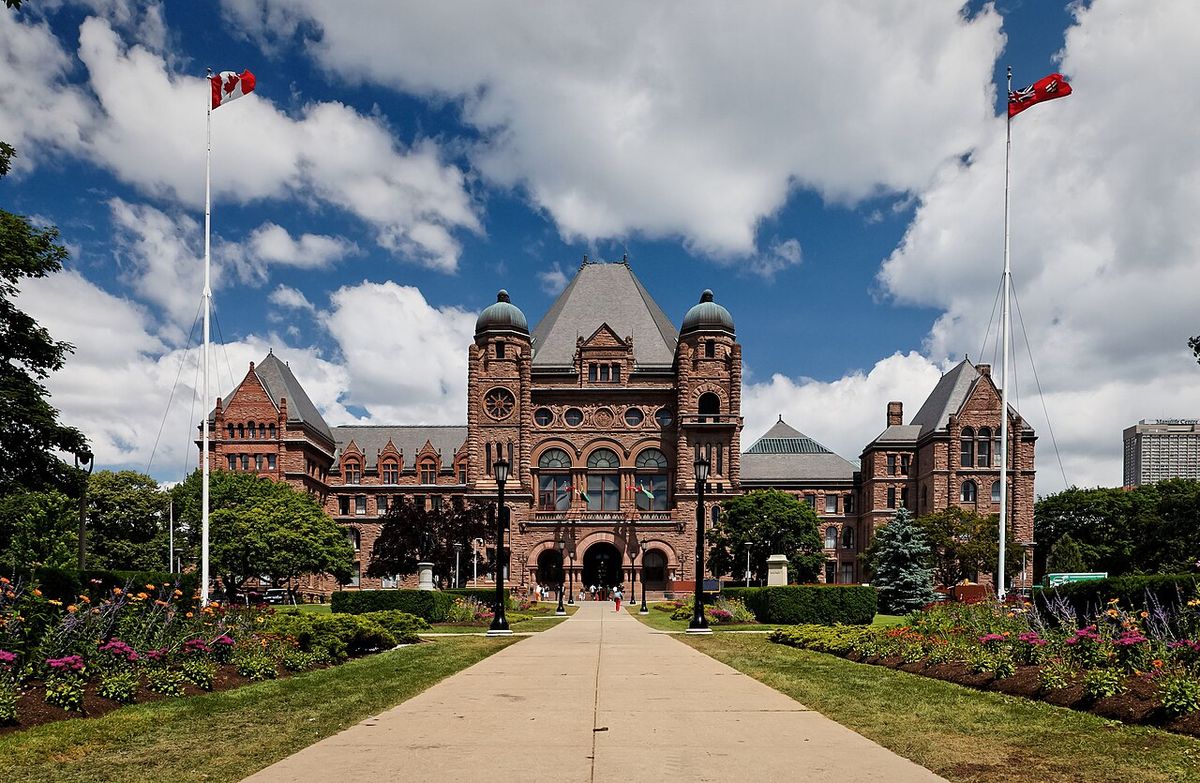
The provincial government informed the city in 1879 of its intention to build a new legislature on the park grounds, acting on the clause in the 1858 lease. A protracted design competition delayed the project for several years until the commission was finally awarded to architect Richard A. Waite in 1886. That same year, ownership of the southern portion of the park was transferred from the city to the provincial government. The Ontario Legislative Building was finished in 1892 and its first legislative session was held on 4 April 1893. Following the building's completion, two Russian cannons that had been placed at the park's southern tip in 1859 were moved to the legislature's entrance. These cannons were war prizes from the Crimean War, gifted to Toronto by Queen Victoria.
Layout, Circulation, and Geographic Setting
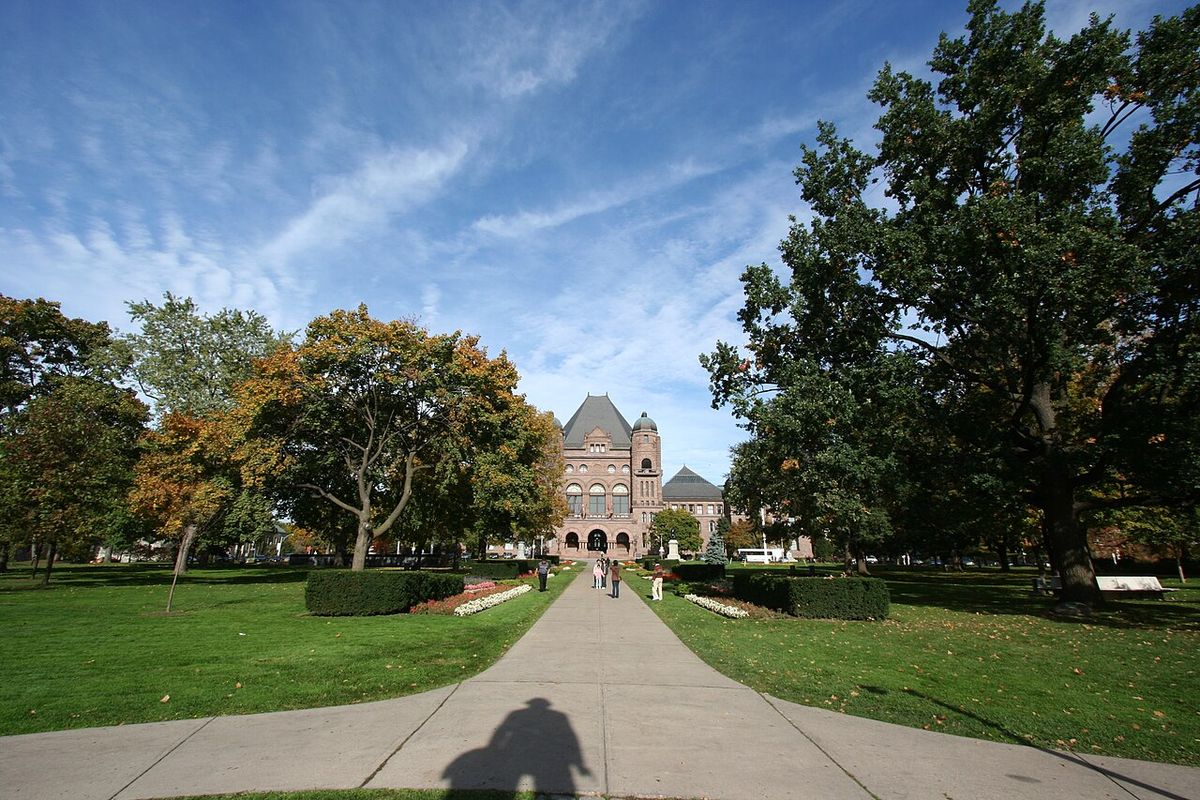
Queen's Park possesses a distinctive oval shape, with a noticeable indentation on its southwestern edge that traces the former bank of Taddle Creek, now an underground waterway. The park is completely encircled by the one-way streets Queen's Park Crescent East and West, which form a continuous counterclockwise loop for vehicular traffic. University Avenue to the south and Avenue Road to the north align directly with the park, creating a major north-south arterial route. Wellesley Street cuts across both the park and the crescent loop slightly north of the oval's centre, creating distinct northern and southern sections. The northern area, which is 20 hectares under the original city lease, is maintained by the Toronto Parks, Forestry and Recreation Division.
This northern section follows a classic British park design dominated by large mature trees that provide extensive shade. Pathways radiate outward from a central mound topped by an equestrian statue of King Edward VII. A primary north-south path connects this statue to the 48th Highlanders of Canada Regimental Memorial at the park's northernmost point. The southern section, maintained by the provincial government, contains the Legislative Building, associated parking, and the majority of the park's formal monuments and gardens. Geologically, the park sits on a bed of sandy sediment left behind by Glacial Lake Iroquois. The original forest cover consisted of eastern white pine, northern red oak, and white oak, though extensive planting of non-native European trees in the 19th century altered the composition. Ongoing restoration projects aim to reintroduce native tree species to the area.
- Road Network: Queen's Park Crescent East (northbound) and West (southbound) form a loop. University Avenue and Avenue Road provide through traffic.
- Major Bisector: Wellesley Street divides the park into northern (city) and southern (provincial) sections.
- Northern Park Design: Radial pathways, central mound with Edward VII statue, traditional landscaping.
- Saluting Station: Official provincial location for gun salutes on Victoria Day (noon EDT), Canada Day (noon EDT), and Remembrance Day (1102 EST).
- Original Ecology: Eastern white pine, northern red oak, white oak forests on glacial lake sediment.
- Transit Access: Served by Queen's Park and Museum subway stations on Line 1 Yonge-University, 13 Avenue Road and 94 Wellesley buses, and the 506 Carlton streetcar.
Gardens and Commemorative Landscaping
The southern portion of Queen's Park features several gardens that commemorate royal occasions and provincial symbols. The first segment of the Queen Elizabeth II Rose Gardens was dedicated in 1977 to mark the Queen's Silver Jubilee. An extension was added in 2003 for her Golden Jubilee, and a Platinum Jubilee garden with tobacco plants from Massey College's Chapel Royal was unveiled in 2022. This garden complex also holds the park's first plaque acknowledging the land as part of Treaty 13 territory. The White Trillium Garden is dedicated to Ontario's official floral emblem, the white trillium. A separate native species garden includes eastern white cedars, hackberries, and perennial flowers indigenous to the Toronto region. These gardens serve both a ceremonial purpose and provide an educational resource on local horticulture and Indigenous history.
Monuments and War Memorials Within the Park
Queen's Park contains a dense and historically layered collection of monuments, with most erected between the late 19th and early 21st centuries. The Northwest Rebellion Monument followed in 1895, commemorating militia and North-West Mounted Police members. The 48th Highlanders of Canada Regimental Memorial was placed at the northern apex in 1923. In 1940, the Mackenzie monument, featuring a bust by sculptor Walter Seymour Allward, was unveiled to honour William Lyon Mackenzie and the achievement of responsible government. The Post One Monument was added for the Canadian Centennial in 1967.
A significant modern installation is the Ontario Veterans' Memorial, unveiled on 17 September 2006. This memorial consists of a 30-metre-long granite wall, 2.2 metres tall at each end, sloping to a central gathering area. Its 24 grey granite panels are etched with 44 images selected by historian Jack Granatstein, depicting Ontario's military history from the Fenian raids to the war in Afghanistan. Poet Jane Urquhart wrote the inscription, and the design was by artist Allan Harding Mackay and landscape architects Phillips Farevaag Smallenberg. Other notable markers include two plaques on boulders, one installed in 1935 for the Silver Jubilee of King George V and another memorializing the victims of the 1985 Air India Flight 182 bombing. A large boulder northeast of the Mackenzie monument honours Canadian volunteers of the Mackenzie-Papineau Battalion who fought in the Spanish Civil War.
| Memorial | Year | Primary Commemoration |
|---|---|---|
| Canadian Volunteer Monument | 1870 | Battle of Ridgeway veterans |
| 48th Highlanders Memorial | 1923 | Regimental history and service |
| Mackenzie Monument | 1940 | William Lyon Mackenzie, responsible government |
| Post One Monument | 1967 | Canadian Centennial |
Statues Honouring Individuals
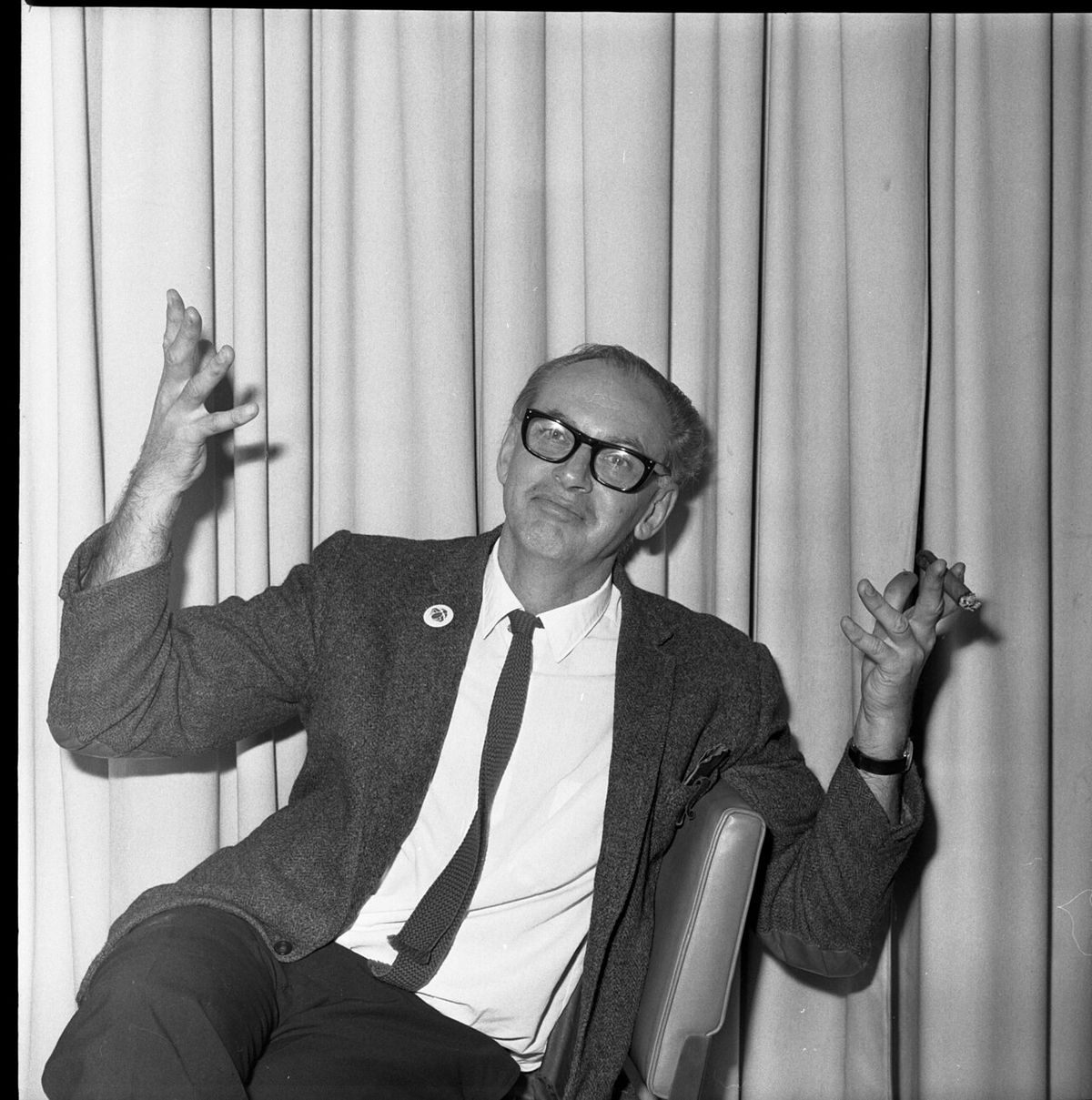
In addition to abstract memorials, Queen's Park displays several full-body statues of notable figures, most on stone plinths in the southern section facing away from the legislature. The statue of Sir John A. Macdonald, Canada's first prime minister, stands at the southern tip facing University Avenue, on the spot where a statue of Queen Victoria was originally planned in 1860. Victoria's statue was eventually purchased and placed near the legislative building's entrance in 1902. The equestrian statue of Edward VII is the focal point of the northern park. A significant departure from tradition occurred in 2008 with the unveiling of a statue of Canadian poet Al Purdy. This was the result of a campaign led by poet Dennis Lee and advocate Richard Griffin, who insisted on the park as its location to affirm the importance of arts in public life, making it the first statue in the park dedicated to a non-political or non-royal individual.
Adjacent Memorials and Provincial Commissions
Several major monuments are located on properties immediately surrounding Queen's Park, separated by the encircling roadways. The Canadian Volunteer Monument is situated west of Queen's Park Crescent West. The provincial government has commissioned three memorials adjacent to the southern park edges, all designed by Siggy Puchta: the Ontario Police Memorial (2000) honouring officers killed in the line of duty, the Ontario Firefighters Memorial (2005) for firefighters who died in service, and the Notre Place Monument celebrating the Franco-Ontarian community. A statue of Dr. Norman Bethune, unveiled in 2014 and commissioned by the University of Toronto Faculty of Medicine, stands southwest of the park. A statue of Robert Raikes is also located in the vicinity. These adjacent installations extend the park's commemorative function into the immediate urban fabric.
Ceremonial and Public Use Through History
Since its inception, Queen's Park has served as Toronto's preeminent civic square for public assembly and official ceremony. Throughout the late 19th and early 20th centuries, residents gathered there for concerts, memorial services, military parades, and political rallies. During the First World War, the park was a mobilization point for soldiers of the Canadian Expeditionary Force. Its designation as the provincial saluting station formalizes its role in state ceremony. The park's evolution mirrors societal changes, expanding from a focus on monarchy and political leaders to include recognition of veterans, emergency services, cultural figures, and Indigenous history. The tree planting ceremonies in 1984 for the eastern white pine, involving Deputy Premier Bob Welch on 25 May and Queen Elizabeth II on 29 September, exemplify its ongoing use for events of provincial significance. This layered history confirms the park's enduring status as a central and dynamic public space for Ontario.
Metonymic Use and Governmental Presence
The phrase "Queen's Park" is routinely used in Ontario media and political discourse as a metonym to refer to the Government of Ontario and the Legislative Assembly of Ontario. This usage stems directly from the park being the location of the provincial legislature since 1893. The concentration of government activity extends beyond the Legislative Building itself. Numerous ministry buildings of the Ontario government occupy properties to the east of the park, in the area between Wellesley Street and Grosvenor Street. This clustering of administrative functions reinforces the park's identity as the physical and symbolic heart of provincial governance. The park's very geography, with the legislature at its centre, visually and functionally represents the seat of political power in Ontario.
Detailed Inventory of Memorials and Plaques
Beyond the major monuments, Queen's Park contains a number of specific plaques and markers that document historical moments. The plaque marking the 1984 planting of the eastern white pines by Queen Elizabeth II and the Duke of Edinburgh is situated at the location of the ceremony. The images etched into the Ontario Veterans' Memorial granite wall include specific conflicts: the Fenian raids, the North-West Rebellion, the Second Boer War, the First World War, the Second World War, the Korean War, and various Cold War peacekeeping and support operations, concluding with the war in Afghanistan. The plaque adjacent to that memorial's seating area provides a written historical recount spanning from the War of 1812 to the Afghanistan conflict. The two boulders with plaques near the southern pathway hold specific dedications: one to King George V's 1935 Silver Jubilee and the other to the 1985 Air India Flight 182 bombing victims. This detailed inventory makes the park an open-air museum of provincial and national memory.
- 1984 Tree Planting Plaque: Marks spot of eastern white pine planting by Queen Elizabeth II and Duke of Edinburgh on 29 September 1984.
- Ontario Veterans' Memorial Conflicts: Depicts Fenian raids, North-West Rebellion, Second Boer War, First World War, Second World War, Korean War, Cold War operations, war in Afghanistan.
- Veterans' Memorial Plaque Text: Historical summary from War of 1812 to war in Afghanistan.
- George V Jubilee Boulder: Installed in 1935 for the king's Silver Jubilee.
- Air India Memorial Boulder: Dedicated to victims of the 1985 bombing.
- Mackenzie-Papineau Battalion Boulder: Northeast of Mackenzie monument. Honours Spanish Civil War volunteers from Canada.
Questions about Queen's Park
Who owns Queen's Park?
Ownership is divided. The land under the Ontario Legislative Building and the southern portion of the park is owned by the Government of Ontario. The northern section of the park is owned by the University of Toronto and leased to the City of Toronto under a 999-year lease agreement originally signed in 1858. The city maintains the northern park.
What special events or ceremonies happen at Queen's Park?
The park is Ontario's official saluting station, where gun salutes are fired on Victoria Day, Canada Day, and Remembrance Day. It has historically hosted political rallies, public concerts, and memorial services. The park was also the site of tree-planting ceremonies for Ontario's official tree in 1984, including one with Queen Elizabeth II. It continues to be a venue for official government ceremonies and public gatherings.
Why is it called Queen's Park?
The park was named in honour of Queen Victoria. It was officially dedicated as Canada's first municipal park under that name on 11 September 1860 by her son, Edward, Prince of Wales, who later became King Edward VII. The dedication ceremony was originally planned for the previous Saturday but was rescheduled due to heavy rain. During the ceremony, the Prince of Wales laid a base for an eventual statue of Queen Victoria. The name has remained since its opening, solidifying its royal connection.
What government building is located at Queen's Park?
The Ontario Legislative Building is located in the southern portion of Queen's Park. Completed in 1892, it houses the Legislative Assembly of Ontario, the province's elected law-making body, and hosted its first legislative session on 4 April 1893. The building was designed by architect Richard A Waite after a design competition. The phrase "Queen's Park" is often used metonymically to refer to the Government of Ontario and the Legislative Assembly. The land for the building was selected and given to the provincial government in 1880, with ownership formally transferred in 1886.
What are the main monuments to see at Queen's Park?
Key monuments include the statue of Sir John A Macdonald at the southern tip facing University Avenue, which occupies the spot originally intended for a statue of Queen Victoria. The Ontario Veterans' Memorial is a 30 metre long granite wall with etched images depicting military history from Confederation onward. The northern section features an equestrian statue of Edward VII at its centre. Other significant memorials are the Mackenzie monument from 1940, the 48th Highlanders of Canada Regimental Memorial from 1923, and the 2008 statue of poet Al Purdy, the first at the park commemorating a non-political figure. The park also holds the Canadian Volunteer Monument from 1870 and several commemorative boulders.
How do you get to Queen's Park using public transit?
The most direct access is via the Toronto subway's Line 1 Yonge-University, which runs below University Avenue and Queen's Park. Queen's Park station is located at the park's southwestern edge, while Museum station is to the northwest. Other public transit access is provided by the 13 Avenue Road and 94 Wellesley bus routes. The 506 Carlton streetcar route also serves the area, running along College Street just south of the park. These transit options provide comprehensive access to the oval shaped park bounded by Queen's Park Crescent East and West.
Sources and further reading
- Queen's Park (Wikipedia)
- Queen's Park (newwestcity.ca)
- Queen's Park (destinationtoronto.com)
- Queen's Park Neighbourhood Plan (westminster.gov.uk)
Checked by the Your Space Hamilton desk. Last updated 2026-10-23.