North York
North York is a former township and city and is now one of the six administrative districts of Toronto, Ontario, Canada. It is located in the northern area of Toronto, centred around Yonge Street and north of Ontario Highway 401. The district is bounded by York Region to the north at Steeles Avenue, on the west by the Humber River, and on the east by Victoria Park Avenue. As of the 2016 Census, North York had a population of 644,685, and it has become a significant secondary economic hub for the city outside Downtown Toronto.
History and Formation
The Township of North York was formally created on June 13, 1922, following a successful petition by northern farmers in the Township of York who felt underrepresented and underserved. Led by dairy farmer Robert Franklin Hicks, the 6,000 residents voted in favour of separating from York by a margin of 393 votes to create a new municipality north of Eglinton Avenue. The new township remained predominantly agricultural until the post-World War II housing shortage triggered rapid suburban development in the late 1940s and 1950s. This growth led to its inclusion in the newly formed Municipality of Metropolitan Toronto in 1953, a federation of 11 townships and villages with the Old City of Toronto designed to coordinate services across the region. North York's status evolved with its population, becoming a borough in 1967 and finally a city on Valentine's Day 1979, which inspired its longtime civic slogan, "The City with Heart". The city's independent existence ended on January 1, 1998, when it was amalgamated with five other municipalities and the regional government to form the current City of Toronto, and it now forms the largest part of the area served by the North York Community Council.
On August 10, 2008, a massive propane explosion occurred at the Sunrise Propane Industrial Gases facility just southwest of the Downsview Airport. This destroyed the depot and damaged several homes nearby. About 13,000 residents were evacuated for several days. One employee at the company was killed in the blast and one firefighter died while attending to the scene. A follow-up investigation to the incident made several recommendations concerning propane supply depots. It asked for a review of setback distances between depots and nearby residential areas but did not call for restrictions on where they can be located.
Canada's deadliest pedestrian attack occurred in the North York City Centre district on April 23, 2018 when a van collided with numerous pedestrians. This attack took place on Yonge Street between Finch and Sheppard Avenues. The incident resulted in 10 fatalities. It also injured 16 other people.
Governance and Leadership
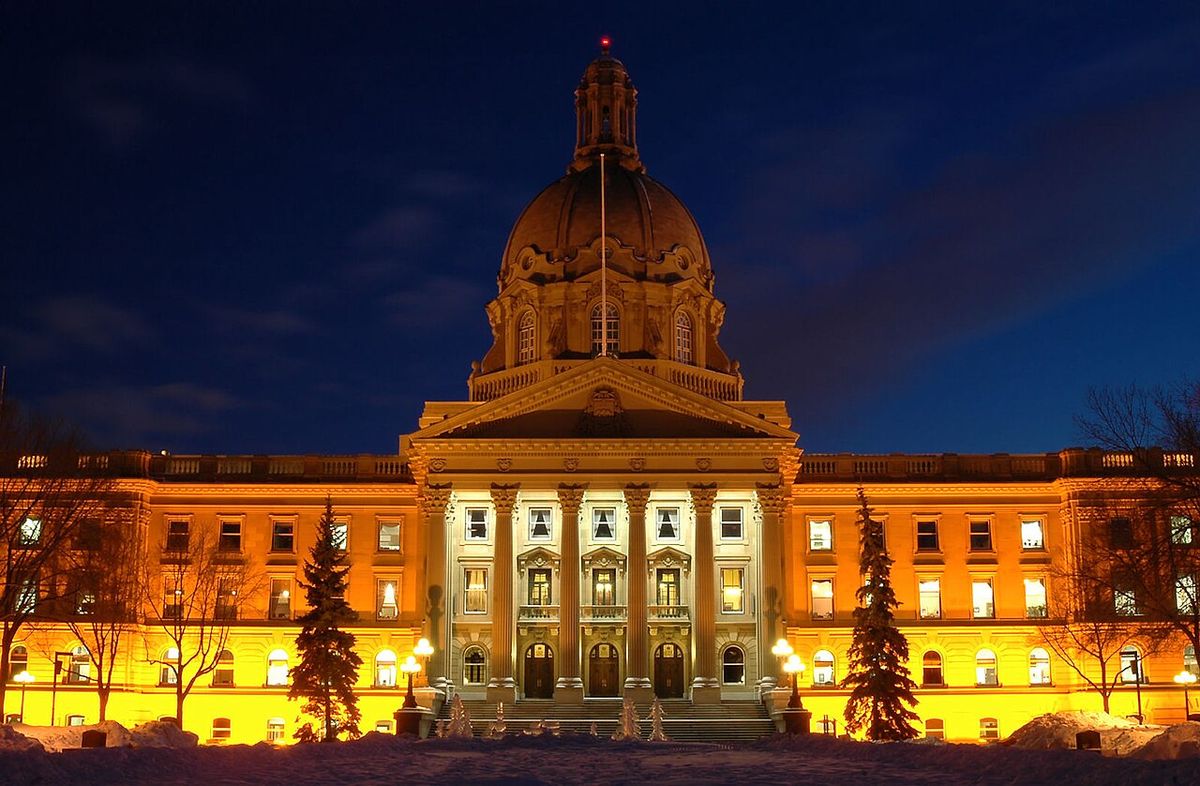
As a district of Toronto, North York is represented by councillors on Toronto City Council, members of the Provincial Parliament for Ontario, and Members of Parliament for Canada. Local civic affairs are addressed by the North York Community Council, a committee of Toronto City Council, which meets at the North York Civic Centre, the former city hall. Prior to amalgamation, North York was a lower-tier municipality within Metropolitan Toronto with its own elected council, and it had a Board of Control from 1964 until 1988 that served as its executive committee. The leadership of the municipality evolved from a reeve to a mayor as its status changed from township to borough to city, with several notable figures guiding its growth through different eras.
Robert Franklin Hicks was a dairy farmer who organized with other farmers to petition the Ontario legislature to create the separate township of North York. He served as the first reeve of the Township of North York from 1922 to 1929. During his period as reeve, the North York Hydro Commission, a public health board, and a water supply system were created. Improvements were also made to Yonge Street and other local roads.
Mel Lastman served as mayor of the Borough of North York from 1973 to 1978. He then served as the mayor of the City of North York from 1979 to 1997. Lastman later served as the first mayor of the amalgamated city of Toronto from 1998 to 2003. To commemorate receiving its city charter on Valentine's Day, the city's corporate slogan under Lastman was "The City with Heart".
- Robert Franklin Hicks (1922 to 1929): The first reeve, a dairy farmer who led the separation movement. His tenure saw the creation of the North York Hydro Commission, a public health board, a water supply system, and improvements to Yonge Street.
- George B. Elliott (1931 to 1933): Served as reeve during the Great Depression and later as warden of York County in 1933, facing demands for improved unemployment relief.
- Robert Earl Bales (1934 to 1940): North York's youngest reeve at age 37, he led the township to pay off its depression-era debt without seizing any homes or farms for unpaid taxes. Earl Bales Park is named for him.
- Norman C. Goodhead (1959 to 1964): As reeve, he opposed illegal basement apartments and campaigned for Metro Toronto Chairman in 1962, losing to William Allen by four votes.
- James Ditson Service (1965 to 1966, 1967 to 1969): As the last reeve and first borough mayor, he championed developing a downtown core around the North York Civic Centre on Yonge Street and advocated for a domed stadium on land from Downsview Airport.
- Mel Lastman (1973 to 1997): Served as borough mayor from 1973 and became the first mayor of the City of North York in 1979, serving until amalgamation. He later became the first mayor of the amalgamated City of Toronto from 1998 to 2003.
North York had a Board of Control from 1964 until it was abolished with the 1988 election. The Board of Control consisted of four Controllers elected at large and the mayor. It served as the executive committee of North York Council. Controllers concurrently sat on Metropolitan Toronto Council. The board was replaced by directly elected Metro Councillors.
Economy and Major Employers
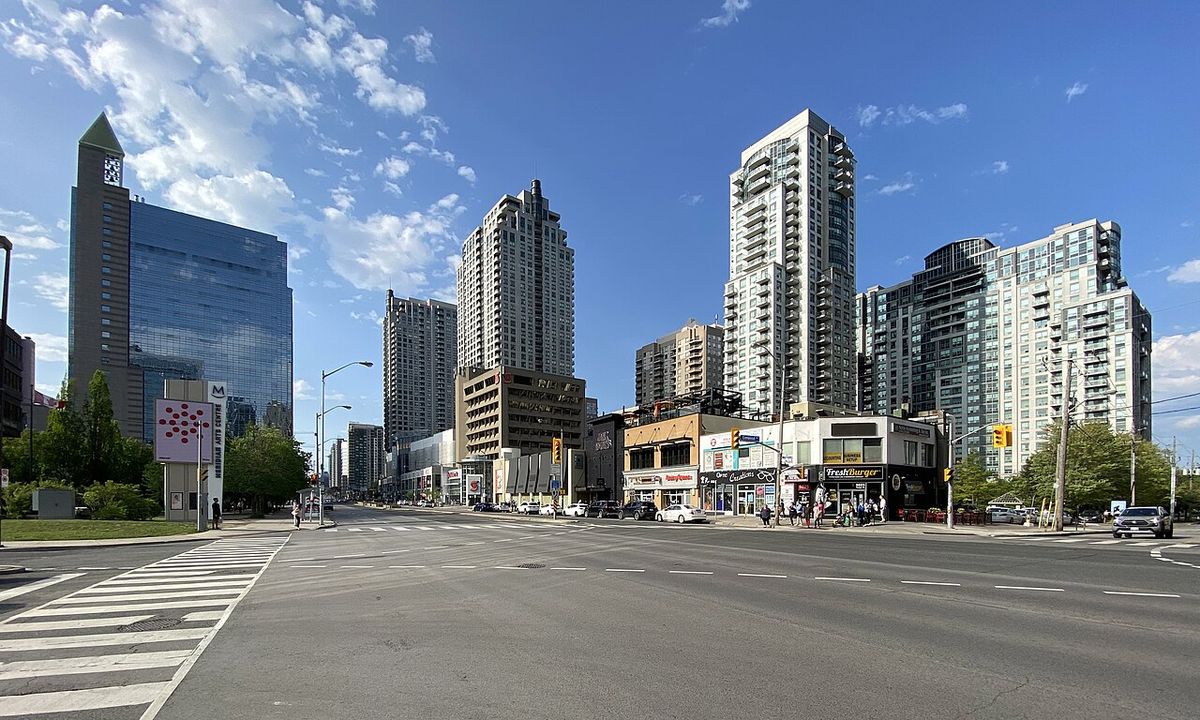
North York functions as a primary economic node for Toronto outside the downtown financial district. Its planned central business district, North York City Centre, houses numerous corporate headquarters and office towers alongside the former North York Civic Centre, continuing to be one of Toronto's major corporate areas. The area around Flemingdon Park, near Eglinton Avenue and Don Mills Road, is another significant employment hub, home to the Canadian head offices of companies like McDonald's Canada and Home Depot Canada. Major office complexes like the Concorde Corporate Centre, which offers 550,000 square feet of leasable area and is 85 percent occupied, host tenants such as Deloitte, the Toronto-Dominion Bank, Esri Canada, and the Sport Alliance of Ontario. Other major employers in Flemingdon Park include Celestica, Foresters Insurance with a major office tower, and a Bell Canada data centre.
Health care is a major industry in North York, with the district housing several major hospitals. These include the North York General Hospital, Hennick Humber Hospital and the Sunnybrook Health Sciences Centre. Downsview Airport, near Sheppard and Allen Road, employs 1,800 workers. Downsview Airport will be the location of the Centennial College Aerospace campus, a $60 million investment from the Government of Ontario and Government of Canada. Private partners include Bombardier, Honeywell, MDA Corporation, Pratt & Whitney Canada, Ryerson University, Sumitomo Precision Products Canada Aircraft, Inc. and UTC Aerospace Systems. North York houses two of Toronto's five major shopping malls: the Yorkdale Shopping Centre and Fairview Mall. Other neighbourhood malls locations include Centerpoint Mall, Bayview Village, Sheridan Mall, Yorkgate Mall, Shops at Don Mills, Steeles West Market Mall, Jane Finch Mall and Sheppard Centre.
Education and Institutions
Public education in North York is administered by four school boards, all headquartered within the district. The Toronto District School Board (TDSB) and Conseil scolaire Viamonde (CSV) operate secular public schools in English and French, respectively, succeeding the pre-1998 North York Board of Education and Conseil des écoles françaises de la communauté urbaine de Toronto. The Toronto Catholic District School Board (TCDSB) and Conseil scolaire catholique MonAvenir (CSCM) operate public separate schools in English and French, succeeding the former Metropolitan Separate School Board. Post-secondary education is prominently represented by York University, founded in 1959, which operates its main Keele Campus and the bilingual Glendon College campus within North York.
Several post-secondary institutions were established in North York. York University is a university that was established in 1959. The university operates two campuses in North York, the Keele campus located in the north, and Glendon College, a bilingual campus. Seneca College was established in North York in 1967, and presently operates several campuses throughout North York, and Greater Toronto. One of Centennial College's campuses are also located in North York, known as the Downsview Park Aerospace Campus.
Culture, Recreation and Museums
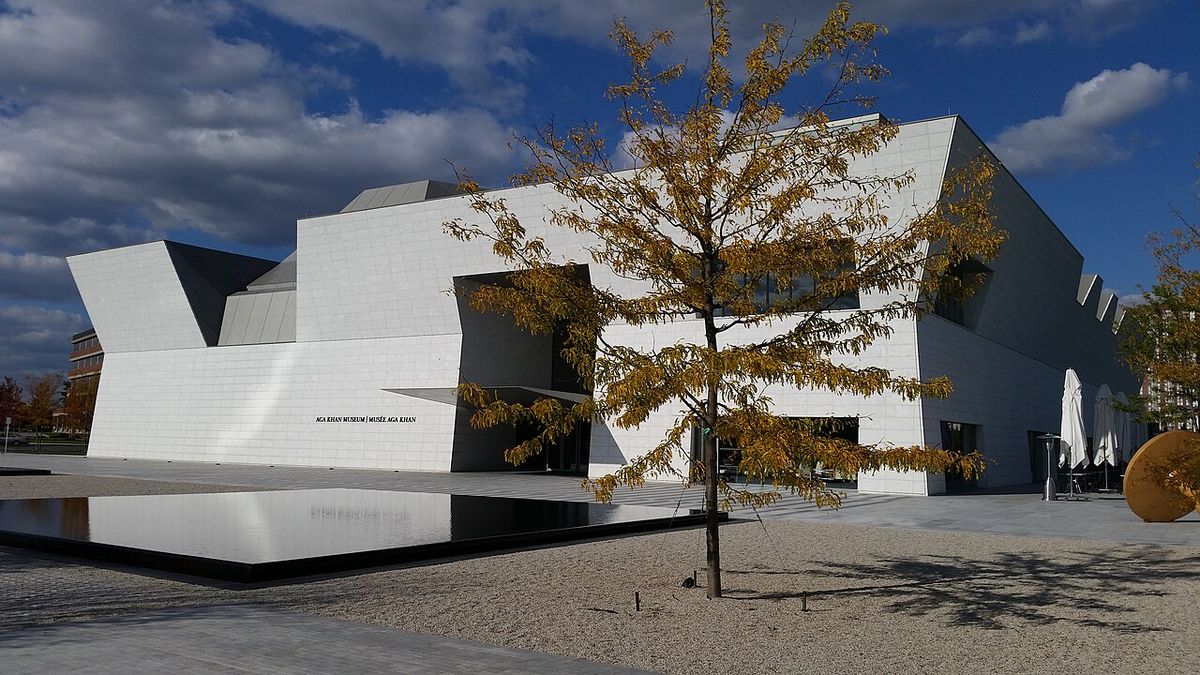
North York offers a diverse range of cultural and recreational attractions. It is home to several notable museums, including the Aga Khan Museum, which houses a collection of Islamic art from the Middle East and Northern Africa, and Black Creek Pioneer Village, an authentic living history museum recreating 19th-century village life. The Ontario Science Centre, an interactive science museum, was permanently closed in June 2024. The former Canadian Air and Space Museum, once located in Downsview Park, relocated to Edenvale, Ontario in 2019 and was renamed the Canadian Air and Space Conservancy.
Downsview Park, a large park created on a former military base and aircraft manufacturing facility, contains the Downsview Park Sports Centre, a 45,000-square-metre multi-purpose facility built by Maple Leaf Sports & Entertainment. MLSE invested $26 million there to build the Kia Training Ground, the practice facility for Toronto FC, and Volleyball Canada has its headquarters and training facility on the site. The district also features the North York Ski Centre at Earl Bales Park, one of Canada's few urban ski centres, which was revitalized with a new four-person chairlift after safety concerns with its old lift. Private sports clubs include the invitation-only Granite Club at Bayview and Lawrence, which underwent a major expansion in 2012, and the Oakdale Golf & Country Club, a private parkland-style club which hosted the 2023 Canadian Open and is scheduled to host again in 2026. Numerous community sports clubs are based in the area, including the North York Storm girls' hockey league, the Gwendolen Tennis Club, and the North York Aquatic Club, founded in 1958 as the North York Lions Swim Club.
Transportation Infrastructure
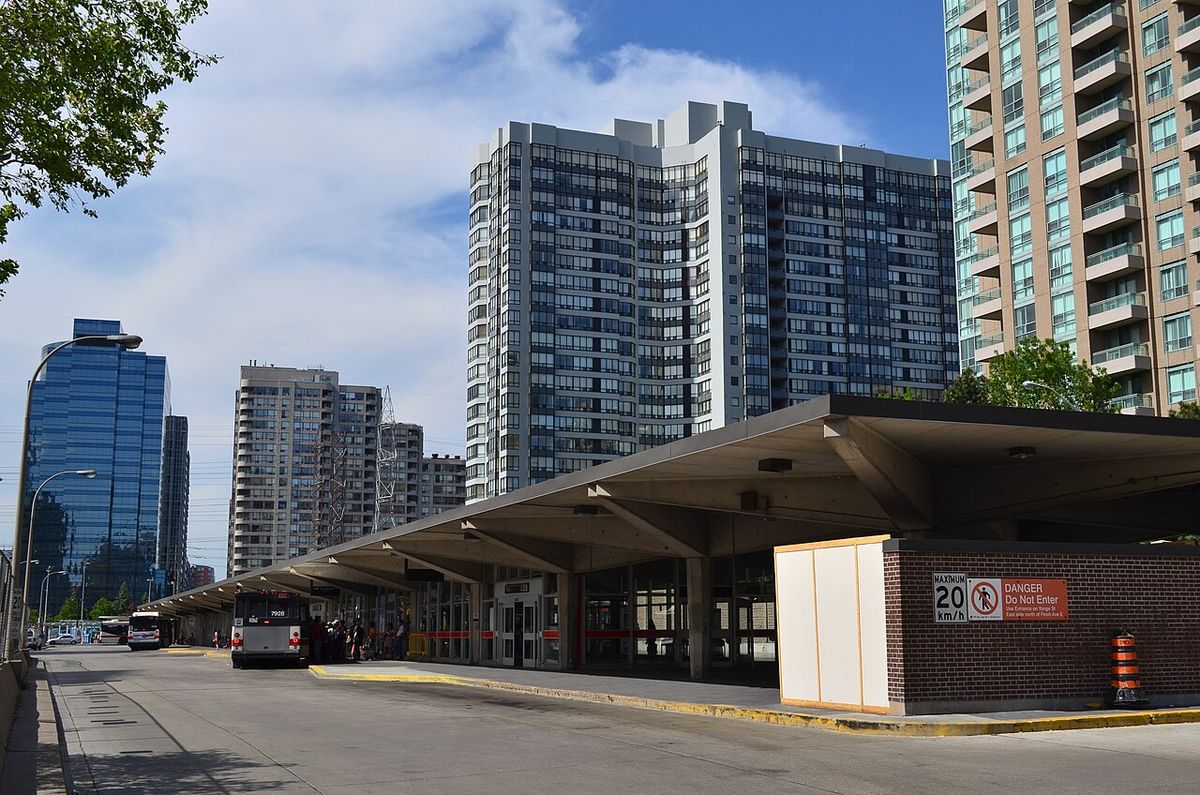
North York is a critical transportation corridor for the Greater Toronto Area, traversed by several major highways. The section of Highway 401 that runs through the district is the busiest freeway segment in North America, regularly exceeding 400,000 vehicles per day, and is also one of the widest. Other major routes include Highway 400, Highway 404, the municipally managed Allen Road, and the Don Valley Parkway. Public transit is primarily provided by the Toronto Transit Commission (TTC), with two subway lines serving the area and an extensive network of bus routes connecting neighbourhoods across the district.
North York is served by an extensive public transportation network as part of the Toronto Transit Commission system. The district's central business district is known as North York Centre, which was the location of the former city's government and major corporate headquarters. North York Centre continues to be one of Toronto's major corporate areas with many office buildings and businesses. The former city hall of North York, the North York Civic Centre, is located within North York City Centre.
| Line | Key Stations in North York |
|---|---|
| Line 1 Yonge-University | Finch, North York Centre, Sheppard-Yonge |
| Line 4 Sheppard | Sheppard-Yonge, Bayview, Bessarion, Leslie |
North York is located in the northern area of Toronto, centred around Yonge Street, north of Ontario Highway 401. Its central business district is known as North York Centre. This area continues to be one of Toronto's major corporate areas with many office buildings and businesses. The district's transportation network supports high-density residential and commercial activity.
Demographics and Media
According to the 2016 Census, the district of North York was home to 644,685 people. While detailed ethnic and linguistic breakdowns from the latest census are not provided, the area has considerable cultural diversity evidenced by its community institutions and media. The presence of media like the Salam Toronto, a bilingual Persian-English weekly paper for the Iranian community, indicates specific cultural communities within the district. For many decades, the primary local newspaper was the North York Mirror, a weekly community paper launched in 1957 and published as part of Torstar's Metroland chain. It ceased publication in 2023 when it was folded into the toronto.com website along with other Toronto-based Metroland titles. The district's evolution from a collection of rural villages to a densely populated urban area has created a mosaic of neighbourhoods, each with its own character, contributing to the overall social and economic fabric of Toronto.
Historical Development and Character
The early character of North York was defined by its agricultural roots and scattered villages, serving as a regional agricultural hub. The post-war boom fundamentally transformed its landscape into a sprawling suburb typical of 1950s and 1960s North America, a process accelerated by its proximity to Toronto. The political vision of leaders like James Ditson Service in the 1960s aimed to give this suburb a distinct urban core, leading to the development of the North York Civic Centre and the high-density office buildings of North York City Centre. This planned downtown area was successful in attracting corporate headquarters and rapid transit, setting the stage for its role as a secondary economic hub after amalgamation. The preservation of green spaces like Downsview Park and Earl Bales Park, alongside the development of major institutions, created a blend of urban density and recreational space that characterizes the district today.
Questions about North York
Is North York a city?
North York is not currently a city. It is now one of the six administrative districts of Toronto, Ontario, Canada. It was declared a borough in 1967, and later became a city in 1979. In 1998, North York was dissolved as part of the amalgamation which created the new City of Toronto.
What is North York known for?
North York is known for being a secondary economic hub of Toronto outside Downtown Toronto. It attracted high-density residences, rapid transit, and a number of corporate headquarters in North York City Centre, its planned central business district. The district houses several major hospitals and two of Toronto's five major shopping malls. It is also home to post-secondary institutions like York University and Seneca College.
Which universities and colleges are in North York?
York University is a university in North York that was established in 1959. It operates the Keele campus and Glendon College. Seneca College was established in North York in 1967 and operates several campuses in the area. Centennial College also operates a campus in North York, known as the Downsview Park Aerospace Campus.
What was the North York propane explosion?
On August 10, 2008, a massive explosion occurred at the Sunrise Propane Industrial Gases facility located just southwest of Downsview Airport in North York. The blast destroyed the depot, damaged nearby homes, and led to the evacuation of about 13,000 residents for several days. The incident resulted in the deaths of one company employee and one firefighter who was attending the scene. A subsequent investigation produced safety recommendations, including a review of setback distances between such facilities and residential areas, though it did not call for restrictions on where they can be located.
When did North York become part of Toronto?
North York became part of Toronto on January 1, 1998. This occurred as part of a municipal amalgamation that dissolved the City of North York to create the new, larger City of Toronto. Prior to this, North York had been a distinct city within the Municipality of Metropolitan Toronto since 1979. It was originally a township formed in 1922, became a borough in 1967, and then a city. Since the 1998 amalgamation, it has functioned as one of Toronto's six administrative districts and is served by the North York Community Council.
What are the major hospitals in North York?
The major hospitals in North York are North York General Hospital, Hennick Humber Hospital, and Sunnybrook Health Sciences Centre. Health care is a significant industry within the district, supported by these major institutions. These hospitals provide essential medical services to the population of North York, which was 644,685 as of the 2016 Census. Their presence shows the area's role as a secondary economic hub within the broader City of Toronto, complementing other economic sectors like corporate offices and retail.
Sources and further reading
- North York (Wikipedia)
- North York at the Centre (toronto.ca)
- North York City Centre, TSA (torontosocietyofarchitects.ca)
Checked by the Your Space Hamilton desk. Last updated 2026-10-31.