Art Gallery of Ontario
The Art Gallery of Ontario (AGO) is a major art museum located in downtown Toronto, Ontario, and is one of the largest art museums in North America by physical space. Established in 1900 as the Art Museum of Toronto, the institution has undergone numerous expansions and renovations, most notably a major redevelopment by architect Frank Gehry completed in 2008. Its permanent collection holds over 120,000 works from Canadian, Indigenous, European, African, and Oceanic artists, spanning from the first century to the present day. The AGO serves as a vital cultural hub for the province, offering extensive exhibition spaces, educational programs, and public events.
Founding and Early Development
The Art Gallery of Ontario originated from the efforts of a group of private citizens and members of the Toronto Society of Arts, who founded the Art Museum of Toronto in 1900. Key founders included prominent figures such as George A. Cox, Lady Eaton, Sir Edmund Osler, Hart A. Massey, and Byron Edmund Walker. The institution was formally incorporated by an act of the Ontario Legislature in 1903, which granted it expropriation powers to acquire land. Before securing a permanent home, the museum held its exhibitions in rented spaces within a Toronto Public Library branch near Brunswick Avenue and College Street. The museum's trajectory changed significantly in 1909 upon the death of Harriet Boulton Smith, who bequeathed her historic Georgian manor, The Grange, and its surrounding property to the institution. Ownership of The Grange was formally transferred to the museum in 1911, and the building was opened as the art museum in June 1913.
That same year, the museum entered an agreement with the City of Toronto to maintain the grounds south of the manor as a public park, now known as Grange Park. The first purpose-built gallery expansion, designed by the architectural firm Darling and Pearson in the Beaux-Arts style, began excavation in 1916 and opened in 1918 adjacent to The Grange. In 1919, the institution was renamed the Art Gallery of Toronto to avoid confusion with the also newly established Royal Ontario Museum. Further expansions designed by Darling and Pearson opened in 1924, featuring a sculpture court and a main entrance on Dundas Street, and again in 1935 with two additional galleries, partially financed by the Eaton's department store chain.
Growth into a Provincial Institution
The mid-20th century was a period of significant growth and formalization for the gallery. In 1965, the museum's collection expanded substantially with the acquisition of 340 works from the operators of the Canadian National Exhibition. Under the direction of museum director William J. Withrow, there was a push for the institution to be designated as a provincial museum to secure greater public funding. This effort culminated in 1966 when the museum adopted its current name, the Art Gallery of Ontario, to reflect its mandate to serve as Ontario's provincial art museum. The 1970s saw another major expansion campaign, with the first phase completed in 1974 with the opening of the Henry Moore Sculpture Centre, a space the artist helped design. A second phase opened new galleries adjacent to Beverley Street in 1977, designed by architect John C. Parkin. In 1978, the museum's staff unionized under the Ontario Public Service Employees Union. The late 20th century also included a significant expansion and renovation project led by architect Barton Myers and the firm KPMB Architects, which opened in 1993. During the 1990s, the museum drafted plans for a pedestrian mall connecting it to University Avenue, but these were abandoned in the early 2000s in favour of a new vision for redevelopment.
The Gehry Redevelopment and Recent Developments
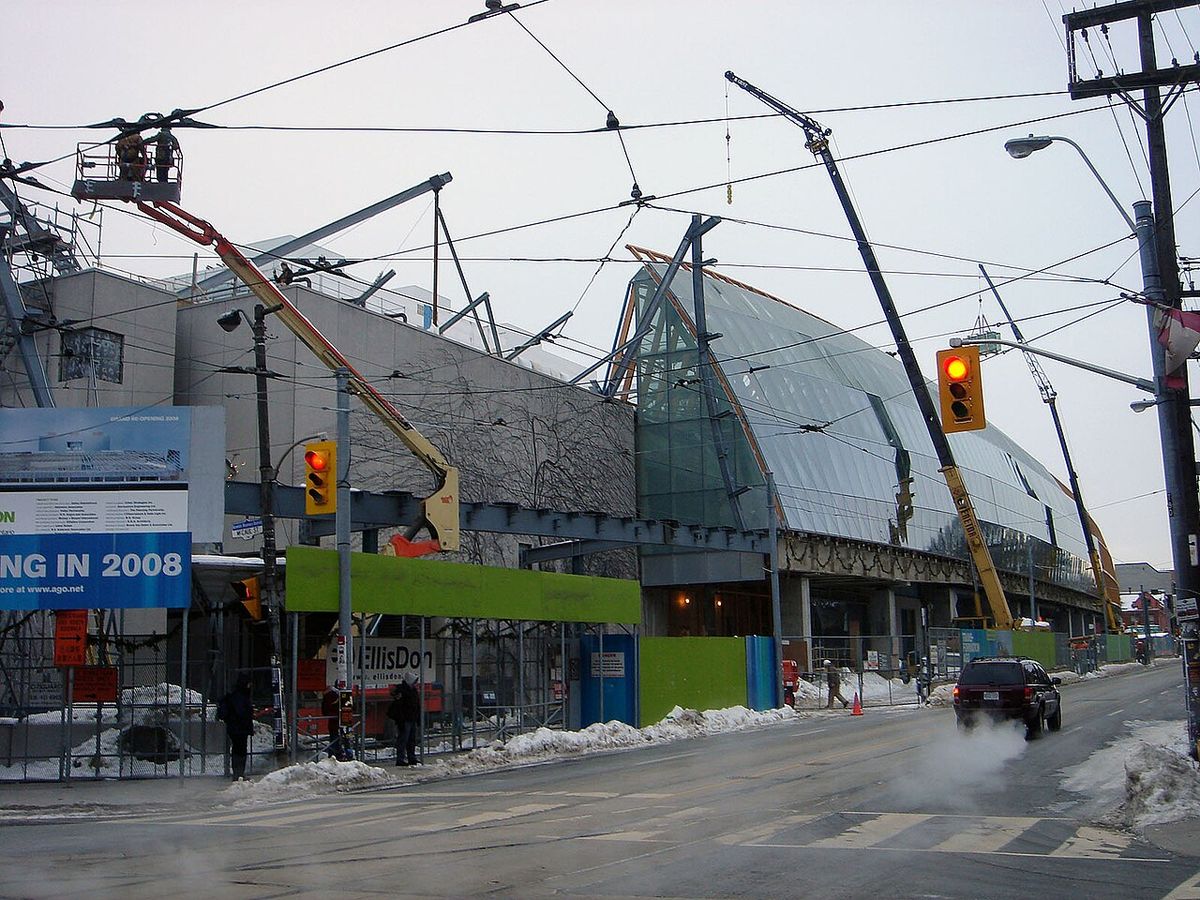
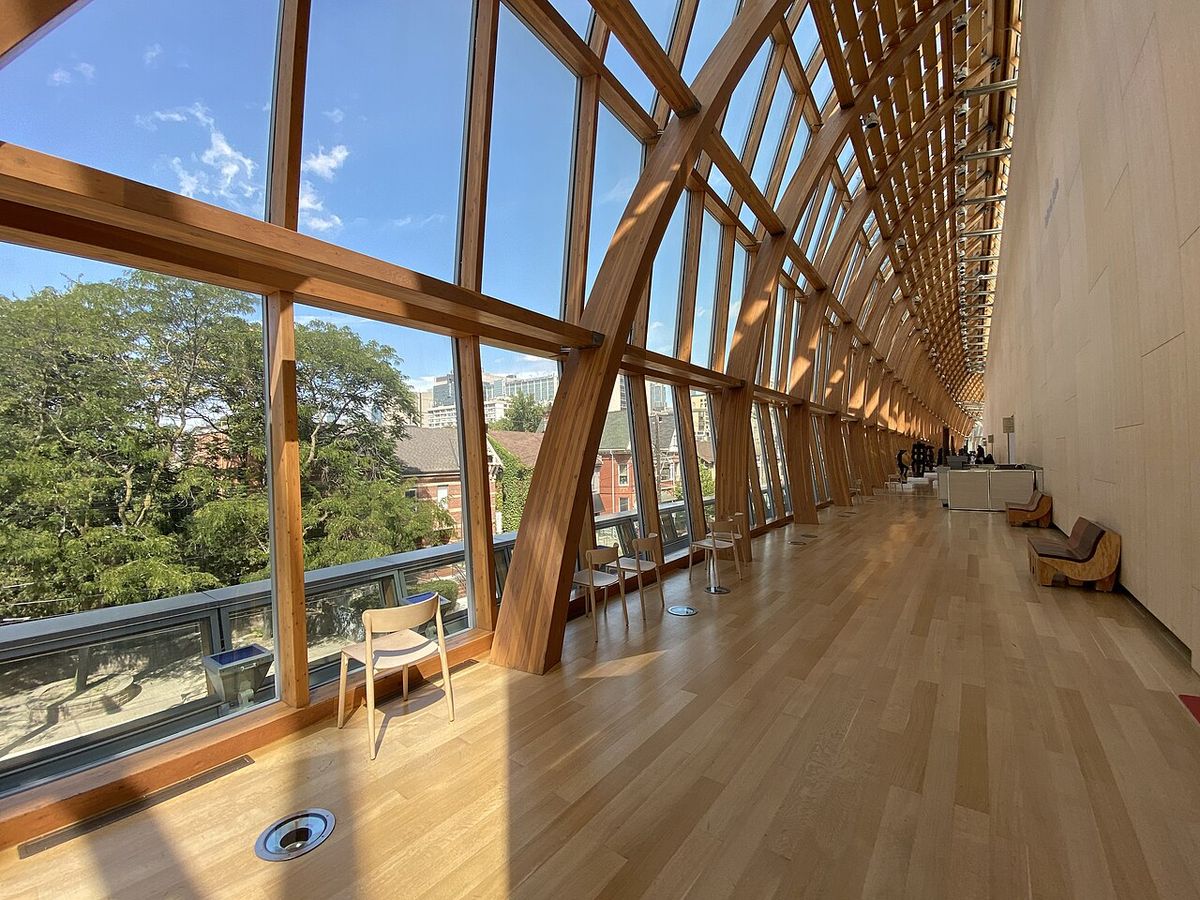
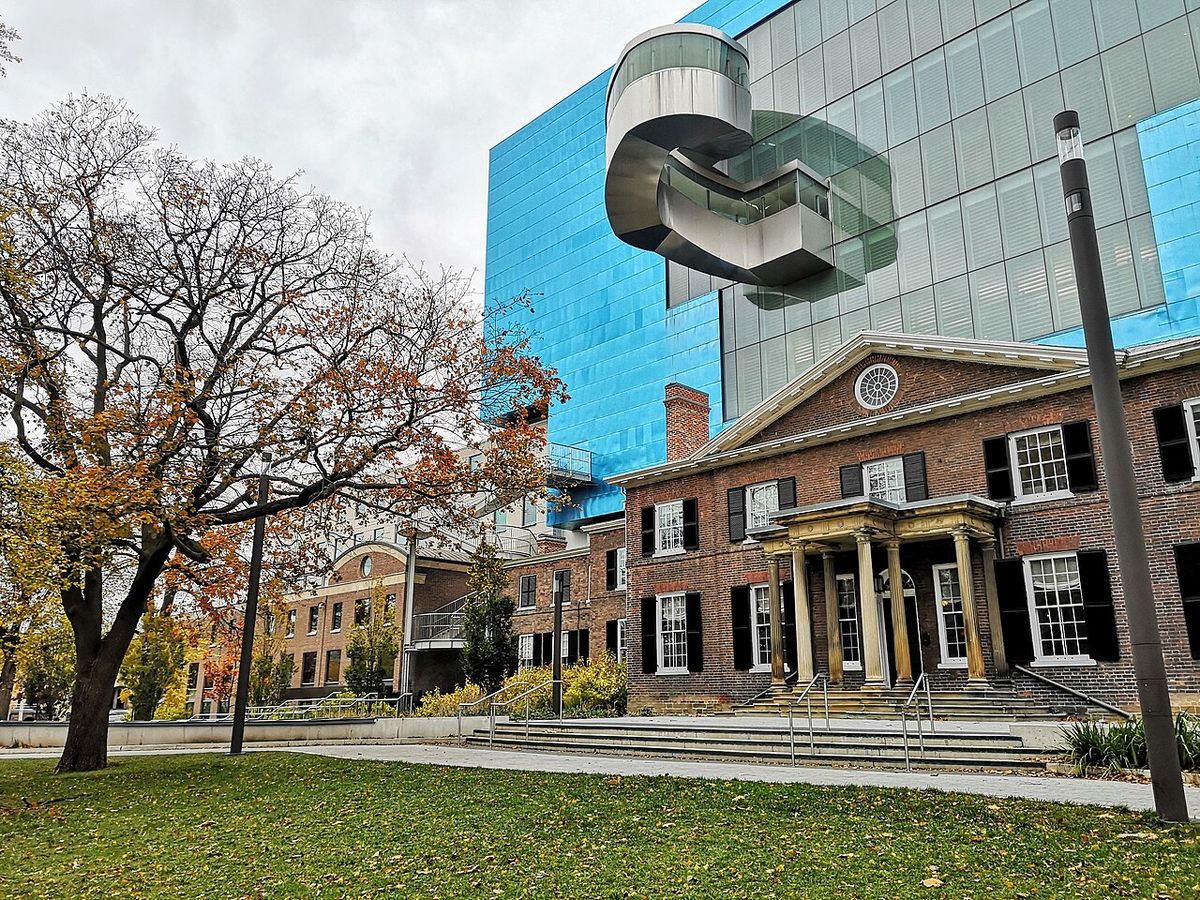
From 2004 to 2008, the AGO underwent its most ambitious redevelopment, known as Transformation AGO, led by Toronto-born architect Frank Gehry at a cost of CA$276 million. This project was Gehry's first built work in Canada and aimed to unify the disparate structures resulting from six previous expansions. A major benefactor was Kenneth Thomson, who donated CA$50 million towards the renovation, a CA$20 million endowment, and a significant portion of his art collection. The redevelopment introduced several notable architectural features, including the Galleria Italia, a 200-metre-long glass and wood canopy projecting along Dundas Street. The roof of the central Walker Court was redesigned with a glass-panelled skylight, and a new five-storey South Gallery block was constructed with a spiral staircase and a facade of glass and titanium panels.
The redeveloped building opened to the public in November 2008. In the following years, the museum continued to evolve its policies and physical space. In 2015, it was reported that 46 works in the collection had gaps in their provenance from the 1933 to 1945 period, and the museum publishes ongoing spoliation research online. In 2018, the gallery renamed Emily Carr's 1929 painting from The Indian Church to Church at Yuquot Village to remove culturally insensitive language, providing contextual notes alongside the work. A major admission policy change in May 2019 made entry free for all visitors aged 25 and under, while offering a CA$35 annual pass for others. In 2022, the museum contracted Selldorf Architects, Diamond Schmitt Architects, and Two Row Architects to design the Dani Reiss Modern and Contemporary Gallery, a planned 3,700-square-metre expansion slated to be the building's seventh major expansion.
Architecture and Museum Complex
The AGO museum complex occupies 45,000 square metres on Dundas Street West in the Grange Park neighbourhood. The property is anchored by The Grange, an 1817 Georgian manor that is the oldest part of the complex and was designated a National Historic Site of Canada in 1970. The main building, situated north and west of The Grange, has been expanded multiple times, resulting in a layered architectural history. The initial expansions by Darling and Pearson (1918, 1924, 1935) were designed in a Beaux-Arts style, modelled in part on the Royal Ontario Museum. The 1974 and 1977 expansions by John C. Parkin added the Henry Moore Sculpture Centre and new gallery wings. The 1993 project by Barton Myers and KPMB Architects introduced a postmodernist wing, which was later demolished during the Gehry redevelopment.
The 2004 to 2008 Transformation AGO project fundamentally reshaped the complex. Key architectural interventions included relocating the main entrance to align with the historic Walker Court, adding the sweeping Galleria Italia canopy, and constructing the sculptural South Gallery block. Wood was a defining material in the redesign, used extensively in floors, staircases, and information booths, primarily Douglas fir. The redevelopment also increased dedicated gallery space to 12,000 square metres. In addition to the buildings, the museum owns the 1.8-hectare Grange Park directly to the south, which is maintained as a public park by the City of Toronto under a perpetual agreement.
Permanent Collection and Acquisitions
The Art Gallery of Ontario's permanent collection comprises more than 120,000 works of art, offering a broad survey from the first century to contemporary practice. The collection has particular strengths in Canadian art, including extensive holdings of works by the Group of Seven, Tom Thomson, and Emily Carr. It also features significant collections of European art from the Renaissance through the Baroque to the modern period, as well as substantial holdings of African art, Oceanic art, and photography. The museum's collection of works by First Nations and Inuit artists is a central part of its Indigenous art holdings. The museum actively reviews the provenance of works in its collection, particularly concerning the Nazi-era.
In 2020, it restituted Jan van Kessel the Elder's painting Still Life with Flowers to the heirs of Dagobert and Martha David, confirming it was a forced sale during the Second World War. The painting had been donated to the AGO in 1995. The gallery continues to acquire works through purchase and donation, ensuring its collection remains dynamic and representative. It also periodically reviews titles and descriptions of historical works to address outdated or culturally insensitive language, as part of an ongoing commitment to contextualizing its collection responsibly.
Selected Temporary Exhibitions (1994 to 2019)
In addition to its permanent collection, the Art Gallery of Ontario has an active program of organizing and hosting major temporary and travelling exhibitions. These exhibitions have brought world-renowned artists and thematic shows to Toronto audiences, significantly enhancing the museum's public profile and educational role. The exhibitions often focus on specific artists, movements, or cultural themes, drawing from both the AGO's holdings and international collections. A selection of notable exhibitions held between 1994 and 2019 demonstrates the range and scale of this programming, which has consistently attracted large visitor numbers and critical attention.
The Art Gallery of Ontario has hosted and organized a number of temporary and travelling exhibitions in its galleries. A select list of exhibitions from 1994 to 2019 is available. These exhibitions have cemented the AGO's reputation as a leading venue for major art shows in Canada. The programming demonstrates a balance between historical surveys and contemporary art. This appeals to a wide range of public interests and contributes to the cultural life of the city.
- Jean-Michel Basquiat: Now's the Time (2015)
- Maharaja: The Splendour of India's Royal Courts (2010)
- Yayoi Kusama: Infinity Mirrors (2018)
The Art Gallery of Ontario has hosted and organized many travelling art exhibitions. These exhibitions have cemented the AGO's reputation as a leading venue for major art shows in Canada. The programming demonstrates a balance between historical surveys and contemporary art. This appeals to a wide range of public interests and contributes to the cultural life of the city.
Public Engagement and Operations
The Art Gallery of Ontario operates as a public institution with a strong focus on accessibility and community engagement. Beyond its exhibition galleries, the complex houses an artist-in-residence office and studio, dining facilities, a gift shop, the E.P. Taylor Research Library and Archives, a theatre and lecture hall, and workshop spaces. The museum's 2019 shift to free admission for visitors 25 and under represents a significant commitment to removing financial barriers for younger audiences. The CA$35 annual pass for other visitors provides affordable year-round access, a model aimed at encouraging repeat visits and deeper engagement with the collection. Educational programming is a core function, with offerings for school groups, families, adults, and scholars.
The museum also hosts a variety of public events, including lectures, film screenings, concerts, and community festivals. In August 2026, the AGO hosted a charitable event featuring Toronto Blue Jays pitcher Dylan Cease and his paintings, launching a related retail collection. The museum's operations are supported by a mix of public funding, private donations, membership revenue, and commercial activities. Its ongoing capital projects, like the planned Dani Reiss Modern and Contemporary Gallery, indicate a continued commitment to growth and renewal in serving its public mandate.
Questions about Art Gallery of Ontario
What are the Art Gallery of Ontario's hours and admission prices?
As of May 2019, the Art Gallery of Ontario revised its admission model to offer free entry to all visitors who are 25 years of age and under. For visitors over 25, the museum offers a CA$35 annual pass, which provides unlimited admission for a full year. The museum's opening hours vary by day and season, with typical hours from 10:30 a.m. to 5:00 p.m., and extended hours until 9:00 p.m. on Tuesdays and Fridays. It is closed on Mondays during certain periods of the year.
What is the most famous part of the AGO's architecture?
The most architecturally renowned feature is the Galleria Italia, a 200-metre-long canopy of glass and Douglas fir wood that projects along the Dundas Street facade, designed by Frank Gehry during the 2004 to 2008 Transformation AGO. Another notable element is the spiral staircase within the South Gallery block, also part of Gehry's redesign. The historic core of the museum is The Grange, an 1817 Georgian manor that is a National Historic Site. The central Walker Court, with its glass-panelled roof skylight added during the Gehry renovation, is another key architectural space.
What are some highlights of the AGO's permanent collection?
Highlights of the permanent collection include an extensive holding of Canadian art, particularly works by the Group of Seven, Tom Thomson, and Emily Carr. The European collection was significantly enhanced by the Kenneth Thomson donation, which included Peter Paul Rubens's Massacre of the Innocents. The museum holds the world's largest public collection of sculpture by Henry Moore, housed in a dedicated centre. Other strengths include works by First Nations and Inuit artists, a substantial collection of African art, and important works by European masters such as Rembrandt, Pissarro, and Van Gogh.
Who designed the AGO's most recent expansion?
The most recent major expansion was the Transformation AGO project from 2004 to 2008, designed by Frank Gehry. In 2022, the museum contracted Selldorf Architects, Diamond Schmitt Architects and Two Row Architects to design a new gallery space for contemporary art. The proposed expansion is later named the Dani Reiss Modern and Contemporary Gallery. It will add 3,700 square metres to the building and will be the building's seventh major expansion.
Has the AGO ever returned artwork to its rightful owners?
Yes, the Art Gallery of Ontario has proactively researched the provenance of works in its collection, particularly concerning the Nazi era. In 2020, the museum restituted the painting Still Life with Flowers by Jan van Kessel the Elder to the heirs of Dagobert and Martha David. The museum confirmed the painting was part of a forced sale by the Jewish David family during the Second World War. The AGO publishes its spoliation research online and reviews titles of works on a case-by-case basis to address culturally insensitive language, as it did with Emily Carr's Church at Yuquot Village in 2018.
Where is the Art Gallery of Ontario located?
The Art Gallery of Ontario is located on Dundas Street West in the Grange Park neighbourhood of downtown Toronto, Ontario, Canada. The museum complex occupies 45,000 square metres of physical space, making it one of the largest art museums in North America. It is situated directly south of Dundas Street and includes the historic Grange manor. The museum also owns the 1.8 hectare Grange Park directly south of The Grange, which is maintained as a municipal park by the City of Toronto.
Sources and further reading
- Art Gallery of Ontario (Wikipedia)
- Art Gallery Of Ontario | Things To See & Places To Eat (destinationtoronto.com)
Checked by the Your Space Hamilton desk. Last updated 2026-10-19.