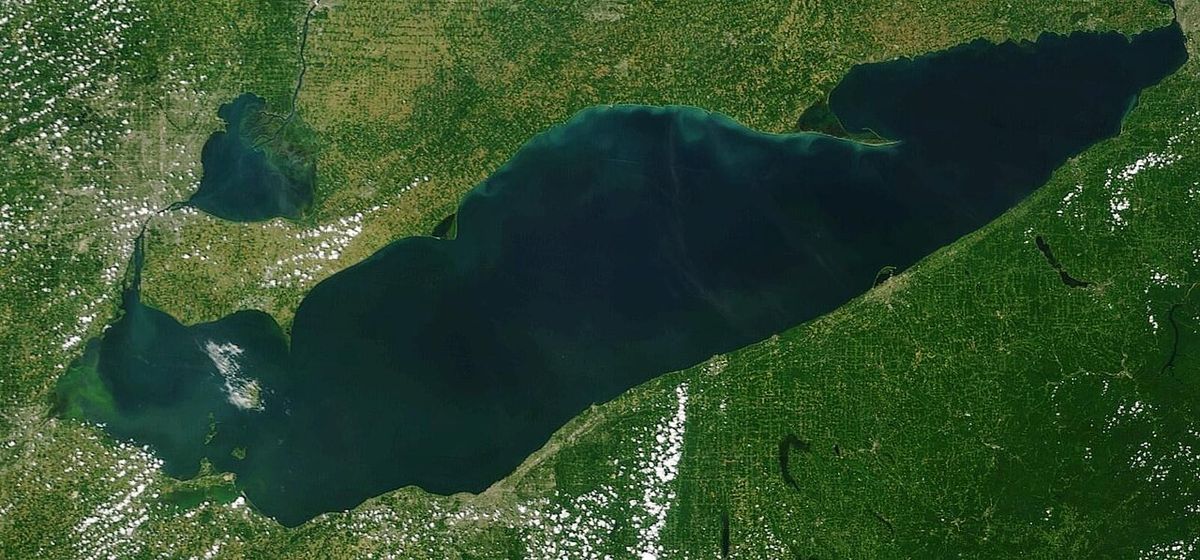
Lake Superior
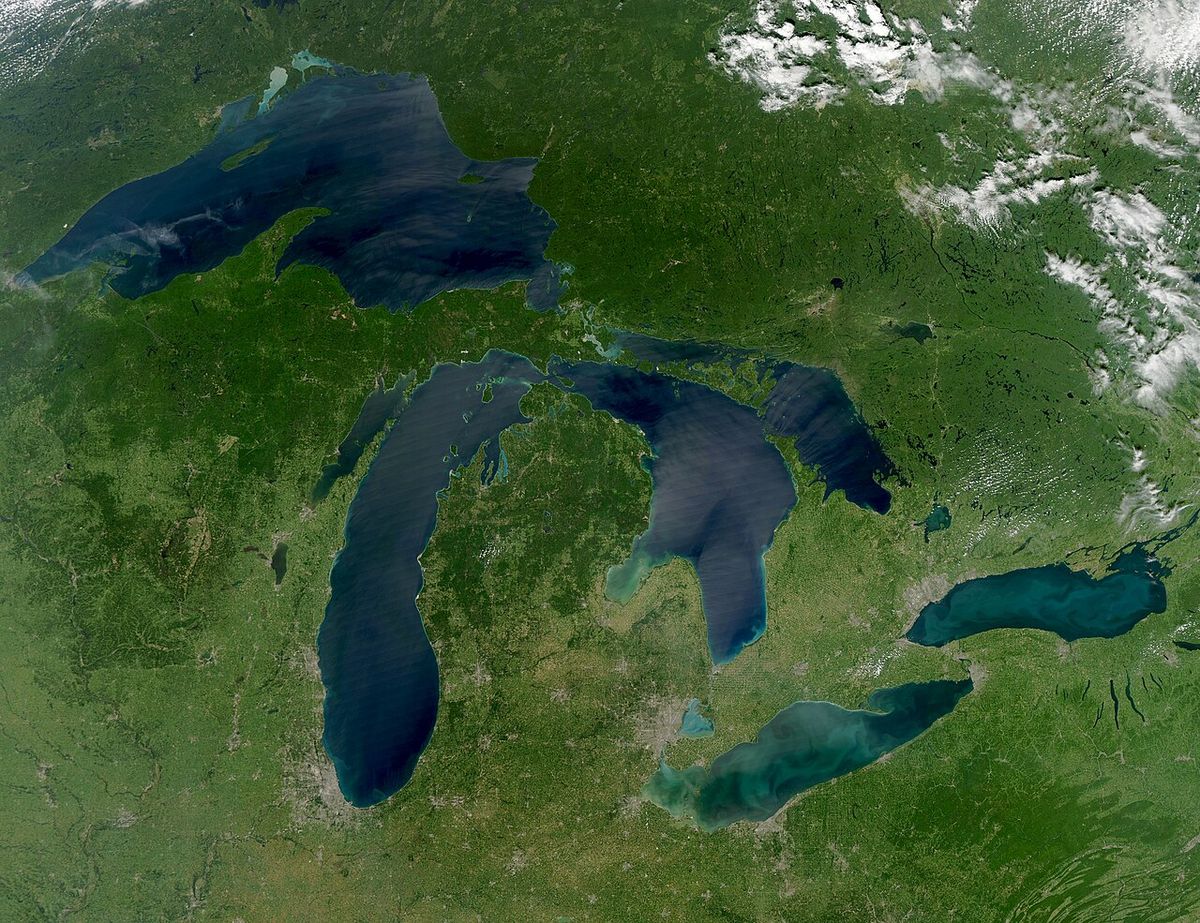
Lake Superior is the largest freshwater lake in the world by surface area and the northernmost of North America's Great Lakes. It forms a significant part of the Canada, United States border, with Ontario to the north and Minnesota, Wisconsin, and Michigan to the south and west. The lake is a vital ecological and economic resource, supporting shipping, tourism, and diverse ecosystems. Its immense size, profound depth, and often treacherous weather have shaped the region's history and culture, including numerous historic shipwrecks.
Physical Characteristics and Hydrology
Lake Superior holds the title of the world's largest freshwater lake by surface area, covering approximately 31,700 square miles, which is comparable in size to Austria. It is also the third-largest freshwater lake by volume globally, containing an estimated 2,900 cubic miles of water. This vast volume results in an exceptionally long water retention time of 191 years, meaning a drop of water entering the lake will, on average, remain there for nearly two centuries. The lake's immense basin was carved by glacial activity during the last ice age approximately 10,000 years ago.
The lake's thermal structure is dimictic, meaning its water column mixes completely twice a year when the temperature reaches a uniform 39°F from top to bottom. Below approximately 660 feet, the water temperature remains a near-constant 39°F year-round. This cold, deep water inhibits bacterial growth, a factor in the lake's reputation for preserving shipwrecks. Lake Superior is fed by over 200 rivers, with major tributaries including the Nipigon, St. Louis, and Kaministiquia Rivers. Its sole outlet is the St. Marys River, which flows into Lake Huron, dropping 25 feet over rapids that are bypassed by the engineering marvel of the Soo Locks.
Water levels are managed by the International Lake Superior Board of Control according to a regulation plan. Levels fluctuate seasonally, typically peaking in late fall and reaching lows in early spring. Record highs were set in numerous months during 2019 and 2020, while historic lows were recorded in 1926 and again in the summer of 2007. The lake's immense size significantly influences the local climate, moderating air temperatures in summer and contributing to heavy lake-effect snowfalls along its shores in winter.
Geology and Natural Resources
The bedrock of Lake Superior's north shore is part of the ancient Canadian Shield, with granites dating back to the Precambrian era. The lake itself lies within the Midcontinent Rift, a massive, long-extinct rift valley formed over a billion years ago. This geological history deposited rich mineral resources in the region, including copper, iron, silver, gold, and nickel. Significant mining operations have included copper from the Keweenaw Peninsula, gold from the Hemlo mine near Marathon, Ontario, and iron from the Gogebic Range.
Volcanic activity associated with the rift created the black basalt formations found on Isle Royale, Michipicoten Island, and the Black Bay Peninsula. Later, sedimentary layers formed limestone, dolomite, and shale, such as those visible at Kakabeka Falls. Diabase sills, intruded between sedimentary layers, form the flat-topped mesas around Thunder Bay. The region is also known for amethyst deposits formed in cavities within the rift, with several mines operating in the Thunder Bay area. The familiar terrain of bays, islands, and rocky headlands was ultimately sculpted by the advance and retreat of continental glaciers during the Wisconsin glaciation.
Human History and Cultural Significance
The first peoples arrived in the Lake Superior region roughly 10,000 years ago following glacial retreat. Successive cultures, including the Shield Archaic and Laurel complex, developed fishing, hunting, and copper mining techniques. The direct ancestors of the Ojibwe and Cree peoples were established in the area by around 500 BC. The Ojibwe name for the lake is Gichigami, meaning "great sea," a name immortalized in Henry Wadsworth Longfellow's poem The Song of Hiawatha and later in Gordon Lightfoot's music.
By the mid-18th century, the Ojibwe had become the dominant Indigenous nation around the lake. European exploration began with French voyageurs in the 17th century, who named it lac supérieur (the upper lake). The fur trade era saw fierce competition between the Hudson's Bay Company and the North West Company, which established key posts at Grand Portage, Fort William, and Sault Ste. Marie. The 19th and early 20th centuries brought intensive mining and logging, transforming settlements into industrial towns. Today, while some resource industries remain, tourism has become a major economic driver, attracting visitors to the lake's rugged wilderness and scenic parks.
Shipping and Maritime History
Lake Superior has been a critical transportation corridor within the Great Lakes Waterway system for over a century, primarily for the shipment of iron ore, grain, and other bulk commodities. Large lake freighters and smaller ocean-going vessels travel its waters. The shipping season is limited by ice, which typically closes ports from mid-January to late March. The first steamboat on the lake, the Independence, did not begin operation until 1847, later than on the lower Great Lakes.
The lake's maritime history is marked by tragedy, with its southern shore near Whitefish Point earning the nickname "Graveyard of the Great Lakes." Notorious storms like the Great Lakes Storm of 1913 and the Mataafa Storm of 1905 have claimed multiple vessels. The French minesweepers Inkerman and Cerisoles, lost in a 1918 storm with 78 lives, represent the largest loss of life on the lake. The most famous shipwreck is the SS Edmund Fitzgerald, which sank with all 29 hands during a storm on November 10, 1975. The wreck was later memorialized in song by Gordon Lightfoot. In 2007, the wreck of the SS Cyprus, lost in 1907, was discovered, and in 2024, wreckage from the SS Arlington, which sank in 1940, was located.
Ecology and Fish Species
Lake Superior supports a diverse aquatic ecosystem with more than 80 species of fish recorded. Native species form the backbone of the fishery and include lake trout, lake whitefish, cisco, burbot, and walleye. The lake is also home to brook trout, northern pike, muskellunge, smallmouth bass, and the long-lived lake sturgeon. The cold, oligotrophic (nutrient-poor) waters of Lake Superior result in slower fish growth rates but support a relatively pristine ecosystem compared to the other Great Lakes.
Fisheries management is crucial, with specific regulations in place to protect native stocks. For instance, within Lake Superior Provincial Park, the use of live baitfish is prohibited to prevent the introduction of invasive species, and special fishery regulations apply to some interior lakes. The park is noted for its brook trout fishery, as well as opportunities for lake trout, rainbow trout, and salmon. The lake's ecological health is monitored closely, with concerns including potential impacts from climate change on water temperature and ice cover, which can affect entire food webs.
Lake Superior Provincial Park
Lake Superior Provincial Park, located near Wawa in northeastern Ontario, protects over 160,000 hectares of dramatic Lake Superior shoreline, boreal forest, and inland lakes. The park is a premier destination for wilderness recreation, offering two main campgrounds: Agawa Bay, situated on a three-kilometre sandy beach, and the more secluded Rabbit Blanket Lake Campground. The park's extensive trail network spans approximately 130 kilometres, including the challenging Coastal Hiking Trail, which provides multi-day trekking opportunities along the rugged coast. For paddlers, the park maintains about 150 kilometres of canoe routes across numerous interior lakes, with access points at locations like Agawa Bay and the Sand River.
The park's backcountry features 163 designated campsites divided into 76 zones, many equipped with privies, and some with picnic tables or food lockers. Reservations for backcountry camping can be made up to five months in advance, and an interior camping permit is required. The park operates seasonally, with the Agawa Bay Campground typically open from early May to mid-October, though backcountry openings can be delayed by lingering snow and ice, as was the case in the spring of 2026. Visitor services include a park office open year-round and a seasonal visitor centre at Agawa Bay, where permits and information are available.
Park management enforces strict guidelines to preserve the wilderness character. These guidelines include a ban on cans and glass bottles in the backcountry. They also include restrictions on motorized boats on interior lakes. The park's dramatic scenery offers a classic Canadian wilderness experience. This scenery ranges from sandy beaches and towering cliffs to dense forests and rolling hills. The experience is focused on the immense power and beauty of Lake Superior.
Climate Change and Environmental Considerations
Lake Superior is experiencing measurable environmental changes linked to broader climate patterns. Studies indicate that summer surface water temperatures increased by about 4.5°F between 1979 and 2007, a rate faster than the warming of the surrounding air temperature. This warming is correlated with decreasing winter ice cover, as less ice allows more solar radiation to be absorbed by the water. While the lake historically froze over completely about once every 20 years, some projections suggested it could become routinely ice-free by 2040, though recent data shows high variability in ice coverage. Consecutive winters with high ice cover, such as 2013 to 2014 and 2014 to 2015, and a record 95 percent coverage in 2019, demonstrate the complexity of these trends.
Warmer air and water temperatures could lead to increased evaporation and lower water levels in the long term. The system is however subject to significant annual and decadal fluctuations. Changes in the lake's thermal regime may also alter ecological dynamics. These changes could potentially intensify lake-effect snow events along the snowbelt regions. These regions include Michigan's Upper Peninsula and Ontario's north shore. Ongoing scientific monitoring is essential to understand and manage the impacts of climate change on this vast freshwater ecosystem.
Questions about Lake Superior
Why is Lake Superior called the largest freshwater lake in the world?
Lake Superior is considered the largest freshwater lake in the world by surface area, covering 31,700 square miles. This measurement refers to the total area of the water surface itself. While the Caspian Sea is larger, it is saline, not freshwater. By volume, Lake Superior is the third-largest freshwater lake globally, behind Lake Baikal in Siberia and Lake Tanganyika in Africa, due to its great depth and vast basin.
Can you swim in Lake Superior?
Swimming in Lake Superior is possible, but the water is cold year-round. Surface temperatures rarely exceed 55°F even in late summer. The cold temperatures require caution. These temperatures are combined with potentially strong currents and sudden weather changes. Many provincial parks and national lakeshores along the coast have designated beaches where swimming is a popular activity during the warmer months. Lake Superior Provincial Park's Agawa Bay is one such example. Swimmers should always be aware of the conditions and their own limits.
What are the main activities in Lake Superior Provincial Park?
Lake Superior Provincial Park offers a wide range of outdoor activities centred on its dramatic shoreline and interior wilderness. Key activities include backcountry hiking on trails like the Coastal Hiking Trail, canoeing and kayaking on Lake Superior or interior lakes, and fishing for species such as brook trout and lake trout. The park also features two vehicle-accessible campgrounds at Agawa Bay and Rabbit Blanket Lake. Visitors can enjoy day-use activities like picnicking, swimming at sandy beaches, and exploring scenic lookouts and waterfalls.
How do I reserve a backcountry campsite in Lake Superior Provincial Park?
Backcountry campsites in Lake Superior Provincial Park can be reserved online or by phone up to five months in advance of your arrival date. A reservation is strongly recommended to secure a specific zone or campsite. An interior camping permit is required for all backcountry camping. If you have a printed reservation confirmation, you may proceed directly to your designated access point. Otherwise, you must pick up your permit at the park office or visitor centre before starting your trip. Be sure to review all park regulations, including bans on cans and glass bottles in the backcountry.
Sources: Wikipedia and current public reporting, checked by the Your Space Hamilton desk. Last updated 2026-10-18.