Soo Locks
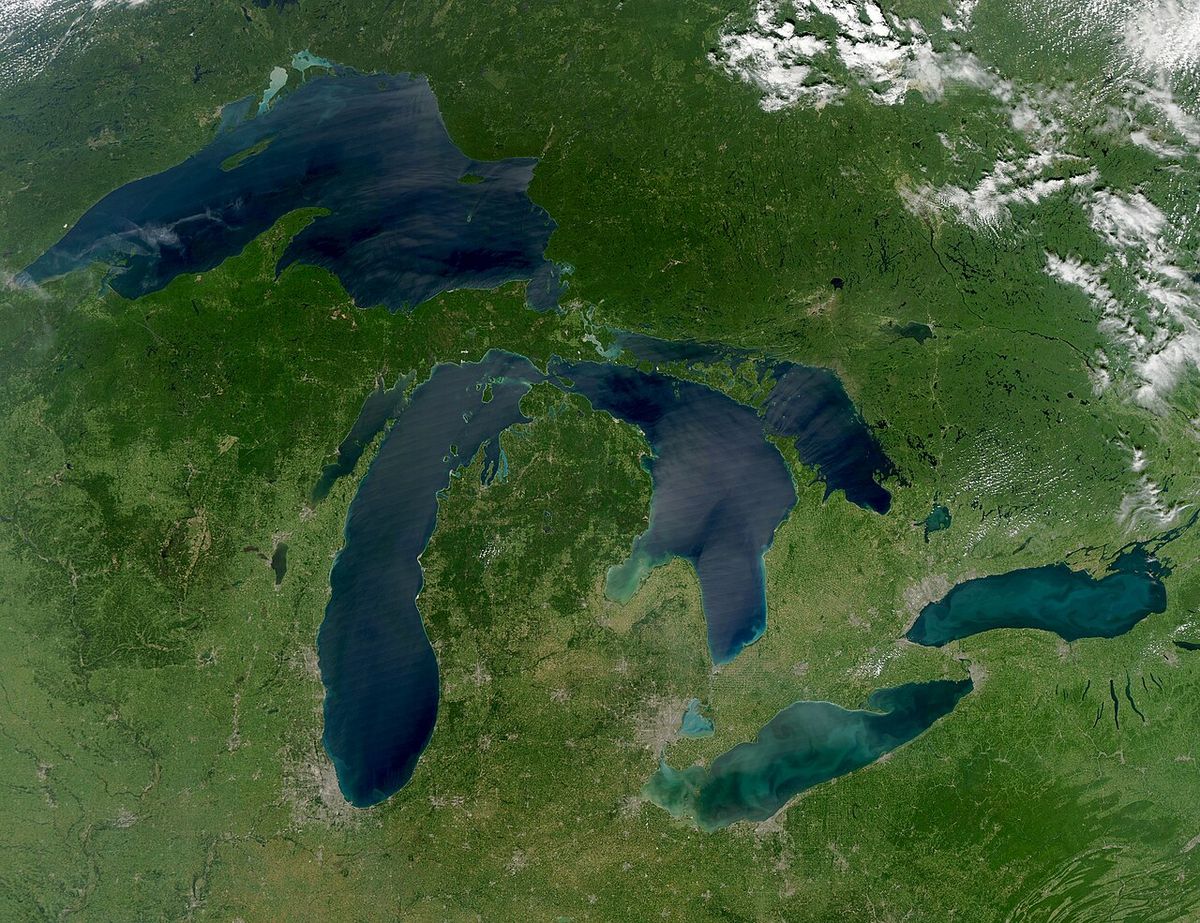
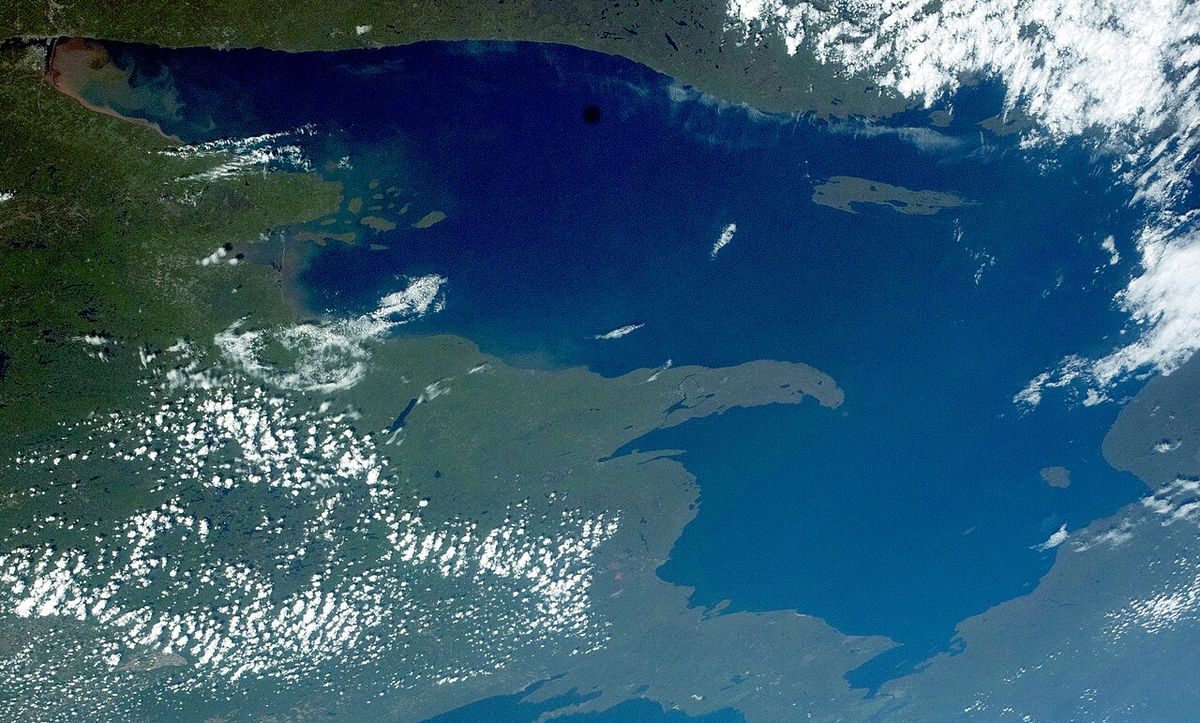
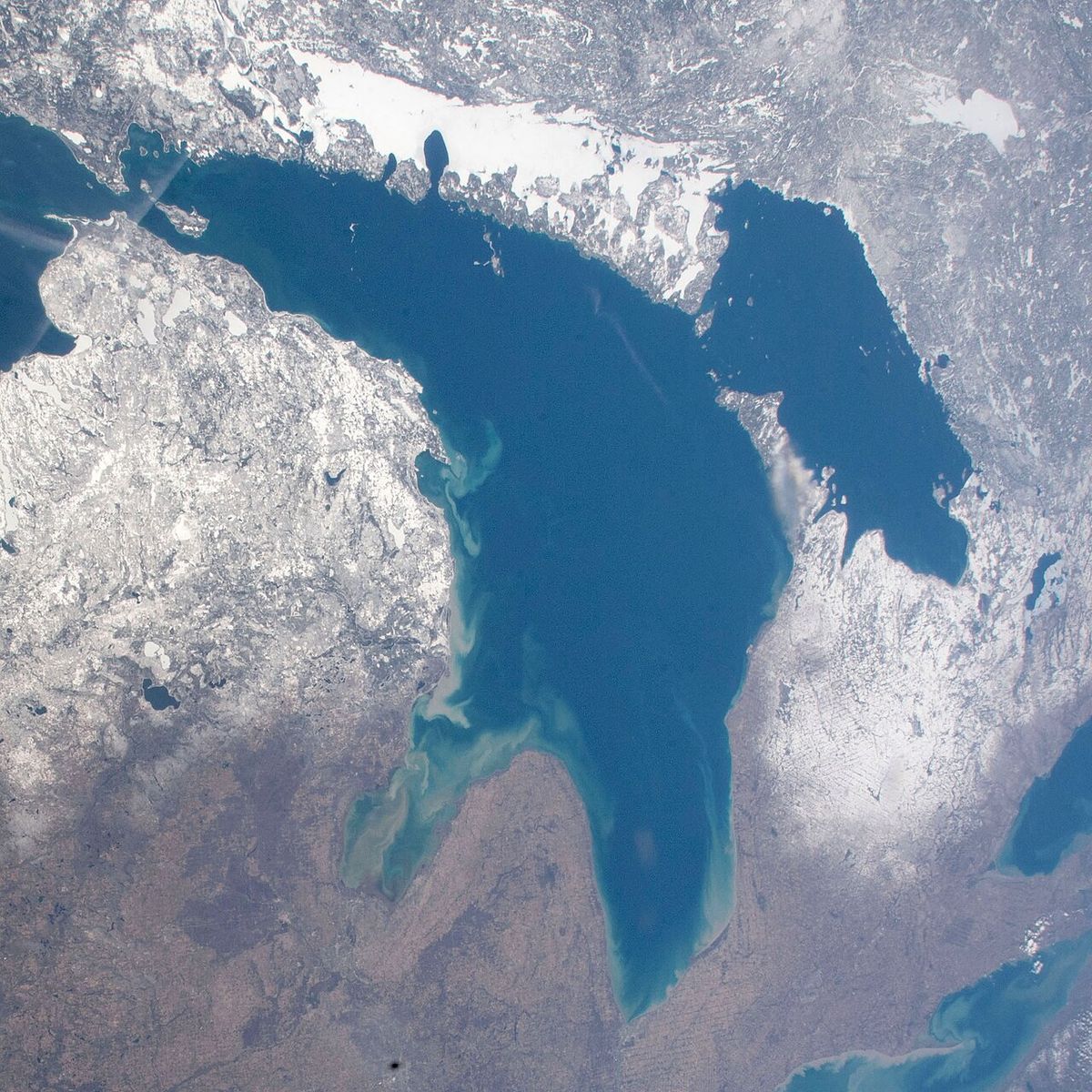
The Soo Locks are a critical navigation complex on the St. Marys River, enabling maritime traffic to bypass the river's rapids and traverse the 6.4-metre water level difference between Lake Superior and Lake Huron. Located between Michigan's Upper Peninsula and Ontario, Canada, the locks are a fundamental part of Great Lakes shipping, facilitating the movement of bulk commodities like iron ore, grain, and coal. Operated by the United States Army Corps of Engineers, the American locks handle an average of 10,000 commercial vessel transits annually during the ice-free shipping season. Their strategic and economic importance to continental trade, particularly for Canadian and American industries, led to their designation as a National Historic Landmark in the United States in 1966.
History and Significance
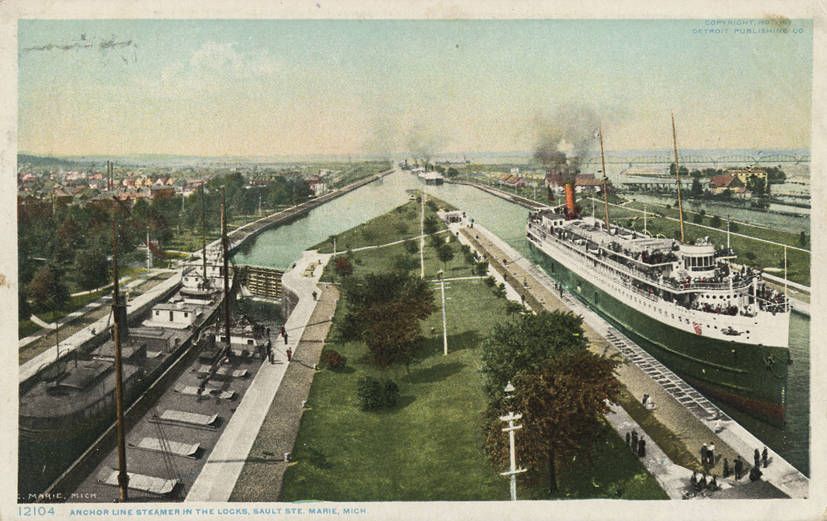
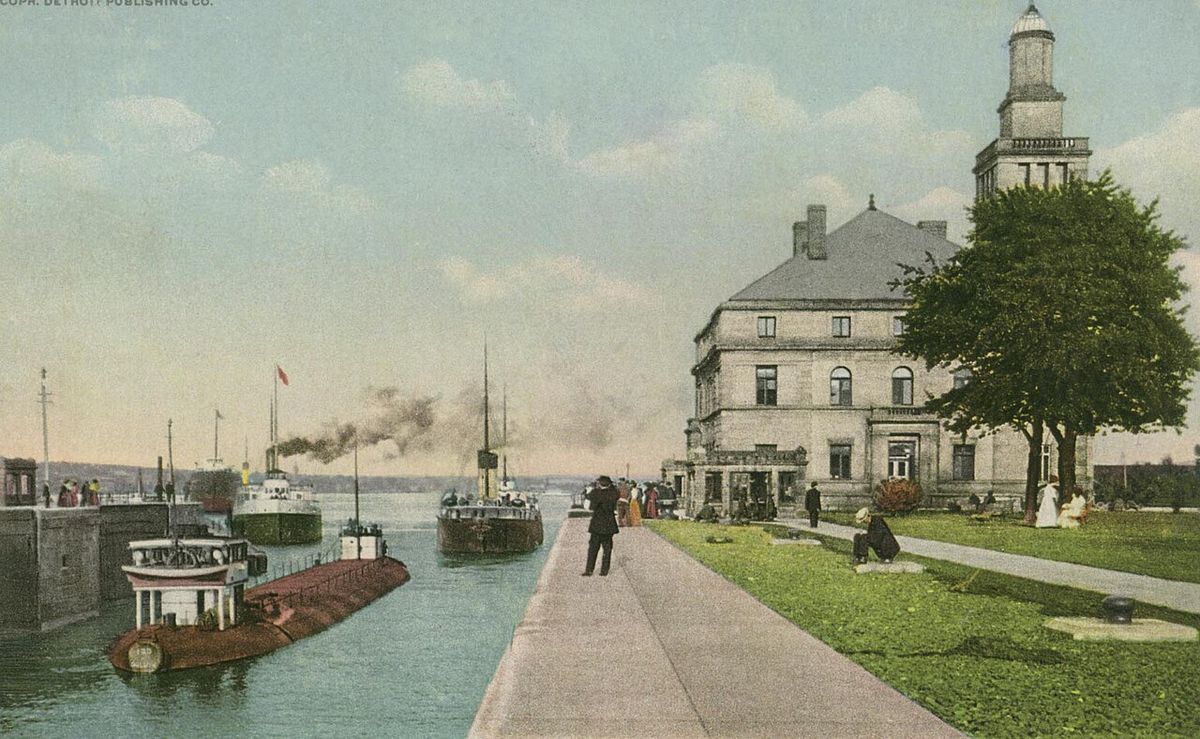
The history of the Soo Locks is deeply intertwined with the economic development of the Great Lakes region and North America. The first lock on the river was a small Canadian timber lock built by the Northwest Fur Company in 1798 to support the fur trade, but it was destroyed by American forces during the War of 1812. The modern era began with the completion of the first American lock, the State Lock, in May 1855, a project driven by the state of Michigan to access newly discovered copper and iron ore deposits around Lake Superior. This lock, along with the Erie Canal constructed in 1824, was among the great infrastructure engineering projects of the antebellum United States. The strategic importance of the locks grew exponentially with the rise of the steel industry, as they became the sole waterborne gateway for the vast iron ore reserves of Minnesota's Mesabi Range to reach steel mills in the lower lakes. This vital role in continental trade and industry was formally recognized when the Soo Locks were designated a National Historic Landmark in 1966. The locks have been owned and maintained by the U.S. federal government since 1881, when control was transferred from the state of Michigan to the U.S. Army Corps of Engineers, which has provided free passage to vessels ever since.
Current American Lock Configuration and Specifications
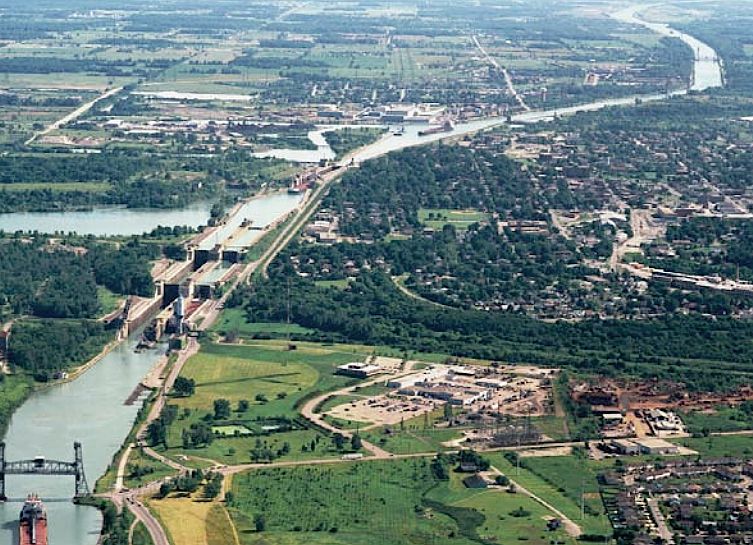
The active American locks today consist of two parallel chambers within the 2.6-kilometre St. Marys Falls Canal. The MacArthur Lock, built in 1943, is 240 metres long, 24 metres wide, and 9 metres deep. It was designed to handle ocean-going vessels that also transit the smaller Welland Canal, with maximum permitted vessel dimensions of 730 feet in length and 75 feet in width due to the southwest wall alignment. The first vessel to pass through it was the SS Carl D. Bradley. The Poe Lock is the larger and more critical of the two for Great Lakes shipping. Originally engineered by Orlando Poe and completed in 1896, it was the world's largest lock at 240 metres long and 30 metres wide upon its debut. It was completely rebuilt and enlarged in 1968 to accommodate the new generation of massive lake freighters made possible by the Saint Lawrence Seaway. The modern Poe Lock is 370 metres long, 34 metres wide, and 9.8 metres deep, capable of handling ships carrying up to 65,000 tonnes of cargo. It remains the only lock at Sault Ste. Marie that can service the largest thousand-foot freighters that dominate shipping on the Upper Lakes, with the first passage after its rebuild made by the Phillip R. Clarke in 1969. The configuration of these two locks supports the immense volume of traffic, with the complex passing an average of 10,000 ships per year despite a winter closure from January through March for maintenance.
Decommissioned American Locks
Several historic locks have been retired over the decades as shipping technology and vessel sizes evolved, each representing an era of engineering. The original State Lock, operational from 1855, was a two-chambered lock built by Michigan with federal land grants and was replaced by the first Poe Lock in 1896. The Weitzel Lock, completed in 1881, was the first lock to be operated by the federal government and, at 157 metres long, was the longest lock in the world upon its completion. It was decommissioned in 1919 and its site was later used for the MacArthur Lock. The Davis Lock, opened in 1914, briefly held the title of world's longest lock at 410 metres. It operated alongside its twin, the Sabin Lock, which opened in 1919 and was named for its designer, General Superintendent Louis Carlton Sabin. Both the Davis and Sabin Locks were officially decommissioned in 2010 due to infrequent use and obsolescence, clearing the way for a new lock project. Their history illustrates the continual adaptation of the site to meet the demands of Great Lakes commerce.
- State Lock: Built 1853 to 1855 by Michigan. Two chambers each 110m long. Replaced in 1896.
- Weitzel Lock: Built 1873 to 1881. 157m long, first federal lock. Decommissioned 1919.
- Davis Lock: Opened 1914. 410m long, world's longest at the time. Decommissioned 2010.
- Sabin Lock: Opened 1919. Twin to Davis Lock, named for designer Louis Carlton Sabin. Decommissioned 2010.
The New Lock Project and Future Capacity
To ensure future resilience and capacity, a major new lock construction project is underway, slated for completion by 2030. Groundbreaking for the project occurred on June 30, 2009. This new lock will be built on the sites of the decommissioned Davis and Sabin Locks and will be equal in size to the Poe Lock, providing a crucial second passage for the largest lake freighters. The project addresses a significant strategic vulnerability, as the current reliance on a single Poe Lock creates a potential choke point for the North American economy. Construction on Phase One of the project, involving the replacement of the Sabin Lock, began in May 2020. Once finished, the new lock will greatly enhance the redundancy and reliability of this vital transportation link. North of the new lock site, a small hydroelectric plant in an additional channel provides electricity for the lock complex's operations.
- Groundbreaking: June 30, 2009.
- Site: Replaces the decommissioned Davis and Sabin Locks.
- Planned Size: Equal to the Poe Lock (370m long, 34m wide).
- Target Completion: By 2030.
- Phase One Start: May 2020 (Sabin Lock replacement).
- Associated Infrastructure: Includes a hydroelectric plant in a northern channel.
The Canadian Lock and Recreational Use
While the American locks handle all major commercial traffic, a single lock operates on the Canadian side of the St. Marys River. The current Canadian lock opened in 1895 and was substantially rebuilt in 1987. It is significantly smaller than its American counterparts, measuring 77 metres in length, 15.4 metres in width, and 13.5 metres in depth. This lock is not part of the deep-draft commercial shipping corridor. Instead, it serves recreational boaters and tour vessels, providing a transit option for smaller craft and contributing to the local tourism economy. The separation of function highlights the binational cooperation at the site, with Canada maintaining a heritage and recreational facility while the United States operates the industrial-scale infrastructure critical for continental bulk cargo movement.
Public Access, Security, and Engineers Day
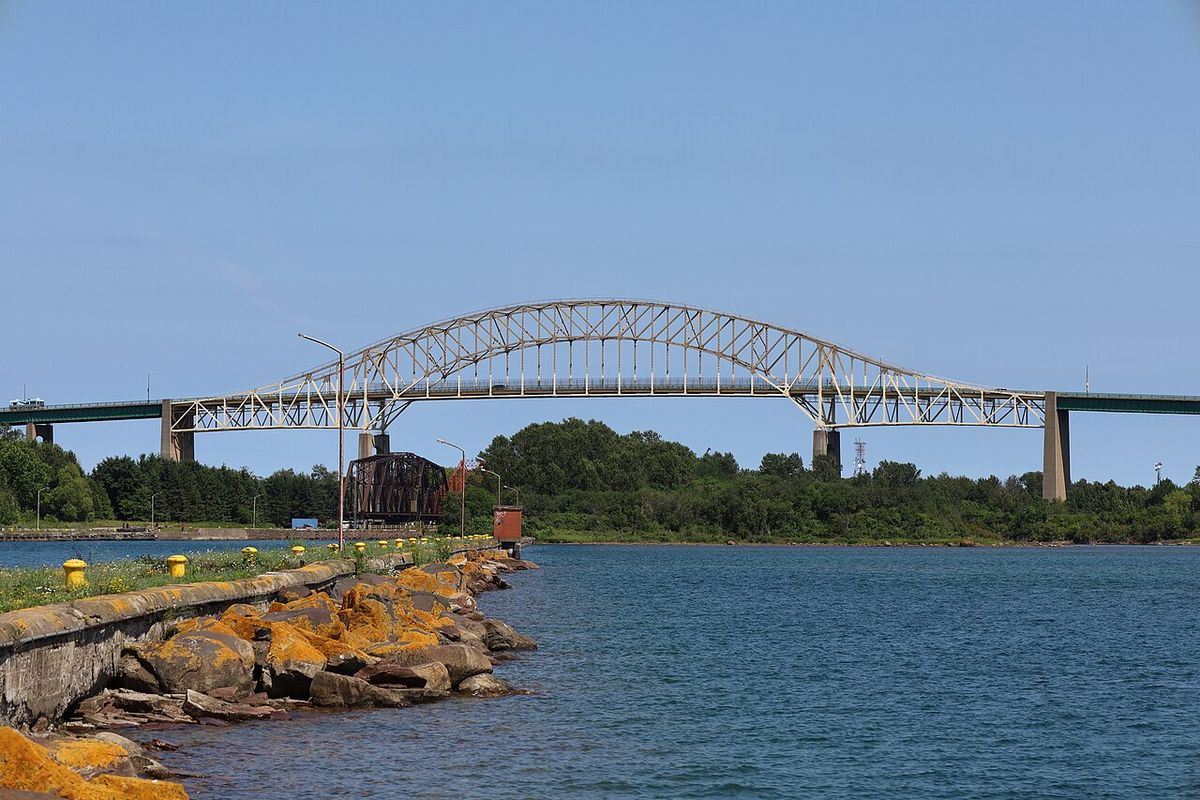
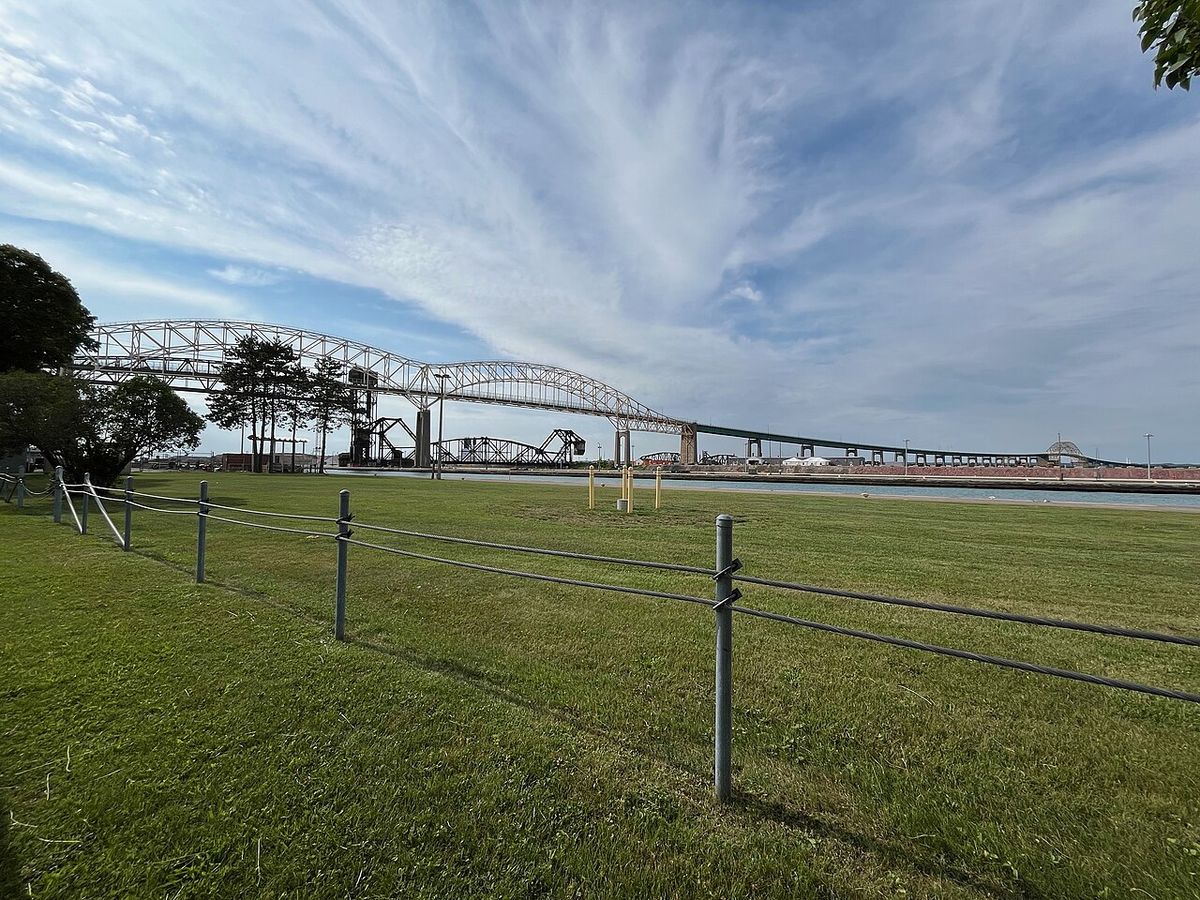
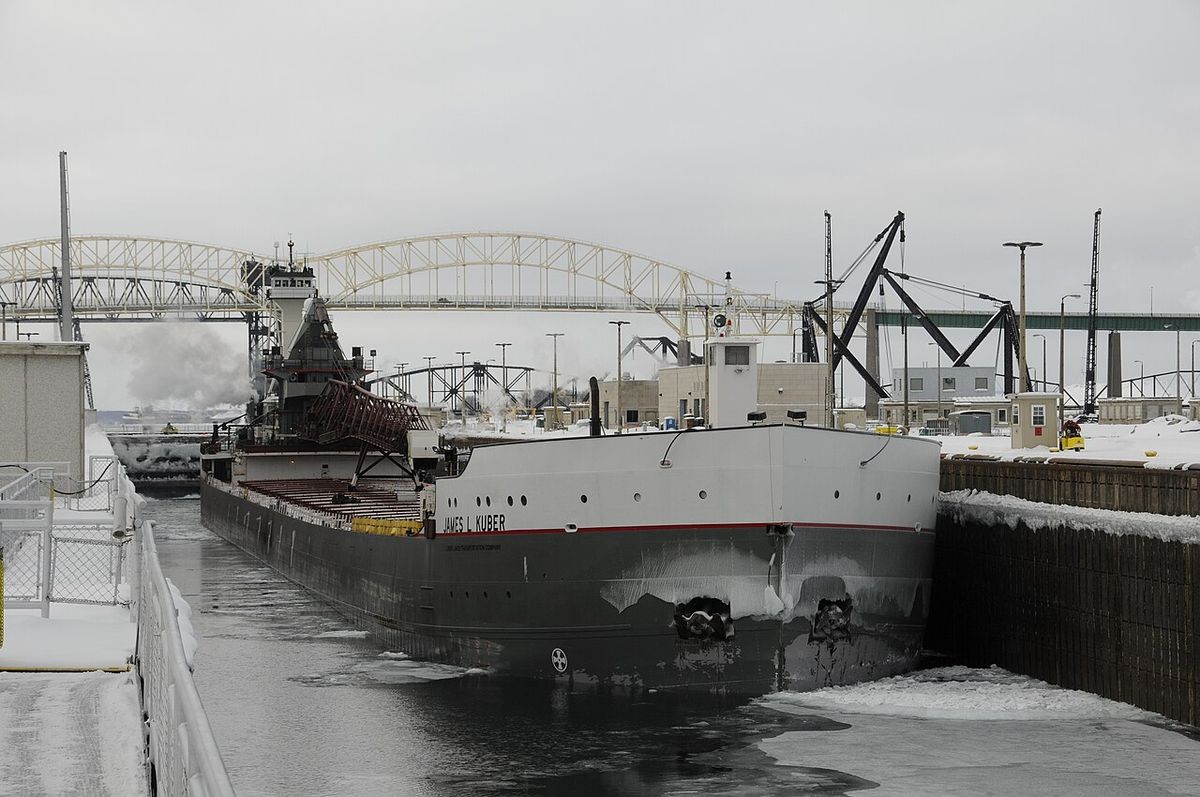
Public access to the Soo Locks is managed by the U.S. Army Corps of Engineers, Detroit District, which operates a Visitors Center and viewing deck. For security reasons, as the locks are United States Federal property under the command of the U.S. Army Corps of Engineers, unauthorized access to the lock gates and operational areas is prohibited under threat of fine or imprisonment for trespassing. However, the Corps hosts an annual Engineers Day Open House on the last Friday of every June. This event allows the public to go behind the security fence, walk across the lock gates, and view vessels transiting the MacArthur and Poe Locks from an exceptionally close vantage point, even close enough to touch passing ships. It is a unique opportunity for thousands of visitors to engage directly with this engineering marvel and learn about its operation and importance. Other notable structures at the site include the Sault Ste. Marie International Bridge for vehicles and a separate railroad bridge, both crossing the St. Marys River just upstream of the locks.
Economic, Strategic Role and Operational Data
The Soo Locks are an indispensable component of the Great Lakes-St. Lawrence Seaway system, a primary conduit for North American heavy industry. They enable the cost-effective transport of millions of tonnes of raw materials annually, including iron ore from Minnesota and Michigan to steel mills in Illinois, Indiana, and Ohio, and coal and limestone in the reverse direction. The locks also facilitate the movement of grain from western Canadian and American prairies to global markets. The winter closure from January through March, when ice halts most shipping, is used for critical inspection and maintenance. The strategic concentration of this traffic through a single modern lock capable of handling the largest vessels, the Poe, presents a unique economic risk, a primary driver behind the construction of the new parallel lock. The continued operation and modernization of the Soo Locks remain vital for the economic competitiveness of both Canadian and American industries in the heart of the continent.
| Feature | Specification or Statistic |
|---|---|
| Annual Ship Transits | Average of 10,000 ships |
| Operational Season | Open approximately April to December |
| Water Level Overcome | 6.4 metres (21 feet) |
| Poe Lock Cargo Capacity | Up to 65,000 tonnes per ship |
| MacArthur Lock Max Vessel Width | 75 feet (23 metres) |
| Canadian Lock Dimensions | 77m long, 15.4m wide, 13.5m deep |
Questions about Soo Locks
Where are the Soo Locks located?
The Soo Locks are located on the St. Marys River, which connects Lake Superior and Lake Huron. They sit between the city of Sault Ste. Marie in Michigan's Upper Peninsula and the city of Sault Ste. Marie in Ontario, Canada. The Sault Ste. Marie International Bridge for vehicles and a separate railroad bridge cross the river just upstream from the locks.
Can the public visit the Soo Locks?
Yes, the public can visit the Soo Locks. The U.S. Army Corps of Engineers operates a Visitors Center and viewing deck. The major public event is Engineers Day, held on the last Friday of June, when visitors are allowed behind security fences to walk across the lock gates and see ships up close. On all other days, access is restricted to the viewing areas for security reasons.
Is a new Soo Lock being built?
Yes, a new lock is under construction and is scheduled for completion by 2030. It is being built on the sites of the old Davis and Sabin Locks and will be the same size as the Poe Lock. This project is crucial for providing a second passage for the largest freighters, adding redundancy and capacity to this vital shipping corridor. Groundbreaking occurred in 2009, with active construction phases underway.
Why are the Soo Locks so important?
The Soo Locks are vitally important because they enable ships to travel between Lake Superior and the lower Great Lakes by bypassing the St. Marys River rapids where the water falls 6.4 metres. This infrastructure allows for the annual passage of an average of 10,000 ships, facilitating crucial commercial shipping. The locks were among the great engineering projects of the antebellum United States, first opened in 1855. Their operation supports the transport of bulk commodities essential to North American industry. The locks are closed from January through March for winter maintenance, but their seasonal operation remains a base of regional economies.
What is the biggest ship that can use the Soo Locks?
The biggest ships that can use the Soo Locks are the large lake freighters, which can only transit through the Poe Lock. The Poe Lock was rebuilt in 1968 to its current dimensions of 370 metres long, 34 metres wide, and 9.8 metres deep, allowing it to handle ships carrying 65,000 tonnes of cargo. The original Poe Lock, completed in 1896, was the largest in the world at that time. The MacArthur Lock, at 240 metres long and 24 metres wide, is smaller and cannot accommodate these maximum size freighters. The Poe Lock is therefore the only lock capable of handling the largest vessels used on the Upper Lakes.
Is there a lock on the Canadian side of the Soo?
Yes, there is a single lock on the Canadian side of the Soo. This lock was opened in 1895 and was rebuilt in 1987. It measures 77 metres long, 15.4 metres wide, and 13.5 metres deep. The Canadian lock is used for recreational and tour boats, not for major commercial shipping. All major shipping traffic uses the larger United States locks operated by the Army Corps of Engineers. The first lock ever built in the area was a Canadian lock in 1798, but it was destroyed in 1814 during the War of 1812.
Sources and further reading
- Soo Locks (Wikipedia)
- Soo Locks Park (saultstemarie.com)
- Sault Ste. Marie Canal National Historic Site, Parks Canada (parks.canada.ca)
Checked by the Your Space Hamilton desk. Last updated 2026-10-21.