Thunder Bay
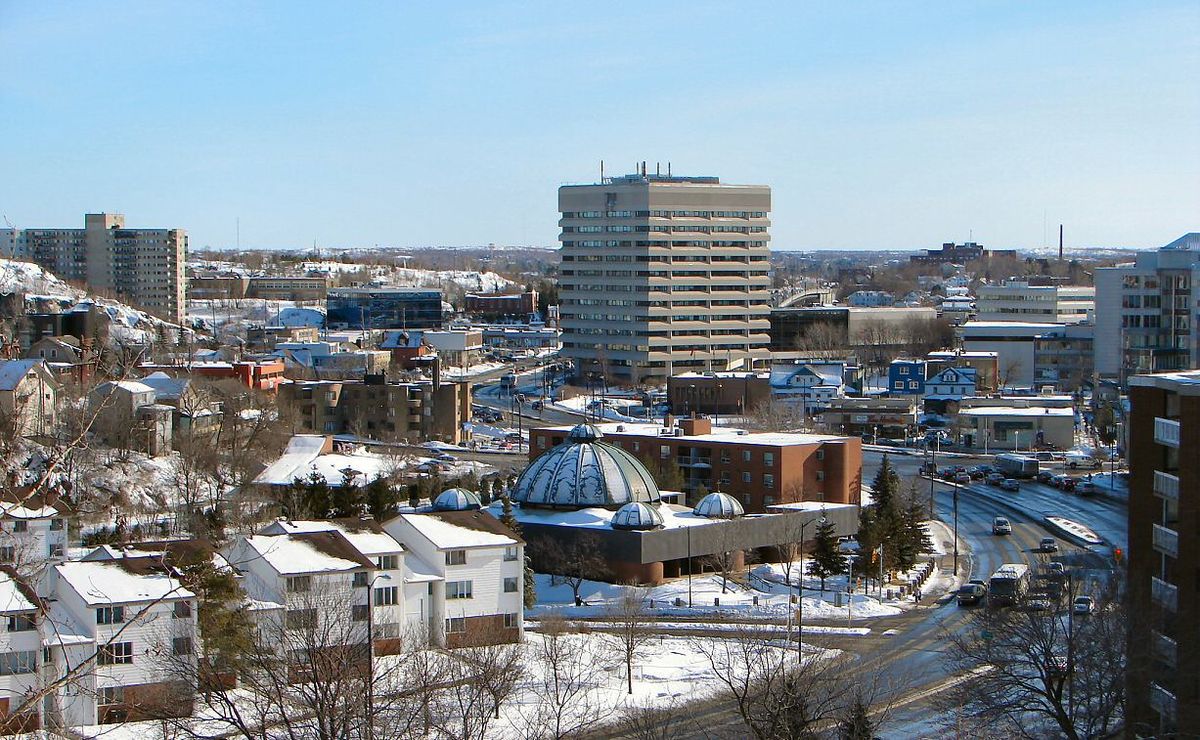
Thunder Bay is a city in Northwestern Ontario, Canada, and the seat of Thunder Bay District. It is the most populous municipality in Northwestern Ontario and the second most populous in Northern Ontario, with a population of 108,843 as of the 2021 census. Located on the northwestern shore of Lake Superior, the city is a major regional hub for commerce, administration, and healthcare. Its formation in 1970 through the amalgamation of the twin cities of Fort William and Port Arthur ended a long-standing rivalry and created a unified urban centre known for its port, historical role in grain shipping, and transition towards a knowledge-based economy.
History and Amalgamation
European presence in the Thunder Bay area began with French fur trading posts established in 1683 and 1717, though these were later abandoned. The Montreal-based North West Company established Fort William as its inland headquarters in 1803, solidifying the area's role in the fur trade. By the 1850s, the Province of Canada took a greater interest in the region, negotiating the Robinson Treaty with local Ojibwa communities in 1850. Settlement north of Fort William grew after the federal government built a road to the Red River Colony, with the site named Prince Arthur's Landing in 1870 and later renamed Port Arthur by the Canadian Pacific Railway in 1883. The arrival of the CPR ignited a fierce rivalry between Fort William and Port Arthur, a competition that defined their development for nearly a century. The CPR's relocation of all its operations to Fort William in 1889, following a tax dispute with Port Arthur, shifted economic dominance to Fort William, especially after a silver mining collapse hurt Port Arthur's economy after 1890.
The early 20th century was a period of extraordinary growth for the twin cities, driven by the western wheat boom and transcontinental railway expansion. Grain elevator construction boomed, and both cities developed modern municipal infrastructures, including Canada's first municipally owned electric street railway in Port Arthur in 1892. The boom ended with the outbreak of the First World War, though a wartime economy emerged with munitions and shipbuilding. The forest products industry, established in the 1870s, expanded significantly with the first pulp and paper mill opening in Port Arthur in 1917. Manufacturing was revived in 1937 when the Canada Car and Foundry plant reopened to build British aircraft, a facility that remains in operation today under Alstom.
The movement to amalgamate Fort William and Port Arthur culminated in a referendum on 23 June 1969 to choose a new name. The final vote tally was "Thunder Bay" with 15,870 votes, "Lakehead" with 15,302, and "The Lakehead" with 8,377. The name "Thunder Bay" was chosen due to the split between the two similar "Lakehead" options. On 1 January 1970, the City of Thunder Bay was officially formed through the merger of the cities of Fort William and Port Arthur and the geographic townships of Neebing and McIntyre. The amalgamation resolved the historic rivalry but the distinct identities of the former cities persist. Since the 1970s, the expansion of highways like the Trans-Canada has diminished the city's historical role as a break-bulk point for rail and shipping, leading to economic diversification.
Geography and Climate
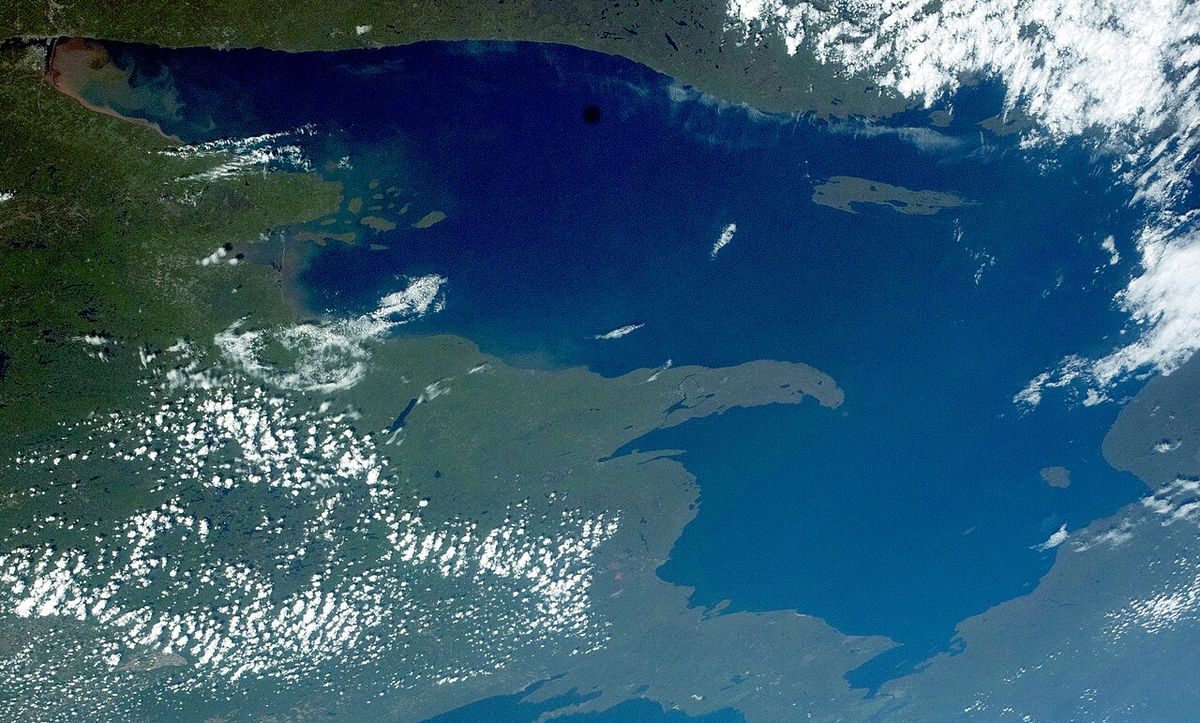
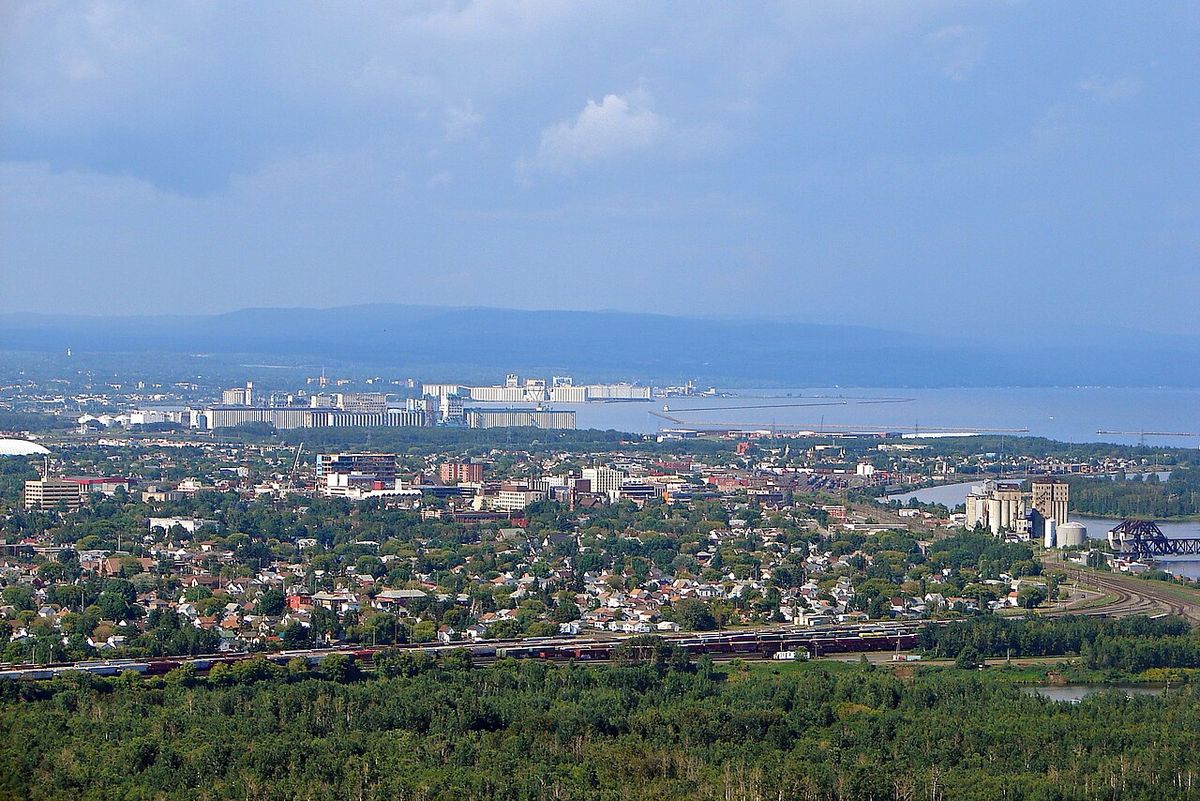
Thunder Bay encompasses a land area of 327.77 square kilometres, incorporating the former urban areas of Fort William and Port Arthur along with surrounding townships. The city's geography is marked by a distinct contrast between its two historic cores. The former Fort William section occupies flat alluvial land along the Kaministiquia River, featuring large islands like Mission Island and McKellar Island in its delta. In contrast, the former Port Arthur area is more typical of the Canadian Shield, with gently sloping hills, thin soil, and exposed bedrock. A large uninhabited area known as Intercity historically separated the two downtowns, though it has since become a major commercial and governmental centre. The city's namesake, Thunder Bay, is a large bay on Lake Superior located about 22.5 kilometres from downtown Port Arthur to Thunder Cape at the tip of the Sleeping Giant peninsula.
The city experiences a warm-summer humid continental climate with a subarctic influence in northeastern areas near Lake Superior, which moderates temperatures. Average daily temperatures range from 18.0 °C in July to -13.4 °C in January. Thunder Bay holds Ontario's record for coldest day with wind chill, set on 10 January 1982 when the temperature dropped to -36.3 °C with a wind chill of -58 °C. The highest temperature ever recorded was 40.3 °C on 7 August 1983, while the coldest was -43.2 °C on 31 January 1996. The city is notably sunny, averaging 2,121 hours of bright sunshine annually. Winters are comparatively dry with limited snowfall, a contrast to the heavy lake-effect snow common on the U.S. side of Lake Superior. In 2021, the city set a record for its latest first freeze and longest growing season, which began on 17 October.
Demographics and Population
According to the 2021 Canadian census, Thunder Bay had a population of 108,843, a slight increase of 0.9% from 2016. The census metropolitan area, which includes surrounding municipalities and First Nations, had a population of 123,258. The city's population density is 332.1 people per square kilometre. Demographic data from 2016 showed a nearly even gender split, with 48.8% male and 51.2% female residents. The average age in Thunder Bay was 43.3 years, slightly higher than the national average of 41.0. People aged 40 to 64 made up the largest age cohort at 35.1% of the population, while those 19 and under accounted for 19.9%.
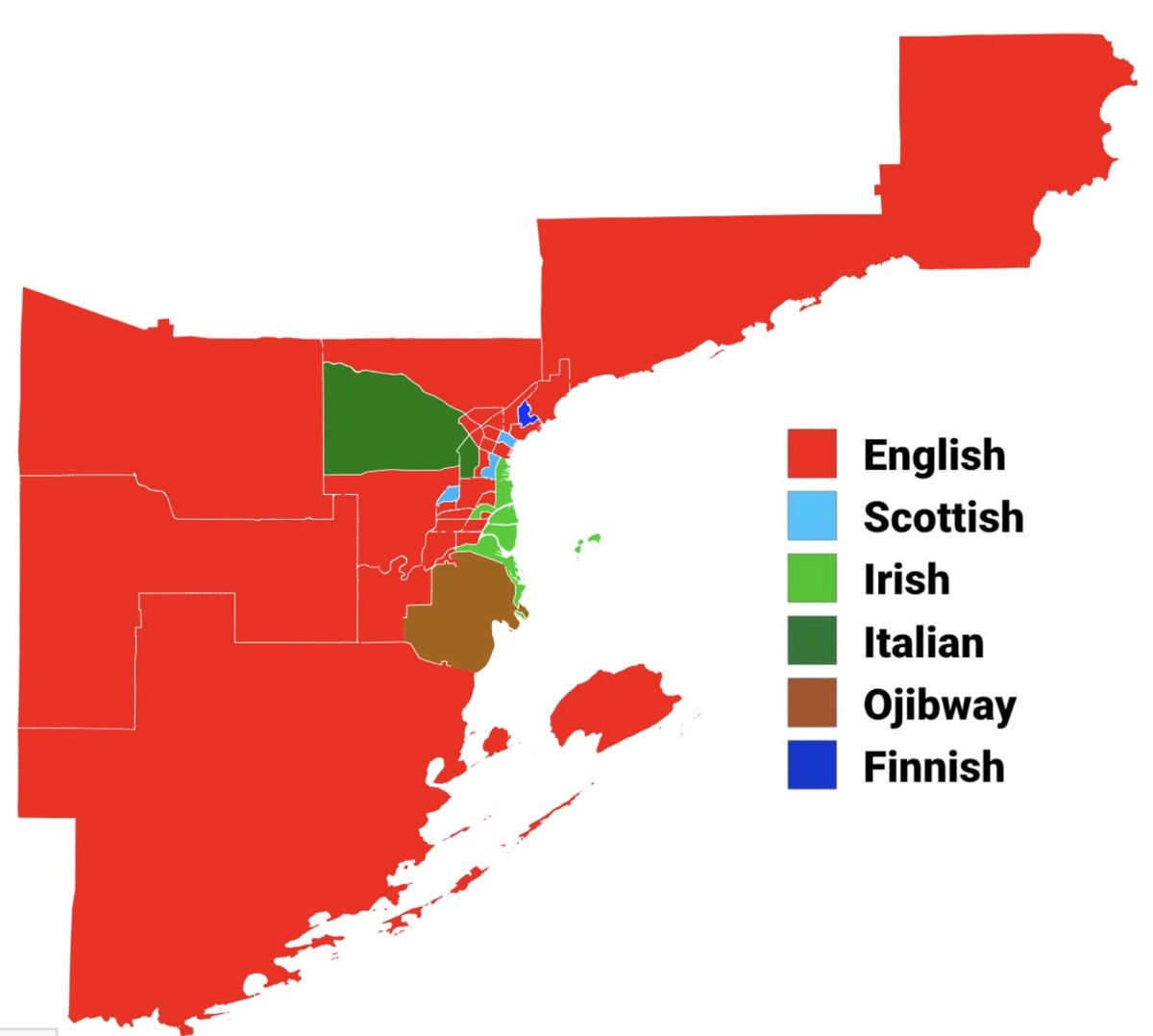
Thunder Bay has a diverse ethnic composition. It is home to the highest concentration of people of Finnish descent in Canada, with 13,565 residents claiming Finnish origin in the 2016 census. The city also has a significant Indigenous population, representing 14.1% of the total in the 2021 census, though studies suggest this figure may be a substantial underestimate. Visible minorities accounted for 7.5% of the population. In terms of religious affiliation, 56.0% of residents identified with a Christian denomination in 2021, down from 72.0% in 2011, with Roman Catholics being the largest group at 30.4%. Those with no religious affiliation rose to 39.9%, while non-Christian religions such as Hinduism and Islam each represented just over 1% of the population.
Economy and Major Employers
As the largest city in Northwestern Ontario, Thunder Bay serves as the region's primary commercial, administrative, and medical centre. The economy has historically been based on transportation, forestry, and manufacturing, but has undergone significant restructuring in recent decades. The loss of grain transportation subsidies, a shift from rail and ship to truck freight, and trade agreements have reduced the city's role as an east-west break-bulk point. Traditional industries like forest products have declined by close to 60% due to high labour costs and a lack of innovation. In response, the city has developed a more diversified economy with a growing emphasis on public sector services, healthcare, and education.
The largest employers in Thunder Bay are predominantly in the public sector. The City of Thunder Bay, the Thunder Bay Regional Health Sciences Centre, the Lakehead District School Board, and the Government of Ontario each employ over 1,500 people. The largest private employer is Resolute Forest Products, which also employs over 1,500 people in the forestry sector. Alstom operates a major manufacturing plant in the city, employing approximately 500 people to produce mass transit vehicles and equipment. This facility has a long history, originally built by Canadian Car and Foundry in 1912 and later producing aircraft during the Second World War. The city is also the site of the Thunder Bay Regional Health Research Institute, signalling a shift towards a knowledge-based economy.
Education and Institutions
Thunder Bay is a significant centre for post-secondary education and research in Northwestern Ontario. Confederation College, a college of applied arts and technology, provides career-oriented diploma and certificate programs. These institutions contribute to the city's skilled workforce and support its transition to a knowledge economy. The presence of these schools, along with the Thunder Bay Regional Health Research Institute, anchors the city's growing focus on medical research and innovation.
The city's educational infrastructure also includes the Lakehead District School Board and the Thunder Bay Catholic District School Board, which oversee public and separate elementary and secondary schools. The city's role as a regional services centre is reinforced by the presence of numerous provincial government offices. Key cultural and civic institutions include the Thunder Bay Art Gallery, the Thunder Bay Community Auditorium, and the Thunder Bay Historical Museum, which preserve and promote the area's rich heritage. The city's port, though less active than in its heyday, remains an important seasonal link for shipping on the Great Lakes and Saint Lawrence Seaway.
Crime and Social Issues
Thunder Bay has faced significant challenges with crime, particularly violent crime, in recent years. From 2012 to 2014, and again from 2016 to 2019, the city had the highest per-capita homicide rate among Canadian cities. In 2014, the homicide rate reached 10.1 per 100,000 people, more than double the 2012 rate and over 2.5 times higher than the city with the next highest rate. While the overall crime rate decreased by 6% between 2014 and 2015, homicides remain a serious concern. In 2022, Thunder Bay set a new record with 15 homicides, resulting in a rate of 13.7 per 100,000 people, a figure comparable to several major American cities that year.
These crime statistics are often discussed in the context of broader social issues, including the city's substantial Indigenous population and socioeconomic disparities. The relationship between the police service and Indigenous communities has been a focus of scrutiny and calls for reform. Efforts to address these complex issues involve multiple levels of government, community organizations, and Indigenous leadership. The city continues to work on strategies for community safety, reconciliation, and improving social services to tackle the root causes of crime.
Notable Facts and Records
Thunder Bay holds several notable distinctions in Canadian history and meteorology. It was the first city in the world to enact daylight saving time, doing so on 1 July 1908. The city is often referred to by its nickname "The Lakehead," referencing its geographic position at the head of Great Lakes navigation on the Canadian side. The area's shipping history is commemorated by the many grain elevators that once lined the waterfront, though most have now been demolished. The city's climate records are extreme, including Ontario's record for coldest day with wind chill, set in January 1982.
Thunder Bay's cultural makeup is unique within Canada. It has the highest concentration of people of Finnish origin in the country, a legacy reflected in community events, architecture, and surnames. The city's development was fundamentally shaped by the rivalry between Fort William and Port Arthur, a dynamic that influenced railway development, municipal politics, and urban growth for nearly a century before their amalgamation. The city's port was once a critical link in the transportation of grain from western Canada to eastern markets, a role that has greatly diminished but remains a part of its identity.
- First city in the world to enact daylight saving time (1 July 1908).
- Home to the highest concentration of people of Finnish origin in Canada.
- Holds Ontario's record for coldest day with wind chill (10 January 1982).
- Formed by the amalgamation of Fort William and Port Arthur on 1 January 1970.
- Name chosen by referendum in 1969, beating "Lakehead" by a narrow margin.
- Site of a major Alstom plant manufacturing transit vehicles, with origins dating to 1912.
- Record high temperature of 40.3 °C set on 7 August 1983.
- Record low temperature of -43.2 °C set on 31 January 1996.
Questions about Thunder Bay
Why is Thunder Bay called the Lakehead?
Thunder Bay is often called "The Lakehead" because of its geographic location at the head of Great Lakes navigation on the Canadian side. Historically, it was the western terminus for ships travelling the Great Lakes and a major transshipment point where goods, particularly grain, were transferred from trains to ships. This nickname was so popular that it was one of the top choices in the 1969 referendum to name the newly amalgamated city, though it ultimately lost to "Thunder Bay. The term remains in common use to describe the city and its region.
What are the main industries in Thunder Bay today?
Thunder Bay's economy has diversified from its historical base in transportation and forestry. Today, the largest employers are in the public sector, including healthcare, education, and municipal and provincial government services. Major employers like the Thunder Bay Regional Health Sciences Centre and the Lakehead District School Board each employ over 1,500 people. The largest private employer is Resolute Forest Products in the forestry sector. Manufacturing remains important through the Alstom plant, which builds mass transit vehicles. The city is also developing a knowledge economy centred on Lakehead University, Confederation College, and the Thunder Bay Regional Health Research Institute.
How did Fort William and Port Arthur become Thunder Bay?
The cities of Fort William and Port Arthur, along with the townships of Neebing and McIntyre, were amalgamated into a single city on 1 January 1970. Prior to this, a referendum was held on 23 June 1969 to choose the new name. Residents voted between "Thunder Bay," "Lakehead," and "The Lakehead. The vote split between the two similar "Lakehead" options, allowing "Thunder Bay" to win with a narrow plurality of 15,870 votes. The name references the large bay on Lake Superior, known as Baie du Tonnerre on early French maps.
What is the population of Thunder Bay?
According to the 2021 Canadian census, the city of Thunder Bay had a population of 108,843. The larger census metropolitan area, which includes the surrounding municipalities of Oliver Paipoonge and Neebing, several townships, and the Fort William First Nation, had a population of 123,258. The city's population density is 332.1 people per square kilometre. Thunder Bay is the most populous municipality in Northwestern Ontario and the second most populous in all of Northern Ontario, after Greater Sudbury.
What is the climate like in Thunder Bay?
Thunder Bay has a warm-summer humid continental climate, with a moderating influence from Lake Superior that brings cooler summers and warmer winters to areas near the shore. Average daily temperatures range from 18.0 °C in July to -13.4 °C in January. The city is known for its sunshine, averaging 2,121 bright hours per year. Winters are comparatively dry with limited snowfall compared to U.S. lake-effect snow regions. The city holds extreme temperature records, including a high of 40.3 °C in August 1983 and a low of -43.2 °C in January 1996. It also holds Ontario's record for coldest wind chill.
What universities and colleges are in Thunder Bay?
Thunder Bay is home to two post-secondary institutions. Lakehead University is a public research university offering a wide range of undergraduate and graduate programs. Confederation College is a college of applied arts and technology that provides career-focused diploma, certificate, and apprenticeship programs. These institutions are major contributors to the city's economy and its shift towards a knowledge-based sector. They attract students from across Northwestern Ontario and beyond, and support local research and innovation, particularly in fields like health sciences and natural resources.
Sources and further reading
- Thunder Bay (Wikipedia)
- City of Thunder Bay: Home (thunderbay.ca)
- City of Thunder Bay (lakeheadu.ca)
- Live, CEDC (gotothunderbay.ca)
Checked by the Your Space Hamilton desk. Last updated 2026-10-20.