Owen Sound
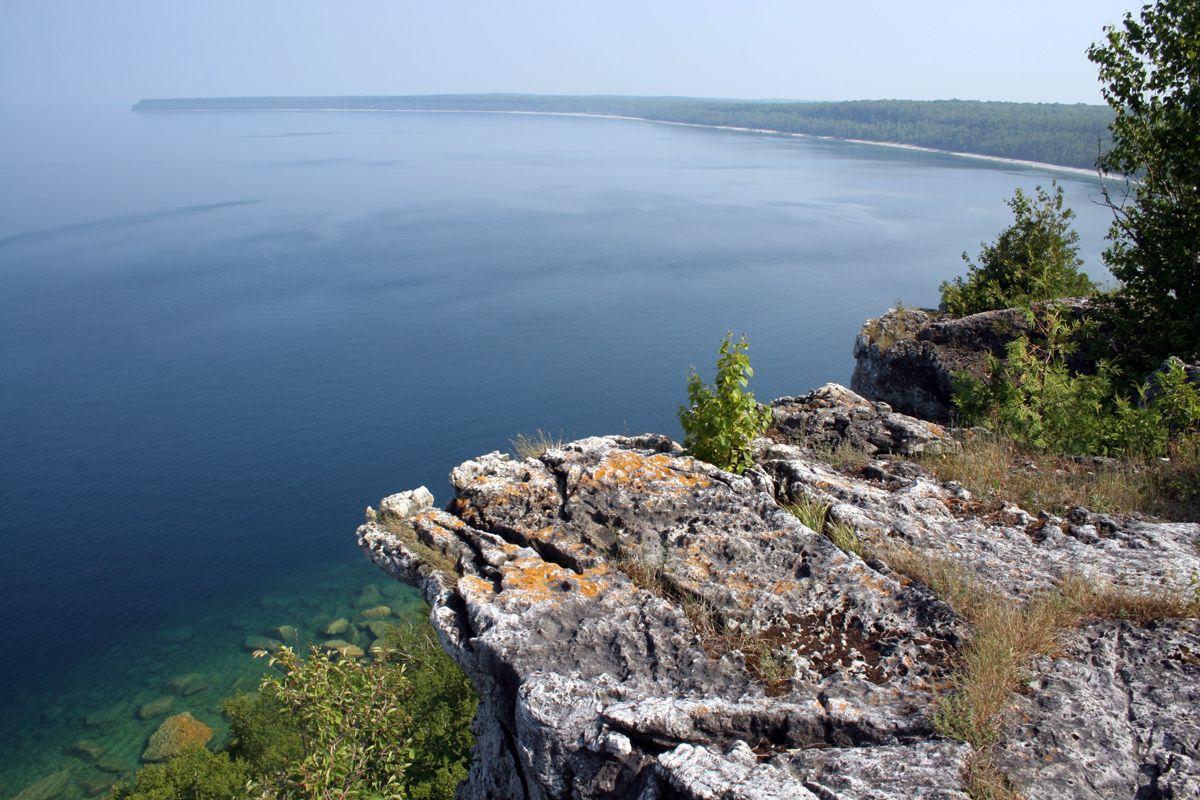
Owen Sound is a city in Grey County, Southwestern Ontario, Canada, situated at the mouths of the Pottawatomi and Sydenham Rivers on an inlet of Georgian Bay. As the county seat, it serves as the administrative centre for Grey County, a role it has held since 1852. The city is celebrated for its cultural festivals, natural attractions including numerous waterfalls, and its status as the smallest Ontario municipality to host a major junior hockey team. Its rich history is tied to shipping and its role as a northern terminus of the Underground Railroad, and it is located on the scenic Niagara Escarpment.
History and settlement
The area around Owen Sound has been inhabited by the Ojibwe people since prehistory, with the Ojibwe name for the inlet being Gchi-wiigwedong. In 1815, surveyor William Fitzwilliam Owen named the inlet after his brother, Admiral Edward Owen. A settlement initially called Sydenham was established around 1840 or 1841 by Charles Rankin, with John Telfer among the early settlers. By 1846, the community had a population of 150 and operating saw and grist mills. In 1842, a First Nations Band led by Chief Newash established a village of the same name on a reserve of about 11,000 acres, which included fourteen log houses, a school, and a barn served by Wesleyan Methodist missionaries. The government took over this reserve land in 1857, moving most Chippewa inhabitants to the Cape Croker Hunting Ground 60B reserve north of Owen Sound.
Sydenham was renamed Owen Sound in 1851 and became the seat of Grey County the following year. The community was incorporated as a town in 1857 with a population nearing 2000. This era was epitomized by a tavern called the Bucket of Blood at an intersection known as Damnation Corners, just a block from an intersection with four churches called Salvation Corners. The city prohibited all drinking establishments for several decades, remaining dry until 1972. The arrival of the Toronto, Grey and Bruce Railway from Weston in 1873 significantly boosted the local economy by facilitating the shipping of goods.
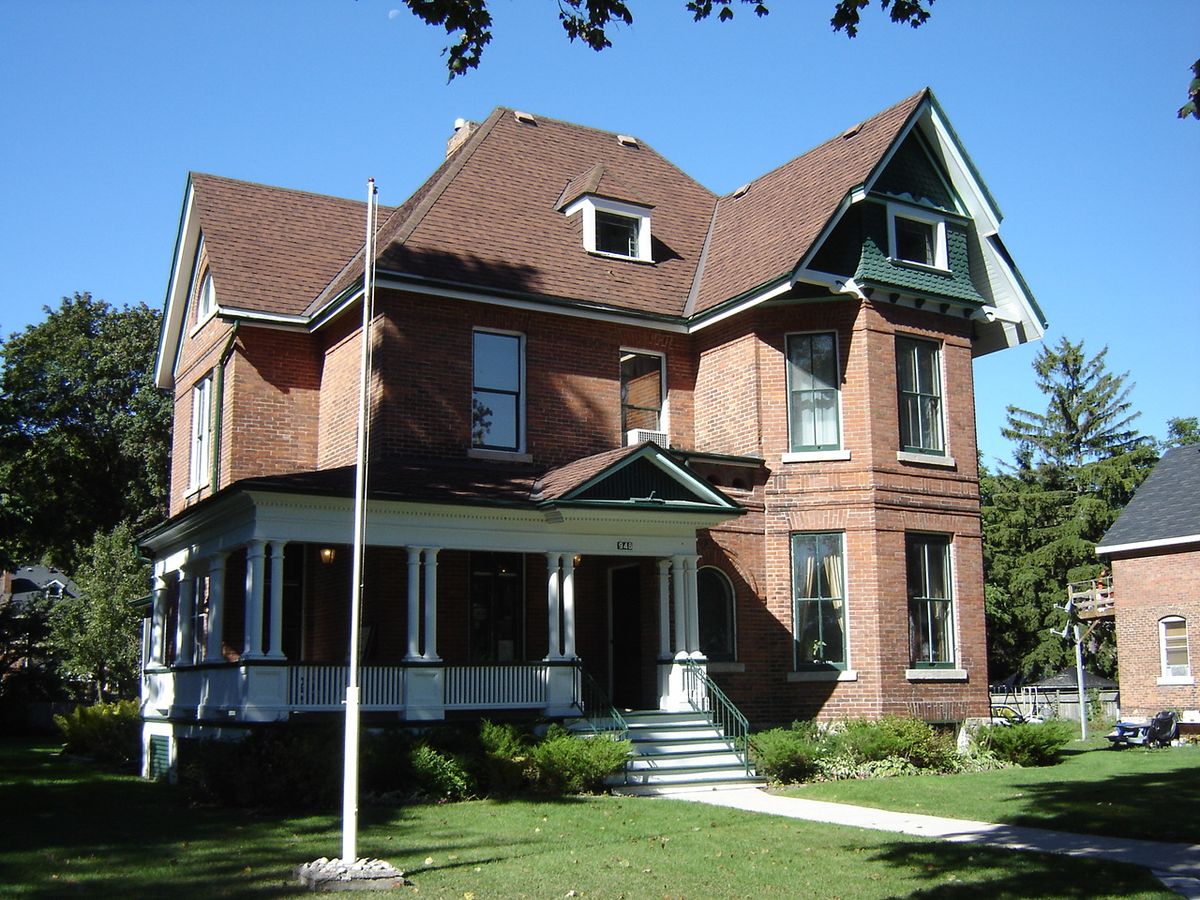
A historic building just outside town, originally built as a home in 1881, operated as a brothel from 1907 to 1915 where the madam would watch for ships from a castle-like tower. It later became Louis' Steakhouse, opened by the Gavaris family in the 1980s, before being demolished in 2016. The city's 150th anniversary of incorporation was celebrated in 2007 with special events, including a 10-day Homecoming celebration from July 27 to August 5. In 2005, Owen Sound was named the National Communities in Bloom champion in the cities of 20,001-50,000 category for its beauty, natural landscape, and strong sense of community. The city has also been recognized as a good retirement community due to its cultural, sports and natural amenities.
Geography and climate
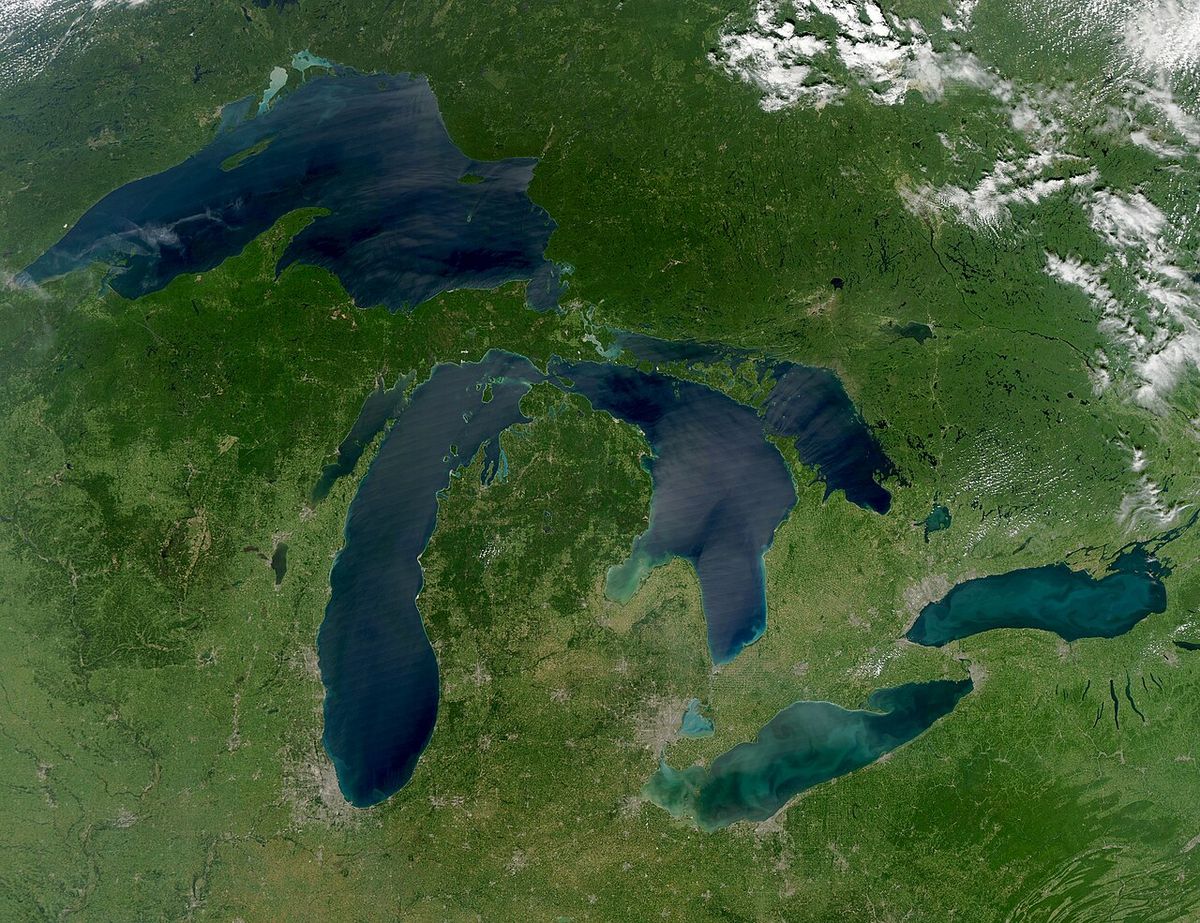
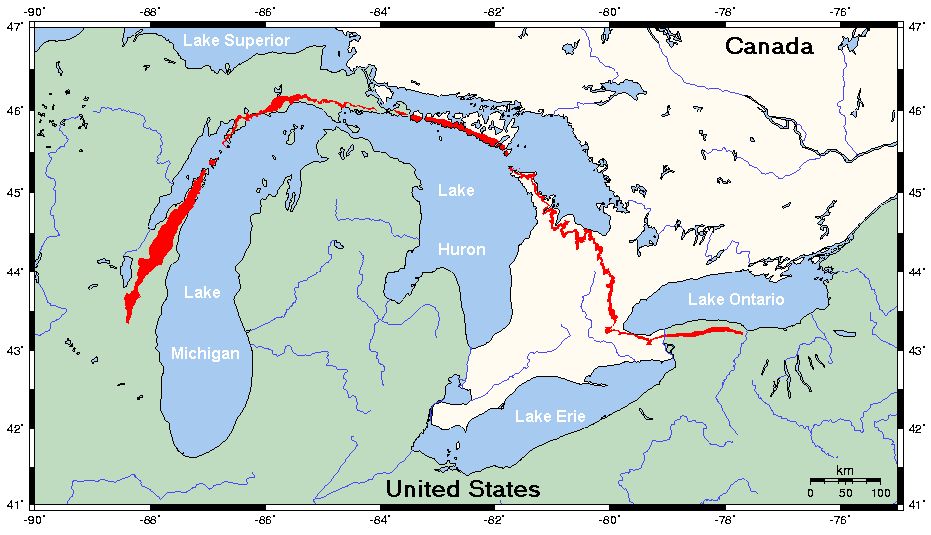
Owen Sound is located on an inlet of Georgian Bay at the mouths of the Sydenham and Pottawatomi Rivers, within the Niagara Escarpment region. The Sydenham River, a pre-glacial waterway that cut into the limestone escarpment, flows into Owen Sound Bay and was responsible for creating features like Inglis Falls. The city experiences a humid continental climate, moderated by the proximity of Lake Huron and Georgian Bay. Winters are cold and very snowy, with Owen Sound situated in the direct line of the Great Lakes snowbelt, while summers are warm and humid but cooler than many other parts of southwestern Ontario due to the lake influence. Annual average precipitation is high, at approximately 1,100 millimetres, with summer thunderstorms being a common occurrence.
The highest temperature ever recorded in Owen Sound was 40.0 °C (104.0 °F) on July 3, 1911. The coldest temperature ever recorded was -36.7 °C (-34.1 °F) on February 6, 1895. Owen Sound is located at the junctions of Ontario Highways 6, 10, 21 and 26, serving as a gateway to the Bruce Peninsula. The two major parks in Owen Sound are Kelso Beach on Georgian Bay and Harrison Park. Harrison Park contains the Black History Cairn, which celebrates Owen Sound's status as a northern terminus of the Underground Railroad.
Demographics and economy
According to the 2021 Canadian census, Owen Sound had a population of 21,612, living in 9,895 of its 10,406 total private dwellings. This represented a slight increase of 1.3% from its 2016 population of 21,341. With a land area of 24.21 square kilometres, the population density was 892.7 people per square kilometre. The city has been recognized as a desirable retirement community due to its cultural, sports, and natural amenities. Historically, the economy was centred on the port and related industries, including shipbuilding and grain handling. The Parrish & Heimbecker Grain Terminal, operating as Great Lakes Elevator Co Ltd, is located in the inner harbour. The original Canadian Pacific Railway grain elevators were destroyed by fire in 1911, and Transport Canada has since divested the harbour.
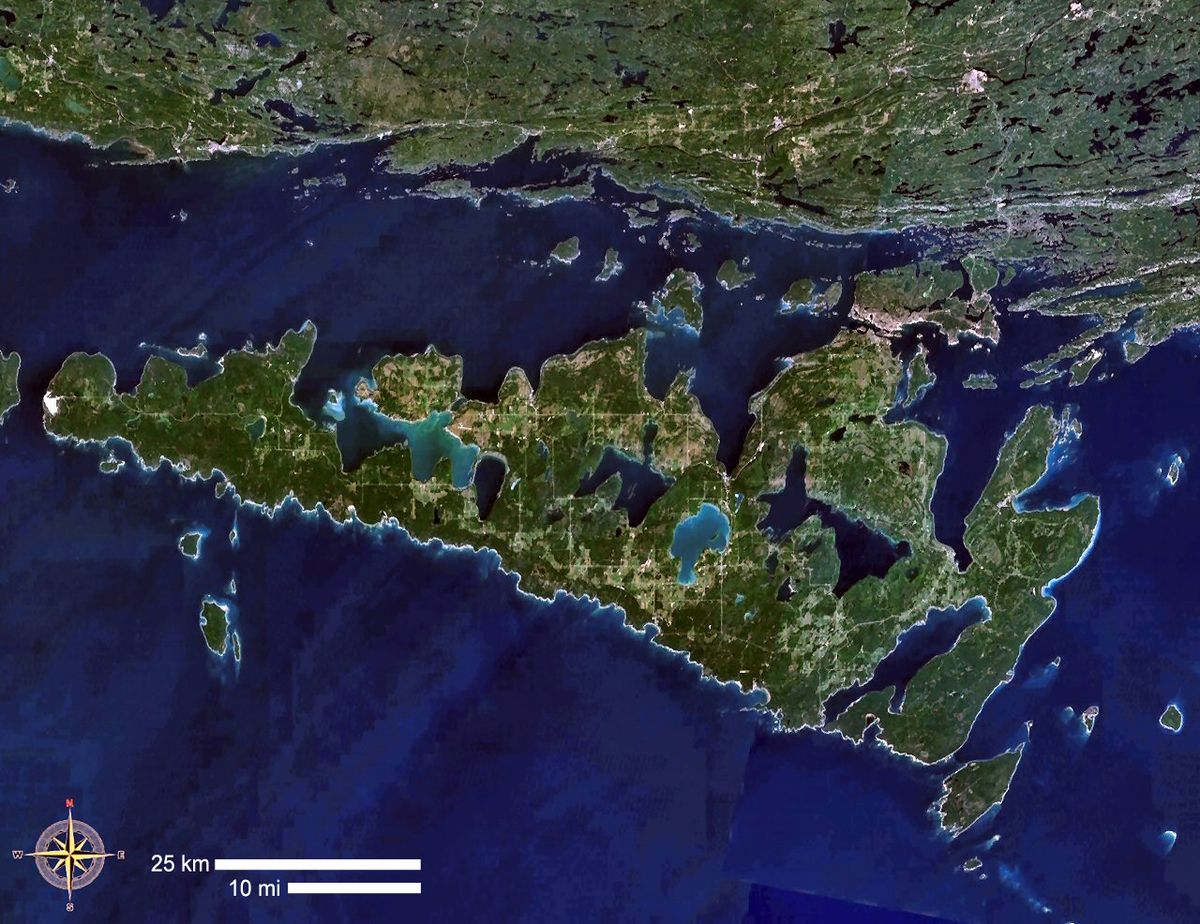
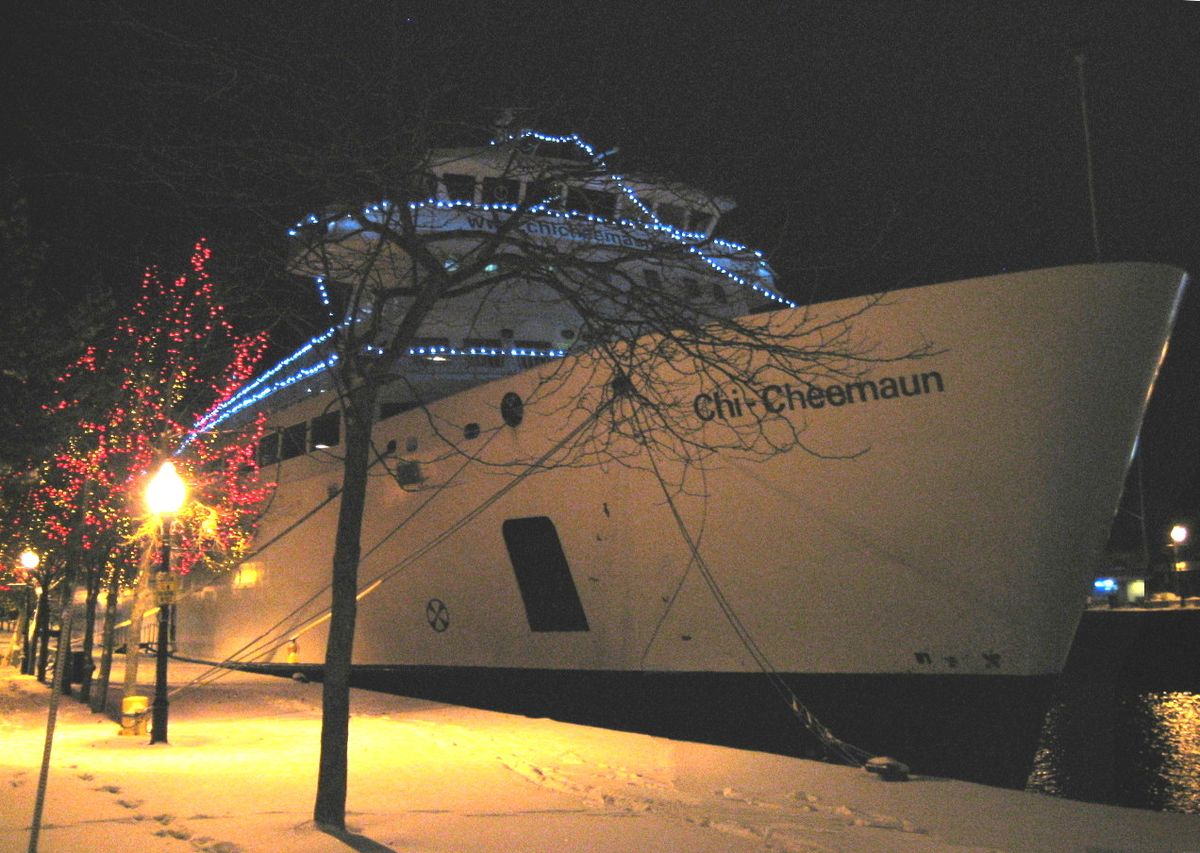
The city was home to several shipbuilders, notably Polson Iron Works from 1888 to 1897 and Russel Brothers, which operated from 1937 to 1994 after moving from Fort Frances. The Russel Brothers shipyard was located on current vacant lots at 2050 and 2198 3rd Avenue East, with the launch slip the only remaining reminder of the shipyards. The inner harbour is also where the car ferry MS Chi-Cheemaun, operated by the Owen Sound Transportation Company, is docked during the winter months. This ferry operates from Tobermory to South Baymouth on Manitoulin Island during the navigation season, connecting the Bruce Peninsula to Manitoulin Island.
Government and infrastructure
Owen Sound is governed by a city council consisting of a mayor, a deputy mayor, and seven councillors, all elected at-large. As of October 2022, the mayor is Ian Boddy, who was first elected to council in 2010, then as mayor in 2014, and re-elected in 2018 and 2022. The city provides local bus service through Owen Sound Transit, including specialized transportation for those unable to use regular transit. It is a transportation hub located at the junctions of Ontario Highways 6, 10, 21, and 26, serving as a gateway to the Bruce Peninsula. The Canadian Pacific Railway Owen Sound subdivision, which connected Orangeville and Owen Sound, was discontinued and formally abandoned in 1995. The Canadian National Railway subdivision connecting Guelph and Owen Sound via Palmerston was also discontinued in the 1990s.
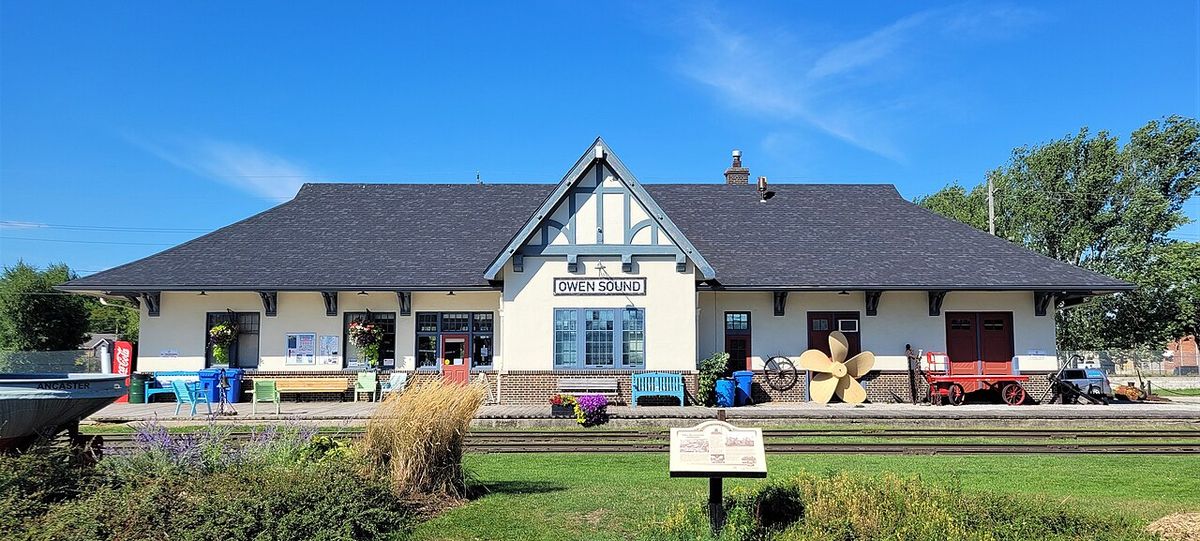
The former CPR Owen Sound station, built in 1946, is now a restaurant and brewery, while the CNR Owen Sound Station is home to the Owen Sound Marine and Rail Museum. Aircraft may land at the Major-General Richard Rohmer Meaford International Airport. Owen Sound is the seat of the Bright Shores Health System, which operates the largest hospital in Grey and Bruce counties. A notable piece of local infrastructure history involves the former Grey County jail, which opened in 1854 as part of a complex with a courthouse, police services, and a land registry office. The jail finally closed at the end of 2011, with the last three prisoners leaving on December 4, and was transferred to city ownership in November 2014 per a 1960 agreement between the county and the city.
Culture, events, and recreation
Owen Sound was designated a Cultural Capital of Canada in 2004 and hosts numerous cultural events and facilities. Key annual events include the Summerfolk Music and Crafts Festival, a three-day event founded in 1976 held every August on the third weekend at Kelso Beach Park, and the Festival of Northern Lights, a large Christmas lights display along the Sydenham River, downtown, and in Harrison Park running from November until January. The city is also home to A Novel Marathon, a special event fundraiser for the Adult Literacy Program of the Owen Sound and North Grey Union Public Library. Theatrical performances are held at the 400-seat Roxy Theatre, owned and operated by the Owen Sound Little Theatre, while the Youth Theatre Coalition, a youth theatre company run entirely by and for youth, is also prevalent in the area and presents musical, theatrical, and concert type performances throughout the year.
The city contains a significant number of museums and cultural attractions. The community is also a gateway to outdoor recreation, with several waterfalls located on the Niagara Escarpment just outside the city, including the 18-metre high Inglis Falls created by the Sydenham River meeting the escarpment edge. The area offers extensive hiking trails, some connecting to the Bruce Trail, and is known for world-class rainbow trout fishing, with annual derbies drawing participation from across North America. Southeast of the city are popular ski resorts like Blue Mountain and Beaver Valley, and the region has numerous snowmobile trails. The Owen Sound area is also one of two homes to The Grey and Simcoe Foresters Primary Reserve Infantry regiment, alongside Barrie, as well as various cadet corps.
- Grey Roots Museum and Archives, presents the history of Owen Sound and Grey County.
- Tom Thomson Memorial Art Gallery, holds a large collection of memorabilia and works from Tom Thomson.
- Community Waterfront Heritage Centre, focuses on the city's history in rail and water transportation.
- Billy Bishop Home and Museum, located in Bishop's former home, dedicated to his life and Canadian aviation history.
- Black History Cairn, in Harrison Park, celebrates Owen Sound's status as a terminus of the Underground Railroad.
- Owen Sound Farmer's Market, has occupied the same location since 1868, open every Saturday morning.
- Beth Ezekiel Synagogue, a designated heritage building under Ontario's Heritage Act and the last active small town synagogue in Canada.
- Georgian Bay Symphony, a regional community orchestra of 55 volunteer and five professional core musicians performing five main concerts a year.
- Owen Sound City Band, a volunteer organization founded in 1923 that performs for Canada Day and other events.
Sports and education
Owen Sound is notable for being the smallest city in Ontario to host an Ontario Hockey League major junior hockey team, the Owen Sound Attack. The team originated as the Guelph Platers, moved to Owen Sound in 1989, and was renamed the Attack in 2000 prior to the 2000 to 2001 season. They play at the Harry Lumley Bayshore Community Centre and won the J. Ross Robertson Cup as OHL champions in 2011. The team was purchased by a group of six local investors. Other current sports teams include the Owen Sound North Stars in both Major Series Lacrosse and the OLA Senior B Lacrosse League. The city is one of two homes to The Grey and Simcoe Foresters Primary Reserve Infantry regiment, alongside various cadet corps.
Former sports teams in the city have a long history, including the Owen Sound Mercurys and Crescents in the OHA Senior A Hockey League, the Canadians in the Northern Senior B Hockey League, the Trappers in the OHA Intermediate A Hockey League, the Crescents in Major Series Lacrosse, and the Greys in the Mid-Western Junior Hockey League. Post-secondary education is provided by a campus of Georgian College, which offers 14 full-time programs including the Great Lakes International Marine Training and Research Centre. This centre trains marine industry professionals and students in the Marine Navigation Technology and Marine Engineering Technology programs. Public school education is managed by the Bluewater District School Board, while Catholic schools are under the Bruce-Grey Catholic District School Board.
| High School | School Board/Type |
|---|---|
| St. Dominique Savio | French Catholic |
| St. Mary's | Bruce-Grey Catholic DSB |
| Owen Sound District Secondary School (OSDSS) | Bluewater DSB |
Notable residents and legacy
Owen Sound has been the birthplace or home to many notable Canadians across various fields. Its most famous son is First World War flying ace William Avery "Billy" Bishop, a Victoria Cross recipient credited with downing 72 enemy aircraft. Bishop also received the Distinguished Service Order and Military Cross, was promoted to Air Marshal after the war, and served as director of recruiting for the Royal Canadian Air Force. His boyhood home is a National Historic Site of Canada and a museum. Another Victoria Cross winner from the city is Thomas William Holmes, after whom the local armoury is named. The artist Tom Thomson, a key figure in Canadian art, grew up in the area and is buried in the nearby village of Leith.
Norman Bethune, the pioneering surgeon, avowed communist, and medical innovator known for his innovative work with the Chinese army during the Second Sino-Japanese War, was an alumnus of Owen Sound Collegiate and Vocational Institute. In sports, National Hockey League Hall of Fame goaltender Harry Lumley hailed from Owen Sound, as did NHL player and Hall of Fame member Hap Day. The legendary hockey broadcaster Bill Hewitt once served as sports director for the local AM radio station, CFOS. Other distinguished residents have included federal politician and writer Agnes Macphail, horticulturist Robert Pim Butchart, country music singer-songwriter Barry Brown, classical pianist and educator Margaret Miller Brown, and physicist Elizabeth Laird.
- Shelagh Armstrong, artist.
- Gundega Cenne, artist.
- Janis Mackey Frayer, journalist.
- Cheryl Hickey, television personality.
- Heather Hiscox, television personality.
- Alvin "Buck" Jones, professional hockey player.
- Jock McKeen, physician, author and lecturer.
- Emma Priscilla Scott, educator.
The former Billy Bishop Regional Airport in the nearby Municipality of Meaford was named after World War I flying ace William Avery "Billy" Bishop. His modest gravesite is located in the city's Greenwood Cemetery. In 2005, Owen Sound became the National Communities in Bloom champion in the cities of 20,001-50,000 category in Canada for its beauty, natural landscape, and strong sense of community. The city's cultural fabric is enriched by its history as a destination for freedom seekers, commemorated by the Black History Cairn in Harrison Park.
Questions about Owen Sound
What is Owen Sound known for?
Owen Sound is known for its rich history as a port city with a once-notorious reputation for taverns and brothels, earning it historical nicknames like Corkscrew City. It is recognized for its scenic location on Georgian Bay at the base of the Niagara Escarpment, with many nearby waterfalls such as Inglis Falls. The city is culturally significant for events like the Summerfolk Music and Crafts Festival and the Festival of Northern Lights. It is also notable as the smallest in Ontario to host an OHL team, the Owen Sound Attack, and for being the boyhood home of First World War flying ace Billy Bishop and artist Tom Thomson.
What was Owen Sound's original name and when was it founded?
The settlement that became Owen Sound was originally named Sydenham, established around 1840 or 1841 by Charles Rankin, with John Telfer as an early settler. The name was changed to Owen Sound in 1851, honouring Admiral Edward Owen, whose brother William Fitzwilliam Owen had surveyed the inlet in 1815. The Ojibwe name for the area is Gchi-wiigwedong. The community served as the seat for Grey County from 1852 and was incorporated as a town in 1857 when the population was nearly 2000. A direct road to Toronto Township, the Toronto-Sydenham Road, served the community and exists today as Highway 10 and the southern portion of Hurontario Street.
What are the major cultural attractions and events in Owen Sound?
Major attractions include the Tom Thomson Memorial Art Gallery, the Billy Bishop Home and Museum, and the Community Waterfront Heritage Centre. The city hosts significant annual events like the Summerfolk Music and Crafts Festival, a three-day event founded in 1976 held every August at Kelso Beach Park, and the Festival of Northern Lights, a large Christmas lights display running from November to January. Other cultural fixtures are the 400-seat Roxy Theatre for live performances, the Owen Sound Farmer's Market operating since 1868, and the Beth Ezekiel Synagogue, a heritage-designated building. The city was a 2004 Cultural Capital of Canada and is home to the Georgian Bay Symphony and the Owen Sound Artists' Co-op, established in 1994.
How did Owen Sound become a terminus of the Underground Railroad and how is it commemorated?
Owen Sound served as a northern terminus for the Underground Railroad, the network used by enslaved African Americans to escape to freedom in Canada. Its relatively remote location on Georgian Bay made it a final destination for freedom seekers arriving in Canada West. This history is commemorated by the Black History Cairn located in historic Harrison Park. The cairn celebrates Owen Sound's unique role in this chapter of North American history, providing a permanent physical reminder of the community's connection to the pursuit of liberty and its status as a sanctuary.
What is the population and economic base of Owen Sound?
According to the 2021 Canadian census, the population of Owen Sound was 21,612, with a density of 892.7 people per square kilometre. Historically, the economy was centred on the port, with shipbuilding companies like Polson Iron Works and Russel Brothers, and grain handling at the Parrish & Heimbecker Grain Terminal in the inner harbour. While heavy industry has declined, the city's economy is now supported by healthcare as the seat of Bright Shores Health System, education through Georgian College, tourism related to its natural attractions and festivals, and its role as a retail and service centre for Grey County. The city also functions as a transportation gateway to the Bruce Peninsula.
Who are some of the most famous people from Owen Sound?
The most famous resident is First World War flying ace Billy Bishop, a Victoria Cross winner credited with 72 aerial victories who also tangled with Manfred von Richthofen. Another Victoria Cross recipient from the city is Thomas William Holmes. Celebrated artist Tom Thomson grew up in the area. Notable medical figure Norman Bethune attended school in Owen Sound. In sports, NHL Hall of Fame goaltender Harry Lumley and player Hap Day are from the city. Other notable individuals include politician Agnes Macphail, journalist Heather Hiscox, and horticulturist Robert Pim Butchart. Legendary hockey broadcaster Bill Hewitt also worked in Owen Sound as a radio sports director for CFOS.
Sources and further reading
- Owen Sound (Wikipedia)
- Owen Sound (visitgrey.ca)
- Owen Sound Tourism: Home (owensoundtourism.ca)
- City of Owen Sound (nationaltrustcanada.ca)
Checked by the Your Space Hamilton desk. Last updated 2026-11-02.