Arctic hare
The Arctic hare (Lepus arcticus) is a large lagomorph species superbly adapted to the extreme cold of the North American tundra and Arctic islands. Found across northern Canada, from Ellesmere Island south to Labrador and Newfoundland, this resilient animal is an integral part of the Arctic ecosystem and has traditionally been an important resource for Indigenous peoples. Its remarkable adaptations include a dense, seasonally changing coat, a compact body with short ears to conserve heat, and the ability to run at speeds up to 60 kilometres per hour to evade predators. While populations are currently considered secure, the Arctic hare faces a challenging environment and a suite of natural predators, from the Arctic wolf to the snowy owl.
Physical description and adaptations
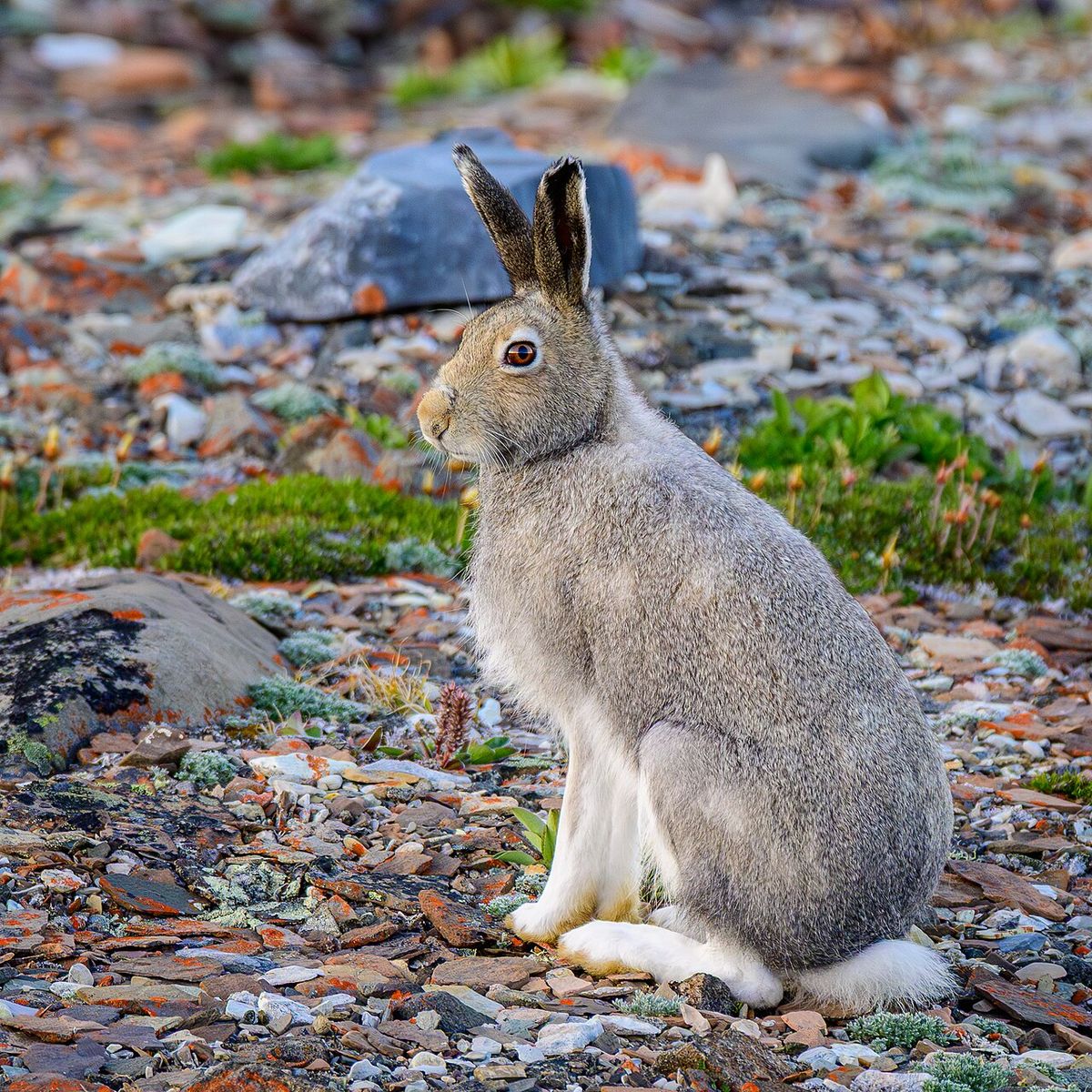
The Arctic hare is one of the largest living lagomorphs, with a body length ranging from 43 to 70 centimetres and a short tail of 4.5 to 10 centimetres. Adults typically weigh between 2.5 and 5.5 kilograms, though particularly large individuals can reach up to 7 kilograms. Its most striking feature is its thick, plush fur, which provides exceptional insulation against the cold. In winter, most populations sport a brilliant white coat that offers near-perfect camouflage against the snow, though hares in Newfoundland and southern Labrador moult to a brown or grey colour in summer. Those in the far northern reaches of Canada, where summers are extremely short, remain white year-round. The animal's physiology is a masterclass in cold adaptation, featuring a compact body, shortened ears and limbs, and a small nose to minimize heat loss. Body fat constitutes close to 20 percent of its mass, serving as both insulation and an energy reserve. Remarkably, the Arctic hare maintains a stable body temperature of about 38.9 degrees Celsius despite having a basal metabolic rate that is 17 to 38 percent lower than expected for its size, a key energy-saving adaptation for its barren habitat.
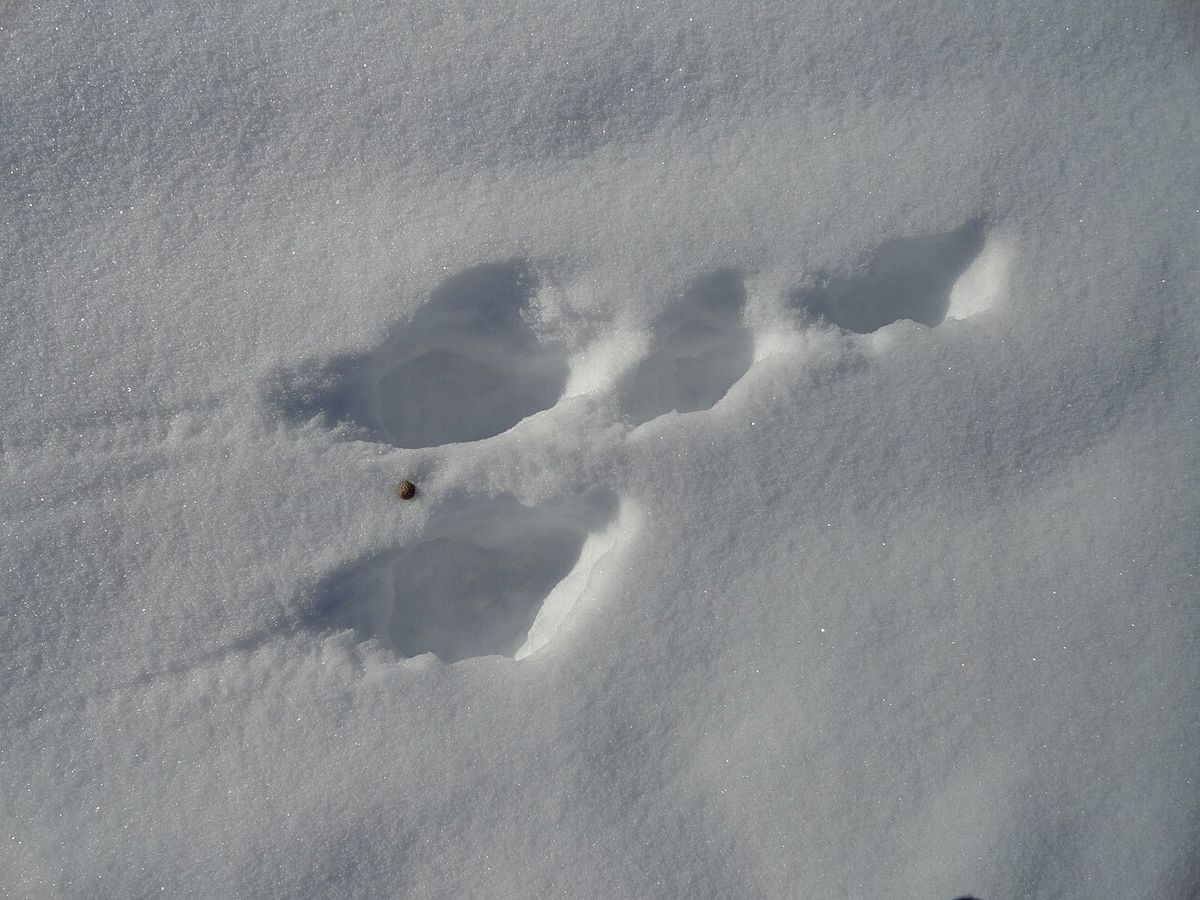
Behavioural strategies complement these physical traits for survival. To conserve warmth, Arctic hares often assume a nearly spherical posture when resting. They seek shelter behind large rocks, within natural snowdrifts, or in man-made structures, and are capable of digging their own snow burrows up to 188 centimetres in length. Their white fur has a high reflectance, which may help prevent excessive heat gain during the long daylight hours of Arctic summer. Body size can fluctuate with the seasons and local climate conditions, generally being smaller in winter due to reduced food quality and availability. Research in Greenland shows complex relationships between body size, temperature, and food plant availability, with size increasing with temperature at lower latitudes but decreasing at higher latitudes where warmer conditions can reduce precipitation and plant growth.
Distribution and habitat
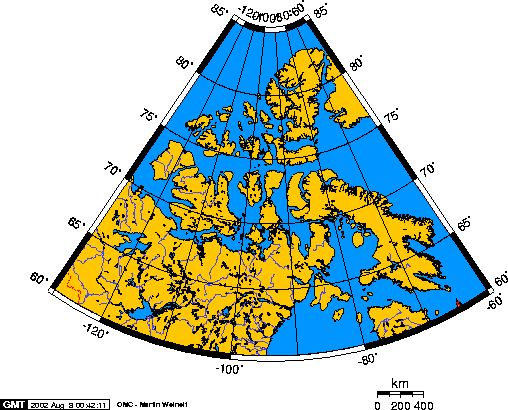
The Arctic hare inhabits the northernmost reaches of North America, with its range extending over the tundra regions of Greenland, the Canadian Arctic Archipelago, and northern Canada. Its distribution includes islands such as Ellesmere Island and reaches farther south into Labrador and Newfoundland. This species is supremely adapted to the conditions of the tundra, treeless coasts, and plateaus, enduring cold weather, frozen precipitation, and persistent winds. It can be found from sea level up to elevations of 900 metres, relying on the specific vegetation of this habitat for food and using the open landscapes where its camouflage and speed are most effective. The hare's presence across this vast and inhospitable region demonstrates its resilience and specialized adaptations for life in one of Earth's most challenging environments.
Diet and foraging
The Arctic hare is a herbivore, with a diet that shifts somewhat with the seasons but remains heavily reliant on woody plants. Arctic willow constitutes about 95 percent of its diet year-round, with other common foods including saxifrage, crowberry, dwarf willow, lichens, mosses, leaves, twigs, and roots. During the short Arctic summer, their diet becomes more diverse and recent studies indicate a surprising shift toward legumes, which can make up to 70 percent of their summer intake. To obtain water, they eat snow. When faced with extreme scarcity during harsh winters, Arctic hares display remarkable dietary flexibility. They have been observed engaging in scavenging behaviour, consuming meat such as fish, deer carcasses, and even the stomach contents of eviscerated caribou. Like other lagomorphs, they also practice coprophagy, re-ingesting certain fecal pellets to extract maximum nutrients from their fibrous food.
Their foraging is aided by exceptional senses adapted to the tundra. They possess a keen sense of smell to locate vegetation beneath the snow, and their eyes are positioned to provide a near 360-degree field of view for detecting predators. Their short, mobile ears function like radar to pick up sounds, and their dark eyelashes protect against the intense glare of sun on snow and ice. These sensory adaptations, combined with their speed and camouflage, are crucial for survival in an environment where food is often scarce and predators are ever-present.
Reproduction and life cycle
The breeding season for Arctic hares occurs around April or May. After a gestation period of approximately 53 days, the young, called leverets, are born in May, June, or July. Litters can contain up to eight leverets, with an average size of 5.4. Unlike the young of many other lagomorphs, Arctic hare leverets are born fully furred and are mobile very shortly after birth, a critical adaptation for the harsh climate. They grow rapidly, reaching nearly full size by late July, just weeks after birth, and they stay within their mother's home range until they can survive on their own. The leverets are weaned and independent by two to three weeks of age, though they may stay nearby for up to eight weeks. Arctic hares reach sexual maturity and breed for the first time after one year of age. There is little precise data on their lifespan in the wild, but anecdotal evidence suggests they live three to five years, and they do not fare well in captivity, where they typically survive no longer than a year and a half.
Predators and parasites
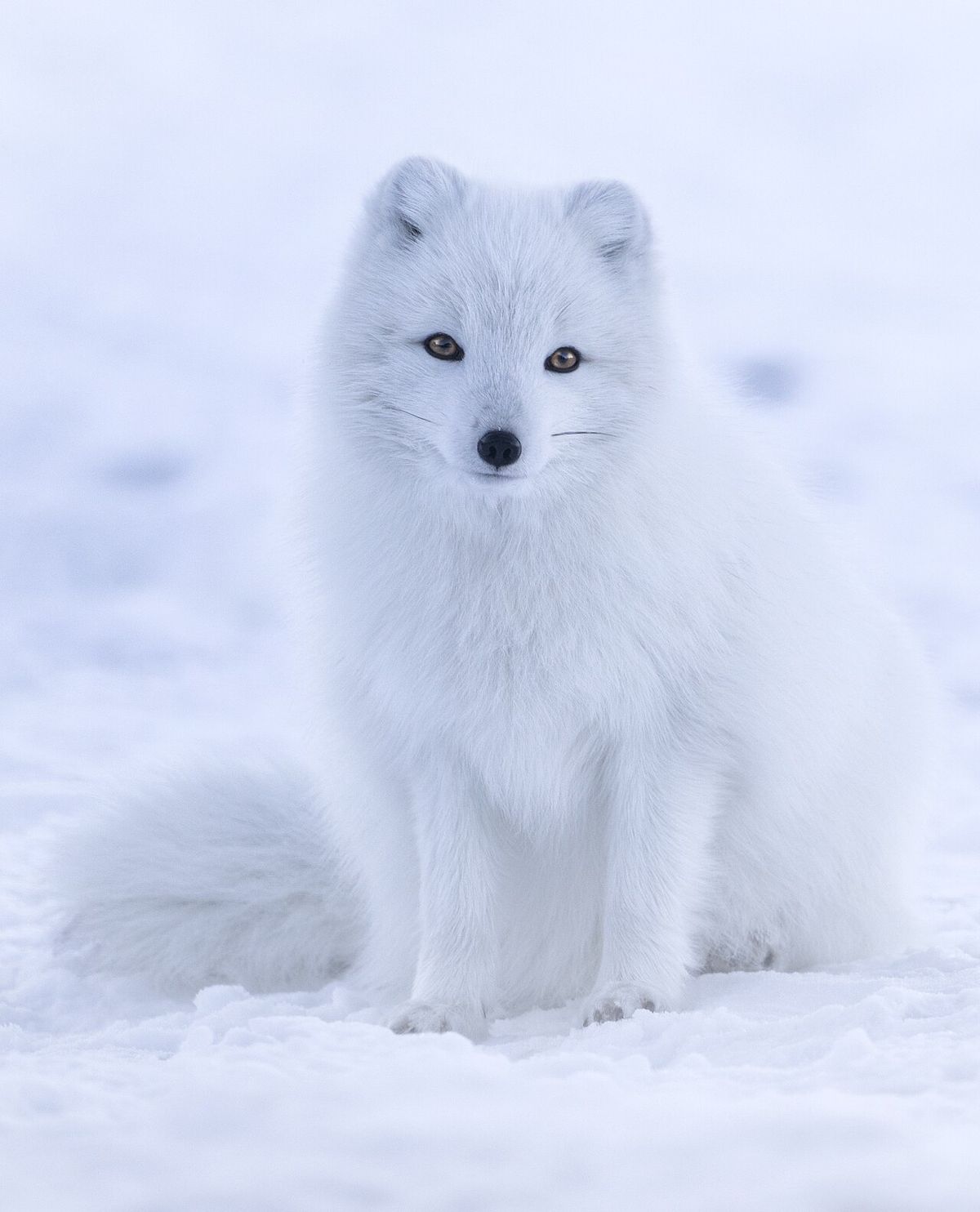
The Arctic hare occupies a central place in the Arctic food web and is preyed upon by a wide variety of predators. Its main natural enemies include the Arctic wolf, Arctic fox, red fox, lynx, ermine, snowy owl, gyrfalcon, and rough-legged hawk. Humans also hunt them for food and fur. The Arctic wolf is considered one of the most successful predators, with even young wolves capable of catching adult hares. Smaller predators like the Arctic fox and ermine typically target young leverets. Birds of prey employ different strategies. Gyrfalcons have been known to carry hares to their nests, cutting them in half first, and even use hare bones and feet in nest construction on Ellesmere Island. At the southern end of their range, peregrine falcons also prey on Arctic hares. The species is also host to several parasites, including protozoans, nematodes, lice, and fleas, with fleas being more common than parasitic worms.
Specific predators known to hunt the Arctic hare include the Arctic fox, the red fox, the wolf, the lynx, the ermine, the snowy owl, the gyrfalcon, and the rough-legged hawk. Humans also occasionally hunt Arctic hares. The Arctic wolf is considered the most successful predator of adult hares. Smaller predators like the Arctic fox and ermine typically prey on young hares, while gyrfalcons and snowy owls also target the young.
- Arctic fox (Vulpes lagopus)
- Red fox (Vulpes vulpes)
- Arctic wolf (Canis lupus)
- Lynx (Lynx canadensis)
- Ermine (Mustela erminea)
- Snowy owl (Bubo scandiacus)
- Gyrfalcon (Falco rusticolus)
- Rough-legged hawk (Buteo lagopus)
These predators employ various hunting strategies based on their size and the age of the hare they are targeting. The Arctic wolf pursues and catches adult hares, and even young wolves can catch them. Smaller predators like the ermine focus on hunting young leverets. Gyrfalcons carry hares to their nests, sometimes cutting them in half first, and peregrine falcons prey on hares in the southern parts of their range.
Behaviour and social structure
Arctic hare social behaviour is fluid and primarily driven by environmental conditions rather than a fixed social instinct. During the summer, when resources are more abundant and temperatures are milder, they are most often solitary or found in very small groups of up to three individuals. Each hare tends to forage independently within its home range. This pattern changes dramatically with the onset of winter. To better survive the cold and increase vigilance against predators, Arctic hares congregate in large groups that can number in the dozens, hundreds, or even thousands. These winter aggregations allow for huddling to share body heat and provide more eyes and ears to detect threats. Unlike many mammals that form groups specifically for mating, Arctic hares actually disperse for the breeding season. During this time, animals pair off, and a male may take more than one female partner within defined mating territories.
Key behaviours and records include their habit of digging burrows in snow or resting behind rocks for shelter from wind and cold. They are capable of bursts of speed up to 60 km/h to escape danger, ranking among the fastest animals in the Arctic. One tracked individual covered an impressive 388 kilometres in 49 days, demonstrating significant mobility. They also maintain a spherical resting posture to conserve heat and orient their bodies to minimize exposure to wind. This behavioural flexibility, from solitary summer foraging to communal winter huddling, is a key component of the species' survival strategy in an unpredictable and demanding environment.
Notable facts about Arctic hare behaviour and capabilities include their ability to run at speeds up to 60 kilometres per hour. They can travel in groups, sometimes huddling with dozens or more for warmth, but are often found alone. They usually dig holes in the ground or under the snow to keep warm and sleep. They can survive extreme cold due to adaptations like a thick fur coat, shortened ears, and significant body fat.
- Record journey of 388 kilometres in 49 days by one individual.
- Ability to run at speeds up to 60 kilometres per hour.
- Capability to dig snow burrows up to 188 centimetres in length.
- Winter group sizes that can reach dozens, hundreds, or even thousands of individuals.
- Maintenance of a body temperature of 38.9 degrees Celsius.
- Body fat composition of nearly 20 percent for insulation and energy.
Taxonomy and history
The Arctic hare was first scientifically described in 1819 by the Arctic explorer John Ross, with the English zoologist William Elford Leach providing the formal scientific name Lepus arcticus . Leach distinguished it from the similar mountain hare by its black-tipped ears and the black hairs distributed across its body. The genus name Lepus is Latin for hare, while the species name arcticus denotes its northern distribution. In the Cree language, the animal is known as meestapoos, from words meaning large rabbit. Four subspecies are recognized: L. a. arcticus, L. a. bangsii, L. a. groenlandicus, and L. a. monstrabilis . A 2024 phylogenetic analysis indicated its closest relatives are the broom hare, Corsican hare, and Alaskan hare. The fossil record of the Arctic hare prior to the Holocene epoch is sparse, with remains from the Last Glacial Period found in North America and Europe. The species persisted in isolated refugia during glaciations, leading to its divergence from the Alaskan hare. The four recognized subspecies of the Arctic hare are Lepus arcticus arcticus, Lepus arcticus bangsii, Lepus arcticus groenlandicus, and Lepus arcticus monstrabilis. These subspecies are part of the scientific classification of the species first described by John Ross and William Elford Leach in 1819. The subspecies are distinguished based on their geographical distribution and physical characteristics.
- Lepus arcticus arcticus
- Lepus arcticus bangsii
- Lepus arcticus groenlandicus
- Lepus arcticus monstrabilis
These subspecies are distributed across different parts of the hare's vast Arctic range. The Arctic hare is found in the northernmost regions of Greenland, the Canadian Arctic islands, and Northern Canada, including Ellesmere Island. Its range extends farther south into Labrador and Newfoundland. The species inhabits tundras, plateaus, and treeless coasts from sea level to elevations of 900 metres.
Conservation and human relations
According to the Nunavut Wild Species 2000 report, the current status of the Arctic hare is considered secure across its range. It is not currently listed as a threatened species. The animal has a long history of importance to Indigenous peoples in the North, who have traditionally hunted it as a source of food and used its thick, warm fur for clothing. This use continues in many communities as part of a sustainable harvest. The primary conservation concerns for the species are not direct human pressures but rather the potential long-term impacts of climate change on its fragile tundra habitat. Changes in snow cover, plant communities, and predator-prey dynamics could all affect Arctic hare populations in the future. Its current secure status reflects its wide distribution and remarkable adaptations, but ongoing monitoring is essential in a rapidly changing Arctic environment.
Questions about Arctic hare
Where can you find Arctic hares in Canada?
Arctic hares are found across the northernmost regions of Canada, including the Canadian Arctic islands and Northern Canada, with Ellesmere Island being a specific location. Their range extends farther south into Labrador and Newfoundland. They inhabit tundra environments, plateaus, and treeless coasts, and can be found at elevations from sea level up to 900 metres. In the southern parts of their range, such as Newfoundland and Southern Labrador, they undergo a seasonal colour change from brown or grey in summer to white in winter, while those in the far north remain white year round.
How fast can an Arctic hare run?
An Arctic hare can run at speeds of up to 60 kilometres per hour, which is approximately 40 miles per hour. This high speed is a vital adaptation for escaping predators across the open tundra. Their locomotive efficiency is part of a broader survival strategy that combines these short, fast bouts of activity with long periods of resting to conserve energy. This speed, combined with their keen senses, helps them evade predators such as the Arctic wolf, fox, and lynx.
What do Arctic hares eat in the winter?
In winter, Arctic hares are primarily herbivores, with woody plants like Arctic willow constituting about 95 percent of their diet year round. They also consume roots, twigs, saxifrage, crowberry, dwarf willow, lichens, and mosses. When plant food is extremely scarce, they have been reported to occasionally eat meat, including fish and the stomach contents of eviscerated caribou. They obtain water by eating snow, and their diet is generally less diverse in winter compared to summer.
Are Arctic hares endangered?
No, Arctic hares are not currently endangered or threatened. According to the Nunavut Wild Species 2000 report, their current status is listed as secure. They have a wide distribution across the Arctic regions of Canada and Greenland. While their habitat faces long term pressures from climate change, they are a plentiful species and are even hunted traditionally by Indigenous peoples for food and fur. There are no major conservation threats indicated for the species at this time.
How do Arctic hares survive the extreme cold?
Arctic hares survive extreme cold through numerous physiological and behavioural adaptations. Physically, they have a thick coat of fur, shortened ears and limbs to reduce heat loss, and body fat that makes up close to 20 percent of their mass. They maintain a body temperature comparable to other mammals despite a lower metabolic rate, which saves energy. Behaviourally, they dig holes in the ground or under snow for shelter, sometimes huddle in groups, and orient their bodies to conserve heat. They also assume a nearly spherical shape when resting to minimize surface area.
What is the difference between an Arctic hare and a rabbit?
Arctic hares look similar to rabbits but have distinct differences. They are one of the largest living lagomorphs, with taller hind legs when standing and shorter ears, which is an adaptation for conserving heat in the cold. Unlike rabbits, Arctic hares are highly adapted to thrive in extreme cold environments like the Arctic tundra. Their young, called leverets, are born fully furred and mobile after a gestation period of about 53 days, which is crucial for survival in the harsh Arctic, whereas rabbit kits are typically more altricial.
Sources and further reading
- Arctic hare (Wikipedia)
- Arctic Hare (nationalgeographic.com)
- Arctic Hare Facts: Pictures, Diet, Habitat & More (poseidonexpeditions.com)
Checked by the Your Space Hamilton desk. Last updated 2026-10-27.