Arctic fox
The Arctic fox (Vulpes lagopus) is a small canid species native to the circumpolar Arctic regions, including extensive territories across northern Canada. It is superbly adapted to frigid environments, renowned for its thick, seasonally changing fur that provides exceptional insulation and camouflage. The species is a key component of the tundra ecosystem, preying on small mammals like lemmings and serving as a scavenger and prey for larger predators. Its presence across Canada's northern territories, from the Yukon to Nunavut and the coastal regions of Hudson Bay, makes it a well-known symbol of the Canadian Arctic and a species of significant ecological and cultural importance.
Physical Description and Adaptations
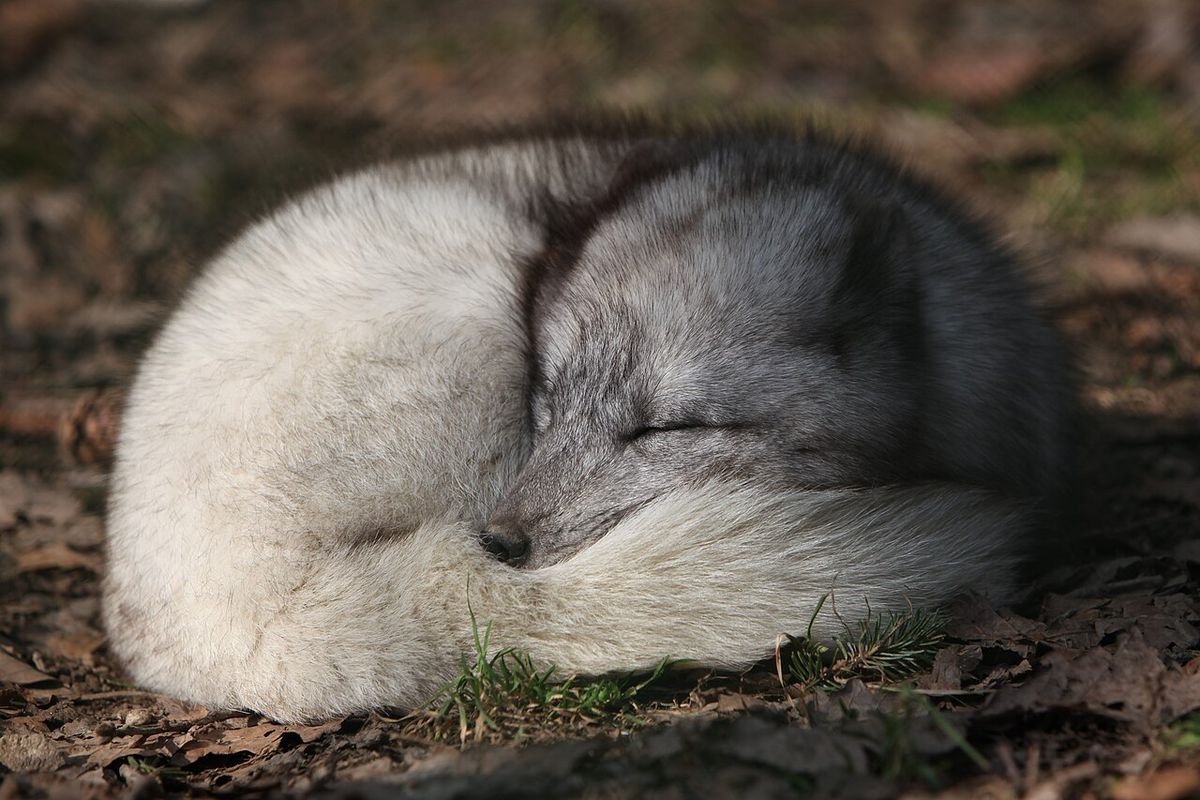
The Arctic fox is distinctly smaller than the common red fox, with a shoulder height of 25-30 cm. Males have an average head-to-rear length of 55 cm and weigh around 3.5 kg, while females average 52 cm in length and 2.9 kg in weight. This compact body shape, along with short legs, a short muzzle, and small, thick ears, creates a low surface area to volume ratio, which is a fundamental adaptation for minimizing heat loss in its freezing environment. The fox's large, bushy tail, about one-third of its body length, is used for both balance and warmth, as the animal will curl up and tuck its nose and feet under its body and tail to conserve heat. Its paws have fur on the soles, and it employs a remarkable countercurrent heat exchange system in its legs to keep footpad temperatures above freezing even when standing on snow and ice.
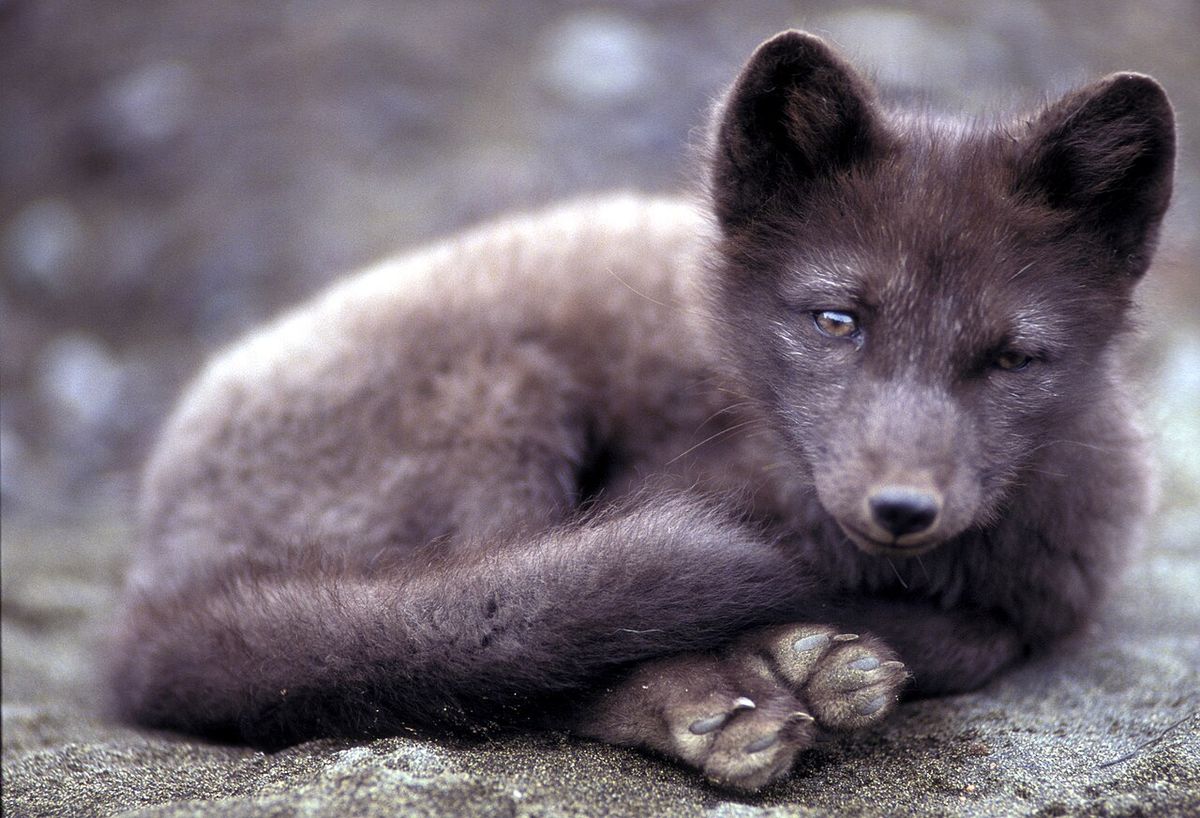
The species is most famous for its dense, multilayered fur, which provides the best insulation of any mammal. Arctic foxes undergo two molts per year, switching between a darker, shorter summer coat and a long, thick white or blue winter coat. The winter coat is twice as long as the summer coat, and its underfur is so effective that the fox's lower critical temperature, the point at which it must expend energy to stay warm, is as low as -7°C in winter. Two main colour morphs exist genetically: the white morph and the blue morph. The white morph turns pure white in winter and is brownish in summer, while the blue morph remains a darker grey, brown, or black year-round, becoming slightly lighter in winter. In the global population, the white morph is dominant, comprising about 90% of all Arctic foxes.
Further physiological adaptations allow the Arctic fox to thrive. Its basal metabolic rate drops by 27% in winter compared to summer, as it slows its metabolism to conserve fat reserves stored during autumn. During this fattening period, an Arctic fox can increase its body weight by more than 50%. The fox also possesses advantageous genes related to fatty acid and glucose metabolism, such as GLTPD1 and AKT2, which help it endure periods of extreme cold and starvation. These combined traits enable the fox to endure temperature differences of up to 90-100°C between its external environment and its stable internal core temperature.
Distribution and Habitat in Canada
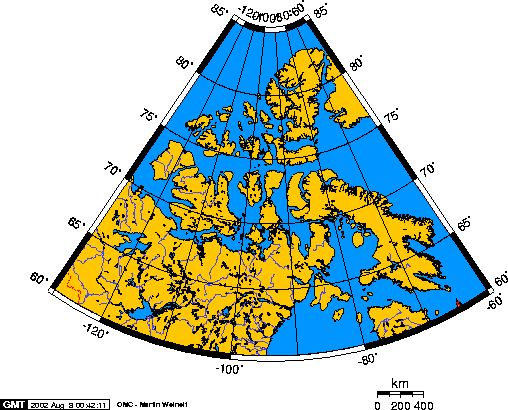
The Arctic fox has a circumpolar distribution and is found across the Arctic tundra of northern Europe, Asia, and North America. In Canada, its range extends from the Arctic islands of Nunavut throughout the mainland tundra of the Northwest Territories and Yukon, and as far south as the coasts of Hudson Bay. The species also inhabits the boreal forest regions of northern Saskatchewan, northern Manitoba, Northern Ontario, Northern Quebec, and Newfoundland and Labrador. It is an animal of the open tundra and pack ice, but it can also be found in certain forested areas and on mountain slopes up to 3,000 metres in elevation. Historically, its range was more extensive during the last ice age, with fossil remains found across northern Europe and Siberia.
The distribution of the two colour morphs is influenced by habitat. The white morph is predominantly found inland on the snowy tundra, where its winter camouflage is most effective. The blue morph is more common in coastal regions, such as parts of Iceland and Fennoscandia, where its darker fur blends with rocky cliffs and shorelines. In Canada, both morphs are present, with their prevalence varying by local geography. The fox is the only native land mammal in Iceland, having arrived at the end of the last ice age by walking over frozen sea ice. While locally extinct in some areas like Jan Mayen, populations persist across the Canadian Arctic, though they face pressures from climate change and increased competition.
Arctic foxes exhibit different movement patterns. About 95% of foxes make short commuting trips within their home range, journeys that last less than three days. A smaller percentage, around 3.4%, are nomadic, undertaking long-distance travels. Some Canadian Arctic foxes are known to make remarkable loop migrations or nomadic voyages from the Canadian Arctic Archipelago to Greenland and northwestern Canada. These movements are not significantly different in duration or distance between males and females and are likely driven by the search for food in a harsh and unpredictable environment.
Diet and Hunting Strategies
The Arctic fox is an opportunistic and omnivorous feeder, with a diet that shifts dramatically with availability and season. Its primary prey across much of its range are small rodents, particularly lemmings and voles. When lemming populations are high, a single family of foxes can consume dozens of lemmings each day, and the foxes' own reproductive success is tightly linked to lemming abundance. In coastal areas and on islands like Iceland, the diet shifts to predominantly birds and their eggs. The fox is a significant egg predator, consuming eggs from all but the largest tundra bird species, and it can efficiently locate and raid nests.
To survive the harsh Arctic winter when fresh prey is scarce, Arctic foxes employ several strategies. They actively scavenge, often following larger predators like polar bears and wolves to feed on the remains of seals or caribou. They are known to eat the feces of these larger animals in times of extreme scarcity. A crucial survival behaviour is food caching. The foxes hoard surplus food, particularly during the abundant summer bird-nesting season. In Canada, Arctic foxes have been observed collecting snow goose eggs at a rate of 2.7 to 7.3 eggs per hour and caching 80% to 97% of them in shallow holes or under rocks and vegetation. Research using isotope analysis has shown that cached eggs remain a viable food source for long periods, with their metabolizable energy decreasing by only about 11% after 60 days, and eggs stored in summer are often retrieved and eaten the following spring.
- Primary Prey: Lemmings, voles, and other small rodents.
- Seasonal Prey: Ringed seal pups in spring, migrating birds and eggs in summer.
- Scavenged Food: Carrion from wolf, polar bear, and human kills.
- Plant Matter: Berries, seaweed, and other available vegetation.
- Caching Behaviour: Stores thousands of eggs and bird carcasses for winter consumption.
- Winter Survival: Relies on cached food and up to 14,740 kJ of energy from stored body fat.
Reproduction and Family Life
Arctic foxes are primarily monogamous, with breeding pairs forming in the early spring and working together to raise their young. The breeding season typically occurs in April and May, with a gestation period of about 52 days. Pups are born in late spring or early summer inside elaborate underground dens. These dens are not simple burrows but complex, multi-entrance tunnel systems that can cover up to 1,000 square metres. They are often dug into the well-drained, frost-free soil of eskers or other raised ground and may be used by many generations of foxes over decades. Parents select dens that face south for warmth and are situated in rugged terrain for protection from predators.
Litter size is highly variable and directly tied to food availability. Inland white morph foxes, which depend on cyclic lemming populations, may have litters ranging from 6 to 18 pups in a good year but may not reproduce at all when lemmings are scarce. Coastal blue morph foxes, with a more consistent food supply from birds and marine resources, typically have smaller, more stable litters of 5 to 6 pups each year. The largest recorded litters can contain up to 25 pups, which is the greatest litter size in the order Carnivora. Newborn pups are tiny, blind, and deaf, weighing only 60-90 grams. They emerge from the den at 3 to 4 weeks of age and are weaned by 7 weeks, and their fur remains dark until they are about 8 weeks old.
Social structure can vary with environmental conditions. In areas with abundant resources, such as the coasts of Svalbard or regions where conservationists provide supplemental food, social structures become more complex. Larger packs, which may include non-breeding offspring from the previous year, can form to help guard the territory and assist in raising the pups, increasing overall survival rates. This phenomenon is an example of kin selection, where older siblings remain to help raise their younger siblings. In Scandinavia, the presence of competitive red foxes may also encourage more complex social groupings. In contrast, in resource-scarce environments or in Iceland, the classic monogamous pair is the most common social unit. The average lifespan after reaching adulthood is 3 to 4 years, though exceptional individuals in the wild can live to 11 years of age.
Predators, Threats, and Conservation
The Arctic fox faces predation from a variety of larger Arctic carnivores and birds of prey. Key predators include Arctic wolves, polar bears, wolverines, and red foxes. Avian predators such as golden eagles, bald eagles, and snowy owls will also take foxes, particularly pups. The red fox represents a significant competitor and direct threat. As climate change allows red foxes to expand northward, they increasingly encroach on Arctic fox territory, compete for food, and may kill them. Introduced threats, such as free-roaming domestic dogs in northern communities, can also pose a danger to local fox populations.
Beyond natural predation, the species faces broader anthropogenic threats. Climate change is altering the Arctic ecosystem rapidly, affecting snow cover, lemming population cycles, and the extent of sea ice. Reduced sea ice limits the foxes' ability to travel and hunt, and warmer temperatures can favour the expansion of red foxes into the tundra. In some regions, such as the Aleutian Islands where Arctic foxes were introduced in the 19th century, they are considered an invasive species threatening native bird populations and are subject to eradication programs. Historically, the fox was heavily trapped for its valuable fur, though regulated trapping continues today in Canada under sustainable harvest management plans.
| Predator/Threat | Type of Impact |
|---|---|
| Red Fox | Competition, direct predation, territory encroachment |
| Golden Eagle & Snowy Owl | Predation on pups and adults |
| Climate Change | Habitat alteration, reduced sea ice, disrupted prey cycles |
| Historical Over-trapping | Population reduction for fur trade |
| Introduced Species (Aleutians) | Eradication programs due to impact on birds |
In Canada, the Arctic fox is currently classified as Not at Risk by the Committee on the Status of Endangered Wildlife in Canada (COSEWIC). Population sizes naturally fluctuate with prey availability, making overall trends difficult to assess. Conservation efforts are focused on monitoring populations, researching the impacts of climate change, and, in some cases, providing supplemental feeding to support declining groups. The Arctic Fox Center in Súðavík, Iceland, serves as a research and education hub, studying the species and the effects of tourism on local populations. Protecting the vast, intact tundra ecosystems of northern Canada remains the most important long-term conservation strategy for the species.
Taxonomy and Evolution
The Arctic fox is a 'true fox' belonging to the genus Vulpes within the canid family. It was originally described by Carl Linnaeus in 1758 as Canis lagopus. For a time, it was placed in its own monotypic genus, Alopex, but genetic evidence has firmly placed it within Vulpes. Its specific name, lagopus, is derived from Ancient Greek words for "hare" and "foot," a reference to the hairy soles of its feet which are similar to those of cold-climate hares. The Arctic fox diverged from its closest relative, the red fox, approximately 3.17 million years ago, and from its sister species, the kit fox of North America, about 0.9 million years ago.
The evolutionary origins of the Arctic fox are described by the "out of Tibet" hypothesis. Fossils of an extinct ancestor, Vulpes qiuzhudingi, dating from the early Pliocene (5.08-3.6 million years ago), have been found on the Tibetan Plateau. This ancient fox lived in a cold, tundra-like environment on the plateau alongside other precursors of modern Arctic mammals. Researchers believe that as global climates cooled during the Pleistocene ice ages, these cold-adapted species, including the ancestor of the Arctic fox, spread from the high Tibetan Plateau across Eurasia and into North America, colonizing the expanding Arctic tundra habitats.
Several subspecies of the Arctic fox have been described. Besides the nominate subspecies, which is the common Arctic fox (Vulpes lagopus lagopus), four other subspecies are recognized. These are the Bering Islands Arctic fox (V. l. beringensis), the Greenland Arctic fox (V. l. foragoapusis), the Iceland Arctic fox (V. l. fuliginosus), and the Pribilof Islands Arctic fox (V. l. pribilofensis). These subspecies reflect the fox's vast circumpolar distribution across Arctic tundra habitats. Their range includes northern Europe, northern Asia, North America, Iceland, Greenland, Svalbard, and islands in the Bering Sea.
Questions about Arctic fox
What does an Arctic fox eat?
The Arctic fox has a highly varied, opportunistic diet. Its primary food source is small rodents, especially lemmings and voles. It also preys on birds and their eggs, fish, and ringed seal pups in the spring. As an omnivore and scavenger, it consumes berries, seaweed, and carrion left by wolves or polar bears. To survive winter scarcity, it heavily relies on food it has cached during the abundant summer months, such as thousands of buried bird eggs.
Where can you find Arctic foxes in Canada?
Arctic foxes are found across the Canadian Arctic. Their range includes all three northern territories, Nunavut, the Northwest Territories, and the Yukon, as well as the northern regions of several provinces. They inhabit the tundra surrounding Hudson Bay in northern Manitoba, Ontario, and Quebec, and can be found in Newfoundland and Labrador. They also live on the Arctic islands and are known to travel on sea ice far from land.
How does the Arctic fox survive the extreme cold?
The fox survives through a suite of remarkable adaptations. Its most famous feature is its incredibly dense winter fur, which provides the best insulation of any mammal. It has a compact body, short extremities, and a heat-exchange system in its legs to prevent heat loss from its paws. Physiologically, it can lower its metabolic rate in winter to conserve energy and builds substantial fat reserves in autumn. Behaviourally, it shelters in complex dens and curls into a tight ball, using its bushy tail as a blanket.
What is the difference between a white and a blue Arctic fox?
The two types are colour morphs caused by genetic differences. The white morph fox has a brown summer coat that turns pure white in winter, providing camouflage on snowy tundra. The blue morph fox remains a darker grey, brown, or blackish colour year-round, only lightening slightly in winter. It is better camouflaged on rocky coastlines. The white morph is far more common globally, making up about 90% of the population, while the blue morph is prevalent in coastal regions like Iceland.
Are Arctic foxes endangered?
Globally, the Arctic fox is considered a species of Least Concern, but some regional populations are threatened. In Canada, it is officially classified as Not at Risk by COSEWIC. The main threats come from climate change, which alters its habitat and prey base and increases competition from northward-moving red foxes. Historical over-trapping impacted populations, but today regulated harvests are managed. Conservation efforts include monitoring, habitat protection, and, in some cases, supplemental feeding programs.
How many babies do Arctic foxes have?
Litter size is highly variable and directly linked to food supply. In a good year when lemmings are abundant, a white morph fox can have 6 to 18 pups. The largest recorded litters can contain up to 25 pups, the biggest in the carnivore order. Coastal blue morph foxes, with more stable food from birds and marine life, typically have 5 to 6 pups annually. In years of severe food scarcity, foxes may not reproduce at all. The pups are born in large underground dens and are cared for by both parents.
Sources and further reading
- Arctic fox (Wikipedia)
- Arctic Fox (kids.nationalgeographic.com)
- Arctic Fox (Alopex lagopus) Printer Friendly (adfg.alaska.gov)
- Interesting facts about Arctic foxes (ifaw.org)
- Interesting Facts About Arctic Foxes (defenders.org)
Checked by the Your Space Hamilton desk. Last updated 2026-10-20.