Arctic wolf
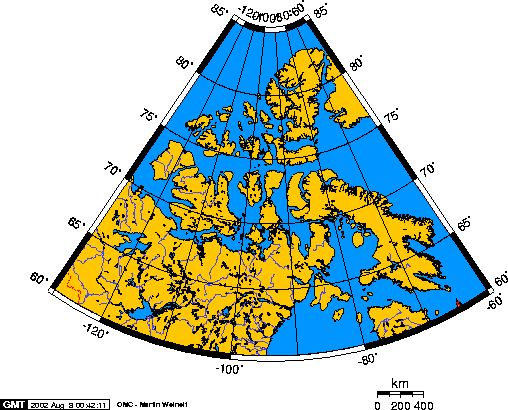
The Arctic wolf (Canis lupus arctos), also known as the white wolf or polar wolf, is a medium-sized subspecies of grey wolf native to the High Arctic tundra of Canada. Its range is centred on the Queen Elizabeth Islands, including Melville and Ellesmere Islands, and it spends its entire life north of the northern treeline. This Canadian carnivore is distinguished by its predominantly white fur, smaller size compared to mainland wolves, and a notable lack of fear towards humans due to its extreme isolation. The Arctic wolf is a key part of its fragile tundra ecosystem, primarily preying on muskoxen and Arctic hares, and its conservation status is currently listed as least concern, though it faces challenges from climate variability.
Taxonomy and Classification
The Arctic wolf was formally attributed the subspecies name Canis lupus arctos in 1935 by British zoologist Reginald Pocock, based on a specimen from Melville Island. Pocock noted that similar wolves inhabited Ellesmere Island and also identified a separate Greenland wolf subspecies. For decades, this classification was widely accepted, with the Arctic wolf recognized as a distinct subspecies in authoritative works like Mammal Species of the World (2005). A 2012 study using autosomal microsatellite and mitochondrial DNA data found the Arctic wolf possesses no unique genetic haplotypes, suggesting its colonization of the Arctic Archipelago from mainland North America was relatively recent and may not warrant full subspecies distinction.
This conclusion was discussed at a 2014 meeting convened by the United States Fish and Wildlife Service, where geneticist Robert K. Wayne presented a counter argument. Wayne disagreed with the notion that genetic distinctness was the sole criterion for subspecies designation, proposing that populations could grade into one another. He suggested that while individual wolves might not be distinguishable by DNA, the Arctic wolf population as a whole could be identified by differing proportions of specific single-nucleotide polymorphisms (SNPs). Wayne further argued that the unique High Arctic habitat occupied by these wolves was itself a significant characteristic justifying their subspecies classification. This ongoing scientific discussion highlights the complexity of defining subspecies in widely roaming canids like wolves.
Physical Description and Adaptations
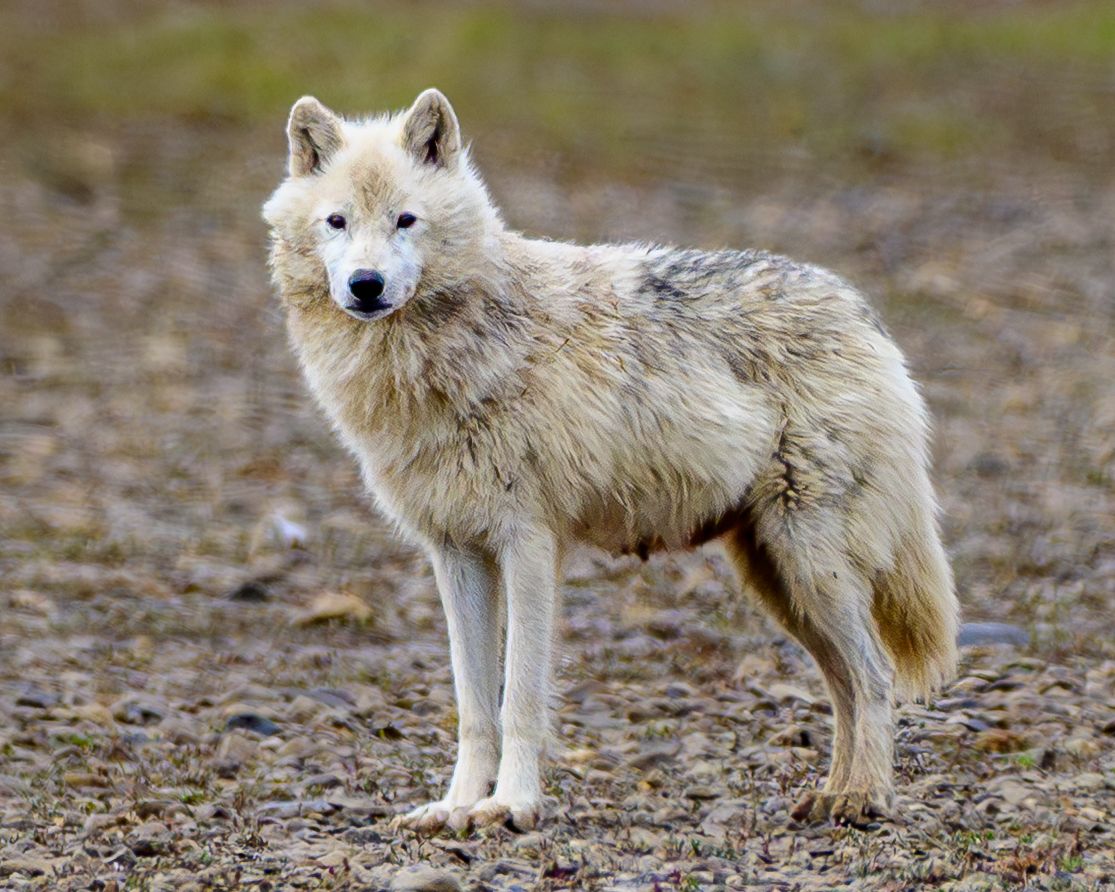
The Arctic wolf is a medium-sized subspecies, generally smaller than the northwestern wolf found in mainland Canada. Adults typically weigh between 70 and 175 pounds and measure from 3.2 to 5.9 feet in length. Its most recognizable feature is its year-round white fur, a long, silky coat with a soft, thick underlayer that provides essential insulation against the extreme cold of its habitat. This white colouration offers perfect camouflage against the snowy and icy landscapes of the High Arctic, aiding in both hunting and avoiding detection. The subspecies is further distinguished by a narrower braincase and larger carnassial teeth compared to other grey wolves, adaptations linked to its specific diet and environment.
Research has indicated a notable physical change in the subspecies over the past century. Since 1930, there has been a documented progressive reduction in the size of Arctic wolf skulls. The leading hypothesis for this morphological shift is wolf-dog hybridization, suggesting some historical interbreeding with domestic dogs, though the extent and timing of such events are not fully detailed. Despite this size reduction, the Arctic wolf remains a powerful and efficient predator, superbly adapted to one of the planet's most challenging environments. Its physical form is a direct result of evolutionary pressures to conserve heat and thrive in a landscape with limited resources and prolonged periods of darkness.
Behaviour and Interaction with Humans
Arctic wolf behaviour is notably distinct from most other wolf populations due to its great isolation. These wolves exhibit very little fear of humans, a trait attributed to minimal exposure over generations. In the remote reaches of the High Arctic, they often view humans with cautious curiosity rather than instinctive avoidance. Historical accounts, such as those from Otto Sverdrup's Fram expedition, describe wolves shadowing human explorers while maintaining a safe distance. More direct encounters have been recorded, including a 1977 incident on Ellesmere Island where six wolves approached a pair of scientists, with one animal leaping and grazing a researcher's cheek.
In areas with sustained human presence, this lack of fear can lead to habituation and occasional conflict. The community of Alert, Nunavut, where wolves have lived near a weather station for decades, has experienced incidents involving aggressive wolves. In one case, a wolf that attacked three people was shot and later tested positive for rabies, indicating disease can be a factor in rare aggressive encounters. For most Canadians, viewing these unique behaviours is possible through zoo programs. The Toronto Zoo, for example, featured Arctic wolf social life and howls in an October 2026 video, while the Edmonton Valley Zoo generated excitement with the arrival of three Arctic wolf pups in late April of a recent year.
- Exhibit minimal fear of humans due to extreme isolation.
- May approach humans with cautious curiosity in remote areas.
- Historical accounts note them shadowing explorers like those on the Fram expedition.
- Rare aggressive incidents, as in Alert, Nunavut, can be linked to habituation or disease.
- Canadian zoos like the Toronto Zoo and Edmonton Valley Zoo offer public viewing and educational programs.
- The Edmonton Valley Zoo acquired a pair of female Arctic wolves from France ahead of a recent Family Day.
Diet and Hunting
The Arctic wolf's diet is specialized for the sparse resources of the tundra, primarily revolving around two key species: muskoxen and Arctic hares. These wolves are also known to prey on lemmings, caribou, Arctic foxes, various birds, and even beetles. Scavenging behaviour has been observed, including wolves going through human garbage, though this is not a consistent food source due to its regional and seasonal unpredictability. There is ongoing scientific debate regarding whether muskoxen or Arctic hares constitute the primary prey, forming a complex hare-wolf-muskox predator-prey system. Evidence supporting muskoxen as the staple points to their provision of long-term viability, with other ungulates being largely absent from the wolves' diet.
Conversely, other studies suggest a greater dependence on Arctic hares, noting that mature wolf population numbers have paralleled hare population increases more closely than muskox availability. The degree of reliance on each source is uncertain and varies significantly by season and year. This debate extends to the diet of young wolves. One study indicates muskox calves are a primary food source to meet the greater nutritional needs of pups, while another suggests wolves commonly fed abundant hares to their pups during summer months. These dietary differences may also be attributed to specific locations across the vast Arctic range. Encounters with polar bears are rare, though there are two documented records of wolf packs successfully killing polar bear cubs.
Habitat and Movement
The Arctic wolf is endemic to the High Arctic tundra, with its core range in Canada encompassing the Queen Elizabeth Islands from Melville Island to Ellesmere Island. Its southward distribution is limited to the northern fringes of the Middle Arctic tundra on islands like the southern half of Prince of Wales and Somerset Islands. Unlike other wolf populations that may migrate between forest and tundra, Arctic wolves spend their entire lives north of the northern treeline, intimately tied to the frozen landscape. This extreme habitat offers relative safety from many human threats due to its remoteness, but it also presents significant challenges for researchers studying the animals.
Very little is known about the detailed movement patterns of Arctic wolves, primarily due to the harsh climate and logistical difficulties. The only known migratory period occurs during the continuous darkness of the winter, when 24-hour night prevails and temperatures can plunge as low as -53°C. This makes tracking and observation exceptionally difficult. One winter movement study was conducted about 2,250 kilometres south of the High Arctic, under similar conditions of complete darkness and extreme cold. The researchers confirmed that wolves in that area preyed mainly on muskoxen, but specific information on the wolves' movement patterns in relation to their muskox prey remains unavailable. The inaccessibility of their range means much of their life history, including detailed pack territories and seasonal travel routes, is still a subject for future discovery.
Conservation Status and Population
As of 2026, the Arctic wolf is classified as Least Concern on the conservation scale, indicating it is not currently at immediate risk of extinction. Its population is stable in its remote Arctic stronghold, largely insulated from the habitat loss and persecution that affect many southern wolf populations. However, the subspecies is not without threats and has experienced population fluctuations linked to environmental conditions. A notable decline in Arctic wolf numbers occurred in 1997, corresponding with a drop in the populations of its primary prey, muskoxen and Arctic hares. This decline was driven by a series of unfavourable summer weather conditions that persisted for four consecutive years, impacting the availability of food.
The resilience of the Arctic wolf was demonstrated the following summer when weather patterns returned to normal, allowing both wolf and prey populations to recover. This event highlights the direct link between the wolf's survival and the stability of its ecosystem, which is vulnerable to climatic shifts. Long-term threats potentially include the broader impacts of climate change on the Arctic environment, though the wolf's extreme isolation currently protects it from more direct human pressures like hunting and industrial development. Continued monitoring is essential to understand how changing Arctic conditions may affect the delicate balance of this predator-prey system in the future.
Arctic Wolves in Canadian Zoos
Several Canadian zoological institutions are important for educating the public about Arctic wolves through captive breeding and display programs. These facilities provide most Canadians with their only opportunity to observe this remote subspecies and learn about its biology. The Toronto Zoo has a notable Arctic wolf exhibit, which was the subject of a dedicated video in October 2026. The video highlighted their daily activities, such as lounging in the sun and social interactions, bringing attention to their complex social lives and characteristic howls. The zoo emphasizes the wolves' physical adaptations, including their year-round white fur which provides camouflage in their native habitat.
The Edmonton Valley Zoo in Alberta is another centre for Arctic wolf conservation and education. The zoo generated significant public excitement with the arrival of three Arctic wolf pups born in late April of a recent year. The zoo is home to a resident female wolf named Shilah, who was part of an educational segment with host Alex Smyth. In a move to enhance its pack genetics and educational value, the Edmonton Valley Zoo also announced the arrival of a pair of female Arctic wolves from France ahead of a Family Day Monday celebration. These zoo populations serve as ambassadors for their wild counterparts, fostering a connection between the public and the conservation of Canada's High Arctic wildlife.
| Zoo | Recent Activity/Feature | Year Noted |
|---|---|---|
| Toronto Zoo | Video feature on social life and howls | 2026 |
| Edmonton Valley Zoo | Arrival of three Arctic wolf pups | Recent (late April) |
| Edmonton Valley Zoo | Arrival of two female wolves from France | Recent (before Family Day) |
| Edmonton Valley Zoo | Educational feature with wolf Shilah | Recent |
Questions about Arctic wolf
Where can you find Arctic wolves in Canada?
Arctic wolves are native to the High Arctic tundra of Canada, specifically the Queen Elizabeth Islands. Their range includes Melville Island and Ellesmere Island, and they spend their entire lives north of the northern treeline. Their distribution extends south only to the northern fringes of the Middle Arctic tundra on islands like the southern half of Prince of Wales and Somerset Islands. Due to their remote habitat, most Canadians only see them in zoological institutions like the Toronto Zoo or the Edmonton Valley Zoo.
What do Arctic wolves eat?
The primary diet of Arctic wolves consists of muskoxen and Arctic hares. They are also known to prey on lemmings, caribou, Arctic foxes, birds, and beetles, and have been observed scavenging through garbage when available. There is scientific debate over whether muskoxen or hares are the more crucial food source, as reliance varies by season and location. Rarely, they may encounter polar bears, with two records of wolf packs killing polar bear cubs.
Are Arctic wolves dangerous to humans?
Arctic wolves are generally not dangerous to humans and exhibit very little fear due to their extreme isolation and lack of exposure. They often approach humans with cautious curiosity in remote areas. However, in places with sustained human presence like Alert, Nunavut, habituation has led to rare aggressive incidents. One such wolf that attacked three people was found to be rabid, indicating disease can be a factor in unusual behaviour.
Can you see Arctic wolves at Canadian zoos?
Yes, several Canadian zoos house Arctic wolves for conservation and education. The Toronto Zoo has an exhibit that was the subject of a 2026 video on their social behaviour. The Edmonton Valley Zoo has been active, celebrating the birth of three pups in a recent April and acquiring two new female wolves from France. These zoos offer the public a chance to learn about the wolves' adaptations and their role in the Arctic ecosystem.
How are Arctic wolves different from other grey wolves?
Arctic wolves are physically distinguished from other grey wolves by their smaller size, whiter year-round colouration, narrower braincase, and larger carnassial teeth. They are a subspecies native specifically to the High Arctic tundra of Canada's Queen Elizabeth Islands, spending their entire lives north of the northern treeline. Behaviourally, they are relatively unafraid of humans, a trait attributed to minimal human contact. Taxonomically, some genetic studies suggest their colonization of the Arctic was recent, leading to debate about their subspecies status, though they are often distinguished by habitat and specific genetic markers. Unlike some populations, Arctic wolves do not migrate between forest and tundra regions.
What is the conservation status of the Arctic wolf?
The Arctic wolf is classified as Least Concern. It faces threats primarily from environmental fluctuations rather than direct human activity due to its remote habitat. For instance, a population decline occurred in 1997 after several years of unfavourable summer weather conditions which reduced the availability of their primary prey, muskoxen and Arctic hares. The population recovered the following summer when weather conditions returned to normal. Their isolation in the High Arctic offers some protection from many common human threats, contributing to their stable conservation status.
Sources and further reading
- Arctic wolf (Wikipedia)
- Arctic Wolves: Diet, Habitat, Threats & Other Facts (ifaw.org)
- Arctic wolves and their prey, Mech (pmel.noaa.gov)
- Arctic Wolf Facts and Adaptations, Canis lupus arctos (coolantarctica.com)
Checked by the Your Space Hamilton desk. Last updated 2026-10-29.