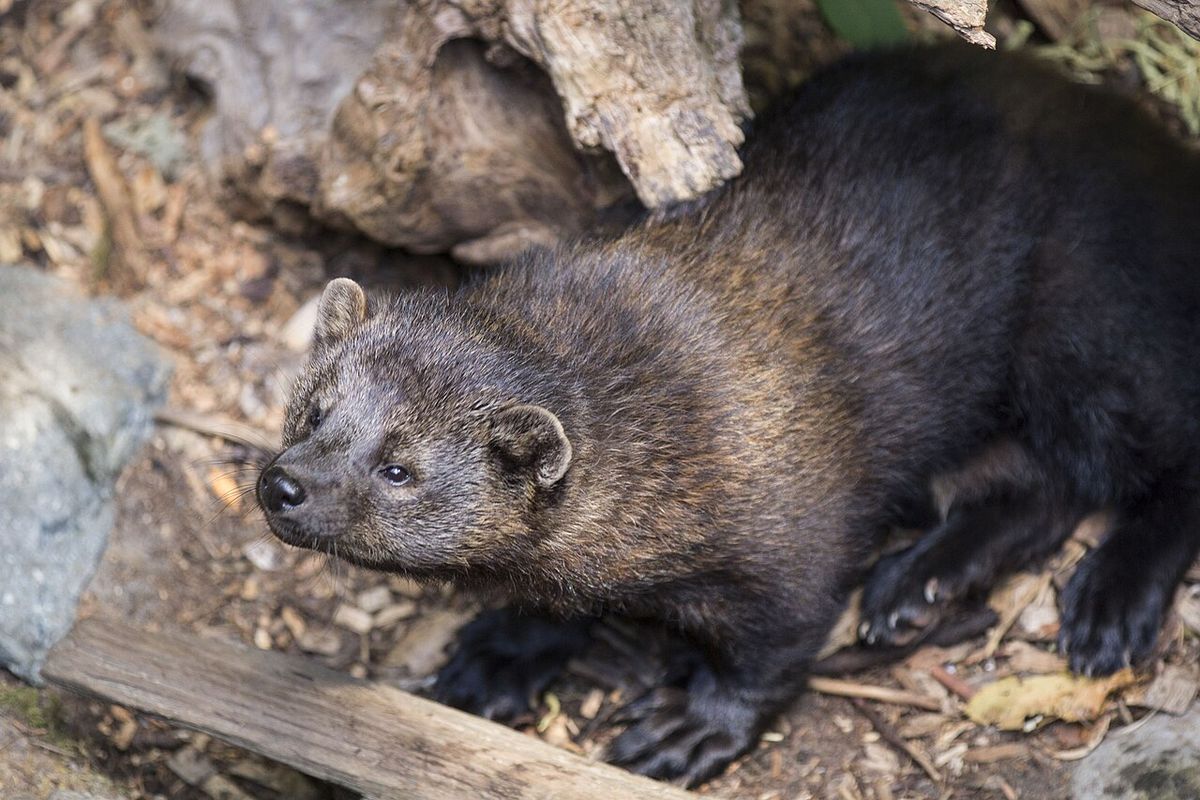
Coyote
The coyote (Canis latrans) is a medium-sized canine native to North America, known for its remarkable adaptability and distinctive vocalizations. Often called the prairie wolf or American jackal, this species has expanded its range dramatically from its original western plains habitat to occupy nearly every corner of the continent, including urban environments. Coyotes play a significant ecological role as predators and scavengers, and they hold a complex place in both Indigenous folklore and contemporary human-wildlife conflict. Their story is one of biological resilience and cultural symbolism, making them a subject of ongoing scientific study and public fascination across Canada.
Physical Description and Characteristics
Coyotes exhibit notable size variation across their range, with northern subspecies generally larger than their southern counterparts. Males typically weigh between 8 and 20 kilograms, while females are slightly smaller, ranging from 7 to 18 kilograms. Their total body length, including a bushy tail that measures about 40 centimetres, averages from 1.0 to 1.35 metres. The largest recorded coyote was a male killed near Afton, Wyoming, on November 19, 1937, which weighed 34 kilograms and measured 1.5 metres from nose to tail. Their physique is more slender and gracile than that of the gray wolf, featuring longer ears, a relatively larger braincase, and a thinner muzzle.
The coyote's fur is a mix of light gray, red, or fulvous, interspersed with black and white guard hairs. Geographic location influences colouration, with high-elevation coyotes tending toward more black and gray shades, while desert populations are often more fulvous or whitish-gray. The fur consists of a soft undercoat and longer, coarser guard hairs, with northern forms having longer and denser pelage. Distinctive physical traits include a bushy tail carried downward during movement, a white facial mask, and active supracaudal scent glands located at the upper side of the tail base which are a bluish-black colour. Albinism is exceptionally rare in the species, with only two albino specimens found among 750,000 coyotes killed by federal hunters between 1938 and 1945.
Coyote tracks can be distinguished from domestic dog tracks by their more elongated and less rounded shape. Unlike dogs, the upper canines of coyotes extend past the mental foramina in the jaw. The species' sagittal crest is low or flattened, indicating a bite force weaker than that of wolves. This cranial structure reflects the coyote's status as a less specialized carnivore compared to the gray wolf, with molars featuring larger chewing surfaces suited for processing vegetable matter in addition to meat.
Taxonomy, Evolution, and Genetic History
The coyote was first scientifically described by naturalist Thomas Say in September 1819 near the Council Bluffs on the Missouri River. His description was published in 1823, distinguishing the 'prairie wolf' from the larger Canis nubilus, or Great Plains wolf. The common name 'coyote' derives from the Nahuatl word coyōtl, entering English via Spanish. The first published usage was in Francisco Javier Clavijero's Historia de México in 1780. Its scientific name Canis latrans translates to 'barking dog,' a reference to its diverse vocal repertoire. Alternative English names include brush wolf, cased wolf, little wolf, and American jackal.
Evolutionary history traces the genus Canis back to the coyote-like Eucyon davisi from the Miocene epoch around six million years ago in the southwestern US and Mexico. By the Pliocene, the larger Canis lepophagus appeared, leading to the early Pleistocene emergence of C. latrans. Fossil records show the oldest specimens within the modern coyote range date to 0.74-0.85 million years ago in West Virginia. Pleistocene coyotes, classified as C. l. orcutti, were larger and more robust with teeth more adapted to shearing meat. Their reduction in size occurred within 1,000 years of the Quaternary extinction event, as large prey died out and gray wolves filled the big-game hunting niche.
Genetic studies reveal a complex history of hybridization. A 2016 whole-genome study proposed all North American wolves and coyotes diverged from a common ancestor about 51,000 years ago. Research indicates widespread genetic admixture, with most North American wolf populations containing some level of coyote ancestry, and all coyotes carrying some degree of wolf ancestry. The red wolf and eastern wolf are highly admixed with different proportions of gray wolf and coyote genes. A 2018 genomic study found coyotes from Missouri, Illinois, and Florida exhibit 5-10 percent wolf ancestry, while those from Alaska, California, Alabama, and Quebec show almost none. The study also indicated the common ancestor of coyotes and gray wolves admixed with a ghost population of an extinct canid genetically close to the dhole.
Habitat, Distribution, and Adaptability
At the time of the European colonization of the Americas, coyotes were largely confined to open plains and arid regions of the western half of the continent. In early post Columbian historical records, determining whether the writer is describing coyotes or wolves is often difficult. One record from 1750 in Kaskaskia, Illinois, written by a local priest, noted that the "wolves" encountered there were smaller and less daring than European wolves. This species was encountered several times during the Lewis and Clark Expedition from 1804 to 1806, though it was already well known to European traders on the upper Missouri. Meriwether Lewis, writing on 5 May 1805, in northeastern Montana, described the coyote as the small wolf or burrowing dog of the prairies. The coyote was first scientifically described by naturalist Thomas Say in September 1819.
They are now found from the Arctic tundra to Central America, and from the Atlantic to the Pacific coasts. This expansion includes successful colonization of urban and suburban landscapes, with populations established in many major cities. Their versatility allows them to thrive in environments heavily modified by humans, from agricultural fields to industrial parks. The species is extremely adaptable to changes in its territory, whereas other animals like bears and cougars are less flexible. Notable range expansions include the first sighting in eastern Panama in 2013, across the Panama Canal from their home range.
The coyote is versatile and able to adapt to and expand into environments modified by humans. Urban coyotes are common in many cities. The coyote was sighted in eastern Panama for the first time in 2013. It is highly flexible in social organization, living either in a family unit or in loosely knit packs of unrelated individuals. Primarily carnivorous, its diet consists mainly of deer, rabbits, hares, rodents, birds, reptiles, amphibians, fish, and invertebrates, though it may also eat fruits and vegetables on occasion. The species fills much of the same ecological niche as the golden jackal does in Eurasia, but the coyote is generally larger.
Behaviour, Diet, and Social Structure
Coyotes are highly flexible in their social organization. They may live in nuclear family units consisting of a mated pair and their offspring, or in loosely knit packs of unrelated individuals. This social variability helps them exploit different types of habitats and food sources. Lewis noted in 1805 that they 'usually associate in bands of ten or twelve sometimes more' and burrow near passes frequented by game. They are primarily nocturnal but can be active during the day, especially in areas with less human disturbance.
Their characteristic vocalization is a howl that changes rapidly in tone and pitch, used for long-distance communication within and between groups. Their diet is omnivorous and opportunistic, though predominantly carnivorous. It consists mainly of deer, rabbits, hares, rodents, birds, reptiles, amphibians, fish, and invertebrates. They will also consume fruits and vegetables when available. Coyotes employ various hunting techniques, from solitary stalking to cooperative pack hunting for larger prey like deer, as they are rarely able to take deer alone.
Their breeding season occurs in the winter months from January to March, with pups born in April or May. Litters typically number five to seven pups, which are reared in dens often repurposed from other animals or dug in well-concealed locations. The coyote's ecological niche in North America is similar to that of the golden jackal in Eurasia, though the coyote is generally larger. As predators and scavengers, they help control rodent and rabbit populations and clean up carrion. Their foraging behaviour brings them into contact with human settlements, where they seek easily accessible food like garbage, fallen fruit, or unattended pet food.
Cultural Significance and Human Perceptions
In the folklore of many Indigenous cultures, particularly in Aridoamerica, the coyote is a prominent trickster figure. It is depicted as a clever character that uses deception and humour to challenge social conventions, alternately assuming the form of a coyote or a man. As with other trickster figures, the coyote rebels against social conventions through these methods. In Mesoamerican cosmology, the animal was respected as a symbol of military might. Following European colonization, Anglo-American culture often portrayed the coyote as cowardly and untrustworthy, a perception that has proven persistent.
As of 2012, public attitudes towards coyotes remain largely negative, especially when compared to the improving image of wolves. They are frequently viewed as pests or threats, leading to widespread persecution. This cultural animosity exists alongside a growing movement to promote coexistence and highlight the coyote's ecological importance and intelligence. Project Coyote, an organization founded in 2008, works to change these perceptions, stating that coyotes represent the most egregious example of unethical and unscientific wildlife management in the United States. Project Coyote's 2026 observance week ran from March 16 to 22, dedicated to nurturing awareness and changing public perception of this native species.
The coyote is a prominent character in Native American folklore, mainly in Aridoamerica, usually depicted as a trickster that alternately assumes the form of an actual coyote or a man. As with other trickster figures, the coyote uses deception and humor to rebel against social conventions. The animal was especially respected in Mesoamerican cosmology as a symbol of military might. After the European colonization of the Americas, it was seen in Anglo American culture as a cowardly and untrustworthy animal. Unlike wolves, which have seen their public image improve, attitudes towards the coyote remain largely negative as of 2012.
Conservation Status and Human Conflicts
The coyote is listed as Least Concern by the International Union for Conservation of Nature due to its wide distribution and abundance. Its greatest threat is humans, followed by cougars and gray wolves. Despite their stable population, coyotes face intense and systematic persecution. In the United States, it is estimated that at least one coyote is killed every minute through methods including trapping, poisoning, hounding, aerial gunning, and wildlife killing contests. This makes them the most persecuted native carnivore in North America, subjected to year-round killing with little public scrutiny.
Organizations like Project Coyote work to promote ethical management and coexistence through education, science, and advocacy. The founder noted that during her work with the Animal Protection Institute, she saw how many native carnivores could be killed in unlimited numbers with little awareness. Coexistence strategies focus on securing anthropogenic food sources, such as garbage and pet food, and using non-lethal deterrents. For instance, coyotes can be scared away from private property by cameras, lights, and AI alarms, as they tend to run away very fast when encountering such devices.
The core message for the public is that seeing a coyote is not cause for alarm, as they are simply searching for food, water, and shelter like other urban wildlife. The species' resilience in the face of extermination campaigns, often used to justify further killing, is a central point of contention. Their ability to rebound and adapt to new environments, from deserts and forests to suburbs and cities, is a key biological trait. However, this very adaptability increases interactions with humans, leading to conflict, and practical tools for communities include information on coyote behaviour, securing attractants, and hazing techniques to reinforce natural wariness of people.
Subspecies and Hybridization
As of 2005, 19 subspecies of coyote are recognized. Geographic variation is not extreme, but general trends exist across the continent. Eastern subspecies like C. l. thamnos and C. l. frustor are large, dark-coloured animals. Size and colour gradually pale moving westward and northward through subspecies such as C. l. texensis and C. l. incolatus. Brighter ochraceous tones, deep orange or brown, appear towards the Pacific coast in subspecies like C. l. ochropus. Mexican and Central American populations, including C. l. microdon and C. l. mearnsi, are generally smaller with darker reddish fur and shorter muzzles. The eastern coyote, found in northeastern North America, is a larger subspecies resulting from historical hybridization with wolves.
Coyotes can hybridize with domestic dogs, producing offspring colloquially known as 'coydogs.' Such matings are rare in the wild because the mating cycles of dogs and coyotes do not coincide and coyotes are usually antagonistic towards dogs. Hybridization usually occurs only when coyotes are expanding into areas where few other coyotes are present and dogs are the only alternative mates. Even then, pup survival rates are lower because dogs do not form pair bonds with coyotes, making rearing pups difficult. In captivity, first-generation hybrids tend to be more mischievous and less manageable as pups than dogs, and are less trustworthy on maturity than wolf-dog hybrids.
Coyotes also interbreed with eastern wolves and red wolves, producing fertile hybrids often called 'coywolves,' but they have never been known to mate with gray wolves in the wild. Both first and second-generation hybrids resemble their coyote parents in terms of shyness and intrasexual aggression. Hybrids are fertile and can be successfully bred through four generations. The variation in appearance among hybrids is significant, with first-generation animals tending to be intermediate in form between dogs and coyotes, while second-generation hybrids are more varied. This capacity for hybridization has played a major role in the genetic makeup of canids across North America.
Questions about Coyote
What should I do if I see a coyote?
Seeing a coyote should not be a cause for alarm. Like all urban wildlife, they are searching for food, water, and shelter. To encourage them to move along, make yourself appear large, make loud noises, and maintain eye contact. Do not run. Secure potential food sources like garbage, pet food, and compost. Using deterrents such as motion-activated lights, cameras, or alarms can also be effective, as coyotes are often scared by these devices and will run away very fast. The goal is to reinforce their natural wariness of humans without causing harm.
Are coyotes dangerous to humans or pets?
Coyotes are generally wary of humans and direct conflicts are rare. However, they are predators and may view small, unattended pets as potential prey. The greatest threat to coyotes is humans, followed by other large predators like cougars and gray wolves. To protect pets, especially small dogs and cats, supervise them outdoors, particularly at dawn and dusk. Keeping pets on a leash and installing coyote-proof fencing can reduce risks. Coyotes are highly adaptable and their presence in an area is a sign of a functioning ecosystem, but precautions should be taken to avoid habituation.
What is the difference between a coyote and a wolf?
Coyotes are significantly smaller than gray wolves, with longer ears and a more slender frame, face, and muzzle. They carry their tail downwards when moving, whereas wolves typically hold their tail horizontally. Coyote tracks are more elongated and less rounded than dog tracks. Ecologically, coyotes are less specialized carnivores than wolves, with teeth adapted for a more varied diet that includes vegetation, as shown by larger chewing surfaces on their molars. Genetically, most North American wolves contain some coyote ancestry, and eastern coyotes have significant wolf ancestry, leading to hybrid animals often called coywolves.
How long do coyotes live?
In the wild, coyote lifespan is often shorter due to factors like predation, disease, and human conflict. In captivity, where these threats are removed, coyotes may live up to 21 years or more. Their remarkable adaptability contributes to their survival across diverse and challenging environments. The species' resilience is demonstrated by its ability to rebound from intense persecution and expand its range despite widespread control efforts that kill hundreds of thousands of individuals annually.
What is Project Coyote and what is Coyote Awareness Week?
Project Coyote is a non-profit organization founded in 2008 that works to protect North America's wild carnivores and promote compassionate coexistence through education, science, and advocacy. It aims to bridge the gap between conservation and animal protection, grounded in science and guided by ethics. Coyote Awareness Week is an annual observance organized by Project Coyote to foster public education and shift perceptions about coyotes. In 2026, it ran from March 16 to 22, focusing on promoting coexistence, providing practical tools for communities, and highlighting the ecological and cultural importance of this native species.
Sources: Wikipedia and current public reporting, checked by the Your Space Hamilton desk. Last updated 2026-10-18.