Bobcat
The bobcat (Lynx rufus) is a medium-sized wild cat native to North America and the most common wild feline on the continent. Its range extends from southern Mexico through the contiguous United States into southern Canada, where it inhabits a diverse array of environments from swamps and forests to desert scrublands and urban edges. Recognizable by its tufted ears, spotted coat, and distinctive short "bobbed" tail, the bobcat is an adaptable and solitary predator with a diet centred on rabbits and hares. In Canada, its presence is notable in provinces like Nova Scotia and Ontario, though its northern expansion is limited by deep snow and competition with its close relative, the Canada lynx.
Taxonomy and Evolution
The bobcat's scientific name, Lynx rufus, has its origins in the late 18th century, but its taxonomic history is complex. In the 19th and 20th centuries, numerous subspecies were proposed based on specimens from different regions, ranging from Florida to Nova Scotia and Mexico. A major revision in 1981 challenged the validity of many of these subspecies due to minor physical differences across the bobcat's wide geographic range. The most current understanding, following a 2017 revision of cat taxonomy, recognizes only two valid subspecies. These are Lynx rufus rufus, found east of the Great Plains, and Lynx rufus fasciatus, found west of the Great Plains.
The bobcat's evolutionary story is intertwined with the history of the genus Lynx in North America. It is thought to have evolved from the Eurasian lynx, which crossed into North America via the Bering Land Bridge during the Pleistocene epoch. The first progenitors arrived as early as 2.6 million years ago, with the bobcat first appearing in the fossil record around 1.8 million years ago. An early population moved into southern North America and became isolated by glaciers, eventually evolving into the modern bobcat around 20,000 years ago. A second wave of lynx migration from Asia settled in the north, developing into the modern Canada lynx. The aridification of the Great Plains during interglacial periods likely separated the eastern and western bobcat populations, leading to the subspecies recognized today.
Physical Description
The bobcat is the smallest of the four lynx species, with a variable coat colour that generally ranges from tan to greyish brown. Its most distinctive markings are the black streaks on its body and the dark bars on its forelegs and short tail, the latter giving the animal its common name. The coat acts as camouflage, with bobcats in southwestern desert regions having the lightest fur and those in northern forests being the darkest. The face is wide due to facial ruffs, and the ears are black-tipped, pointed, and feature short tufts. Bobcat eyes are yellow with black slit-shaped pupils, and their vision and hearing are exceptionally sharp.
Adult bobcats measure from 47.5 to 125 centimetres in length from head to the base of the tail, with the tail itself adding another 9 to 20 centimetres. They stand about 30 to 60 centimetres tall at the shoulder. There is significant sexual dimorphism in weight. Adult males typically range from 6.4 to 18.3 kilograms, averaging about 9.6 kilograms, while females are smaller, ranging from 4 to 15.3 kilograms with an average of 6.8 kilograms. The largest bobcats on record are from eastern Canada and northern New England, consistent with Bergmann's rule, which states that animals tend to be larger in colder climates. Rare melanistic, or black, bobcats have been documented in Florida and New Brunswick.
Bobcat tracks are distinctive and can be distinguished from those of domestic cats. The tracks show four toes without claw marks due to their retractable claws, and they average about 45 millimetres in size. When walking, the bobcat directly registers, meaning its hind foot prints fall directly on top of its forefoot prints. Their tracks are generally larger than those of a house cat, and when running, bobcats can make strides of 1.2 to 2.4 metres.
Distribution and Habitat in North America
The bobcat is a highly adaptable species with a historical range stretching from Oaxaca, Mexico, throughout the contiguous United States, and into southern Canada. It persists across much of this original territory. The bobcat prefers wooded areas, including deciduous, coniferous, and mixed forests, but it does not rely exclusively on deep wilderness. It thrives in a remarkable variety of habitats, from the humid swamps of Florida to the deserts of Texas and rugged mountain ranges. Its presence is largely determined by the availability of prey, dense cover for hunting and escape, and suitable den sites, rather than by human activity alone.
In the United States, bobcat populations faced declines in the Midwest and parts of the Northeast during the 20th century, largely due to agricultural habitat changes. However, by 2010, they had recolonized many areas and are now found in every contiguous state except Delaware. Sightings have been confirmed in recent years in places like central New York, northern Indiana, and even urban settings like downtown Pittsburgh and Houston. In Canada, the bobcat's range is limited primarily by deep snow, which it tolerates poorly compared to the snowshoe-adapted Canada lynx, and by the presence of that competing felid. Its range in Canada includes areas like Nova Scotia and Ontario, but it generally retreats from regions with persistent deep snow.
The clearing of northern coniferous forests for agriculture has led to a northward retreat of the Canada lynx's range to the advantage of the bobcat. In northern and central Mexico, the bobcat is found in dry scrubland and forests of pine and oak. The bobcat is an adaptable species that may appear in backyards in "urban edge" environments where human development intersects with natural habitats. Like most cats, the bobcat is largely solitary. Its range does not seem to be limited by human populations but by the availability of suitable habitat.
Behaviour and Social Structure
Bobcats are crepuscular, meaning they are most active during twilight hours around dawn and dusk. They typically travel along habitual routes, moving between 3 and 11 kilometres each night. This pattern can shift seasonally, with bobcats becoming more active during the day in fall and winter to match the activity patterns of their prey. Like most felines, bobcats are largely solitary and maintain well-defined territories. They mark these home ranges with scent from urine and feces, and by clawing prominent trees.
Studies have shown that resident males generally have the largest ranges, while females have smaller ones, and transient individuals have large, poorly defined territories. Kittens have the smallest ranges until they disperse. Unusually for cats, male bobcats are more tolerant of overlapping ranges with other males, while females rarely intrude on each other's territories. Multiple females may live within a single male's range, and when ranges overlap, a dominance hierarchy is established.
Population density estimates vary widely, from one to 38 bobcats per 26 square kilometres, with an average of about one bobcat per 13 square kilometres. Research indicates a link between density and sex ratio, with higher-density populations having more males per female. This skew may help regulate reproduction through increased competition when resources are abundant. Bobcats communicate primarily through scent marking and visual signals, using body postures and facial expressions at close range. They are generally quiet but can produce chortles, chirps, and, during mating season, loud screams reminiscent of a domestic cat.
Diet and Hunting
The bobcat is an opportunistic and adaptable predator, though its diet heavily favours mammals. Its primary prey varies by region, reflecting local abundance. In the eastern United States, it is the eastern cottontail rabbit, while in northern areas, the snowshoe hare is key. In the far south, cotton rats can become a primary food source. The bobcat is considered more of a generalist than the specialized Canada lynx, and it readily diversifies its diet when its main prey numbers decline. This dietary flexibility is a key to its success across diverse habitats.
Bobcats hunt by stalking and ambushing their prey, often from a concealed position. They pounce with a short chase, using their sharp, retractable claws to seize animals. They typically target prey weighing between 0.7 and 6 kilograms, which includes rabbits, hares, various rodents, and birds up to the size of a swan. They also hunt insects and occasionally fish. While they prefer smaller prey, bobcats are capable of taking much larger animals. They are known to kill deer, especially fawns, and elk calves, particularly in winter when smaller prey is scarce or when deer populations are high. They stalk resting deer and deliver a killing bite to the throat or skull.
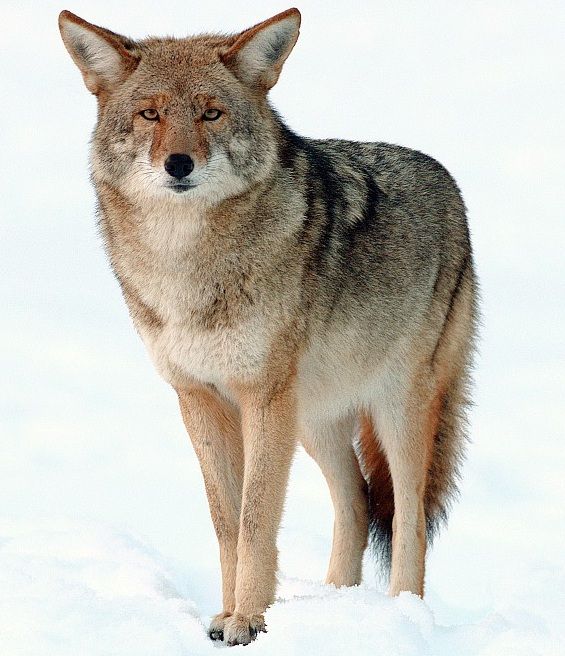
Bobcats occasionally prey on domestic animals, with sheep, goats, and poultry being the most vulnerable. According to one report, bobcats were responsible for 4.9 percent of all sheep predator deaths in 2004. However, they also scavenge, so some predation may be misidentified. Their ecological niche overlaps with other midsized predators like coyotes and foxes. Studies show mixed evidence of direct competition, though high coyote populations may suppress bobcat numbers in some areas. The relationship with the Canada lynx is one of competitive exclusion, with the bobcat's adaptability likely preventing the lynx from expanding further south.
Reproduction and Life Cycle
The bobcat's breeding season is primarily in the winter, though mating can occur from November through August. After a gestation period of about 60 to 70 days, a female gives birth to a litter of kittens. The kittens are born well-furred and with their spots already visible. They remain with their mother for most of their first year, learning to hunt and survive within her home range before dispersing to find their own territory. This extended maternal care is crucial for developing the skills needed for a solitary predatory life. Bobcats have a typical lifespan of 5 to 15 years in the wild, with mortality factors including starvation, predation, disease, and human causes like hunting and vehicle collisions.
The median life expectancy for bobcats in human care, such as in zoos, is longer, at about 18 years. The bobcat's reproductive strategy and adaptability have allowed it to maintain stable populations across most of its range, even in the face of historical hunting pressure for its fur. The species is currently listed as Least Concern on the IUCN Red List, a status it has held since 2002. This classification reflects its wide distribution and large, overall stable population, though local declines can occur due to habitat loss or intense persecution.
Bobcats in Canada and Human Encounters
In Canada, the bobcat is found in southern regions, with notable populations in provinces like Nova Scotia, Ontario, and New Brunswick. Its northern limit is largely constrained by deep snow, as it lacks the large, snowshoe-like paws of the Canada lynx. In areas where their ranges overlap, such as in Nova Scotia, the more aggressive bobcat has been observed displacing the Canada lynx. Furthermore, the clearing of coniferous forests for agriculture has facilitated a northward expansion of the bobcat's range in some areas at the expense of the lynx.
Bobcat encounters, while not everyday occurrences, do happen, especially in "urban edge" locations where suburbs border natural habitats. A rare sighting in Forchu, Nova Scotia, in March 2026 served as a cautionary tale, reminding the public that bobcats are wild predators. While their spotted, feline appearance may seem "friend-shaped," they are not animals to approach or attempt to interact with. Bobcats are generally shy and avoid humans, but they can become defensive if cornered or if they perceive a threat to their kittens. If chased, a bobcat will usually climb a tree to escape, and most conflicts arise when they prey on small livestock or poultry, making proper enclosure security the best prevention for landowners.
Questions about Bobcat
Are bobcats dangerous to humans?
Bobcats are generally not dangerous to humans. They are secretive, solitary animals that actively avoid people. Attacks on humans are extremely rare. However, like all wild animals, they can become defensive if cornered, threatened, or protecting their young. The primary safety concern is for small pets and livestock, which can be seen as prey. It is important to observe bobcats from a distance and never attempt to feed or approach them.
What is the difference between a bobcat and a Canada lynx?
Bobcats and Canada lynx are closely related but have key differences. Bobcats are slightly smaller on average and have smaller, less furry feet that are not as well adapted for deep snow. Their coats are more spotted and reddish, compared to the plainer, greyer coat of the lynx. Bobcats have shorter ear tufts and prefer warmer climates at lower latitudes, while the Canada lynx is specially adapted to cold, snowy boreal forests and primarily hunts snowshoe hares. The bobcat's tail also tends to have more distinct banding than the lynx's.
Where are bobcats found in Canada?
In Canada, bobcats are found primarily in southern regions. Their range includes areas of Nova Scotia, New Brunswick, southern Quebec, Ontario, and parts of the southern Prairies. Their distribution is limited northward by deep snow, which they have difficulty traversing, and by the presence of the competing Canada lynx. They inhabit mixed forests, rocky areas, and swamps, and their range has been expanding northward in some areas due to forest clearing and climate changes that disadvantage the lynx.
What do bobcats eat?
Bobcats are carnivores with a diet centred on small to medium-sized mammals. Their primary prey is rabbits and hares, such as the eastern cottontail and snowshoe hare. They also commonly eat rodents like squirrels, mice, and voles, as well as birds. When opportunity arises, they will hunt larger prey like deer fawns or elk calves. Their diet is opportunistic and can include insects, fish, and occasionally livestock such as sheep or poultry. They are adaptable hunters and will adjust their prey selection based on local availability.
How long do bobcats live?
In the wild, most bobcats live between 5 and 15 years. Mortality is high for young kittens, but those that survive to adulthood can live for over a decade. The main causes of death include starvation, disease, predation by other animals like coyotes, and human-related factors such as vehicle collisions and hunting. In human care, such as in wildlife rehabilitation centres or zoos, where threats are minimized and nutrition is consistent, bobcats can live longer, with a median life expectancy of about 18 years.
Why is it called a bobcat?
The bobcat gets its common name from its most distinctive physical feature: its short, "bobbed" tail. Unlike the long tails of many other cat species, the bobcat's tail is only 9 to 20 centimetres long and appears stubby or chopped off. This tail has black bars on the upper side and a white underside. The "bobbed" appearance is a quick and reliable way to distinguish it from other similar-sized wild cats or large domestic cats, which typically have much longer tails.
Sources: Wikipedia and current public reporting, checked by the Your Space Hamilton desk. Last updated 2026-10-18.