American paddlefish
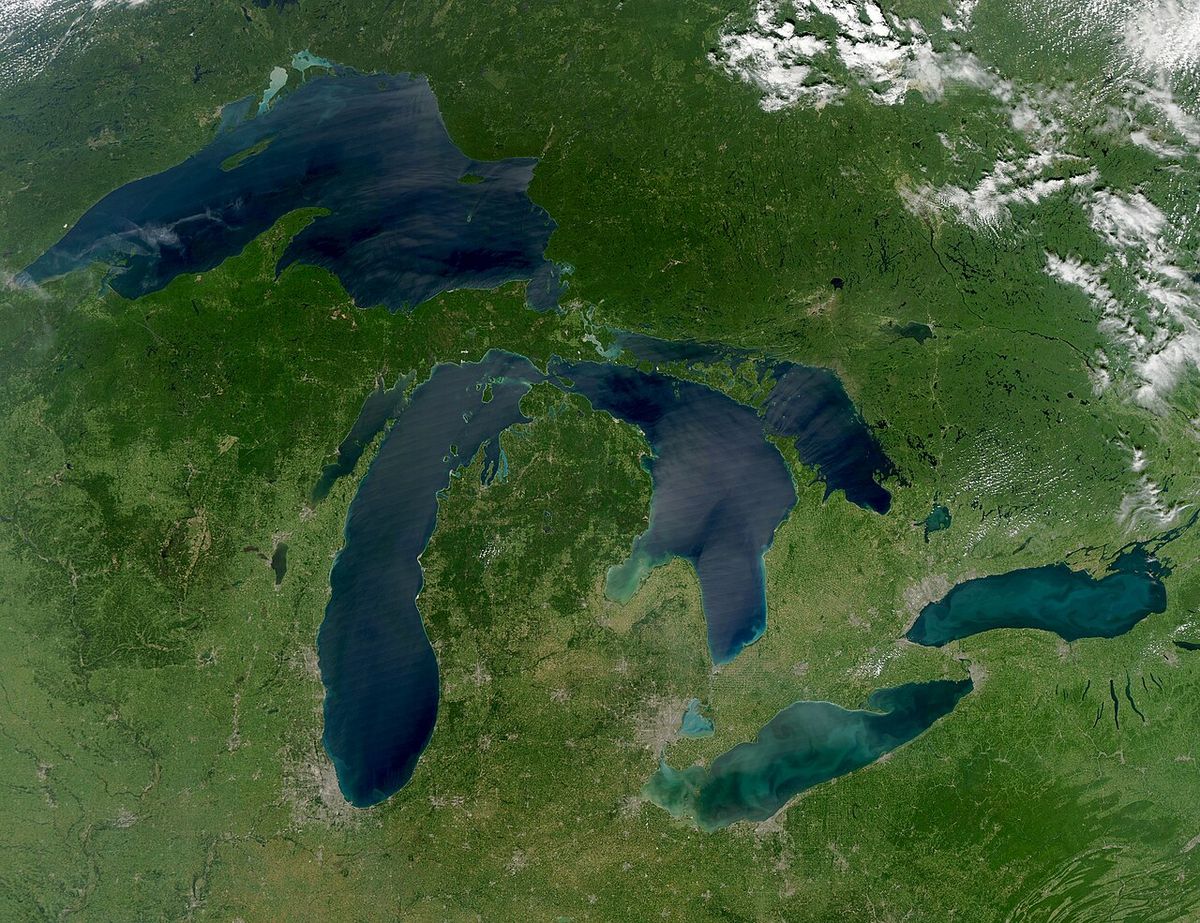
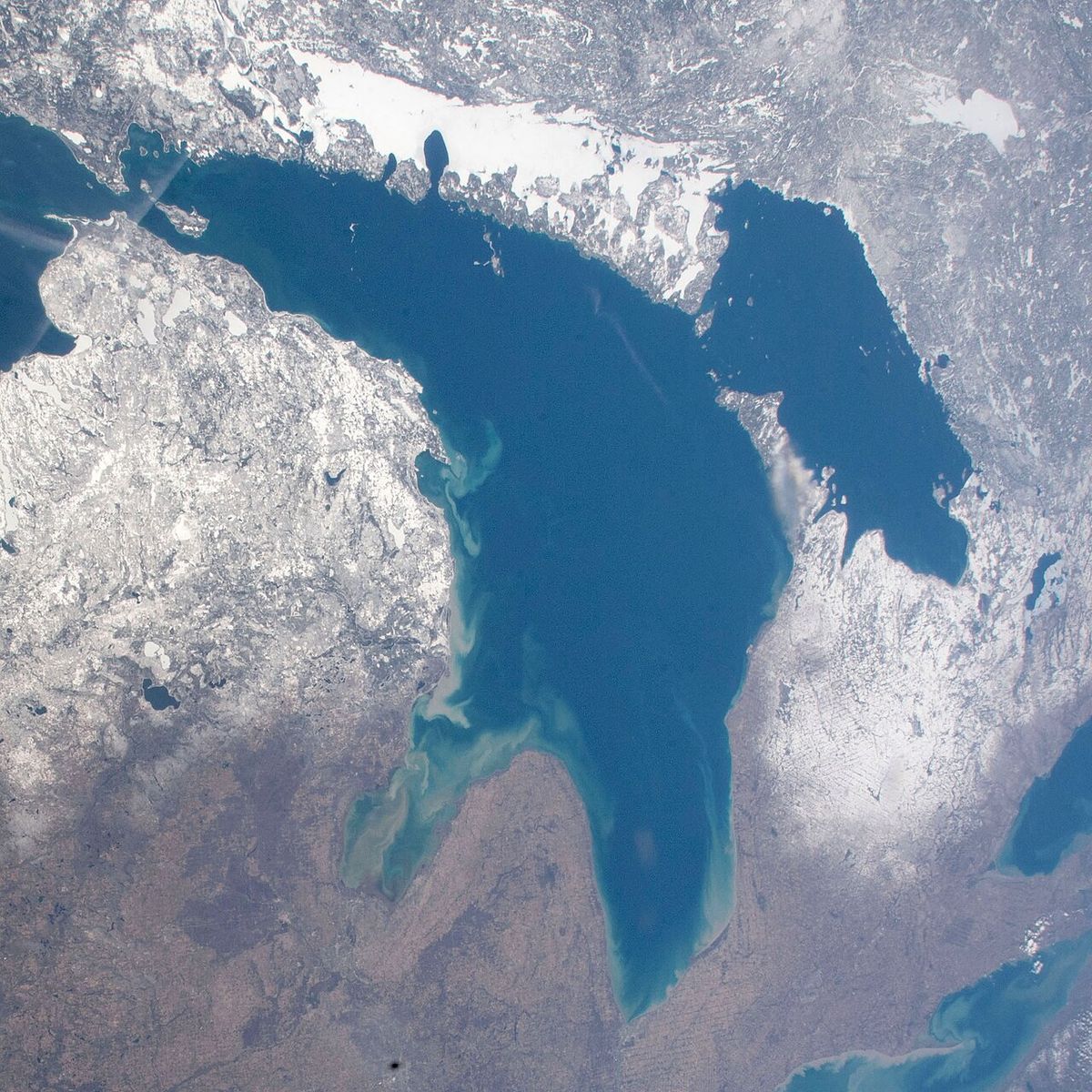
The American paddlefish (Polyodon spathula) is a large, prehistoric-looking freshwater fish native to the Mississippi River Basin, notable for its elongated, paddle-shaped snout. As the last surviving species of its family, it is a living relic with a fossil record stretching back 65 million years. Historically, its range extended into Canadian waters of the Great Lakes, with records from Lake Huron and Lake Helen until around 1917. Today, the species is protected under various laws due to significant population declines from overfishing, habitat loss, and poaching for its valuable caviar.
Taxonomy and Evolutionary History
The American paddlefish was first scientifically described in 1792 by Johann Julius Walbaum as Squalus spathula, though the genus name Polyodon, established by French naturalist Bernard Germain de Lacépède in 1797, is the valid one used today. Lacépède disagreed with an earlier description by Pierre Joseph Bonnaterre in 1788 that had mistakenly classified paddlefish as a species of shark. The species name 'spathula' references its distinctive paddle-shaped rostrum, while 'Polyodon', meaning "many toothed" in Greek, is derived from its extensive comb-like gill rakers used for filter feeding, despite adults being functionally toothless. The American paddlefish is the sole extant member of the paddlefish family Polyodontidae, which is the sister group to sturgeons (family Acipenseridae). Molecular evidence from mitochondrial DNA sequences suggests these two families shared a last common ancestor roughly 141.4 million years ago. Together, they compose the order Acipenseriformes, one of the most basal living groups of ray-finned fishes. The paddlefish lineage is ancient, with fossils dating to the Early Cretaceous period 125 million years ago. The oldest fossils definitively belonging to the genus Polyodon, specifically P. tuberculata, are from the Lower Paleocene Tullock Member of the Fort Union Formation in Montana and date to approximately 65 million years ago. The only other modern paddlefish was the Chinese paddlefish (Psephurus gladius), last sighted in 2003 in China's Yangtze River and now considered extinct, with DNA evidence indicating the two lineages diverged about 68 million years ago. The family Polyodontidae comprises six known species: three fossil species from western North America, one fossil species from China, the extinct Chinese paddlefish, and the extant American paddlefish.
Physical Description and Anatomy
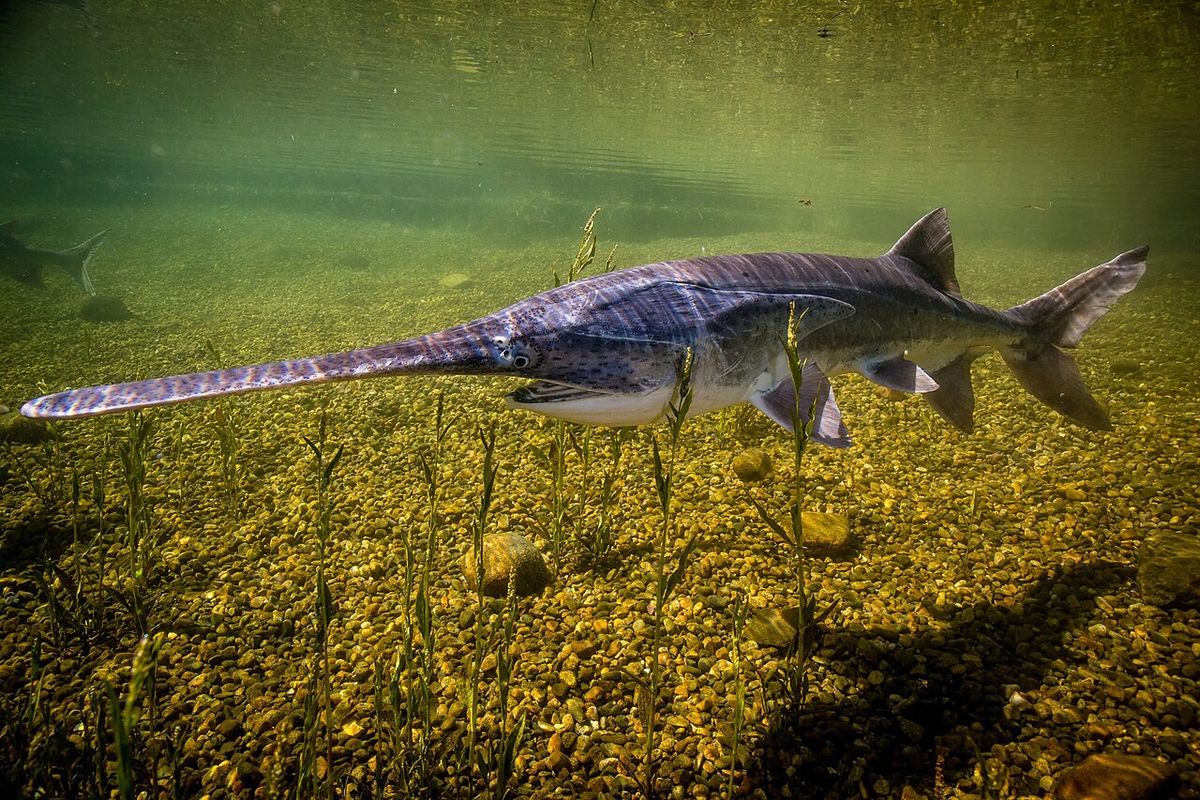
American paddlefish are among the largest and longest-lived freshwater fishes in North America, with a shark-like body and a smooth, almost entirely cartilaginous skeleton. They average 1.5 metres in length and 27 kilograms in weight, though individuals can live for over thirty years, with dentary ring studies suggesting some may reach 60 years or more. Females typically live longer and grow larger than males, with most populations having a median age of five to eight years and a maximum age of fourteen to eighteen years. Their most striking feature is a long, flat rostrum or snout that extends nearly one-third of their body length, which begins to form shortly after hatching from an embryo that initially has no rostrum. The rostrum is an extension of the cranium, not the jaws or olfactory system. Their eyes are small, directed laterally, and they possess a large, tapering operculum flap and a large mouth. Their coloration is typically bluish gray to black on the back, grading to a whitish underbelly, often with mottling. The tail is heterocercal, meaning the spine extends into the upper lobe, giving it a shark-like appearance, which led to early descriptions as a 'freshwater shark' despite no close relation. The skeleton is highly cartilaginous, and the gill arches support the specialized filter-feeding apparatus. Juvenile paddlefish under 630 mm in length have been found to possess numerous small teeth less than 1 mm in size, though adults are effectively toothless.
Specialized Feeding Ecology and Sensory Biology
American paddlefish are highly specialised filter feeders that consume zooplankton, including copepods, cladocerans like Daphnia pulex, and ephemeropteran (mayfly) nymphs. Their elongated rostrum is a sophisticated sensory organ covered with tens of thousands of electroreceptors, morphologically similar to the ampullae of Lorenzini in sharks and rays. Laboratory experiments using electron microscopy in 1993 conclusively established that these are passive ampullary-type electroreceptors used to detect plankton. These receptors can detect the weak electrical fields generated not only by the presence of zooplankton but also by the individual feeding and swimming movements of their appendages. When a swarm is detected, the paddlefish swims forward continuously with its mouth wide open, forcing water over the gill rakers to filter out prey in a behaviour known as ram suspension-feeding. Clusters of these sensory receptors also cover the head and the tips of the operculum flaps, with sensory pores covering nearly half of the skin surface from the rostrum to the head and operculum. Research indicates electroreception has largely replaced vision as the primary sensory modality for locating food, as their small eyes hardly respond to overhead shadows or changes in illumination. Further research suggests the electroreceptive system may also serve as a navigational aid for obstacle avoidance. Studies have shown that paddlefish with damaged or abbreviated rostrums are still capable of foraging and maintaining good health, indicating the system is redundant and not solely dependent on the paddle. The feeding behaviour of young fingerlings differs, as they capture individual plankton one by one using an intercept maneuver, before transitioning to filter feeding as they grow.
Reproduction, Life Cycle, and Growth
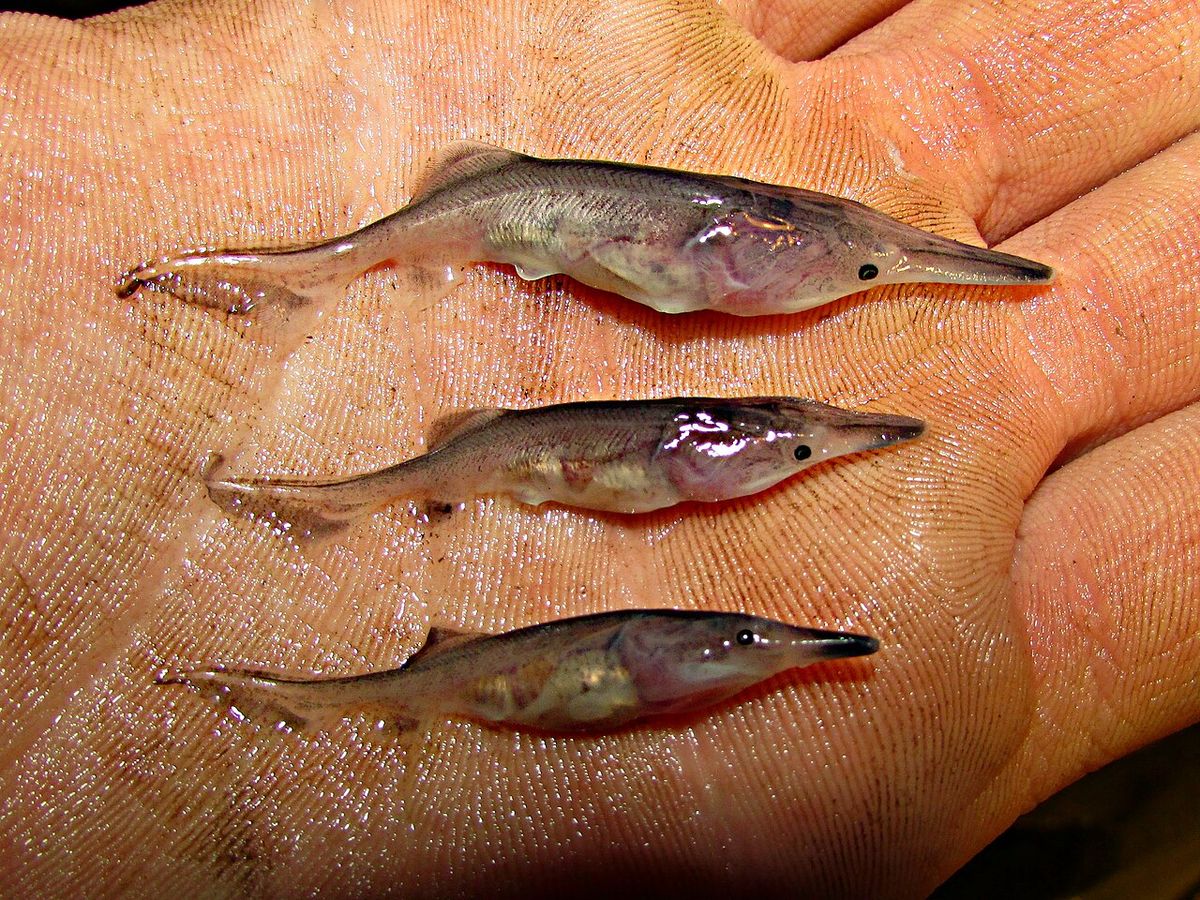
American paddlefish are long-lived, pelagic fish that are sexually late-maturing. Females do not begin spawning until they are seven to ten years old, with some as late as sixteen to eighteen years old, and they spawn only every second or third year. Males spawn more frequently, usually every year or every other year beginning around age seven, though some may start as late as nine or ten years of age. Spawning migrations begin in early spring, though some individuals start in late fall, and are triggered by a precise combination of environmental cues. The water temperature must be between 13 and 16 degrees Celsius, the lengthened photoperiod of spring must occur, and there must be a proper rise and flow in the river from snowmelt and spring rains. They spawn on silt-free gravel bars that are exposed or covered by very shallow water during low flow but are inundated during these spring rises. Historically, these three precise conditions coincided only once every four or five years, meaning the species did not spawn annually. They are broadcast spawners, where gravid females and males simultaneously release eggs and sperm into the water over bare substrate. Fertilization occurs externally, and the eggs become sticky, attaching to the bottom. Incubation takes about seven days in 16-degree Celsius water before hatching into larval fish that drift downstream into low-flow areas. Young paddlefish are poor swimmers and susceptible to predation, making rapid first-year growth critical. Fry can grow about 2.5 centimetres per week, reaching 13 to 15 centimetres by late July. Their growth rate is highly variable and dependent on food abundance. By late September, fingerlings develop into juveniles around 25 to 30 centimetres long. After the first year, growth slows significantly, averaging around 5 centimetres per year by age five, influenced by food availability and other environmental factors.
Historic Range, Decline, and Current Distribution
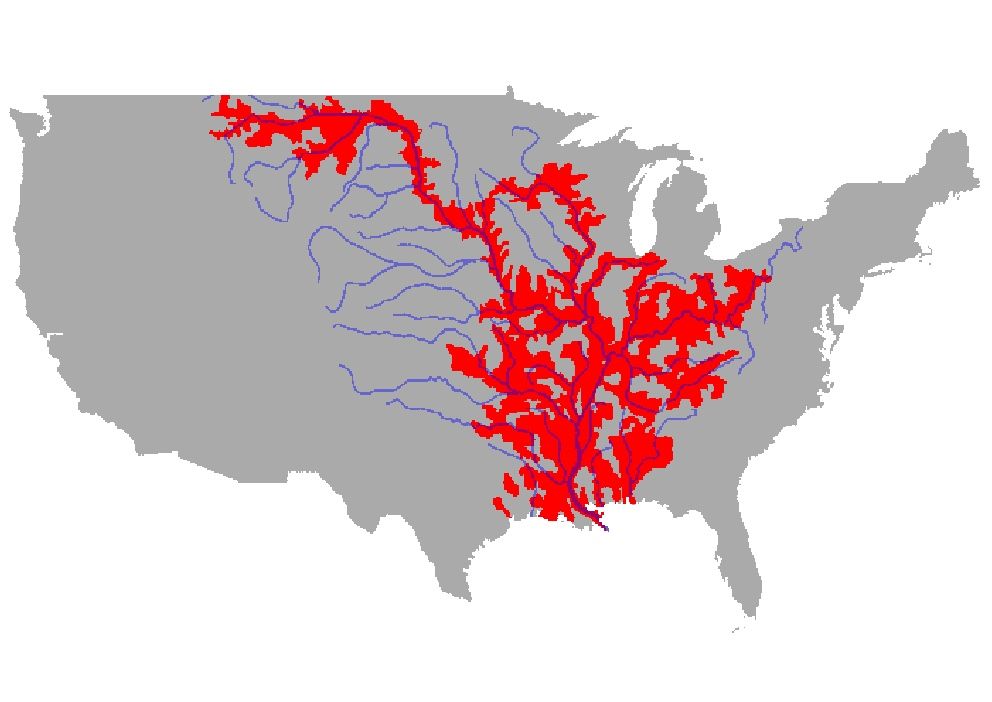
American paddlefish are endemic to the Mississippi River Basin and adjacent Gulf slope drainages, historically occurring from the Missouri and Yellowstone rivers in the northwest to the Ohio and Allegheny rivers in the northeast. Their range extended from the headwaters of the Mississippi south to its mouth, and from the San Jacinto River in the southwest to the Tombigbee and Alabama rivers of the southeast. They are highly mobile and well-adapted to riverine habitats, most frequently inhabiting deeper, low-current areas like side channels, oxbows, backwater lakes, bayous, and tailwaters below dams, with movements of over 3,200 kilometres documented within a river system. Their peripheral range once extended into the Great Lakes, with verified occurrences in Lake Huron and Lake Helen in Canada until approximately 1917. Populations have been extirpated from New York, Maryland, Virginia, and Pennsylvania, as well as from most of their peripheral Great Lakes range. Major causes of decline include overfishing for meat and caviar, habitat destruction from dams and channelization, pollution, and ongoing poaching. Reintroduction programs began in Pennsylvania in 1991, utilizing hatchery-reared fish for the upper Ohio and lower Allegheny rivers. New York initiated a stocking program in 1998 in the Allegheny Reservoir above Kinzua Dam, with a second stocking in Conewango Creek in 2006. While free-ranging adults have since been captured in Pennsylvania and New York, there is no evidence of natural reproduction in these reintroduced populations. The species is currently found in 22 U.S. states, primarily within the Mississippi and Missouri River tributaries and the Mobile Bay drainage basin. It is protected under state and federal laws, as well as by international agreements like CITES. Sport or commercial fishing is permitted in 13 states under strict regulations.
Aquaculture, Artificial Propagation, and Techniques
Artificial propagation of American paddlefish began with the efforts of the Missouri Department of Conservation in the early 1960s, initially focused on maintaining sport fisheries. The growing commercial importance of paddlefish for meat and roe later became the catalyst for developing advanced culture techniques for aquaculture in the United States. Because of the species' late sexual maturation, broodstock are initially obtained from the wild and brought into hatchery environments. The fish are injected with LH-RH hormone to stimulate spawning. A female's fecundity depends on her size, ranging from 70,000 to 300,000 eggs. Unlike most teleost fish, the oviducts of paddlefish and sturgeons are not directly attached to the ovaries but open into the body cavity. To determine reproductive readiness, a minor surgical procedure called ova staging is performed, involving a small abdominal incision to extract oocyte samples. The oocytes are boiled to harden the yolk, then cut in half to expose the nucleus, which is examined under a microscope to determine the stage of maturity. Once maturation is confirmed, one of three egg extraction procedures is employed, each with distinct advantages and drawbacks.
- Traditional Hand-Stripping: This method is considered time-consuming and laborious for the hatchery staff.
- Caesarean Section: This is a relatively quick surgical method involving a 10-centimetre abdominal incision. While faster than hand-stripping, it requires suturing, which can cause muscular stress, poor suture retention, and lower survival rates for the female.
- MIST (Minimally Invasive Surgical Technique): This is the fastest procedure, requiring less fish handling and eliminating suturing. A small internal incision in the dorsal area of the oviduct allows direct stripping of eggs from the body cavity through the gonopore.
For male American paddlefish, successful sperm production results in the release of milt over a period of three to four days. The milt is collected by inserting a plastic tube with an attached syringe into the urogenital opening and applying light suction. This collected milt is then diluted in water. It is added to the eggs for external fertilization just prior to this dilution process.
Conservation Status, Threats, and Legal Protections
The American paddlefish has experienced dramatic population declines across its historic range and is considered a species of conservation concern. It is protected under various state and federal laws in the United States and is listed under Appendix II of CITES (the Convention on International Trade in Endangered Species of Wild Fauna and Flora), which regulates international trade in its caviar to ensure it is not detrimental to the species' survival. The primary historical threat was overharvest, both for its boneless meat and for its eggs, which are processed into a caviar comparable to sturgeon roe. Poaching remains a persistent and significant threat as long as demand for caviar remains strong. Habitat destruction is a critical ongoing issue. Dams block essential spawning migrations and alter the precise flow and temperature regimes required for successful reproduction. Channelization, levee construction, and drainage have eliminated vital off-channel habitats like backwaters, oxbows, and braided channels used for feeding and juvenile rearing. Pollution from agricultural runoff, industrial sources, and siltation further degrades water quality. The species' life history traits, late sexual maturation, infrequent spawning, and specific environmental requirements, make populations slow to recover from these pressures. While reintroduction programs in states like Pennsylvania and New York aim to re-establish populations, the lack of evidence for natural reproduction highlights the difficulty of restoring functional river ecosystems. Ongoing conservation management focuses on habitat restoration, strict enforcement of fishing regulations, scientific monitoring, and supportive aquaculture for stocking.
Comparison with the Extinct Chinese Paddlefish
The American paddlefish was one of only two paddlefish species to survive into modern times, the other being the Chinese paddlefish (Psephurus gladius), which was last recorded in 2003 in the Yangtze River and is considered to have gone extinct no later than 2010. While both shared an ancient lineage within the Polyodontidae family and an elongated rostrum, they exhibited significant ecological, morphological, and behavioural differences. The Chinese paddlefish had a narrower, more sword-like rostrum and a protrusible mouth, unlike the broad, flat snout and fixed mouth of the American species. It was an opportunistic piscivore, a strong, active swimmer that fed on small fishes and crustaceans, and grew to a considerably larger size. In contrast, the American paddlefish is a specialised filter feeder with a toothless adult mouth, employing a ram suspension-feeding technique to consume zooplankton. The American species has many more, finer gill rakers adapted for filtering, while the Chinese paddlefish had fewer, thicker gill rakers. The rostrum of the American paddlefish is densely packed with electroreceptors for detecting plankton, a specialization not observed in its Chinese cousin. Genetically, the two species diverged approximately 68 million years ago, representing distinct evolutionary paths and adaptations to their respective river ecosystems in North America and Asia. The extinction of the Chinese paddlefish highlights the vulnerability of these ancient lineages to human impacts like overfishing and habitat fragmentation.
Age Determination and Population Demographics
Determining the age of American paddlefish is crucial for population management and is most accurately accomplished through dentary studies, a process analogous to aging a tree by its rings. This method is typically performed on fish harvested during snagging season, a legal sport fishing method in some states. The dentary bone is removed from the lower jaw, cleaned of soft tissue, and cross-sectioned to expose the annual growth rings, which are then counted under magnification. These studies have revealed that while most populations have a median age of five to eight years and a maximum observed age of fourteen to eighteen years, some individuals can live 60 years or longer. The data consistently show that females live longer and attain a larger size than males, which has implications for population recovery given their later age of sexual maturity. Growth rates are highly variable after the first year and are strongly influenced by local environmental conditions, particularly the abundance of zooplankton. In areas with limited food, growth slows considerably. This variability means that size is not a reliable indicator of age, making direct examination of bony structures the only accurate method. Understanding these demographic parameters is essential for setting sustainable harvest quotas, assessing the health of stocked populations, and modeling the long-term viability of wild populations under various conservation scenarios. The loss of the Chinese paddlefish, the only other modern species, makes the conservation of demographic data for the American paddlefish even more critical for the survival of the entire family.
Questions about American paddlefish
Are there American paddlefish in Canada?
American paddlefish are no longer found in Canadian waters. Historically, their range extended into the Great Lakes, with verified occurrences in Lake Huron and Lake Helen in Canada until about 1917. These populations were extirpated due to overfishing and habitat changes. Today, the species' native range is confined to the Mississippi River Basin in the United States, though reintroduction efforts are underway in some eastern U.S. states like Pennsylvania and New York, which border the Great Lakes watershed. There is no current evidence of naturally reproducing populations returning to Canadian waters.
Why is the American paddlefish called a 'living fossil'?
The American paddlefish is often called a living fossil because it retains primitive morphological characteristics from its ancient ancestors. These characteristics include a skeleton composed primarily of cartilage and a deeply forked heterocercal caudal fin. Fossil records of the paddlefish family date back 125 million years to the Early Cretaceous. Fossils of the genus Polyodon specifically extend back 65 million years to the early Paleocene.
What does the American paddlefish use its paddle for?
The paddle, or rostrum, is primarily a sophisticated sensory organ covered with tens of thousands of electroreceptors that detect the weak electrical fields produced by its zooplankton prey. This allows the paddlefish to locate dense swarms of food in often murky river waters. Contrary to past theories that it was used for digging or balance, research established its sensory function in 1993. The electroreceptive system may also assist with navigation and obstacle avoidance. The rostrum begins to develop shortly after the fish hatches and grows to about one-third of its total body length.
Is the American paddlefish endangered?
While not globally assessed as Endangered on the IUCN Red List, the American paddlefish is considered to have suffered severe population declines and is protected under a variety of state and federal laws in the United States. It is also listed under CITES Appendix II, which regulates the international trade of its caviar to ensure sustainability. The species has been extirpated from much of its historic range, including several U.S. states and Canadian waters, primarily due to overfishing, dam construction, habitat loss, and poaching. Its specialized life history makes it vulnerable to these threats.
Can you eat American paddlefish?
Yes, American paddlefish are harvested for both their meat and their roe (eggs), which is processed into caviar. However, fishing is heavily regulated. Only 13 of the 22 states where the fish is found allow commercial or sport fishing, and these activities are managed with strict quotas, seasons (like snagging season), and licensing requirements to ensure sustainability. The high value of paddlefish caviar has, unfortunately, also made the species a target for illegal poaching, which remains a significant conservation challenge for enforcement agencies.
How do American paddlefish reproduce?
American paddlefish are broadcast spawners that require very specific environmental conditions. They migrate upstream in spring when water temperatures reach 13 to 16 degrees Celsius, day length increases, and river levels rise due to snowmelt and rain. They release eggs and sperm simultaneously over clean gravel bars during flooding. Fertilization occurs externally, and the sticky eggs attach to the bottom. The eggs hatch in about a week. These precise requirements make natural reproduction sporadic and vulnerable to river alterations like dams.
Sources and further reading
- American paddlefish (Wikipedia)
- American Paddlefish (singaporeoceanarium.com)
- Paddlefish (Polyodon spathula) - Texas Parks and Wildlife (tpwd.texas.gov)
- Polyodon spathula (American paddlefish) | INFORMATION (animaldiversity.org)
Checked by the Your Space Hamilton desk. Last updated 2026-11-02.