American black bear
The American black bear (Ursus americanus) is a medium-sized bear species endemic to North America. It is the continent's most common and widely distributed bear, found from the northern forests of Canada to parts of Mexico. Across Canada, the bear inhabits forested regions in every province and territory except Prince Edward Island, where it was extirpated. The species is an adaptable omnivore and is classified as a species of Least Concern globally, though its increasing proximity to human settlements makes understanding its behaviour essential for safe coexistence.
Taxonomy and Evolution
The American black bear is genetically distinct from North America's other bear species, the brown bear and polar bear. Genetic studies indicate it split from a common ancestor with these species approximately 5.05 million years ago. The American black bear is more closely related to the Asian black bear, with the two species diverging around 4.08 million years ago after both split from sun bears 4.58 million years ago. The oldest known North American fossil member of the genus Ursus, dated to 4.95 million years ago, is considered a potential direct ancestor of the modern American black bear, which evolved on the continent. Fossils from the Early Pleistocene of Pennsylvania greatly resemble Asian black bears, though later specimens grew to sizes comparable to grizzly bears. The bear's generalist, omnivorous behaviour is credited with allowing it to survive the climatic and vegetative changes of the last Ice Age, while more specialized North American predators like the giant short-faced bear and the Florida spectacled bear became extinct. After these prehistoric ursids died out, only American black bears, brown bears, and polar bears remained in North America.
Hybrids and Subspecies
American black bears are reproductively compatible with several other bear species and have occasionally produced hybrid offspring. Historical records note a bear captured in Florida was thought to be the offspring of an escaped female Asian black bear and a male American black bear. In 1859, an American black bear and a Eurasian brown bear were bred together in the London Zoo, though the cubs did not survive to maturity. In 1986, a bear shot in Michigan was suspected to be an American black bear and grizzly bear hybrid due to its unusually large size and skull proportions, though DNA testing was inconclusive. Traditionally, sixteen subspecies of American black bear are recognized, listed alphabetically by subspecific name. These include regional variants such as the Florida black bear, the cinnamon bear, and the glacier bear of coastal Alaska. However, a 2015 genetic study did not support designating some of these, such as the Florida black bear, as distinct subspecies, suggesting the traditional classification may require revision based on modern genetic analysis.
Distribution and Population
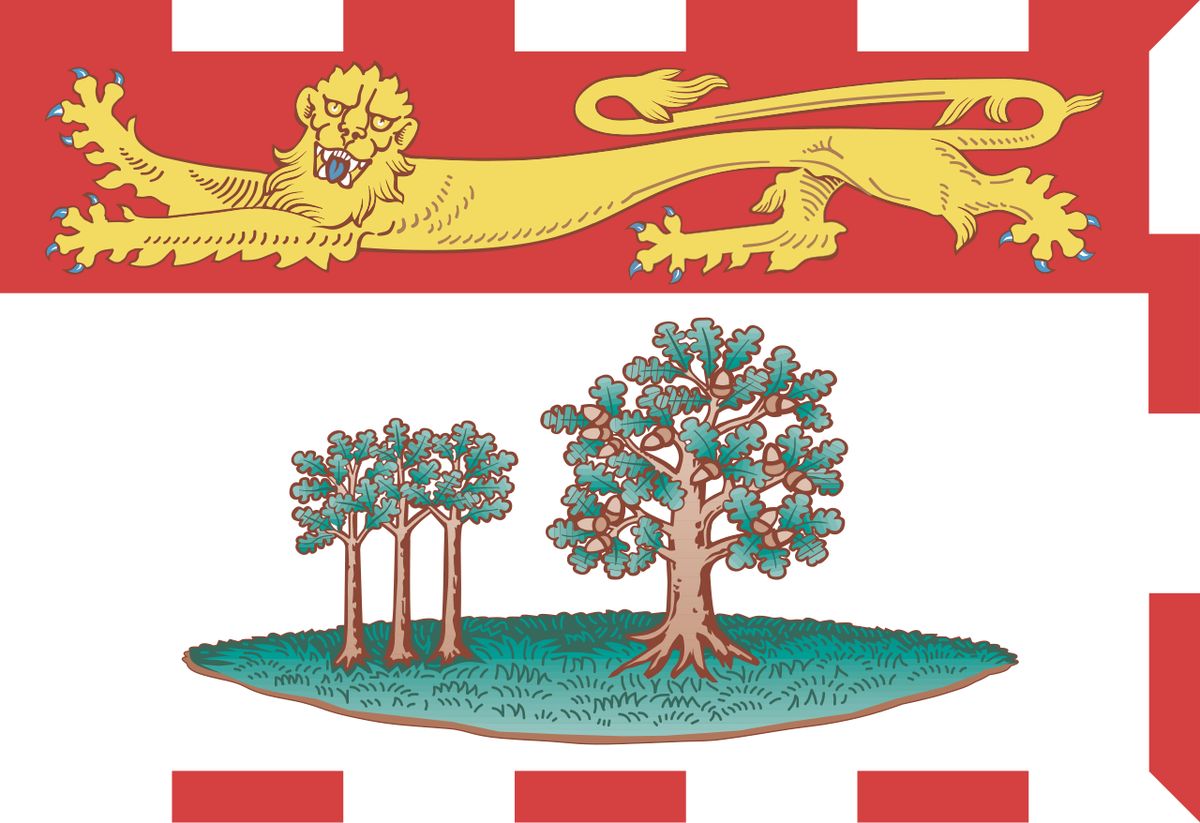
The American black bear occupies much of its historical Canadian range, though it is seldom found in the southern farmlands of Alberta, Saskatchewan, and Manitoba. It was extirpated on Prince Edward Island in 1937. Surveys from the mid-1990s estimated the population in seven Canadian provinces to be between 396,000 and 476,000, with all provinces reporting stable populations through the 2000s. This estimate excluded populations in New Brunswick, the Northwest Territories, Nova Scotia, and Saskatchewan. Continental population estimates from more recent data suggest there are approximately 850,000 to 900,000 American black bears across North America. In the United States, the bear's range is largely continuous in the Northeast, the Appalachian Mountains from Maine to northern Georgia, the northern Midwest, the Rocky Mountain region, the West Coast, and Alaska. Populations have expanded in recent decades, with sightings now common in states like Ohio, Illinois, southern Indiana, and western Nebraska. In 2019, a resident black bear was confirmed in Iowa for the first time since the 1880s. The species is classified as endangered only in Mexico, where its distribution is poorly documented. In the United States, early 1990s surveys indicated populations were stable or increasing in 35 states, except in Idaho and New Mexico.
Regional Population Dynamics
Population densities and trends vary significantly across the continent. California has the largest population of the species in any of the 48 contiguous United States. The estimated 25,000 to 35,000 black bears in California in 2017 grew to 60,000 by 2026. In Great Smoky Mountains National Park, the 2020 population was about 1,500 bears, with a density of about two per square mile. In western North Carolina, the black bear population increased from about 3,000 in the early 2000s to over 8,000 in the 2020s. A 2011 estimate for the United States population ranged between 339,000 and 465,000, though this did not include data from Alaska, Idaho, South Dakota, Texas, or Wyoming. In Canada, populations remain robust in forested regions, demonstrating the species' successful recovery and adaptability across a wide range of jurisdictions and habitat types.
Physical Characteristics
American black bears are the smallest bear species in North America. Adults typically range from 120 to 188 centimetres in head-and-body length and stand 63 to 103.5 centimetres at the shoulder. There is significant sexual dimorphism in weight. Adult males typically weigh between 60 and 300 kilograms, while females are considerably smaller, averaging 40 to 150 kilograms. Seasonal weight variation is pronounced, with bears often 30 percent heavier in autumn before denning than in spring. East Coast bears tend to be heavier on average than West Coast counterparts, though they generally follow Bergmann's rule where average size is inversely correlated with environmental temperature. The species exhibits great colour variation beyond its name. Individual coats can range from white and blonde through cinnamon and light brown to dark chocolate brown and jet black. Approximately 70 percent of all American black bears are black, though in the Rocky Mountains only about half are black. Silvery-gray bears with a blue luster occur along coastal Alaska and British Columbia, and white to cream-coloured bears are found on coastal islands of southwestern British Columbia.
Anatomy and Senses
The American black bear has a broad skull with a narrow muzzle and large jaw hinges. In Virginia, adult skulls average 26.2 to 31.7 centimetres in length. Their claws are short, curved, and thickest at the base, most often black or grayish-brown. The paws are relatively large, with forepaws measuring 5.3 to 13.5 centimetres long and hindpaws 7.1 to 20.3 centimetres long. The soles of the feet are black or brownish, naked, leathery, and deeply wrinkled. The hind legs are relatively longer than those of Asian black bears, and the tail is small, typically 7.7 to 17.7 centimetres long. The ears are small, rounded, and set well back on the head. American black bears are highly dexterous, capable of opening screw-top jars and manipulating door latches. They possess great physical strength, with a 54-kilogram bear observed flipping flat rocks weighing 141 to 147 kilograms with a single foreleg. They are fast runners, reaching speeds of 40 to 48 kilometres per hour. Their keenest sense is smell, which is about seven times more sensitive than a domestic dog's. They have good eyesight and have proven able to learn visual colour discrimination tasks faster than chimpanzees and as fast as domestic dogs.
Habitat and Adaptability
Throughout its range, the American black bear prefers areas with relatively inaccessible terrain, thick understory vegetation, and abundant food sources, especially mast like acorns and nuts. This preference for wooded, thickly vegetated areas may be an evolutionary adaptation to historically share the landscape with larger, more aggressive predators like the extinct giant short-faced bear and American lion. The species demonstrates remarkable adaptability. Although most numerous in wild, undisturbed areas, American black bears can survive in peri-urban regions if vegetative cover and easily accessible foods are present. In the contiguous United States, they are usually found in heavily vegetated mountainous areas from 400 to 3,000 metres in elevation. In the Southwest, habitat consists of chaparral and pinyon-juniper woodlands. In Canada and Alaska, where human development is low, bears are regularly found in lowland regions. In parts of eastern Canada like Labrador, black bears have adapted to semi-open areas, a habitat more typical for brown bears, likely due to the absence of larger carnivore species there. Their generalist behaviour allows them to exploit a wider variety of foods and habitats.
Behaviour, Diet, and Life History
The American black bear is an omnivore with a diet that varies greatly by season and location. Its natural diet includes grasses, roots, berries, fruits, nuts, insects, small mammals, and fish. In autumn, they heavily rely on mast to build fat reserves for winter hibernation. They are excellent and strong swimmers, swimming for pleasure and to feed on fish. They regularly climb trees to feed, escape enemies, and hibernate, being one of the most arboreal bear species alongside the Asian black bear and sun bear. They are largely solitary animals except for females with cubs. The species is known for its intelligence and learning ability, capable of rapidly learning to distinguish different shapes like triangles, circles, and squares. This intelligence, combined with their dexterity, allows them to exploit a wide variety of food sources. Unfortunately, this includes human-associated foods like garbage, pet food, and bird feeders, which is a primary source of conflict. Bears are drawn to human settlements due to the availability of easily accessible calories, leading to food-conditioned behaviour that increases encounter risks.
Conservation and Human Coexistence
The International Union for Conservation of Nature lists the American black bear as a species of Least Concern due to its large, widespread, and generally stable population. Its estimated population is roughly twice that of all other bear species combined. Along with the brown bear, it is one of only two modern bear species not considered globally threatened with extinction. The primary conservation challenge is not species survival but managing human-bear conflicts. The bear's recovery and adaptability mean it increasingly inhabits areas near human settlements. A stable or growing population creates more frequent encounters when food conditioning and fragmented habitat pull bears toward people. Encounters often occur in foothill neighbourhoods, mountain towns, trailheads, and campgrounds where unsecured garbage, pet food, or bird feeders are available. Safe coexistence depends on public education about securing attractants and proper behaviour in bear country. Management strategies across Canada and the United States focus on reducing human-provided foods to keep bears wild and avoid the need for relocation or destruction of problem animals. The practical issue is the urban adaptation gap, where conflict reports can rise in developed areas even while overall population numbers remain stable.
Notable Size Records
The largest wild American black bear on record was a male from New Brunswick, shot in November 1972. After being dressed it weighed 409 kilograms, meaning it likely weighed an estimated 500 kilograms in life and measured 2.41 metres long. Another notably large wild bear, weighing 408 kilograms, was a cattle-killer shot in December 1921 on the Moqui Reservation in Arizona. Record-sized bears from individual states include a 376.5-kilogram bear shot in Morris County, New Jersey in December 2011, and a 399-kilogram bear shot in Pike County, Pennsylvania in November 2010. The world's largest captive American black bears are held at the North American Bear Center in Ely, Minnesota. The male, named Ted, weighed between 431 and 453.5 kilograms in the fall of 2006. The female, named Honey, weighed 219.6 kilograms in the fall of 2007. These records illustrate the significant size potential within the species, particularly for males with access to abundant food sources.
Questions about American black bear
How many American black bears are there in North America?
The total population of American black bears across North America is estimated to be between 850,000 and 900,000 individuals. This makes it the most abundant bear species on the continent, with a population roughly twice that of all other bear species combined. In Canada, mid-1990s surveys estimated between 396,000 and 476,000 bears in seven provinces, with populations reported as stable in the 2000s. The species is absent only from the southern prairie farmlands and Prince Edward Island, where it was extirpated in 1937.
Are all American black bears actually black?
No, American black bears exhibit significant colour variation. While approximately 70 percent of individuals are black, coats can also range from white and blonde to cinnamon, light brown, and dark chocolate brown. In the Rocky Mountains, only about 50 percent of bears are black. Silvery-gray bears occur along parts of coastal Alaska and British Columbia, and white to cream-coloured bears are found on coastal islands of southwestern British Columbia. This variation means colour alone is not a reliable identifier, and cinnamon-coloured black bears are sometimes mistaken for grizzly bears.
What should I do if I encounter a black bear?
If you encounter a black bear, remain calm and do not run. Speak to the bear in a firm, calm voice to identify yourself as human. Back away slowly while facing the bear, and give it plenty of space to leave. Make yourself look larger by raising your arms or holding a jacket above your head. If the bear approaches, stand your ground and use bear spray if you have it. Never turn your back or play dead with a black bear, as this is a strategy reserved for defensive grizzly bear encounters. The goal is to convince the bear you are not a threat and not a source of food.
Where are American black bears found in Canada?
American black bears are found in forested regions across most of Canada. They currently inhabit much of their original Canadian range but are seldom found in the southern farmlands of Alberta, Saskatchewan, and Manitoba. They have been extirpated on Prince Edward Island since 1937. Populations are stable in provinces where they are found, from the boreal forests of the north to the mixed woodlands of central and eastern Canada. In areas with low human development, such as parts of the territories, bears are commonly found in lowland regions.
What do American black bears eat?
American black bears are omnivores with highly variable diets that change with the seasons and location. Their natural diet includes grasses, roots, berries, fruits, nuts, insects, small mammals, and fish. In autumn, they heavily rely on mast, such as acorns and beechnuts, to build fat reserves for winter. They are opportunistic and will scavenge carcasses. Unfortunately, they are also drawn to human food sources like unsecured garbage, pet food, bird seed, and compost, which is a leading cause of human-bear conflicts. Their adaptability and keen sense of smell allow them to exploit a wide range of food items.
How can I prevent black bears from coming onto my property?
Preventing black bears from being attracted to your property involves diligently managing potential food sources. Store garbage in bear-resistant containers or in a secured building until collection day. Remove bird feeders during the months when bears are active, typically from spring to fall. Never leave pet food outdoors. Clean barbecue grills thoroughly after each use. Manage fruit trees by picking ripe fruit promptly and collecting fallen fruit. Secure compost bins, and do not compost meat, fish, or oily food scraps. By eliminating these attractants, you reduce the likelihood of a bear learning that your property is a reliable food source.
Sources: Wikipedia and current public reporting, checked by the Your Space Hamilton desk. Last updated 2026-10-18.