Welland Canal
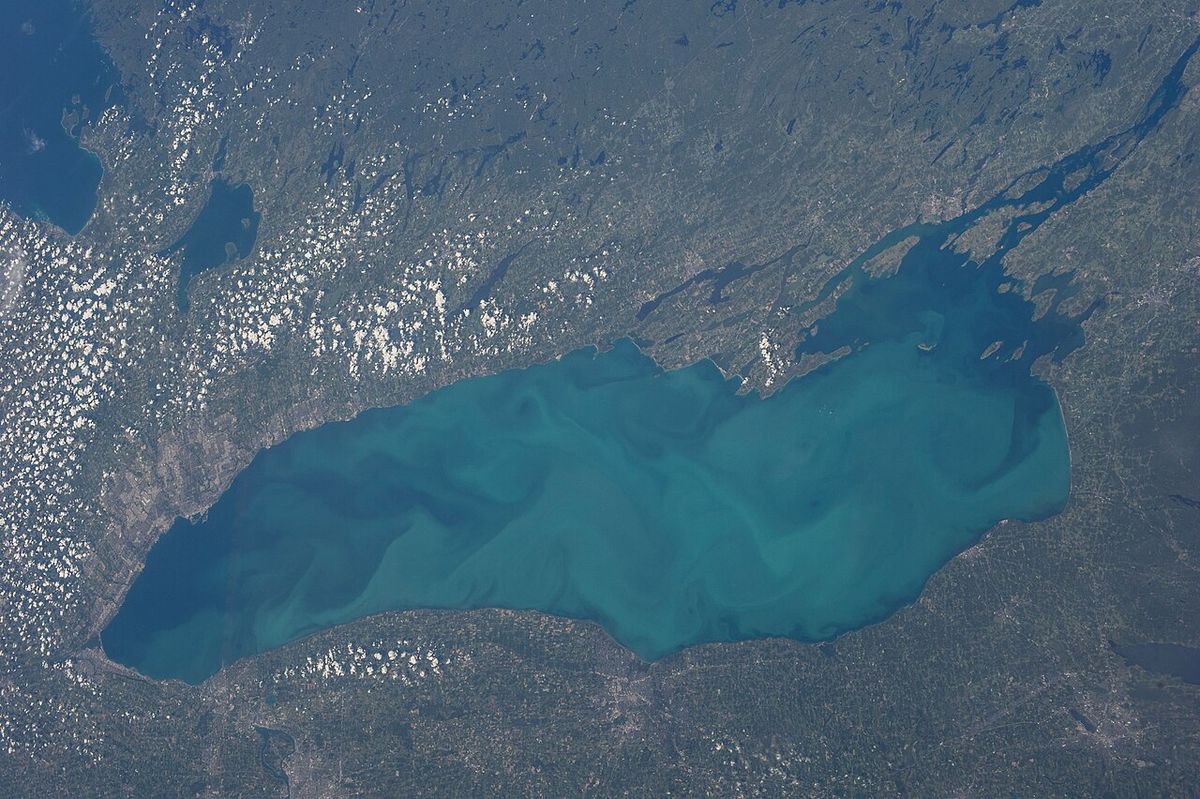
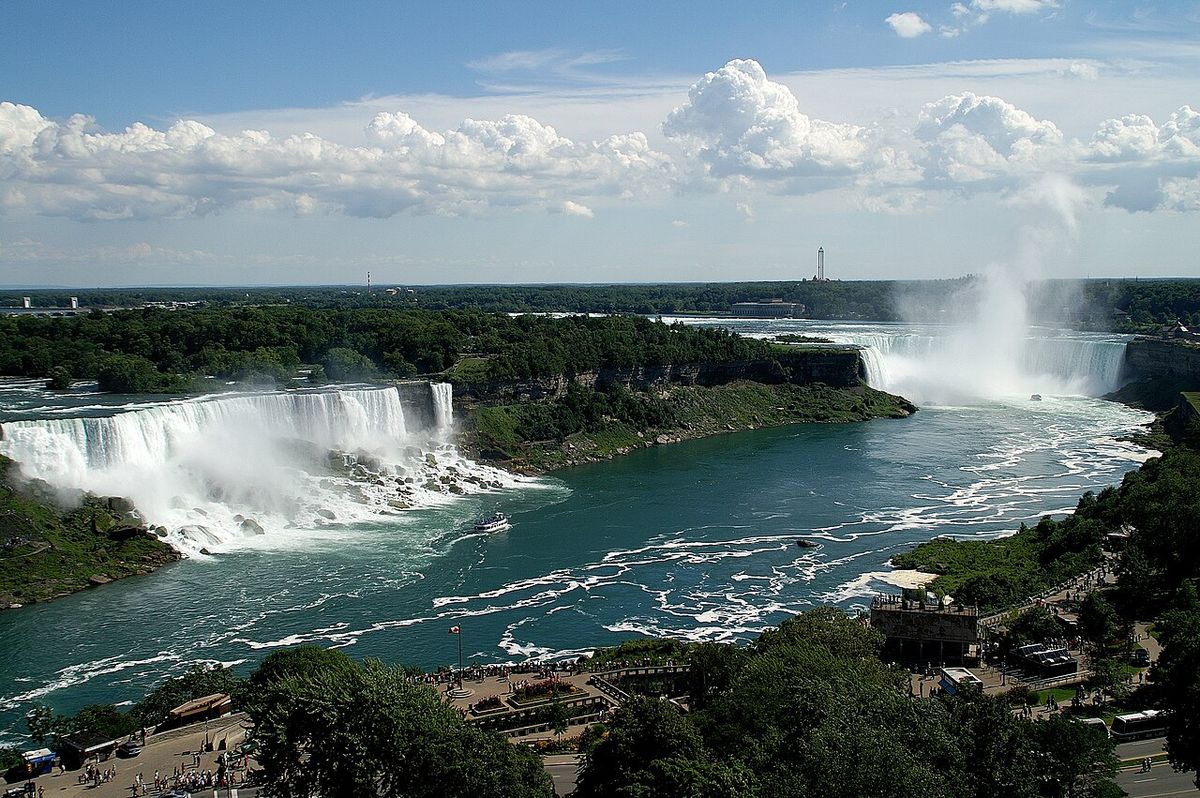
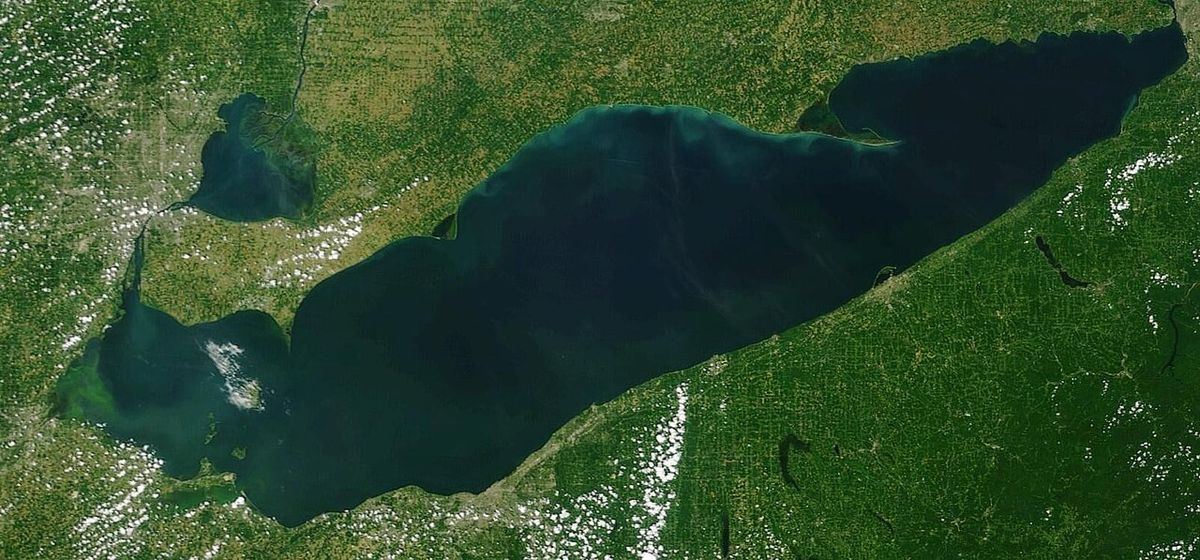
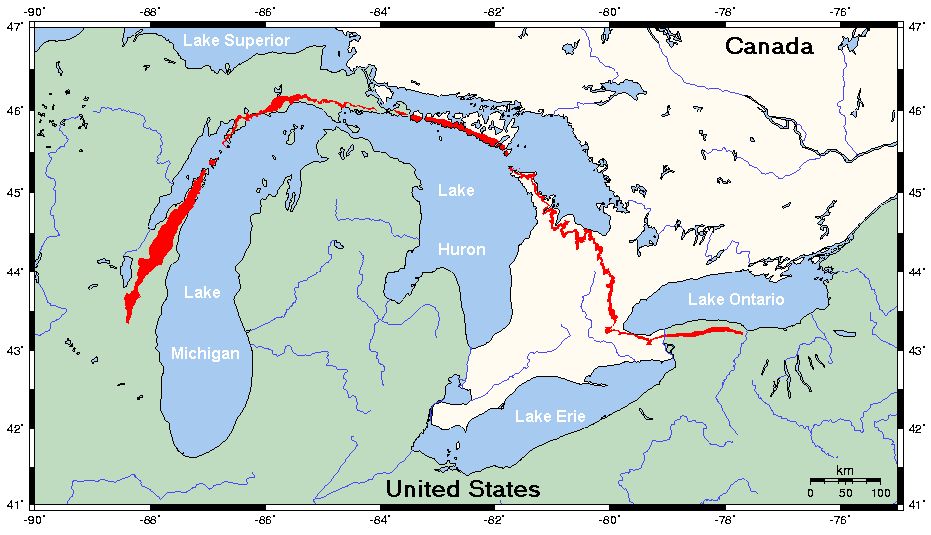
The Welland Canal is a vital ship canal in Ontario, Canada, forming a critical link in the St. Lawrence Seaway and Great Lakes Waterway. It traverses the Niagara Peninsula between Port Weller on Lake Ontario and Port Colborne on Lake Erie, bypassing the unnavigable Niagara Falls and enabling ships to ascend and descend the 99.5-metre Niagara Escarpment. The canal handles approximately 3,000 ships annually, moving about 40 million tonnes of cargo, and has been a major factor in the industrial growth of Great Lakes ports and cities like Toronto. Since its first opening in 1829, the canal has been reconstructed four times to accommodate larger vessels, with the current Fourth Welland Canal, completed in 1932, featuring eight massive locks and an average transit time of eleven hours.
Historical Development and Construction
The Welland Canal was born out of necessity to overcome the natural barrier of Niagara Falls and create a navigable route between Lake Ontario and Lake Erie. Before its construction, shipping relied on a portage road between Chippawa and Queenston on the Niagara River. The Welland Canal Company was incorporated by the Province of Upper Canada in 1824, following a petition led in part by businessman William Hamilton Merritt. Construction on the First Welland Canal began at Allanburg on November 30, 1824, and it opened for a trial run exactly five years later on November 30, 1829, with the schooner Anne & Jane making the inaugural transit. This original canal stretched 44 kilometres between Port Dalhousie on Lake Ontario and Port Colborne on Lake Erie, utilizing 40 wooden locks with a minimum size of 33.5 by 6.7 metres and a depth of 2.4 metres. The route followed Twelve Mile Creek to St. Catharines, wound up the escarpment through Merritton and Thorold, and connected to the Welland River at Port Robinson, with a southern extension to Port Colborne completed in 1833.
Rapid deterioration of the wooden locks and the demand for larger ships prompted the construction of the Second Welland Canal. After the provincial government purchased the struggling private company in 1841, work began to deepen the channel and rebuild the locks with cut stone. By 1846, a 2.7-metre deep path was completed, and the number of locks was reduced to 27, each measuring 45.7 by 8.1 metres. Competition emerged from railways like the Erie and Ontario Railway in 1854 and the affiliated Welland Railway in 1859, but the canal remained crucial. The increased depth allowed ships carrying up to 24,000 bushels of grain to use the canal, whereas previously they had only been able to carry about 18,000 bushels.
The Third Welland Canal, built between 1872 and 1877, featured a new, shorter alignment and 26 larger masonry locks lined with wood, each 82.3 metres long by 13.7 metres wide, with a minimum depth of 4.3 metres. Notable features included the Merritton Tunnel, built in 1876 to carry a Grand Trunk Railway line under the canal, and another tunnel that carried the canal over a sunken section of St David's Road. Despite these improvements, the canal was soon outgrown by expanding vessel sizes. The Fourth and current Welland Canal, known as the Welland Ship Canal, began construction in 1913. Work was halted during the First World War from 1916 to 1919 due to labour shortages and was finally completed and officially opened on August 6, 1932, with dredging to the full 7.6-metre (25-foot) depth finished by 1935. This canal radically altered the route north of St. Catharines, running directly to Port Weller, and reduced the number of locks to eight, each 233.5 metres long and 24.4 metres wide.
Engineering and Operational Features
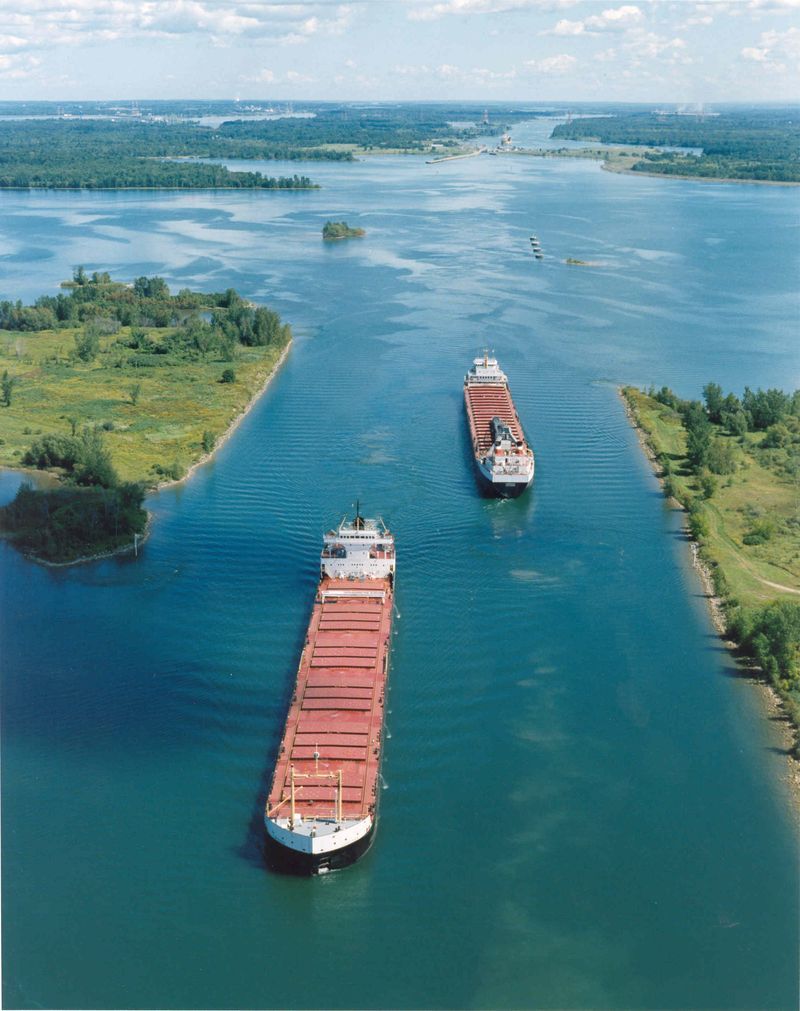
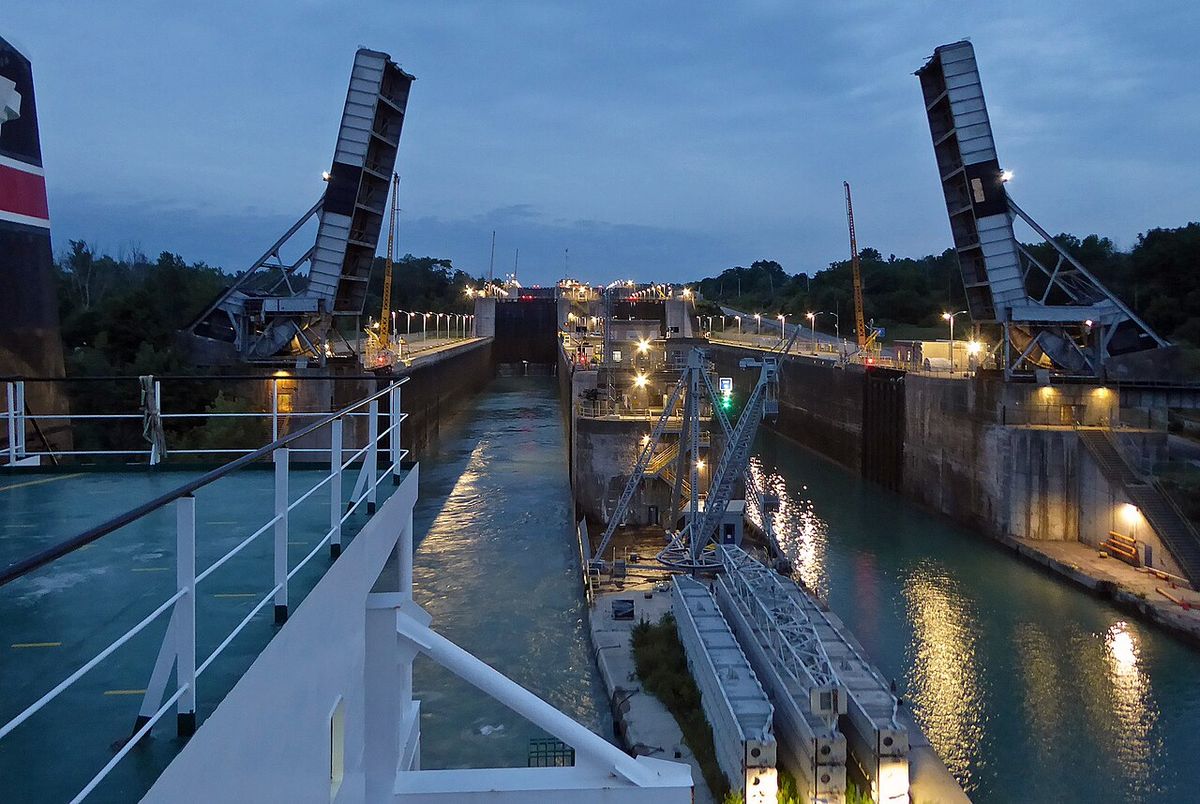
The modern Welland Canal is an engineering marvel designed to lift vessels the 99.5-metre difference in elevation between Lake Erie and Lake Ontario. The system consists of eight locks, with seven lift locks (Locks 1-7) clustered at the Niagara Escarpment and an eighth guard lock at Port Colborne to compensate for fluctuating water levels in Lake Erie. Each of the seven main locks is 233.5 metres long and 24.4 metres wide, raising or lowering ships between 13 and 15 metres per lock. The southernmost Lock 8 is longer at 349.9 metres. The canal's design permits two large ships to pass in opposite directions within its channels. A key constraint is the fixed vertical clearance of 35.5 metres imposed by the Garden City Skyway, which passes over the canal. All other highway and railroad crossings are either movable vertical-lift or bascule bridges, or tunnels such as the Thorold Tunnel.
Major infrastructure projects have continued to shape the canal. Between 1967 and 1972, the 13.4-kilometre Welland By-Pass was constructed, opening for the 1973 shipping season. This project created a new, shorter alignment between Port Robinson and Port Colborne, bypassing downtown Welland via three tunnels, including one that acts as an aqueduct for the Welland River. The old channel through Welland became the Welland Recreational Waterway. Technological upgrades have also been implemented, such as the installation of 'hands-free' vacuum mooring systems in Locks 1 through 7, a project completed in early 2018 after some delays. While a Fifth Welland Canal with larger, twinned locks was once proposed and land was expropriated, the project was shelved, and continued improvements to the current infrastructure are expected to extend its operational life well beyond its original design horizon of 2030.
The canal operates on a seasonal schedule, typically from late March through December, closing in winter due to ice and hazardous weather. The record for earliest opening was set on March 20, 2007, and matched the following year. While commercial shipping has priority, the canal also accommodates pleasure craft under specific conditions. Vessels must be over 6 metres in length or weigh more than 900 kilograms, be motor-propelled (sailboats cannot use their sails), and have a minimum crew of three for upbound transits and two for downbound. Reservations and payment must be made online, with a fee of $200 CAD to transit all eight locks as of February 2025. Dinghies must be stowed on deck and cannot be towed behind the vessel during the transit.
Notable Accidents and Sabotage Attempts
Throughout its long history, the Welland Canal has witnessed several significant accidents and deliberate acts of sabotage. On June 20, 1912, the government steamer La Canadienne lost power and crashed into the gates of Lock 22 on the Third Canal, forcing them open and causing a surge of water that drowned three boys fishing downstream. A major accident occurred on August 25, 1974, when the ore carrier Steelton struck the rising Bridge 12 in Port Robinson, knocking the structure over and destroying it, though no one was killed. More recently, on August 11, 2001, the freighter Windoc collided with Bridge 11 in Allanburg, destroying the ship's wheelhouse and funnel and causing a major fire, rendering the vessel a total loss but resulting in no injuries or pollution. The marine investigation suggested the bridge operator's performance was likely impaired. Another collision involved the cargo ship Lena J striking Bridge 19 in Port Colborne on September 30, 2015, closing the bridge to vehicular traffic for months. On July 11, 2020, two cargo ships, the Alanis and the Florence Spirit, struck each other near Port Robinson, though no injuries or spills were reported.
The canal has also been the target of sabotage plots on multiple occasions. The first successful attack occurred on September 9, 1841, when an explosive charge destroyed a lock gate at Lock 37 of the First Canal near Allanburg. A catastrophic flood was prevented only by an upstream guard gate closing automatically. The suspected saboteur was Benjamin Lett. A second bombing took place on April 21, 1900, at Lock 24 of the Third Canal, causing minor damage. The perpetrators, John Walsh, John Nolan, and ringleader 'Dynamite' Luke Dillon, were caught, tried in Welland, and received life sentences. During the First World War, a plot known as the 'Von Papen Plot' aimed to blow up the canal, leading to indictments against German agents including Franz von Papen, though he had already left the United States and the plot was never executed.
- June 20, 1912: Steamer La Canadienne crashes into Lock 22 gates, causing a fatal surge.
- August 25, 1974: Ore carrier Steelton destroys Bridge 12 in Port Robinson.
- August 11, 2001: Freighter Windoc collides with Bridge 11 in Allanburg, causing a major fire.
- September 30, 2015: Cargo ship Lena J strikes Bridge 19 in Port Colborne.
- July 11, 2020: Cargo ships Alanis and Florence Spirit collide near Port Robinson.
Economic and Strategic Importance
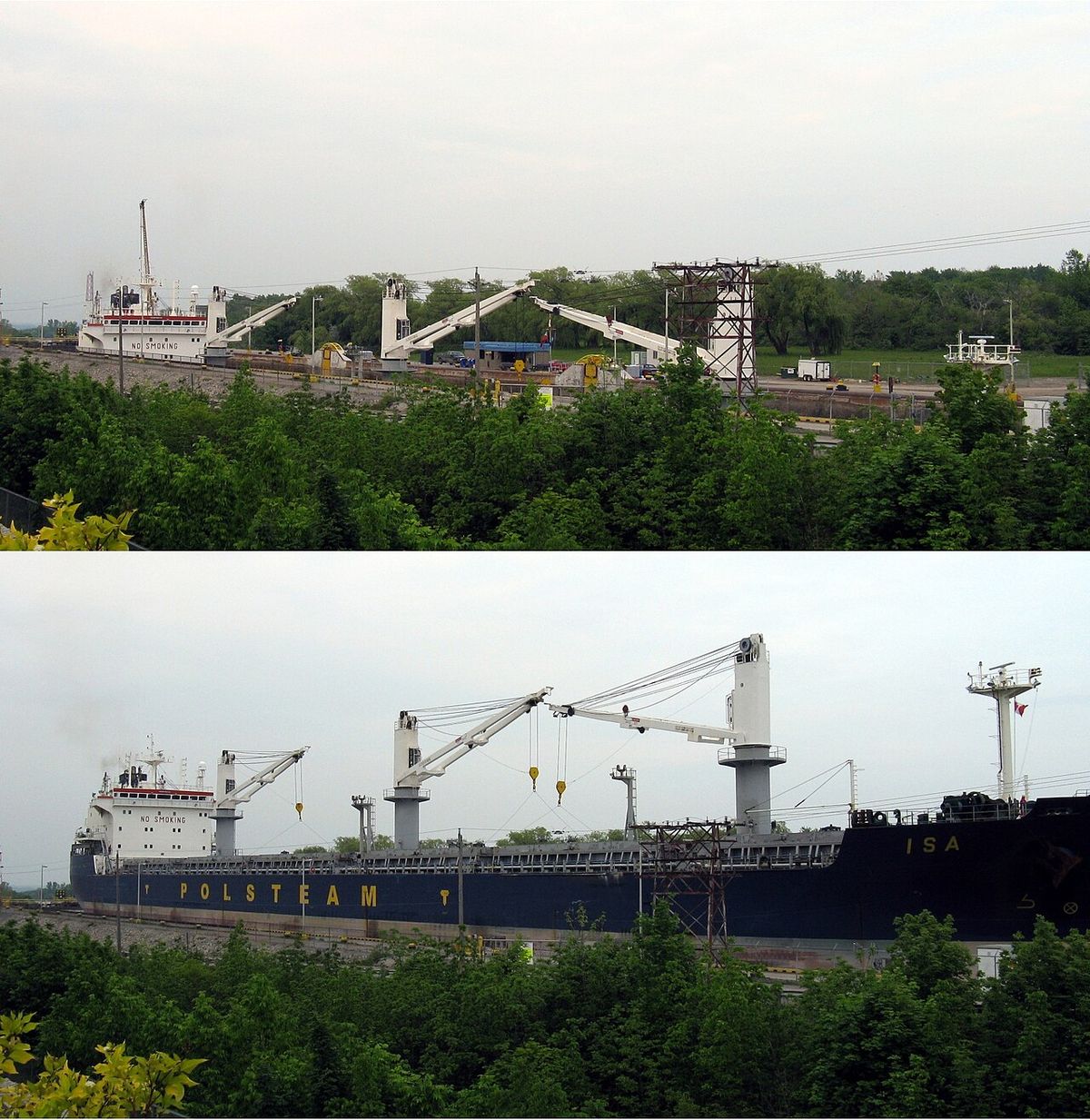
The Welland Canal's primary economic function is to serve as a conduit for bulk cargo shipping between the upper and lower Great Lakes, integrating with the broader St. Lawrence Seaway system. It handles approximately 40 million tonnes of cargo annually from about 3,000 ship transits, carrying vital commodities such as iron ore, coal, grain, and limestone. By providing a direct water route that bypasses Niagara Falls, the canal enabled goods from major industrial centres like Cleveland, Detroit, Chicago, and Milwaukee, as well as Ontario's heartland, to be shipped efficiently to ports in Montreal and Quebec City for transfer to ocean-going vessels. This connectivity was a major catalyst for the growth of Toronto and other Great Lakes ports, establishing a reliable supply chain for raw materials and finished goods.
The canal's evolution directly responded to the demands of maritime trade. Each reconstruction aimed to accommodate larger vessels, thereby reducing shipping costs per tonne and increasing the volume of trade. The First Canal's 40 small wooden locks gave way to the stone locks of the Second Canal, which were soon outgrown, leading to the larger Third Canal and finally the massive Fourth Canal with its Panamax-capable locks. This continuous enlargement allowed the canal to eclipse narrower rival routes like the Erie Canal and the Trent-Severn Waterway by offering a more direct and efficient passage.
- Annual Cargo Volume: Approximately 40 million tonnes.
- Annual Ship Transits: Approximately 3,000 vessels.
- Key Commodities: Iron ore, coal, grain, and limestone.
- Major Connected Ports: Cleveland, Detroit, Chicago, Milwaukee, Toronto, Montreal, Quebec City.
- Historical Rival Routes: Erie Canal and Trent-Severn Waterway.
- Major Upgrade Project: Welland By-Pass (built 1967 to 1972, opened 1973).
Key Specifications and Comparative Data
The technical specifications of the Welland Canal have expanded dramatically over its four iterations. The First Welland Canal, which opened in 1829, had a minimum depth of 2.4 metres and 40 wooden locks each measuring 33.5 by 6.7 metres. The Second Welland Canal, completed by 1845, increased the depth to 2.7 metres and featured 27 stone locks each measuring 45.7 by 8.1 metres. The Third Welland Canal, finished in 1887, had a minimum depth of 4.3 metres with 26 stone locks each 82.3 metres long by 13.7 metres wide. The current Fourth Welland Canal, opened in 1932, has a depth of 7.6 metres and eight locks, with seven lift locks each 233.5 metres long by 24.4 metres wide and one guard lock that is 349.9 metres long. These changes reflect the growth in global ship sizes and the need to keep the waterway commercially viable.
| Canal Generation | Years Operational | Number of Locks | Typical Lock Dimensions (Length x Width) | Minimum Canal Depth |
|---|---|---|---|---|
| First Welland Canal | 1829 to 1845 | 40 | 33.5 m x 6.7 m (110 ft x 22 ft) | 2.4 m (7.9 ft) |
| Second Welland Canal | 1845 to 1935 | 27 | 45.7 m x 8.1 m (150 ft x 27 ft) | 2.7 m (9 ft) by 1846 |
| Third Welland Canal | 1877 to 1935 | 26 | 82.3 m x 13.7 m (270 ft x 45 ft) | 4.3 m (14 ft) |
| Fourth Welland Canal | 1932-Present | 8 | 233.5 m x 24.4 m (766 ft x 80 ft) | 7.6 m (25 ft) |
Cultural Legacy and Commemoration
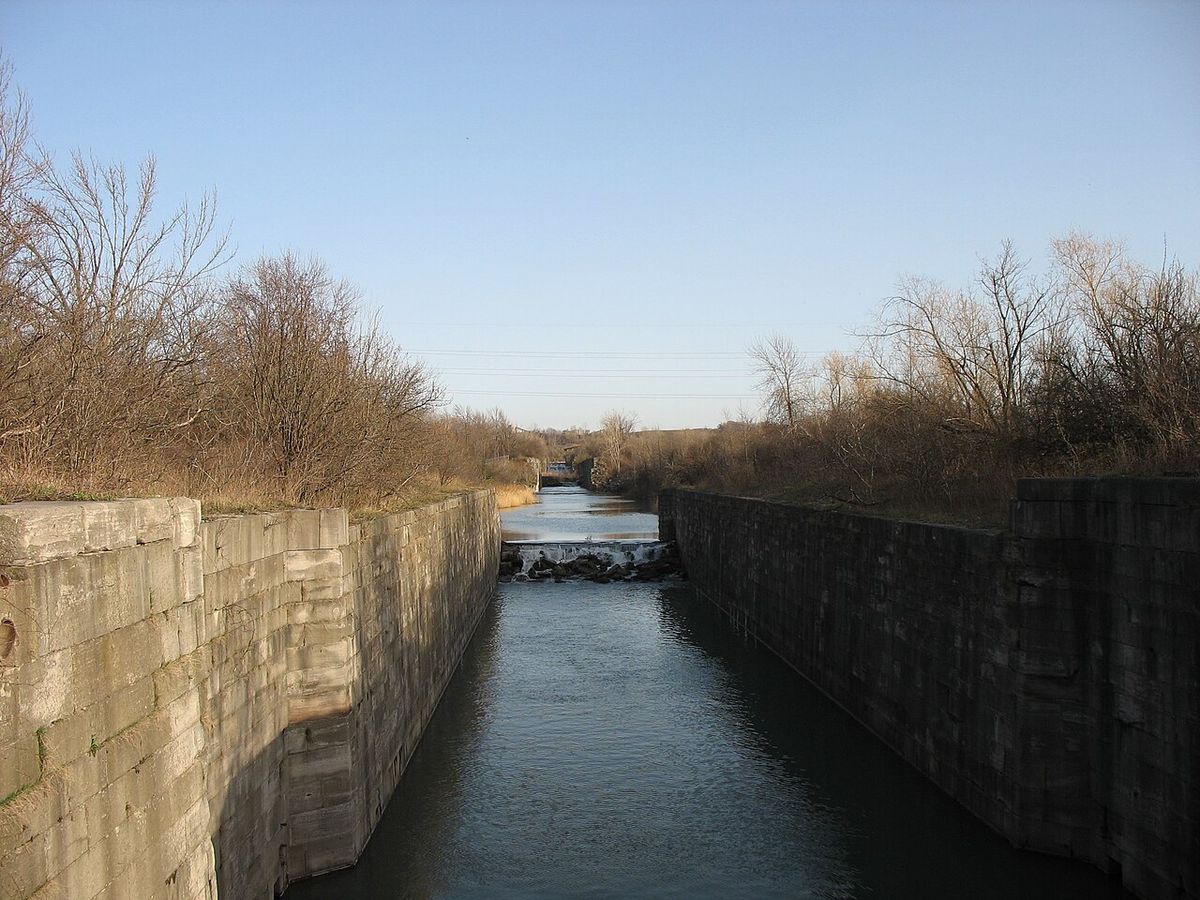
The Welland Canal is more than an industrial corridor. It is a defining feature of the Niagara Peninsula's landscape and community identity. These waterways now host recreational boating, fishing, and scenic trails, integrating the canal's history into the region's green infrastructure. Communities like Port Colborne, Thorold, and St. Catharines have grown alongside the canal, with their economies and histories deeply intertwined with its operation. The sight of a massive laker slowly ascending the escarpment through a series of locks remains a popular tourist attraction, drawing visitors to viewing platforms and interpretive centres.
The human cost of building this critical infrastructure is formally commemorated. On November 12, 2017, the Welland Canal Fallen Workers Memorial was unveiled at Lock 3. This monument honours the 137 workers who lost their lives during the construction of the various canals. The memorial serves as a solemn reminder of the dangerous labour required to shape this national asset. The canal's story is also preserved through local museums, historical societies, and archives that document its engineering feats, the communities it shaped, and the workers who built it. From its role in wartime sabotage plots to its daily function in global trade, the Welland Canal's narrative is a significant part of Canadian industrial, social, and maritime history.
- Welland Recreational Waterway: Repurposed old canal channel through Welland.
- Welland Canal Fallen Workers Memorial: Unveiled November 12, 2017, at Lock 3.
- Workers Honoured: 137 workers who died during construction.
- Key Canal-Side Communities: Port Colborne, Welland, Thorold, St. Catharines, Port Dalhousie, Port Weller.
- Notable Tourist Feature: Viewing platforms for watching ships transit the locks.
- Historical Preservation: Local museums and archives dedicated to canal history.
Questions about Welland Canal
How many locks are in the current Welland Canal and how do they work?
The current Fourth Welland Canal has eight locks. Seven are lift locks (Locks 1-7) clustered at the Niagara Escarpment, each raising or lowering ships by between 13 and 15 metres. The eighth lock at Port Colborne is a guard lock, which does not provide lift but adjusts for the varying water levels in Lake Erie. Each of the seven main locks is 233.5 metres long and 24.4 metres wide, using a system of filling and emptying massive chambers with water to move vessels up or down the 99.5-metre total elevation difference between the two lakes.
Can recreational boats use the Welland Canal?
Yes, pleasure craft are permitted to transit the Welland Canal, but commercial vessels have absolute priority. To use the canal, recreational vessels must be over 6 metres in length or weigh more than 900 kilograms, and must be propelled by a motor (sailboats cannot use their sails). A minimum crew of three is required for upbound trips and two for downbound trips. Reservations and payment must be made online, with a fee of $200 CAD to transit all eight locks as of February 2025.
What was the worst accident on the Welland Canal?
Several serious accidents have occurred. A tragic early accident in 1912 saw the steamer La Canadienne crash into a lock gate, causing a surge that drowned three boys. A major collision in 2001 involved the freighter Windoc hitting Bridge 11 in Allanburg, destroying the ship's superstructure in a fire and resulting in a total loss, though there were no fatalities. Another significant accident in 1974 saw the ore carrier Steelton knock over and destroy Bridge 12 in Port Robinson, which was never replaced, leaving the community dependent on a ferry service.
Has the Welland Canal ever been attacked or sabotaged?
Yes, the canal has been the target of sabotage on at least two confirmed occasions. In 1841, an explosive charge destroyed a lock gate on the First Canal near Allanburg, with Benjamin Lett suspected. In 1900, dynamite damaged Lock 24 of the Third Canal near Thorold. The saboteurs were caught and received life sentences. During the First World War, a German plot known as the 'Von Papen Plot' to blow up the canal was uncovered, leading to indictments, but the plan was never carried out.
What is the Welland By-Pass?
The Welland By-Pass is a 13.4-kilometre section of the canal built between 1967 and 1972 to create a more efficient route. It opened for the 1973 shipping season, providing a new, shorter alignment between Port Robinson and Port Colborne that bypasses the city centre of Welland. This project involved constructing three tunnels, including one that acts as an aqueduct carrying the Welland River over the canal. The old channel through Welland was converted into the Welland Recreational Waterway for public use.
Why was the Welland Canal built?
The Welland Canal was built because the Niagara River, the only natural waterway connecting Lake Ontario and Lake Erie, was unnavigable due to Niagara Falls. Before the canal's construction, shipping traffic used a portage road between Chippawa and Queenston on the Niagara River. The canal was built to traverse the Niagara Peninsula between Port Weller on Lake Ontario and Port Colborne on Lake Erie, enabling ships to ascend and descend the Niagara Escarpment. It is a key part of the St. Lawrence Seaway and Great Lakes Waterway, allowing goods from Great Lakes ports to be shipped to Montreal or Quebec City for international shipping. This bypass of the falls was essential for creating a continuous water route.
Sources and further reading
- Welland Canal (Wikipedia)
- Welland Canal, Park Trail (ontariobiketrails.com)
- Niagara's Welland Canal | Canada's Engineering Achievement (niagarawellandcanal.com)
- Welland Canal (niagarageopark.com)
- St. Catharines Museum and Welland Canals Centre (stcatharines.ca)
Checked by the Your Space Hamilton desk. Last updated 2026-10-19.