St. Catharines
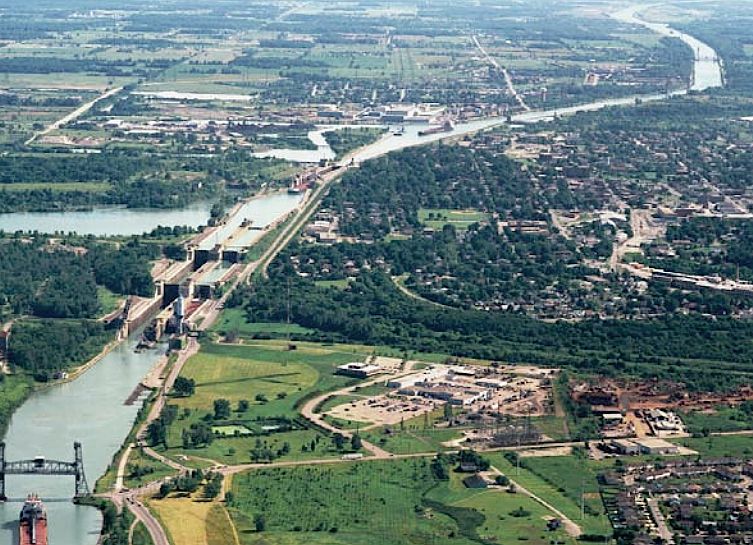
St. Catharines is the most populous city in Canada's Niagara Region and the eighth-largest urban area in Ontario, with a 2021 population of 136,803. Located on the Niagara Peninsula 51 kilometres south of Toronto, the city serves as a crucial economic and cultural hub for Southern Ontario. It is historically significant as a terminus of the Underground Railroad and is the northern entrance to the Welland Canal, a vital shipping route. Known officially as "The Garden City" for its extensive parklands, St. Catharines is also home to Brock University and a growing culinary and tourism sector.
History and Early Settlement
The region that became St. Catharines was originally inhabited by Iroquoian-speaking Chonnonton peoples, also known as the "people of the deer," who lived in longhouses and grew corn, beans, and squash. The Seneca conquered Chonnonton villages in 1647, and the Haudenosaunee destroyed the remaining villages in the 1650s, with smallpox epidemics contributing to the disappearance of the Chonnontons by 1671. The land falls within the original territory of the Mississaugas, who ceded a large tract, including the St. Catharines area, to the British Crown in a 1782 treaty for European settlement. Loyalists began settling the area in the 1780s, with Serjeant Jacob Dittrick and Private John Hainer among the first to take Crown Patents in 1790 where Dick's Creek and 12 Mile Creek merge, the site of the modern city centre. Historians speculate Dick's Creek may have been named after Richard Pierpoint, a Black Loyalist and former American slave. Early transportation relied on indigenous trails and water routes, with townships surveyed between 1787 and 1789.
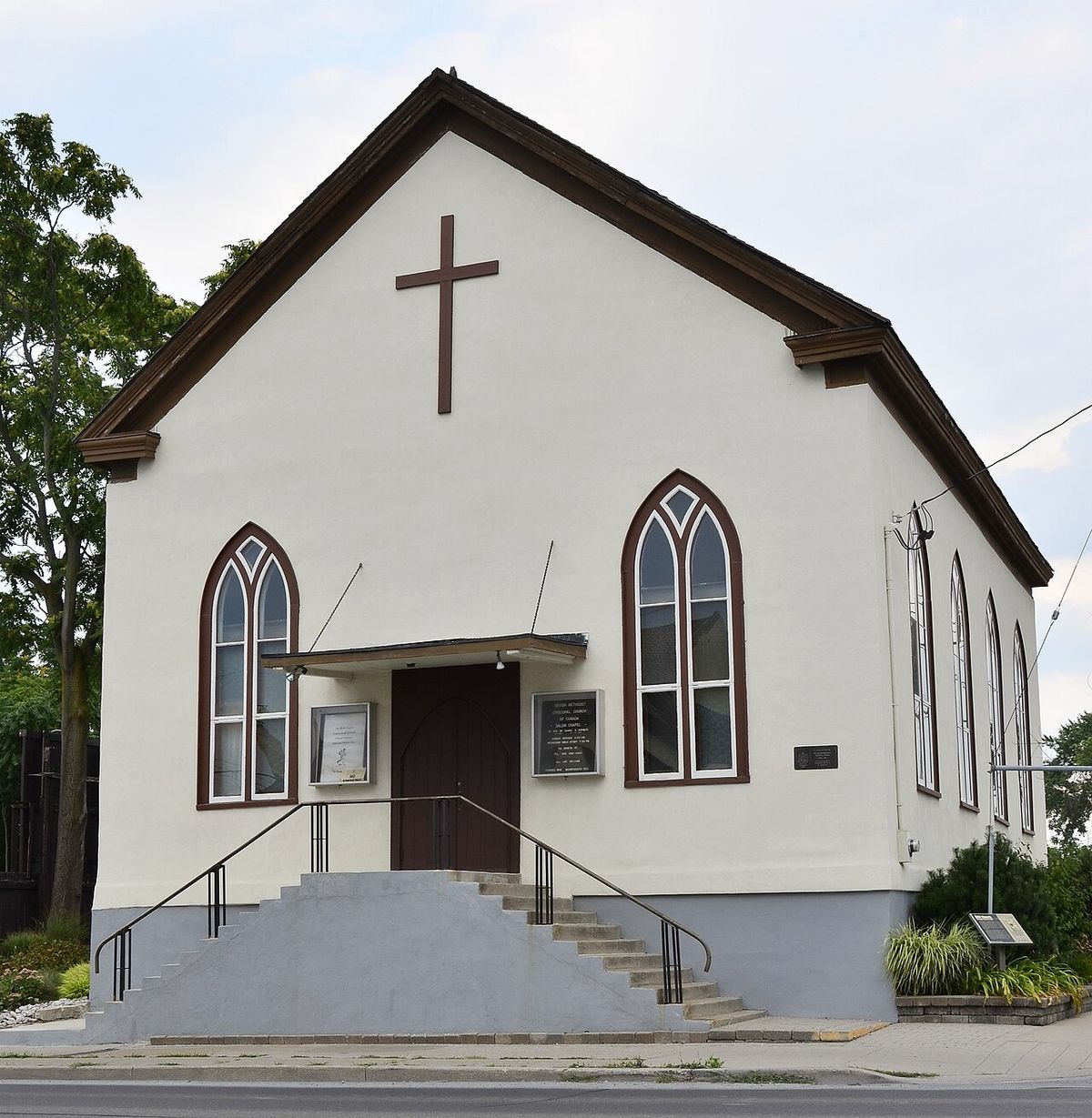
After Butler's Rangers disbanded in 1784, former quartermaster Duncan Murray distributed free government supplies to resettled Loyalists from his mill on 12 Mile Creek in Power Glen until his death in 1786. The Merritt family, later Loyalists from the Carolinas, New York, and New Brunswick, arrived in 1796. William Hamilton Merritt worked to promote and fund the first Welland Canal, constructed from 1824 to 1833, which established St. Catharines as the commercial and industrial hub of the Niagara Peninsula. Merritt also granted land at Geneva and North Streets in the early 1840s for the British Methodist Episcopal Church, Salem Chapel, established in 1855. This area became a destination for the Underground Railroad, with the abolitionist Harriet Tubman living in St. Catharines. By the mid-1850s, the town's population was about 6,000, including approximately 800 people of African descent.
The settlement, known as Shipman's Corners and The Twelve, saw early community development with an inn built by Thomas Adams on Ontario Street, a log schoolhouse built before 1797, and various mills and businesses along the extension of the Iroquois Trail, later renamed St. Paul Street. Incorporated as a village in 1845 with a population of about 3,500, its primary industry was flour milling, supported by ship repairs, grist mills, breweries, distilleries, a tannery, a foundry, and eight taverns. St. Catharines was incorporated as a city in 1876. Major expansions occurred in 1961 with the annexation of Grantham Township, Merritton, and Port Dalhousie, and in 1970 when part of Louth Township was amalgamated into the city, extending the boundary to Fifteen Mile Creek. The origin of the city's name is unclear, with theories citing Saint Catherine of Alexandria, Catherine Butler, or Catherine Askin Hamilton, and the spelling was standardized as St. Catharines upon incorporation in 1845.

Geography, Climate, and Distinct Communities
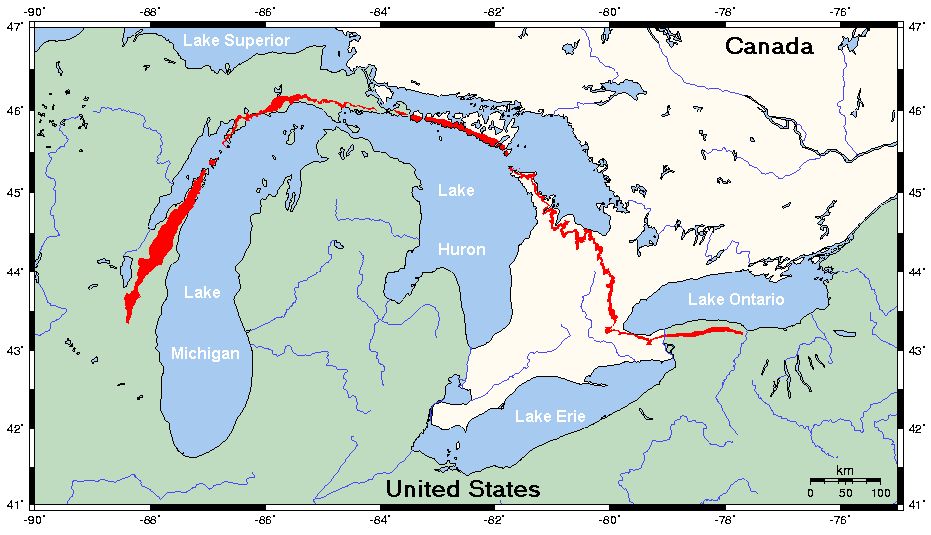
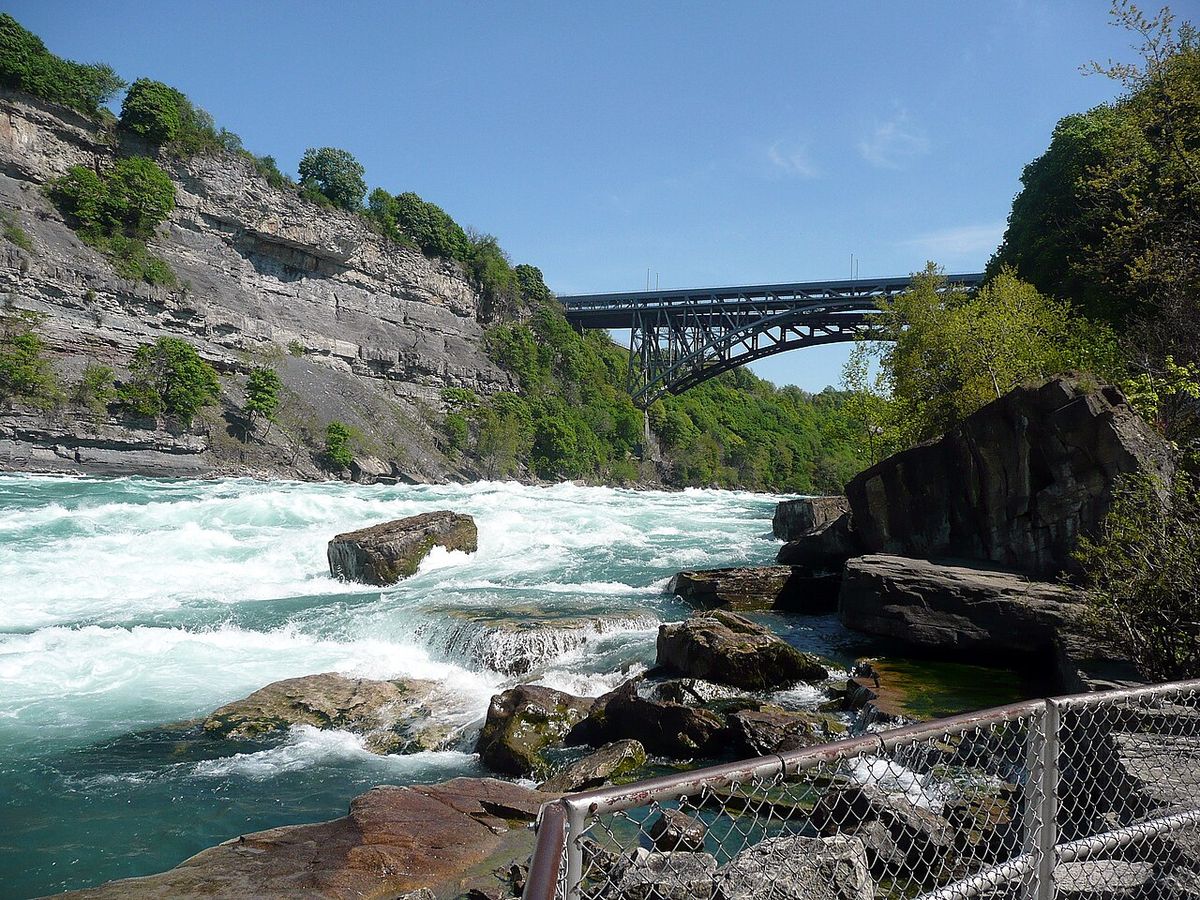
St. Catharines is located in Southern Ontario, 51 kilometres south of Toronto across Lake Ontario and 19 kilometres inland from the Niagara River border with the United States. Its position between the Greater Toronto and Hamilton Area and the Canada-U.S. border makes it a strategic transportation and telecommunications corridor, lying on one of the main telecommunications backbones between the two countries. The city's geography is defined by the Niagara Escarpment to the south and the moderating influence of Lake Ontario and Lake Erie, which creates a unique microclimate classified as humid continental. This microclimate allows wineries to flourish due to numerous frost-free days and frequent winter thaws, though the area can experience heavy lake-effect snow. Summer average high temperatures reach 27°C in July, with thunderstorms that are less severe than in western southern Ontario. The highest recorded temperature was 40.0°C on July 10, 1936, and the coldest was -25.7°C on February 18, 1979.
The city's development has resulted in several distinct communities within its boundaries. The historical core was the downtown area, with surrounding land originally part of Louth Township to the west and Grantham Township to the east. Steady growth through the late 19th and early 20th centuries led to the annexation of land that became Western Hill and Old Glenridge to the southwest and central areas to the east and north. Separate municipalities, the town of Merritton and the town of Port Dalhousie, existed to the south and north until their annexation in 1961. Post-World War II explosive growth saw further annexation of Grantham Township lands to the north, known as The North End. The 1970 regional government amalgamation transferred the portion of Louth Township east of Fifteen Mile Creek, including parts of the Hamlet of Rockway and the Hamlet of Power Glen, as well as Port Weller, to St. Catharines. This enabled later developments like Martindale Road in 1983 and Vansickle Road in 1987.
- Downtown: The original city core, subject to major revitalization projects.
- Merritton: A former town annexed in 1961, located to the south.
- Port Dalhousie: A former town and lakeside community annexed in 1961, home to Henley Island.
- The North End: A large residential area developed post-World War II on annexed Grantham Township land.
- Western Hill and Old Glenridge: Early 20th-century annexations to the southwest.
- Power Glen and Rockway: Hamlets transferred from Louth Township in 1970.
- Port Weller: An industrial area on Lake Ontario transferred in 1970.
Downtown Revitalization and Infrastructure
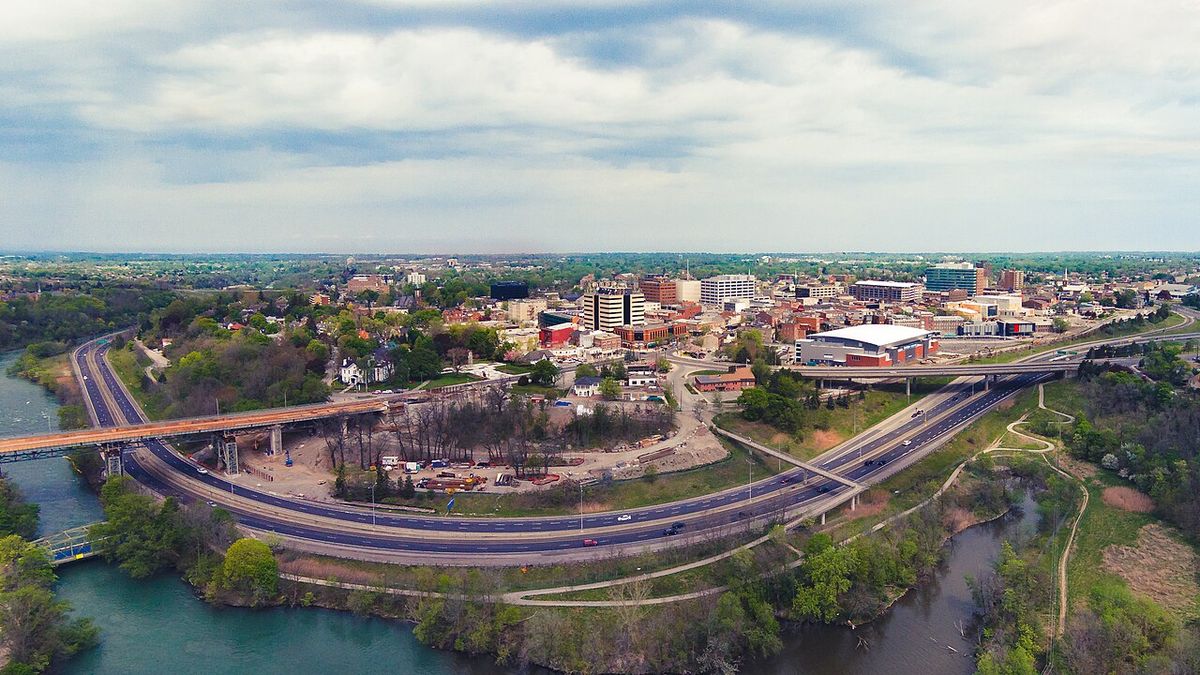
Following the loss of manufacturing jobs, numerous efforts were made to improve the downtown core. In 2006, city council approved converting one-way arteries to two-way traffic to improve circulation and make the area a destination rather than a thoroughfare. The first phase, converting St. Paul and King streets at a cost of $3.5 million shared with Niagara Region, was completed in 2009. By 2012, the change was considered successful and garnered national media attention. The city also modified the Ontario Wine Council's Wine Route in 2012 to officially redirect winery visitors through downtown. A major cultural investment was the $54 million FirstOntario Performing Arts Centre, funded jointly by federal, provincial, and municipal governments and opened in September 2015. Adjacent to it, Brock University's Marilyn I. Walker School of Fine and Performing Arts opened in the renovated former Canada Hair Cloth Building.
In late 2011, council approved constructing a new spectator facility to replace the Garden City Arena Complex from 1938. The U-shaped facility, intended to host the Ontario Hockey League's Niagara IceDogs and other events for 4,500 to 5,300 spectators, was planned for a cost at or below $50 million on land behind St. Paul Street abutting Highway 406. IceDogs owner Bill Burke promised a 20-year lease if the arena was built. Other downtown improvements included the Carlisle Street Parking Garage, which opened in January 2012. Built to Leadership in Energy and Environmental Design standards, it cost $27.9 million with three-way government funding and featured a green roof, greywater collection, permeable pavement, and retail space at street level. From 2019 to 2023, the city operated weekend pedestrian zones on certain downtown streets, with $214,500 allocated in the 2021 budget for the road closures.
Demographic and Social Characteristics
According to the 2021 Census, St. Catharines had a population of 136,803 living in 58,903 private dwellings, a 2.8 percent increase from 133,113 in 2016. The land area is 96.2 square kilometres, resulting in a population density of 1,422.1 people per square kilometre. The St. Catharines-Niagara census metropolitan area had a population of 433,604 in 2021. The city's ethnic composition in 2021 was 81.0 percent White, 16.5 percent visible minorities, and 2.5 percent with Indigenous identity. The largest visible minority groups were Black at 4.1 percent, South Asian at 2.5 percent, Latin American at 2.3 percent, Chinese at 1.6 percent, Filipino at 1.5 percent, and Arab at 1.3 percent.
Religious affiliation shifted significantly between 2011 and 2021. The proportion of Christians fell from 71.8 percent to 58.3 percent, comprising 25.8 percent Catholic, 17.8 percent Protestant, 9.4 percent Christians of unspecified denomination, 1.3 percent Christian Orthodox, and 3.9 percent other Christian traditions. Those reporting no religious affiliation rose from 24.5 percent to 35.9 percent. Non-Christian religions accounted for 5.8 percent of the population, led by Islam at 3.4 percent, Buddhism at 0.6 percent, and Hinduism at 0.6 percent. The city has faced public health challenges, with a 2001 Statistics Canada analysis showing 57.3 percent of residents were overweight, leading media to dub it Canada's "fattest" city at the time. By 2008, the combined obese/overweight rate in St. Catharines-Niagara was 69.3 percent, lower than Hamilton, Kingston, and St. John's. As of 2015, an estimated 23 percent of children in St. Catharines lived in poverty, above the national average. In 2022, the municipality became the largest employer in Ontario to offer a living wage to its staff.
Economic Structure and Major Employers
Manufacturing was historically the dominant industry in St. Catharines, as reflected in its heraldic motto "Industry and Liberality." General Motors of Canada was once the city's largest employer, a distinction now held by the District School Board of Niagara. THK Rhythm Automotive, formerly TRW, continues to operate a manufacturing plant in the city. Employment has shifted from heavy industry towards services, including a concentration of call centres due to the city's location on a major telecommunications backbone between Canada and the United States. Tourism is an influential economic factor, supported by the Conference Board of Canada's projected GDP growth for the region. The city is designated an Urban Growth Centre under the Growth Plan for the Greater Golden Horseshoe, with a target of achieving a minimum density of 150 jobs and residents combined per hectare by 2032 or earlier.
In 2026, the City of St. Catharines was named a Hamilton-Niagara Top Employer by Mediacorp Canada Inc. for the second consecutive year. The culinary scene gained significant recognition in 2026 when the MICHELIN Guide Toronto & Region included several downtown restaurants. Les Incompetents received a new Bib Gourmand award, while oddBird. and Fat Rabbit were newly designated as MICHELIN Recommended restaurants. This concentration of recognized establishments along the downtown stretch has been locally referred to as the "MICHELIN Mile." Other Niagara establishments recognized in the same guide included RPM Bakehouse, Trius Winery & Restaurant, Revé, and the two-star Restaurant Pearl Morissette.
| Employer/Sector | Notes |
|---|---|
| District School Board of Niagara | Current largest employer in the city. |
| General Motors of Canada | Former largest employer. Automotive manufacturing. |
| THK Rhythm Automotive | Manufacturing plant, formerly TRW. |
| Call Centres | Multiple operations due to telecommunications infrastructure. |
| Brock University | Major educational institution and employer. |
| Tourism & Hospitality | Includes wineries, restaurants, and the FirstOntario Performing Arts Centre. |
Education, Culture, and Recreation
St. Catharines is a significant educational centre for the Niagara Region. Brock University, a comprehensive public university, is located in the city. Its Marilyn I. Walker School of Fine and Performing Arts is integrated into the downtown cultural precinct. The city also hosts a campus of Trillium College and Ridley College, a university preparatory school. These institutions contribute to the local economy and community. Cultural venues are anchored by the FirstOntario Performing Arts Centre, which opened in September 2015 and features multiple performance spaces for concerts, dance, and film. The annual Cicada Music & Arts Festival is held on Henley Island in Port Dalhousie, featuring artists like Metric, Bahamas, and USS.
Historical sites include the British Methodist Episcopal Church, Salem Chapel, a National Historic Site commemorating the city's role in the Underground Railroad. The city's official tourism website promotes local attractions, accommodations, dining, and events. Recreation opportunities are extensive, including the city's aquatics programming and 4 square kilometres of parks, gardens, and trails that support the "Garden City" nickname. Community events include the annual Fall Tree Giveaway, with the 2026 event scheduled for October 24 and registration opening October 7. Seasonal activities like Pumpkinville at Happy Rolph's Animal Farm offer family entertainment. The Merchant Ale House, a downtown pub operating since 1999, is noted as a local tradition. The city also supports volunteer-run outdoor neighbourhood ice skating rinks in winter.
Municipal Governance, Budgeting, and 2026 Milestones
The City of St. Catharines operates under a mayor-council system within the Regional Municipality of Niagara. Mayor Mat Siscoe leads the council, which holds regular meetings, with a meeting scheduled for November 2, 2026, at 6 p.m. The city uses a multi-year budget cycle, with a policy approved in 2022 focusing on three-year budgets. The 2024 to 2026 multi-year budgets were initially adopted in fall 2024. The Municipal Act requires readoption of the budget in the second and each subsequent year of the cycle. The 2026 budget readoption was approved after Mayor Siscoe waived the mayoral veto period on November 20, 2025. The budget process involves separate capital and operating budgets, as well as distinct, self-funded budgets for parking and water/wastewater services. Property taxes combine rates set by the city, the Niagara Region, and the Province of Ontario for education. The Municipal Property Assessment Corporation is responsible for property assessments. The next municipal council and school board elections are scheduled for October 26, 2026.
The year 2026 marks the 150th anniversary of St. Catharines' incorporation as a city in 1876. Mayor Mat Siscoe officially launched the sesquicentennial celebrations, which include special events, historical posts under the STC150 banner, and a special State of the City address. The anniversary coincides with the city's recognition as a Hamilton-Niagara Top Employer and the culinary achievements of its downtown restaurants. The city's communications include a Telephone Town Hall held on October 21, 2025, and a Budget Open House on October 22, 2025, with audio available on the city's YouTube page. Residents can subscribe to city news and updates for information on activities, events, and programs.
Questions about St. Catharines
What is St. Catharines known for?
St. Catharines is known as the most populous city in Niagara and the northern entrance to the Welland Canal. It is officially nicknamed "The Garden City" for its 4 square kilometres of parks, gardens, and trails. Historically, it was a major terminus of the Underground Railroad, where Harriet Tubman once lived. The city is an educational hub with Brock University and has a growing culinary reputation, with several downtown restaurants earning MICHELIN Guide recognition in 2026.
What is the population of St. Catharines?
According to the 2021 Census, the population of St. Catharines is 136,803. The population density is 1,422.1 people per square kilometre on a land area of 96.2 square kilometres. The broader St. Catharines-Niagara census metropolitan area had a population of 433,604 in 2021. The city's population increased by 2.8 percent from its 2016 count of 133,113.
What are the major employers in St. Catharines?
The largest employer in St. Catharines is the District School Board of Niagara. Historically, General Motors of Canada held this distinction. Manufacturing remains present with employers like THK Rhythm Automotive. The service sector includes call centres and tourism. Brock University is a major institution. In 2026, the city was recognized as a Hamilton-Niagara Top Employer for the second consecutive year.
What is there to do in St. Catharines?
Visitors can explore the city's parks and gardens, tour the Welland Canal, or visit historical sites like the Salem Chapel BME Church. The downtown features the FirstOntario Performing Arts Centre and MICHELIN-recognized restaurants such as Les Incompetents and Fat Rabbit. Annual events include the Cicada Music & Arts Festival on Henley Island. Families enjoy attractions like Happy Rolph's Animal Farm and its Pumpkinville event in the fall.
When did St. Catharines become a city?
St. Catharines was incorporated as a city in 1876. The settlement was first incorporated as a village in 1845. The year 2026 marks the 150th anniversary of its city status, with celebrations planned throughout the year. The city's roots extend back to Loyalist settlement in the 1780s, and it grew through 20th-century amalgamations with Grantham Township, Merritton, and Port Dalhousie in 1961 and part of Louth Township in 1970.
When is the next St. Catharines municipal election?
The next municipal council and school board elections for St. Catharines are scheduled for Monday, October 26, 2026. This date is confirmed by the City of St. Catharines, which provides elections resources for candidates and voters on its official website. The election will occur in the same year the city proudly marks its 150th anniversary of incorporation, a milestone that will be celebrated throughout 2026. This electoral event is part of the regular democratic process for the city, which is the most populous in the Niagara Region.
Sources and further reading
- St. Catharines (Wikipedia)
- City of St. Catharines: Home (stcatharines.ca)
- Visit St. Catharines | Official tourism information for St ... (lovestc.ca)
- St. Catharines Budget (engagestc.ca)
Checked by the Your Space Hamilton desk. Last updated 2026-10-25.