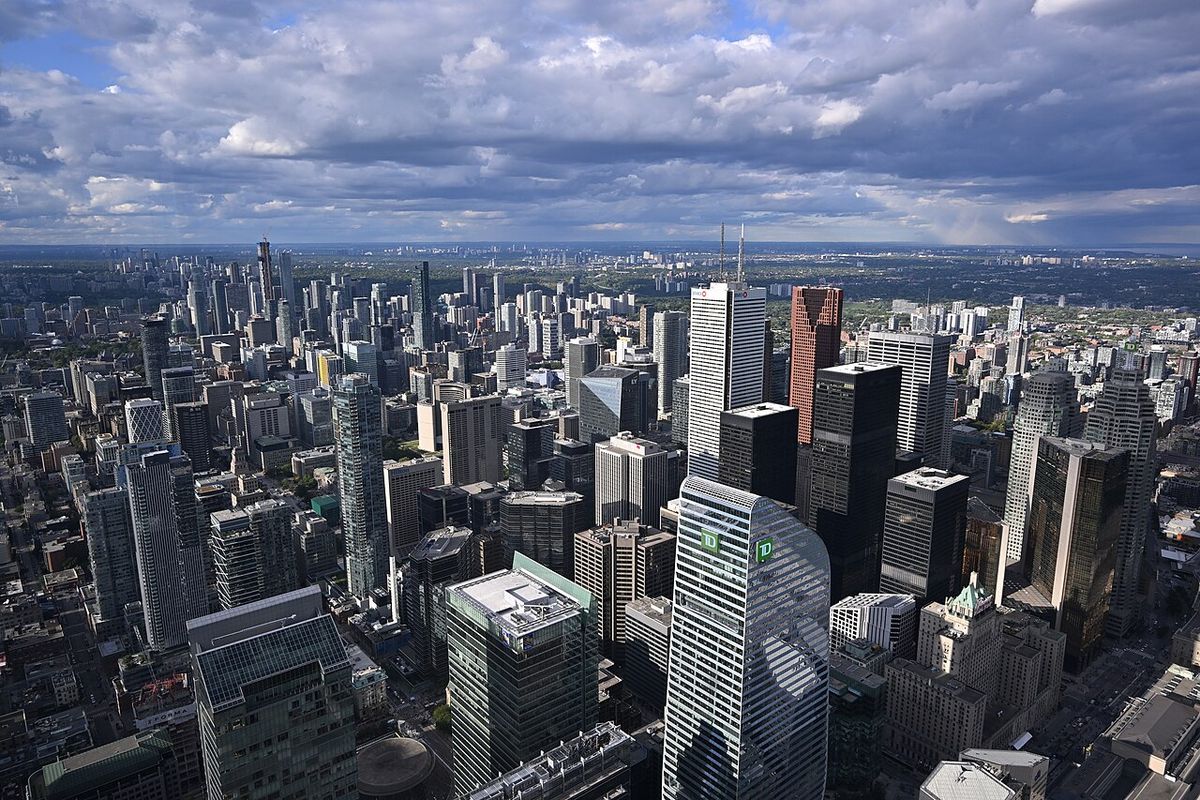
Toronto Metropolitan University
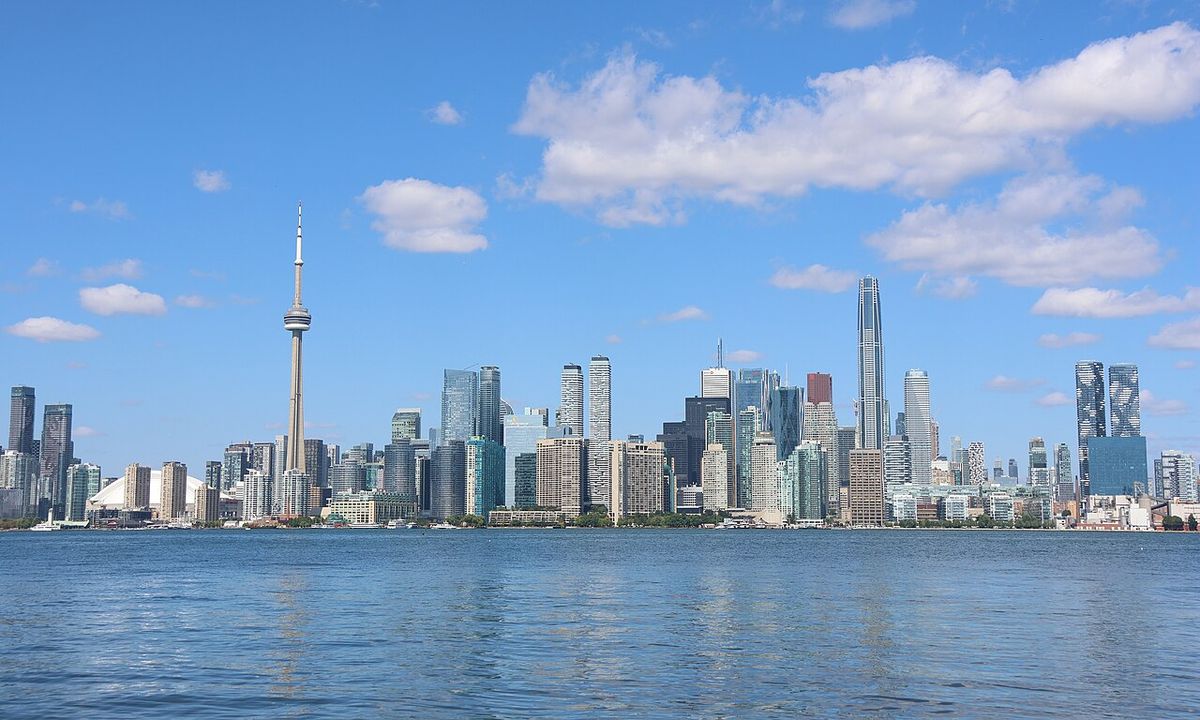
Toronto Metropolitan University (TMU), formerly known as Ryerson University, is a public research university located in the Garden District of downtown Toronto, Ontario. Established in 1948, the university has evolved from a technical institute into a comprehensive institution with nine academic divisions, including the Ted Rogers School of Management, the Lincoln Alexander School of Law, and the School of Medicine. Its central campus is deeply integrated into the urban fabric of Toronto, with pedestrian-focused streets and public spaces. The university's 2022 renaming to Toronto Metropolitan University was a direct response to the legacy of its former namesake, Egerton Ryerson, and his role in the design of the Canadian Indian residential school system.
Historical Development and Name Change
The institution's origins lie in post-Second World War efforts to provide vocational training for returning veterans. Howard Hillen Kerr, the director of the Training and Re-Establishment Institute, saw a need for specialized institutes after a 1943 trip to the Massachusetts Institute of Technology. Kerr's vision led to the Vocational Education Act and the creation of the Ryerson Institute of Technology, which opened on September 16, 1948, with about 250 students. The school initially focused on two-year career training programs, later expanding to three-year diplomas, with a significant emphasis on part-time continuing education night school.
The Ryerson Polytechnical Institute Act was passed in 1963, reorganizing the institution with its own board of governors and renaming it Ryerson Polytechnical Institute in 1964. In a significant early development, the nursing programs of three hospitals were transferred to the institute, the first such program in a Canadian post-secondary institution. The institute received limited degree-granting authority in 1971 for Bachelor of Applied Arts and Bachelor of Technology degrees, and later for a Bachelor of Business Administration in 1977. It achieved full university status as Ryerson Polytechnic University in 1993, expanding its mandate to include scholarly research, and shortened its name to Ryerson University in 2002 after its school of graduate studies was formally established in 1997.
Following the Truth and Reconciliation Commission's 2015 report, the university began a consultation process in 2018 led by professor Denise O'Neil Green, who later became the institution's first vice-president for equity and community inclusion, a first for a Canadian post-secondary institution. A plaque describing Ryerson's role in the residential school system was placed beside his campus statue that same year. Pressure intensified after the 2021 discovery of unmarked graves at the Kamloops Indian Residential School, leading students and staff of the Yellowhead Institute to stop using the Ryerson name in favour of 'X University'. The statue of Egerton Ryerson was toppled in June 2021 and its head thrown into Toronto Harbour, with the university stating it would not be restored. In August 2021, the university accepted the 22 recommendations of an internal task force, which included renaming the institution, leading to the announcement of the new name, Toronto Metropolitan University, on April 26, 2022, formalized by legislation in December 2022.
Campus Layout and Urban Integration
The university's core campus is interwoven with the downtown Toronto neighbourhoods, primarily within the Garden District, with few traditional gates or markers. Its rough perimeter is defined by Gerrard Street to the north, Jarvis Street to the east, Dundas Street East to the south, and Yonge Street to the west, though the university operates facilities beyond these boundaries. Kerr Hall, completed in 1963 after the razing of the old Toronto Normal School and wartime barracks, serves as the architectural and geographical heart of the campus. The campus is a mix of institutional, commercial, and residential zoning, with building heights restricted by ordinances that protect air ambulance flight paths to nearby St. Michael's Hospital and the Hospital for Sick Children.
Public streets and laneways run through the campus, contributing to its open character. Gould Street, the main east-west corridor south of Kerr Hall, was part of a pilot program in 2010 to limit it to pedestrian traffic and was permanently closed to cars from O'Keefe Lane to Bond Street in 2012. This area is now designated as Toronto Metropolitan University Square and includes an outdoor skating rink in winter. Victoria Street south of Gerrard has been a pedestrian-only zone since 1978. This integration means most student needs are met by surrounding city services, with an estimated 275 food service providers within a five-minute walk of the campus as of 2017.
Most parks and green spaces on campus, like Devonian Square and the Kerr Hall quadrangle, are owned by the university but open to the public. Devonian Square, funded by the Devonian Group of Charitable Foundations, features a reflecting pool and large Precambrian igneous and metamorphic rocks from the Canadian Shield that are approximately two billion years old. The university also maintains an urban farm and green roof atop the George Vari Engineering and Computing Centre, established in 2003 as the Andrew and Valerie Pringle Environmental Green Roof, which operates on a five-year crop rotation with 30 different crops and hundreds of cultivars. The university holds undeveloped properties, including parking lots acquired from Infrastructure Ontario in 2013 for $32 million at 202 Jarvis Street and 136 Dundas Street East, with plans for future development such as a proposed 41-storey mixed-use tower at the Jarvis Street site that would include an 11-storey academic base for the Faculty of Science and a student residence.
Academic Structure and Student Body
Toronto Metropolitan University is organized into nine academic divisions. These include the Faculty of Arts, the Faculty of Community Services, the Faculty of Engineering and Architectural Science, the Faculty of Science, The Creative School, the Lincoln Alexander School of Law, the Ted Rogers School of Management, the School of Medicine, and the Yeates School of Graduate and Postdoctoral Studies. Many faculties contain smaller, specialized schools and departments, such as the School of Image Arts within The Creative School. The Chang School of Continuing Education provides extensive part-time and professional development programs, continuing the institution's original emphasis on vocational and continuing education that began with its early night school programs.
During the 2025-26 academic year, the university enrolled approximately 47,118 undergraduate and 2,950 graduate students. It is a co-educational institution with a large commuter population, a reflection of its downtown location. Only about 5.2 percent of all students lived on campus in the 2017-18 year, though nearly 17.9 percent of first-year students did. The university has over 256,000 alumni as of 2026. The institution operates themed residence floors to complement academic studies, such as a fashion floor for students in the school of fashion, within its three on-campus residences that provide about 1,144 beds.
The university's athletics department operates several varsity teams that play as TMU Bold, competing in the Ontario University Athletics conference of U Sports. The university is a co-educational institution, with approximately 47,118 undergraduates and 2,950 graduate students enrolled there during the 2025-26 academic year. As of 2026, TMU has over 256,000 alumni. The university includes nine academic divisions, such as the Faculty of Arts and the Ted Rogers School of Management. Many of these academic divisions are further organized into smaller departments and schools.
Key Buildings and Facilities
Mid-20th century Brutalist structures are a notable feature, with the campus nearly doubling in total floor area between 2000 and 2019 due to significant expansion during an early 21st century construction boom. The Toronto Metropolitan University Library, an 11-storey Brutalist building completed in 1974, houses a collection of over 522,000 books, 836,000 microform units, and extensive electronic resources including e-books, serial titles, and databases. It is augmented by the adjacent, architecturally distinct Student Learning Centre, a 14,200 square metre facility designed by Snøhetta and opened in 2015 to provide additional study space, though it does not store books from the university's collection. The Image Centre is a 4,500 square metre photography museum and academic facility housing the School of Image Arts. Its collection of approximately 375,000 objects includes the historic Black Star collection of 292,000 photographs gifted to the university, archives from publications like Life and The New York Times, and works by contemporary artists. The centre, which originated in 1969, moved into its current building renovated by Diamond Schmitt Architects in the early 2010s and includes climate-controlled storage, several galleries with one dedicated to student work, screening rooms, and offices. Student residences include Pitman Hall (1991) with 565 rooms, the International Living & Learning Centre (1987) with 256 rooms, and the multi-purpose Daphne Cockwell Complex (2019) with 332 rooms, the latter having academic facilities on its lower levels and residential space above.
To increase housing, the university entered a public-private partnership in 2012 to construct the HOEM residence on Jarvis Street, which opened in 2018 and is not owned or operated by the university. The former O'Keefe House residence was repurposed for other university uses after HOEM opened. Several buildings operate as shared spaces with other tenants, and the university also leases or holds strata titles for a number of properties surrounding the central campus. Dining services on campus are limited compared to other universities, given the abundance of nearby options in the downtown core.
Satellite Locations and Partnerships
Beyond its downtown core, TMU operates several off-campus facilities. The Toronto Metropolitan University Aerospace Engineering Centre opened in 2018 at Downsview Park within a 680 square metre repurposed helicopter manufacturing facility. This centre is a partnership between the Faculty of Engineering and Architectural Science, Bombardier, and the Downsview Aerospace Innovation and Research Consortium, providing a collaborative research environment for faculty and graduate students with its industry partners and forming part of a larger research and development park. The university's varsity soccer program also uses sports facilities at Downsview Park.
The university's core campus is situated within the Garden District in downtown Toronto, although it also operates facilities elsewhere in the city and a satellite campus in Brampton for its medical school. In May 2025, the Dundas TTC station stop was approved to be renamed to TMU station and will be renamed December 7th. The university operates more than 40 buildings, and as of 2019, the university's buildings account for over 370,000 square metres of gross floor area. The campus includes an assortment of buildings from different architectural periods, such as Oakham House dating back to 1848 and the Daphne Cockwell Health Sciences Complex opened in 2019.
Toronto Metropolitan University is a public research university located in Toronto, Ontario, Canada. The university provides continuing education services through the Chang School of Continuing Education. The university's central campus primarily lies within the Garden District of downtown Toronto. The campus is interwoven with the rest of the downtown core, with few entrance markers delineating the campus from the rest of the city.
Notable Events and Incidents
The campus has been the site of significant events reflecting both its history and its urban setting. On April 15, 2025, a motorist intentionally struck four pedestrians on the university's walkway adjacent to Gould Street, resulting in one person with serious injuries. This incident highlighted the challenges of managing public safety in a campus fully open to city streets. The toppling of the Egerton Ryerson statue in June 2021 was a major event in the reckoning with the institution's namesake and directly preceded the renaming process.
The university's response to the Truth and Reconciliation Commission's calls to action, including the installation of an explanatory plaque in 2018 and the creation of a senior equity leadership position, marked a formal institutional shift. The permanent closure of Gould Street to vehicular traffic in 2012 transformed the core of campus into a major pedestrian plaza, shaping the daily experience of students and the public. The acquisition of the Black Star photographic collection and the subsequent expansion of The Image Centre solidified the university's role as a major cultural repository within the city. The initial plans in 1948 to house the institute entirely within the Toronto Normal School building were abandoned due to rapid growth, leading to the construction of Kerr Hall and setting the pattern for ongoing campus expansion.
Questions about Toronto Metropolitan University
Why did Ryerson University change its name to Toronto Metropolitan University?
The name change was a direct response to growing recognition of Egerton Ryerson's role in designing the Canadian Indian residential school system. Following the Truth and Reconciliation Commission's 2015 report and the 2021 discovery of unmarked graves at the Kamloops residential school, the university faced significant pressure to change its name. An internal task force recommended renaming, and the new name, Toronto Metropolitan University, was announced in April 2022 and formalized in legislation later that year. The statue of Egerton Ryerson on campus was toppled in 2021 and was not restored.
Where is Toronto Metropolitan University located?
The university's primary campus is located in the Garden District of downtown Toronto, Ontario. Its core is roughly bounded by Gerrard Street to the north, Jarvis Street to the east, Dundas Street East to the south, and Yonge Street to the west. The campus is deeply integrated into the city's urban fabric, with public streets running through it. The university also operates a satellite campus in Brampton for its medical school and a research centre at Downsview Park.
What programs is TMU known for?
Toronto Metropolitan University is organized into nine academic divisions, encompassing a wide range of programs. It is particularly known for the Ted Rogers School of Management, the Lincoln Alexander School of Law, the School of Medicine, and The Creative School, which includes programs in media, fashion, and the arts. The Faculty of Engineering and Architectural Science and the Chang School of Continuing Education are also prominent. The university maintains its polytechnic roots with a focus on career-oriented and experiential learning.
How many students attend Toronto Metropolitan University?
During the 2025-26 academic year, Toronto Metropolitan University had a total enrolment of approximately 47,118 undergraduate students and 2,950 graduate students. The university is a co-educational institution with a large commuter population, given its downtown location. As of 2026, the university has over 256,000 alumni. Only a small percentage of students live on campus, with most residing in the surrounding city.
What is The Image Centre at TMU?
The Image Centre is a 4,500 square metre photography museum and academic facility on campus that houses the School of Image Arts. It holds a collection of approximately 375,000 objects, including the significant Black Star collection of 292,000 historical photographs and archives from publications like Life and The New York Times. The centre features climate-controlled storage, several galleries, and screening rooms. It originated in 1969 and moved into its current renovated building, designed by Diamond Schmitt Architects, in 2012.
Is the TMU campus open to the public?
Yes, the TMU campus is notably open and integrated with the city. Most streets and laneways within the campus are public rights-of-way, and parks like Devonian Square are publicly accessible. Gould Street is a permanent pedestrian zone known as Toronto Metropolitan University Square. The university's location in downtown Toronto means its facilities and the surrounding neighbourhood amenities are used interchangeably by students and the public. This open design is a defining characteristic of the campus experience.
Sources: Wikipedia and current public reporting, checked by the Your Space Hamilton desk. Last updated 2026-10-18.