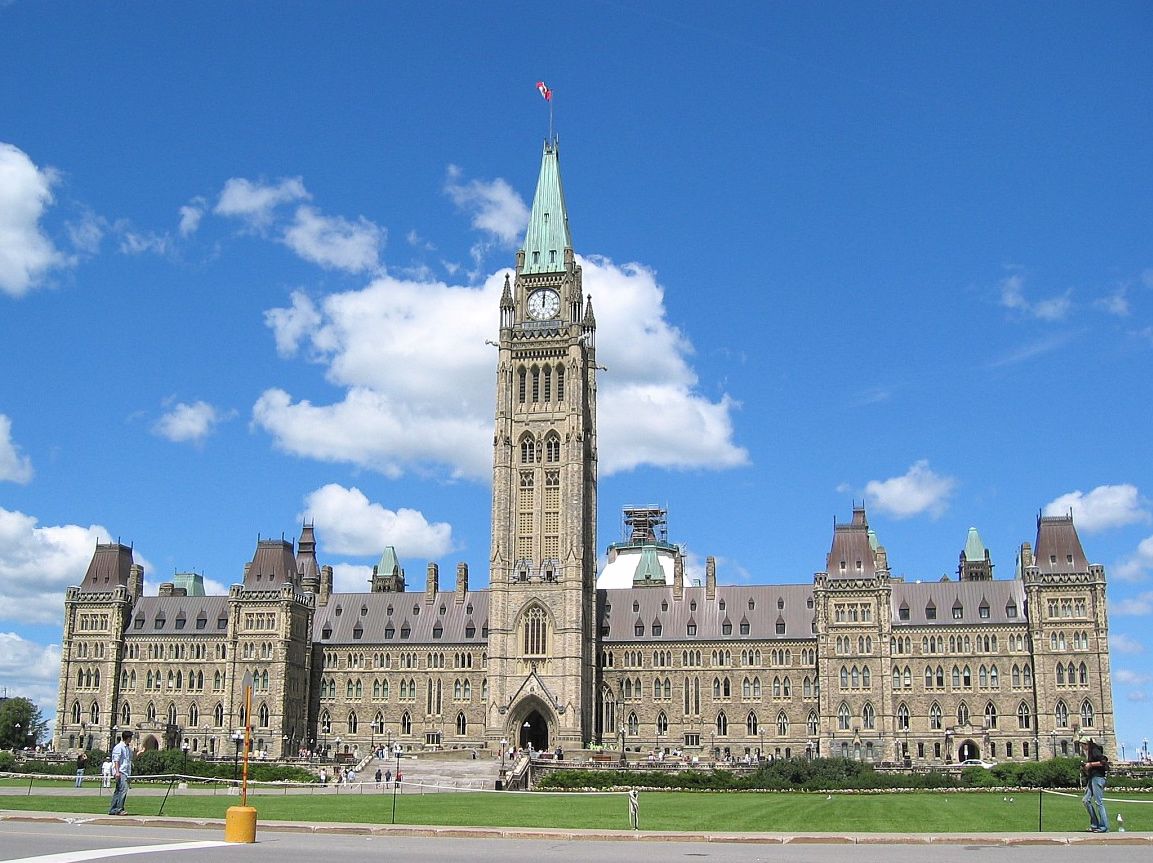
Brampton
Brampton is a city in the Regional Municipality of Peel, Ontario, and the ninth most populous municipality in Canada. As a key component of the Greater Toronto Area, it serves as the administrative seat for Peel Region and is a major urban centre within the Greater Golden Horseshoe. Incorporated as a village in 1853, a town in 1873, and a city in 1974, Brampton has grown from its agricultural and floricultural roots into one of the country's most diverse and fastest-growing cities. Known historically as "The Flower Town of Canada," the city maintains its "Flower City" identity while evolving as a significant economic and cultural hub.
History and Settlement
The area now known as Brampton is part of the traditional territory of the Mississaugas of the Credit First Nation. In October 1818, the chief of the Mississaugas signed Treaty 19, also known as the Ajetance Purchase, surrendering the land to the British Crown. European settlement began in the late 18th century, with an early tavern at the intersection of Hurontario Street and the 5th Sideroad becoming a focal point known as "Buffy's Corners." In 1834, John Elliott laid out lots for sale and named the settlement Brampton, after a town in Cumberland, England. The community was formally incorporated as a village in 1853, the same year the County Agricultural Society of Peel held its first fair at Main and Queen streets, an event that evolved into the modern Brampton Fall Fair. Brampton became the county seat of Peel in 1866, with the construction of the Peel County Courthouse, and was incorporated as a town in 1873. The town faced early challenges with water supply, leading to the development of a pipeline from Heart Lake in 1878 to provide a reliable source.
The late 19th and early 20th centuries saw significant civic development. A public library was founded in 1887 with volumes from the Mechanic's Institute, and in 1907 it received a grant from the Carnegie Foundation to build a new facility. In 1902, publisher Sir William J. Gage donated land to the town to create Gage Park, a central green space that remains a landmark today. The city's economic foundation was heavily influenced by horticulture, particularly after immigrant Edward Dale established Dale's Nursery in 1863. His business grew to become the largest cut flower operation in North America, at its peak featuring 140 greenhouses and producing 20 million blooms annually.
- 1818: Treaty 19 (Ajetance Purchase) surrenders land to the Crown.
- 1853: Brampton incorporated as a village. First agricultural fair held.
- 1866: Becomes county seat. Peel County Courthouse built.
- 1873: Incorporated as a town.
- 1878: Water pipeline from Heart Lake completed.
- 1887: First public library established.
- 1907: Carnegie library built.
- 1963: Flower Festival of Brampton begins.
A major period of growth and amalgamation occurred in the mid-20th century. In 1974, the Province of Ontario restructured local government, merging the Town of Brampton with the Townships of Chinguacousy and Toronto Gore, along with northern parts of Mississauga, to form the present-day City of Brampton. This amalgamation incorporated outlying communities such as Bramalea, Heart Lake, Snelgrove, and Tullamore. Peel County was simultaneously reconstituted as the Regional Municipality of Peel, with Brampton retaining its role as the regional administrative centre. In 2002, the city council established the "Flower City Strategy" to reconnect with its horticultural heritage through community landscaping and cultural projects, leading to the opening of the Rose Theatre in 2006.
Development of Bramalea and Suburban Growth
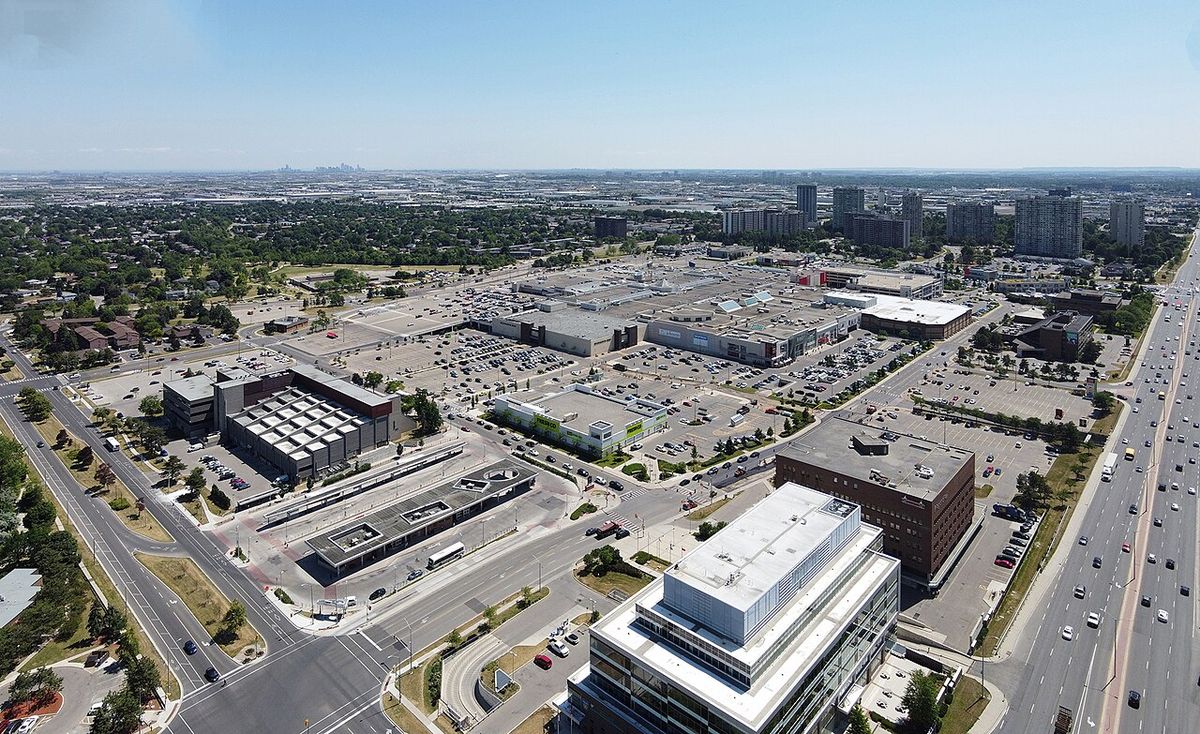
Bramalea was developed in the 1950s as Canada's first planned satellite community, situated east of the original town in Chinguacousy Township. The name was created by farmer William Sheard, combining "BRAM" from Brampton, "MAL" from Malton, and "LEA," an Old English word for meadow. Developed by Bramalea Limited according to a detailed master plan, the community featured a parkland trail system and a central "downtown" area. The Civic Centre, housing city hall and library, opened in 1972, directly across from the Bramalea City Centre shopping mall, with the two initially connected by a weather-protection tunnel that has since been closed. Following the 1974 amalgamation, the new city's council moved from downtown Brampton to the Bramalea Civic Centre, symbolizing the merger of the two communities.
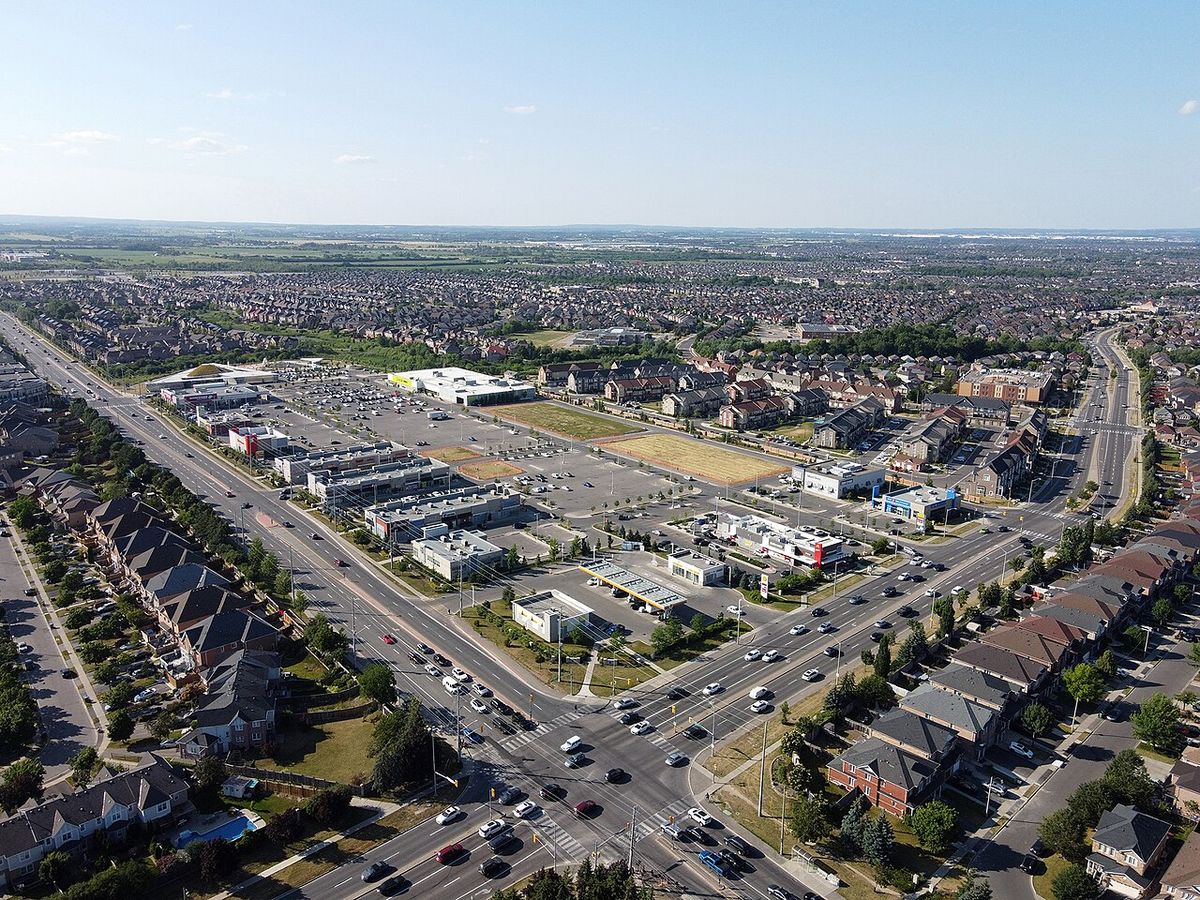
Suburban expansion continued rapidly in the following decades. Development of the Springdale area began in 1991, and by 1999, urban growth reached the city's northern border with Caledon along Mayfield Road. Although this border was designated as the limit for urban development until 2021, construction began spilling north of Mayfield in the late 2010s. The city's eastern boundary with Vaughan is also nearly completely urbanized. This growth transformed Brampton's landscape from a collection of distinct townships and villages into a continuous, car-centric urban area. The city purchased the Brampton Fairgrounds in 1992 for redevelopment, with the Agricultural Society relocating outside the city in 1997.
Demographics and Diversity
Brampton has undergone a major demographic transformation, becoming one of Canada's most diverse and fastest-growing cities. According to the 2021 census, the city's population was 656,480, representing a growth of 10.6 percent since 2016, the fastest rate among Canada's 25 largest municipalities. A defining characteristic is its ethnic composition, with people of South Asian origin constituting the largest single group at 52.4 percent of the population. Other significant groups include those of European (18.9%), Black (13.1%), Filipino (3.2%), and Latin American (2.1%) ancestry. Approximately 60 percent of Brampton's residents are foreign-born, reflecting its status as a major destination for immigrants.
This diversity is reflected in the city's religious and linguistic characteristics. In 2021, Christianity was the most reported religion at 35.7 percent, with Catholicism being the largest denomination. Sikhism (25.1%) and Hinduism (18.1%) were the next largest religious affiliations, followed by Islam (9.1%). 10.3 percent of the population reported no religious affiliation. English was the mother tongue for 42.9 percent of residents, with a multitude of other languages spoken at home. The rapid demographic shift prompted educational adaptations, such as the Peel Board of Education introducing extensive English as a Second Language programs and night classes in over 20 languages by the 1980s. The city's multicultural spirit is celebrated through events like the Carabram festival, founded in 1982, which by 2003 featured 18 cultural pavilions.
Geography and Climate
Brampton is located within the Greater Toronto Area in southern Ontario, covering a total land area of 265 square kilometres. The city is bordered by Vaughan to the east, Halton Hills to the west, Caledon to the north, and Mississauga to the south, with a small southeastern border touching the Etobicoke area of Toronto. The northern boundary generally follows Mayfield Road, except for the neighbourhood of Snelgrove, which extends slightly north of it. The southern border with Mississauga largely follows a hydro corridor and the CN Halton Subdivision rail line. Brampton features a humid continental climate, typical of the Greater Toronto Area, with warm summers and cold winters. Climate data is typically referenced from nearby Toronto Pearson International Airport, located approximately 10.55 kilometres to the east.
Economy and Infrastructure
Brampton's economy has evolved significantly from its 19th-century foundation in agriculture and floriculture. The city is now a major employment centre within the Greater Toronto Area, with a diverse economic base that includes advanced manufacturing, logistics, retail, and technology sectors. Historically, the floriculture industry was paramount, exemplified by Dale's Nursery, which was North America's largest cut flower business and a major employer. While the greenhouse industry has diminished, the "Flower City" identity persists through civic branding and beautification projects.
The city's infrastructure has expanded to support its rapid population growth. Brampton Transit provides a significant public transit service, recording a ridership of approximately 226,500 per weekday as of the second quarter of 2024. The city maintains its role as the administrative heart of Peel Region, hosting the regional council chamber, the Peel Regional Police headquarters, the public health department, and the Peel Art Gallery, Museum and Archives. Key civic buildings include Brampton City Hall, which opened in 1991 and was expanded in 2014 with a nine-storey tower connected by a glass walkway called Heritage Way. The Rose Theatre, opened in 2006, serves as the city's premier performing arts venue, replacing the older Heritage Theatre.
Culture and Landmarks
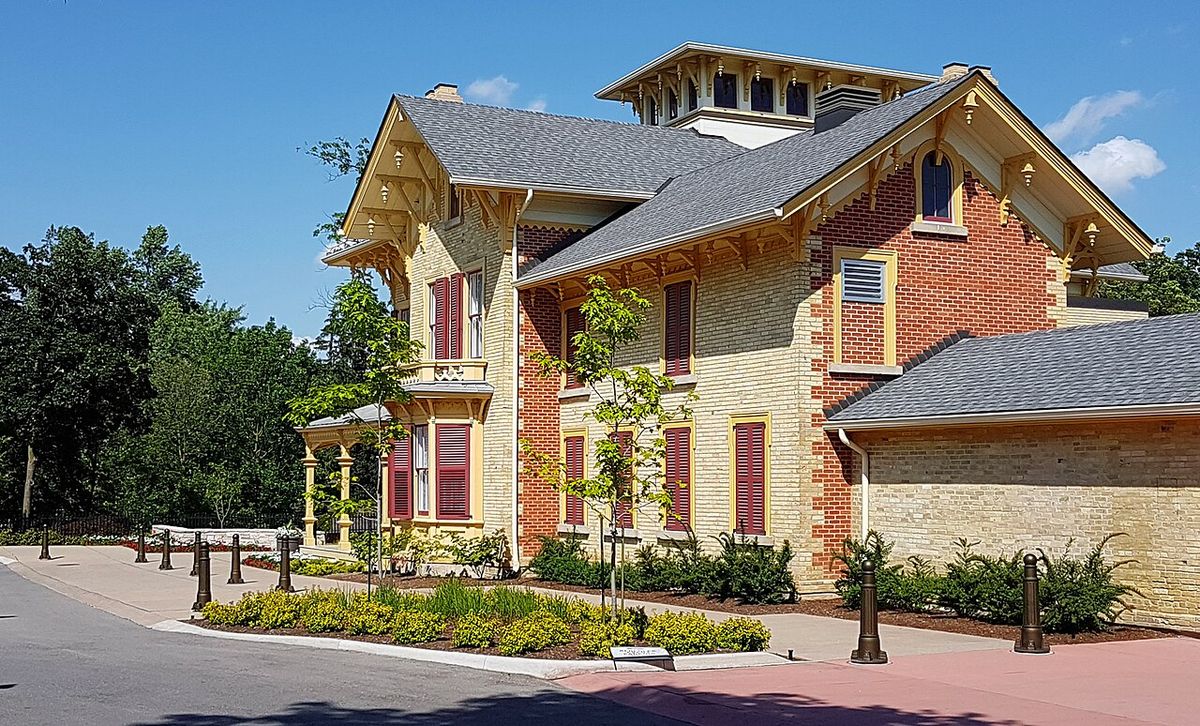
Brampton's culture is shaped by its history, diversity, and community initiatives. The city's floral heritage is celebrated through the Flower City Strategy, participation in the national Communities in Bloom competition, and landmarks like the Rose Theatre. The downtown core features several historical buildings, including the Old Shoe Factory at 57 Mill Street North, the former home of the Hewetson Shoe Company, which was designated under the Ontario Heritage Act in 2008 and now houses small businesses. Gage Park, donated by Sir William J. Gage in 1902, remains a central gathering space. The Peel Art Gallery, Museum and Archives, located in the historic Peel County Courthouse, is the region's major museum.
- Rose Theatre: A 750-seat performing arts centre opened in 2006.
- Gage Park: A 1.7-acre downtown park donated in 1902.
- Peel Art Gallery, Museum and Archives: Regional museum in the 1866 courthouse.
- Old Shoe Factory: Heritage-designated building from 1907.
- Bramalea Civic Centre: Opened in 1972, former city hall.
- Heart Lake Conservation Area: Centred on the lake that was Brampton's original water source.
- Carabram: Multicultural festival founded in 1982.
- Brampton Fall Fair: Annual agricultural fair originating in 1853.
Community events are central to civic life in Brampton. The Brampton Fall Fair continues the tradition of the 1853 agricultural fair. Carabram, the multicultural festival, highlights the city's diversity. The city also offers a self-guided historical walking tour of downtown called "A Walk Through Time," available at city hall and online. The 2003 Sesquicentennial celebrations revived the summer parade tradition and other community projects, strengthening local spirit and connection to the city's past.
Governance and Regional Context
Brampton is a lower-tier municipality within the two-tier governance structure of the Regional Municipality of Peel, which also includes the cities of Mississauga and Caledon. Brampton serves as the regional seat, hosting the headquarters for Peel Regional government services. The city's own governance is led by a mayor and city council. The relationship within Peel Region has occasionally been a subject of debate, with Mississauga council historically advocating for separation to become a single-tier municipality, arguing that it subsidizes growth in Brampton and Caledon. Despite these discussions, the regional structure remains in place.
The city's administrative history reflects its growth. After amalgamation in 1974, the city council moved from a modest downtown location to the Bramalea Civic Centre. In 1991, a new city hall opened in downtown Brampton, returning the municipal government to the city's historic core. This facility was expanded in 2014. As the population has surged, planning challenges related to urban sprawl, transportation, and service delivery have become central to municipal policy, particularly as development has approached and exceeded the northern Mayfield Road boundary.
Questions about Brampton
Why is Brampton called the Flower City?
Brampton earned the nickname "The Flower Town of Canada" due to its historically dominant floriculture industry, which began in the 1860s. Edward Dale's nursery, established in 1863, grew to become the largest cut flower business in North America, with 140 greenhouses producing 20 million blooms annually. This spurred dozens of other nurseries. The city revived this identity in 2002 with the official "Flower City Strategy," which promotes beautification projects and cultural connections to its horticultural heritage, using "Flower City" as its civic slogan.
When did Brampton become a city?
Brampton was incorporated as a city in 1974. This followed its earlier incorporations as a village in 1853 and as a town in 1873. The 1974 designation coincided with a major municipal restructuring by the Province of Ontario, which amalgamated the Town of Brampton with the Townships of Chinguacousy and Toronto Gore, plus parts of northern Mississauga, to form the present-day city boundaries. This merger incorporated communities like Bramalea, Heart Lake, and Snelgrove into the new City of Brampton.
What is the largest ethnic group in Brampton?
The largest ethnocultural group in Brampton is people of South Asian origin. According to the 2021 census, they account for 52.4 percent of the city's population. This represents a significant increase from 1996, when the South Asian community made up 13 percent of residents. Other major groups include those of European origin (18.9%), Black (13.1%), and Filipino (3.2%). The city's demographic makeup is highly diverse, with substantial populations from many different cultural backgrounds.
Where is Brampton located?
Brampton is located in southern Ontario, within the Greater Toronto Area and the Regional Municipality of Peel. It is situated northwest of Toronto, with specific borders touching several other municipalities. The city is bordered by Vaughan to the east, Halton Hills to the west, Caledon to the north, and Mississauga to the south. A small southeastern portion of Brampton borders the Etobicoke area of Toronto. Its total land area is 265 square kilometres.
What are some major landmarks in Brampton?
Key landmarks in Brampton include the Rose Theatre, a 750-seat performing arts venue that opened in 2006, and Gage Park, a central downtown park donated in 1902. The Peel Art Gallery, Museum and Archives is housed in the historic 1866 Peel County Courthouse. The Old Shoe Factory on Mill Street North is a heritage-designated building from 1907. The Bramalea Civic Centre, opened in 1972, and the modern Brampton City Hall, expanded in 2014, are significant civic buildings. The Heart Lake Conservation Area centres on the lake that was the city's original water source.
What is Brampton's population?
According to the 2021 Canadian census, Brampton had a population of 656,480 people. This represents a growth of 10.6 percent from the 2016 census, making it the fastest-growing of Canada's 25 largest municipalities during that period. Approximately 60 percent of Brampton's residents are foreign-born, reflecting its significant diversity. Brampton is the ninth most populous municipality in Canada and the third most populous city in the Greater Golden Horseshoe urban area.
Sources and further reading
- Brampton (Wikipedia)
- Brampton 311 (311brampton.ca)
Checked by the Your Space Hamilton desk. Last updated 2026-10-20.