Kamloops
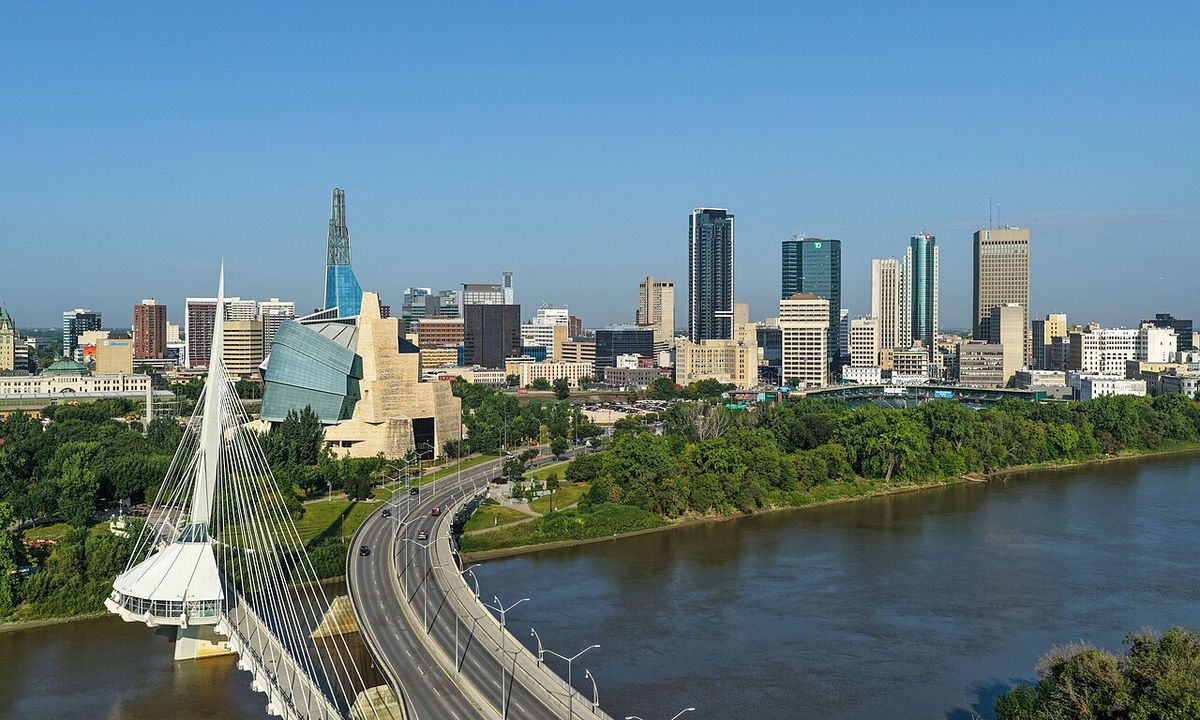
Kamloops is a city in south-central British Columbia, Canada, situated at the confluence of the North and South Thompson Rivers where they form the Thompson River. Incorporated in 1893, the city grew into a major transportation and commercial hub for the Thompson Country region following the arrival of the Canadian Pacific Railway in 1886. With a 2025 population of 109,633, it is the twelfth largest municipality in the province and is nationally recognized as the Tournament Capital of Canada for hosting over 100 sporting events annually. The city's economy is significantly shaped by institutions like Thompson Rivers University, the Royal Inland Hospital, and the British Columbia Lottery Corporation.
History and Indigenous Roots
The area now known as Kamloops has been a significant meeting place for millennia, a fact reflected in its name, derived from the Secwépemc word 'Tk'əmlúps', meaning 'meeting of the waters'. The first European presence began with the fur trade in 1811 when David Stuart of the Pacific Fur Company spent a winter with the Secwépemc. These operations were consolidated under the Hudson's Bay Company by 1821, and the post became commonly known as Thompson's River Post or Fort Kamloops. The journals of the post's Chief Traders provide valuable records of daily trade and inter-Indigenous relations throughout the Pacific Slope during this era. Local Secwépemc leadership, notably Chief Kwa'lila and later his nephew Chief Nicola, strategically engaged with the fur traders, controlling access and providing aid to European settlers during the Fraser Canyon Gold Rush of 1858.
The mid-19th century brought a severe tragedy with the 1862 Pacific Northwest smallpox epidemic, which devastated Indigenous communities lacking acquired immunity. The epidemic reached the Kamloops area in the summer of 1862, and despite vaccination efforts by fort clerk William Manson, fatalities were catastrophic. Contemporary reports described bodies strewn on the ground, with an estimated two-thirds of the Secwépemc population perishing. This demographic collapse facilitated the subsequent colonization of traditional Indigenous lands throughout British Columbia. The city's modern growth was catalyzed by the Cariboo Gold Rush and, decisively, by the completion of the Canadian Pacific Railway through downtown in 1885. Kamloops was officially incorporated as a city in 1893 with a population of about 500 residents. The 20th century saw significant municipal amalgamations, including with the Town of North Kamloops in 1967 and several surrounding districts and communities in 1973.
In May 2021, an anthropologist announced she had used ground-penetrating radar to find probable graves containing the remains of 215 children at a former Kamloops Indian residential school, part of the Canadian Indian residential school system. The story was reported around the world. In the weeks following, five Catholic churches in Western Canada were burned down since the school was operated by a Catholic order. On September 19, 2024, the Red Bridge was destroyed in a fire suspected to be the result of arson.
Geography and Climate
Kamloops is located in the Thompson Valley within the Montane Cordillera Ecozone, characterized by rolling ridges, arid gulches, and mountains. The city centre lies at the confluence of the North and South Thompson Rivers, with suburbs extending along the river valleys and onto the surrounding steep hillsides. The area is biogeographically connected to semi-desert regions in the Okanagan and the interior western United States, sharing distinctive flora and fauna such as ponderosa pine, big sagebrush, and prickly pear cactus. The city is surrounded by the smaller communities of Cherry Creek, Chase, and Savona, among others, and the lands of the Tk'emlúps te Secwépemc begin just northeast of the downtown core.
The climate of Kamloops is semi-arid, placing it in the Köppen BSk classification, a result of its position in the rain shadow leeward of the Coast Mountains. Winters are relatively mild for a non-coastal Canadian city, with mean temperatures of -2.0°C in December and -2.7°C in January, though Arctic air can occasionally bring cold snaps near -30°C. Summers are hot, dry, and sunny, with low daytime humidity often dropping below 20 percent, which allows for substantial nighttime cooling. The area averages 36 days per year where the maximum temperature exceeds 30°C and is prone to dry-lightning thunderstorms that can ignite forest fires. Kamloops holds extreme temperature records, including the highest ever recorded in a Canadian city with over 10,000 people at 47.3°C on June 29, 2021, during the Western North America heat wave. The lowest temperature recorded was -38.3°C in January 1950.
Demographics and Community
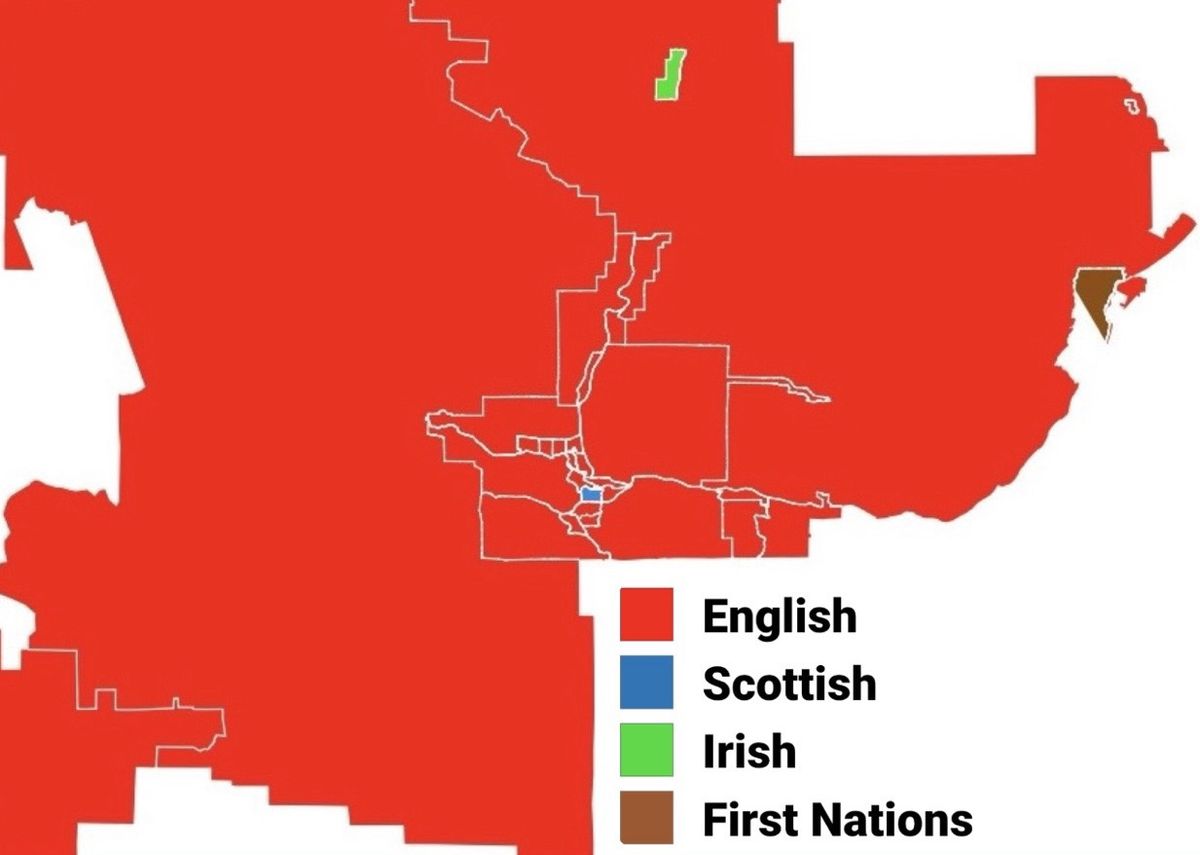
According to the 2021 census, Kamloops had a population of 97,902, which represented an 8.4 percent increase from 2016. The broader Kamloops Census Agglomeration had a population of 114,142. The population density within the city was 328.6 people per square kilometre. The demographic profile reflects a diverse ethnic heritage, with the most commonly reported ethnic origins being English (28.8 percent), Scottish (22.8 percent), Irish (18 percent), German (16.6 percent), and Canadian (13.5 percent). Religious affiliation shows a majority of the population, 60.5 percent, reporting no religious affiliation, while Christianity is the faith of 33.6 percent of residents. Other significant religious groups include Sikh (2.1 percent), Hindu (1.1 percent), and Muslim (0.9 percent) communities.
The city has a notable Chinese Canadian history dating back to the 1880s, when immigrants arrived to work on the Canadian Pacific Railway. By the 1890s, ethnic Chinese constituted about one-third of Kamloops's population and established a community on Victoria Street. Although not a 'true Chinatown' in the traditional urban sense, it was a significant settlement for the region. Economic shifts and fires led to its decline and eventual demolition between 1911 and 1914. A lasting legacy is the Kamloops Chinese Cemetery, the only one in British Columbia dedicated to Chinese pioneers, with the last interment occurring in the 1960s. Kamloops also made history by electing Peter Wing in 1966, who became the first ethnic Chinese mayor in North America, serving three terms.

Economy and Major Employers
Kamloops's economy is diversified, with key sectors including healthcare, post-secondary education, tourism, transportation, and natural resource extraction. The city's largest single employer is the Royal Inland Hospital (RIH), a major acute care and tertiary referral hospital for the Southern Interior with 239 acute beds. Thompson Rivers University (TRU) is another economic pillar, serving a student body of 25,754, including a large contingent of international students, while its Open Learning division is one of the largest distance education providers in Canada. The British Columbia Lottery Corporation is also headquartered in the city. Heavy industry remains important, with major operations including the Domtar Kamloops Pulp Mill, the Tolko-Heffley Creek Plywood and Veneer plant, the New Afton Mine, and the nearby Highland Valley Copper Mine.
Kamloops functions as a critical transportation hub for the Interior, with four major highways converging: the Trans-Canada (BC Highway 1), the Coquihalla (BC Highway 5 south), the Yellowhead (BC Highway 5 north), and BC Highway 97. Both the Canadian Pacific and Canadian National railways have lines running through the city, supporting over 50 trucking and transport companies based locally. Tourism is a major economic driver, with the city welcoming 1.8 million visitors in 2017. Direct visitor expenditure was estimated at $270 million that year, contributing to a total tourism economic impact of $449 million. The city offers over 50 accommodation choices, with an occupancy rate of 61.5 percent in 2017.
Culture, Festivals, and Recreation
Kamloops has cultivated an active cultural scene that celebrates local talent in culinary arts, sports, live entertainment, and fine art. The city lives up to its official designation as the Tournament Capital of Canada by hosting more than 100 sporting tournaments each year at world-class facilities like the Tournament Capital Centre, Sandman Centre, and Tournament Capital Ranch. It has also gained international recognition as a premier mountain biking destination, home to the 26-hectare Kamloops Bike Ranch, Canada's largest municipal bike park, and is often described as the birthplace of freeride mountain biking. A packed annual calendar of festivals and events draws both residents and visitors, contributing significantly to the local culture and economy.
The city's festival lineup is diverse and runs throughout the year. Key events include the Kamloops Wine Festival, a fundraiser for the Kamloops Art Gallery, and the Kamloops Film Festival, a ten-day international film celebration held each March. The River Beaver Classic is an annual mountain biking festival in April that raises funds for local trail maintenance. Summer highlights feature the Kamloops International Buskers Festival in Riverside Park, the Hot Nite in the City car show, and the Kamloops Rotary Ribfest, Western Canada's largest rib festival which has raised over $500,000 for local charities. The autumn season brings the Salute to the Sockeye Festival at Tsútswecw Provincial Park and the Kamloops Comedy Fest in October.
- Kamloops Wine Festival: Annual fundraiser for the Kamloops Art Gallery.
- Kamloops Film Festival: Ten-day international film event each March.
- River Beaver Classic: Mountain biking festival in April supporting trail maintenance.
- Kamloops International Buskers Festival: Four-day event in Riverside Park.
- Hot Nite in the City: Major car show held every August.
- Kamloops Rotary Ribfest: Western Canada's largest rib festival in August.
- Salute to the Sockeye Festival: Celebrates salmon return from late September to mid-October.
- Kamloops Comedy Fest: Weekend of Canadian comedy each October.
Education and Infrastructure
Education in Kamloops is anchored by Thompson Rivers University (TRU), a comprehensive institution that offers a wide range of undergraduate and graduate programs, trades training, and a massive open-learning division. With a total enrolment of 25,754 students, TRU attracts a diverse international student body, primarily from Asian countries, and its Open Learning arm is the largest distance education provider in British Columbia. The university is a major driver of the local economy and cultural life. The city is also served by the Kamloops/Thompson School District, which operates numerous public elementary and secondary schools. Healthcare infrastructure is dominated by the Royal Inland Hospital, the primary acute care facility for the region which underwent a significant expansion completed in 2016, adding 20 beds to its existing 239 acute beds.
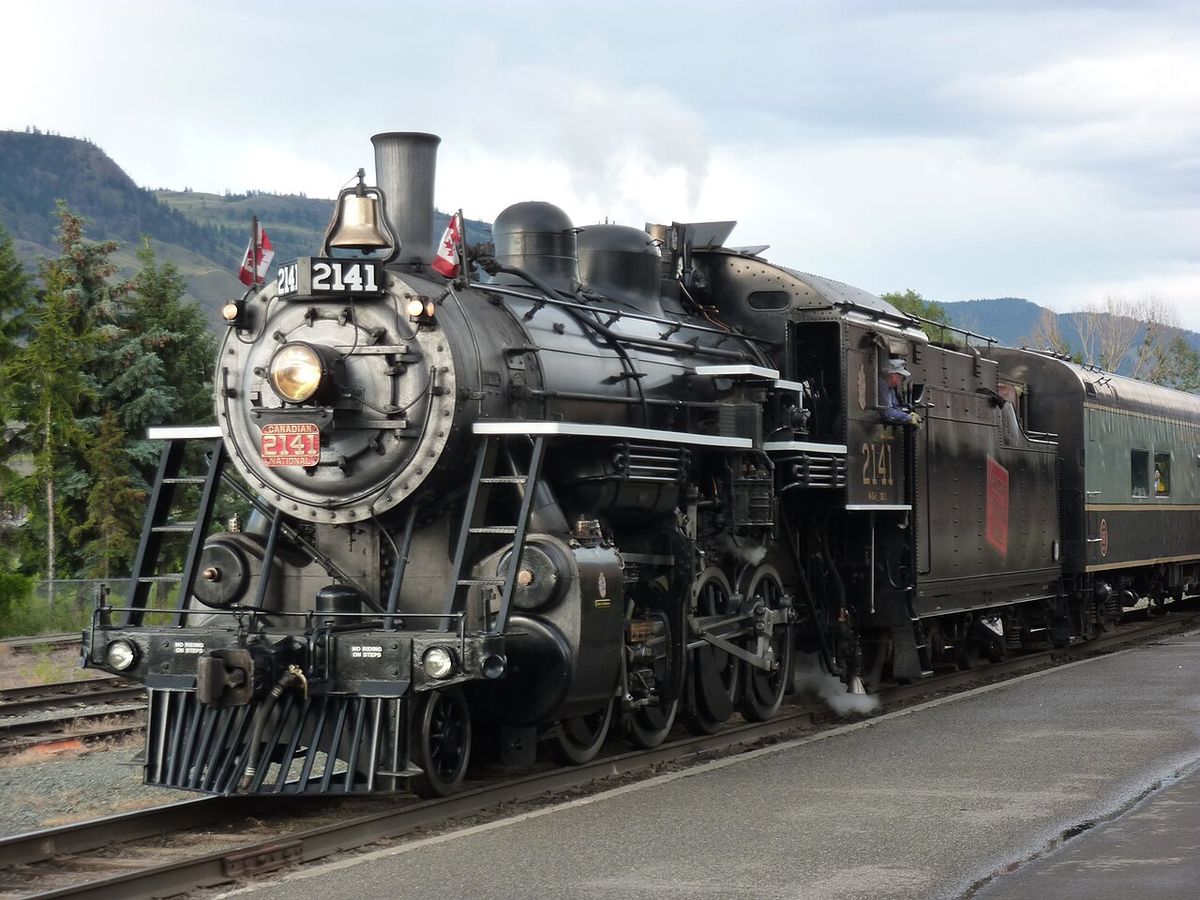
Transportation infrastructure is fundamental to Kamloops's identity as a hub. The city is a key stop on both the Canadian Pacific and Canadian National railway networks. Kamloops station is used by the Rocky Mountaineer tourist train and the Kamloops Heritage Railway, while Kamloops North station is the first stop on VIA Rail's eastbound transcontinental service, The Canadian. The convergence of four major highways facilitates extensive road freight and passenger movement. The city's commitment to recreational infrastructure is evident in facilities like the Tournament Capital Centre, a multi-sport complex, and the Sandman Centre, a major arena. The Kamloops Airport provides regional air service, connecting the city to other parts of British Columbia and beyond.
Population and Economic Data
The population of Kamloops has shown steady growth in recent years, with significant increases at both the city and census agglomeration levels. The 2021 census provided a detailed snapshot, while more recent estimates indicate continued expansion. The following table compares key demographic and tourism figures from recent years, illustrating the city's growth trajectory and the substantial economic impact of its tourism sector. The data shows how visitor numbers and expenditures have risen, contributing to the overall vitality of the local economy.
| Metric |
|---|
| City Population |
| Census Agglomeration Population |
| Annual Visitors |
| Direct Visitor Expenditure |
| Total Tourism Economic Impact |
Kamloops welcomed 1.8 million visitors in 2017, a 9 percent increase from 2015. A $1.8 million destination marketing budget returned $449 million in economic benefit in 2017. The annual direct visitor expenditure is estimated at $270 million, a 19 percent increase from 2015. The total estimated tourism economic impact was $449 million in 2017, a 32.4 percent increase from 2015.
Questions about Kamloops
What does the name Kamloops mean?
Kamloops is the anglicized version of the Secwépemc (Shuswap) word 'Tk'əmlúps', which translates to 'meeting of the waters'. This name refers to the city's location at the confluence of the North and South Thompson Rivers. An alternate folk etymology, stemming from early French-speaking fur traders, suggests it came from 'Camp des loups' or 'Camp of Wolves', linked to legends of wolf attacks on traders' camps. The Secwépemc origin is the accepted and historically accurate meaning.
Why is Kamloops called the Tournament Capital of Canada?
Kamloops has officially branded itself as the Tournament Capital of Canada due to its extensive capacity and commitment to hosting sporting events. The city hosts more than 100 tournaments each year across a wide range of sports. This is enabled by first-class facilities like the Tournament Capital Centre multi-sport complex, the Sandman Centre arena, and the Tournament Capital Ranch. The designation recognizes the city's significant investment in sports infrastructure and the substantial economic impact generated by these events.
What is the significance of the Kamloops Indian Residential School discovery?
In May 2021, an anthropologist using ground-penetrating radar located what were described as 215 probable graves of children at the site of the former Kamloops Indian Residential School. This school was part of the Canadian Indian residential school system and was operated by a Catholic order. The announcement brought global attention to the tragic legacy of the residential school system in Canada, sparking national mourning, calls for accountability, and renewed efforts toward truth and reconciliation. As of February 2026, no bodies have been exhumed or recovered from the site.
What are the main industries and employers in Kamloops?
Kamloops has a diversified economy with key sectors in healthcare, education, tourism, transportation, and natural resources. The city's largest employer is the Royal Inland Hospital, a major acute care facility. Thompson Rivers University is another major institution, serving thousands of students locally and through distance education. The British Columbia Lottery Corporation is headquartered there. Heavy industry includes the Domtar pulp mill and the nearby New Afton and Highland Valley copper mines. The city's role as a transportation hub, where four major highways and two national railways meet, also supports a large logistics and trucking sector.
What is the climate like in Kamloops?
Kamloops has a semi-arid climate, classified as BSk under the Köppen system, due to its location in the rain shadow of the Coast Mountains. Winters are relatively mild for a non-coastal Canadian city, though cold snaps can bring temperatures near -30°C. Summers are hot, dry, and sunny, with average highs often above 30°C and low humidity. The area holds the record for the highest temperature ever recorded in a Canadian city over 10,000 people, at 47.3°C on June 29, 2021. The region is prone to forest fires ignited by dry-lightning storms during the summer.
What major annual events or festivals are held in Kamloops?
Kamloops hosts a year-round calendar of festivals and events. Notable ones include the Kamloops Wine Festival, which supports the Kamloops Art Gallery, and the Kamloops Film Festival in March. The Kamloops International Buskers Festival brings performers to Riverside Park in the summer, while the Hot Nite in the City car show and the massive Kamloops Rotary Ribfest occur in August. Autumn features the Salute to the Sockeye Festival celebrating the salmon run and the Kamloops Comedy Fest. The city also hosts numerous sporting tournaments year-round, living up to its Tournament Capital title.
Sources and further reading
- Kamloops (Wikipedia)
- Castanet Kamloops: Kamloops News | News Kamloops (castanetkamloops.net)
- City of Kamloops (tnrd.ca)
Checked by the Your Space Hamilton desk. Last updated 2026-10-22.