St. Lawrence Market
The St. Lawrence Market neighbourhood is a historic district in downtown Toronto, Ontario, centred on the landmark public market of the same name. Located along Front Street East and Jarvis Street, the area is the original commercial and civic heart of the city, with roots tracing back to the early 19th century. The district is defined by its two main market buildings, St. Lawrence Market South and the newly rebuilt St. Lawrence Market North, which host a well-known farmers' market, antique markets, food vendors, and cultural exhibits. Its significance lies in its continuous operation for over two centuries, its architectural heritage incorporating Toronto's former city hall, and its status as a vital community hub and major tourist attraction.
Historical Origins and Development
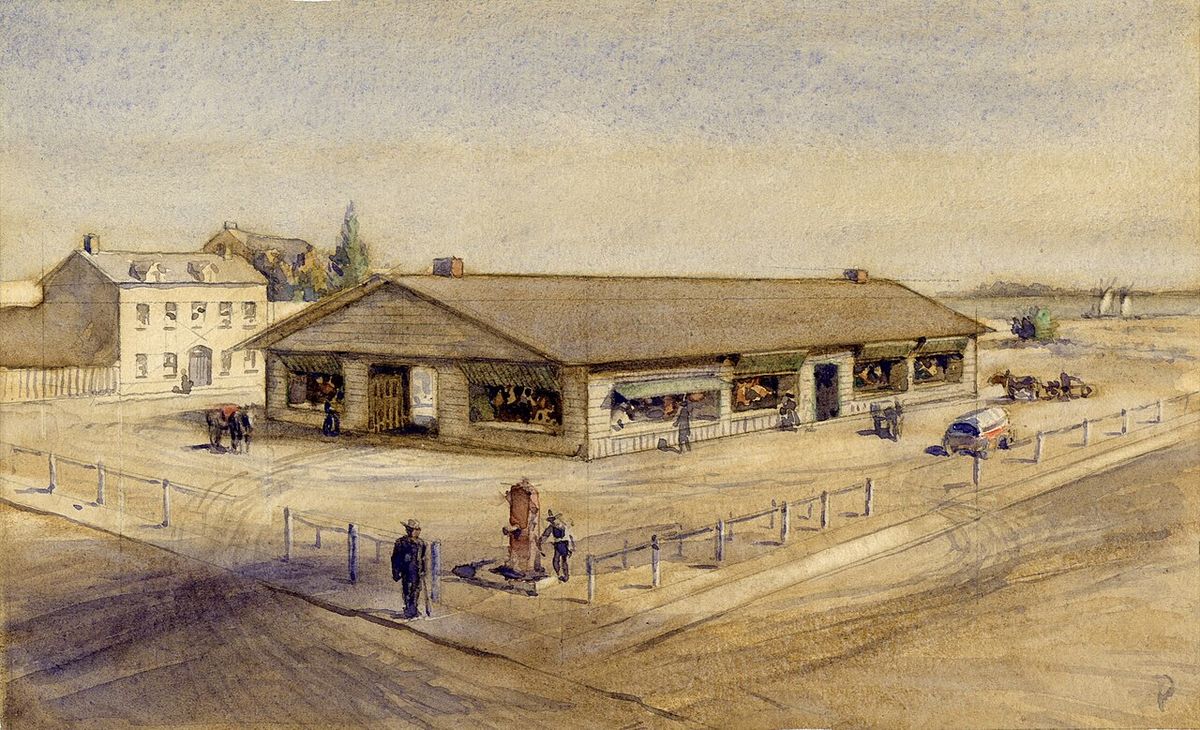
The establishment of St. Lawrence Market was a direct response to the growing needs of the Town of York. In 1803, Lieutenant Governor Peter Hunter issued a proclamation published in The Upper Canada Gazette, designating a weekly market day and a specific area for the sale of provisions and goods. The original market square, known as Market Square, occupied a 5.5-acre plot at the corner of King Street and New Street, later renamed Jarvis Street, stretching west to Church Street and south to Palace Street, now Front Street. This square quickly became the social and commercial centre of the young town, hosting auctions and public gatherings. The first temporary market shelter, measuring 24 by 36 feet, was constructed in 1814, followed by the first permanent structure in 1820. The town's first public well was dug on the market property in 1823, highlighting its central role in community life.
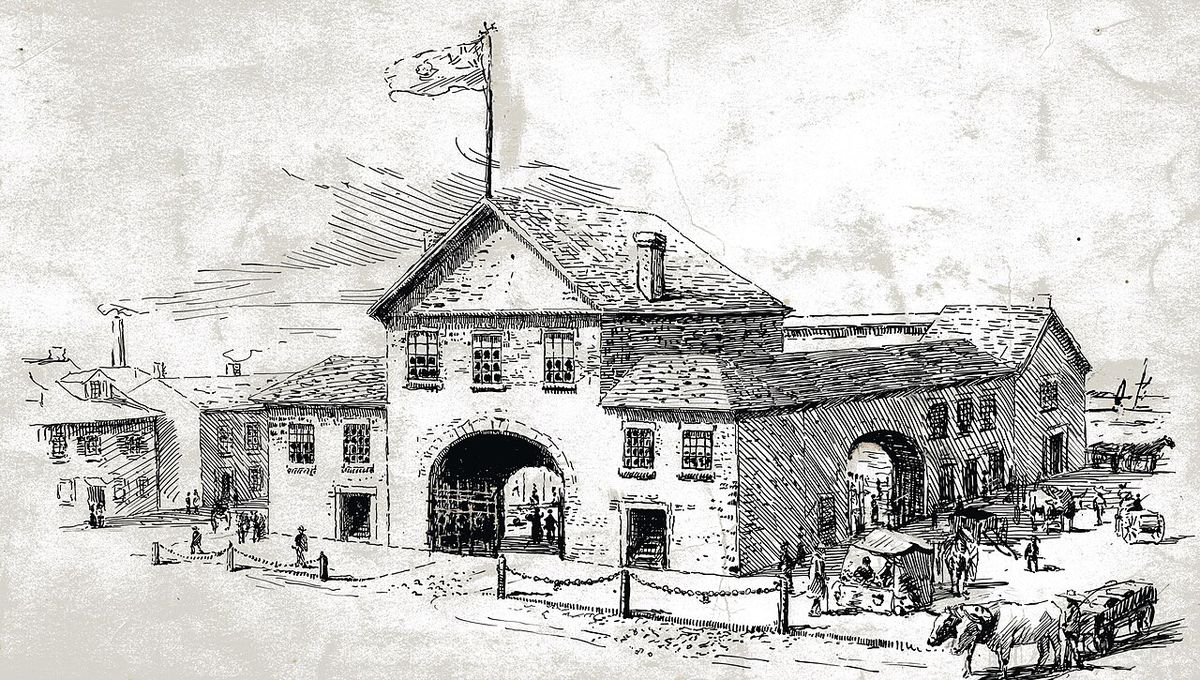
The market's first major brick building was erected in 1831, replacing the earlier wooden structure. This building served a dual purpose, with its office space housing the Toronto City Council on a temporary basis from 1834 onward. This arrangement continued until the Great Fire of Toronto in 1849, which severely damaged the northern portion of the market complex. In the aftermath of the fire, a period of significant reconstruction began. St. Lawrence Hall was built to the north, and a new market building, the first to be formally named St. Lawrence Market, was constructed between the hall and Front Street. This 1851 building featured an arcade design oriented north-south. To finance this development, the City of Toronto sold lots on the market block. The arrival of railways in the 1850s further transformed the area, with tracks initially laid along Front Street before being relocated to the newly created Esplanade to the south.
Architecture and Buildings
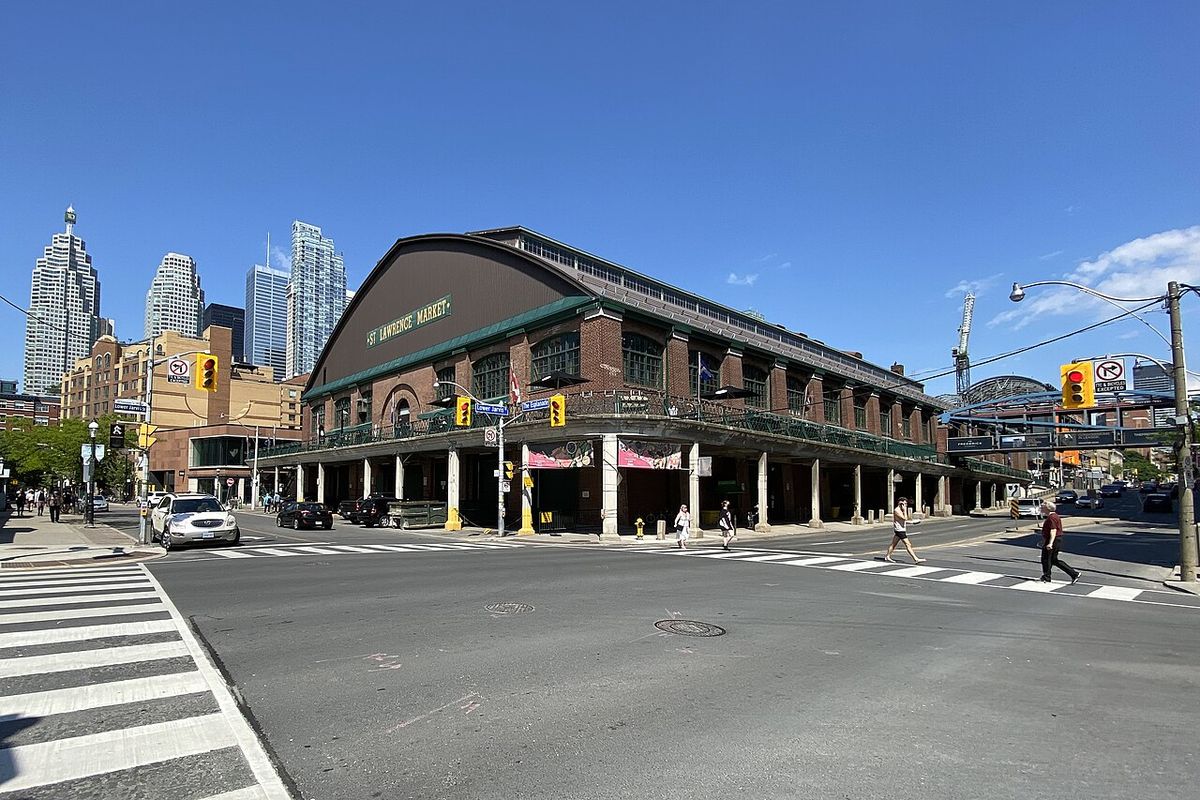
The St. Lawrence Market complex consists of two primary buildings situated on opposite sides of Front Street East. St. Lawrence Market South, on the south side, is the older of the two structures and carries deep historical significance. The core of the South Market is the former Toronto City Hall, built in 1845. After the city government moved to its new building at Queen and Bay Streets in 1899, the 1845 structure was incorporated into a new market building, which opened in 1902. This building has been rebuilt twice but still retains a section of the original 1845 city hall. Today, it houses a busy array of food stalls, restaurants, and specialty vendors, and is open from Tuesday to Sunday. It also contains the St. Lawrence Market Gallery, a public art gallery located in the former Toronto City Council chamber.
St. Lawrence Market North, located on the north side of Front Street, has undergone several transformations. The 1851 north market was replaced in 1904 with a building designed to mirror the new South Market. This 1904 structure was itself replaced in 1968 by a simple, single-storey building that hosted the weekly farmers' and antique markets for decades. That 1968 building was demolished in 2015 to make way for a modern replacement. Construction of the new North Market began in July 2019, with the building opening in stages in 2025. The new four-storey structure features an atrium and houses underground parking, a courthouse, the traditional Saturday Farmers' Market, and the Sunday antique market. During the decade-long redevelopment, the market's functions were temporarily relocated to a site at 125 The Esplanade.
Civic and Social Role
For much of the 19th century, the St. Lawrence Market site was intrinsically linked to Toronto's civic administration. Following the 1849 fire, the city's government operated from the building that is now the core of the South Market from 1845 until 1899. This period cemented the area's status as the political heart of Toronto. The market square also served as the primary venue for public life in early York and Toronto. It was a place for commerce, social interaction, and municipal affairs. In the town's earliest days, when slavery was still legal in Upper Canada, the market square was also the site of auctions for enslaved Black people, a dark chapter in its history. Town bylaws from the era mandated that the sale of essential foodstuffs like butter, eggs, and meat on Saturdays could only occur within the market boundaries between 6 a.m. and 4 p.m., reinforcing its economic monopoly.
The market was one of three major public markets established in 19th-century Toronto, each named for the ward it served. St. Lawrence Market, founded in 1803, was the first and foremost. St. Patrick's Market at Queen Street West followed in 1836, and St. Andrew's Market, built in 1850 on a block between Richmond and Adelaide streets, was the third. Of these, only St. Lawrence Market remains a major public food market, while St. Patrick's operates as an organic food court and St. Andrew's is now a public park. This historical context highlights the central and enduring role St. Lawrence Market has played in the city's distribution of food and goods.
Modern Operations and Recognition
Today, St. Lawrence Market operates as an active, multi-faceted destination. The Saturday Farmers' Market in the North Building is a weekly tradition where Ontario farmers sell their products directly to the public. The Sunday Antique Market attracts collectors and browsers with a diverse array of vintage goods. In April 2012, National Geographic bestowed a significant honour on the market, naming it the world's best food market, a recognition that has bolstered its international reputation. The market has also adapted to modern expectations, expanding its hours to include Sunday openings. While a plan to open on Sundays was initially set for March 15, 2020, it was delayed by the COVID-19 pandemic and finally implemented in the summer of 2022.
The market complex also serves important cultural and civic functions beyond retail. The St. Lawrence Market Gallery presents exhibitions on Toronto's history and art. The new North Market building includes a courthouse, which opened in March 2025, adding a judicial function to the site's long history of civic service. Archaeological work during the North Market's redevelopment uncovered the foundations of the 1831, 1851, and 1904 market buildings beneath the 1968 structure, providing a tangible link to the site's layered past. The following list details the key components of the modern market complex:
- St. Lawrence Market South: Open Tuesday-Sunday. Houses permanent food vendors, butchers, fishmongers, bakeries, and restaurants.
- St. Lawrence Market Gallery: Located in the former city council chamber. Hosts historical and artistic exhibitions.
- St. Lawrence Market North: Hosts the Saturday Farmers' Market (April 2025) and the Sunday Antique Market.
- North Market Courthouse: A modern court facility opened within the new North Market building in March 2025.
- Underground Parking: Provides public parking beneath the new North Market building.
- Special Events: The market hosts seasonal events, cooking demonstrations, and tours throughout the year.
The Neighbourhood Context
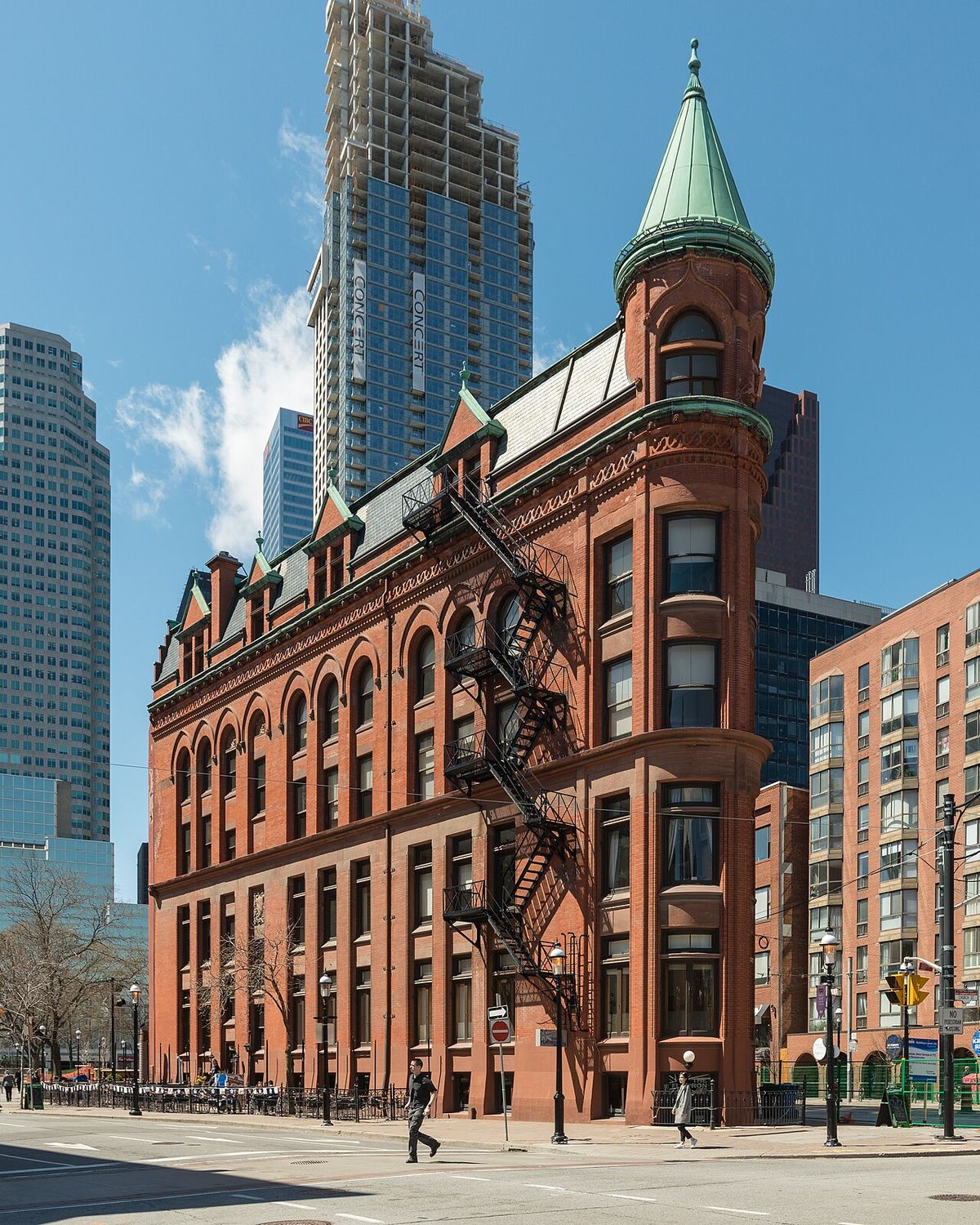
The St. Lawrence Market neighbourhood, often considered part of the larger Old Town Toronto area, is a dense, mixed-use district characterized by its historic architecture and central location. Bounded roughly by Yonge Street to the west, Parliament Street to the east, the railway corridors to the south, and King Street East to the north, the area is a blend of commercial, residential, and institutional uses. The market itself acts as the neighbourhood's anchor and primary draw. The area features a mix of heritage buildings, modern condominiums, theatres, restaurants, and parks. Key landmarks include the historic St. Lawrence Hall, a grand meeting hall built in 1850, and the Flatiron-style Gooderham Building at Front and Wellington Streets. The Distillery District, a preserved 19th-century industrial complex now housing arts and entertainment venues, is located just to the east.
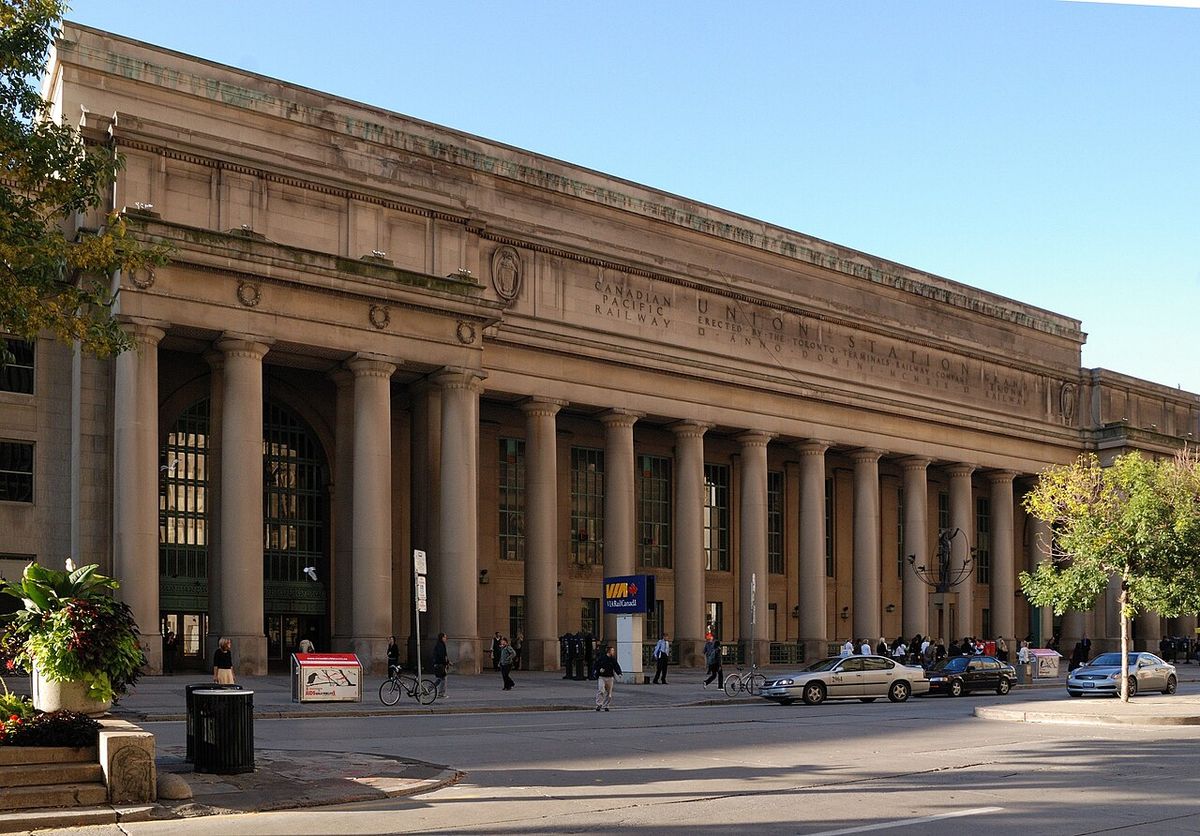
The neighbourhood's streetscape reflects its evolution from Toronto's original town site. Front Street East, once the shoreline of Lake Ontario, is now a major thoroughfare lined with historic and modern structures. The Esplanade, created from landfill in the 1850s to accommodate rail lines, is now a quieter street with parks and residential buildings south of the market. The area is well-served by public transit, including streetcars on King and Queen Streets and the nearby Union Station subway stop. The following table outlines the historical progression of key market buildings on the site:
| Building/Phase | Construction Year | Key Features & Notes |
|---|---|---|
| First Temporary Shelter | 1814 | 24' x 36' wooden structure at Market Square. |
| First Permanent Structure | 1820 | Replaced the initial shelter. |
| Brick Market Building | 1831 | Housed temporary city council. Destroyed in 1849 fire. |
| Post-Fire Market & St. Lawrence Hall | 1851 | Arcade design. Hall built to the north. |
| South Market (Core) | 1845 | Built as Toronto City Hall. Incorporated into 1902 market. |
| North Market (1904) | 1904 | Mirrored South Market design. Replaced 1851 building. |
| North Market (1968) | 1968 | Single-storey building. Demolished in 2015. |
| New North Market | 2025 | Four-storey building with atrium, courthouse, and parking. |
Cultural Significance and Tourism
St. Lawrence Market holds a prominent place in Toronto's cultural identity, representing the city's origins and its evolution into a diverse metropolis. It is a living museum of culinary and social history, where residents have shopped for essentials for generations. The market's recognition by National Geographic as the world's best food market has made it a mandatory stop for international visitors, cementing its status as a top-tier tourist attraction. It is frequently included in guidebooks and tours of the city, praised for its authentic atmosphere, high-quality vendors, and historic setting. The market's ability to blend its historic function with modern gourmet trends, such as artisanal foods and international cuisines, reflects Toronto's own multicultural character.
The area surrounding the market contributes significantly to its cultural appeal. The St. Lawrence Market Gallery offers free exhibitions that explore local history and contemporary art, adding an educational dimension to a visit. The neighbourhood's many historic sites, including the aforementioned St. Lawrence Hall and the nearby Cathedral Church of St. James, create a heritage-rich environment. Seasonal events, such as Christmas markets and summer food festivals, utilize the market and its surroundings, drawing large crowds. The completion of the new North Market building in 2025, with its modern amenities and restored market functions, ensures the district will continue to be a dynamic centre for commerce, community, and culture for decades to come.
Questions about St. Lawrence Market
What are the opening hours for St. Lawrence Market?
St. Lawrence Market South is open from Tuesday to Sunday, though individual vendor hours may vary. The Saturday Farmers' Market in the North Building typically operates on Saturday mornings. The Sunday Antique Market runs on Sundays. The market historically operated from Tuesday to Saturday but expanded to include Sunday openings in the summer of 2022, after a delay caused by the COVID-19 pandemic. It is generally closed on Mondays.
Where is St. Lawrence Market located?
St. Lawrence Market is located in downtown Toronto at the intersection of Front Street East and Jarvis Street. The market complex consists of two main buildings. St. Lawrence Market South is on the south side of Front Street East, bounded by The Esplanade to the south. St. Lawrence Market North is on the north side of Front Street East, bounded by St. Lawrence Hall to the north.
What is the history of the St. Lawrence Market buildings?
The market site was first designated by proclamation in 1803. The first permanent structure was built in 1820, with a major brick market building following in 1831. That building housed the city council and was damaged in the 1849 fire. The core of the current South Market is the 1845 Toronto City Hall, which was incorporated into a new market building in 1902. The North Market has been rebuilt several times, with a 1904 structure replaced in 1968, and that building demolished and replaced by a modern four-storey building which opened in 2025.
What can you buy at St. Lawrence Market?
Shoppers can purchase a vast array of goods. The South Market features permanent stalls selling fresh produce, meats, seafood, cheeses, baked goods, pastas, spices, and prepared foods from diverse cuisines. The Saturday Farmers' Market in the North Building focuses on fresh, locally grown produce and goods sold directly by Ontario farmers. The Sunday Antique Market offers vintage collectibles, furniture, jewellery, and art. The market is particularly famous for its peameal bacon sandwiches, a Toronto specialty.
Why is St. Lawrence Market famous?
St. Lawrence Market is famous for several reasons. It is one of the oldest continuously operating markets in North America, with origins dating to 1803. It was named the world's best food market by National Geographic in 2012. Its South Market building incorporates Toronto's former city hall, used from 1845 to 1899, giving it significant historical importance. The market is also a beloved institution for Torontonians and a major tourist attraction known for its high-quality vendors and active atmosphere.
Is there parking available at St. Lawrence Market?
Yes, parking is available. The new St. Lawrence Market North building, which opened in 2025, includes an underground public parking garage. There are also several other public parking lots and on-street parking options in the surrounding neighbourhood. Given the market's central location and popularity, using public transit is often recommended, with streetcar lines on King and Queen Streets and the Union Station subway station within walking distance.
Sources and further reading
- St. Lawrence Market (Wikipedia)
- Old Town Toronto | St Lawrence Market Neighbourhood (oldtowntoronto.ca)
- St. Lawrence, Toronto Neighbourhood guide (neighbourhoodguide.com)
- Living in the St. Lawrence Market Neighbourhood | TRB (torontorealtyboutique.com)
Checked by the Your Space Hamilton desk. Last updated 2026-10-22.