Queen Street
Queen Street is a major east-west thoroughfare and a collection of distinct neighbourhoods in Toronto, Ontario, serving as a historic baseline for the city's original grid. The street extends from Roncesvalles Avenue in the west to Victoria Park Avenue in the east, with its western section, known as Queen West, being a nationally recognized centre for Canadian broadcasting, music, fashion, and visual arts. Over time, the street has evolved from a series of ethnically defined immigrant enclaves into a series of gentrified, culturally significant districts that are central to Toronto's identity. Its ongoing transformation, marked by new developments, festivals, and international acclaim, continues to shape the social and commercial character of Canada's largest city.
Historical Development and Nomenclature
The history of Queen Street is deeply intertwined with the founding and growth of Toronto. The road was first laid out in 1793 as part of the survey by Sir Alexander Aitkin, commissioned by Lieutenant Governor John Graves Simcoe. For its first six decades, much of the street was known as Lot Street, named for the 40-hectare park lots granted to loyal officials along its south side in the new town of York. A section west of Spadina Avenue was called Egremont Street until approximately 1837, and east of the Don River to near Coxwell Avenue it was part of the historic Kingston Road. The street was formally renamed in honour of Queen Victoria during the 1840s, a name it has retained since. The western extension of the street, which historically continued along the route of today's The Queensway, had its name changed in Etobicoke in 1947 to avoid confusion due to a break in the route, a legacy still seen in the parallel North Queen Street near Sherway Gardens.
The term 'Queen West' colloquially refers to the series of neighbourhoods that developed along the thoroughfare, many originating as distinct ethnic enclaves. In the mid-19th century, the area around Queen and Bathurst was known as Claretown, an Irish immigrant neighbourhood. From the 1890s to the 1930s, the Ward, a Jewish immigrant district, had Queen Street between Yonge and University as its southern boundary. The intersection of Queen and Bay Streets marked the southern end of a thriving Chinatown in the 1930s. Subsequent decades saw the area become the heart of Toronto's Polish, Ukrainian, and later Portuguese communities. A prolonged period of gentrification over recent decades has gradually displaced many immigrant communities to more affordable parts of the city as property values and desirability have risen dramatically.
During the 1982 Toronto municipal election, candidate Deanne Taylor established headquarters at The Cameron House. She performed nightly with the Hummer Sisters west of Spadina Avenue. The area between University and Spadina Avenues was a cultural nexus in the 1980s. It was known for its cheap restaurants, clubs, and an eclectic mix of musicians and artists.
Geographic Route and Eastern Neighbourhoods
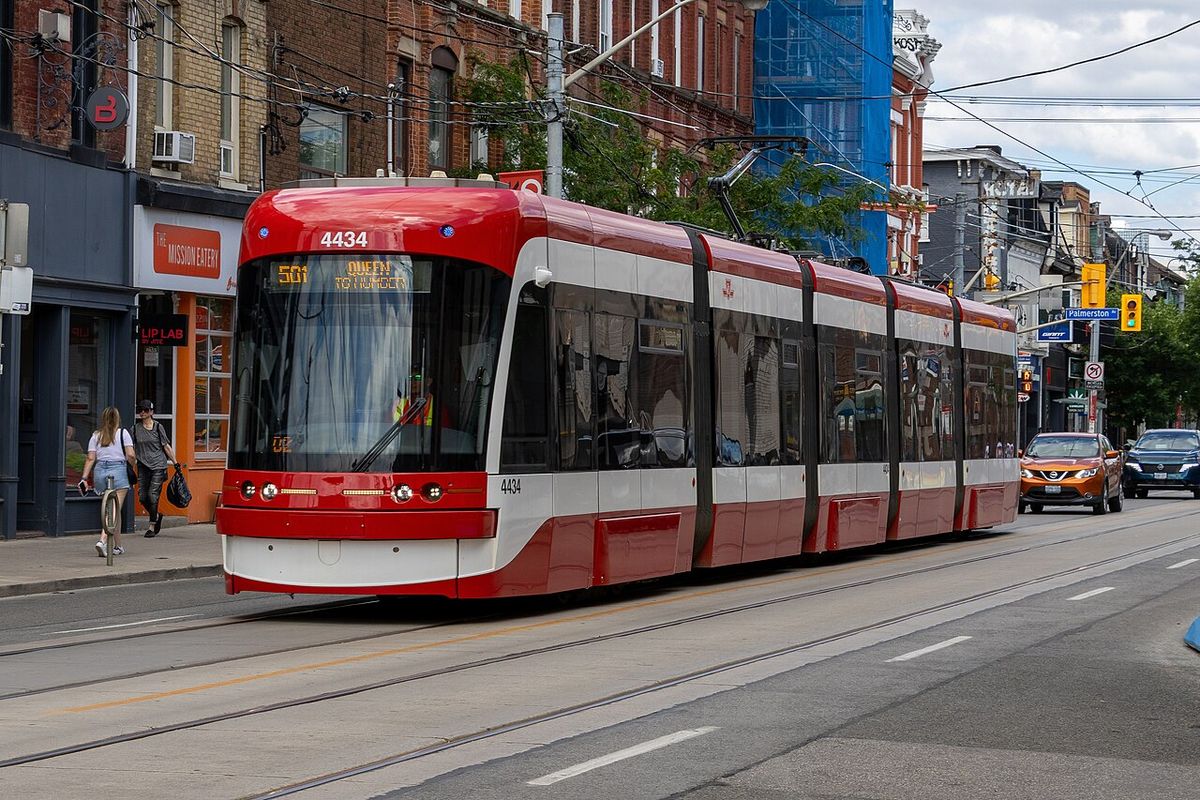
Queen Street traverses a diverse cross-section of Toronto, from quiet residential streets in the east to the dense downtown core. The easternmost segment, from Fallingbrook Road to Victoria Park Avenue, is located in Scarborough and functions as a minor residential side street before widening near the Neville Park streetcar loop, the eastern terminus of the 501 route. The street passes the landmark R. C. Harris Water Treatment Plant near Victoria Park Avenue, a crucial facility for Toronto and York Region. The commercial heart of The Beaches community lies between Fallingbrook and Coxwell Avenue, characterized by independent specialty stores and a streetscape that changes frequently from year to year, sometimes drastically. East of Woodbine Avenue, traffic lessens and the street is effectively reduced to one lane each way, with outer lanes used for parking and centre lanes used by the streetcar.
This area is the site of new openings in 2026, including the redesigned Beaches Brewing Company at 1953 Queen Street East and the upcoming Leuty's on Queen restaurant at 1963 Queen Street East. The Beaches Brewing Company reopened on May 29, 2026, with a new menu incorporating French and Southeast Asian influences under chef Rajesh Pandey, moving away from a traditional brewery aesthetic. Leuty's on Queen, named after the historic Leuty Lifeguard Station, is targeting an opening in the first week of August 2026, featuring a second-floor private dining area and a side patio. Both addresses are located on the block of Queen Street East from Woodbine to Beech Avenue, which is closed nightly for the Beaches International Jazz Festival's StreetFest from July 23 to 25, 2026, an event that draws nearly one million attendees throughout the festival's month-long span.
West of Coxwell Avenue, Queen Street enters the neighbourhood of Leslieville, where it serves as the main commercial hub underneath the CN railway tracks at Greenwood Avenue. The area is known for its small stores and restaurants and is adjacent to the historic Ashbridge Estate and the Russell Carhouse. Further west, between Logan Avenue and the Don River, is the Riverdale neighbourhood, an area of independent arts galleries housed primarily in Victorian and Edwardian homes originally built as boarding rooms for the working class. Key landmarks in Riverdale include the New Edwin Hotel, the New Broadview House Hotel, the Opera House, and the Ralph Thornton Community Centre. The street crosses the Don River via the Queen Street Viaduct, a steel truss bridge constructed in 1910, replacing an original 1803 wooden structure, with surrounding bridges extending east to Davies Avenue and west to River Street.
Downtown Core and Queen West Cultural Evolution
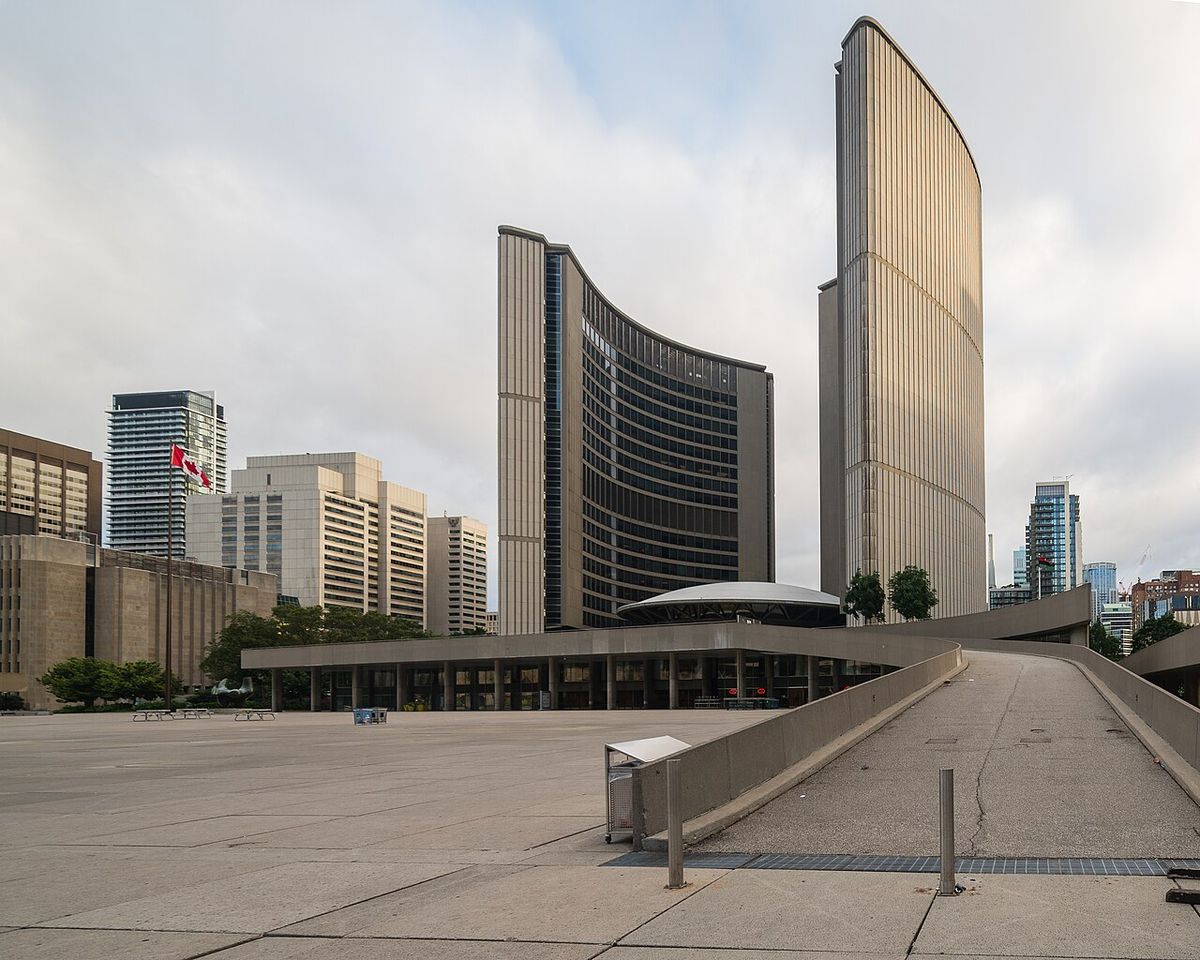
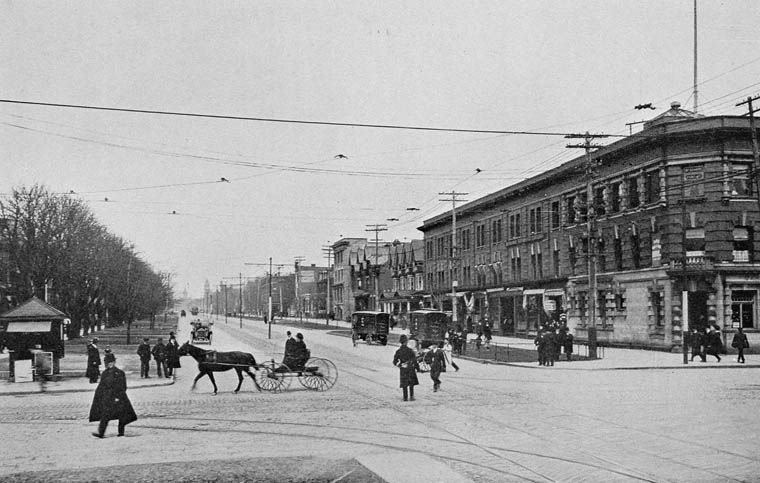
The section from the Don River to University Avenue constitutes downtown Toronto, passing through areas like Corktown, Moss Park, and the Financial District. East of Parliament Street is the Trefann Court area, the site of a major development debate in the 1960s, and the street passes St. Michael's Hospital and Metropolitan United Church. At Yonge Street, Queen Street was historically the site of a fierce retail rivalry between the Eaton's and Simpson's department stores, making the pedestrian crosswalk just west of the intersection one of the busiest in Canada. While the original stores are gone, the Toronto Eaton Centre remains a major shopping complex, and the historic Simpson's building now houses Hudson's Bay and Saks Fifth Avenue. West of Yonge, the street is lined with civic institutions including Old City Hall, Toronto City Hall, Osgoode Hall and the Four Seasons Centre for the Performing Arts.
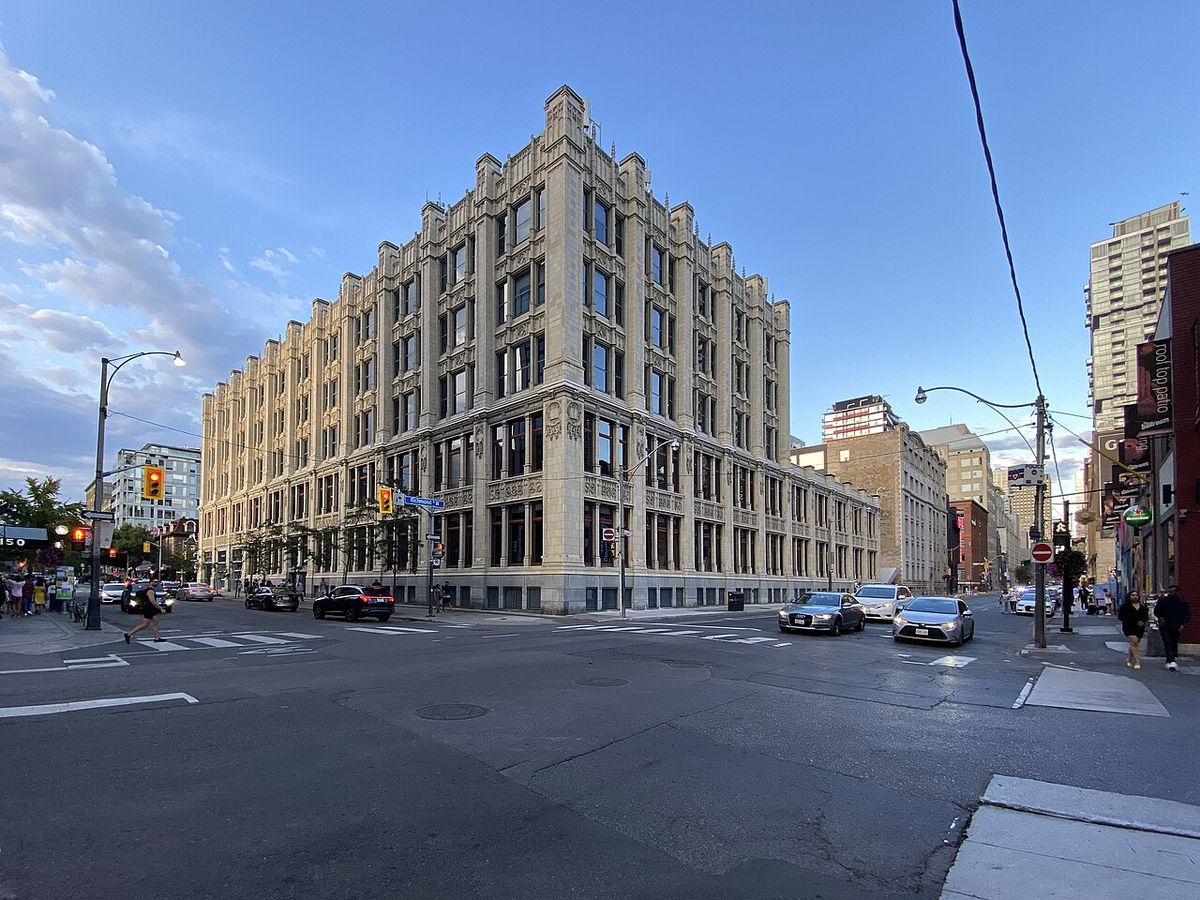
The stretch from University Avenue to Spadina Avenue became a cultural nexus in the 1980s, known for its punk rock scene, cheap restaurants, and eclectic mix of artists and musicians. This transformation was driven in part by students from the nearby Ontario College of Art & Design, and the area developed an active music scene which was a dominant centre of Canadian music in its era. The relocation of Citytv to 299 Queen Street West in the late 1980s accelerated gentrification almost overnight, attracting mainstream culture and wealthier businesses. By the mid-1990s, the arrival of chain stores like Le Château, the first chain on the strip, cemented the area's reputation as trendy and hip. The broadcast hub at 299 Queen Street West, formerly the CHUM-City Building and originally the site of the Ryerson Press, became synonymous with MuchMusic, with VJs often broadcasting live from the sidewalk and programs like Electric Circus and the MuchMusic Video Awards regularly using the street.
Original businesses such as the Cameron, the Horseshoe Tavern and The Rivoli have remained and changed little. The strip is now cluttered with mid and higher end international chain stores such as H&M and Zara. St. Patrick's Market, at 238 Queen Street West, was founded in the late 1830s. The current building dates from 1912 and this property is currently home to a communal food market. Small independent businesses started to move further west on Queen Street West past Spadina Avenue and Bathurst Street for cheaper rent. The push continued into the mid and late 2000s and into Parkdale until that area also became associated with trendy businesses, and now condos.
- 1793: Street first surveyed and laid out as part of York.
- 1840s: Lot Street renamed Queen Street in honour of Queen Victoria.
- Late 1970s-1980s: Queen West between University and Spadina becomes a punk and artist hub.
- Late 1980s: Citytv moves to 299 Queen Street West, accelerating gentrification.
- Mid-1990s: Mainstream chains arrive. Area becomes synonymous with 'cool'.
- 2005: Museum of Contemporary Canadian Art (MOCCA) relocates to Queen West.
- 2008: Major fire destroys several heritage buildings between Bathurst and Portland Streets.
- 2018: MOCCA moves out of the Queen West area to Sterling Road.
West Queen West Art and Design District
The area from Bathurst Street to Gladstone Avenue, known as West Queen West or the Art and Design District, is a two-kilometre stretch celebrated for its concentration of independent art galleries, boutiques, bars, and nightclubs. The south side of the street is largely occupied by the buildings and grounds of the Centre for Addiction and Mental Health (CAMH), formerly the Queen Street Mental Health Centre. This district has received international recognition, being named one of the world's coolest neighbourhoods by Vogue magazine in 2014 and one of the coolest streets in North America by Cushman & Wakefield in a 2026 report. The report highlighted the area's large millennial population, estimated at 75.9 percent, and its prime hipness score, noting Canada's largest concentration of independent art galleries and an abundance of independent boutiques.
The gallery scene was historically bolstered by the conversion of the former Metro Toronto Police 6 Division building, an Art Deco structure built in 1931 and closed in the 1990s, into Gallery 1313 with extensive city financial assistance. Other notable galleries have included the Stephen Bulger Gallery, founded in 1994, and the Museum of Contemporary Canadian Art which relocated to the area in 2005 before moving out in 2018. However, the district has undergone rapid change, with rising rents leading to the departure of many galleries like Sis Boom Bah, Luft Gallery, Burston Gallery and Brackett Gallery in recent years, while new bars and hotels have opened. In 2013, developer Urbancorp applied to demolish the MOCCA building and adjacent galleries to build a nine-storey condominium, prompting the museum's eventual relocation.
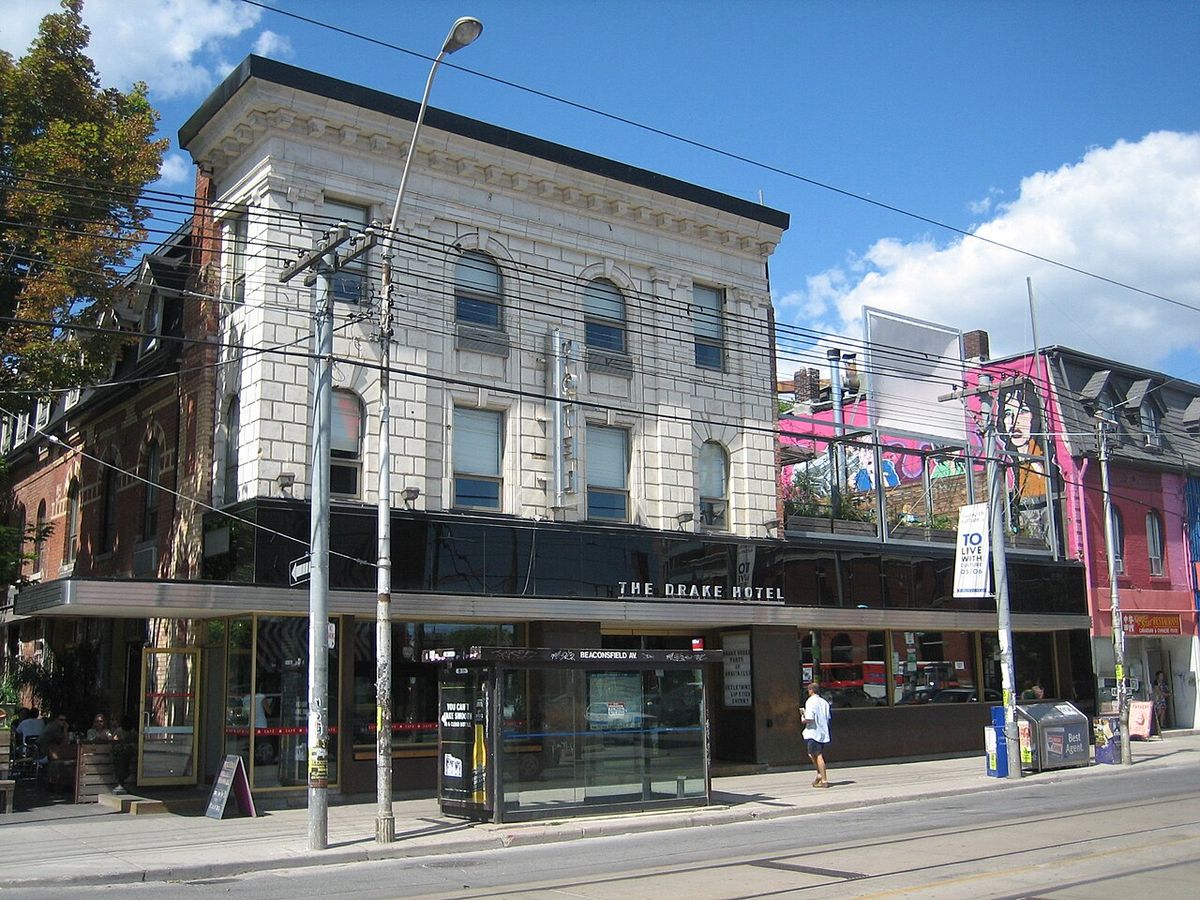
The Drake Hotel, a renovated former flophouse converted at a cost of $6 million, and the historic Gladstone Hotel, which underwent a major renovation spearheaded by the Zeidler family in 2005, are key anchors of the area's nightlife and social scene. The Gladstone's first-floor tavern hosts a weekly 'Art Bar' where locals from the arts community converge. Artscape Youngplace, a 75,000-square-foot creative centre opened in 2013 at 180 Shaw Street after a $17 million transformation of the former Shaw Street School, provides a permanent hub for artists and organizations. The Camera Bar, originally established by filmmaker Atom Egoyan, is now operated by the Stephen Bulger Gallery as a rental space with a bar and screening venue.
Transportation, Infrastructure and Recent Developments
Queen Street is a major transit corridor primarily served by the 501 Queen streetcar, one of the longest such routes in North America, which shepherds passengers from Parkdale to Ossington Avenue and the Fashion District. The City of Toronto and the TTC continuously implement changes to improve transit efficiency and safety. In 2026, several significant infrastructure projects are underway or planned that will affect the street and its surrounding areas. Starting the week of April 30, 2026, overnight work began to install new traffic and cycling changes on Portland Street from Queen Street West to Front Street, including making Portland one-way northbound and adding a protected two-way bike lane. Also in April 2026, priority streetcar lanes were being finished on Bathurst Street between Nassau Street and Bathurst Station to reduce delays for transit.
Major provincial transit investment is also reshaping the area through the construction of the Ontario Line, a new 15.6-kilometre subway running from Exhibition Place to Don Mills with 15 new stations. This line will include two stations serving Queen Street West at Osgoode and Spadina, aiming to reduce crowding and improve connectivity. In conjunction with this project, Simcoe Street from Queen Street West to the laneway was closed for approximately 11 months starting in April 2026 for construction, though walking, cycling and delivery access were maintained. The City is also planning a new park at 464-470 Queen Street West, with a public design consultation process concluding in April 2026 and construction currently expected to begin in 2027. The park is planned as a green, accessible space with seating, shade, planting and public art.
The broadcast hub at 299 Queen Street West is located at the corner of Queen and John Streets. The area between Spadina Avenue and Trinity Bellwoods Park south of Queen Street is Toronto's Fashion District. From Spadina to Bathurst, Queen Street is lined with street level retail, with upper level apartments. Bates and Dodds, Toronto's oldest operating funeral home, is at 931 Queen St. West across from Trinity Bellwoods Park.
| Project | Location/Scope | Start/Status (2026) |
|---|---|---|
| Portland Street Cycling Changes | Queen St W to Front St. New bike lane & one-way northbound | Overnight installation began April 30 |
| Bathurst Street Priority Lanes | Nassau St to Bathurst Station | Installation finishing mid-April |
| Ontario Line Construction | 15 new stations, including Osgoode & Spadina on Queen West | Ongoing. Simcoe St closure from Queen began April |
| New Queen West Park | 464-470 Queen Street West | Public design consultation until April 7. Construction expected 2027 |
| John Street Redesign | Front St to Stephanie St. Greener cultural corridor | Construction expected 2028 |
Cultural Landmarks, Retail and Community Life
Queen Street is defined by a dense concentration of cultural landmarks, venues, and community events that draw both locals and tourists. The street is a live music hotbed, home to legendary venues like the Horseshoe Tavern, The Rivoli, and the Cameron House, and the annual Queen West LIVE Music Series in August brings free performances to venues including The Rex Hotel. The Four Seasons Centre for the Performing Arts, the home of the Canadian Opera Company, anchors the performing arts scene. The annual Queen West Art Crawl (QWAC) is a three-day festival produced by the not-for-profit Parkdale Liberty Economic Development Corporation that celebrates local artists and businesses. The Beaches International Jazz Festival, one of Canada's largest free jazz festivals with nearly one million attendees, includes StreetFest, which closes Queen Street East for nightly performances from July 23 to 25, 2026.
The neighbourhood's character is also expressed through its public spaces and retail ecology. Trinity Bellwoods Park is a major green space and social hub opposite which sits TYPE Books, a renowned independent bookstore known for literary fiction and author readings. The area holds significant street art, most notably in Graffiti Alley (Rush Lane) in the Fashion District between Spadina Avenue and Trinity Bellwoods Park. Shopping ranges from high-end designer boutiques like KOWLI, Gaspard and Coal Miner's Daughter to curated vintage stores like House Of Vintage and antique shops such as Era Antiques, A Room in Paris and Studio 1484. Artisan markets like Made You Look, representing over 100 local jewellery designers, are a mainstay for custom engagement rings.
The culinary scene is exceptionally diverse, featuring Tibetan momos in Parkdale's Little Tibet, one of the largest Tibetan expat enclaves outside Asia, and restaurants like Côte de Boeuf and the vegan Malaysian tasting menu at Fat Choi on the Ossington strip. The area between Spadina Avenue and Trinity Bellwoods Park south of Queen Street is Toronto's official Fashion District, which saw high-priced clothing stores open in the later 1990s. Bates and Dodds, Toronto's oldest operating funeral home, has been at 931 Queen Street West since 1884, across from Trinity Bellwoods Park. A large fire on February 20, 2008, destroyed several buildings on the south side between Bathurst and Portland Streets, a block declared a heritage conservation district the year before, causing significant concern over the area's changing character and the nature of future development.
- Four Seasons Centre: Home to the Canadian Opera Company.
- 299 Queen Street West: Historic broadcast hub for Citytv/MuchMusic, now Bell Media operations.
- Trinity Bellwoods Park: Major public park and social gathering place.
- Graffiti Alley (Rush Lane): Famous corridor for street art and photography in the Fashion District.
- Queen West Art Crawl (QWAC): Annual three-day arts festival.
- The Beaches International Jazz Festival: Major summer festival with StreetFest closing Queen East.
- St. Patrick's Market: Historic market building at 238 Queen Street West, dating from 1912.
- Bates and Dodds Funeral Home: Oldest operating in Toronto, at 931 Queen St W since 1884.
Questions about Queen Street
What is Queen Street in Toronto known for?
Queen Street is known as a major historic thoroughfare and a series of neighbourhoods central to Toronto's cultural identity. Its western section, Queen West, is internationally recognized as a hub for Canadian broadcasting, music, fashion, and visual arts. The street is famous for its live music venues, independent boutiques, art galleries, and diverse dining scene. It also hosts major festivals like the Queen West Art Crawl and the Beaches International Jazz Festival, and features landmarks such as the Toronto Eaton Centre, the broadcast hub at 299 Queen Street West, and Trinity Bellwoods Park.
Where does Queen Street start and end?
Queen Street runs east-west across Toronto. Its western terminus is at the intersection of Roncesvalles Avenue and King Street. Its eastern terminus is at Victoria Park Avenue, with a small segment continuing east into Scarborough as a minor residential street. The street originally extended further west along the route now known as The Queensway, but that section was renamed in 1947. The 501 Queen streetcar line runs the full length of the street from the Neville Park loop in the east to Long Branch in the west.
What is the difference between Queen Street West and West Queen West?
Queen Street West is a broad term often used to describe the neighbourhoods along Queen Street west of Yonge Street. West Queen West is a more specific designation for the Art and Design District, the stretch of Queen Street West between Bathurst Street and Gladstone Avenue. This area is particularly known for its high concentration of independent art galleries, boutique hotels, bars, and trendy shops. West Queen West has received specific accolades, such as being named one of the coolest streets in North America by Cushman & Wakefield in 2026.
What are the major transit projects affecting Queen Street in 2026?
Several major transit and infrastructure projects are affecting Queen Street in 2026. The construction of the Ontario Line subway includes stations at Osgoode and Spadina, with related closures like the one on Simcoe Street from Queen Street West that began in April 2026. The City of Toronto is also implementing new cycling infrastructure on Portland Street, making it one-way northbound and adding a protected bike lane. Priority streetcar lanes are being installed on Bathurst Street to improve transit reliability. A new park is planned for 464-470 Queen Street West, with construction expected to start in 2027.
What was the historical significance of the Queen and Yonge intersection?
The intersection of Queen Street and Yonge Street was historically the epicentre of Toronto's retail activity for over a century. It was the site of a fierce rivalry between the Eaton's and Simpson's department stores, which faced each other across Queen Street. This competition was so central to the city's commerce that the pedestrian crosswalk just west of the intersection was once one of the busiest in Canada, as shoppers moved between the two stores. While the original stores are gone, the Toronto Eaton Centre occupies the Eaton's site, and the historic Simpson's building now houses the Hudson's Bay and Saks Fifth Avenue.
How has Queen Street West changed over time?
Queen Street West has undergone significant transformation from a series of working-class immigrant neighbourhoods into a gentrified cultural and retail destination. In the 1960s and early 1970s, it was an aging commercial strip known for greasy spoon restaurants. The late 1970s and 1980s saw an influx of artists and musicians, creating a punk and alternative scene. Gentrification accelerated in the late 1980s with the move of Citytv to 299 Queen Street West. By the mid-1990s, chain stores began to appear, shifting the area's character. In the 2000s and beyond, rising rents pushed artists further west, and areas like West Queen West became known for high-end boutiques and bars, though they retain a core of artistic institutions and events.
Sources and further reading
- Queen Street (Wikipedia)
- Member Resources | Queen Street West (queenstreetwest.ca)
- Queen West Toronto Guide: Restaurants, Shops & Nightlife (destinationtoronto.com)
- West Queen West ranked one of the coolest streets in ... (digitalmainstreet.ca)
Checked by the Your Space Hamilton desk. Last updated 2026-10-30.