Cathedral Church of St. James
The Cathedral Church of St. James is the Anglican cathedral of the Diocese of Toronto and the oldest congregation in the city, with its parish established in 1797. Located at 106 King Street East in Toronto's historic St. Lawrence neighbourhood, the cathedral is a National Historic Site and a prominent example of Gothic Revival architecture in Canada. Its 92.9-metre spire was the tallest structure in Canada for 25 years after its completion in 1874 and remains a defining landmark of the downtown core. The cathedral serves as both an active parish church and the episcopal seat of the Bishop of Toronto, hosting regular worship services, musical events, and public tours.
Historical Development and Construction
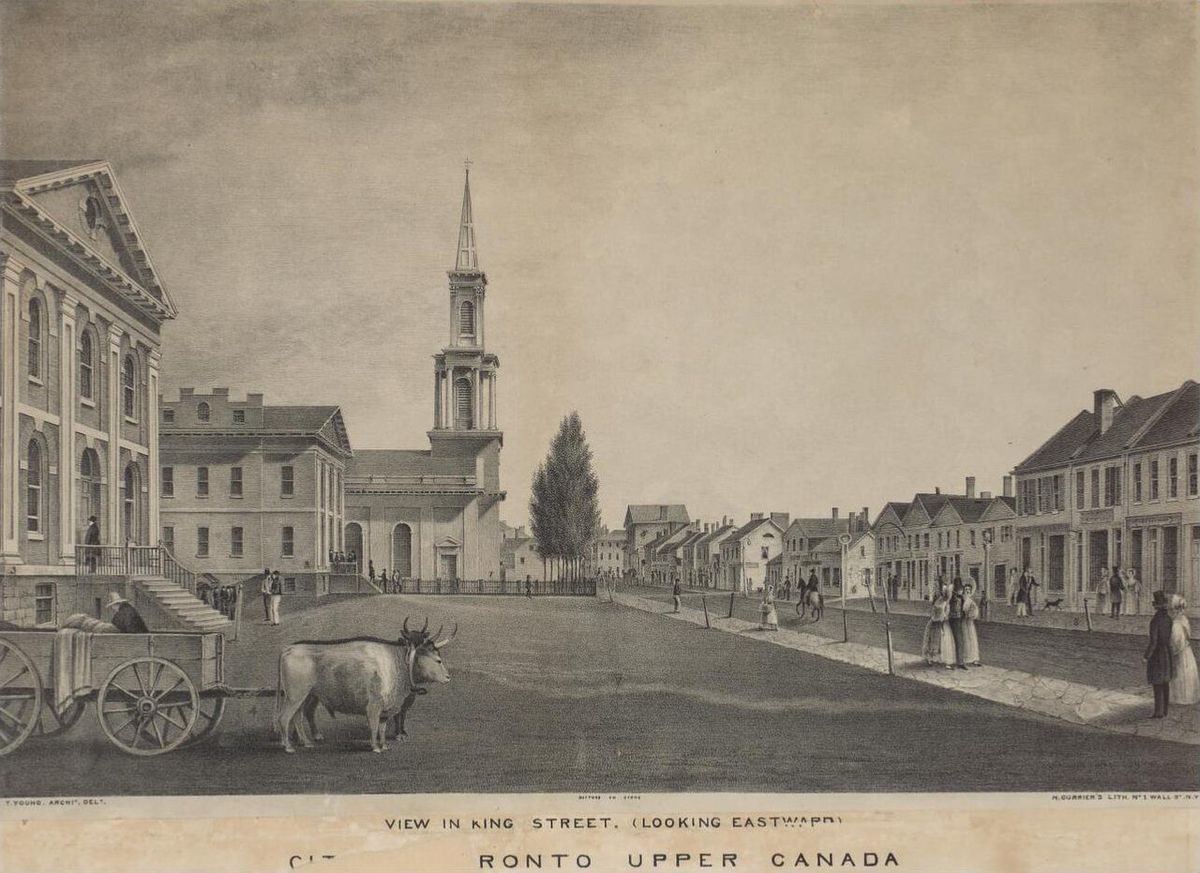
The Anglican parish of St. James was founded in 1797 in the town of York. The first church, a wooden structure, was built in 1807 and served as a hospital during the War of 1812, suffering damage from American troops. A larger stone church in the Neoclassical style replaced it in 1833, but this building burned down in the first Great Fire of Toronto in 1849. An international architectural competition was held to design its replacement, attracting eleven entries from Canada and the United States. The winning Gothic Revival design was submitted by Frederick William Cumberland in partnership with Thomas Ridout, beating proposals from John Ostell and Kivas Tully.
Construction on the present cathedral began on July 1, 1850, with the ceremonial first stone laid on November 20, 1850, by Bishop John Strachan and Reverend Grasset. This stone contained a sealed bottle with a Scobie's 1851 almanac, church society reports, documents, and a collection of coins. Built of white brick and Ohio sandstone, the church opened for public worship on June 19, 1853, and was one of the largest buildings in Toronto at the time. The original organ was built in 1853 by Samuel Russell Warren. Bishop John Strachan, Toronto's first Anglican bishop, was buried in a vault beneath the high altar upon his death in 1867. The tower and spire, designed by architect Henry Langley, were not completed until 1873 to 1874.
The cathedral has undergone several significant modifications throughout its history. In 1889, side galleries and aisles were removed, and new choir stalls and an organ console were installed in the chancel. Albert Ham served as the organist and choirmaster from 1897 to 1933. The year 1936 was particularly important, as St. George's Chapel was dedicated, the organ was overhauled by Casavant Frères, and the church officially became the cathedral of the Diocese of Toronto, with the cathedra moved from the Cathedral of St. Alban the Martyr. Major renovations were completed in 1982, and for the parish's bicentennial in 1997, a peal of 12 change ringing bells was installed as the largest such peal in North America.
Architectural Significance and Exterior
St. James Cathedral is a seminal work of Gothic Revival architecture in Canada, designed to achieve harmony through proportional relationships known as a 'core dimension'. Every architectural element is rationally linked to create a coherent whole. The exterior is constructed from white brick and Ohio sandstone, featuring lancet windows, square inset designs, and buttresses topped with pinnacles. A careful balance is struck between horizontal elements, like the dog-toothed fret along the roofline, and the pronounced verticality of the tower and spire. The buttresses are accented by heavy weatherings in lighter coloured stone to draw attention to points of structural stress, and they are topped with pinnacles to emphasize their massiveness and verticality.
The spire, completed in 1874, reaches a height of 92.9 metres (305 feet). Upon completion, it was the tallest structure in Canada, a title it held for 25 years until surpassed by Toronto's Old City Hall. It remains the tallest church spire in Canada and the second tallest in North America after St. Patrick's Cathedral in New York. The cathedral's total length is 60 metres (198 feet) with a maximum width of 30 metres (98 feet). St. James Park is located adjacent to the building, and a four-sided arch with a steeple was erected alongside the cathedral as a military memorial.
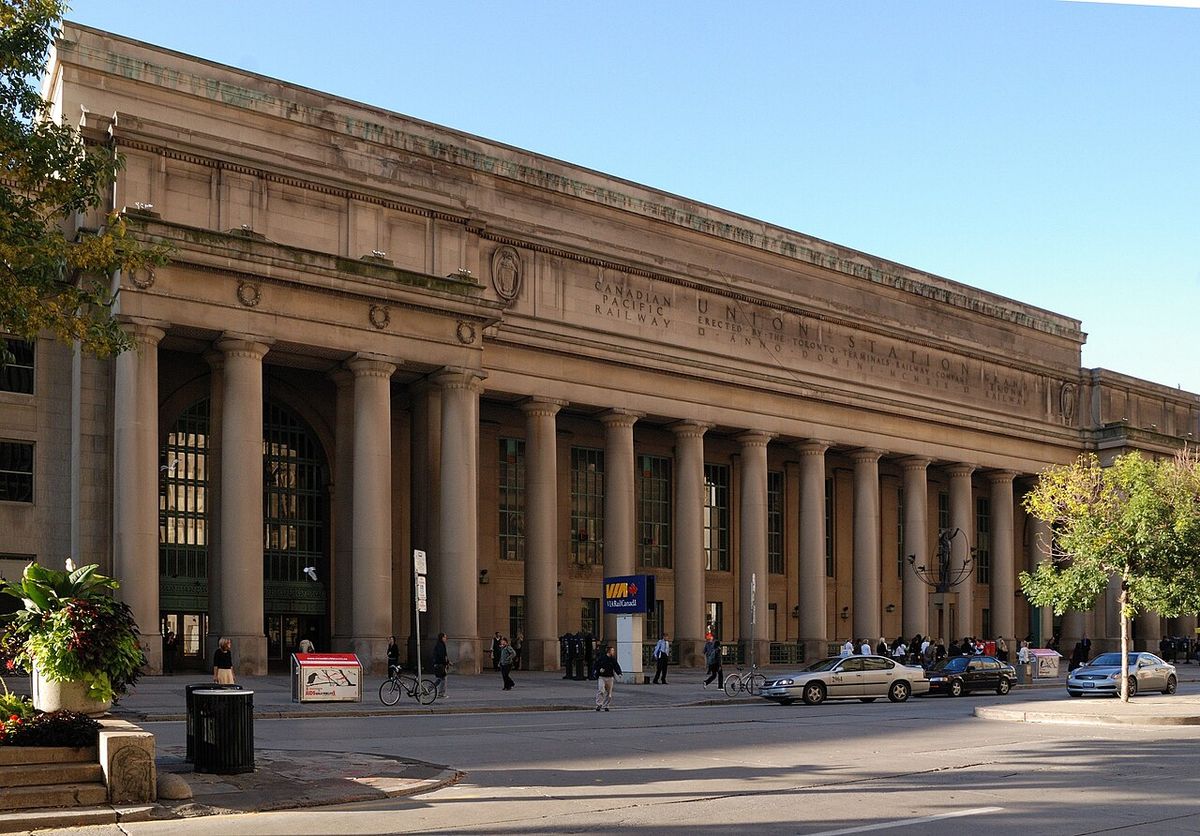
The exterior design includes several distinctive decorative elements. The spires are built of stone and decorated with pinnacles and dormers, with ball flower ornaments atop the pinnacles. Tower walls are reinforced with square and octagonal buttresses that taper abruptly and terminate in pinnacles, some with slender colonettes. These features provide spatial rhythm on the east and west facades. At the turn of the 20th century, the cathedral's spire was often the first structure immigrants noticed when arriving at Toronto's old Union Station, marking it as a primary symbol of the city for newcomers.
Interior Design and Features
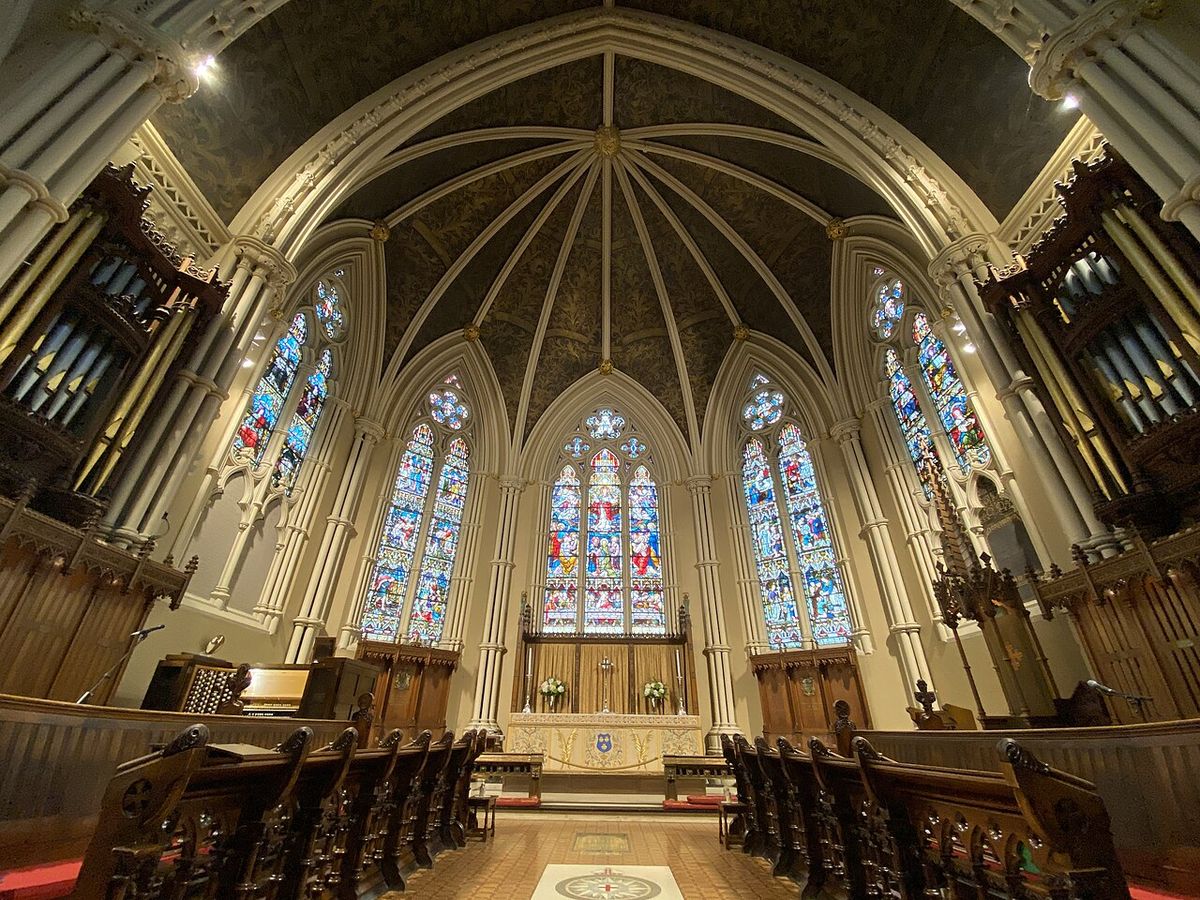
The interior of the cathedral is notable for its lack of galleries, which emphasizes the vertical sweep of the nave arcade and clerestory. The high-pitched roof is made of heavy timber with carved bosses, and the apsidal chancel features a decorative plaster vault designed to resemble stone. The interior is divided into six bays, reflected on the exterior by the placement of buttresses. Notably, the cathedral is oriented on a north-south axis rather than the traditional east-west alignment, a decision made by the design committee in the post-War of 1812 era. The pews are arranged in central rows with aisles on each side, and their comfort was not a primary concern in the original design.
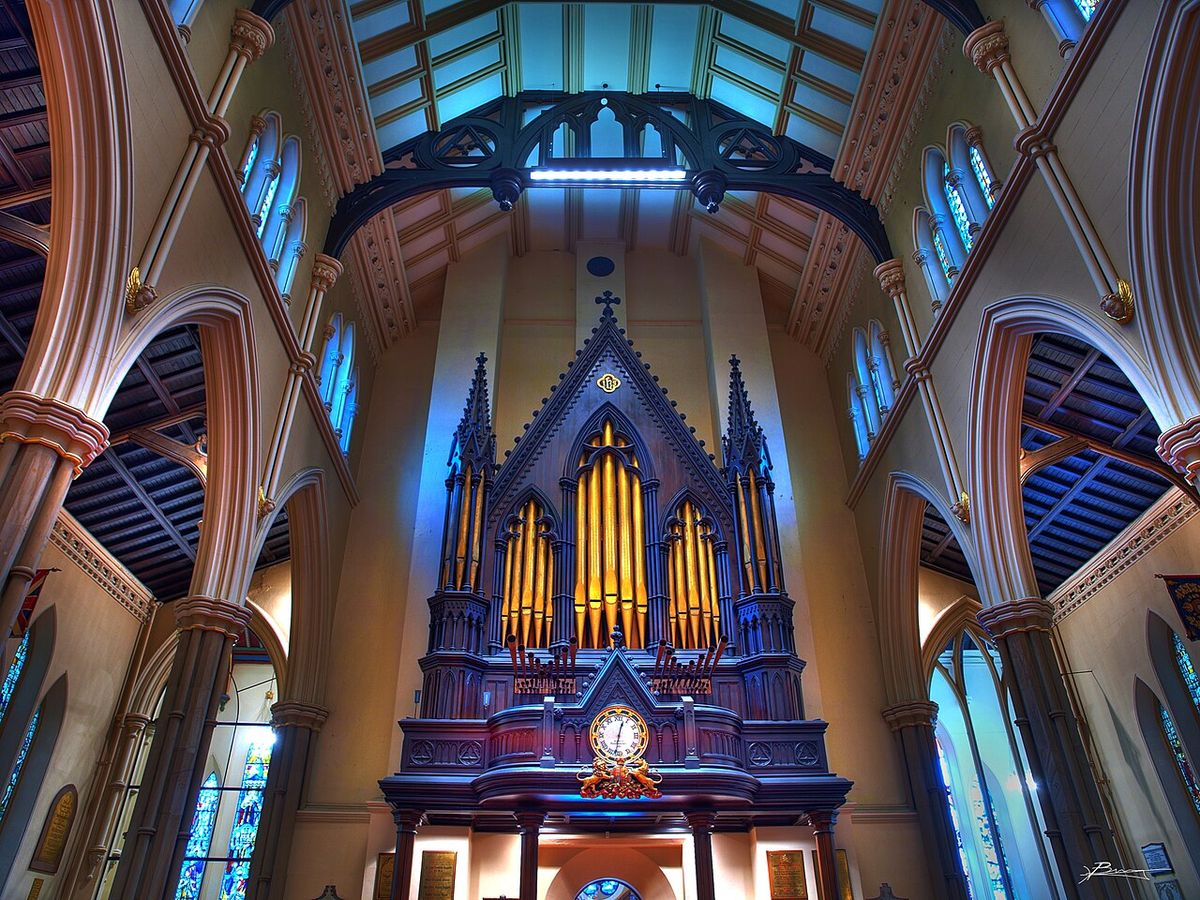
Key interior furnishings are crafted from black walnut, including the pews, gallery fronts, chancel panelling, and Corinthian capitals. The flooring features Minton tile-work. Over the principal entrance hangs a carved organ cover with a royal coat of arms above it. The cathedral's organ is a significant instrument with over 5,000 pipes. It incorporates the original gallery organ from 1853 above the south entrance, to which trumpet pipes were later added. Front chancel and aisle pipes were installed in 1916. The glazing bars in the windows create divisions in the stained glass that are reminiscent of Gothic tracery, allowing light to filter into the space.
The interior design principles focus on illumination and structural expression. Every element, including the stained glass windows, pointed arches, high ceilings, and pinnacles, is intended to allow as much natural light as possible to flood the interior. The combination of ribbed vaults, flying buttresses, and pointed arches creates a generously illuminated space. The exposed rafters of the nave roof are articulated structural elements, broad tie-beams and decorative cornices accent the joints, and a band of continuous painted bosses runs along the top of the aisle wall to balance the vertical composition and create a sense of stability and repose.
Community Role and Public Engagement
St. James Cathedral functions as both the diocesan cathedral and an active parish church ministering to the surrounding St. Lawrence neighbourhood. It holds multiple services each Sunday, including Said Eucharist at 8:00 am, Worship Together at 9:00 am, Choral Eucharist at 11:00 am, and Choral Evensong at 4:30 pm. The cathedral is deeply engaged with the community through music, hosting the Children's Community Choir and maintaining a strong choral tradition. Its associated choir school is Royal St. George's College, an independent day school for boys in grades 3 through 12 located in The Annex neighbourhood. The cathedral actively participates in Toronto's Doors Open event, inviting the public to explore its architecture and history through a detailed schedule of activities.
The 2026 Doors Open event demonstrated the cathedral's extensive public programming. Activities were held at both the cathedral and the separate St. James Cemetery location at 635 Parliament Street. The cathedral's schedule for that weekend included a wide range of events designed to share its heritage and community life with thousands of visitors. The weekend featured guided tours, organ demonstrations, bell tower climbs with the Change Ringers Guild, and open rehearsals with the Children's Community Choir. The cathedral relies on volunteers to support these public events and its daily operations, holding orientation sessions for new volunteers on May 17 and May 22 in 2026.
- 10:00 am: Children’s Community Choir open rehearsal.
- 10:30 am to 4:00 pm: Bell Tower tours with the Change Ringers Guild.
- 10:30 am, 11:30 am, 1:30 pm, 2:30 pm, and 3:30 pm: Guided Tours of the cathedral.
- 11:30 am and 1:30 pm: Organ demonstrations.
- 8:00 am: Said Eucharist service.
- 12:30 pm to 3:30 pm: Additional Bell Tower tours.
- 1:30 pm: A guided tour.
- 4:30 pm: Choral Evensong service.
The cathedral hosts community events such as the Magnifica Humanitas encyclical reading group from September to December 2026. It also sells tickets for special concerts, including one scheduled for November 6, 2026. To help pay for rising maintenance costs, part of the cathedral grounds was planned to be sold. After a public outcry, a deal was made to sell a parking lot to the northwest of the cathedral for the SP!RE condominium development instead of land from the original cemetery.
Notable Events and Burials
The cathedral has been the site of numerous notable funerals for prominent figures from the Toronto area, including former Bishops of Toronto. Only two individuals are buried within the cathedral building itself. Reverend George Okill Stuart, who served from 1800 to 1812, is interred here. The most significant burial is that of John Strachan, the first Anglican Bishop of Toronto, who was laid to rest in a vault beneath the high altar in 1867. Dean Henry James Grasett, who served from 1808 to 1882, is also buried within the cathedral. The original parish cemetery was relocated in the 1840s to the site of St. James-the-Less at Parliament and Bloor Streets, although historical records indicate that unmarked graves remain under the current cathedral parking lot.
The separate St. James Cemetery and Crematorium, now located at 635 Parliament Street, continues to operate and was also part of the Doors Open 2026 programming. That event offered guided and self-guided tours of its historic grounds from 10:00 am to 5:00 pm on May 23 and 24. The cemetery's involvement in Doors Open highlights the cathedral parish's ongoing connection to its historic burial grounds. The cathedral's change ringing bells, installed in 1997, are one of only nine peals of 12 bells outside the British Isles and one of only two in North America, the other being located at Trinity Church in New York City.
Key Facts and Records
St. James Cathedral holds several significant records and distinctions related to its history, architecture, and contents. These facts highlight its national importance and unique characteristics within the Anglican communion and Canadian built heritage. The cathedral's history is marked by a series of constructions, destructions, and rebuilds on the same site since 1797, reflecting the growth of Toronto itself. Its architectural and community features have set benchmarks for church buildings across the country.
- Oldest Congregation: The parish was established in 1797, making it the oldest in Toronto.
- Largest Bell Peal: The 1997 installation of 12 change ringing bells is the largest such peal in North America.
- Architectural Competition: The 1849 design competition drew 11 entries from Canada and the United States.
- Building Dimensions: The cathedral is 60 metres long and 30 metres wide at its maximum.
- Organ Pipes: The cathedral's organ contains over 5,000 pipes.
- Heritage Status: The building is designated under the Ontario Heritage Act.
- Choir School: The associated Royal St. George's College educates boys from grades 3 through 12.
The cathedral continues its role as a centre for worship and community events in downtown Toronto. It engages the public through tours and musical programming, such as organ demonstrations and choir rehearsals. The tower has five bells that still ring through the city today. The chiming clock is considered one of the finest examples of a chiming public clock anywhere in the world.
Visitor Information and Access
St. James Cathedral is located at 106 King Street East, with additional administrative references to 65 Church Street, in Toronto's downtown core. The cathedral is regularly open to the public for worship, tours, and special events. The cathedral maintains an active online presence to communicate service times, event schedules like the 'Magnifica Humanitas' reading group in 2026, and ticket information for special concerts. Public access is a priority, with regular guided tours offered, particularly during city-wide events like Doors Open where activities are designed to share the building's history and music.
Key attractions for visitors include climbing the historic bell tower, viewing the Gothic Revival architecture, and seeing the extensive organ with 5000 pipes. The cathedral is located in the historic St. Lawrence neighbourhood in downtown Toronto. For those interested in volunteering, the cathedral recruits helpers for major public events like Doors Open. Volunteer applications for the cathedral are processed through an online form, while opportunities at St.
Questions about Cathedral Church of St. James
Where is St. James Cathedral located?
St. James Cathedral is located at 106 King Street East in downtown Toronto's St. Lawrence neighbourhood. The postal code is M5C 2E9. The cathedral's administrative offices are also associated with 65 Church Street. It is situated near St. James Park and is a prominent landmark in the city's historic core.
What are the service times at St. James Cathedral?
Sunday services are held at 8:00 am, 9:00 am, 11:00 am, and 4:30 pm. The 8:00 am service is a Said Eucharist. The 9:00 am service is called Worship Together. The 11:00 am service is a Choral Eucharist. The 4:30 pm service is Choral Evensong.
Can the public tour St. James Cathedral?
Yes, the cathedral is open for public tours. It participates annually in Toronto's Doors Open event, offering guided tours, bell tower climbs, and organ demonstrations. During the 2026 Doors Open weekend, tours ran from 10:30 am to 4:00 pm. Outside of special events, visitors are welcome to explore the cathedral, and guided tours can often be arranged by contacting the cathedral office.
How tall is the spire of St. James Cathedral?
The tower and spire are 92.9 metres, or 305 feet, tall. Upon completion in 1874, the spire was the tallest structure in Canada. It remained the tallest for 25 years. It is the second tallest spire in North America after St. Patrick's Cathedral in New York.
When was the current cathedral building constructed?
The current Gothic Revival building was constructed between 1850 and 1853. The ceremonial first stone was laid in November 1850, and the church opened for services on June 19, 1853. The tower and spire were later additions, completed between 1873 and 1874. The building is the fourth church to occupy the site since the parish was founded in 1797.
What is the connection between St. James Cathedral and Royal St. George's College?
Royal St. George's College is the cathedral's choir school. It is located in The Annex neighbourhood. The school is open to boys in grades 3 through 12. It provides choristers for the cathedral's choir.
Sources and further reading
- Cathedral Church of St. James (Wikipedia)
- Thank you • Doors Open 2026 (stjamescathedral.ca)
Checked by the Your Space Hamilton desk. Last updated 2026-10-28.