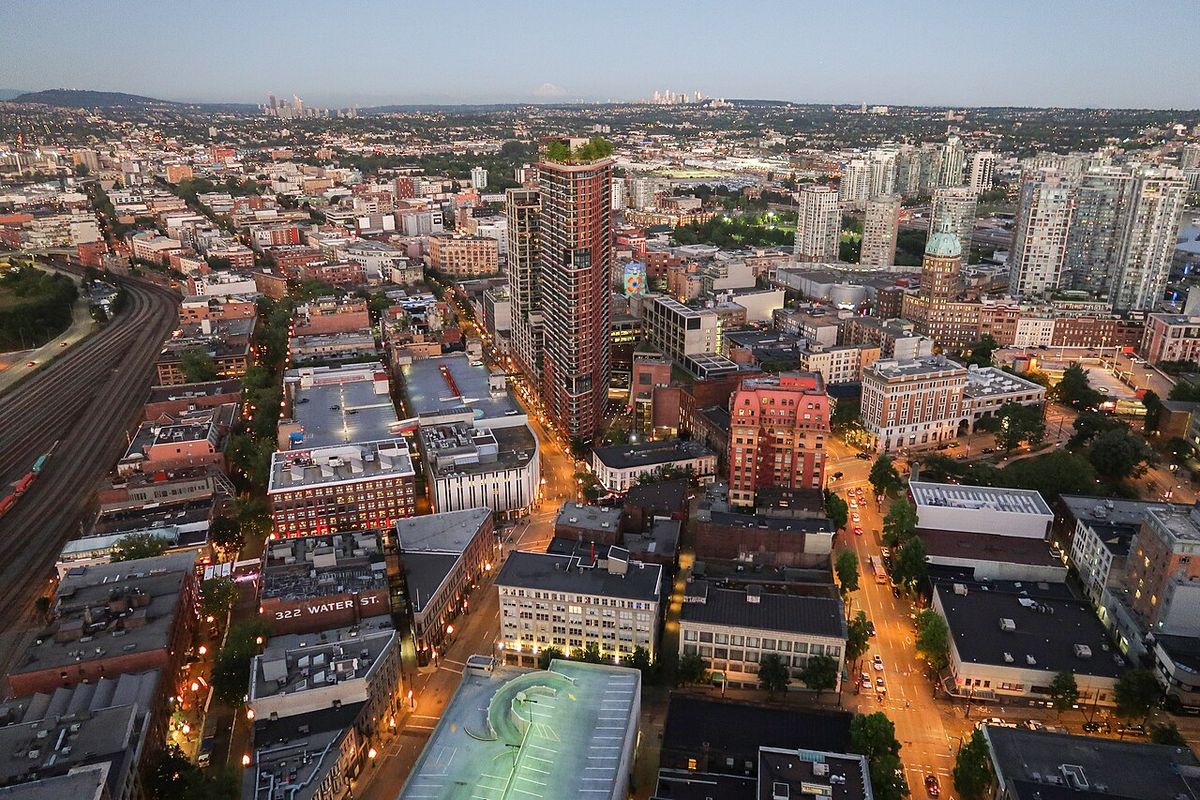
Red-Light District, Montreal
The Red-Light District of Montreal, historically centred on the intersection of Saint Laurent Boulevard and Saint Catherine Street, was a notorious entertainment and vice district that defined the city's character for much of the 20th century. Its emergence was fuelled by American Prohibition and a permissive municipal attitude, creating a hub for jazz, burlesque, gambling, and prostitution that attracted international tourists and entertainers. The district's legacy is deeply intertwined with Montreal's cultural history, serving as the starting point for many artists and a focal point for social and moral debates. Today, the area has been largely redeveloped into the Quartier des spectacles, a cultural precinct, though its history remains a significant part of Montreal's identity.
Historical Boundaries and Character
The boundaries of Montreal's Red-Light District were never officially designated and shifted over time according to different observers and eras. In its mid-20th century heyday, the central area was commonly described as being bordered by René Lévesque Boulevard to the south, Sherbrooke Street to the north, Bleury Street to the west, and Saint Denis Street to the east. Its undisputed heart was the crossroads of Saint Laurent Boulevard, known locally as The Main, and Saint Catherine Street, which nightlife reporter Al Palmer nicknamed 'St. Kits' in his 1950 book Montreal Confidential. The district's character was defined by its high density of taverns, nightclubs, and cabarets, a proximity to the downtown core and tourist attractions, and a concentration of activities like prostitution and gambling that operated with a degree of municipal tolerance. This area was predominantly a working-class, francophone neighbourhood by day, with dense, often dilapidated housing, but it transformed dramatically after dark into a neon-lit entertainment zone. The 1954 Dozois Report described the area as having one of the densest concentrations of substandard housing in Montreal, with a third of units lacking bathtubs and arrest rates six times the city's average.
The Sin City Era and Cultural Impact
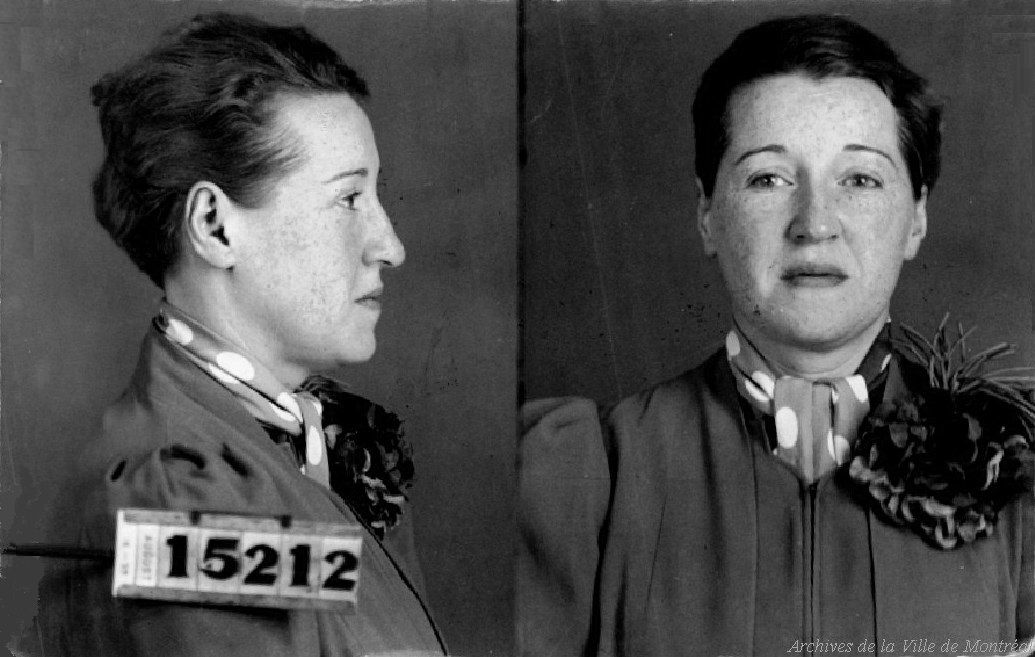
Montreal's reputation as a 'Sin City' peaked between the 1920s and the late 1950s, a period directly energized by American Prohibition. As one of the few places in North America where alcohol remained legally available, the city became a magnet for American tourists, gamblers, and entertainers. The unofficial theme song 'Hello Montréal!' captured this influx, with lyrics bidding 'Goodbye Broadway, hello Montréal'. The district became a premier jazz destination, hosting international stars like Ella Fitzgerald, Frank Sinatra, Édith Piaf, and Sammy Davis Jr., while local legend Oscar Peterson began his career in its clubs. A key institution was Rockhead's Paradise in nearby Little Burgundy, founded by Jamaican-born First World War veteran Rufus Rockhead as Canada's first Black-owned nightclub, providing a vital stage for Black musicians. The area's cabaret scene launched numerous careers and cemented Montreal's image as a pleasure-oriented city, an identity that historian Nancy Marrelli noted had become a tourist asset.
The burlesque scene, centred on the Gayety Theatre, produced the district's most famous performer, Lili St. Cyr. Her elaborate theatrical striptease acts, which included performances in giant champagne glasses and staged orientalist fantasies, drew massive crowds and significant controversy, including a full-page condemnation from a Jesuit priest in Le Devoir. She performed her last Montreal show in March 1957. The district's influence extended into popular culture, most notably inspiring Mae West's 1926 Broadway play 'Sex', which featured a fictional Montreal prostitute named Margy LaMont working on a street based on the real Cadieux Street. The play's obscenity charges in New York, which led to West serving eight days in jail, prompted Montreal authorities to hastily rename Cadieux Street to De Bullion in 1927 to distance the city from the scandal.
Key Figures and the Underground Economy
Beneath the district's glittering surface operated a complex underground economy managed by an interconnected network of club owners, madams, organized crime figures, and corrupt officials. This ecosystem functioned on a system of mutual tolerance and strategic payoffs that everyone understood but rarely acknowledged publicly. Notable criminal figures included the Cotroni family, who had interests in gambling dens and protection rackets across the district, and Harry Davis, known as the king of Montreal's gambling world until his assassination in 1946. The most famous madam was Anna Labelle, also known as Madame Émile Beauchamp, who operated dozens of brothels and was known for her affluent lifestyle, arriving at court in a Cadillac wearing a mink coat. Police and political figures were often deeply entangled in regulating, and profiting from, this nighttime economy, an arrangement that persisted for decades and created conditions where vice could flourish relatively openly.
This informal governance structure began to fracture in the late 1940s due to internal pressure. Pacifique 'Pax' Plante, head of the Morality Squad between 1946 and 1948, launched a public campaign against these networks by tipping off reporters before raids and accumulating evidence. This exposure forced the provincial government to launch the Caron Inquiry in 1950, which laid bare a police force so deeply entangled in the nighttime economy it was meant to regulate that the scandal alone was destabilizing. The inquiry revealed the extent of payoffs and protection, marking the beginning of the end for the old order.
Decline and Urban Renewal
The decline of the open Red-Light District was a result of converging social, political, and urban forces beyond the Caron Inquiry. Changing social morals and increased policing gradually dismantled the open vice economy that had characterized the area for generations. Concurrently, urban renewal efforts targeted the district's physical infrastructure, which had been highlighted as severely dilapidated in the 1954 Dozois Report. This report noted the area's extreme population density and lack of basic amenities, providing justification for redevelopment. By the early 1960s, the era of a wide-open Red-Light District was effectively over, though some adult entertainment venues like the Café Cleopatre persisted in a more discreet form. The corner of Saint Laurent and Saint Catherine, once described as a place where you could lose your watch on one side of the street and see it sold on the other, began its long transformation.
The process of renewal was slow and contested. As late as 2009, historic venues like the Café Cleopatre were still threatened with demolition by urban renewal projects linked to the development of the nearby Quartier des spectacles. This tension between preserving physical remnants of the district's history and modernizing the area continues to be a subject of local discussion. The redevelopment was part of a broader municipal effort to reshape the neighbourhood's identity from one associated with illicit activity to one focused on sanctioned cultural production and upscale residential living.
Modern Legacy and the Quartier des Spectacles
The physical space once occupied by the Red-Light District has undergone extensive redevelopment, primarily into the Quartier des spectacles. This official cultural district, managed by a non-profit partnership created in 2003, now features glass condominiums, festival infrastructure, and performing arts venues marked by signature red pavement dots. Historic theatres that operated during the Sin City era, including the Gesù which opened in 1865, the Monument-National from 1893, the Théâtre du Nouveau Monde (the former Gayety from 1912), and Théâtre Saint-Denis from 1916, all remain active as legitimate cultural institutions. The Imperial Cinema on Bleury Street, opened in 1913 as one of the city's first movie palaces, also continues to operate. The intersection of Saint Laurent and Saint Catherine, once a gateway to vice, is now a clean, curated public space that some critics describe as soulless compared to its past.
The area's history is actively commemorated and commercialized through guided ghost walks and historical tours that explore its scandalous past, with tours available as of 2026. These tours are often led by figures like legendary burlesque performer and guide Velma Candyass, who provides firsthand accounts of the district's later years. The transformation from an illicit entertainment zone to a sanctioned cultural precinct represents a deliberate municipal effort to control the neighbourhood's narrative while acknowledging its complex history. The Quartier des spectacles Partnership itself explains that the neighbourhood was christened the Red-Light District during the Prohibition era, directly linking the new district's cultural programming to the area's historical function as an entertainment hub, albeit in a radically different form.
Contemporary Adult Entertainment in Montreal
While the traditional, concentrated Red-Light District is gone, Montreal maintains a regulated adult entertainment industry that reflects Quebec's progressive, sex-positive culture. This modern scene is dispersed and operates within a legal framework that distinguishes it from the illicit past. The industry emphasizes wellness, emotional connection, and professional standards over the gritty transactional nature of the old district. The current landscape includes several distinct types of venues and services, with upscale adult entertainment most concentrated in downtown Montreal along Sainte-Catherine Street and surrounding areas. The Plateau Mont-Royal offers more intimate, boutique massage studios catering to a creative clientele, while Old Montreal provides discreet options oriented toward tourists seeking authentic experiences.
The legal framework operates under federal Canadian law, with provincial attitudes allowing for a more permissive environment for services like erotic massage, escorting, and strip clubs when conducted within specific regulations. Established venues prioritize discretion, maintain clean facilities, and have clear policies about consent and boundaries. Income for workers in this industry varies widely, and costs for clients can range from $180 to $260 for premium erotic massage experiences, $200 to $500 per hour for escort services, and $100 to $300 for strip club visits including drinks and dances, with tipping etiquette of 15 to 20 percent. Digital platforms are increasingly used for booking and client verification, and demand fluctuates with the city's festival calendar, seeing increases around events and following holidays like Valentine's Day.
Today, Montreal's adult entertainment scene is defined not by a specific geographical district but by professionalized services operating within a regulated market. The modern scene includes a focus on therapeutic benefits and emotional wellness within adult services. It also involves the use of digital platforms for booking and client verification. Established venues strictly adhere to safety and consent policies. This contemporary approach represents a complete evolution from the historically tolerated, crime-associated vice district.
Representation in Media and Culture
The history and mythology of Montreal's Red-Light District have inspired numerous works across various media, cementing its place in popular culture. Documentary filmmakers have examined the area, most notably in the film 'Sexe de rue', which explores the district and its themes. The animated short film 'The End of Pinky', set in the neighbourhood, offers a stylized, artistic interpretation of its atmosphere and characters. The era is also chronicled in nonfiction works like Al Palmer's 1950 exposé 'Montreal Confidential' and Nancy Marrelli's book 'Stepping Out: The Golden Era of Montreal Nightclubs'. These works collectively preserve the district's legacy, capturing its allure, complexity, and enduring fascination as a symbol of a bygone era in Montreal's social history.
The 1928 song 'Hello Montréal!' became an unofficial theme for the Prohibition-era influx of tourists. Lili St. Cyr's 1982 memoir 'Ma vie de stripteaseuse' provides a personal account of the burlesque scene. The district's notoriety directly influenced mainstream American theatre through Mae West's play 'Sex'. This play chronicled a fictional Montreal prostitute. Ongoing cultural production ensures the memory of the district continues to be examined long after its physical transformation.
Demographic and Economic Data
During its Sin City heyday, the area was characterized by extreme population density and poverty. This was documented by the Dozois Report of 1954. The report described the area as one of the densest concentrations of dilapidated housing in the city. In contrast, the contemporary adult entertainment industry operates as a formalized service sector. It has established price points and business models.
| Aspect | Historical Era (Peak) | Contemporary Scene (2026) |
|---|---|---|
| Primary Location | Bordered by René-Lévesque, Sherbrooke, Bleury, St-Denis | Dispersed: Downtown, Plateau, Old Montreal |
| Housing Condition | Dilapidated. 1/3 of units lacked bathtubs (1954) | Glass condos and renovated buildings |
| Arrest Rates | 6 times Montreal's municipal average | Regulated, licensed operations |
| Key Entertainment | Jazz clubs, burlesque theatres, illegal gambling | Upscale massage, gentlemen's clubs, escort services |
| Notable Ownership | Cotroni family, Harry Davis, Anna Labelle | Licensed businesses, independent contractors |
| Police Relation | Entangled corruption, payoffs | Regulatory compliance, licensed venues |
There was a fundamental shift from an illicit, densely packed vice district to a dispersed, commercialized service industry. The old district was integrated into the city's shadow economy. The new industry operates within legal parameters. The economic model changed from one based on exploitation and corruption. It became one based on consumer transactions for adult leisure and wellness services.
Notable Venues and Landmarks
The Red-Light District and its successor area have been home to a number of significant venues. These venues chart the evolution from illicit entertainment to sanctioned culture. The Gesù theatre opened in 1865. The Monument-National was the birthplace of francophone professional theatre in 1893. The Gayety Theatre opened in 1912 and became the Théâtre du Nouveau Monde in 1951. The Théâtre Saint-Denis opened in 1916. The Imperial Cinema on Bleury Street opened in 1913.
- The Gayety Theatre: Opened in 1912, this was the home stage for burlesque star Lili St. Cyr. It was converted into the Théâtre du Nouveau Monde in 1951 and remains in operation.
- Rockhead's Paradise: Founded by Rufus Rockhead on Saint-Antoine Street in Little Burgundy, it was Canada's first Black-owned nightclub and a major jazz venue.
- Café Cleopatre: A surviving strip club and cabaret from the later years of the district, which was threatened with demolition in 2009 by Quartier des spectacles renewal projects.
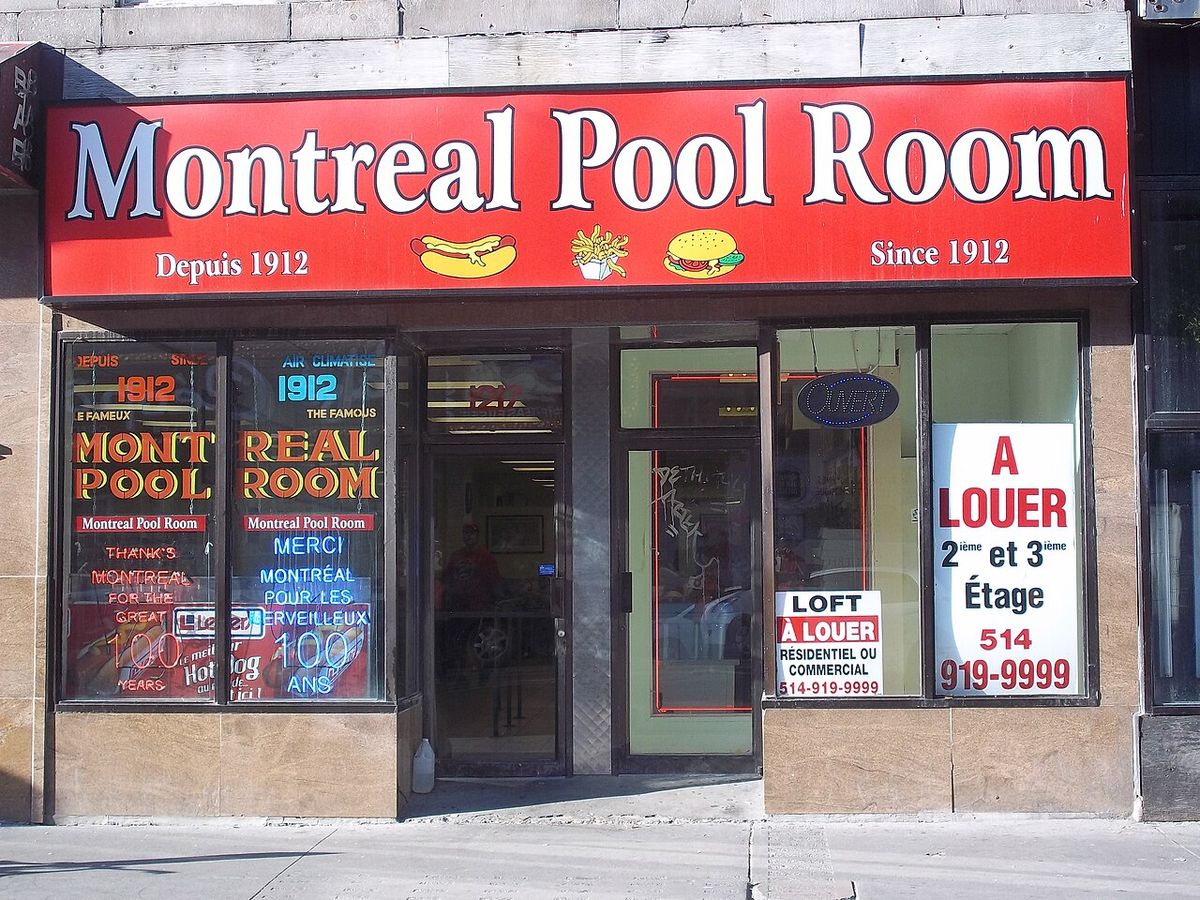
- Montreal Pool Room: A historic fast-food restaurant located within the district, known for its steamed hot dogs and longevity.
- The Gesù: A theatre that opened in 1865, representing the area's long history as an entertainment district before the Sin City era.
- Monument-National: Opened in 1893, noted as the birthplace of francophone professional theatre in Montreal.
- Théâtre Saint-Denis: A major performance venue that opened in 1916 and continues to operate today.
- Imperial Cinema: Located on Bleury Street, opened in 1913 as one of Montreal's first movie palaces.
These venues illustrate the continuity of performance and gathering in the area over more than 150 years. The nature of the entertainment and its legal status changed dramatically during this time. All these theatres are still operating today. Their preservation and adaptation are central to the narrative of the Quartier des spectacles. The Quartier des spectacles has been home to nightclubs and cultural institutions for a long time.
Key Events and Publications
The history of the Red-Light District was shaped by specific events. It was documented in contemporary publications that exposed its inner workings. American Prohibition from 1920 to 1933 increased Montreal's popularity. It also led to the growth of organized crime, prostitution and illegal gaming houses. In 1950, crime reporter Al Palmer published the book Montreal Confidential. The Caron Inquiry of 1950 laid bare a police force deeply entangled in the nighttime economy.
- 1920 to 1933: American Prohibition, which drove tourism and vice investment into Montreal, fuelling the district's growth.
- 1926: Premiere of Mae West's play 'Sex' on Broadway, inspired by the Montreal Red-Light District and featuring a prostitute from Cadieux Street.
- 1927: Montreal renames Cadieux Street to De Bullion following the obscenity charges against Mae West's play.
- 1946 to 1948: Pacifique 'Pax' Plante leads the Morality Squad, beginning his crusade against police corruption.
- 1950: Publication of crime reporter Al Palmer's book 'Montreal Confidential'. Launch of the provincial Caron Inquiry into police corruption.
- 1954: Release of the Dozois Report, highlighting the area's dilapidated housing and high arrest rates.
- March 1957: Lili St. Cyr performs her last show in Montreal, marking the end of an era.
- 2003: Creation of the Quartier des spectacles Partnership to redevelop the area.
- 2009: Café Cleopatre is threatened with demolition by urban renewal projects.
External events like Prohibition played a part in defining the district's history. Internal scandals like the Caron Inquiry also played a key role. Cultural products like Al Palmer's book Montreal Confidential contributed to the district's mythos. These factors all contributed to the district's eventual transformation. The district's operation was between the 1920s and the start of the 1960s.
Questions about Red-Light District, Montreal
Where was Montreal's historic Red-Light District located?
The historic district was centred on the intersection of Saint Laurent Boulevard and Saint Catherine Street in downtown Montreal. Its commonly cited boundaries during its peak were René Lévesque Boulevard to the south, Sherbrooke Street to the north, Bleury Street to the west, and Saint Denis Street to the east. This area was the heart of the city's vice and entertainment scene for much of the 20th century. The definition of the boundaries has varied according to both the source and the time period.
Why was Montreal called a 'Sin City'?
Montreal earned the 'Sin City' nickname primarily during American Prohibition from 1920 to 1933. It became a major destination for Americans seeking legal alcohol. The city's permissive attitude towards vice, including gambling, prostitution, and jazz and burlesque clubs, cemented this reputation. This era of nightlife continued well into the 1950s. Burlesque star Lili St. Cyr later observed that every night in Montreal felt like New Year's Eve in New York.
Who was Lili St. Cyr and why was she important?
Lili St. Cyr was an American-born burlesque performer who became the famous face of Montreal's Red-Light District. She headlined at the Gayety Theatre with elaborate theatrical striptease acts that combined spectacle and controversy, performing in giant champagne glass baths and staged orientalist fantasies. Her performances drew condemnation from religious authorities but immense popularity from the public and a not-guilty verdict in an indecency trial. She played her last Montreal show in March 1957 and remains a symbolic figure of the district's golden era.
What caused the decline of the Red-Light District?
The district's decline began with a crackdown on police corruption and vice in the late 1940s. This was led by Morality Squad head Pacifique 'Pax' Plante. His findings were exposed by Le Devoir newspaper in a series titled 'Montreal Under the Rule of the Underworld'. The subsequent Caron Inquiry in 1950 revealed deep collusion between law enforcement and organized crime. Changing social morals and urban renewal projects gradually ended the era of wide-open vice by the early 1960s.
What is in the area of the old Red-Light District today?
Today, the area is part of the Quartier des spectacles, a modern cultural and entertainment district managed by a partnership created in 2003. It features glass condominiums, festival grounds, and renovated historic theatres like the Théâtre du Nouveau Monde. The once-notorious corner of Saint Laurent and Saint Catherine is now a clean public space with the Quartier's signature red pavement dots. The district's history is remembered through guided tours and its legacy in the city's performing arts scene.
Does Montreal still have a red-light district?
Montreal no longer has a concentrated, traditional red-light district like its historical predecessor. Instead, the city has a dispersed and regulated adult entertainment industry operating within legal frameworks. Upscale venues are found downtown, with other services in areas like the Plateau and Old Montreal. The modern scene is characterized by a focus on wellness, discretion, and professional standards, with services like erotic massage, escorting, and strip clubs operating legally under specific regulations, reflecting Quebec's progressive culture.
Sources and further reading
- Red-Light District, Montreal (Wikipedia)
- Montréal's historic Red-Light District (mtl.org)
- What Happened to Montreal's Red Light District? | The Main (themain.com)
- Montreal Red Light District: Adult Entertainment Guide 2026 (montrealaise.com)
Checked by the Your Space Hamilton desk. Last updated 2026-10-27.