CN Tower
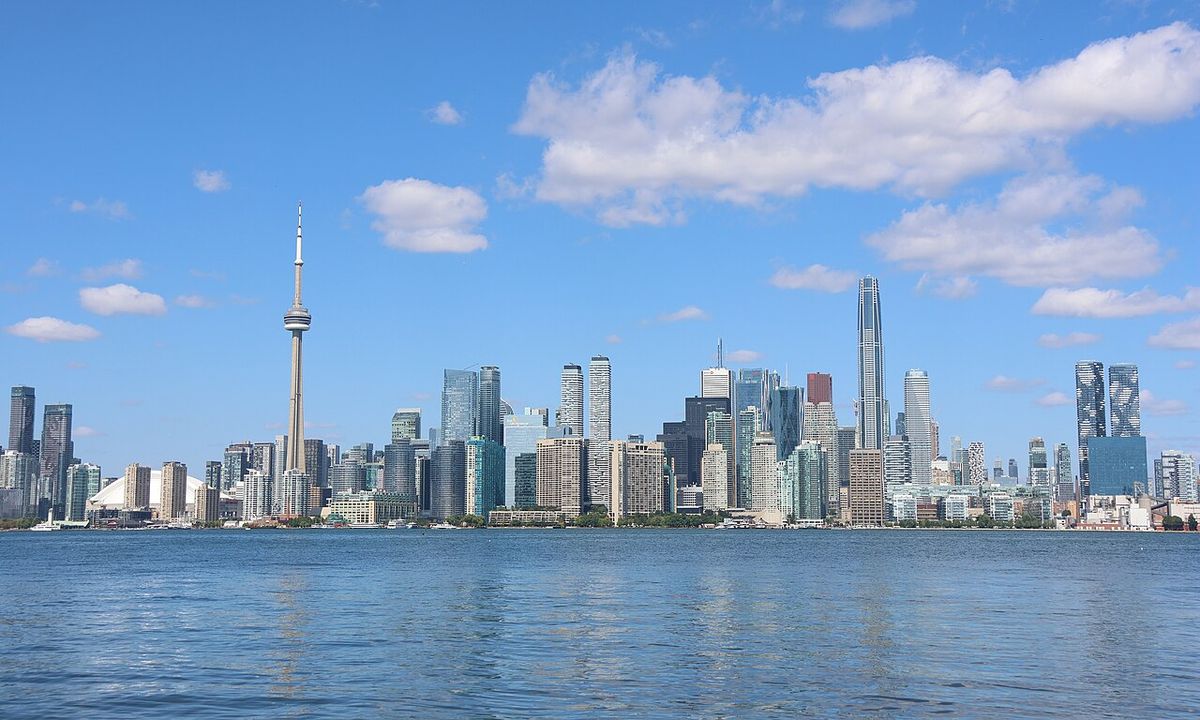
The CN Tower is a 553.3-metre-high communications and observation tower located in downtown Toronto, Ontario. Completed in 1976 on the former Railway Lands, it was built by Canadian National Railway to serve as a broadcast platform and a symbol of Canadian industrial strength. For over three decades, it held the title of the world's tallest free-standing structure and remains the tallest in North America and the Western Hemisphere. A defining feature of Toronto's skyline, the tower attracts millions of visitors annually with its observation decks, revolving restaurant, and the EdgeWalk thrill attraction.
Origins and Construction
The concept for the CN Tower originated in 1968 when Canadian National Railway sought to build a superior broadcast platform for the Toronto area and demonstrate the strength of Canadian industry. The project was formalized in 1972, initially conceived as part of a larger development called Metro Centre on the Railway Lands, a former switching yard made redundant by the opening of the MacMillan Yard north of the city in 1965. The design evolved from a tripod of three pillars into the single continuous hexagonal core structure that exists today, with the addition of a high observation deck, later named The Top, to attract tourists. Construction began on February 6, 1973, with massive excavations for the foundation, which required the removal of 56,000 tonnes of earth and shale to a depth of 15 metres. The foundation itself incorporated 7,000 cubic metres of concrete with 450 tonnes of rebar and 36 tonnes of steel cable, built to a thickness of 6.7 metres. The main concrete pillar was built using a hydraulically raised slipform that climbed approximately six metres per day, with concrete poured intermittently until February 22, 1974, at which point it surpassed the Inco Superstack to become the tallest structure in Canada. The construction of the main pod, which houses the primary observation levels and restaurant, began in August 1974 using twelve giant steel and wooden bracket forms slowly raised into position by 45 hydraulic jacks over the course of a week. The 102-metre antenna was installed in 36 sections by a Sikorsky S-64 Skycrane helicopter named Olga, a process that took three and a half weeks instead of the planned six months and was a local tourist attraction. The tower was officially topped off on April 2, 1975, becoming the world's tallest free-standing structure after 26 months of construction, with a total mass of 118,000 tonnes.
Architectural and Structural Design
The CN Tower's structure is defined by its hollow concrete hexagonal core, which contains stairwells and utility connections. Below the main public deck, three large supporting legs blend into the hexagon, giving the tower a distinctive Y-shaped base at ground level. The tower's six glass-fronted elevators are situated in the three inverted angles created by the hexagonal shape, with two elevators per shaft. The main broadcast antenna, which carries television and radio signals, rises 102 metres above the concrete portion. There are three primary public observation areas. The Lower Observation Level at 342 metres houses the Glass Floor and an outdoor terrace. The Main Observation Level is at 346 metres. The highest viewing platform, The Top, is at 446.5 metres just below the antenna. The Glass Floor, installed in 1994, consists of 64-millimetre-thick thermal glass units and can withstand a pressure of 4.1 megapascals. One elevator was upgraded in 2008 with a glass floor panel, creating the world's highest glass-floor elevator ride at 346 metres. The structure contains 40,500 cubic metres of concrete, all mixed on-site to ensure consistency, and maintains a vertical accuracy within 29 millimetres over its entire height. A metal staircase with 1,776 steps reaches the main deck, and 2,579 steps reach The Top, making it the tallest metal staircase in the world.
Opening and Early Years
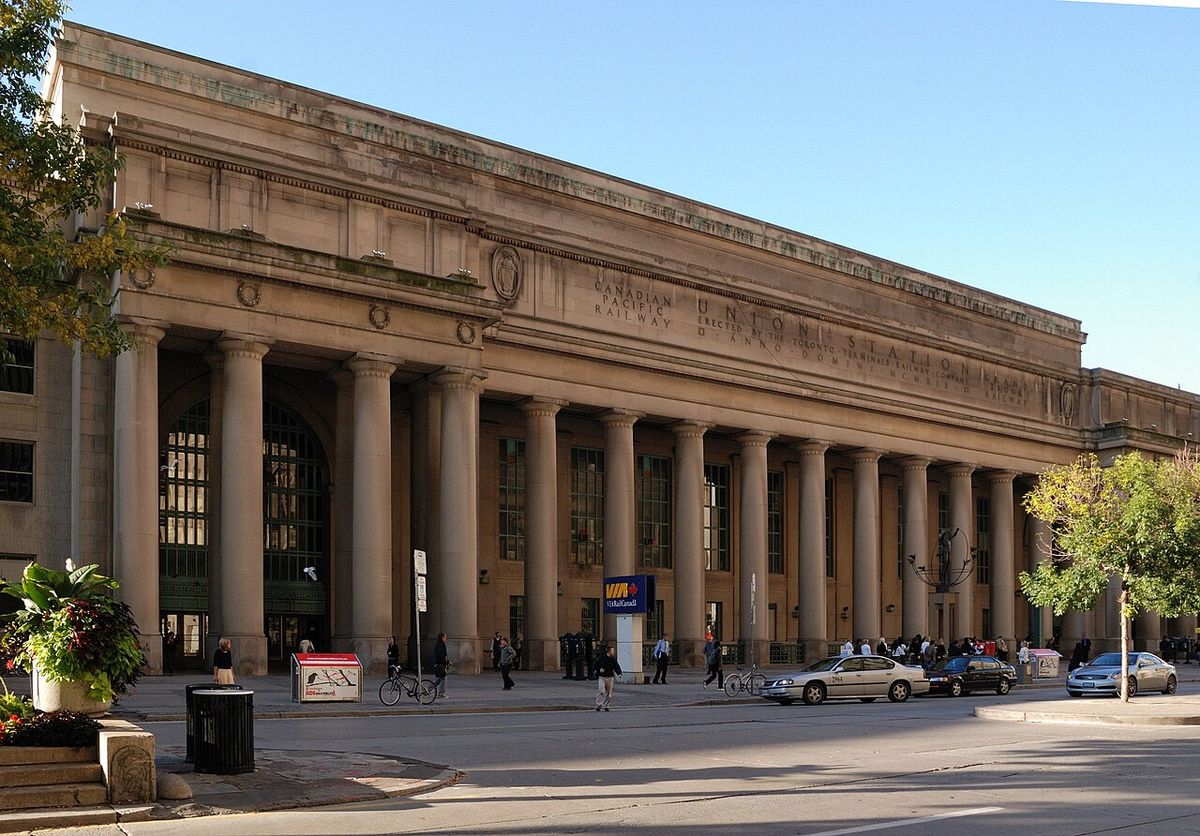
The CN Tower opened to the public on June 26, 1976, at a construction cost of approximately 63 million Canadian dollars. Its opening observation points included The Top, then called the Space Deck at 447 metres, the Indoor Observation Level at 346 metres, and the Outdoor Observation Terrace at 342 metres. One floor above the Indoor Observation Level was the Top of Toronto Restaurant, a revolving dining venue that completed a revolution every 72 minutes. For years after its opening, the tower stood relatively isolated on the largely undeveloped Railway Lands, which created serious access problems for tourists as noted by project architect Ned Baldwin. The area began to transform with the completion of the Metro Toronto Convention Centre in 1984 and the SkyDome in 1989, with access greatly improved by the construction of the SkyWalk pedestrian bridge to Union Station in 1989. The tower garnered worldwide media attention in the late 1970s and 1980s through daring stunts, including parachute jumps by Dar Robinson for a film and a personal documentary, and an exterior climb by Dan Goodwin on the tower's tenth anniversary. From 1985 to 1992, the basement level hosted Tour of the Universe, the world's first flight simulator ride based on a Space Shuttle flight, which was later replaced by other attractions.
Ownership Changes and Major Renovations
In 1995, prior to the privatization of Canadian National Railway, the tower was sold to the federal Crown corporation Canada Lands Company as CN divested non-core freight assets. The tower's official name was adjusted to Canada's National Tower, and the railway logo was removed from its wordmark, though the CN Tower moniker remained in common use. From 1997 to January 2004, management company TrizecHahn oversaw a 26 million dollar entertainment expansion. This project added two new elevators, bringing the total to six, and relocated the interior staircase from a leg into the core, adding nine steps to the climb. The glass floor was installed on the Lower Observation Level in 1994. In 2007, the tower's exterior lighting was upgraded from incandescent bulbs to a dynamic LED system capable of changing colours, which offered cost savings. That same year, the Burj Khalifa in Dubai surpassed the CN Tower as the world's tallest free-standing structure. A major new attraction, the EdgeWalk, opened on August 1, 2011, allowing visitors to walk hands-free around the main pod's exterior at 356 metres, directly above the 360 Restaurant.
Recent Developments and 50th Anniversary
The tower was prominently featured in the 2015 Pan American Games, with a pre-recorded segment of the opening ceremony showing athletes Bruny Surin and Donovan Bailey on the EdgeWalk and a parachute jump into Rogers Centre. Fireworks were launched from the tower for the Canada 150 celebrations on July 1, 2017, in a five-minute display coordinated with music. The CN Tower, like many attractions, faced closures during the COVID-19 pandemic from 2020 to 2021, during which time the gift shop was renovated. The year 2026 marks the 50th anniversary of the tower's opening, a milestone being celebrated with commemorative events and a 21 million dollar renovation project. Special anniversary lighting displays at midnight and other moments are planned throughout the year. A 2026 commemorative two-dollar circulation coin featuring a glow-in-the-dark design has been issued by the Royal Canadian Mint. The tower also continues to host major community events, including the United Way Greater Toronto's annual CN Tower Climb fundraiser, scheduled for November 14 and 15, 2026, which aims to build on the record 2 million dollars raised in 2025.
Attractions and Visitor Experience
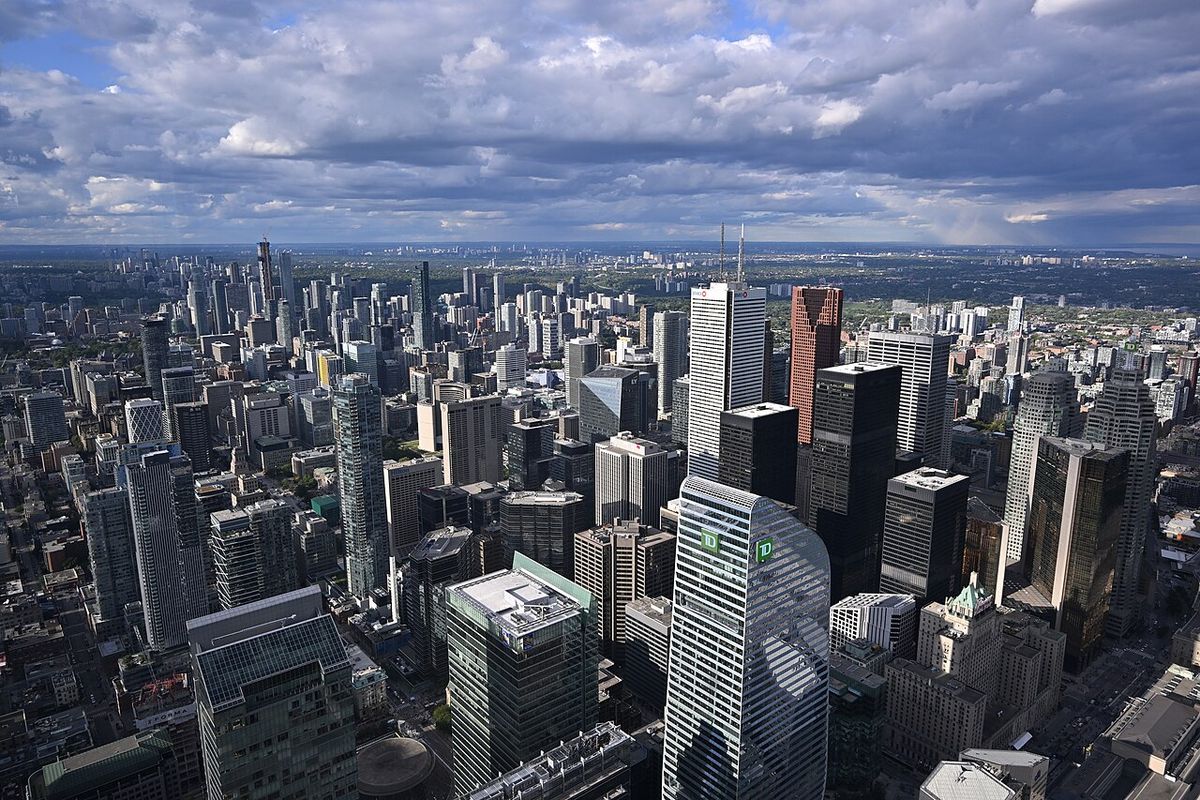
The CN Tower offers a multi-level experience for visitors. The Main Observation Level at 346 metres provides panoramic views of Toronto and Lake Ontario through floor-to-ceiling windows and houses the Horizons Cafe. One level down, the Glass Floor and Outdoor Observation Terrace at 342 metres allow visitors to look directly down at the city below through 24 square metres of reinforced glass. The highest public viewing platform, The Top, sits at 446.5 metres, where visitors can feel the subtle sway of the structure and which was the highest such deck in the world until 2008. The 360 Restaurant, a revolving fine-dining venue at 351 metres, completes a full rotation every 72 minutes and features Canadian ingredients. The EdgeWalk is the world's highest full-circle, hands-free external walk, where participants are tethered to an overhead rail on the main pod's roof at 356 metres. The landmark is integrated into the city's PATH underground pedestrian network via the SkyWalk, connecting it to Union Station. The tower also houses gift shops and has historically featured various entertainment rides and simulators in its lower levels, including the Sparkles discotheque at the Indoor Observation Level when it first opened.
Cultural Significance and Recognition
The CN Tower is an internationally recognized symbol of Toronto and Canadian engineering ambition. It was declared one of the modern Seven Wonders of the World by the American Society of Civil Engineers in 1995 and is a member of the World Federation of Great Towers. For 32 years, from 1975 to 2007, it held the record as the world's tallest free-standing structure, a period that cemented its global status. The tower has been a backdrop for countless films, television shows, and major public events, including New Year's Eve celebrations and the 2015 Pan Am Games. Its lighting scheme is used to mark holidays, commemorate tragedies, and support charitable causes, making it a dynamic part of the city's cultural fabric. The tower stands on land reclaimed from Lake Ontario, which is the traditional territory of several Indigenous Nations, including the Mississaugas of the Credit, the Anishinaabe, the Chippewa, the Haudenosaunee, and the Wendat Peoples, and is covered by Treaty 13. The tower also hosts cultural events such as the Toronto Biennial of Art in 2026.
Closures and Operational History
The CN Tower has experienced several notable closures throughout its operational history. It was closed on September 11, 2001, following the terrorist attacks on the World Trade Center in New York City. For security reasons related to the G20 summit and associated protests, the tower was closed on June 26 and 27, 2010, due to its proximity to the Metro Toronto Convention Centre. Provincial public health restrictions during the COVID-19 pandemic led to an extended closure from 2020 into 2021. On December 16, 2021, the tower was closed temporarily due to glass falling from the structure during periods of heavy wind. These closures, while disruptive, have been part of the tower's history of adapting to extraordinary circumstances while maintaining its role as a premier tourist destination and a vital piece of Toronto's broadcast and tourism infrastructure.
Broadcast Function and Engineering Legacy
The primary technical rationale for building the CN Tower was to solve broadcast signal interference caused by Toronto's rapidly growing skyline of reflective skyscrapers in the late 1960s and early 1970s. The new buildings degraded television and radio signals, necessitating new antennas at least 300 metres tall. Furthermore, the tower was designed to serve as a central hub for microwave communication links, which were essential for data transmission at the time, with CN intending to rent space for dishes visible from buildings across the city. The tower's UHF transmitters are housed in a large white radome at 338 metres. The structure's height and stability made it an ideal platform, and its design as the world's tallest free-standing structure was pursued specifically to improve signal quality. The use of the slipform construction method, similar to that used for the Inco Superstack, and the innovative helicopter lift of the antenna sections were significant engineering achievements. The tower's concrete mix was controlled entirely on-site to ensure batch consistency for the 40,500 cubic metre pour, contributing to its enduring structural integrity.
Questions about CN Tower
How tall is the CN Tower and is it still the tallest in the world?
The CN Tower stands 553.3 metres tall. It held the record as the world's tallest free-standing structure from 1975 until 2007, when it was surpassed by the Burj Khalifa in Dubai. It was also the world's tallest tower until 2009. It remains the tallest free-standing structure on land in North America, the Western Hemisphere, and is currently the tenth-tallest such structure in the world.
What are the main attractions inside the CN Tower?
The tower features three main observation levels. The Main Observation Level is at 346 metres, the Lower Observation Level at 342 metres houses the Glass Floor and Outdoor Terrace, and The Top is the highest viewing platform at 446.5 metres. Other major attractions include the revolving 360 Restaurant at 351 metres and the EdgeWalk, an external hands-free walk around the main pod at 356 metres. The tower also contains gift shops and has historically featured simulator rides and a discotheque.
When did the CN Tower open and how much did it cost to build?
The CN Tower opened on June 26, 1976. The construction costs were approximately 63 million Canadian dollars, which is equivalent to 333 million dollars in 2025. The tower was topped-off on April 2, 1975, after 26 months of construction. The capital costs were repaid in fifteen years.
Who owns the CN Tower now?
The Canada Lands Company owns the CN Tower. It is a federal Crown corporation responsible for the government's real estate portfolio. Canadian National Railway built the tower and transferred it to Canada Lands Company in 1995. This transfer occurred prior to the railway's privatization when it divested operations not directly related to its core freight shipping businesses.
What is the EdgeWalk and when did it open?
The EdgeWalk is an amusement where visitors walk on and around the roof of the tower's main pod at 356 metres. It is the world's highest full-circle, hands-free walk. Visitors are tethered to an overhead rail system. The EdgeWalk opened on August 1, 2011. Canadian comedian Rick Mercer visited it for an episode of his television show in 2013.
Sources: Wikipedia and current public reporting, checked by the Your Space Hamilton desk. Last updated 2026-10-18.