Saint Catherine Street
Sainte-Catherine Street is the primary commercial artery and cultural spine of Downtown Montreal, Quebec. Spanning 11.2 kilometres from Westmount to the Grace Dart Extended Care Centre near the Assomption metro station, it serves as the backbone of the city's downtown core and a major hub for retail, entertainment, and urban life. The street is renowned for its dense concentration of department stores, shopping complexes, theatres, and educational institutions, and it is traversed by nine Montreal Metro stations. Its significance extends beyond commerce, as it hosts annual pedestrian events and forms the central axis of Montreal's historic Gay Village, making it a vital and dynamic public space for both residents and visitors.
Historical Development
The origins of Sainte-Catherine Street date to 1758 when a landowner created a small stretch in the then-distant Faubourg Saint-Laurent neighbourhood. The street's name has several historical theories, including being named for Catherine de Bourbonnais, Saint Catherine of Alexandria, or a daughter-in-law of Montreal's first mayor, Jacques Viger. In the late 18th century, administrative control of roads like Sainte-Catherine fell to Justices of the Peace under the Roads Act of 1796, with road inspectors like Viger responsible for ensuring proper grading, drainage, and paving. The street's development occurred in four distinct stages from the mid-18th to early 20th centuries, expanding piecemeal from its original core.
The first stage of growth occurred between 1758 and 1788, with the street reaching a width of 24 feet between Saint-Alexandre Street and Sanguinet Road. A second phase from 1820 to 1860 saw the eastern part extend past Sanguinet to Panet Street, while the western section was pushed from Saint-Alexandre to McGill College Avenue by 1840. By the 1850s, the street had reached Atwater Avenue. The third stage, from 1860 to 1890, involved further westward expansion to Greene Avenue by 1872 and past Victoria Avenue in the 1880s, while the east extended to De Lorimier and Fullum avenues by 1863. The final stage from 1890 to 1910 saw the street stretch into the Hochelaga and Maisonneuve neighbourhoods, reaching Vimont Street. Final connections in the 1950s linked the street to Notre-Dame Street in the east and de Maisonneuve Boulevard in the west, completing its 11.2-kilometre route.
Commercial and Retail Heritage
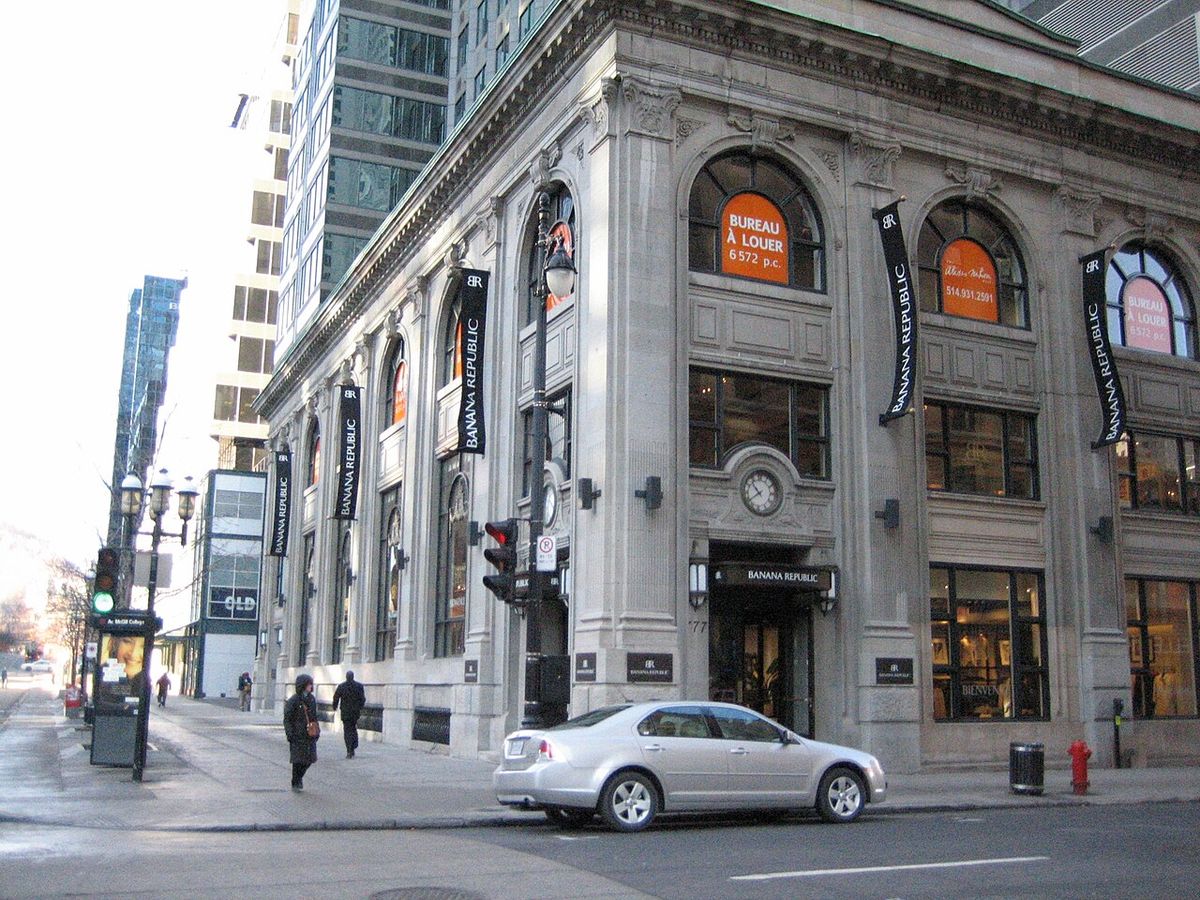
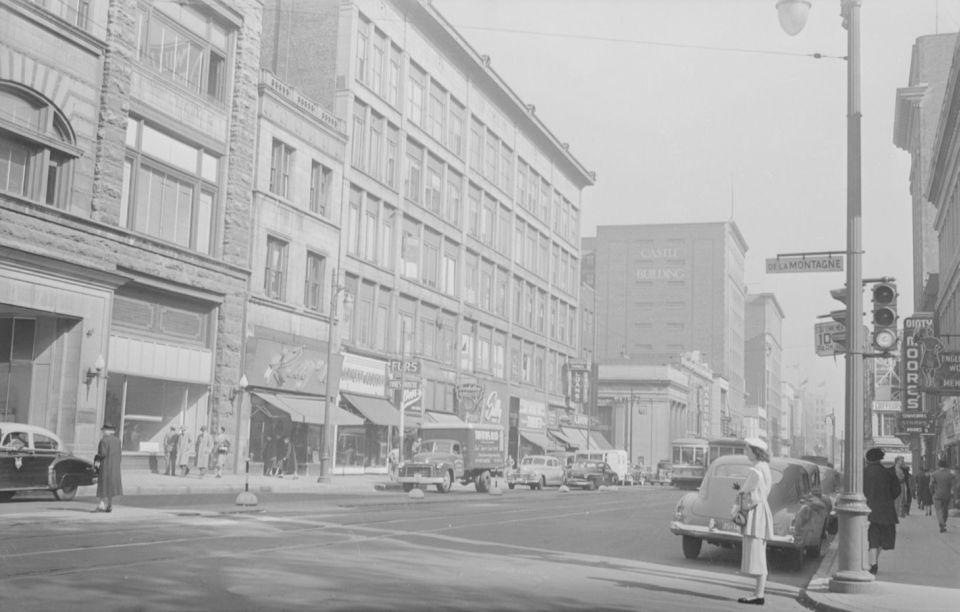
Sainte-Catherine Street's commercial prominence began in the late 19th century as wealthy families moved out of Old Montreal, with Anglophones settling west and Francophones moving east. This new residential clientele attracted neighbourhood businesses and, eventually, major department stores. The first significant move was by Henry Morgan, who in 1891 established a large store opposite Phillips Square, a location that became the Hudson's Bay Company after its 1960 acquisition. This set a precedent, and Sainte-Catherine quickly became Montreal's premier retail and fashion destination. The arrival of electric streetcars in 1892 transformed access, allowing customers from across the city to shop there, which expanded the clientele beyond the upper class to a city-wide market.
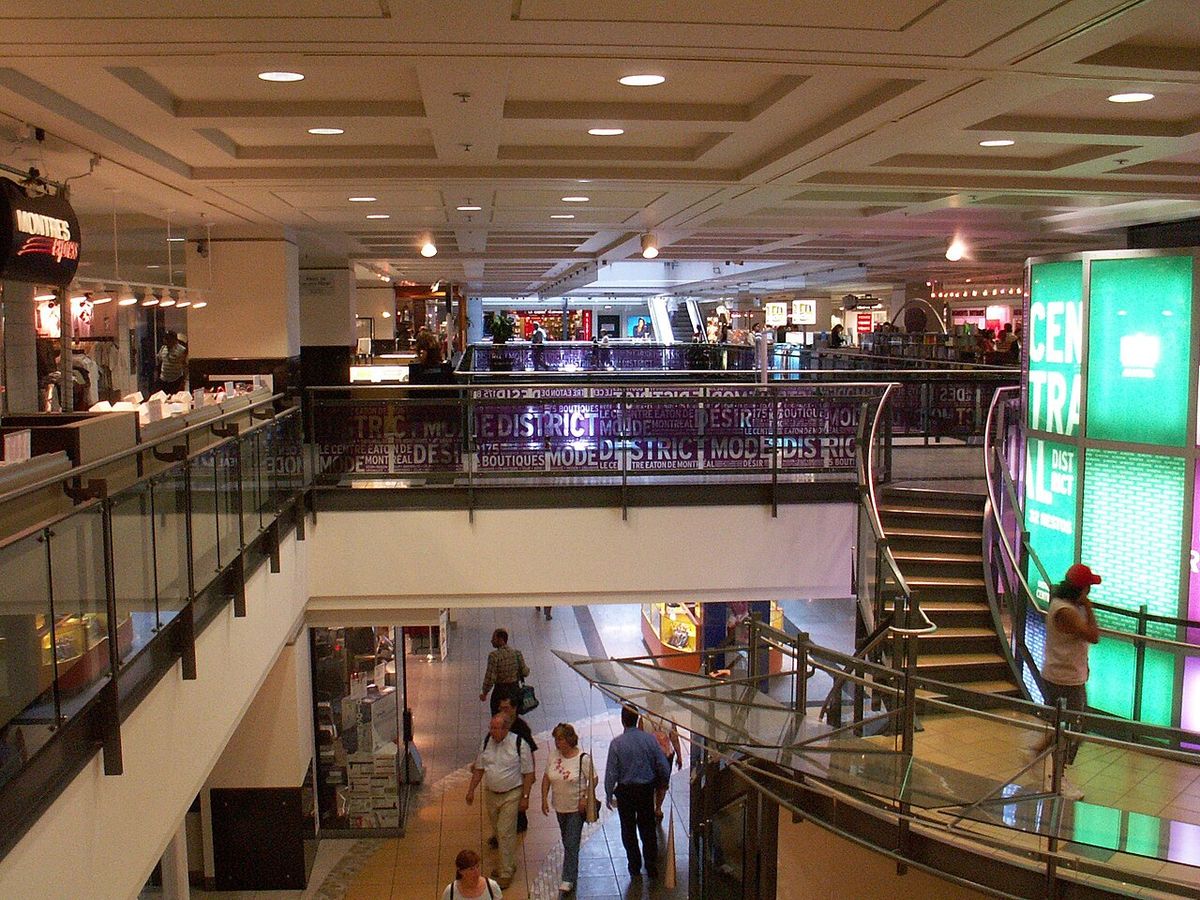
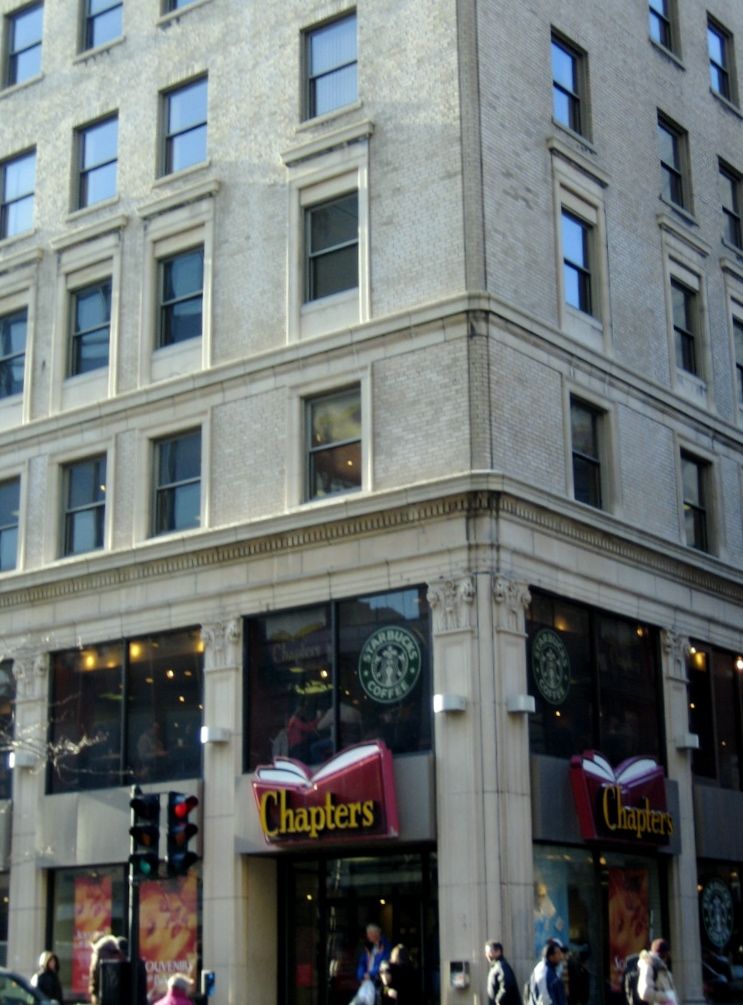
The street has been home to many of Canada's famous department stores, though their physical presence has evolved. The Simpson's building now houses the Simons department store and a multiplex cinema, while the former Eaton's store was converted into the Complexe Les Ailes. Further east, the Dupuis Frères store at St. Catherine and St. Hubert is now a shopping mall and office complex. Ogilvy's remains a fixture, though it now operates as a collection of boutiques. Contemporary major retailers along the street include flagship stores for Apple, H&M, Zara, Indigo Books and Music, Archambault, and Roots. The street is also lined with prominent shopping complexes that form part of Montreal's underground city network.
- Historic Department Stores: Eaton's, Morgan's, Simpson's, Dupuis Frères, Ogilvy's.
- Major Shopping Complexes: Eaton Centre, Complexe Les Ailes, Place Montreal Trust, Promenades Cathédrale, les Cours Mont-Royal, Complexe Desjardins, Place Dupuis, Place Alexis Nihon, Faubourg Sainte-Catherine, Westmount Square.
- Notable Flagship Stores (2026): Apple Store, H&M (at Peel), Lululemon (new 11,600 sq ft flagship), m0851 boutique (at Crescent), Maison Local (Quebec brands).
- Specialty Retail: The Hartt Shoe Company flagship opened at 467 St. Catherine Street in 1916.
Culture, Entertainment and Landmarks
By the end of the 19th century, Sainte-Catherine Street had solidified its role as Montreal's entertainment hub. Evening entertainment boomed with English and French theatres and the Academy of Music lining the street near Victoria Avenue. The early 20th century saw the rise of cinema, with the first dedicated film theatre, the Ouimetoscope, opening on the street. Between 1917 and 1922, several grand movie palaces with 2,000 to 3,000 seats were built, remaining destinations until the 1960s and 70s. The street was once home to numerous now-closed cinemas such as the Loews, Palace, Capitol, Cinéma de Paris, York, and the Seville Theatre, as well as the demolished Montreal Spectrum music venue. The primary concert venue, Place des Arts, is located at the intersection of Saint Catherine, Jeanne-Mance and Saint-Urbain streets within the Quartier des Spectacles district.
Several key landmarks define the streetscape. The Montreal Forum, the former home of the Montreal Canadiens at the corner of Atwater Street, has been converted into the Pepsi Forum shopping and cinema complex. Its presence made Sainte-Catherine the traditional parade route for Stanley Cup celebrations. The street also features notable places of worship, including Christ Church Cathedral, which uniquely sits atop the Promenades Cathédrale shopping mall. Saint James United Church has recently had its concealing commercial façade removed, and St. James the Apostle Anglican Church is also located on the street. The area further east in Hochelaga-Maisonneuve remains an important local commercial district, reflecting the street's varied character across its length.
Pedestrianization and Seasonal Events
Sainte-Catherine Street is renowned for its large-scale pedestrian events that temporarily transform the thoroughfare. Every July, the street hosts Canada's largest open-air sidewalk sale, attracting an estimated 300,000 people. For this event, a two-kilometre section between Jeanne-Mance Street and St. Mark Street is closed to vehicular traffic, allowing vendors from nearby shopping centres to display sale merchandise alongside live entertainment. A more extensive seasonal closure occurs in the Gay Village, where Sainte-Catherine Street between Saint-Hubert and Papineau Avenue is closed to cars for most of the summer. In 2026, this closure runs from May 15 to October 12, creating a large pedestrian zone with outdoor retail and expansive restaurant terrasses. The summer season in the Village is punctuated by festivals and events such as the art festival FIMA (Festival International Montréal en arts), Pride Celebrations, and Divers/Cité.
Looking forward, there are plans to transform the section of Sainte-Catherine Street East in the Village into a permanent, year-round pedestrian zone. These initiatives highlight a broader trend in Montreal of creating car-free public spaces during warmer months, with Sainte-Catherine Street serving as a central artery for this urban experience. The street's role as a seasonal pedestrian destination is a key part of its identity and a major draw for both locals and tourists seeking a different way to experience the city's commercial and social life. This focus on pedestrian access enhances the street's function as a communal gathering place beyond its commercial role.
Transportation and Access
Transportation has been integral to the street's development and accessibility. Horse-drawn streetcars appeared by 1850, and the first electric-powered tramway was introduced by the Montreal City Passenger Railway in 1864. The conversion to electric streetcars in 1892, with up to ten different lines serving the street, enabled workers and shoppers from across Montreal to access its stores and amenities. Today, the Green Line of the Montreal Metro was built to serve the street, though to avoid disruption it was constructed one block north under what became de Maisonneuve Boulevard. Despite this, several stations have direct entrances on Sainte-Catherine Street, including Atwater, Berri-UQAM, Beaudry, and Papineau.
Nine metro stations provide access to various points along Sainte-Catherine Street, facilitating movement through residential neighbourhoods, the Quartier des spectacles, and the downtown core. Beaudry station, serving the Gay Village, features a permanent rainbow decoration on its façade. Bus service is provided by the STM's 15 Sainte-Catherine and 34 Sainte-Catherine lines, which operate seven days a week. This multi-modal access, combined with connections to the Underground Pedestrian Network, ensures the street remains a highly accessible destination for millions of people each year.
| Metro Station | Line | Notes |
|---|---|---|
| Atwater | Green | Entrance on street, serves western retail section. |
| Guy-Concordia | Green | Near Concordia University. |
| Peel | Green | Access to major retail crossroads. |
| McGill | Green | Serves central shopping district and McGill University. |
| Place-des-Arts | Green | Direct access to cultural precinct. |
| Berri-UQAM | Green, Orange, Yellow | Major interchange, entrance on street. |
| Beaudry | Green | Primary access to Gay Village, rainbow façade. |
| Papineau | Green | Entrance on street, eastern end of Village closure. |
| Assomption | Green | Near eastern terminus of street. |
Recent Developments and Future Projects
Significant redevelopment work is underway on Sainte-Catherine Street Ouest, a major infrastructure project scheduled from summer 2025 to fall 2030. The work aims to replace century-old underground utilities and redesign public spaces to prioritize pedestrians and improve the user experience. As of 2026, construction is active in sections between Peel Street and de la Montagne Street, and between Mackay Street and Saint-Mathieu Street, with concurrent work on Guy Street. New measures implemented in the winter of 2026 involve greater crew mobilization to optimize the project timeline. The city offers financial assistance programs for businesses affected by the construction, demonstrating the project's scale and impact on the local economy.
The street continues to evolve as a commercial and cultural destination with new openings. In June 2026, several new venues debuted downtown, including Cabaret Jazz L’Entracte on Sainte-Catherine West, an intimate venue dedicated to jazz performances. New retail openings included a downtown location for the Quebec brand boutique Maison Local, a new m0851 leather goods boutique at the corner of Sainte Catherine and Crescent, and a large new Lululemon flagship spanning 11,600 square feet over two floors. The lounge and restaurant O Lounge also opened on Crescent Street, contributing to the area's nightlife. These additions reflect the ongoing vitality and magnetic pull of Sainte-Catherine Street as Montreal's central commercial corridor, constantly adapting to new trends and consumer demands. The street's ability to attract such investments, even during major construction, speaks to its enduring importance.
Neighbourhood Character and Green Spaces
Sainte-Catherine Street traverses multiple distinct neighbourhoods, each imparting a different character to the street. The western end begins in the affluent municipality of Westmount. It passes through the dense downtown core with its skyscrapers and shopping complexes, moves into the cultural Quartier des Spectacles and the francophone Quartier Latin near Université du Québec à Montréal, and runs through the active Gay Village before reaching the more residential and historically industrial areas of Hochelaga-Maisonneuve in the east. This journey reflects Montreal's social and linguistic history, with traditional anglophone commercial influence stronger in the west and francophone character more pronounced in the east. The street also passes by major educational institutions including Concordia University, McGill University, Dawson College, and LaSalle College.
Despite its urban density, the street and its immediate vicinity feature several parks and green spaces. These include Phillips Square and Cabot Square in the downtown core, Dorchester-Clarke and Landsdowne parks in Westmount, and Place Émilie-Gamelin next to UQAM. Further east, one finds Jos-Montferrand Park, Edmond-Hamelin Park, and Morgan Park. These spaces provide pockets of respite along the commercial artery, contributing to the area's livability and offering gathering spots for students, workers, and residents. The presence of these green areas adds a necessary layer of public amenity to the otherwise intensely developed corridor, balancing the street's commercial function with public recreation.
Questions about Saint Catherine Street
When is Sainte-Catherine Street closed to cars for pedestrians?
There are two major seasonal closures. A large sidewalk sale closes a two-kilometre section between Jeanne-Mance and St. Mark Streets for one weekend every July. More extensively, the segment running through the Gay Village, between Saint-Hubert and Papineau Avenue, is closed to vehicular traffic for most of the summer. In 2026, this Village closure is in effect from May 15 to October 12, creating a permanent pedestrian zone with outdoor terrasses and retail.
Which Montreal Metro stations serve Sainte-Catherine Street?
Nine metro stations provide access to the street. Stations with entrances directly on Sainte-Catherine include Atwater, Berri-UQAM, Beaudry, and Papineau. Other nearby stations on the Green Line serving the street are Guy-Concordia, Peel, McGill, Place-des-Arts, and Assomption. Beaudry station is the primary access point for the Gay Village and features a distinctive rainbow decoration.
What cultural venues are located on or near Sainte-Catherine Street?
The street is a major cultural corridor. Place des Arts, the city's primary concert venue, is located on its edge in the Quartier des Spectacles. The street was historically lined with grand movie palaces and theatres like the Ouimetoscope, though many are now closed. The converted Montreal Forum (Pepsi Forum) is a landmark. New venues like Cabaret Jazz L’Entracte, which opened in June 2026, continue its entertainment tradition.
How long is Sainte-Catherine Street and where does it start and end?
Sainte-Catherine Street is 11.2 kilometres (7.0 miles) long. It begins at the corner of Claremont Avenue and de Maisonneuve Boulevard in Westmount. The street crosses the central business district from west to east, passing through Ville-Marie and just east of Viau in Mercier-Hochelaga-Maisonneuve. It ends at the Grace Dart Extended Care Centre by the Assomption metro station, where it folds back into Notre-Dame Street. This route makes it the primary commercial artery and considered the backbone of Downtown Montreal.
What is the Sainte-Catherine Ouest project?
The Sainte-Catherine Ouest project is a multi-year redevelopment initiative on the western section of the street. Work is scheduled to take place in sections from summer 2025 to fall 2030. This project involves significant construction to update infrastructure and redesign the public space. The project reflects ongoing efforts to maintain and modernize this key commercial corridor.
Sources and further reading
- Saint Catherine Street (Wikipedia)
- Saint Catherine Street (canadashistory.ca)
- Sainte-Catherine Ouest project: Work in progress and news (montreal.ca)
Checked by the Your Space Hamilton desk. Last updated 2026-10-29.