Little Burgundy
Little Burgundy, known in French as Petite-Bourgogne, is a historic neighbourhood in the Sud-Ouest borough of Montreal, Quebec. Bordered by the Lachine Canal to the south and the Ville-Marie Expressway to the north, it is recognized as the historic heart of Montreal's English-speaking Black community and a cradle of Canadian jazz. The area has experienced significant transformations, from its industrial origins and mid-20th century urban renewal to contemporary gentrification, making its layered history a central part of Montreal's urban story. Today, it is a district of approximately 10,000 residents, characterized by its red-brick architecture, antique shops, and a well-regarded culinary scene.
Geography and Boundaries
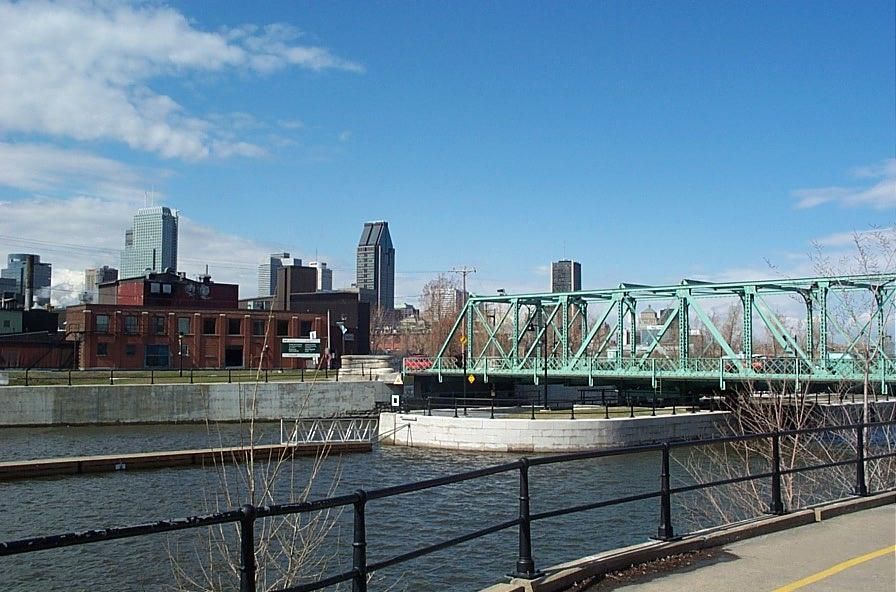
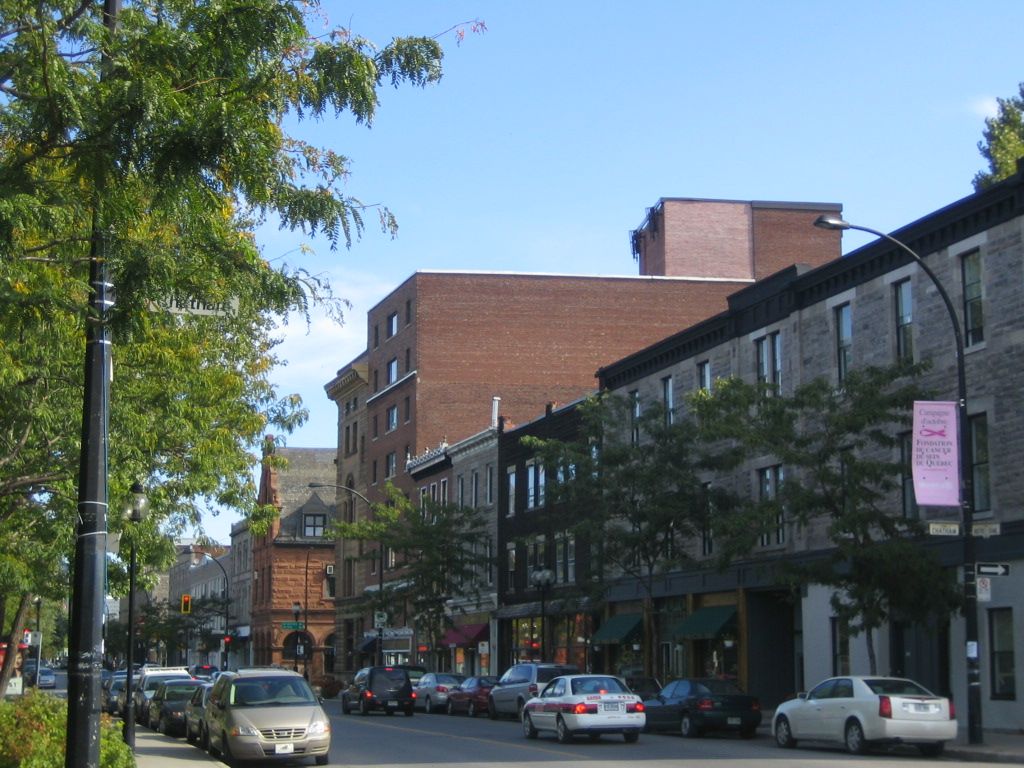
Little Burgundy occupies a defined area within Montreal's Sud-Ouest borough, situated approximately two kilometres southwest of the downtown core. Its traditional boundaries are Atwater Avenue to the west, Saint-Antoine Street to the north, Guy Street to the east, and the Lachine Canal to the south. The adjacent neighbourhoods include downtown Montreal and Ville-Marie to the north and northeast, Griffintown to the southeast, Pointe-Saint-Charles directly south, and Saint-Henri to the west. The neighbourhood's physical layout is shaped by major thoroughfares like Notre Dame Street and Saint Jacques Street, as well as the imposing cut of the Ville-Marie Expressway along its northern edge. Architecturally, the area features mid-density housing with characteristic Montreal multiplexes, red-brick facades, and minimal setbacks from the street, alongside converted industrial buildings near the canal. The neighbourhood comprises the former territories of the city of Sainte-Cunégonde and Saint-Joseph's ward, which were historically distinct entities before annexation and consolidation.
Origin and Evolution of the Name
The name Petite-Bourgogne has specific historical and administrative roots. A surveyor's map from 1855 identifies a property called Bourgogne, owned by the heirs of Louis Guy, brother of Étienne Guy for whom Guy Street was named, in an area bounded by Rue des Seigneurs, Rue Notre-Dame, Rue Saint-Martin, and Rue Saint-Antoine. The name was formally adopted for the neighbourhood in the 1965 preliminary study for an urban renewal program, which referred to the area between the Lachine Canal, the CN railway, Atwater Street, and Guy Street. The report's authors drew inspiration from the writing of city archivist Édouard-Zotique Massicotte, a resident of Sainte-Cunégonde, who described the area as a meadow known as "la petite Bourgogne." They kept the name for its poetic and nostalgic quality, and it was retained after the renewal program ended. In the early 1980s, the City of Montreal attempted to rebrand the area as Quartier Georges-Vanier, after Governor General Georges Vanier, to remove the stigma of a low-income district and attract private investment. During public consultations for the city's 1990 Master Plan, residents formally requested and succeeded in having the original name, Petite Bourgogne or Little Burgundy, reinstated, reflecting their connection to its history.
Historical Development from Industry to Renewal
The land that became Little Burgundy was essentially agricultural until around 1810, when development began in the faubourg of St. Joseph outside the old city walls. The area around Richmond Square was built up by 1819. Industrialization accelerated dramatically in the mid-19th century following the construction of the Lachine Canal, which attracted major industries like the Grand Trunk Railway yards and the Steel Company of Canada (Stelco). A residential sector grew north of these factories between 1857 and 1864. This settlement was originally part of the parish of Saint-Henri-des-Tanneries before being established as the village of Delisle in 1864, then Sainte-Cunégonde in 1876, becoming a town in 1884. The name Sainte-Cunégonde derived from St. Cunigunde of Luxembourg, wife of St. Henry II, providing a reference to the neighbouring parish. Sainte-Cunégonde was annexed by the City of Montreal in 1906, and its former town hall on Vinet Street now serves as a public library and community centre.
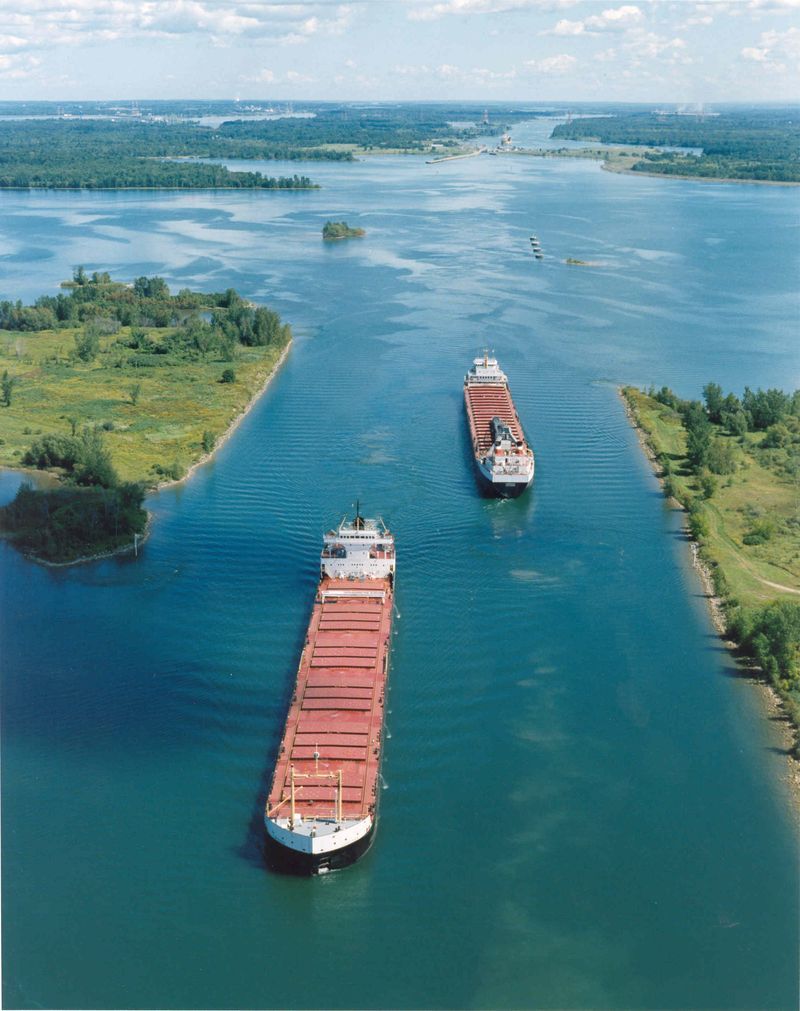
The neighbourhood's fortunes shifted with deindustrialization in the mid-20th century, a process that had begun with the Great Depression. The opening of the St. Lawrence Seaway in 1956 and the closure of the Lachine Canal in 1970 led to the departure of many industries, leaving the area in a state of decay. In 1966, the City of Montreal launched a large-scale urban renewal project, demolishing countless residential and commercial buildings for public housing and clearing land for the Ville-Marie Expressway, a provincial project built in 1970. The expressway construction alone led to the eviction of 1160 households in Little Burgundy and Saint-Henri. Between 1968 and 1978, 1441 units of low-income public housing were built, beginning with Habitations Îlots Saint-Martin. Although Habitations Jeanne-Mance was Montreal's first public housing, Îlots Saint-Martin was the first under Quebec's provincial housing authority and was managed by the municipal housing office.
The renewal program failed to attract the anticipated levels of private development and instead concentrated poverty. From 1966 to 1973, the population plummeted from 14,710 to about 7,000. By 1991, public housing constituted 39.3% of all housing in Little Burgundy and nearly 55% of the area's rental housing. The failed scheme displaced up to 70% of the neighbourhood's Black community and left as much as a third of the land vacant by the end of the 1970s. In the 1980s, programs like Opération 10,000 and 20,000 Logements aimed to repopulate the area by auctioning lots from the public land bank to private developers at below-market rates. Between 1980 and 1986, 1179 housing units were constructed through these programs, 233 of which were nonprofit or co-operative housing. Many of the neighbourhood's townhouses and the Foyer Hongrois home for the elderly were built during this period.
The Black Community: Foundation, Heyday, and Displacement
Beginning in 1887, Little Burgundy became the home of Montreal's working-class, English-speaking Black community. The neighbourhood's proximity to major rail stations like Windsor and Bonaventure made it a settlement point for Black railway porters from the United States, the Caribbean, and Canada's Maritimes, particularly Nova Scotia. During the sleeping car era, most hires were porters, work many described as demeaning, and the railway companies provided housing in the area. As the community grew, Black-run services and facilities became concentrated there because other businesses typically refused service to Black customers. Many West Indian women also came to the neighbourhood after the Domestic Immigration Program of 1955 was established. To combat poverty and social exclusion, the community founded vital social organizations, which became pillars of support and cultural life.
- The Coloured Women’s Club of Montreal was founded in 1902.
- The Union United Congregational Church was established in 1907.
- The Montreal chapter of the Universal Negro Improvement Association (UNIA) was formed in 1919.
- The Negro Community Centre opened in 1927.
- The Elk's Victory Lodge was created in 1941.
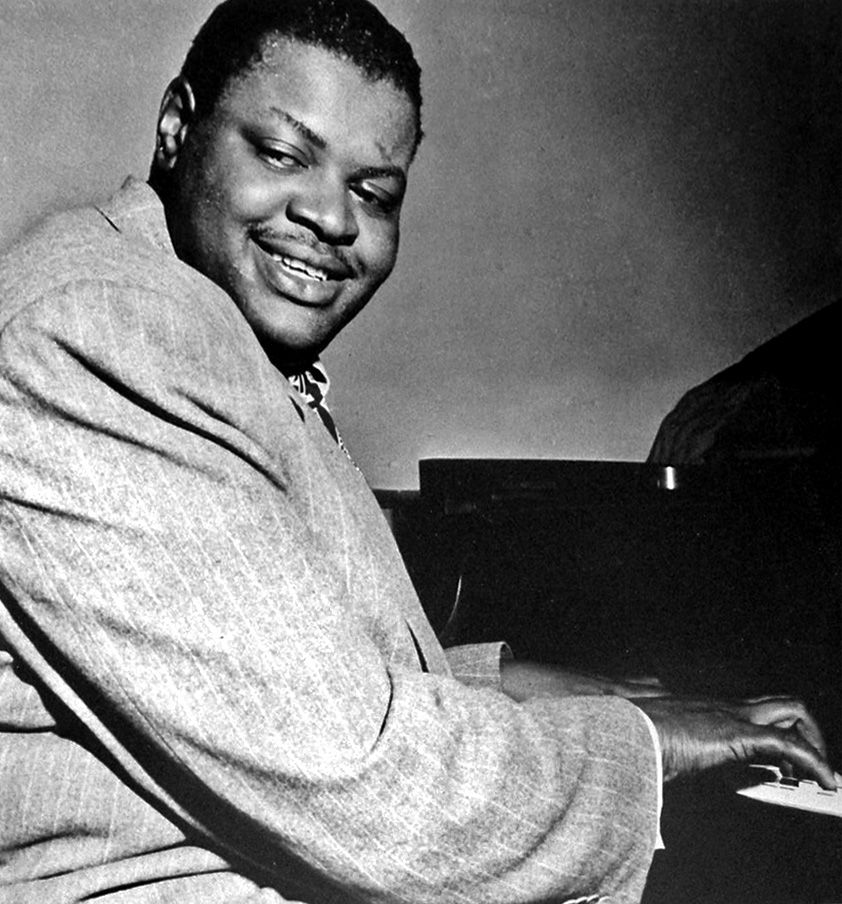
The 1920s were considered a golden period, with nightclubs and casinos like Rockhead's Paradise, Café Saint-Michel, and the Black Bottom catering to white tourists and featuring live music. This era helped establish Montreal as one of three main jazz hubs on the continent, with clubs hosting greats like Louis Armstrong and serving as a launching pad for local talents like Oscar Peterson, Oliver Jones, Charlie Biddle, and Daisy Sweeney. The decline of passenger train travel in the 1950s and 1960s hit the community hard, as hundreds of men were laid off from portering jobs. The urban renewal projects of the 1960s then led to the expropriation of Black-owned properties and the demolition of homes, causing massive displacement. The Black population fell from over 14,000 in 1966 to 7,000 by 1973. The Negro Community Centre closed in 1989 due to financial struggles and was later demolished. By 1996, only 2% of all Blacks in Montreal lived in Little Burgundy, though they still constituted 21.2% of the neighbourhood's population, a figure that declined to 15.9% by 2016. New Black neighbourhoods emerged in areas like Côte-des-Neiges.
Demographic Shifts and Contemporary Gentrification
The sociodemographic profile of Little Burgundy has changed substantially through multiple phases of change. The urban renewal of the 1960s increased welfare dependency, with the proportion of recipients growing from 10% in 1961 to 40% in 1971. By 1991, owner-occupied dwellings had risen to 30% of the housing stock. A study noted a 200% increase in administrators and professionals in Little Burgundy between 1981 and 1986, compared to a 39% increase in Saint-Henri and a 16% increase in Côte Saint-Paul. The transformation accelerated from the 1980s onward, driven by several key factors. These factors collectively reshaped the neighbourhood's economy, housing stock, and population.
- The redevelopment of the Lachine Canal into a linear recreational park during the 1980s and 1990s.
- The 2002 reopening of the Lachine Canal to boat traffic.
- The revitalization of the Atwater Market.
- The conversion of industrial buildings along the canal into condominiums.
- The continued expansion of the École de technologie supérieure.
- The intense redevelopment of the adjacent Griffintown district.
Today, Little Burgundy is associated with new restaurants, cafes, and antique shops. The neighbourhood has endured several phases of gentrification. This ongoing change has involved the dispossession of Little Burgundy's working-class population. The neighbourhood's current state is a direct result of sequential policies. These policies include industrial development, urban renewal, public housing construction, land-bank sales to private developers, and recreational redevelopment of the canal corridor.
Landmarks, Commerce, and Cultural Life
Little Burgundy features a mix of historic sites, commercial districts, and recreational spaces that reflect its layered past and present. The Lachine Canal, designated a National Historic Site of Canada, runs along its southern border, offering a linear park for cycling and walking, with the Pointe-des-Seigneurs archaeological site located within it. The Atwater Market, at the neighbourhood's southwestern corner, is a major public market and landmark. Notre-Dame Street West is formally organized as the "Quartier des Antiquaires," a longstanding row of antique shops that originated from prestigious businesses setting up in the Ward of St. Joseph in the 19th century. The neighbourhood is also home to the North American office of Ninja Tune records and numerous architecture and design firms. The area's cultural life has been significantly shaped by its musical heritage and community institutions.
- Rockhead's Paradise was a famous nightclub owned by Rufus Rockhead, who has a street named for him.
- The Café Saint-Michel presented live music during the neighbourhood's jazz heyday.
- The Black Bottom was another notable nightclub featuring performances.
- The Negro Community Centre, before its closure, was a central hub for cultural education and community gatherings.
- Union United Church remains an active historic institution from the community's foundation.
- Parc Oscar-Peterson and a street named for Rockhead are examples of public art and naming honouring community icons.
Cultural and recreational facilities include the Centre sportif Georges-Vanier, Parc Oscar-Peterson, and Parc Vinet. A public library and cultural centre is located at the corner of Workman and Vinet streets in the former Sainte-Cunégonde town hall. The École de technologie supérieure, part of the Université du Québec network, is located at the eastern end of the neighbourhood and has contributed to the area's redevelopment. For younger residents, Francophone teens often attend Polyvalente St-Henri in the adjacent neighbourhood, while Anglophone teens may attend James Lyng or Westmount High School depending on religion. Sporting facilities and the green spaces along the Lachine Canal provide the main recreational outlets for residents.
Notable Residents and Cultural Figures
Little Burgundy has been home to many influential Canadians across various fields, particularly in music, politics, and literature. The neighbourhood's most famous cultural exports are jazz musicians Oscar Peterson and Oliver Jones, both pianists and composers who grew up in the community. Other jazz artists from the area include Charlie Biddle and Daisy Sweeney. Notable political figures include Michaëlle Jean, a journalist and broadcaster who became Governor General of Canada, and Tyrone Benskin, a former Member of Parliament for Jeanne-Le Ber. The reclusive novelist Réjean Ducharme lived the last 25 years of his life on Quesnel Street. Contemporary musicians from the neighbourhood include rapper Nate Husser and hip hop artist Preme. The neighbourhood's name is also linked to Georges Vanier, a soldier, diplomat, and Governor General born near the street now named for him. Other notable individuals include historian and journalist Aegidius Fauteux, and actress Alexsandra Wright. The community also produced notable figures in business, such as Rufus Rockhead, owner of the famous Rockhead's Paradise nightclub.
Transportation and Accessibility
Little Burgundy is well-served by Montreal's public transit and road networks. The neighbourhood is directly served by the Georges-Vanier station on the Montreal Metro's Orange Line. The Lionel-Groulx station, a major interchange between the Orange and Green Lines, is located nearby to the west in Saint-Henri. Major thoroughfares providing access include Atwater Avenue, Georges Vanier Boulevard, Guy Street, Saint Antoine Street, Saint Jacques Street, and Notre Dame Street. The Ville-Marie Expressway (Autoroute 720) bounds the neighbourhood to the north, providing a direct connection to downtown Montreal and the broader highway network. The presence of the Lachine Canal also makes the area accessible for cyclists and pedestrians via the extensive network of paths along its banks, integrating recreational and active transportation routes directly into the neighbourhood's fabric.
Questions about Little Burgundy
Where is Little Burgundy located in Montreal?
Little Burgundy is situated in the Sud-Ouest borough of Montreal, approximately two kilometres southwest of downtown. Its boundaries are Atwater Avenue to the west, Saint-Antoine Street to the north, Guy Street to the east, and the Lachine Canal to the south. It is adjacent to neighbourhoods including Griffintown, Saint-Henri, and Pointe-Saint-Charles. The area is served by the Georges-Vanier and Lionel-Groulx metro stations.
Why is Little Burgundy important to Black history in Canada?
Starting in the late 19th century, Little Burgundy became the historic centre of Montreal's working-class, English-speaking Black community. Its proximity to major rail stations attracted Black porters from across North America and the Caribbean. The community built vital institutions like the Negro Community Centre and the Union United Church, and it was a cradle for legendary jazz musicians like Oscar Peterson. The neighbourhood's story is central to understanding Black urban life, resilience, and cultural contribution in Canada.
What happened to Little Burgundy in the 1960s?
In the 1960s, the City of Montreal undertook a large urban renewal project and constructed the Ville-Marie Expressway. This involved widespread expropriation and demolition of homes and businesses, ostensibly for slum clearance and modernization. The projects displaced a massive portion of the population, including up to 70% of the Black community, with the total population dropping from 14,710 in 1966 to about 7,000 by 1973. The cleared land was later used for public housing and, eventually, private redevelopment.
Is Little Burgundy a gentrified neighbourhood today?
Yes, Little Burgundy has undergone significant gentrification in recent decades. This transformation was kickstarted by the redevelopment of the Lachine Canal into a linear park, the revitalization of the Atwater Market, and the conversion of industrial buildings into condominiums. The sociodemographic profile has shifted, with marked increases in professionals and owner-occupied housing. While this has brought new investment and amenities, it has also led to concerns about rising costs and the displacement of the neighbourhood's historic working-class residents.
What are some key places to visit in Little Burgundy?
Key places to visit include the Lachine Canal National Historic Site for recreation. The Atwater Market is another key place for food and local products. The Quartier des Antiquaires along Notre-Dame West is known for antique shopping. Sporting facilities include the Centre sportif Georges-Vanier, Parc Oscar-Peterson, and Parc Vinet.
Who are some famous people from Little Burgundy?
The neighbourhood is most famous for producing jazz legends Oscar Peterson and Oliver Jones. Other notable figures include former Governor General Michaëlle Jean, former MP Tyrone Benskin, and novelist Réjean Ducharme. Contemporary musicians from the area include rapper Nate Husser and hip hop artist Preme. The neighbourhood's name is also linked to Governor General Georges Vanier, who was born nearby.
Sources and further reading
- Little Burgundy (Wikipedia)
- Know your neighbourhood: Little Burgundy (thetribune.ca)
- Neighborhooding: Little Burgundy, Montreal (theneighborhooders.com)
Checked by the Your Space Hamilton desk. Last updated 2026-10-27.