Princess Margaret Cancer Centre
The Princess Margaret Cancer Centre is a major cancer research and treatment hospital located in downtown Toronto, Ontario. Affiliated with the University of Toronto as part of the University Health Network, it is one of the largest and most comprehensive cancer centres in Canada and North America. The centre specializes in surgical, medical, and radiation oncology, hematology, bone marrow transplantation, and psychosocial oncology, serving hundreds of thousands of patient visits annually. Named for Princess Margaret, Countess of Snowdon, it operates under the royal patronage of Anne, Princess Royal and is a key institution in Canada's biomedical research community within Toronto's Discovery District.
Clinical Services and Operations
The Princess Margaret Cancer Centre provides a comprehensive range of specialized cancer care services primarily for residents of the Greater Toronto Area. Its clinical offerings include surgical oncology, medical oncology, and radiation oncology, forming a complete continuum of cancer treatment. The hospital's hematology program includes advanced procedures like bone marrow transplantation, while its psychosocial oncology services address the emotional and psychological needs of patients and their families. Medical imaging and radiation therapy are integral components of its diagnostic and treatment capabilities, supported by state-of-the-art technology.
The centre operates 26 specialty clinics organized within 12 distinct site groups, allowing for focused expertise on specific cancer types. It handles over 400,000 patient visits every year, a volume that demonstrates its central function for cancer care in Ontario. More than 3,000 staff members, including physicians, nurses, researchers, and support personnel, work across its facilities to deliver this care. The hospital's physical scale and patient capacity make it the second largest cancer centre in Canada, comparable to the Odette Cancer Centre, and place it among the largest such facilities in North America.
Its radiation therapy department is particularly well-equipped, housing 17 radiation treatment machines. All these machines are equipped with advanced technologies including Intensity-Modulated Radiation Therapy (IMRT) and Volumetric Modulated Arc Therapy (VMAT) for precise tumour targeting. The centre also operates a superficial orthovoltage machine for treating certain skin cancers and superficial tumours. In collaboration with the Toronto Western Hospital, it provides access to a Gamma Knife Perfexion stereotactic radiosurgery machine, a non-invasive tool for treating brain disorders and tumours.
Research and the Ontario Cancer Institute
The research mission of the Princess Margaret Cancer Centre is carried out through its integrated partner, the Ontario Cancer Institute (OCI), founded in 1952 by an Act of the Ontario legislature. The OCI and the hospital maintain a mutually beneficial relationship where clinical insights directly inform research priorities and laboratory discoveries are rapidly translated into patient care. Many OCI researchers hold academic appointments at the University of Toronto, often within the Department of Medical Biophysics, fostering a strong link between hospital-based science and university education. This collaborative environment has established the centre as a global leader in oncology research.
The research program has achieved significant recognition for the quality and impact of its scientific output. It ranked fourth internationally for the percentage of its publications cited in high-impact oncology journals, reflecting the influence of its work on the global cancer research community. Current research initiatives are expansive, including the world's largest program for detecting and intercepting the recurrence of cancer in patients, established through a donation from the Peter Gilgan Foundation. The centre also co-hosts international forums like the Canadian Global Oncology Network Conference, which it co-hosted with the University of Toronto's Dalla Lana School of Public Health in 2026.
The centre describes the current era as a "golden age" for cancer research, where deep biological understanding converges with rapidly advancing technology. This intersection is seen as creating unprecedented opportunities to transform patient outcomes. Research focuses on areas such as novel drug therapies, personalized medicine, immunotherapy, and improving quality of life during and after treatment. The integrated model ensures that patients have access to cutting-edge clinical trials and treatments that may not be available elsewhere, directly benefiting from the institute's discovery pipeline.
Education and Training
As a principal teaching hospital of the University of Toronto, the Princess Margaret Cancer Centre is responsible for training the next generation of oncology professionals. It provides clinical education and hands-on training across multiple medical and allied health disciplines, with a particular emphasis on specialized cancer care. The centre's integration with the University Health Network and the University of Toronto creates a rich academic environment where trainees learn alongside leading clinicians and researchers. This educational function is fundamental to maintaining high standards of care and advancing the field of oncology across Canada, and its most prominent training programs are for medical doctors specializing in oncology, including both medical oncologists and radiation oncologists.
These residents and fellows gain experience in the centre's busy clinics and treatment units, managing complex cases across the spectrum of cancer types. The centre also runs comprehensive training programs for radiation therapists, the professionals who operate advanced radiation equipment and deliver precise treatment plans. The combination of high patient volume, technological sophistication, and research intensity provides a highly regarded training ground for these critical specialties. The training extends to various other medical professions, ensuring a multidisciplinary approach to cancer care is embedded in all educational activities at the hospital.
History and Institutional Development
The institution originated in 1952 with the founding of the Ontario Cancer Institute by an Act of the Ontario legislature. Its original building, designed by architect Henry Sproatt, was located at 500 Sherbourne Street near the former Wellesley Hospital. This site has since been redeveloped into a condominium complex. The hospital was later named Princess Margaret Hospital in honour of Princess Margaret, Countess of Snowdon, reflecting a tradition of royal eponyms in Canadian institutions. Its current royal patron is Anne, Princess Royal, continuing its formal link to the Crown.
A major transformation occurred in the late 1990s during provincial health system restructuring under the government of Premier Mike Harris. Princess Margaret Hospital merged with The Toronto Hospital, which was itself the product of an earlier merger between Toronto General Hospital and Toronto Western Hospital. This consolidation formed the University Health Network (UHN), a multi-hospital academic health sciences centre. Within the UHN structure, the Princess Margaret has maintained its distinct identity and specialized focus on cancer while benefiting from shared administrative resources and clinical collaborations with Toronto General and Toronto Western hospitals.
The centre's physical presence has continued to evolve within Toronto's Discovery District. A significant recent expansion includes the acquisition of a 15-storey building at 522 University Avenue, facilitated by The Princess Margaret Cancer Foundation. This property is being developed into a central hub for the cancer centre's activities, adding to its footprint along Toronto's "hospital row" near the intersection of University Avenue and College Street. This location places it at the heart of a dense concentration of biomedical research institutions, reinforcing its collaborative potential.
The Princess Margaret Cancer Foundation and Fundraising
The Princess Margaret Cancer Foundation is the dedicated fundraising arm responsible for generating crucial financial support for the cancer centre's research and treatment programs. It organizes a wide array of public events and campaigns that engage the community and raise millions of dollars annually. The foundation's work is essential for funding advanced equipment, supporting research salaries, financing clinical trials, and enabling patient support services that are not fully covered by government health funding. Its mission is directly tied to the centre's goal of creating a world free from the fear of cancer.
The foundation runs several major, signature fundraising events throughout the year that have become fixtures in the Canadian charitable landscape. These events vary in format to attract diverse participants and maximize community engagement. The funds raised are directed to priority areas within the cancer centre, such as the world's largest cancer recurrence detection program established by the Peter Gilgan Foundation. Donor stories highlight how contributions translate into tangible advances, from new treatments that transform patient outcomes to integrative care programs that support the whole person throughout their cancer journey. Key annual fundraising events include:
- The Princess Margaret Cancer Foundation Walk: A 21 km half-marathon or 25 km walk through Toronto neighbourhoods, raising millions (e.g., 3,003 walkers raised $6,078,000 in one event).
- The Ride to Conquer Cancer: A two-day cycling adventure spanning over 200 km between Toronto and Niagara Falls.
- Carry The Fire: A family-friendly walk/run event with 1 km, 3 km, and 5 km routes in downtown Toronto.
- PMCF Road Hockey: Billed as the world's largest road hockey event, held in Vaughan, Ontario.
- Home Lottery: Includes games like the Payday For Life Lottery, offering prizes such as $3,000 a month for life.
- Boutique cycling events in Muskoka with 40 km, 100 km, and 160 km routes.
- A street cricket fundraiser held in support of cancer research.
These events demonstrate remarkable scale and success. For instance, the 2026 Princess Margaret Cancer Foundation Walk started at the Harbourfront Centre and raised over $4 million. The foundation also manages legacy giving programs, monthly donations, and merchandise sales, such as a varsity-inspired clothing collection. The consistent growth and high participation in these events reflect strong public trust and a widespread commitment to supporting the centre's life-saving work.
Location and Community Presence
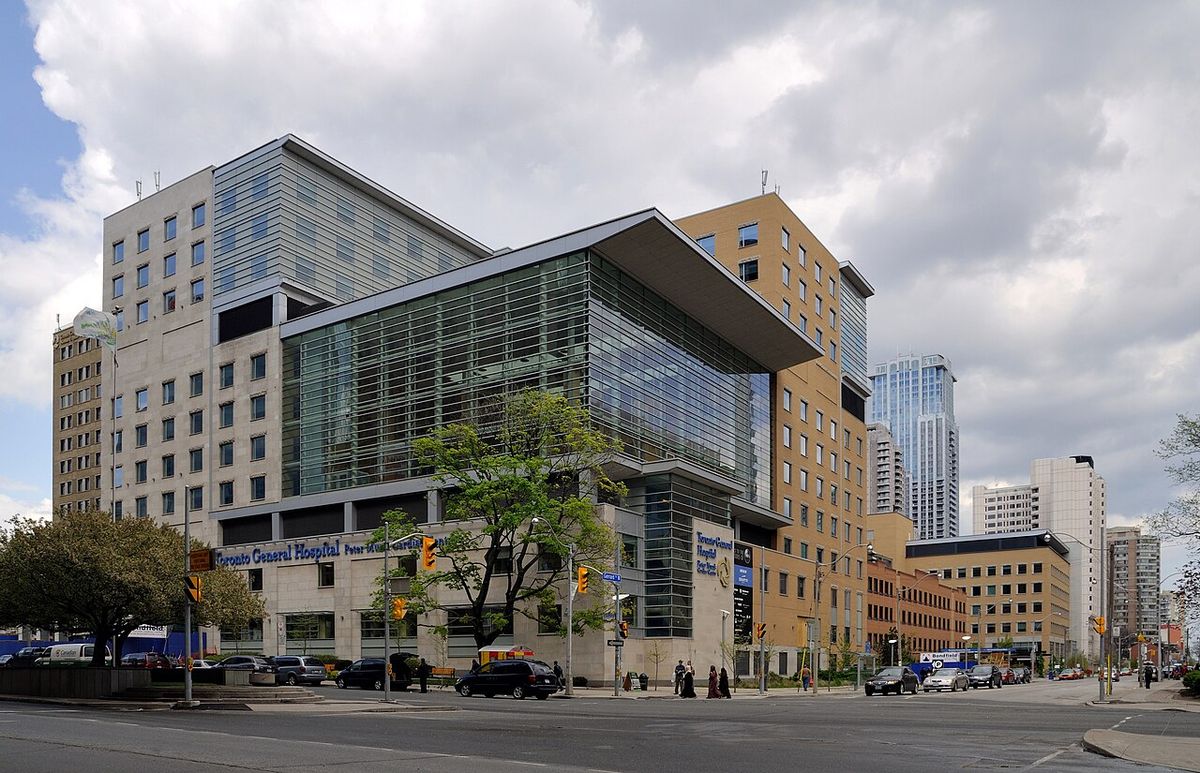
The Princess Margaret Cancer Centre is situated in the heart of downtown Toronto's Discovery District, near the intersection of University Avenue and College Street. This area is characterized by a high concentration of hospitals, research institutes, and university facilities, making it a national epicentre for biomedical innovation. The centre's location on "hospital row" facilitates close collaboration with neighbouring institutions like Toronto General Hospital, Toronto Western Hospital, and the Hospital for Sick Children. Its physical integration into this cluster contributes to its status as part of one of the largest groupings of cancer hospitals and research facilities in the world.
The centre maintains a strong and visible presence in the broader Toronto community through its fundraising events, which often traverse the city's neighbourhoods. Events like the Princess Margaret Cancer Foundation Walk are deliberately routed through well-known Toronto districts, turning the city into a pathway for cancer support. These events not only raise funds but also raise public awareness, with thousands of participants wearing event gear and drawing community attention. The centre also engages supporters beyond Toronto with events in Vaughan, Muskoka, and Niagara, and offers virtual participation options for those across Canada and internationally.
Its community impact extends beyond fundraising to direct patient support and public education. Stories from patients, survivors, donors, and staff are shared publicly to illustrate the human impact of cancer and the hope offered by advanced treatment. The centre produces podcasts and other media where survivors and experts share stories of innovation and recovery. This outreach helps demystify cancer care, highlights Canadian medical achievements, and fosters a sense of collective mission in the fight against cancer, reinforcing the centre's role as a trusted institution in Canadian healthcare.
Questions about Princess Margaret Cancer Centre
What types of cancer treatment does the Princess Margaret Cancer Centre offer?
The Princess Margaret Cancer Centre offers a full spectrum of cancer treatments, including surgical oncology, medical oncology, and radiation oncology. Its specialized services encompass hematology with bone marrow transplantation, psychosocial oncology for emotional support, and advanced medical imaging for diagnosis. The centre is equipped with 17 modern radiation treatment machines featuring IMRT and VMAT technology, a superficial orthovoltage machine, and access to a Gamma Knife for stereotactic radiosurgery. It operates 26 specialty clinics organized into 12 site groups to provide focused care for different cancer types.
How can I participate in fundraising for the Princess Margaret Cancer Centre?
You can support the Princess Margaret Cancer Centre by participating in events organized by The Princess Margaret Cancer Foundation. Major events include the Princess Margaret Cancer Foundation Walk (21 km or 25 km), the Ride to Conquer Cancer (a 200+ km cycling event), and the PMCF Road Hockey tournament in Vaughan. The foundation also runs lottery campaigns like the Payday For Life Lottery, family-friendly runs like Carry The Fire, and boutique cycling events in Muskoka. Participants can register as individuals or teams, and virtual participation options are available for those who cannot attend in person. Fundraising is a key component of all these events.
What is the relationship between the Princess Margaret Cancer Centre and the University of Toronto?
The Princess Margaret Cancer Centre is fully affiliated with the University of Toronto as a core member of the University Health Network (UHN). It serves as a major teaching hospital for the university, providing clinical training for medical oncologists, radiation oncologists, and radiation therapists. Many of its researchers, particularly those with the Ontario Cancer Institute, hold academic appointments at the University of Toronto, often in the Department of Medical Biophysics. The centre also collaborates with the university on conferences and educational programs, such as co-hosting the Canadian Global Oncology Network Conference with the Dalla Lana School of Public Health.
How large is the Princess Margaret Cancer Centre in terms of patients and staff?
The Princess Margaret Cancer Centre is a large-scale institution with more than 3,000 staff members, including clinicians, researchers, and support personnel. It handles a significant patient volume, with over 400,000 patient visits occurring at the centre every year. The clinical operations are structured across 12 site groups and 26 specialty clinics to manage this workload. This scale makes it the second largest cancer centre in Canada and places it among the largest comprehensive cancer centres in North America, contributing to one of the world's largest clusters of cancer hospitals and research institutes.
When was the Princess Margaret Cancer Centre founded and what was its original name?
The institution was founded in 1952 under the name Ontario Cancer Institute, established by an Act of the Ontario legislature. Its original building, designed by architect Henry Sproatt, was located at 500 Sherbourne Street in Toronto. It was later renamed Princess Margaret Hospital in honour of Princess Margaret, Countess of Snowdon, and is now known as the Princess Margaret Cancer Centre. In the late 1990s, it merged with other hospitals to form the University Health Network, within which it maintains its cancer-focused identity. The centre has been under the royal patronage of Anne, Princess Royal.
What advanced technology is used for radiation therapy at the centre?
The Princess Margaret Cancer Centre utilizes highly advanced technology for radiation therapy. Its department houses 17 radiation treatment machines, all of which are equipped with Intensity-Modulated Radiation Therapy (IMRT) and Volumetric Modulated Arc Therapy (VMAT) for precise, conformal dose delivery to tumours while sparing healthy tissue. The centre also operates a superficial orthovoltage machine for treating certain skin cancers and superficial lesions. In collaboration with Toronto Western Hospital, it provides stereotactic radiosurgery using a Gamma Knife Perfexion machine, which is a non-invasive tool for treating brain tumours and other neurological conditions with extreme accuracy.
Sources and further reading
- Princess Margaret Cancer Centre (Wikipedia)
- The Princess Margaret Cancer Foundation (thepmcf.ca)
- EVENT DETAILS, Journey to Conquer Cancer (pmcfjourney.ca)
- Thousands march in annual Princess Margaret Cancer ... (toronto.citynews.ca)
Checked by the Your Space Hamilton desk. Last updated 2026-10-27.