Toronto General Hospital
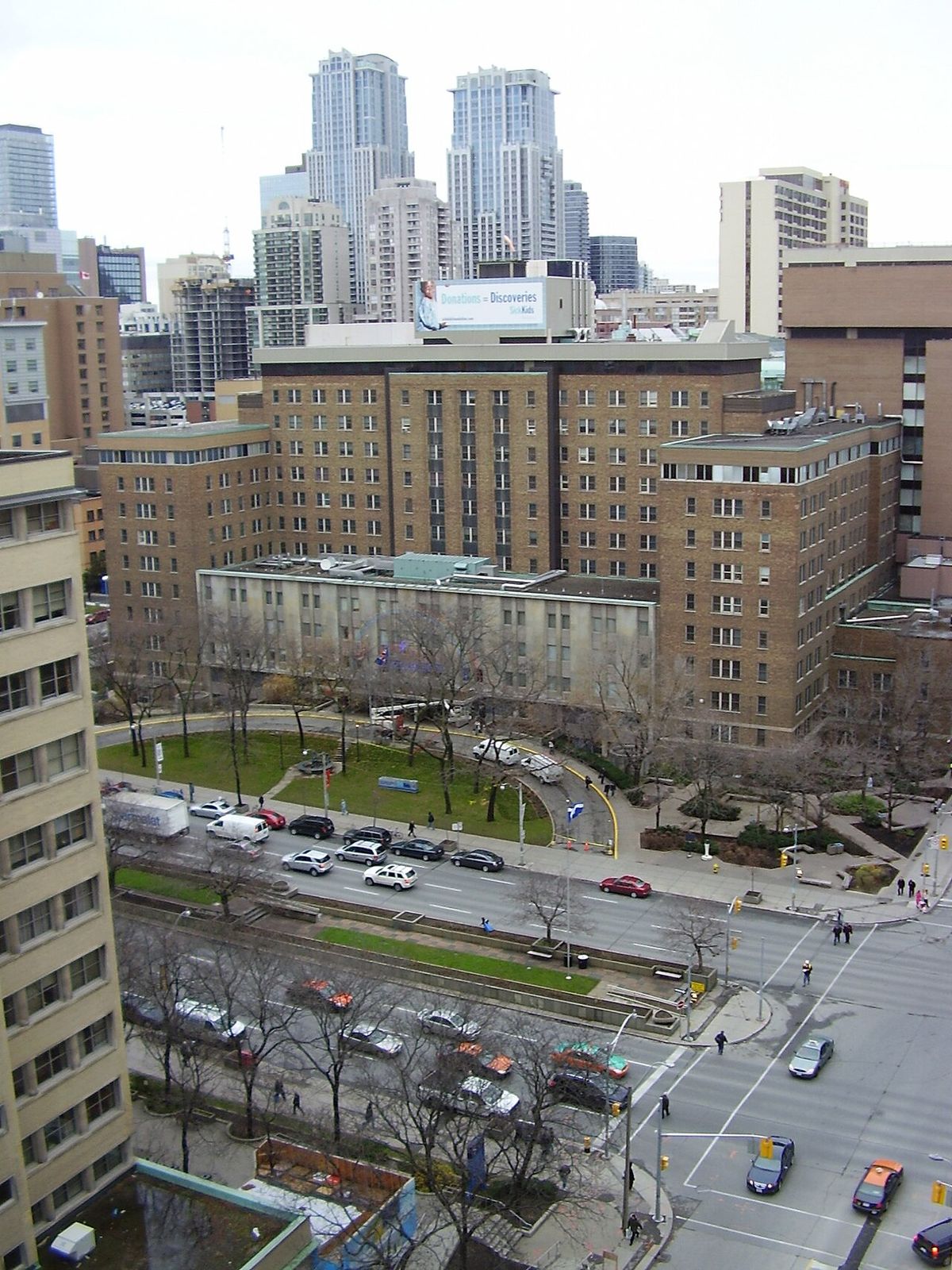
Toronto General Hospital (TGH) is a major teaching hospital in Toronto, Ontario, and the flagship campus of the University Health Network (UHN). Located on University Avenue in the city's Discovery District, it is a central part of Canada's healthcare system and a global leader in organ transplantation and cardiac care. The hospital serves as a primary teaching site for the University of Toronto Faculty of Medicine and was ranked first for research in Canada for nine consecutive years up to 2019. Its clinical and research achievements, including pioneering the first clinical use of insulin, have shaped medical science worldwide.
History and Location
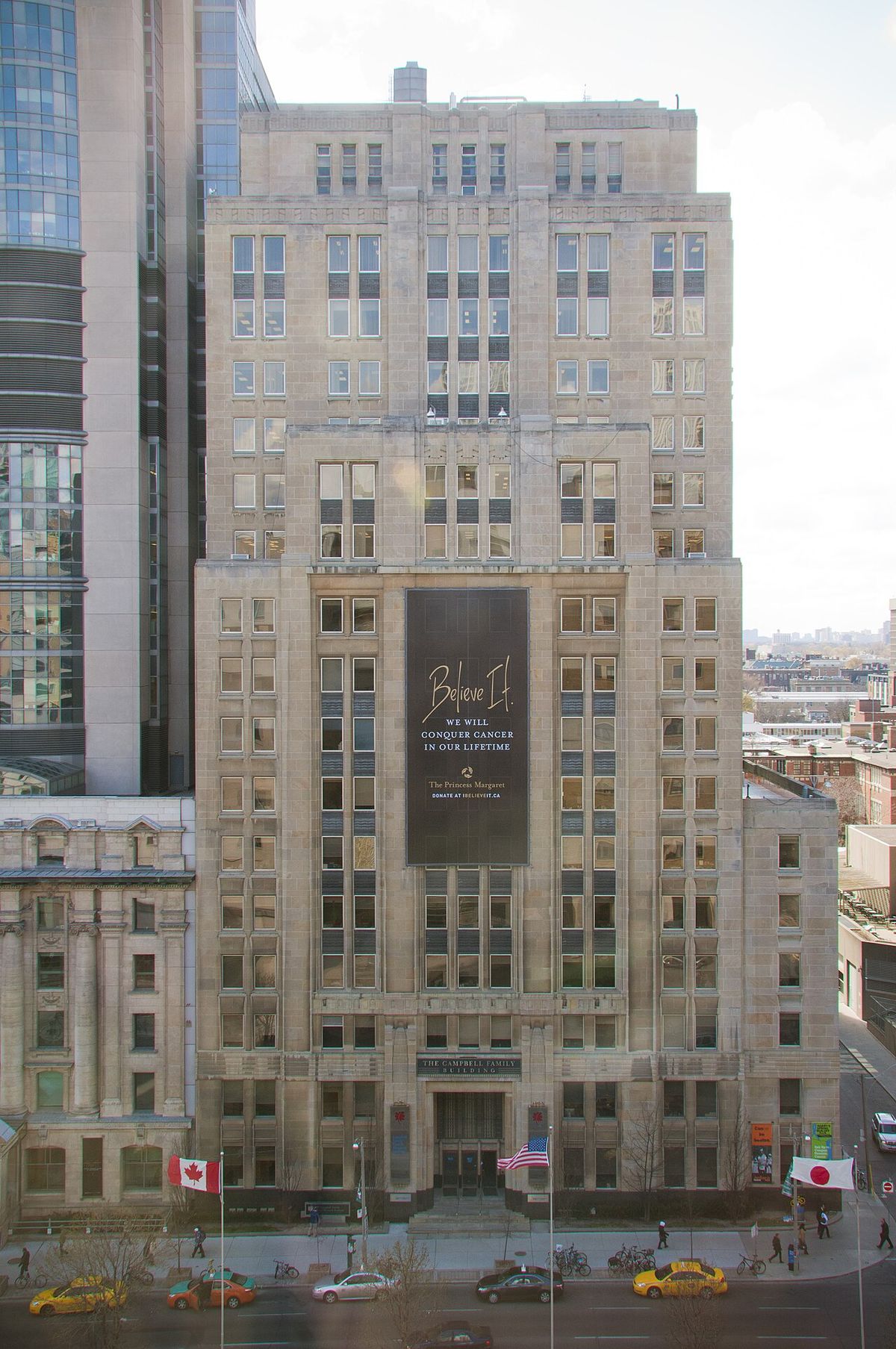
The origins of Toronto General Hospital trace back to a small shed used as a British Army military hospital during the War of 1812. It was formally established as a permanent civic institution named York General Hospital in 1829 at the corner of John and King Streets. In 1855, the hospital moved to a new building on Gerrard Street East, designed by architect William Hay. The institution relocated to its present site on College Street in 1913, a structure that later became known as the College Wing. This historic building was eventually sold and now houses the MaRS Discovery District, following the completion and opening of a new wing for Toronto General Hospital in 2002. Today, the hospital is situated along University Avenue's Hospital Row in the Discovery District of downtown Toronto. It is directly north of The Hospital for Sick Children and east of the Princess Margaret Cancer Centre and Mount Sinai Hospital, forming a dense cluster of major medical and research institutions.
Ajmera Transplant Centre
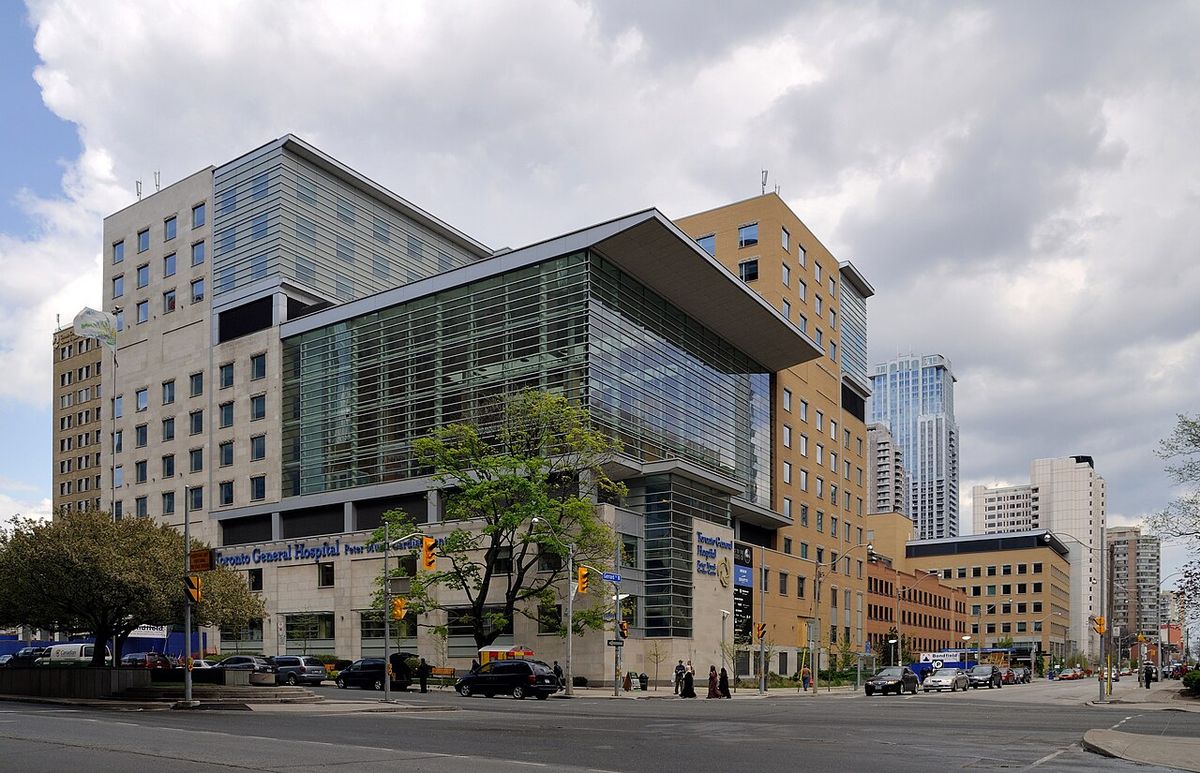
Toronto General Hospital is home to the Ajmera Transplant Centre, the largest organ transplantation centre in North America. In 2017 alone, the centre performed a total of 639 transplants, serving as a referral hub for patients from across Canada. The program encompasses transplants of the heart, lung, kidney, liver, pancreas, and small intestine. The hospital's lung transplant program is the largest in the world, having performed 167 procedures in 2017. Its liver transplant program, with 195 transplants that same year including 39 from living donors, is the largest in North America. The kidney transplant program, performing 202 transplants, is the largest in Canada. The hospital has been the site of numerous world firsts in transplantation, including the first successful single and double lung transplants in 1983 and 1986, and the world's first successful triple organ transplant of lung, liver, and pancreas in 2015 on patient Reid Wylie. The transplant centre's scope and volume across multiple organ systems are extensive, with key statistics from recent years highlighting its leading position.
- Lung: 167 transplants in 2017 (largest program globally).
- Liver: 195 transplants in 2017 (largest in North America).
- Kidney: 202 transplants in 2017 (largest in Canada).
- Heart: 34 transplants in 2017 (largest in Canada).
- Pancreas: 8 transplants in 2018 (largest in Canada).
- Kidney-Pancreas: 34 transplants in 2017 (largest in Canada).
- Small Bowel: 1 transplant in 2018.
Toronto General Hospital houses the major transplantation service for Ontario. This service performs heart, lung, kidney, liver, pancreas, and small intestine transplants for patients referred from all over Canada. The hospital is the largest organ transplant center in North America. It performed 639 transplants in 2017, which was more than any other centre on the continent.
Peter Munk Cardiac Centre
The Peter Munk Cardiac Centre (PMCC) is a world-renowned cardiovascular centre housed within Toronto General Hospital. It is one of the largest open heart centres in Canada and is ranked first in the country for academic productivity, also placing within the top ten in North America. The centre is named for philanthropist Peter Munk, founder and chairman of Barrick Gold, who has donated a total of $175 million to the hospital since 1993. His 2017 donation of $100 million was, at the time, the largest single donation to a hospital in Canadian history. The PMCC has been the site of many clinical firsts in cardiovascular care, including the world's first valve-sparing aortic root replacement performed by Dr. Tirone David in 1992. The centre's work encompasses advanced cardiac and thoracic surgery, complex interventions, and leading-edge research, contributing significantly to the hospital's international reputation for innovation in heart health and attracting patients and researchers from across the country.
Research and Innovations
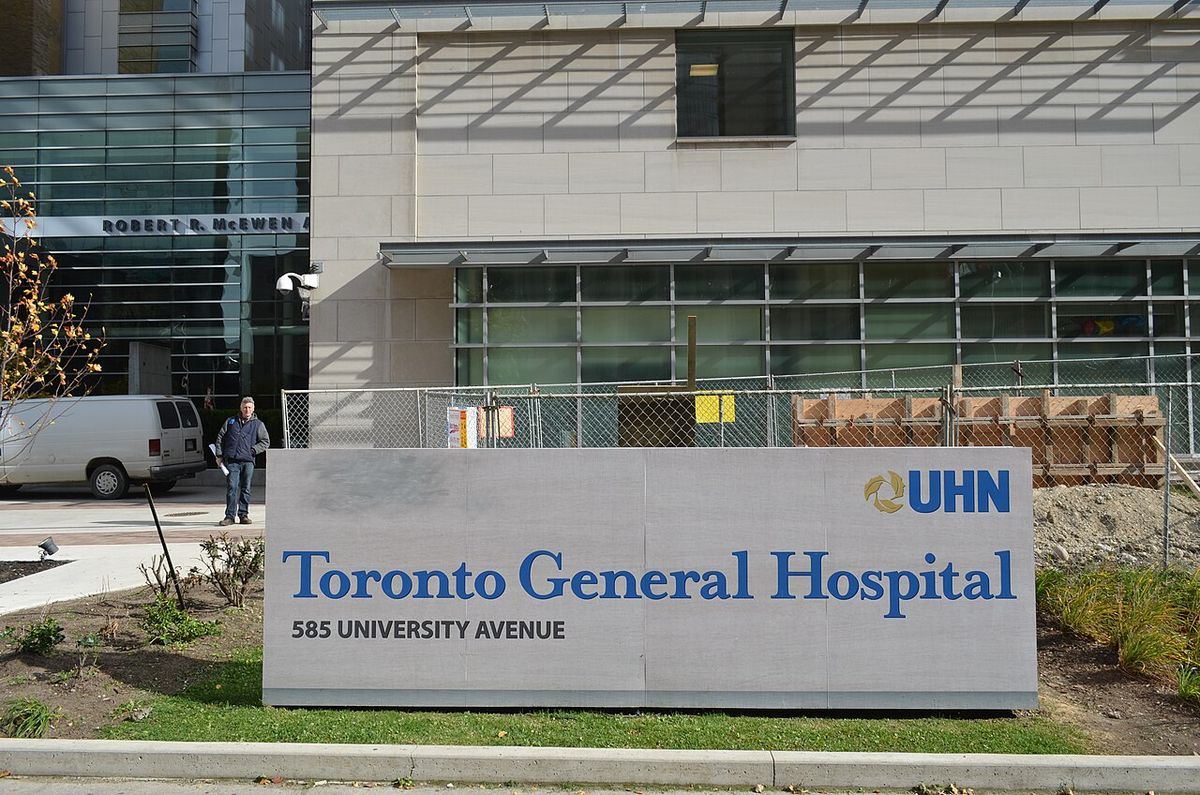
Research is a fundamental pillar of Toronto General Hospital's mission, conducted primarily through the Toronto General Research Institute. The hospital's long history is marked by a series of groundbreaking medical firsts that have transformed patient care globally. The hospital was the site of the development and first clinical use of insulin for diabetes in 1922, a discovery that saved countless lives. Other early innovations include the first clinical use of the anticoagulant heparin in 1935 and the first use of an external heart pacemaker in open heart resuscitation in 1950. The tradition of pioneering work continues with more recent milestones like Canada's first hand transplant in 2016, demonstrating a consistent commitment to advancing medical frontiers. The following timeline highlights key research and clinical firsts achieved at Toronto General Hospital.
- 1922: Development and first clinical use of insulin for diabetes.
- 1935: World's first clinical use of the anticoagulant heparin.
- 1950: World's first external heart pacemaker used in open heart resuscitation.
- 1955: World's first successful valve transplant.
- 1965: World's first coronary care unit.
- 1983: World's first successful single lung transplant (on Tom Hall).
- 1986: World's first successful double lung transplant (on Ann Harrison).
- 1987: World's first aortic valve transplant using the Toronto Heart Valve.
- 1994: Canada's first and largest HIV/AIDS clinic, the Immunodeficiency Clinic.
- 2015: World's first successful triple organ transplant (lung, liver, pancreas).
- 2016: Canada's first hand transplant.
The hospital has a consistent record of innovation. It serves as a teaching hospital for the University of Toronto Faculty of Medicine and conducts research through the Toronto General Research Institute. In 2019, the hospital was ranked first for research in Canada by Research Infosource for the ninth consecutive year. This maintains its top research ranking in Canada for nearly a decade.
Clinical Operations and Teaching
As a major acute care hospital, Toronto General Hospital handles a significant volume of patients through its emergency department, which treats approximately 28,065 persons each year. Beyond transplantation and cardiac care, the hospital provides a full spectrum of specialized medical and surgical services. It functions as a critical provincial resource for complex, high-acuity cases referred from across Ontario and other parts of Canada. The hospital is deeply integrated with the University of Toronto, serving as a primary teaching hospital for the university's Faculty of Medicine. It provides comprehensive training for resident physicians, nurses, and various allied health technicians and professionals. This educational role ensures a continuous pipeline of highly skilled healthcare workers and fosters an environment where clinical care, teaching, and research are closely connected, supporting the hospital's academic mission and its status as a national leader in healthcare education.
Royal Patronage and Community Role
Toronto General Hospital holds a distinction within the Canadian healthcare landscape through its royal patronage. Sophie, Duchess of Edinburgh, a member of the Canadian Royal Family, serves as the hospital's patron. This patronage reflects the institution's historic stature and its ongoing service to the community. The hospital is a central component of the University Health Network, which also includes the Princess Margaret Cancer Centre, Toronto Western Hospital, and the Toronto Rehabilitation Institute. Its location in the Discovery District places it at the heart of Toronto's innovation ecosystem, facilitating collaborations with research institutes, biotechnology firms, and the University of Toronto. As both a community hospital for downtown Toronto and a quaternary care referral centre for the nation, TGH serves a wide range of patients and medical needs, advancing health and treating illness at local, provincial, and national levels, and its work is supported by significant philanthropic contributions from donors like Peter Munk.
Questions about Toronto General Hospital
What is the Peter Munk Cardiac Centre?
The Peter Munk Cardiac Centre (PMCC) is a leading cardiovascular treatment and research centre located within Toronto General Hospital. It is one of the largest open heart centres in Canada and is ranked first in the country for academic productivity. Named after philanthropist Peter Munk, who donated $175 million to the hospital, the PMCC is known for pioneering procedures like the world's first valve-sparing aortic root replacement. It is consistently ranked among the top cardiac centres in North America.
Is Toronto General Hospital a teaching hospital?
Yes, Toronto General Hospital is a major teaching hospital and the flagship campus of the University Health Network. It is a primary teaching site for the University of Toronto Faculty of Medicine. The hospital provides education and training for medical residents, nursing students, and various technical and professional healthcare disciplines. This integration with academia supports its strong research culture, which was ranked first in Canada for nine consecutive years up to 2019.
Where is Toronto General Hospital located?
Toronto General Hospital is located in the Discovery District of Downtown Toronto along University Avenue's Hospital Row. It is directly north of The Hospital for Sick Children, across Gerrard Street West, and east of Princess Margaret Cancer Centre and Mount Sinai Hospital. This positioning places it within a major medical and research hub. The hospital serves as the flagship campus of the University Health Network. Its location supports its role as a leading teaching hospital for the University of Toronto Faculty of Medicine.
What is Toronto General Hospital famous for?
Toronto General Hospital is famous for being a global leader in organ transplantation and cardiac surgery. It is the largest organ transplant center in North America and operates the world's largest lung transplant program. The hospital is renowned for many world firsts, including the first successful single and double lung transplants in 1983 and 1986, and the first successful triple organ transplant in 2015. It also houses the Peter Munk Cardiac Centre, one of Canada's largest open heart centers. Its historic research achievements include the first clinical use of insulin in 1922.
How many transplants does Toronto General perform?
In 2017, Toronto General Hospital performed 639 transplants, solidifying its status as the largest organ transplant center in North America. That year's specific procedures included 167 lung transplants, 195 liver transplants, 202 kidney transplants, and 34 heart transplants. The hospital's Ajmera Transplant Centre also performs pancreas, kidney pancreas, and small bowel transplants. For instance, it performed 8 pancreas transplants in 2018. These numbers represent the major transplantation service for Ontario, receiving patient referrals from across Canada.
Who is the patron of Toronto General Hospital?
The patron of Toronto General Hospital is Sophie, Duchess of Edinburgh. She holds this role as a member of the Canadian Royal Family. Royal patronage is a tradition for certain Canadian institutions. This patronage provides a symbolic link to the monarchy. The hospital's history and current operations continue under this recognized association.
Sources and further reading
- Toronto General Hospital (Wikipedia)
- Toronto East Health Network, Michael Garron Hospital (TEHN ... (tehn.ca)
Checked by the Your Space Hamilton desk. Last updated 2026-10-22.