Vaughan
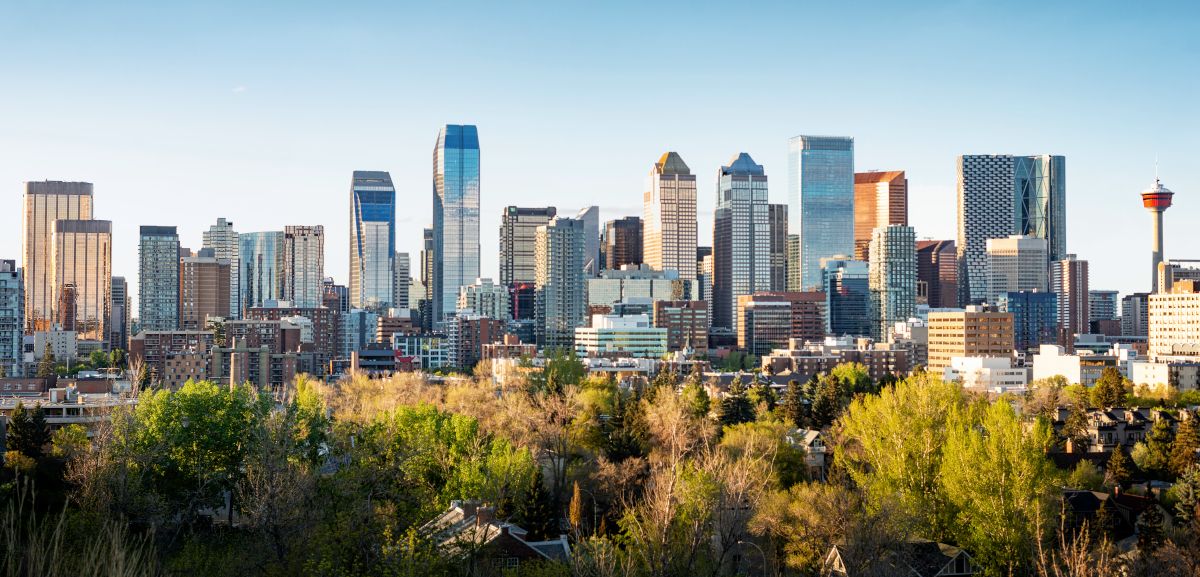
Vaughan is a city in Ontario, Canada, located within the Regional Municipality of York, immediately north of Toronto. With a 2021 population of 323,103, it is the fifth-largest city in the Greater Toronto Area and the seventeenth-largest in Canada. Historically one of Ontario's fastest-growing municipalities, Vaughan has transformed from a collection of agricultural townships into a major urban centre, anchored by developing hubs like the Vaughan Metropolitan Centre. The city is notable for its cultural diversity, significant Italian-Canadian community, and for being the site of Canada's first smart hospital, Cortellucci Vaughan Hospital.
History and Indigenous Heritage
The land that is now Vaughan has been inhabited for centuries. In the late pre-contact period, it was populated by the Wendat (Huron) people, with the Skandatut ancestral village overlooking the east branch of the Humber River being home to approximately 2,000 people in the sixteenth century. A Wendat ossuary was uncovered in Kleinburg in 1970, and the Seed-Barker Wendat site is located one kilometre north of the village. The first European to pass through the area was French explorer Étienne Brûlé in 1615, who traversed the Humber Trail. Significant European settlement began after 1792 with the creation of townships, though the area was considered remote and difficult to access due to a lack of roads. The City of Vaughan acknowledges it is situated in the Territory and Treaty 13 lands of the Mississaugas of the Credit First Nation and the traditional territory of the Huron-Wendat and the Haudenosaunee, and is currently home to many First Nations, Métis and Inuit people.
Early settlers arrived in considerable numbers, with the population growing from 19 men, 5 women, and 30 children in 1800 to 4,300 by 1840. The first wave consisted mainly of Pennsylvania Germans, with a smaller number of families of English descent and a group of French Royalists. After 1814, immigration from Britain became predominant, bringing highly skilled tradespeople useful for a growing community. The township was incorporated in 1850 and named after Benjamin Vaughan, a British commissioner who signed a peace treaty with the United States in 1783. For over a century, Vaughan remained primarily agricultural, with historic communities like Thornhill, Kleinburg, Maple, and Woodbridge developing around mills and other local industries. By 1846, the township had six grist mills and 25 saw mills, and the population reached 4,873 by 1935.
The city's modern growth began after World War II with a new influx of immigration. The population jumped from 4,873 in 1935 to 15,957 by 1960, with Italians, Jews, and Eastern Europeans beginning to change the ethnocultural composition. In 1971, the Township of Vaughan merged with the Village of Woodbridge to form the Town of Vaughan under the new regional government of York Region, which acquired policing and welfare services. It was officially incorporated as the City of Vaughan in 1991 under Mayor Lorna Jackson. The city experienced significant damage from two F2 tornadoes during the Southern Ontario Tornado Outbreak on August 20, 2009, which damaged 200 homes critically, left up to 600 more likely to be demolished, and prompted a declared state of emergency, though no deaths were directly reported.
Government and Politics
Vaughan is governed by a ten-member council consisting of a mayor, four regional councillors, and five local councillors. The mayor and regional councillors are elected at large, while the five local councillors are each elected from one of the city's five wards. The mayor serves as Vaughan's representative on York Regional Council and is the head of the city council. Council meetings are held at Vaughan City Hall in Maple, a facility named for the late Mayor Lorna Jackson that opened on September 25, 2011, and was built to LEED Gold environmental standards, one of the first in Canada to achieve that classification. Vaughan was the first municipality in Ontario to appoint a non-voting Youth City Councillor, a position appointed every six months to represent the city's youth after the Vaughan Youth Cabinet successfully amended its initial proposal.
The city's political history has seen several notable transitions and controversies. After Mayor Lorna Jackson's death in 2002, Regional Councillor Michael Di Biase was appointed mayor by council, and local councillor Gino Rosati was appointed to fill his regional seat. A by-election for Rosati's local seat was won by Linda Jackson, Lorna Jackson's daughter. Di Biase, first elected as a local councillor in 1985, retained the mayorship in the 2003 election but was narrowly defeated by Linda Jackson in 2006. Audits of both Jackson's and Di Biase's 2006 campaigns found contraventions of spending limits and election laws. Jackson's audit found she exceeded her $120,419 spending limit by at least $12,356, leading council to hire a special prosecutor to consider charges under the Municipal Elections Act. Longtime MP Maurizio Bevilacqua was elected mayor in 2010 and served until 2022.
The current mayor, Steven Del Duca, former leader of the Ontario Liberal Party, was elected on October 24, 2022, and assumed office on November 15, 2022. Under his leadership, Vaughan Council unanimously approved the Protecting Vulnerable Social Infrastructure By-law on June 25, 2024. This legislation, the first of its kind in Canada, prohibits nuisance demonstrations within 100 metres of child-care centres, congregate care facilities, hospitals, schools, and places of worship. The next municipal election is scheduled for Monday, October 26, 2026, from 10 a.m. to 8 p.m., with the elected council to serve a term from 2026 to 2030. Advance online voting will be available from Friday, October 9 to Sunday, October 18, 2026, and candidates must file nomination papers by August 21, 2026, at 2 p.m.
Geography and Communities
Vaughan is bounded by Caledon and Brampton to the west, King and Richmond Hill to the north, Markham and Richmond Hill to the east, and Toronto, specifically the former cities of Etobicoke and North York, to the south. The city's built-up area is composed of numerous historic communities and hamlets, and residents often identify more strongly with these neighbourhoods than with the city as a whole due to the municipality's establishment when it was still a rural area with scattered settlements. The city officially designates five major communities within its urban area, with all built-up areas considered part of one of them. The boundaries for these communities are generally defined by major roads.
- Woodbridge: Bounded by Major Mackenzie Drive to the north, Steeles Avenue to the south, Highway 400 to the east, and Highway 50 to the west.
- Maple: Bounded by the King Vaughan Line to the north, Rutherford Road to the south, Bathurst Street to the east, and Highway 400 to the west.
- Thornhill: Bounded by Highways 7 and 407 to the north (Major Mackenzie for the area west of Bathurst), Steeles Avenue to the south, Yonge Street to the east, and Dufferin Street to the west.
- Concord: Bounded by Rutherford Road to the north, Steeles Avenue to the south, Dufferin Street to the east, and Highway 400 to the west.
- Kleinburg: Bounded by the King Vaughan Line to the north, Major Mackenzie Drive to the south, Highway 400 to the east, and Highway 50 to the west.
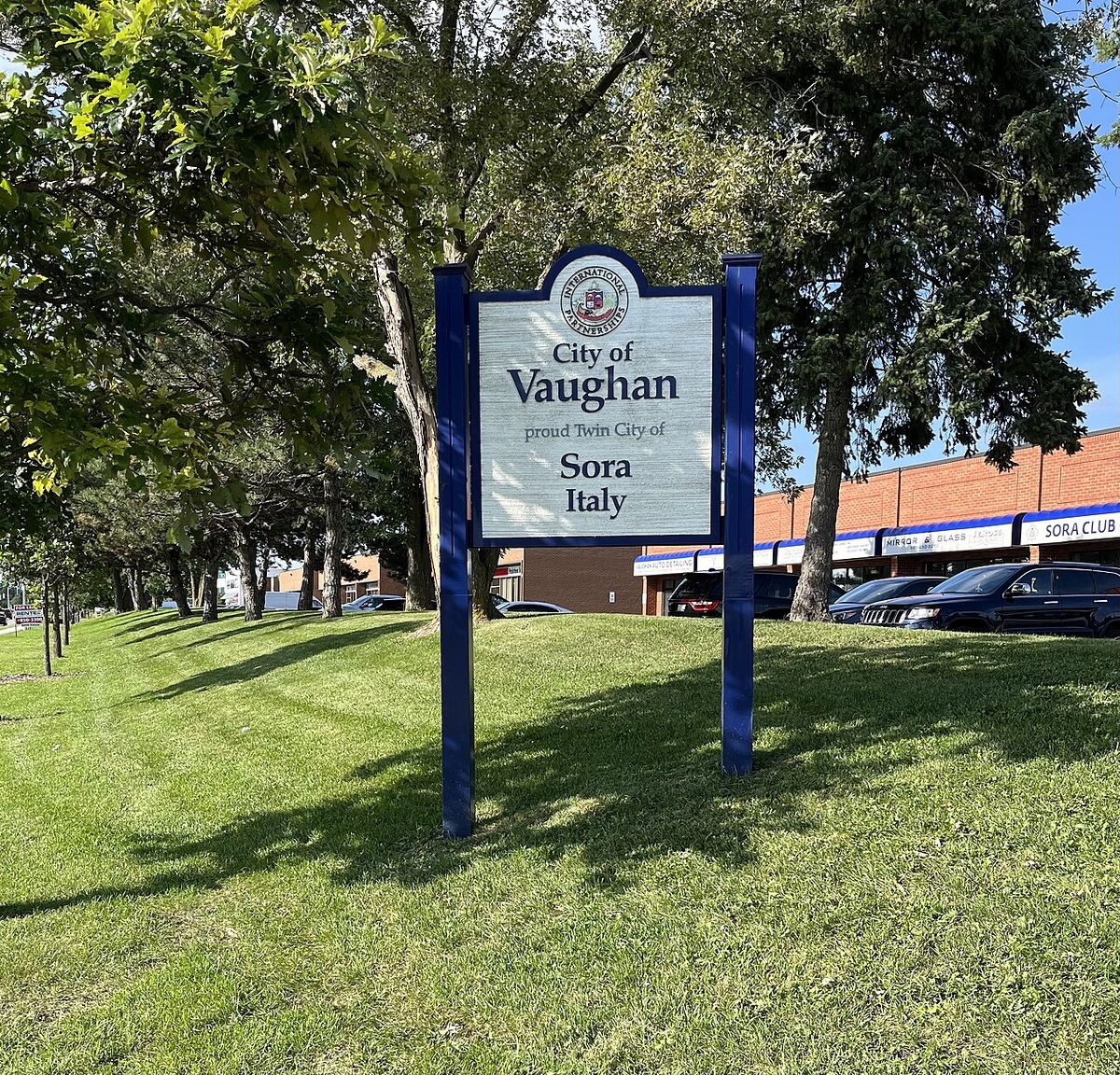
This community-based identity is reflected in practical matters. For instance, Bell Canada, the incumbent local exchange carrier, splits the city into three historical telephone rate centres which are Kleinburg, Maple, and Woodbridge. Part of the Thornhill rate centre also extends into Vaughan, meaning local calling areas differ throughout the city. The city's slogan was once "The City Above Toronto," used to promote population growth, but it was dropped around 2010. Other historic enclaves that contributed to Vaughan's development include Coleraine, Rupertville which became Maple, Richmond Hill, Teston, Claireville, Pine Grove, Carrville, Patterson, Burlington, Concord, Edgeley, Fisherville, Elder's Mills, Elgin Mills, Jefferson, Nashville, Purpleville, Richvale, Sherwood, Langstaff, Vellore, and Burwick which became Woodbridge.
Vaughan Metropolitan Centre and Development
The Vaughan Metropolitan Centre (VMC) is a 179-hectare (442 acre) city centre under development around the intersection of Highway 7 and Jane Street, on the site of the former hamlet of Edgeley. The commitment to create a distinct business and commercial core for Vaughan, separate from its historic village centres, became official policy in 1998 with Official Plan Amendment 500, which called for the area, then branded the Vaughan Corporate Centre, to become a focal point for business activity and major commercial development. The VMC is a major transit hub, anchored by the Vaughan Metropolitan Centre station, which is the northwestern terminus of the Toronto subway's Line 1 Yonge-University. It also serves as a major hub for York Region Transit (YRT), Viva, and Züm bus rapid transit services. This development represents the city's strategic shift from a collection of suburbs to an urban centre with its own downtown core, designed to concentrate employment and high-density residential growth.
Demographics and Society
According to the 2021 census, Vaughan had a population of 323,103 living in 103,914 of its 107,159 total private dwellings, a change of 5.5% from its 2016 population of 306,233. The median age is 41.6, identical to the provincial median. More recent city estimates from 2026 promotional material reference a population of more than 340,000 residents, indicating continued growth. Vaughan is characterized by remarkable cultural and linguistic diversity, being home to residents from more than 217 ethnic or cultural origins who speak 113 different languages. Visible minorities make up 35.4% of the population.
English is the mother tongue for 50.9% of residents. Italian is the second most common mother tongue at 11.2%, reflecting a significant Italian-Canadian community, followed by Russian (6.5%) and Mandarin (4.2%). Other prominent mother tongues each constituting between 1.3% and 2.9% of the population include Spanish, Persian, Cantonese, Urdu, Punjabi, Hebrew, Tagalog (Filipino), Vietnamese, Portuguese, and Korean. In terms of religion, Christianity is the most reported affiliation at 53.1%, with Catholicism (38.6%) being the largest denomination. This is followed by Judaism (13.2%), Islam (7.4%), Hinduism (4.8%), Buddhism (2.4%), and Sikhism (1.8%). Some 17.0% of the population reported no religious affiliation.
Services and Infrastructure
For many years, Vaughan held the distinction of being the largest city in Canada without a hospital. This changed with the opening of Cortellucci Vaughan Hospital on Major Mackenzie Drive on June 6, 2021. The hospital is a 1.2 million square foot facility with 350 beds and is part of the Mackenzie Health system, operating with a single governance, administration and medical staff. It is notable as Canada's first smart hospital, utilizing integrated technology to allow medical systems and devices to communicate with each other to improve patient care and information exchange. Planning for the hospital began in 2007, with provincial approval granted in July 2011, a tender issued in 2014 or 2015, land preparation beginning in summer 2014, and construction starting in October 2016 with an expected completion date of late 2020.
Vaughan offers a complex transportation infrastructure that includes several major highways. Highway 400 runs north-south through the city, completed to Barrie in 1951. Highway 7 was built between Vaughan and Thornhill from 1928 to 1932. The historic Vaughan Road, constructed in 1850, originally linked the township with Toronto and incorporated parts of present-day Dufferin Street. Starting in the late 1950s, major municipal roads including Bathurst, Dufferin, Jane and Keele Streets that had been gravel were paved. Public transit is centred on the Vaughan Metropolitan Centre hub, connecting subway, bus rapid transit, and local bus services. The city's transportation network facilitates its role as a growing employment and residential centre within the Greater Toronto Area.
Culture, Attractions, and Events
Vaughan hosts a variety of cultural attractions and community events that reflect its diverse population. The city is an active participant in the nationwide Culture Days celebration, serving as a Festival Hub for the 2026 event which took place from September 18 to October 4. A kick-off event for Vaughan Culture Days was held at the City Playhouse Theatre at 1000 New Westminster Drive, featuring on-stage entertainment from local artists and interactive arts and culture activities. The city also hosts events like the Talent City Vaughan Youth Careers Expo, aimed at residents aged 15 to 29, which was scheduled for March 2, 2026, at the Father E. Bulfon Community Centre gymnasium, offering career exploration and resume clinics.
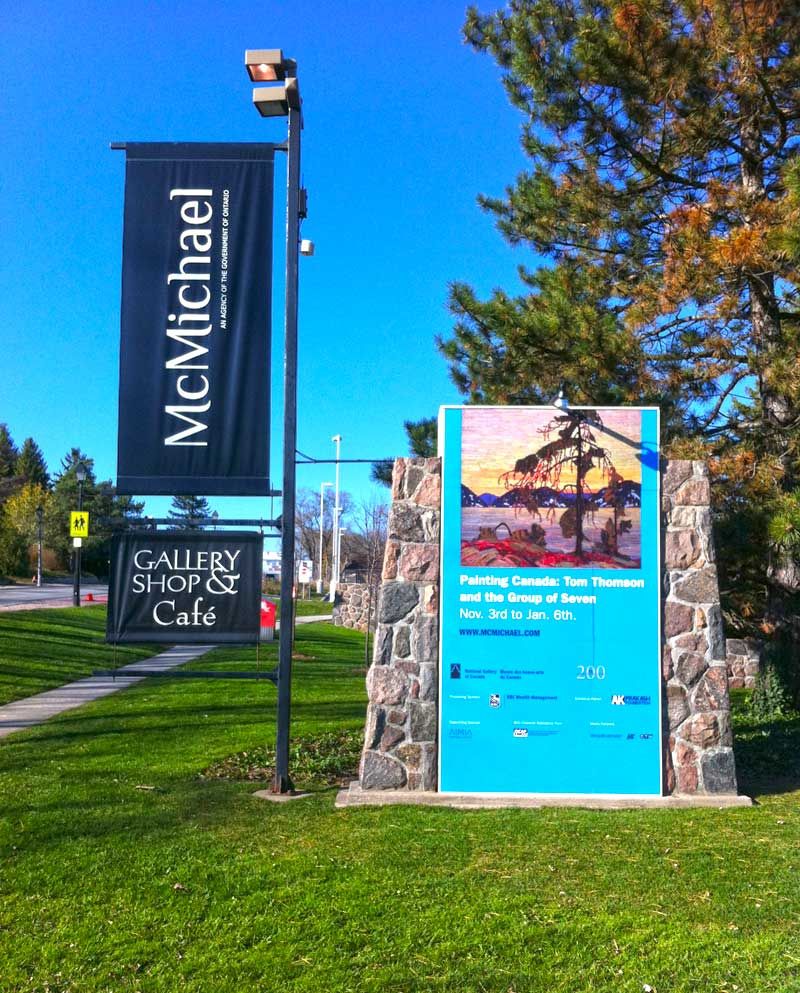
Major attractions and recreational sites in Vaughan include a wide range of facilities for leisure, education, and shopping. The city is home to Canada's Wonderland, the country's largest amusement park located east of Highway 400. Cultural institutions include the McMichael Canadian Art Collection in Kleinburg and the City Playhouse Theatre. For nature and conservation, residents and visitors can access the Kortright Centre for Conservation, Boyd Conservation Area, North Maple Regional Park, and Baker's Woods, a 31-hectare old-growth forest and sugar bush. Retail and entertainment are served by the Promenade Shopping Centre in Thornhill, Cineplex Cinemas Vaughan, Dave & Buster's, and Reptilia Zoo, a 25,000 square foot reptile zoo. The city also features several golf clubs such as Copper Creek Golf Club in Kleinburg, Eagles Nest Golf Club, and Maple Downs Golf & Country Club, and other sites include the J. E. H. MacDonald House in Thornhill and Putting Edge.
Crime and Community Safety
Vaughan has dealt with organized crime incidents, particularly related to the 'Ndrangheta, a Calabrian mafia group. Notable violent incidents include mob shootings outside the Terrace Banquet Hall in July 2013 resulting in two deaths, including mobster Salvatore Calautti, the Regina Sports Café in April 2014 resulting in the death of Carmine Verduci, and the Woodbridge Cafe shooting in June 2015. In March 2017, three separate killings occurred: a 28-year-old woman shot in a car on Caster Avenue on March 14, a 26-year-old man shot at Jane Street and Highway 7 on March 23, and a shooting at a private social club near Martin Grove Road and Highway 7 on March 30. In response to these and other violent events, York Regional Police conducted Project Sindicato, an 18-month investigation coordinated with the Italian State Police.
In July 2019, Project Sindicato resulted in the largest organized crime bust in Ontario, with 15 arrests in Canada and the seizure of $35 million in assets including 27 homes worth $24 million, 23 cars (including five Ferraris), and $2 million in cash and jewelry. The investigation targeted the Siderno Group of the 'Ndrangheta, allegedly headed by Angelo Figliomeni of Vaughan, and charges included tax evasion, money laundering, defrauding the government and participating in a criminal organization. In 2017, the total crime rate against persons was 619.43 incidents per 100,000 population, with violations causing death at 1.49 per 100,000. In response to increasing hate crimes and to protect community institutions, Vaughan Council passed the pioneering Protecting Vulnerable Social Infrastructure By-law in June 2024. This bylaw creates a 100-metre "bubble zone" around places like schools, hospitals, and places of worship, prohibiting targeted demonstrations, making Vaughan the first municipality in Ontario and in Canada to adopt such legislation.
Questions about Vaughan
What is the population of Vaughan?
According to the 2021 Census of Population, Vaughan had a population of 323,103. The city has experienced significant growth, nearly doubling its population since 1991 and was the fastest-growing municipality in Ontario between 1996 and 2006 with an increase of 80.2%. More recent estimates from city promotional material in 2026 reference a population of more than 340,000 residents, indicating continued growth. With a land area of 272.44 km2, its 2021 population density was 1,186.0 people per square kilometre.
Who is the current mayor of Vaughan?
The current mayor of Vaughan is Steven Del Duca, the former leader of the Ontario Liberal Party. He was elected on October 24, 2022, and assumed office on November 15, 2022. His council unanimously passed a landmark bylaw in June 2024 prohibiting protests within 100 metres of vulnerable social infrastructure like schools and hospitals. The next municipal election is scheduled for October 26, 2026, with advance online voting available from October 9 to 18, 2026.
Does Vaughan have a hospital?
Yes, Vaughan is now served by Cortellucci Vaughan Hospital, which opened on June 6, 2021. Prior to its opening, Vaughan was the largest city in Canada without a hospital. The facility is located on Major Mackenzie Drive north of Canada's Wonderland. It has 350 beds within a 1.2 million square foot building and is notable as Canada's first smart hospital, with integrated technology systems designed to improve patient care and information flow as part of the Mackenzie Health system.
What are the main communities or neighbourhoods in Vaughan?
Vaughan is composed of several historic communities, with five officially designated as major urban areas: Woodbridge, Maple, Thornhill, Concord, and Kleinburg. Residents often identify strongly with these communities due to the city's rural origins. Their boundaries are generally set by major roads like Highway 400, Major Mackenzie Drive, Steeles Avenue, Bathurst Street, and Dufferin Street. Each area has its own distinct history and character, with Thornhill being one of the oldest, featuring a sawmill from 1801.
How do I get to downtown Toronto from Vaughan?
The most direct public transit route to downtown Toronto is via the Toronto subway. The Vaughan Metropolitan Centre station, located at Highway 7 and Jane Street, is the northwestern terminus of Line 1 Yonge-University. This subway line provides a direct connection to the downtown core. The station is also a major hub for York Region Transit (YRT), Viva, and Züm bus rapid transit services, making it a central transit point for the region.
What is the Vaughan Metropolitan Centre?
The Vaughan Metropolitan Centre (VMC) is a 179-hectare developing city centre located around Highway 7 and Jane Street on the site of the former hamlet of Edgeley. It is envisioned as Vaughan's future downtown and business core, a policy commitment dating to 1998. A key feature is the Vaughan Metropolitan Centre subway station, the terminus of Toronto's Line 1. The VMC is a major transit hub and the focus of significant commercial and high-density residential development intended to create a distinct focal point for the city.
Sources and further reading
- Vaughan (Wikipedia)
- Vaughan Culture Days Kick Off Event (culturedays.ca)
- Talent City Vaughan: 2026 Youth Careers Expo (vaughanbusiness.ca)
Checked by the Your Space Hamilton desk. Last updated 2026-10-27.