Griffintown
Griffintown is a historic neighbourhood of Montreal, Quebec, located southwest of downtown. It existed as a functional neighbourhood from the 1820s until the 1960s, being mainly populated by Irish immigrants and their descendants. Mostly depopulated since then, the neighbourhood has been undergoing redevelopment since the early 2010s. This redevelopment aims to transform the area into a pleasant, high-density district, with plans expected for completion by 2025.
Historical Development and Community
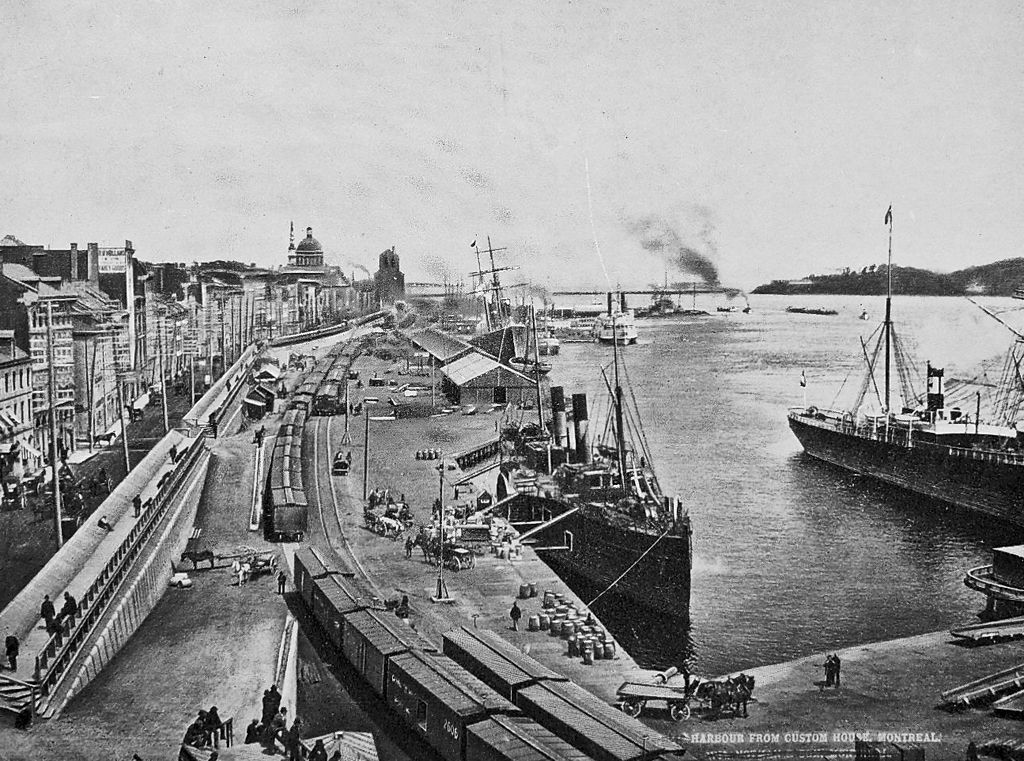
The neighbourhood's origins trace back to Mary Griffin, who illegally obtained a lease for the land from a business associate of Thomas McCord in 1799. She commissioned land surveyor Louis Charland to subdivide the land and plan streets for the area in 1804. Her husband, Robert Griffin, owned a soap factory in the area and later became the first clerk of the Bank of Montreal upon its formation in 1817. These workers built and operated the Lachine Canal, constructed the Victoria Bridge, and supported the expanding railway networks and Port of Montreal. The community's social and spiritual heart was St. Ann's Catholic Church, which opened in 1854 at the corner of McCord and Basin Streets, facing Gallery Square named for the influential Gallery brothers.
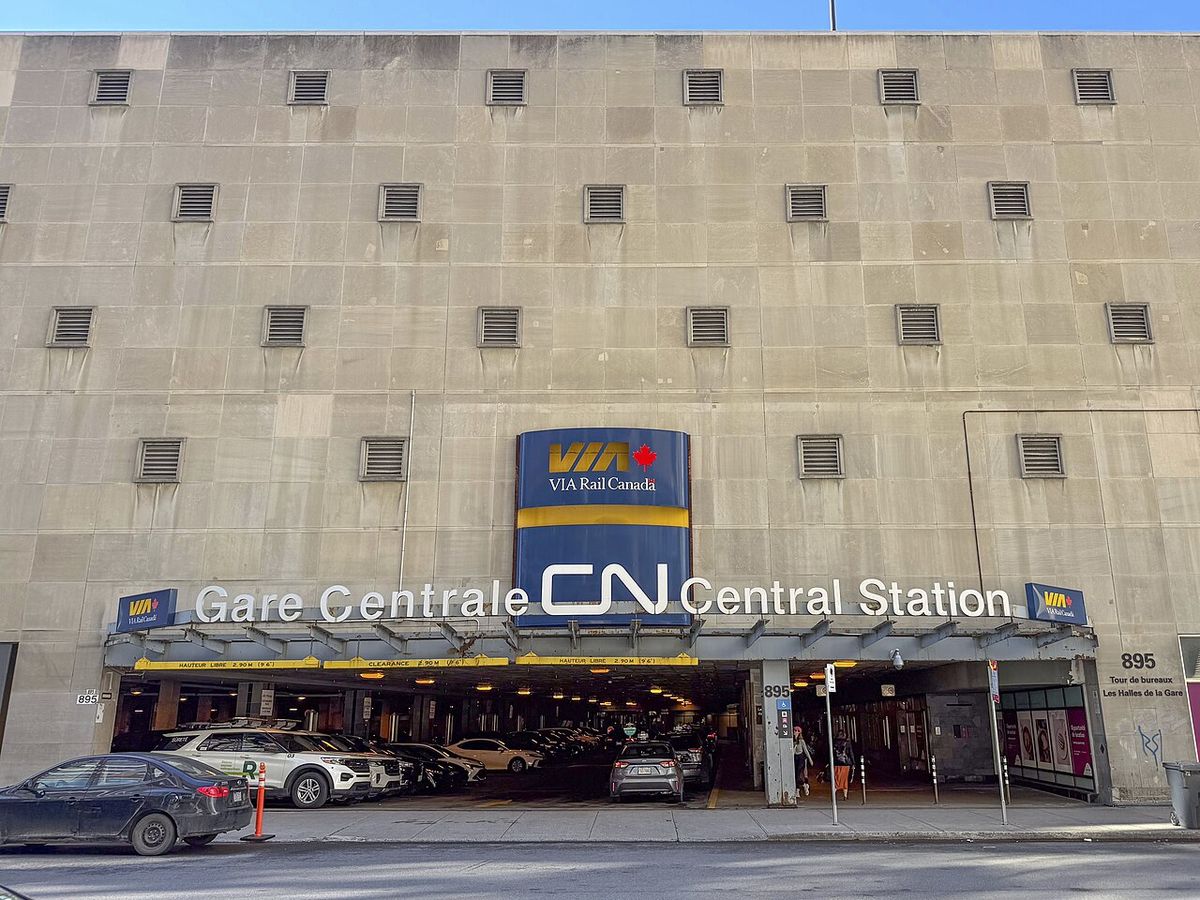
John Daniel Gallery ran a large and successful bakery while his brother Daniel Gallery served as an alderman of Montreal, a schools commissioner, and a Liberal member of parliament. By the early 20th century, demographic shifts began as Jewish, Italian, Ukrainian, and Francophone communities moved in, with the Irish becoming a minority group by 1941. Major infrastructure projects like the Canadian National Railway tracks approaching Montreal Central Station cut a wide swathe between Dalhousie and Nazareth Streets around 1930. The post-war era initiated a steep decline for Griffintown due to broader economic changes beginning in the 1950s. The opening of the Saint Lawrence Seaway in 1959 rendered the Lachine Canal obsolete as a major transport artery, undermining the local industrial base that had sustained the community for over a century.
Depopulation and Industrial Rezoning
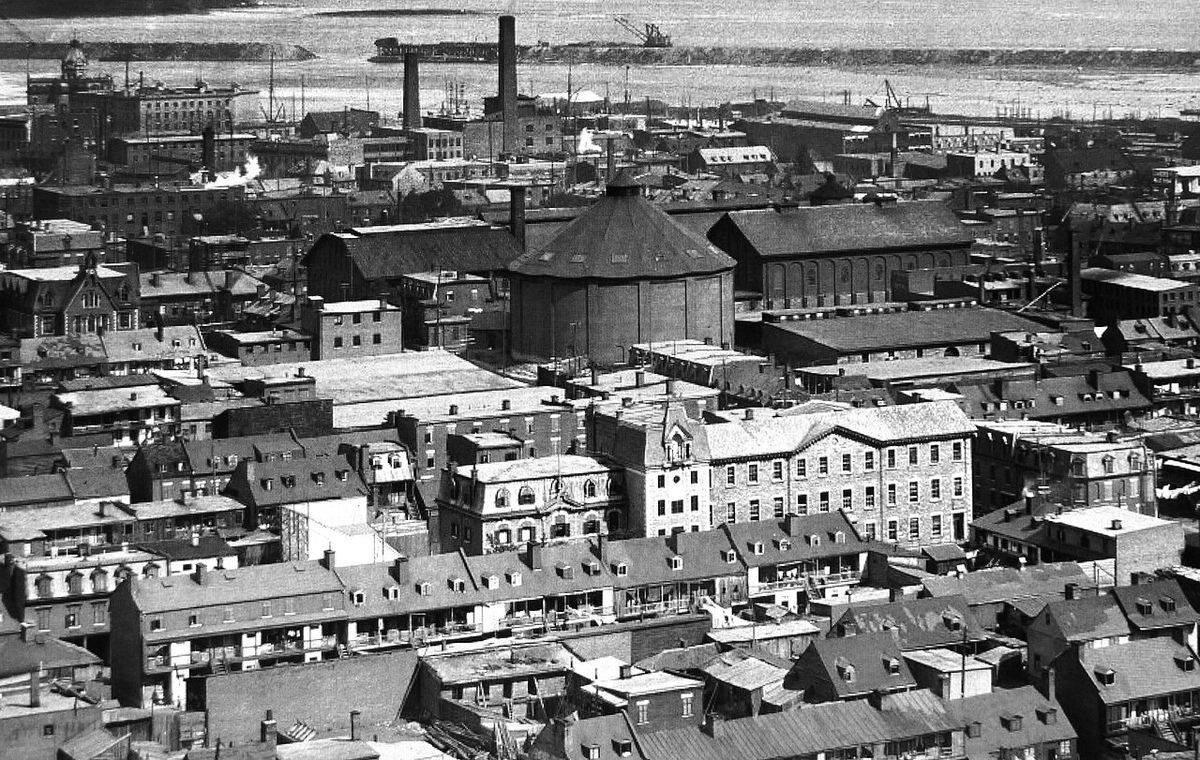
In 1962, Griffintown was formally re-zoned as a light industrial area by the City of Montreal, a decision that accelerated its depopulation. Throughout the 1960s, many buildings were demolished to make way for the new Bonaventure Expressway and for surface parking lots, erasing much of the historic streetscape. The final symbolic blow to the old community came with the demolition of St. Ann's Church in 1970. The church site is now Parc Griffintown-St-Ann, where parts of the church's foundations remain visible and park benches are positioned where the pews would have been. By 1974, the official population of Griffintown had dwindled to only 546 residents. The area that once thrived as a functional neighbourhood from the 1820s was largely vacant, with very little of the original architecture remaining from its peak.
In 1990, the eastern part of the area was included in the municipal planning sector designated as Faubourg des Récollets. By this time, the neighbourhood only somewhat resembled its historic self due to the extensive demolitions. The Cité Multimédia development was later built partly above the ruins of the old neighbourhood. Physical remnants and artefacts from Griffintown's past were preserved in the McCord Museum, which also developed an educational resource called the Griffintown Game about the Irish experience in Montreal. The western end of the historic district extends into the borough of Ville-Marie, while the majority of the area currently considered Griffintown is located within the borough of Le Sud-Ouest.
Redevelopment and Modern Transformation
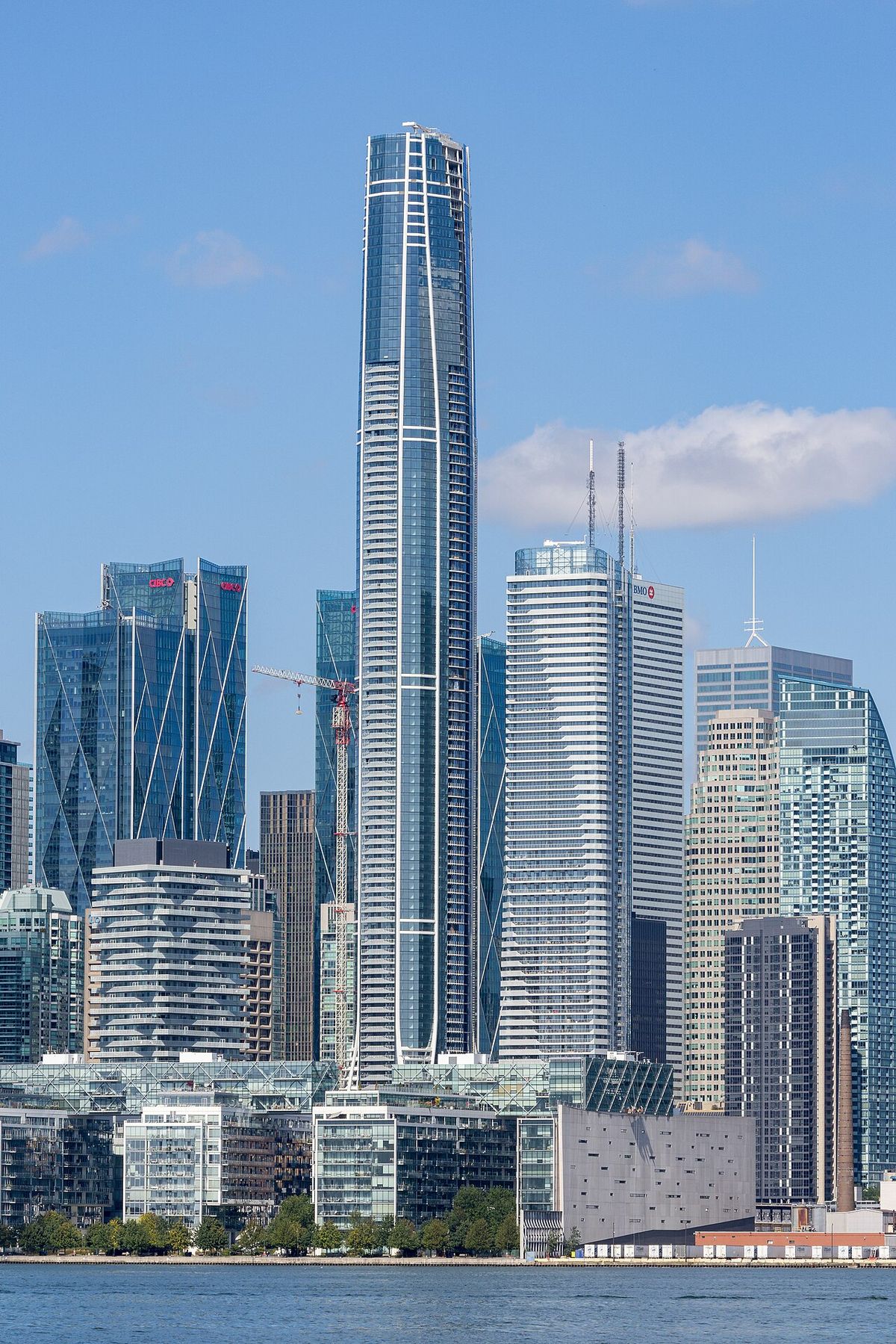
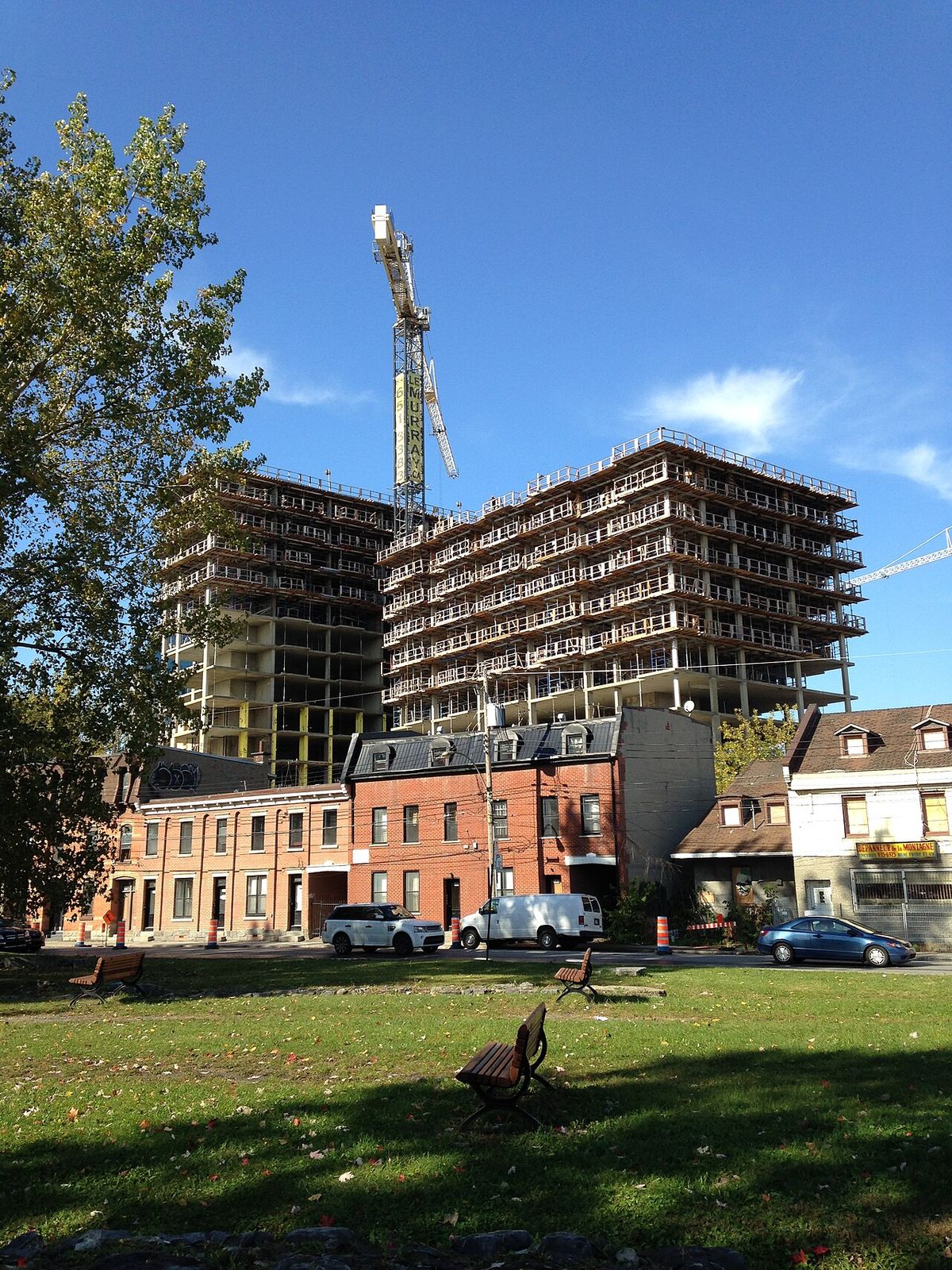
A major turning point came in October 2012 when the City of Montreal revealed its comprehensive plans for the redevelopment of the Griffintown area. The city expressed a desire to transform what was then an industrial, sparsely inhabited zone into a pleasant, high-density neighbourhood. To achieve this, the city announced plans to establish new parks and bike paths and to provide permits for the construction of dozens of condominium towers in the area, ranging from 10 to 20 stories high. Another stated goal of the project was to preserve the historical significance of some of the remaining century-old buildings amidst the wave of new construction. This redevelopment is part of a broader initiative, as Griffintown was included in 2014 within an ongoing movement to create a Quartier de l'innovation in lower Montreal.
The Quartier de l'innovation is designed to foster creativity and entrepreneurship in the city and to promote economic development for district residents. The ongoing transformation has attracted significant residential and commercial investment over the past decade. The area now hosts office spaces for many technology companies and the residence for the École de Technologie Supérieure (ÉTS). Residential projects like the multi-phase Lowney Lofts, which revitalized a former chocolate factory and the surrounding block, have taken shape. Earlier redevelopment proposals included a controversial 2006 plan to relocate the Montreal Casino to the Peel Basin as part of an entertainment complex in partnership with Cirque du Soleil, which was finally abandoned due to concerns about the social impact of gambling in the district. In July 2007, promoter Devimco announced plans to develop 12 hectares of the neighbourhood into a modern complex of office towers and residential homes. The entire Griffintown redevelopment project is expected to be completed by 2025.
Geography and Administrative Boundaries
Griffintown is geographically defined as the portion of the historic St. Ann ward north of the Lachine Canal. Its traditional boundaries are Notre-Dame Street to the north, the Bonaventure Expressway to the east, and a short segment of the city limit between Notre-Dame Street and the canal west of the St. Gabriel Locks to the west. The area south of the canal is now considered part of the Pointe-Saint-Charles neighbourhood. It was the earliest and largest faubourg annexed to Old Montreal before the introduction of the tram car in the 1840s. Administratively, most of modern Griffintown lies within the borough of Le Sud-Ouest, though the western end of the historic district extends into the borough of Ville-Marie. The neighbourhood spans theoretically from Pointe-Saint-Charles to the Old Port, bounded to the north by Notre-Dame Street.
One of its current notable features is the Griffintown Horse Palace at the corner of Ottawa and Eleanor Streets, which houses the stables for the horses that provide calèche tours around the Old Port. Very few residents from the original community still live in the area today. Because of its location close to downtown, new residential projects continue to take shape. The City of Montreal website describes additional plans to update the now-renamed Griffintown, indicating the area remains a priority for urban planning. The neighbourhood holds a unique position as a historic district undergoing rapid contemporary change, balancing preservation with new construction.
Cultural Depictions and Folklore
Griffintown's rich and sometimes vanished past has been the subject of several cultural works exploring its history and community memory. Filmmaker Michel Régnier created a film on the subject in 1972, which used archival photos of Griffintown along with interviews of former residents to depict the community and its people. In 2003, Richard Burman directed the documentary 'Ghosts of Griffintown', which uses the local legend of Mary Gallagher as a metaphor for the community's disappearance. Mary Gallagher was a prostitute brutally murdered in 1879, and folklore claims her ghost returns every seven years to William Street in search of her head, with the last reported sighting in 1928. This story led to the observance of Mary Gallagher Day every seven years on June 27, the date of the alleged sightings.
Journalist Alan Hustak further explored the tale in his book 'The Ghost of Griffintown', which examines the murder in great detail. More recently, artist Lisa Gasior created the Griffinsound Project, which is a walking tour designed to be completed individually. It provides a historical background and interviews regarding the changing nature of this urban space. These works collectively serve to document and interpret the neighbourhood's transition from an active immigrant enclave to a depopulated industrial zone and now to a site of modern redevelopment. They highlight the enduring cultural memory attached to the area despite its physical transformation.
Notable Landmarks and Sites
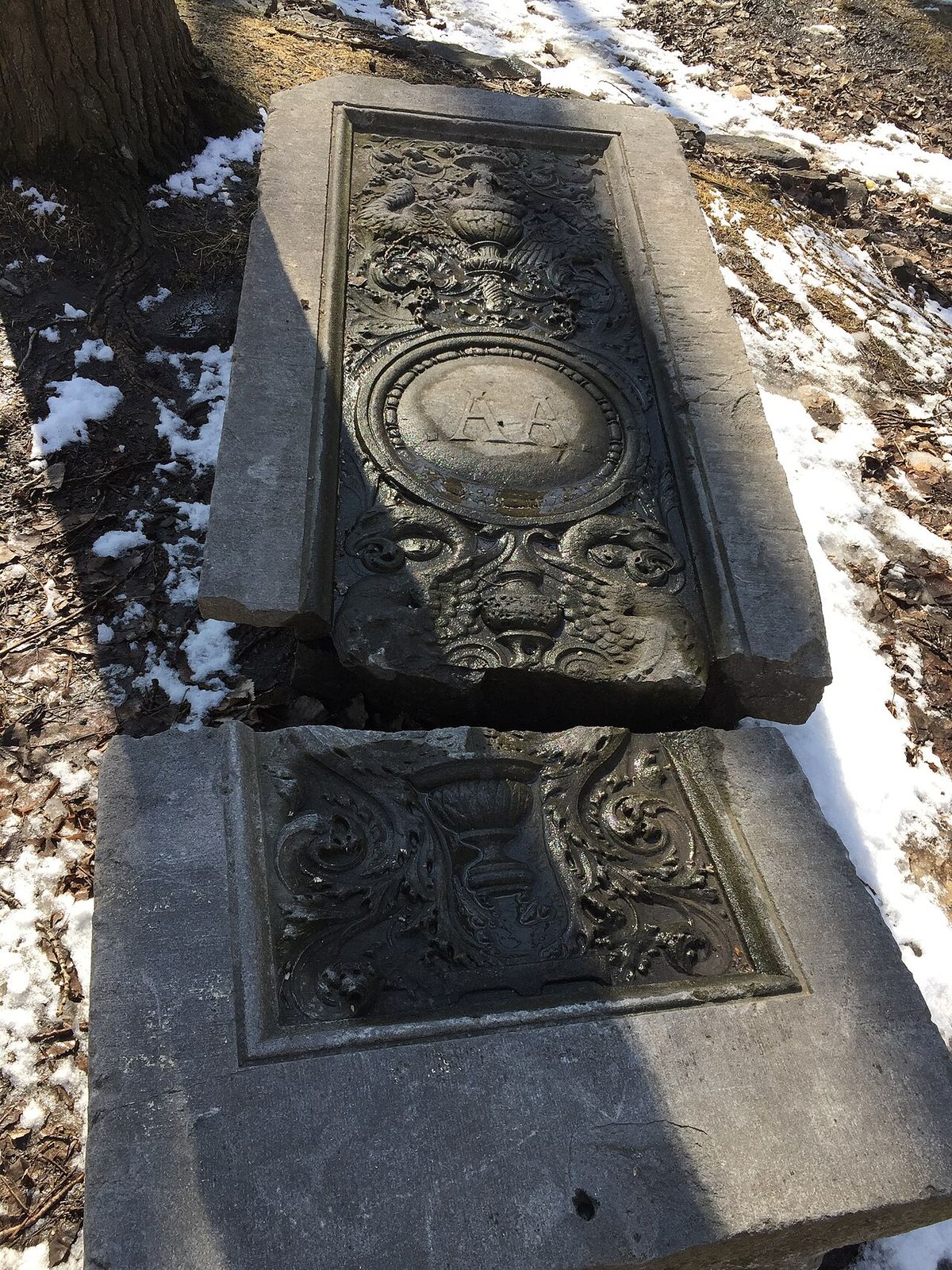
While much of historic Griffintown has been lost, several sites hold significant cultural and historical memory. The location of the former St. Ann's Church is now Parc Griffintown-St-Ann, a public space that incorporates the church's foundations into its design. Gallery Square, named for the Gallery brothers, remains a reference point in the area's history near the original church site. The Griffintown Horse Palace continues a tradition of equestrian activity linked to the Old Port tourism industry. The Cité Multimédia was built partly above the neighbourhood's ruins, while physical remnants of the past are preserved in the McCord Museum. The McCord Museum also hosts the Griffintown Game, an educational resource on the Irish in Montreal.
Other landmarks are primarily tied to the redevelopment, such as the converted Lowney chocolate factory lofts and the new residential towers defining the modern skyline. The area also includes the École de Technologie Supérieure (ÉTS) student residence, representing the new educational focus within the Quartier de l'innovation. The Peel Basin was once considered for the relocated Montreal Casino, a plan that was ultimately abandoned. The Bonaventure Expressway, constructed in the 1960s, is a major physical feature that altered the area's layout. These sites, both old and new, chart the neighbourhood's complex evolution over two centuries.
- Parc Griffintown-St-Ann (site of St. Ann's Church, demolished 1970)
- Gallery Square (historic square named for John Daniel and Daniel Gallery)
- Griffintown Horse Palace (stables for Old Port calèche horses at Ottawa and Eleanor)
- Cité Multimédia (modern development built over part of the historic area)
- McCord Museum (holds preserved artefacts and the Griffintown Game)
- Lowney Lofts (multi-phase condominium project in a revitalized chocolate factory)
- École de Technologie Supérieure (ÉTS) Residence
- Bonaventure Expressway (constructed in the 1960s, a major boundary)
Demographic and Economic Shifts
The demographic history of Griffintown reflects broader patterns of immigration and urban change in Montreal. The neighbourhood was first populated in the early nineteenth century mostly by Irish immigrant labourers, creating a distinct cultural enclave often referred to as a 'Little Dublin'. By the early twentieth century, the Irish were being replaced by new arrivals, including Jewish, Italian, and Ukrainian communities, alongside a growing Francophone presence. This transition was complete by 1941 when the Irish had become a minority group within the area. The post-war economic changes that began in the 1950s led directly to the depopulation of the area locally known as 'The Griff'. The loss of the Lachine Canal's economic role was a critical factor in this decline.
The subsequent re-zoning to light industrial in 1962 formalized the area's new economic function, though this too diminished over time. The recent redevelopment aims to reverse this trend by attracting a new residential population and knowledge-based businesses. The inclusion of Griffintown in the Quartier de l'innovation specifically targets economic development through creativity and entrepreneurship. The projected completion of the redevelopment by 2025 will mark the latest chapter in the area's long history of economic and demographic transformation.
Questions about Griffintown
Where is Griffintown located in Montreal?
Griffintown is a neighbourhood in Montreal, Quebec, situated southwest of downtown. It is the area north of the Lachine Canal within the historic St. Ann ward, bounded roughly by Notre-Dame Street to the north and the Bonaventure Expressway to the east. Administratively, most of it lies within the borough of Le Sud-Ouest, with its western edge extending into the borough of Ville-Marie. The part of the old ward south of the canal is now part of Pointe-Saint-Charles.
What is the story of Mary Gallagher in Griffintown?
Mary Gallagher was a prostitute who was brutally murdered in Griffintown in 1879. Local folklore claims her ghost returns every seven years to William Street to search for her head, with the last reported sighting in 1928. This legend is commemorated with Mary Gallagher Day observed every seven years on June 27, the date of the alleged sightings. The story has been explored in documentaries like 'Ghosts of Griffintown' (2003) and books as a metaphor for the neighbourhood's vanished community.
Why is Griffintown historically significant?
Griffintown is historically significant as one of Montreal's earliest and largest faubourgs annexed to Old Montreal before the 1840s. It was a functional neighbourhood from the 1820s until the 1960s, primarily populated by Irish immigrant labourers who built key infrastructure like the Lachine Canal, the Victoria Bridge, railways, and the Port of Montreal. The community centred on St. Ann's Catholic Church, which opened in 1854. By the mid-20th century, economic changes led to its depopulation and industrial rezoning, making it an important chapter in the city's industrial and immigrant history.
What is happening with redevelopment in Griffintown?
Redevelopment in Griffintown aims to transform the sparsely inhabited industrial area into a high density residential neighbourhood. In October 2012, Montreal revealed plans to build dozens of condominium towers ranging from 10 to 20 stories high, establish parks and bike paths, and preserve some historic century old buildings. This redevelopment is part of the Quartier de l'innovation initiative launched in 2014 to foster creativity and entrepreneurship. The project is expected to be completed by 2025.
What happened to St. Ann's Church in Griffintown?
St. Ann's Catholic Church was demolished in 1970. The church had opened in 1854 at the corner of McCord, now Mountain Street, and Basin Streets, serving as the spiritual centre for the Irish community across from Gallery Square. Its site is now Parc Griffintown St Ann, where parts of the church's foundations remain visible. Park benches are positioned where the pews would have been, creating a memorial to the historic landmark.
Sources and further reading
- Griffintown (Wikipedia)
- Montréal neighbourhood: Discover Griffintown (mtl.org)
- Griffintown (lesquartiersducanal.com)
- Griffintown, Canadian Apartment Properties REIT (capreit.ca)
- Griffintown Montreal: History & Urban Development Guide (2727coworking.com)
Checked by the Your Space Hamilton desk. Last updated 2026-10-31.