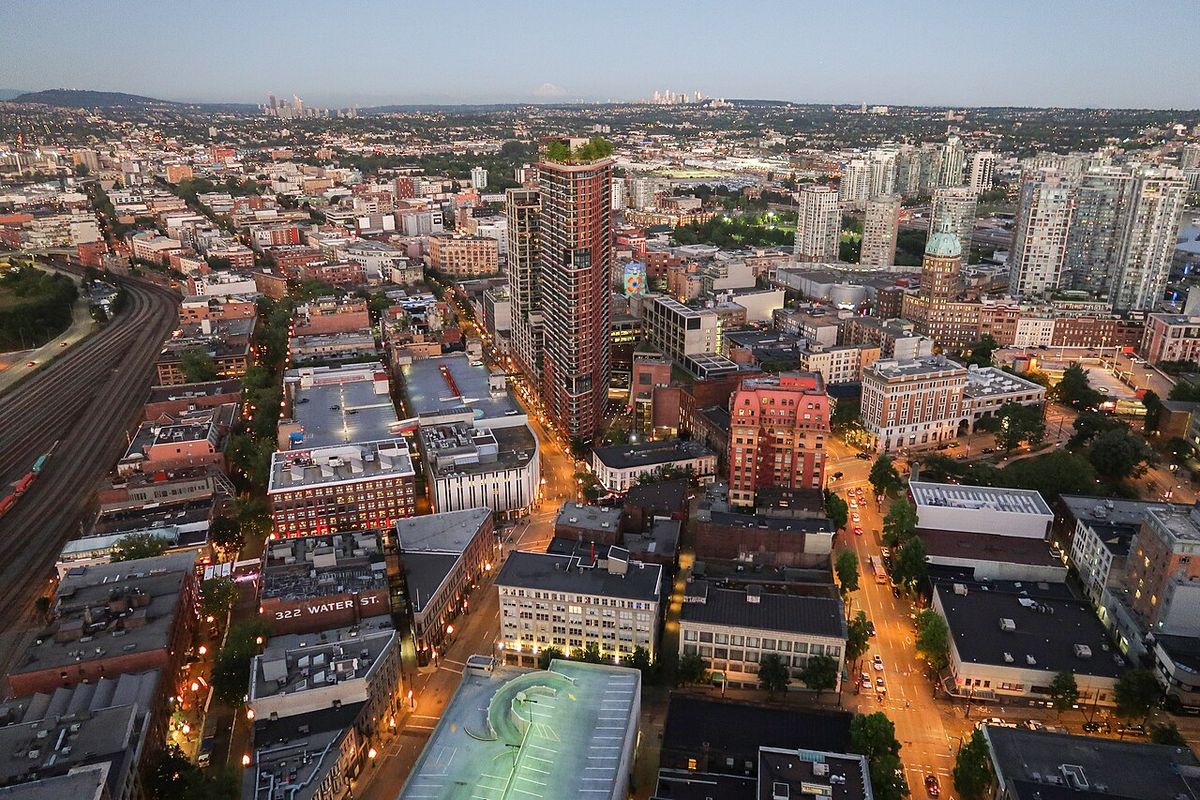
Côte-des-Neiges
Côte-des-Neiges is a central Montreal neighbourhood on the western slope of Mount Royal, forming part of the borough of Côte-des-Neiges-Notre-Dame-de-Grâce. Founded as a village in 1862 and annexed by Montreal in the early 20th century, it has evolved into one of Canada's most densely populated and ethnically diverse urban areas. The neighbourhood is a major educational and medical hub, home to the Université de Montréal campus and several major hospitals. Its multilingual character and significant immigrant and student populations make it a defining example of contemporary urban life in Montreal.
History and Development
The Village of Côte-des-Neiges was formally founded in 1862, with Montreal annexing it in two stages in 1908 and 1910. The area's early residential development was spurred by landowner James Swail, who began subdividing plots east of Decelles Avenue in 1876. A major housing development called Northmount Heights was launched in 1906 by the Northmount Land Company, though much of that land was later expropriated for the Université de Montréal campus. For decades, Côte-des-Neiges remained a village surrounded by working farms, with urbanisation accelerating only after the Second World War. The neighbourhood was historically bordered by Decelles Avenue to the northeast, Notre Dame des Neiges Cemetery to the southeast, Westmount to the southwest, and the confluence of Côte-des-Neiges Road and Queen Mary Road. A ski hill operated near present-day Ridgewood Avenue and Saint Joseph's Oratory, used by the Montreal Ski Club into the 1940s. Part of the area's Black anglophone community traces its roots to the 1960s, when families displaced from the Little Burgundy neighbourhood resettled in Côte-des-Neiges.
Community histories note the presence of several Black families in the mid-20th century, including the Chambers, Fields, Whites, Smiths, Clarks, Tynes, and Martins. This community's earliest members included men from the United States, Atlantic Canada, and the Caribbean who came to work on the railroads. The broader Black population in Côte-des-Neiges includes people of African, Caribbean, Atlantic Canadian, and Afro-Indigenous heritage. On June 22, 2026, the neighbourhood was the site of a shooting attack that resulted in three fatalities, the perpetrator, a civilian, and a police officer, and two other people wounded.
Demographic Profile
Côte-des-Neiges is renowned as one of the most ethnically diverse and densely populated neighbourhoods in Canada, with over 100 distinct ethnic communities represented. The population includes significant numbers of people of Filipino, West Indian, South Asian, Jewish, Latin American, Iranian, Chinese, Arab, Vietnamese, and Eastern European descent, alongside a large Canadian-born population. It is one of the few Montreal neighbourhoods where neither French nor English dominates. Both official languages are spoken equally among a highly multilingual populace. Nearly half of all residents, approximately 47,795 people or 48%, are immigrants, a rate significantly above the Montreal average of 33%. The Plamondon area within the neighbourhood has the largest concentration of immigrant residents, with 29,625 people.
The area has a notably young demographic, with adults aged 18 to 34 constituting 32% of residents, well above the Montreal average of 26%. In the Plamondon-Sud sector, this proportion rises to 38%, driven largely by the student population. The neighbourhood also has 19,120 people living alone and 4,040 single-parent families. Socioeconomically, Côte-des-Neiges has a high concentration of low-income residents, ranking as the second Montreal neighbourhood by this measure with 17,345 people. This poverty is heavily concentrated in the Plamondon and Plamondon-Sud areas, where low-income rates reach 21%, compared to the citywide average of 11%. Educational attainment shows a contrasting profile, with a lower proportion of undereducated adults than the Montreal average but a high school graduation rate of 74%, below the city's 84%.
Geography and Urban Character
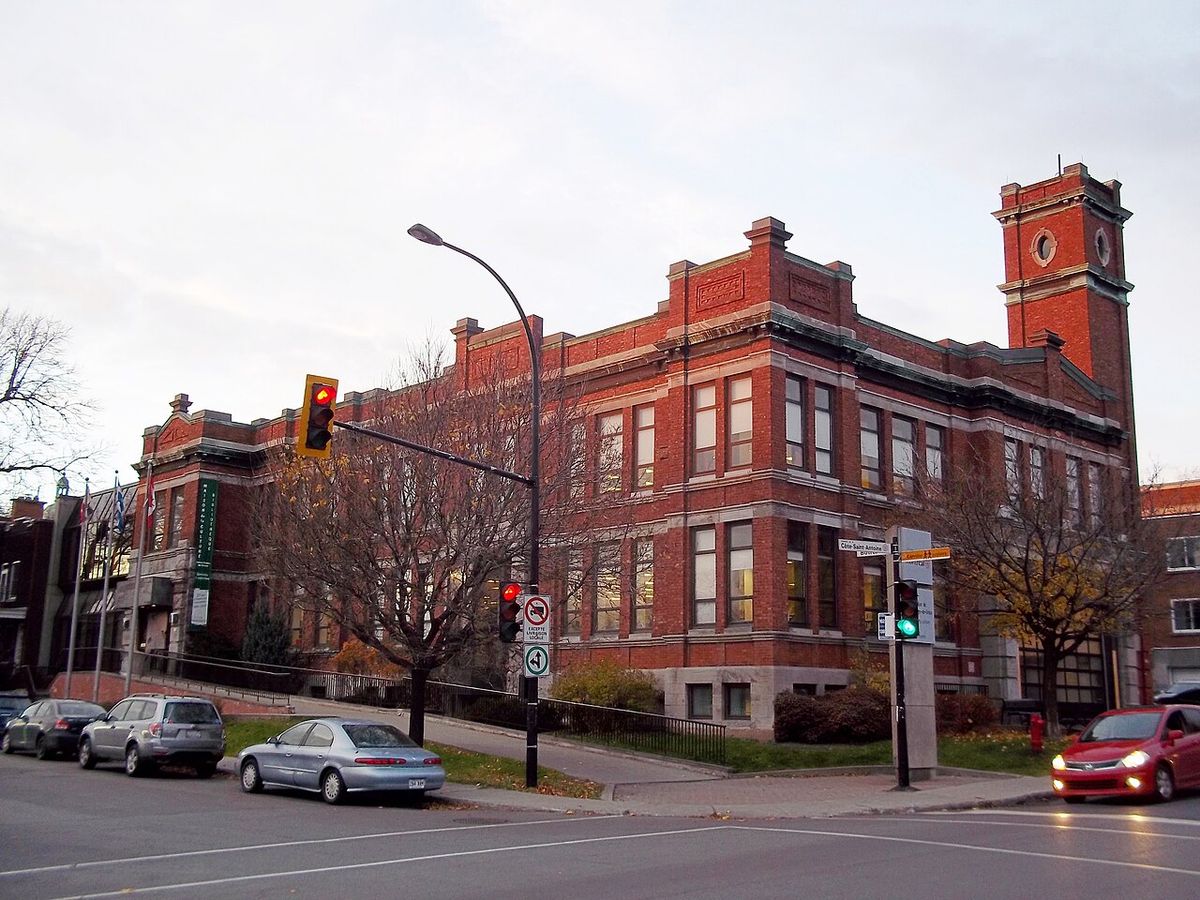
Côte-des-Neiges is a large neighbourhood situated on the western slope of Mount Royal, delineated by Queen Mary Road to the south, Jean-Talon Street to the north, Decelles Avenue to the east, and Décarie Boulevard to the west. Its topography influences its character, with more affluent housing in the hills and more affordable options lower down. The architecture is a mix of imposing early-20th-century semi-detached houses and tall apartment blocks. The area is described as green with active street life along main arteries like Côte-des-Neiges Boulevard, while side streets remain peaceful and residential. Key green spaces include the trails behind Saint Joseph's Oratory, Parc Jean-Brillant, Parc Van Horne, and Parc Westbury.
The neighbourhood is served by an extensive public transit network, including nine metro stations on the blue and orange lines, such as Université-de-Montréal, Côte-des-Neiges, Snowdon, Côte-Sainte-Catherine, and Plamondon. The 711 bus provides direct service to Saint Joseph's Oratory. This connectivity, combined with the presence of major institutions, makes it a highly walkable area. A 2026 comparison with the adjacent Notre-Dame-de-Grâce neighbourhood highlighted Côte-des-Neiges as a choice for those wanting to live within walking distance of universities and hospitals, though it is noted for being dense and noisy on main arteries with difficult parking near those institutions. In contrast, Notre-Dame-de-Grâce was characterized as a bilingual neighbourhood with quieter streets but higher housing costs, with a median single-family home price of $1,247,000 in the second quarter of 2026.
Education and Major Institutions
Côte-des-Neiges is a premier centre for education and healthcare in Montreal. Its most prominent institution is the Université de Montréal, whose main campus is located within the neighbourhood, along with its affiliated schools HEC Montréal and Polytechnique Montréal. This concentration makes the area extremely popular with students. The public school system is served by both the Francophone Centre de services scolaire de Montréal (CSSDM) and the Anglophone English Montreal School Board (EMSB). The neighbourhood is also a major medical hub, hosting the Jewish General Hospital, Saint-Justine's Hospital, and St. Mary's Hospital. These institutions are key employers and contribute to the area's dynamic, round-the-clock activity, attracting a transient population of students, researchers, and medical professionals.
- Francophone elementary schools include École primaire des Nations, École primaire Félix-Leclerc, and École primaire Iona.
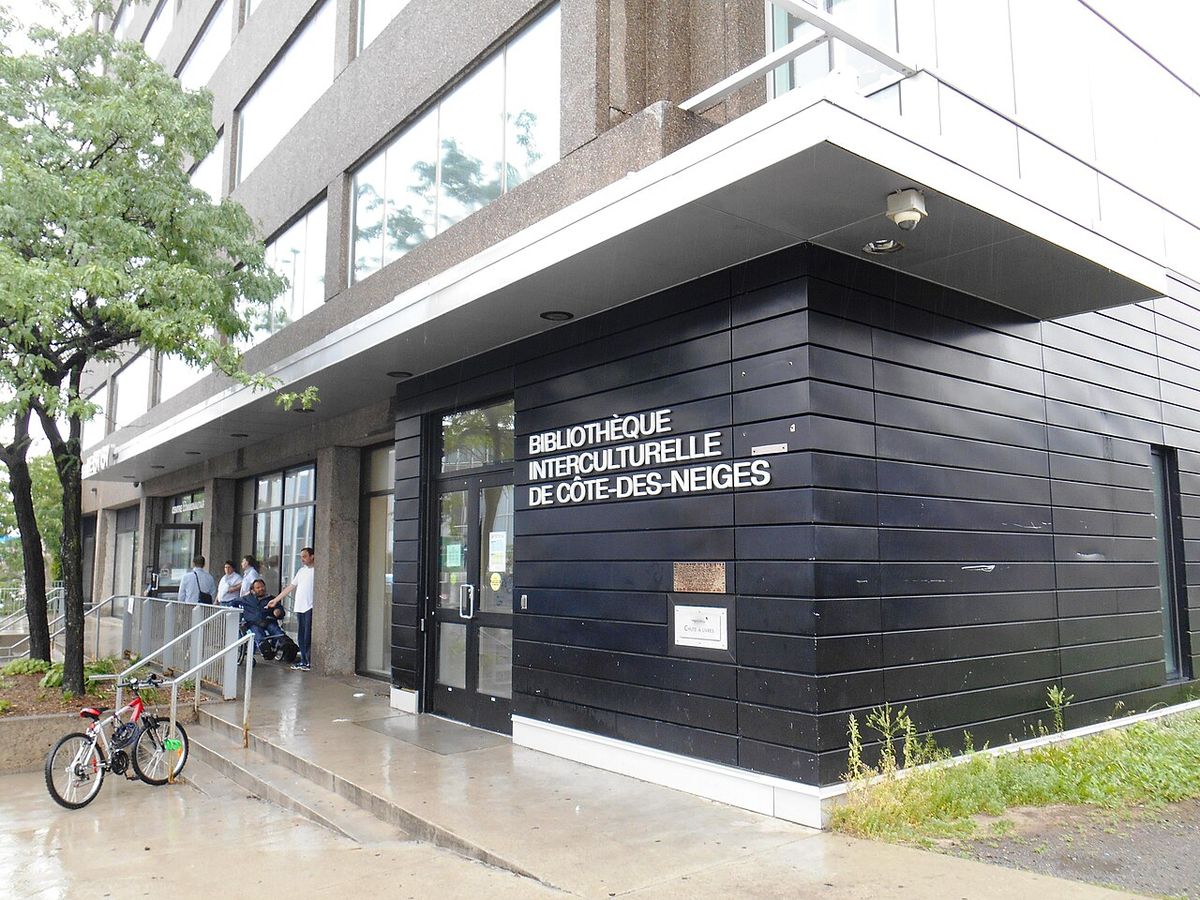
- The Montreal Public Libraries Network operates the Côte-des-Neiges library and the Bibliothèque interculturelle.
- Other educational institutions include Collège Jean-de-Brébeuf, Concordia University's Loyola campus, and Villa Maria College.
- Major hospitals are the Jewish General Hospital, Saint-Justine's Hospital, and St. Mary's Hospital.
- The main campus of the Université de Montréal is located within the neighbourhood.
Culture, Commerce, and Attractions
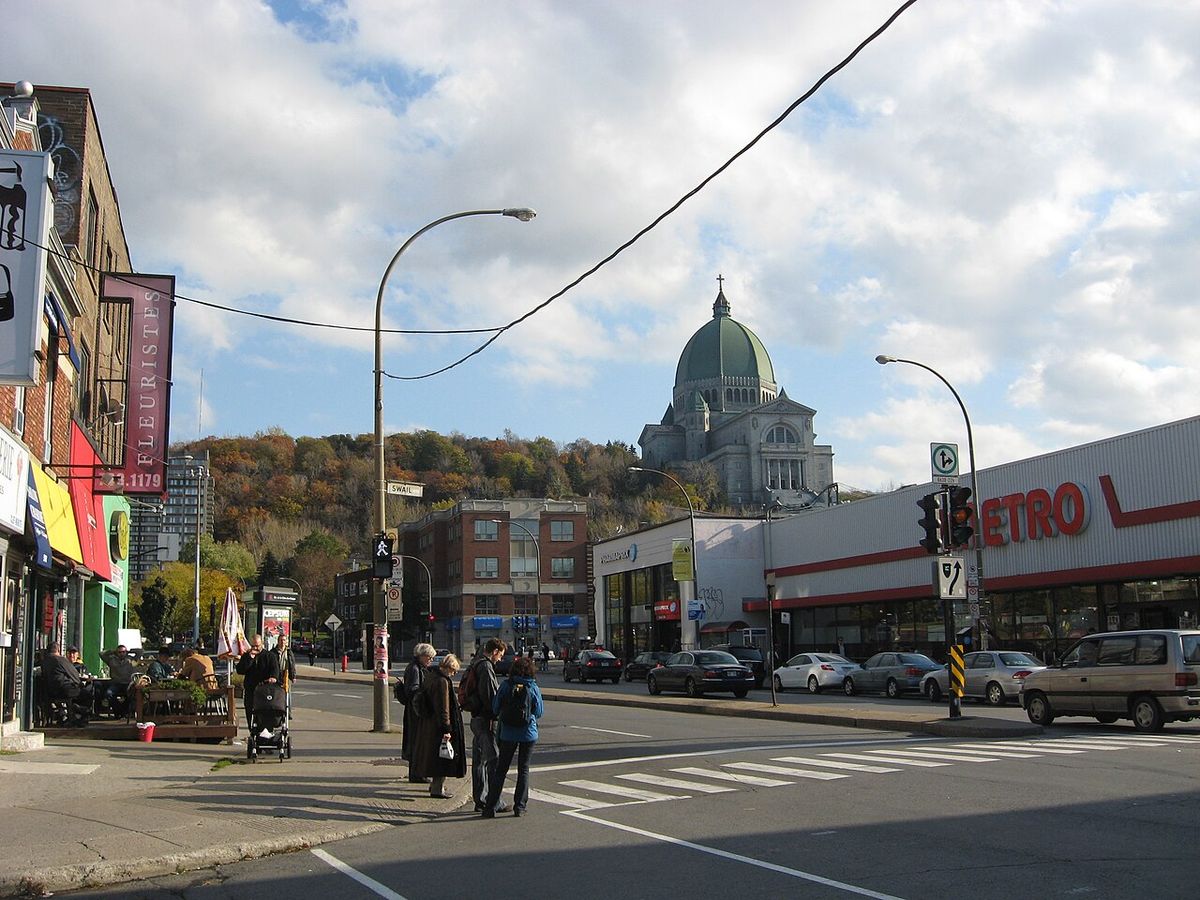
The cultural and commercial life of Côte-des-Neiges is as diverse as its population. The area's most famous landmark is Saint Joseph's Oratory of Mount Royal, a large domed basilica that is one of Montreal's most visited tourist attractions, offering panoramic views of the city. Another well-known local spot is the Gibeau Orange Julep, a roadside restaurant recognized for its giant orange sphere and hot dogs. The neighbourhood's main commercial arteries, including Côte-des-Neiges Boulevard, Queen Mary Road, and Victoria Street, are lined with shops and restaurants representing global cuisines. Cultural venues include the Maison de la culture Côte-des-Neiges, a noted community arts centre, and the Segal Centre for Performing Arts on Côte-Sainte-Catherine, a hub for English theatre designed by architect Phyllis Lambert.
For recreation, the CEPSUM sports complex at the Université de Montréal and the YM-YWHA offer gym and pool facilities. The dining scene is exceptionally varied, with notable restaurants serving Caribbean, Vietnamese, Indian, Middle Eastern, and Georgian food. Establishments like Tropical Paradise Restaurant, Pho Lien, Farhat, and Le Georgia illustrate the neighbourhood's culinary richness. Patisserie Duc de Lorraine is a famed local destination for French pastries and chocolates. Coffee shops such as Brûlerie Urbaine and Caravane Café, along with tea houses like Beau Thé and Café Safran+, cater to the local community.
- Notable restaurants include Tropical Paradise Restaurant, Pho Lien, Farhat, and Le Georgia.
- Popular cafes and tea houses are Brûlerie Urbaine, Caravane Café, Beau Thé, and Café Safran+.
- Cultural venues are the Maison de la culture Côte-des-Neiges and the Segal Centre for Performing Arts.
- Recreational facilities include the CEPSUM complex and the YM-YWHA.
- Key commercial streets are Côte-des-Neiges Boulevard, Queen Mary Road, and Victoria Street.
Housing Market
The Côte-des-Neiges housing market is shaped by its central location, institutional presence, and diverse housing stock. According to data from the second quarter of 2026, the median price for a single-family home in the broader CDN/CSL sector, which includes areas like Snowdon, was $1,164,500, reflecting a 10% year-over-year increase and a 20% rise over five years. These homes sold quickly, with an average of just 29 days on the market. The market consists largely of semi-detached houses and plexes, with tall apartment blocks providing much of the rental stock. The affordability gradient is topographical, with more expensive homes in the upper areas near the mountain and more affordable options lower down. This, along with proximity to the university, makes the neighbourhood particularly attractive to students and new immigrants. The area is known for being dense, with challenging parking near the major hospitals and university campuses.
In a 2026 comparison, the adjacent Notre-Dame-de-Grâce neighbourhood had a higher median single-family home price of $1,247,000 but a slower market, with homes taking 49 days to sell. Côte-des-Neiges is the second Montreal neighbourhood with the largest number of low-income residents, totaling 17,345 people. This low-income population is heavily concentrated in the Plamondon and Plamondon-Sud areas. The low-income rate in Plamondon-Sud is 21%, which is well above the Montreal average of 11%.
Notable Residents
Throughout its history, Côte-des-Neiges has been home to many notable individuals from various fields. The neighbourhood's cultural influence is reflected in the artists and performers who have lived there. Comedian and actor Sugar Sammy grew up in Côte-des-Neiges, as did journalist Pierre Nadeau. The hip hop collective Nomadic Massive has strong ties to the area, with several members born, raised, or residing there. The group maintained its headquarters in the neighbourhood and often referenced it in their music, such as in the song "Medina to Vezina." Other notable figures include environmentalist André Bouchard, actor and comedian Normand Brathwaite, and basketball player Kris Joseph, all of whom grew up in Côte-des-Neiges.
- André Bouchard, environmentalist, grew up in Côte-des-Neiges.
- Normand Brathwaite, actor and comedian, born in Côte-des-Neiges.
- Kris Joseph, basketball player, grew up in Côte-des-Neiges.
- Nomadic Massive, hip hop group, headquartered in the neighbourhood.
- Sugar Sammy, comedian and actor, grew up in Côte-des-Neiges.
- Justin Trudeau, politician, owned a home in Côte-des-Neiges until 2013.
- Sophie Grégoire Trudeau, television host, owned a home in Côte-des-Neiges until 2013.
- Xue Yiwei, writer, resident in Côte-des-Neiges.
Notable people from the neighbourhood include lawyer David Ross McCord, who lived in Côte-des-Neiges. Nun Marie-Anne-Marcelle Mallet was born in Côte-des-Neiges. Trade unionist Léa Roback died in Côte-des-Neiges. Other notable residents have included politician Justin Trudeau, who owned a home there until 2013, and comedian Sugar Sammy, who grew up in the area.
Questions about Côte-des-Neiges
What is Côte-des-Neiges known for?
Côte-des-Neiges is best known for being one of the most ethnically diverse and densely populated neighbourhoods in Canada, with over 100 ethnic communities. It is a major educational and medical hub, home to the Université de Montréal, HEC Montréal, Polytechnique, and several major hospitals including the Jewish General Hospital. Its most famous landmark is Saint Joseph's Oratory of Mount Royal, a major tourist attraction. The neighbourhood's multilingual street life and global culinary scene are also defining characteristics.
Is Côte-des-Neiges a good place to live for students?
Yes, Côte-des-Neiges is an extremely popular neighbourhood for students. The main campus of the Université de Montréal is located within its boundaries, making it convenient for attendance. The area has a high concentration of young adults aged 18 to 34, who make up 32% of the population. Housing includes many apartment blocks that provide rental options, and the cost of living can be more affordable in certain sectors. Excellent public transit access via nine metro stations also makes it easy to commute.
What languages are spoken in Côte-des-Neiges?
Côte-des-Neiges is one of the few Montreal neighbourhoods where neither French nor English is the dominant language. Both of Canada's official languages are spoken equally by the population. A high number of residents are multilingual, speaking a wide variety of other languages due to the area's immense ethnic diversity. This linguistic mosaic includes languages from the Philippines, the Caribbean, South Asia, the Middle East, Eastern Europe, and Africa, reflecting the origins of its immigrant communities.
What are the main attractions in Côte-des-Neiges?
The primary attraction is Saint Joseph's Oratory of Mount Royal, a large basilica offering city views. The Gibeau Orange Julep is a well-known local roadside restaurant and landmark. The neighbourhood's diverse commercial streets, like Côte-des-Neiges Boulevard and Queen Mary Road, are attractions for shopping and global dining. Cultural sites include the Maison de la culture Côte-des-Neiges and the Segal Centre for Performing Arts. The extensive trails and parks on the slopes of Mount Royal also provide significant green space.
How does the cost of living in Côte-des-Neiges compare to nearby areas?
Housing costs in Côte-des-Neiges vary by location, with higher prices in the upper areas near the mountain. As of the second quarter of 2026, the median price for a single-family home in the broader area was $1,164,500. This is generally lower than in the adjacent neighbourhood of Notre-Dame-de-Grâce, where the median was $1,247,000. Côte-des-Neiges offers more affordable housing options, particularly in apartment buildings, but it is noted for density, noise on main arteries, and difficult parking near institutions. Notre-Dame-de-Grâce is characterized as quieter but with a higher entry price for single-family homes.
What is the history of the Black community in Côte-des-Neiges?
Part of the neighbourhood's Black anglophone community traces its roots to the 1960s, when families displaced from the Little Burgundy area resettled in Côte-des-Neiges. Oral histories document several Black families living there in the mid-20th century, including the Chambers, Fields, Whites, Smiths, Clarks, Tynes, and Martins. The earliest members of this community included men from the United States, Atlantic Canada, and the Caribbean who came to work on the railroads. Today, the Black population is diverse, encompassing people of African, Caribbean, Atlantic Canadian, and Afro-Indigenous heritage.
Sources and further reading
- Côte-des-Neiges (Wikipedia)
- Montréal neighbourhood: Discover Côte-des-Neiges (mtl.org)
- Côte-des-Neiges (centraide-mtl.org)
- Côte-des-Neiges or Notre-Dame-de-Grâce: Pros and Cons ... (loaamanseur-remax.ca)
Checked by the Your Space Hamilton desk. Last updated 2026-10-25.