Koreatown, Toronto
Koreatown is an ethnic enclave and neighbourhood within the Seaton Village area of Toronto, Ontario, centred along Bloor Street between Christie and Bathurst Streets. The district developed during the 1970s following an influx of Korean immigrants to the city, becoming a focal point for Korean-Canadian culture, businesses, and cuisine. Toronto is home to the largest single concentration of Koreans in Canada, with 53,940 people identifying as Korean in the 2016 census. While the original Koreatown remains a significant commercial and cultural hub, a second major cluster of Korean businesses, often called Koreantown North or Uptown Koreatown, has emerged in the Willowdale neighbourhood along Yonge Street.
Historical Development and Immigration
The section of Bloor Street west of Bathurst Street that would become Koreatown was heavily populated by people from Central and South America prior to the late 1960s. The Korean presence in Toronto at that time was minimal, with the population recorded at approximately 100 individuals in 1966. A major change in Canadian immigration policy in 1967, which removed racially discriminatory criteria and emphasized skills and education, led to a sharp increase in Korean immigration. By the 1970s, the direct result of this policy shift was a Korean population in Toronto that had grown to roughly 10,000 people. Many of these new immigrants chose to settle in the Bloor and Bathurst area, attracted by affordable housing and the emerging sense of community.
This concentrated settlement provided the customer base necessary for entrepreneurs to establish businesses catering to Korean tastes and needs. A small Korean business neighbourhood developed along Bloor Street, with its initial centre at the intersection of Bloor Street and Manning Avenue. The types of businesses that opened were practical and cultural, including restaurants, bakeries, gift shops, grocery stores, and travel agencies, which served both the immigrant community and began to attract other Torontonians. The establishment of these stores transformed the commercial character of the street, creating a visible ethnic enclave that has persisted for over five decades.
Geography and Urban Character
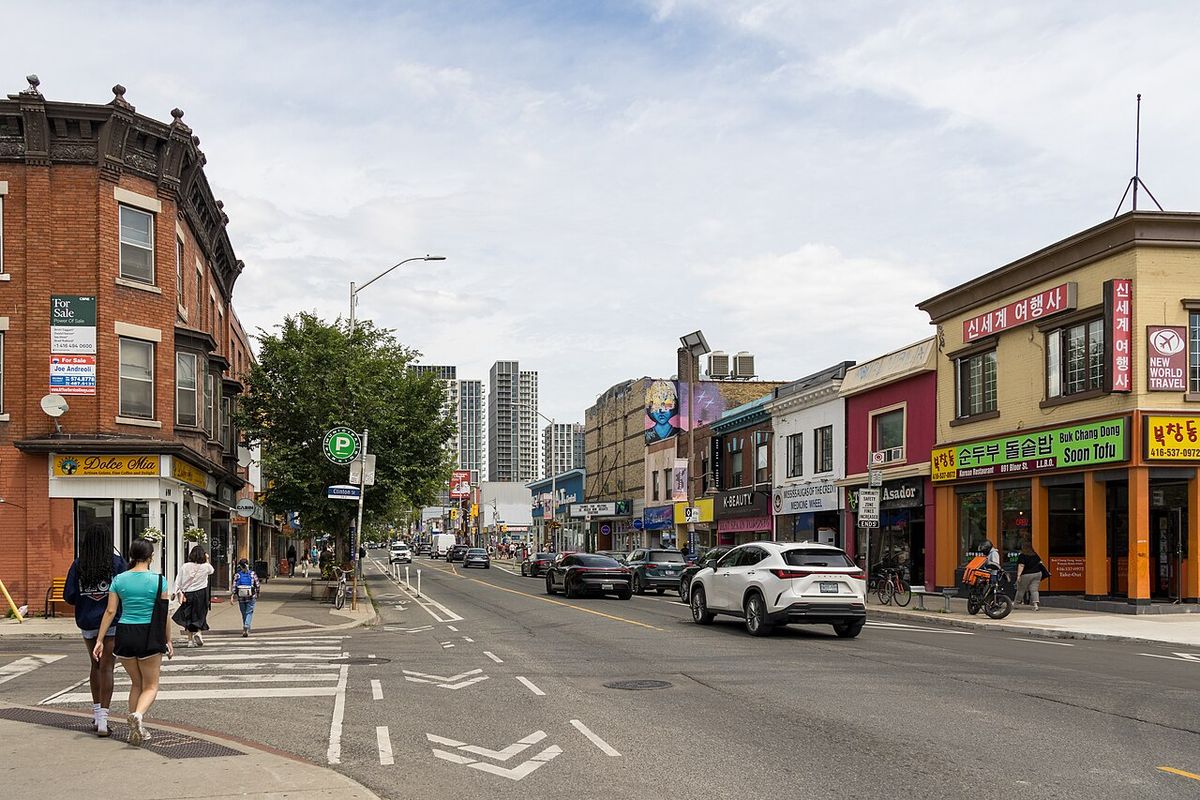
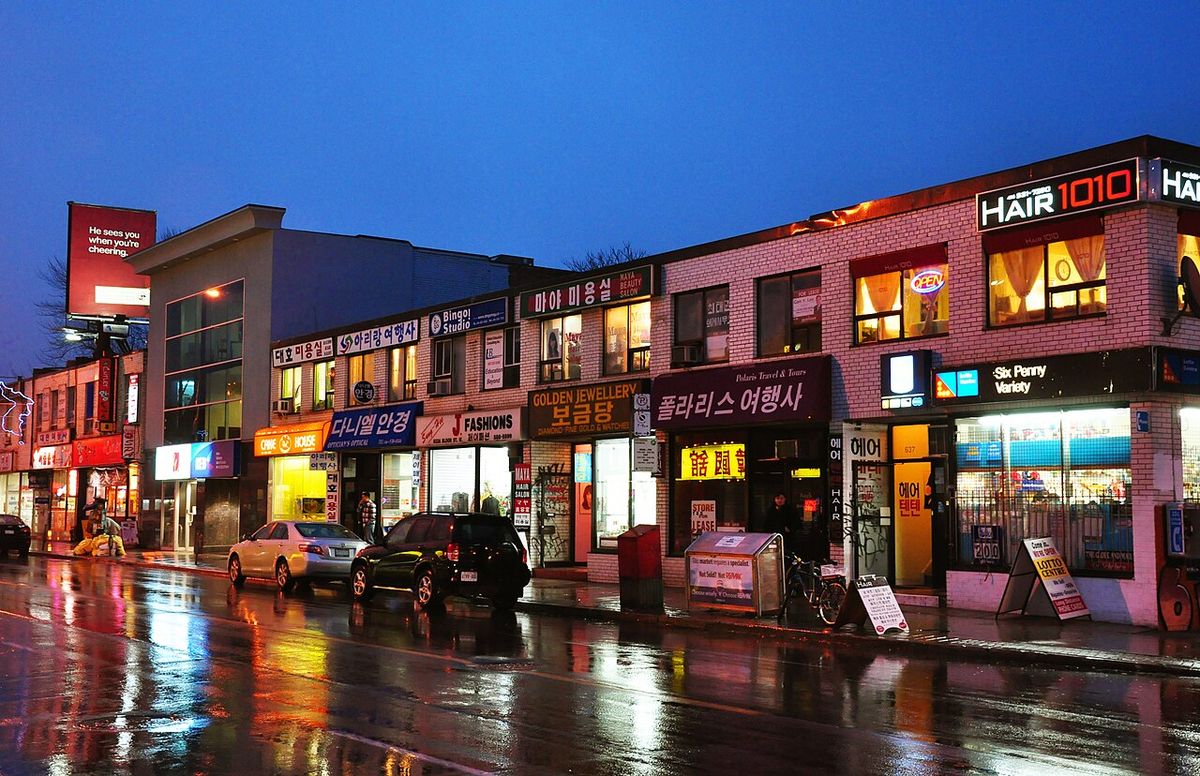
Koreatown Toronto is geographically defined by its linear stretch along Bloor Street West, running from Christie Street in the east to Bathurst Street in the west. This commercial corridor is embedded within the larger residential neighbourhood of Seaton Village. The area's urban character is defined by its dense concentration of storefronts displaying Korean-language signage, which advertise a wide array of goods and services rooted in Korean culture. The streetscape is continuously active with restaurants, cafes, supermarkets, and specialty shops that draw visitors from across the Greater Toronto Area. The neighbourhood's built form is predominantly low to mid-rise, with most buildings housing ground-floor retail and upper-level offices or apartments.
While the area is a premier destination for Korean cuisine and shopping, its residential population is ethnically diverse and not predominantly Korean. The enclave's commercial success and high visibility have made it a studied example of an ethnic commercial district in Toronto, demonstrating how immigrant communities can shape urban identity and economic activity. The Manning Avenue intersection remains a historical reference point for the district's origins, though commercial activity now fills the entire defined strip. This commercial density creates a distinct sense of place that is immediately recognizable to both residents and visitors to the city.
Demographic Evolution and Patterns
According to the 2016 Canadian census, the city of Toronto had a Korean population of 53,940 individuals, representing the largest single concentration of Koreans in the country. This population is not confined to the original Koreatown but is spread across the metropolitan area. Within the Koreatown area itself, the residential population is modest and multicultural, as the district functions primarily as a commercial and cultural hub. The demographic significance of the area lies in its role as a business and community centre for a geographically dispersed population. The growth of the Korean community in Toronto is directly linked to post-1967 immigration trends, which saw the population explode from about 100 in 1966 to roughly 10,000 by the 1970s.
This rapid growth provided the critical mass needed to support dedicated ethnic businesses and institutions that defined the Bloor Street enclave. While many Korean Canadians now live in suburban areas like North York, Markham, and Mississauga, they frequently return to Koreatown for specific cultural products, dining, and community events. The area's economic vitality depends on this sustained patronage from across the region, which has allowed its shops and restaurants to thrive for decades. This pattern of a commercial core serving a dispersed residential community is a common feature of many successful ethnic enclaves in major North American cities.
The Willowdale Koreantown North
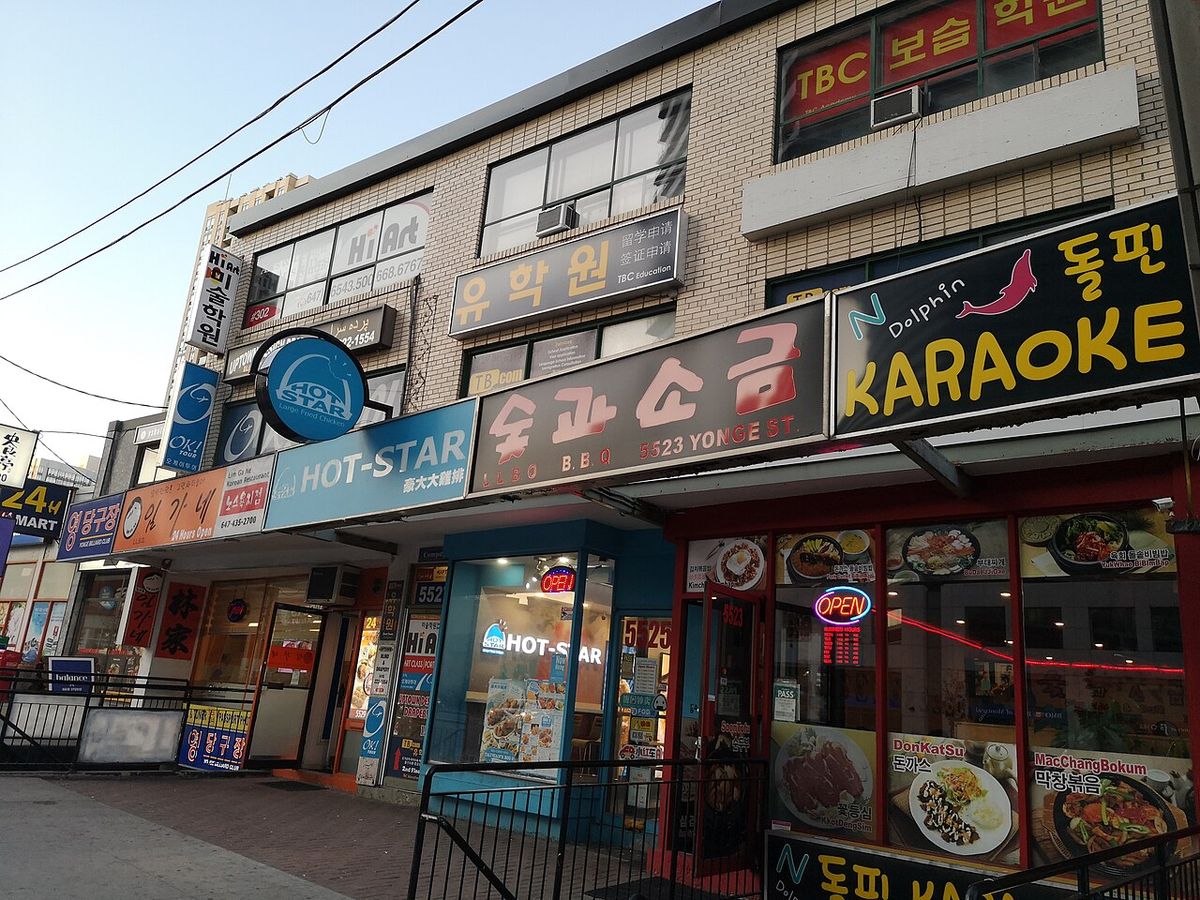
In recent decades, a second major cluster of Korean businesses and community institutions has developed in North Toronto, within the neighbourhood of Willowdale. This area is informally referred to by several names, including Koreantown North, New Koreatown, and Uptown Koreatown. The commercial heart of this cluster is centred along Yonge Street, stretching from Finch Avenue in the north to Sheppard Avenue to the south. This linear corridor features a high density of Korean restaurants, cafes, bakeries, supermarkets, and professional services, creating a newer node of Korean-Canadian life. The 2016 Census reported that Willowdale had over 118,000 residents, of whom more than 10,000 identified Korean as their first language.
Within the specific strip of Yonge Street from Finch to Sheppard, Koreans account for more than 13 percent of the population. This significant residential presence, combined with commercial development, has created a district that functions as both a residential enclave and a commercial destination. The emergence of Koreantown North reflects the northward movement of the Korean community within the city and the growth of suburban ethnic commercial districts that serve local residents. This district complements the original Bloor Street area by providing convenient services for the large Korean population living in North Toronto.
- Primary Location: Yonge Street between Finch and Sheppard Avenues.
- Common Names: Koreantown North, New Koreatown, Uptown Koreatown.
- Korean First-Language Speakers (2016): Over 10,000 in Willowdale.
- Population Share on Yonge Strip: Koreans make up over 13% of the population on Yonge St. from Finch to Sheppard.
- Community Role: Serves as a residential and commercial hub for Korean Canadians in North Toronto.
- Comparative Age: A newer development than the historic Bloor Street Koreatown.
Commercial Economy and Business Types
The commercial economy of Koreatown is dominated by small, independent businesses that serve both the Korean-Canadian community and the general public. The area is particularly renowned for its authentic Korean restaurants, which range from casual barbecue spots and noodle houses to upscale dining establishments. Other common business types include Korean bakeries offering pastries like bungeoppang and red bean buns, grocery stores stocking imported ingredients, kimchi, and produce, karaoke rooms, beauty supply shops, and bookstores. These enterprises collectively create a comprehensive ecosystem where one can find nearly any Korean product or service. Beyond retail and dining, the area hosts cultural institutions and essential service providers such as travel agencies, churches, and community centres that facilitate connections to Korea and support new immigrants.
The enclave acts as a cultural gateway, introducing non-Korean Torontonians and visitors to Korean food, entertainment like noraebang (karaoke), and customs. While it lacks large-scale ceremonial arches or plazas found in some other North American Koreatowns, its identity is firmly established through its business signage, product offerings, and the daily rhythms of commerce. The area also serves as an informal community bulletin board, with notices for housing, services, and events often posted in shop windows. This combination of commerce and community support has been key to the district's longevity and its importance within the city's broader economic scene.
Cultural Significance and Community Function
Koreatown holds considerable cultural and economic importance within Toronto's diverse urban fabric. It is one of the city's most recognizable and established ethnic commercial districts, contributing to Toronto's international reputation as a multicultural metropolis. The district provides essential economic opportunities for Korean-Canadian entrepreneurs and serves as a crucial landing spot for new immigrants, offering familiar foods, language, and services that ease the transition to life in Canada. Its commercial success on Bloor Street demonstrated the economic viability of ethnic commercial corridors, influencing urban development patterns and the acceptance of similar districts elsewhere in the city. The area also performs an important function in preserving and transmitting Korean culture to subsequent generations of Korean Canadians who may live in less concentrated areas.
It is a destination for cultural celebration during holidays like Chuseok (Korean Thanksgiving) and Seollal (Lunar New Year), with special foods, gifts, and traditional goods available in stores. For the wider Toronto population, Koreatown is a popular destination for dining and exploration, contributing significantly to the city's culinary tourism and food culture. The parallel growth of Koreantown North in Willowdale illustrates the dynamic and expanding nature of the Korean-Canadian community and its ongoing impact on the city's social and commercial geography. Together, these districts ensure that Korean culture maintains a prominent and active presence within Toronto's civic life.
Comparative Analysis: Bloor Street vs. Willowdale
The two Korean commercial districts in Toronto, the original on Bloor Street and the newer one in Willowdale, share similarities but also exhibit key differences in their development and function. Both are linear corridors centred on major streets, both feature a high density of Korean-owned businesses, and both serve as community hubs. The primary difference lies in their relationship to residential settlement. The Bloor Street area developed as a commercial enclave for a community that lived nearby initially but later dispersed, while Willowdale's district grew alongside a substantial and growing local Korean residential population. The Bloor Street Koreatown has a longer history, dating to the 1970s, and carries a symbolic weight as the original centre of the community in Toronto.
Its clientele is more destination-based, drawing people from across the city. The Willowdale cluster, often called Koreantown North, is newer and functions more as a neighbourhood service centre for local residents, though it also attracts visitors. This evolution from a single, historic commercial enclave to multiple nodes, including a major residential-commercial district, mirrors the maturation and geographic spread of the Korean-Canadian community in the Greater Toronto Area. The existence of two strong districts indicates the community's size and economic strength, allowing it to sustain significant commercial activity in different parts of the city.
| Feature | Bloor Street Koreatown | Willowdale Koreantown North |
|---|---|---|
| Primary Street | Bloor Street West | Yonge Street |
| Approximate Boundaries | Christie St. to Bathurst St. | Finch Ave. to Sheppard Ave. |
| Local Korean Residential Population | Low | High (>10,000 first-language speakers) |
| Primary Community Role | Historic commercial & cultural destination | Residential-commercial neighbourhood hub |
| Other Names | Koreatown | New Koreatown, Uptown Koreatown |
| Surrounding Neighbourhood | Seaton Village | Willowdale |
Questions about Koreatown, Toronto
Where is Koreatown located in Toronto?
Koreatown is located in the Seaton Village area of Toronto, centred along Bloor Street West between Christie Street and Bathurst Street. This linear commercial corridor is the original and most well-known Korean enclave in the city. A second major cluster, often called Koreantown North, is located in the Willowdale neighbourhood along Yonge Street between Finch and Sheppard Avenues. Both areas are defined by a high concentration of Korean-owned businesses, restaurants, and cultural institutions that serve the community and the wider public.
When did Koreatown Toronto develop?
Koreatown began to develop in the late 1960s and throughout the 1970s. This growth was directly triggered by Canada's adoption of a more liberal immigration policy in 1967, which led to a significant influx of Korean immigrants to Toronto. The city's Korean population grew from approximately 100 in 1966 to about 10,000 by the 1970s. Many of these new immigrants settled near Bloor and Bathurst, establishing the businesses that formed the core of the enclave around the intersection of Bloor Street and Manning Avenue.
What is the difference between Koreatown and Koreantown North?
The original Koreatown is on Bloor Street in Seaton Village and was established in the 1970s. Koreantown North, in Willowdale, is a newer commercial and residential cluster that developed in recent decades along Yonge Street. While the Bloor Street area is a historic commercial hub with few Korean residents, Willowdale has a significant residential Korean population, with over 10,000 people reporting Korean as their first language in 2016. The Bloor Street district serves as a city-wide destination, while Willowdale functions more as a local neighbourhood hub for northern Toronto.
How many Korean people live in Toronto?
According to the 2016 Canadian census, 53,940 people identified as Korean in the city of Toronto. This represents the largest single concentration of Koreans in Canada. The population is not concentrated solely in the Koreatown area but is spread across the metropolitan region. A significant portion resides in North Toronto, particularly in the Willowdale area, which is home to over 10,000 Korean first-language speakers, indicating a strong and growing community presence in that part of the city.
What kind of businesses are found in Koreatown?
Koreatown features a wide variety of Korean-oriented businesses catering to both the community and general public. The most prominent are restaurants serving authentic Korean cuisine like barbecue, stews, and noodles. Other common establishments include Korean bakeries, grocery stores stocking imported goods, gift shops, beauty supply stores, karaoke rooms, travel agencies, and bookstores. These businesses collectively create a commercial streetscape that reflects Korean culture and meets the daily needs of the community, from groceries to entertainment and travel services.
Do many Koreans actually live in the Koreatown area?
No, very few Koreans live within the Koreatown boundaries on Bloor Street today. The area developed primarily as a commercial and cultural hub for a community that initially settled nearby but has since dispersed residentially across the Greater Toronto Area. While many Korean Canadians work, own businesses, and socialize in Koreatown, they typically reside in other neighbourhoods. The newer Koreantown North in Willowdale, by contrast, has a substantial residential Korean population living above and around its commercial strip on Yonge Street.
Sources and further reading
- Koreatown, Toronto (Wikipedia)
- Visit Koreatown Toronto: A Vibrant Hub of Korean Culture (destinationtoronto.com)
- Koreatown, Toronto: Neighbourhood Real Estate Feature (foxmarin.ca)
- Koreatown, Toronto ON - (home.bode.ca)
- Explore Energetic Koreatown In Toronto, Urbaneer (urbaneer.com)
Checked by the Your Space Hamilton desk. Last updated 2026-11-02.