Ottawa
Ottawa is the capital city of Canada and the country's political centre, housing the Parliament of Canada, the Supreme Court, and the headquarters of the federal government. Located in southeastern Ontario at the confluence of the Ottawa and Rideau rivers, it forms the core of the Ottawa, Gatineau census metropolitan area and the National Capital Region. Founded as Bytown in 1826 and incorporated as the City of Ottawa in 1855, it is now the fourth-largest city in Canada with a population of over one million. Ottawa is distinguished by its high proportion of university-educated residents, its concentration of national institutions, and its status as a major cultural and technological hub.
Etymology and Indigenous History
The name Ottawa was chosen in 1855 and is derived from the Ottawa River. The river's name comes from the Algonquin word 'adawe,' meaning 'to trade.' In modern Algonquin, the city is known as Odàwàg. This name reflects the area's deep history as a meeting point for trade and travel long before European contact. The Ottawa Valley became habitable around 10,000 years ago after the draining of the Champlain Sea. Evidence of human presence, such as spearpoints, dates back 8000 to 8500 years, and by 6000 years ago there were robust trading and communications networks in the region.
By approximately 3000 to 3500 years ago, there were definitive, continuously existing settlements near the mouth of the Gatineau River, within the modern bounds of the city. These findings suggest the Algonquin people were engaged in foraging, hunting, fishing, and extensive trade. The confluence of the Ottawa, Rideau, and Gatineau rivers made the area a crucial hub for these activities for thousands of years. This period of Indigenous habitation and commerce ended with the arrival of European explorers and settlers beginning in the early 17th century.
European Settlement and Early Development
The first documented European to travel the Ottawa River was Étienne Brûlé in 1610, passing what would become Ottawa on his way to the Great Lakes. Permanent non-Indigenous settlement began with Philemon Wright, a New Englander who founded a lumber town on the north side of the river in 1800, an area that later became Gatineau. Wright pioneered the Ottawa Valley timber trade by transporting timber by river to Quebec City, establishing the region's most significant economic activity for over a century. The modern city's origins are tied to the construction of the Rideau Canal, a project initiated after the War of 1812 to create a secure route between Montreal and Kingston. In 1826, a town was established to support the project led by Colonel John By and was named Bytown in his honour in 1827. Colonel By set up military barracks on the future site of Parliament Hill and laid out the town's streets, creating the distinct neighbourhoods of Upper Town, west of the canal, and Lower Town, to the east. Bytown's population grew to 1,000 after the canal's completion in 1832, was incorporated as a town in 1850, and was renamed Ottawa upon achieving city status in 1855, with William Pittman Lett serving as its first city clerk.
Selection as the National Capital
The choice of a permanent capital for the United Province of Canada was a long and contentious process involving more than 200 parliamentary votes over several decades. After the Parliament building in Montreal was burned by an Orange mob in 1849, the legislature struggled to find a suitable location, even considering a system of alternating sessions between Toronto and Quebec City known as perambulation. An 1856 vote to move permanently to Quebec City failed when the upper house refused to approve funding, leading to a political impasse. The legislature ultimately requested that Queen Victoria determine the seat of government, removing the decision from parliamentary debate.
Acting on the detailed advice of Governor General Edmund Head, the Queen selected Ottawa as the capital in a letter dated December 31, 1857. Ottawa was seen as a compromise acceptable to both Upper and Lower Canada, and its regional isolation was considered an asset for defence. Its location, set back from the US border on a cliff and surrounded by dense forest, was considered more defensible than other cities. Ottawa also had transportation links via the Ottawa River and Rideau Canal from spring to fall, a modern all-season railway connection since 1854, and the government already owned the land that would become Parliament Hill. Parliament ratified the choice in 1859, and the first session in the new Gothic Revival Parliament buildings was held in 1866, with the Centre, East, and West Blocks constructed between 1859 and 1866.
Post-Confederation Growth and Early 20th Century
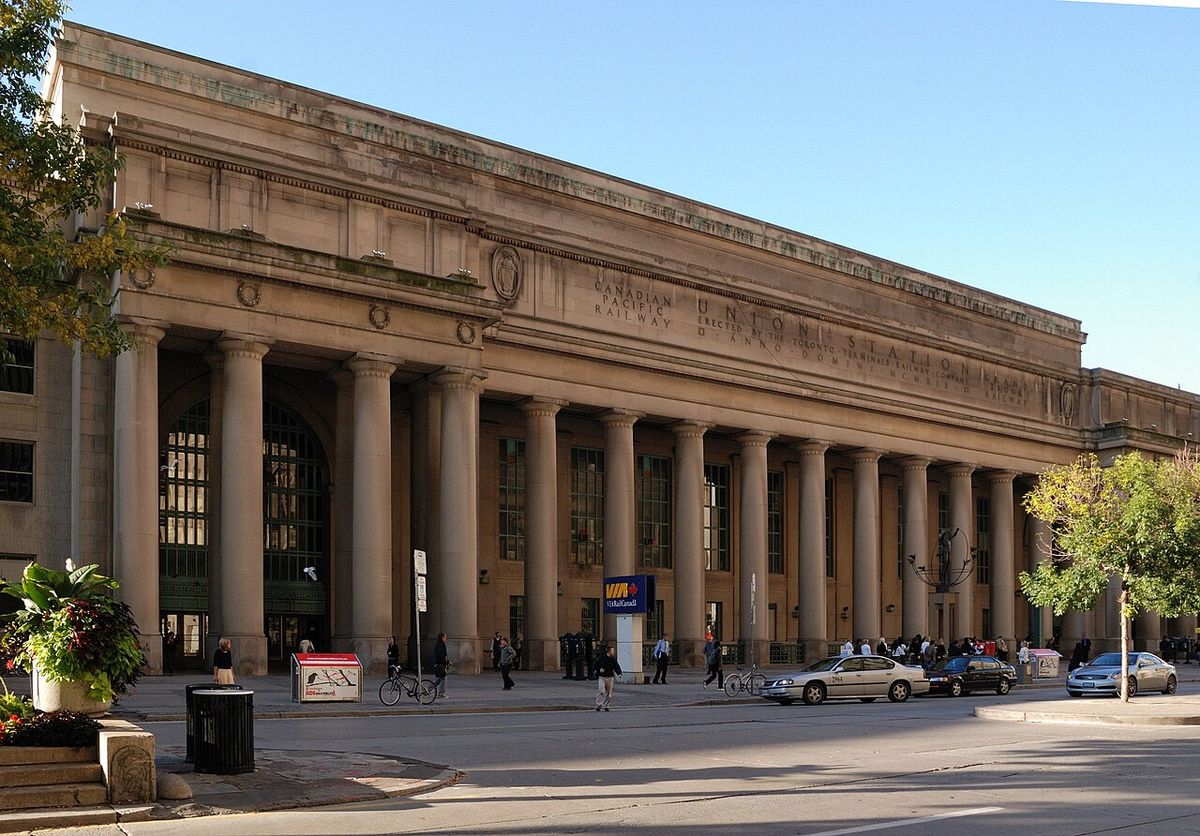
In 1868, Thomas D'Arcy McGee was assassinated on Sparks Street, the only such killing of a federal Canadian politician. The city's infrastructure and economy continued to evolve, with the distribution of water leases for hydroelectric generation at Chaudière Falls in 1889 and the establishment of an electric streetcar system in the 1890s that would operate until 1959. A major disaster struck in 1900 when a chimney fire in Hull spread to Ottawa, destroying about one-fifth of Ottawa's buildings from Lebreton Flats to Dow's Lake and leaving an estimated 14 percent of Ottawans homeless. The early 20th century also saw public health crises, including serious typhoid outbreaks in 1911 and 1912 linked to sewage contaminating the city's drinking water intake at Nepean Bay, which caused over 80 deaths in 1911 and 98 in 1912. Significant construction continued, including the opening of the Château Laurier hotel and Union Station in 1912. The original Centre Block of Parliament was destroyed by fire in February 1916, forcing the House of Commons and Senate to temporarily relocate to the Victoria Memorial Museum until the new Centre Block, featuring the Peace Tower, was completed in 1927. The city's ceremonial centre was developed at Confederation Square, which became the site of the National War Memorial in 1939.
Modern Planning and the Gréber Plan
Ottawa's former industrial appearance was vastly altered by the 1950 Gréber Plan, commissioned by Prime Minister Mackenzie King and designed by French architect-planner Jacques Gréber. The plan aimed to create an urban design for the National Capital Region that was more aesthetically pleasing and befitting a national capital. Key recommendations included the creation of the National Capital Greenbelt, the construction of the Queensway highway and scenic parkways like the Kichi Zibi Mikan, the establishment of the National Arts Centre, and the removal of railways and industries from the downtown core. The plan also called for the relocation of downtown Union Station to the suburbs, which was completed, and the elimination of the streetcar system.
While not every recommendation in the Gréber Plan was acted upon, such as the proposal to place a new city hall on the east side of the canal, the plan's open space recommendations did lead to the creation of spaces such as the Rideau Canal and Ottawa River pathways. A major precondition to the creation of the Rideau Canal pathway was the elimination of direct rail service into downtown. This led to the abandonment of the Ottawa Train Station as the city's main station. The implementation of the Gréber Plan was overseen by the newly established National Capital Commission. This crown corporation was created by the 1958 National Capital Act and began its work in 1959, supplanting previous planning bodies like the Federal District Commission.
Contemporary Economy and High-Tech Sector
Throughout the latter half of the 20th century, Ottawa's economy was anchored by the federal public service, which roughly tripled in size during the Second World War and continued to grow. From the 1960s to the 1980s, a large increase in construction in the National Capital Region was followed by explosive growth in the high-tech industry. Federally assisted research facilities like the National Research Council and large private sector employers like Bell Northern Research, which later became Nortel and employed thousands, laid the foundation for a technology boom. By the 1980s and 1990s, Ottawa had earned the nickname Silicon Valley North and was one of Canada's largest high-tech cities.
The early companies fostered an ecosystem that led to the establishment of successful newer firms in telecommunications and software, such as Newbridge Networks, Mitel, and Corel. This high-tech sector, combined with the stable government sector, universities, and a thriving tourism industry that attracts over 11 million visitors annually, gives Ottawa a diverse and resilient economy. The city also plays host to major federal-provincial negotiations, such as the 1981 Kitchen Accord that led to the patriation of the Canadian constitution. Today, the city supports local business through initiatives like the Shop Local, Buy Canadian campaign and hosts major events like the City of Om wellness festival and the Kickin' In The Capital soccer tournament.
Municipal Governance and Current Priorities
The City of Ottawa is governed by the City of Ottawa Act of the Government of Ontario. The municipal government consists of a mayor elected city-wide and 24 councillors elected from individual wards, all using a first-past-the-post system. The city council meets at Ottawa City Hall, located at 110 Laurier Avenue West in Andrew S. Haydon Hall, a building that became city hall in 2001 following a major municipal amalgamation that replaced the old Regional Municipality of Ottawa-Carleton. Prior locations included a city hall on Green Island from 1958 to 2001 and the Transportation Building adjacent to Union Station from 1931 to 1958.
The city manages a complex budget that funds a wide range of services. For the 2026 fiscal year, the draft operating and capital budget proposes an overall property tax increase of 3.75 percent, which includes a 2 percent citywide levy and 5 percent for policing. To improve public engagement and transparency, the city has introduced tools like the Draft Budget 2026 Magazine and an interactive Budget Explorer with charts and graphs. Residents can provide input through their councillor's office, committee meetings, social media, and contacting the city's 3-1-1 service. The next municipal election is scheduled for October 26, 2026, when residents will elect a mayor, councillors, and school board trustees.
Education, Culture, and National Institutions
Ottawa has the highest proportion of university-educated residents among major Canadian cities. It is home to several post-secondary institutions, including the bilingual University of Ottawa, Carleton University, Algonquin College, and the French-language Collège La Cité. This highly educated workforce supports both the public service and the knowledge-based private sector. The city's cultural landscape is defined by its concentration of national institutions, which include the Parliament of Canada, the Supreme Court, the National Arts Centre, the National Gallery of Canada, and numerous national museums such as the Canadian Museum of History and the Canadian Museum of Nature. The city's heritage is preserved in many monuments and historic sites, including the National War Memorial at Confederation Square, a National Historic Site designated in 1984.
The city's pathways, particularly the Rideau Canal which becomes a large skating rink in winter, and the National Capital Greenbelt provide extensive recreational opportunities. Major annual events draw millions, from Canada Day celebrations to specialized festivals. This combination of economic opportunity, education, culture, and amenities contributes to Ottawa's consistently high standard of living and its status as one of the most visited cities in Canada. The city also maintains a high standard of municipal services and public engagement, as seen in its detailed budget processes and support for local businesses and community events.
Questions about Ottawa
Why was Ottawa chosen as the capital of Canada?
Ottawa was chosen by Queen Victoria in 1857 on the advice of Governor General Edmund Head. It was selected as a neutral compromise between the competing interests of Upper Canada (Ontario) and Lower Canada (Quebec). Its inland location, set back from the US border on a cliff, was considered more defensible than other cities. Ottawa also had transportation links via water and a new railway, and its smaller size was thought to make it less prone to the political mob violence that had occurred in previous capitals like Montreal.
What are some of Ottawa's major universities and colleges?
Ottawa is a major centre for post-secondary education. Its largest universities are the University of Ottawa, a bilingual public research university, and Carleton University. Major colleges include Algonquin College, which has a main campus in Ottawa, and Collège La Cité, a French-language college. The high concentration of these institutions contributes to Ottawa having the highest proportion of university-educated residents among Canadian cities.
What was the Gréber Plan?
The Gréber Plan was an urban design master plan created in 1950 by French architect-planner Jacques Gréber, commissioned by Prime Minister Mackenzie King. It aimed to transform the National Capital Region into a more beautiful and functional political centre. Key elements of the plan that were implemented include creating the National Capital Greenbelt, building the Queensway highway and scenic parkways, removing railway lines from downtown, and relocating Union Station. It also advocated for more green space, leading to the development of the pathways along the Rideau Canal and Ottawa River.
What is Ottawa's high-tech industry known for?
Ottawa developed a major high-tech sector in the late 20th century, earning the nickname Silicon Valley North. Its foundation was laid by large federally assisted research bodies like the National Research Council and major corporations like Bell Northern Research, which became Nortel. This ecosystem fostered the growth of companies in telecommunications and software, such as Newbridge Networks, Mitel, and Corel. While the sector has evolved, it remains a significant part of Ottawa's diverse economy alongside the federal government and tourism.
Sources: Wikipedia and current public reporting, checked by the Your Space Hamilton desk. Last updated 2026-10-18.