Ottawa Valley
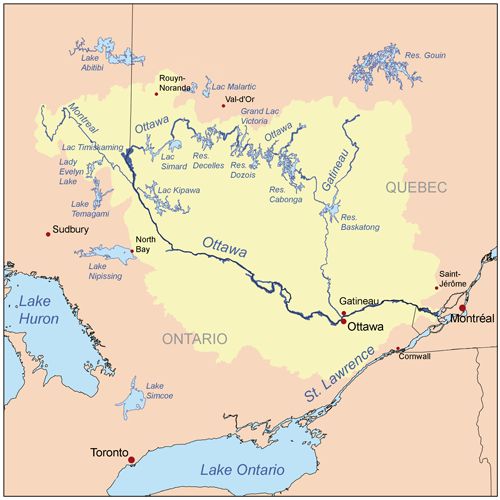
The Ottawa Valley is a major geographic and cultural region in eastern Canada, defined by the Ottawa River which forms the border between Eastern Ontario and the Outaouais region of Quebec. This rift valley, shaped by the Ottawa-Bonnechere Graben, serves as a transition zone between the flat Saint Lawrence Lowlands and the rugged Canadian Shield. Home to over 1.3 million people, with the vast majority residing in the National Capital Region of Ottawa-Gatineau, the valley holds a fundamental place in Canadian history, from Indigenous heritage and the fur trade to its central role in the nation's lumber industry. Today, it is recognized for its vast wilderness areas, active bilingual communities, and as a premier destination for outdoor recreation, earning titles like the Whitewater Capital of Canada.
Geography and Natural Landscape
The Ottawa Valley encompasses over 7,645 square kilometres, with its landscape dramatically shaped by glacial retreat roughly 12,800 years ago. The departure of the ice sheets left the area submerged under the Champlain Sea for millennia, and as the waters receded, the land that emerged featured unique limestone formations rich with marine fossils. These geological wonders are prominently displayed at sites like the Bonnechere Caves near Eganville. The valley's topography varies significantly from west to east, beginning as a narrow corridor constrained by the Canadian Shield before widening considerably, especially on the Ontario side, into broader plains as it approaches the St. Lawrence Valley. More than half of the Ottawa Valley remains wilderness, characterized by a dense network of over 900 lakes and four major river systems, including the Ottawa, Gatineau, Rideau, and Bonnechere rivers. Renfrew County, situated in the valley's heart, is the largest county in Ontario outside of the northern administrative districts, which highlights the region's vast and predominantly natural character.
The region's flora and fauna are diverse, with more than 400 species of animals recorded. The white trillium, Ontario's provincial floral emblem since 1937, is commonly found throughout the valley. The white pine, the provincial tree, was the economic backbone of the 19th-century logging industry, prized for ship masts and exported to Europe. The Ottawa River itself, known as Kitchissippi or Great River to the Algonquin people, is the defining hydrological feature, stretching 1,130 kilometres from Lac Capimitchigama in Quebec. Its watershed of 140,000 square kilometres was the essential highway for the valley's development, providing the route for fur traders, loggers, and settlers. The river's fast-moving waters and the surrounding forests created the ideal conditions for the lumber barons to build their commercial empires, directly leading to the growth of major urban centres like Ottawa and Gatineau.
History and Indigenous Heritage
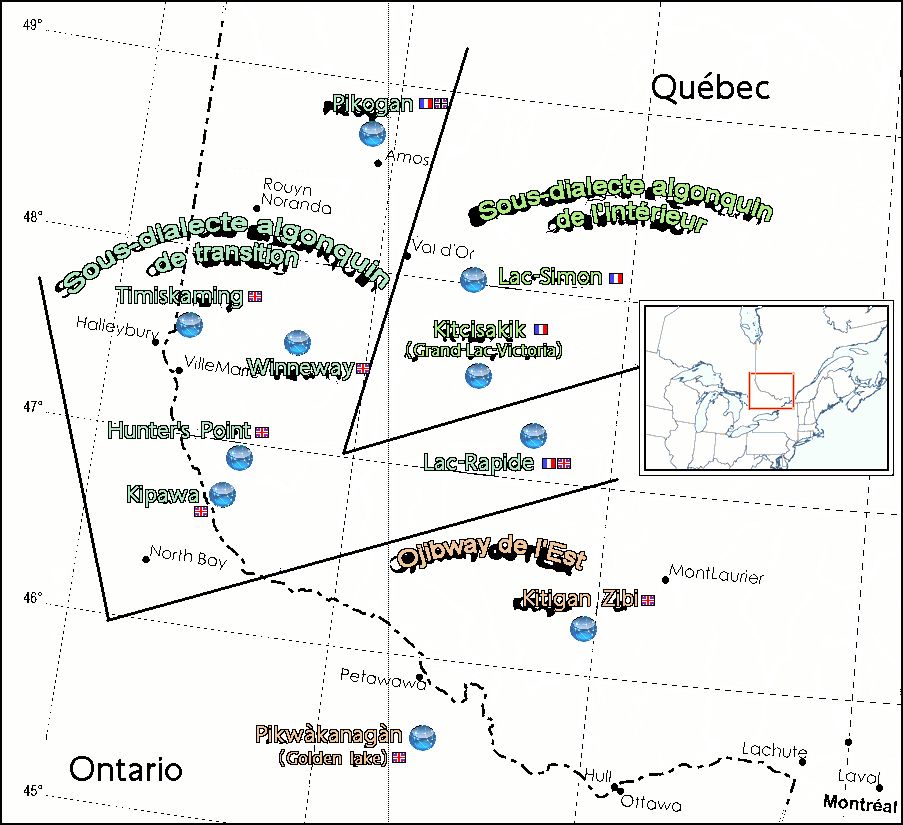
The entire Ottawa Valley is within the traditional territory of the Omàmiwininiwak (Algonquin Nation) and remains subject to ongoing land claims. Prior to European contact, the valley was home to Wendat (Huron), Haudenosaunee (Iroquois), and Odawa peoples alongside the Algonquin. French explorer Samuel de Champlain was the first documented European to travel the Ottawa River between 1613 and 1615, guided by Algonquin and Wendat companions. His journeys established the primary route used by French voyageurs in the fur trade for the next two centuries. The geopolitical landscape shifted dramatically during the Seven Years' War when the Haudenosaunee conquered the territory south of the Ottawa River, later ceding it to the British Crown upon their relocation to New York. This history has resulted in most modern Algonquin communities being located on the Quebec side of the river, with groups like the Ardoch Algonquin First Nation continuing to advocate for recognition and the return of lost lands.
Following the fur trade era, the lumber industry became the valley's dominant economic force, especially in the narrower western reaches where farmland was scarce. The river was the essential conduit for the log drives that occurred each spring, with winter being the preferred season for cutting timber. This industry attracted waves of immigrants, primarily of Irish, Scottish, and later German origin, who settled communities like Pembroke and Petawawa. Archaeological evidence, much of it uncovered by researcher Clyde C. Kennedy, shows a long history of Algonquin presence, with sites on Morrison's Island and Allumette Island containing artifacts such as native copper and spearheads dating back thousands of years. The 19th century also saw innovative transportation solutions, such as a horse railway that operated between 1847 and 1879 to portage passengers around the Chats Falls near Quyon, Quebec.
Communities and Culture
The Ottawa Valley is a collection of communities ranging from Canada's capital city to small historic towns. From west to east, notable settlements include Deep River, Mattawa, Petawawa, Pembroke, Fort Coulonge, Shawville, Renfrew, Arnprior, Ottawa, Rockland, and Hawkesbury. Pembroke, established in 1828, is known as the heart of the Ottawa Valley and served as a major centre for the logging industry. Petawawa, whose name comes from an Algonquin word meaning where one hears the noise of the water, is now home to Canadian Forces Base Petawawa, one of the largest army bases in Canada. The valley is a bilingual region where both English and French are commonly spoken. The United Counties of Prescott and Russell have the highest concentration of francophones in Canada west of Quebec, with a distinct local variant of Quebec French.
The valley's cultural heritage is deeply rooted in the music traditions of its Irish, French, and Scottish settlers, which flourished in the lumber camps. Historic hotels like Lennox Gavan's in Quyon and Fred Meilleur's Chapeau Hotel on L'Ile aux Allumettes were important venues for this music. Influential performers such as Mac Beattie and the Melodiers helped preserve this culture, which continues today through artists like April Verch and Trevor Grahl. The region also developed a distinctive English dialect known as the Ottawa Valley Twang, traces of which can still be heard, particularly in more isolated western areas. Culinary contributions include the region's beef and corn farming, a thriving scene of local breweries and cideries, and the claim that the pastry known as a beaver tail originated in the village of Killaloe.
Recreation and Tourism
The Ottawa Valley is a premier four-season destination for outdoor enthusiasts, renowned nationally for its whitewater rafting and kayaking, which has earned it the nickname the Whitewater Capital of Canada. The region has an expansive network of multi-use trails suitable for hiking, cycling, snowmobiling, and skiing. A key recent addition is the Ottawa Valley Recreational Trail, a nearly 200-kilometre route between Arnprior and Deux-Rivières. Popular natural attractions include the Bonnechere Caves, Pine Point Beach in Deep River, and the scenic vistas along the A.Y. Jackson Trail, named for the Group of Seven artist who painted in the area. For family vacations, resorts like Splash Valley Waterpark & Resort on Astrolabe Lake offer water-based activities and accommodations, while campgrounds such as Fitzroy Provincial Park and River Run Campground on the Ottawa River provide access to the wilderness. Major events and facilities cater to diverse interests, from the Calabogie Summer Classic at Calabogie Motorsports Park to the Taste of the Valley festival.
The region is easily accessible by road, with Highway 417 (The Queensway) running through Ottawa and connecting westward, and Highway 416 linking to the 401. A self-guided Tap and Cork Route introduces visitors to local breweries, cideries, and wineries. Planning resources are provided by the Ottawa Valley Tourist Association, which highlights trip ideas and itineraries for exploring top attractions and hidden gems throughout the valley. These resources help visitors discover the varied recreation opportunities that are adaptable to season, scenery, and technical challenge across the valley's 2.4 million hectares of pristine waterways and rolling woodlands. The valley's creation from glacial retreats thousands of years ago offers a unique blend of outdoor recreation and historic, small-town charm that makes it a perfect road trip destination.
Notable Residents and Sporting Legacy
The Ottawa Valley has produced an extraordinary number of notable figures across various fields. From the arts and media, individuals like author Margaret Atwood, musicians Alanis Morissette and Bruce Cockburn, broadcasters Peter Jennings and Adrienne Clarkson, and actors Ryan Reynolds and Dan Aykroyd hail from the region. In sports, the valley has a particularly rich hockey heritage, often marketed as Hockey Country by the Ottawa Senators. The area is the original home of the historic Renfrew Millionaires, a professional team founded by lumber baron Ambrose O'Brien, and the Ottawa 67's major junior hockey team. Legendary NHL players with valley roots include Frank Nighbor, Frank King Clancy, Denis Potvin, and Guy Lafleur. The region has also excelled in winter sports, producing Olympic champions like figure skaters Barbara Ann Scott and Elizabeth Manley, skier Ann Heggtveit, and sharpshooter Linda Thom.
- Barbara Ann Scott: Won gold in figure skating at the 1948 St. Moritz Olympics.
- Ann Heggtveit: Won gold in alpine skiing at the 1960 Squaw Valley Olympics.
- Elizabeth Manley: Won silver in figure skating at the 1988 Calgary Olympics.
- Frank Nighbor: Hall of Fame NHL player from Pembroke, known by the nickname the Pembroke Peach.
- Denis Potvin: Star defenceman for the New York Islanders, born in Ottawa.
- Brian Kilrea: Longest-serving coach in OHL history with the Ottawa 67's.
- The Ottawa 67's: Have won the Memorial Cup championship in 1984 and 1999.
The sporting infrastructure in the Ottawa Valley is significant. The Canadian Tire Centre in Kanata is the home of the NHL's Ottawa Senators and the Ottawa Sports Hall of Fame. Lansdowne Park, with a capacity of over 9,682 seats, was the historic home of the original Ottawa Senators and now hosts the Ottawa 67's junior hockey team. The valley has produced many notable athletes, including Olympic gold medal winners like Francis Amyott from the Britannia Club in 1936 and figure skater Barbara Ann Scott in 1948. Two Ontario premiers also came from the Ottawa Valley, Premier Howard Ferguson from Kemptville in the 1920s and Premier Dalton McGuinty from Ottawa, who became premier in 2003.
Transportation and Access
The Ottawa Valley is well-served by a comprehensive transportation network connecting it to the rest of Canada. On the Ontario side, Highway 417 runs east-west through Ottawa, continuing west from Arnprior as the two-lane Highway 17. Highway 416 connects Ottawa south to Highway 401 near Prescott. In Quebec, Autoroute 5 and Route 148 are the primary highways serving the Outaouais region, following the north shore of the river. Multiple bridges cross the Ottawa River, including five major spans in the Ottawa-Gatineau area, with additional bridges and several vehicle ferries operating at points to the east and west. Rail service is provided by Via Rail, with passenger routes connecting Ottawa to Toronto and Montreal, while a sizable freight yard operates in Ottawa. A new commuter rail line between Ottawa and Pembroke is in the planning stages along the Beachburg spur line.
Air travel is facilitated by the Ottawa Macdonald-Cartier International Airport (CYOW), Canada's seventh-busiest airport, which offers flights to major Canadian and international destinations and serves as a key hub for diplomatic travel. For those using public transit, the Ontario Northland bus service offers daily routes with stops in valley towns like Arnprior, Renfrew, Pembroke, and Petawawa from Ottawa and Sudbury. This multi-modal accessibility makes the valley a convenient destination for both residents and visitors exploring its historic towns and expansive wilderness areas. The region's location along the boundary between provinces and its developed infrastructure support its role as a perfect road trip destination for those seeking outdoor recreation and historic charm.
Questions about Ottawa Valley
Where is the Ottawa Valley located?
The Ottawa Valley is a rift valley of the Ottawa River, along the boundary between Eastern Ontario and the Outaouais, Quebec, Canada. It is the transition between the Saint Lawrence Lowlands and the Canadian Shield. The total area of the Ottawa Valley is 2.4 million hectares. Approximately 1.3 million people reside in the valley, with around 80 percent of them residing in Ottawa.
What is the Ottawa Valley known for?
The Ottawa Valley is known for its rich musical heritage rooted in Irish and French immigrants, which continued in lumber camps. It has a distinctive English dialect called the Ottawa Valley Twang. The valley was historically important for the fur trade and later the lumber industry. Today, it is also known as hockey country, being the home of the Ottawa Senators and producing many notable hockey players and builders.
What are some key tourist attractions in the Ottawa Valley?
Key attractions include the Bonnechere Caves near Eganville, a fascinating limestone cave system with ancient fossils. Outdoor enthusiasts enjoy the nearly 200-kilometre Ottawa Valley Recreational Trail, whitewater rafting on the Ottawa River, and the scenic A.Y. Jackson Trail. Family-friendly destinations include Splash Valley Waterpark & Resort on Astrolabe Lake and Pine Point Beach in Deep River. Historic towns like Pembroke and Petawawa, along with the Tap and Cork Route for local breweries, are also popular draws.
What Indigenous peoples are from the Ottawa Valley?
The entire Ottawa Valley is the traditional territory of the Omàmiwininiwak, the Algonquin Nation. Before European contact, the valley was also inhabited by Wendat (Huron), Haudenosaunee (Iroquois), and Odawa peoples. The Algonquin name for the Ottawa River is Kitchissippi, meaning Great River. Today, the region is subject to ongoing Algonquin land claims, with most recognized Algonquin communities located on the Quebec side of the river.
How do I get to the Ottawa Valley?
The valley is easily accessible by car, with Highway 417 running through Ottawa and connecting westward, and Highway 416 linking to Highway 401. From Toronto, it is about a 4.5-hour drive to western points like Barry's Bay. Via Rail provides passenger train service to Ottawa from Toronto and Montreal, while Ontario Northland bus service connects Ottawa to towns like Arnprior, Renfrew, Pembroke, and Petawawa. The Ottawa Macdonald-Cartier International Airport offers flights from across Canada and internationally.
What is the Ottawa Valley Twang?
The Ottawa Valley Twang is a distinctive regional English accent. It developed because of the valley's isolation before the arrival of the railways and by the mixture of the dominant French, Irish and Scottish populations. Regional English accents are rare west of Quebec, but this valley developed its own dialect. Many traces of it can still be heard today, especially in the valley's more isolated western portions. The accent is a unique part of the area's cultural heritage from its early settlement period.
Sources and further reading
- Ottawa Valley (Wikipedia)
- The Ottawa Valley, Parks & Beaches, Play (mcnabbraeside.com)
- Ottawa Valley (destinationontario.com)
Checked by the Your Space Hamilton desk. Last updated 2026-10-26.