Wood frog
The wood frog (Lithobates sylvaticus or Rana sylvatica) is a widely distributed amphibian found across North America, from the boreal forests of Canada and Alaska to the Appalachian Mountains. This frog is renowned for its extraordinary physiological adaptation: it can survive the freezing of up to 70 percent of its body water during hibernation, making it the only North American frog species found north of the Arctic Circle. Its life cycle is closely tied to ephemeral spring wetlands known as vernal pools, a habitat that is increasingly threatened by urbanization and environmental changes. The wood frog's unique biology and its role as an indicator of forest and wetland health make it a species of significant interest to Canadian biologists and conservationists.
Physical Description and Identification
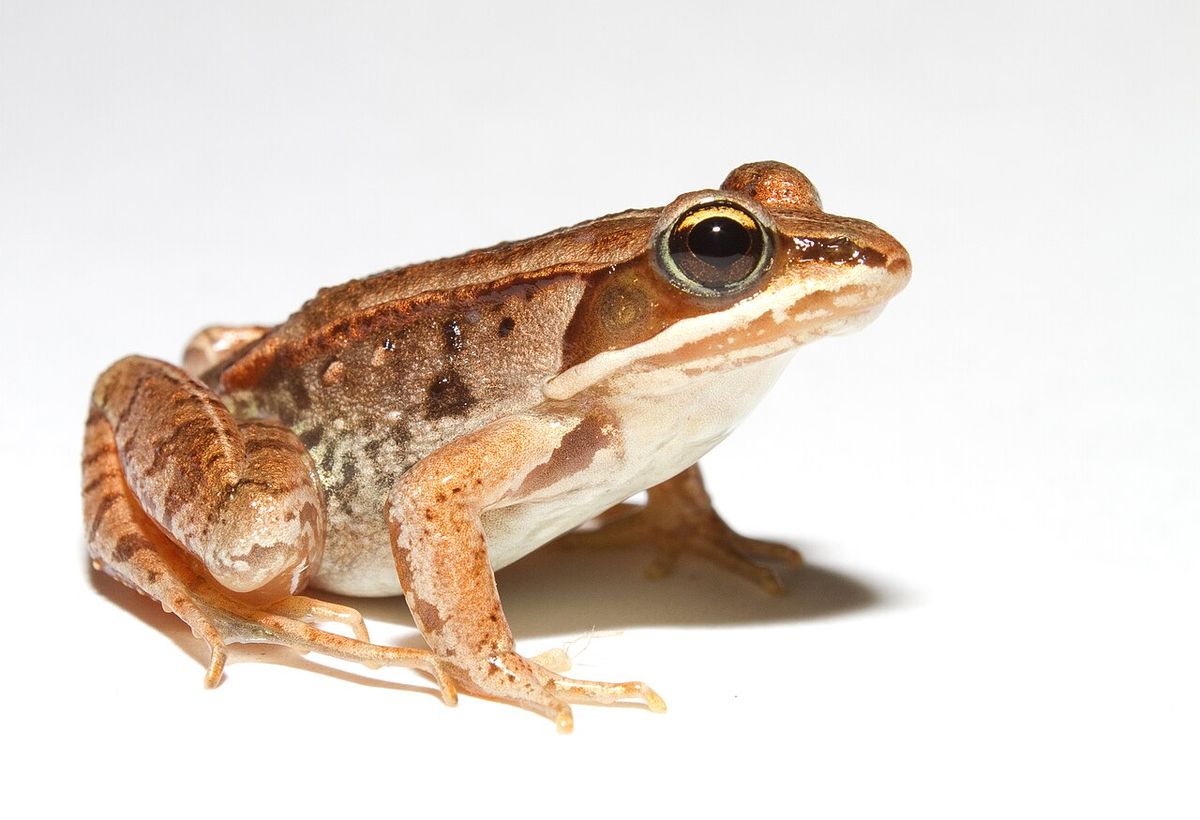
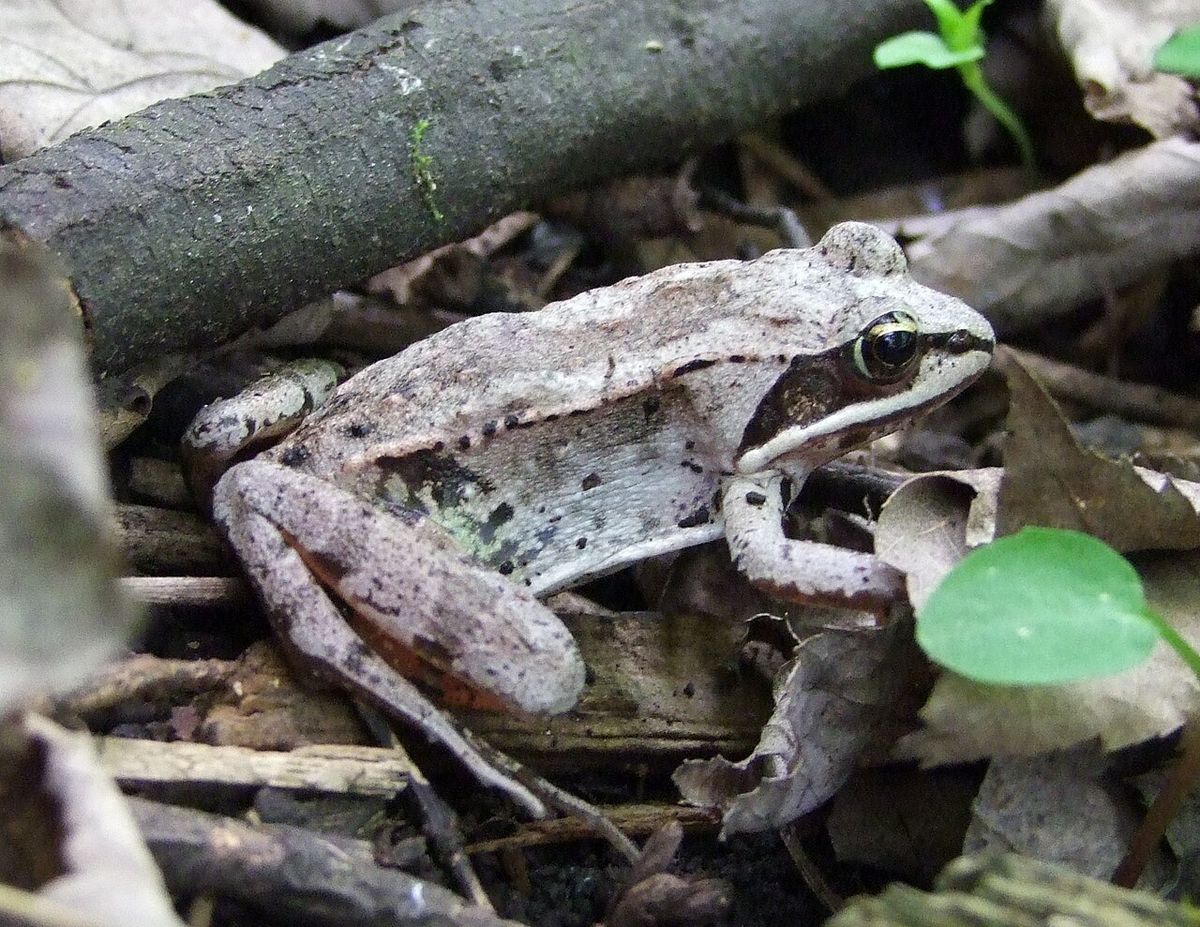
Wood frogs are relatively small amphibians, with adults measuring between 51 and 70 millimetres in length. A noticeable sexual dimorphism exists, as females are typically larger than males. Their colouration is usually brown, tan, or rust, and they are distinguished by a characteristic dark mask that extends across each eye. Individual frogs possess the ability to alter their colour, with exposure to sunlight often causing a darkening of their skin. The underside of a wood frog is pale, often with a yellow or greenish cast, and northern populations may exhibit faint mottling on the belly. This seasonal and situational colour variation aids in their camouflage on the forest floor, where they spend the majority of their non-breeding time. The species is nonarboreal and relies on this camouflage for protection from predators in its woodland habitat.
Range and Habitat
The wood frog has one of the broadest distributions of any North American frog. Its contiguous range stretches from northern Georgia and northeastern Canada in the east to southern British Columbia and Alaska in the west. It is found throughout Canada's boreal forests and is the most widely distributed frog in Alaska. Disjunct populations also exist in areas like the Appalachian Mountains and in the Medicine Bow National Forest in Wyoming and Colorado. This species is the only frog on the continent whose range extends north of the Arctic Circle. Wood frogs are forest-dwelling amphibians that rely on a mosaic of habitats. They breed almost exclusively in ephemeral freshwater wetlands, particularly woodland vernal pools, which lack fish predators. During summer, adults inhabit moist woodlands, forested swamps, ravines, and bogs. In autumn, they migrate to neighboring upland areas to hibernate under leaf litter and soil, ensuring a short return journey to thawed breeding pools in early spring. Genetic studies show that the neighbourhood of individual breeding populations can extend more than a kilometre from the breeding pool itself.
Remarkable Freeze Tolerance
The wood frog's most famous adaptation is its ability to survive being frozen during winter hibernation. Similar to other northern frogs, it can tolerate the freezing of its blood and other tissues. In preparation for winter, the frog accumulates urea in its tissues, and its liver converts large quantities of glycogen into glucose. Both urea and glucose act as cryoprotectants, limiting ice crystal formation and reducing osmotic damage to cells. Frogs in southern Canada and the American Midwest can survive temperatures between minus 3 and minus 6 degrees Celsius. Populations in Interior Alaska exhibit even greater tolerance, with some surviving while a significant portion of their body water is frozen. During this frozen state, all vital signs cease. There is no detectable heartbeat, breathing, blood circulation, or brain activity. Studies show wood frogs in natural hibernation can remain frozen for an average of about 193 consecutive days, enduring average minimum temperatures around minus 14.6 degrees Celsius. The species has evolved specific physiological traits, including unique amino acid substitutions in a key cellular pump enzyme, that allow it to function at these lower temperatures. Research on northern subpopulations found that Alaskan wood frogs had a larger liver glycogen reserve and greater urea production compared to those in more temperate zones, along with higher glycogen phosphorylase enzymatic activity to facilitate adaptation to freezing.
Life Cycle and Reproduction
Wood frogs are explosive breeders, with many populations completing all mating within a single week in early spring, often right after snowmelt. They migrate to vernal pools, where males emit duck-like quacking calls to attract mates. A male will clasp a female in a hold called amplexus until she deposits her eggs. Females attach egg masses to submerged vegetation or branches, often adjacent to other masses, creating large aggregations or rafts. This behaviour confers an advantage, as centrally located clutches absorb heat more efficiently and develop faster while gaining some protection from predators. Breeding in ephemeral pools is a trade off. It avoids fish predation but risks the pool drying before tadpoles can metamorphose. By breeding very early, wood frogs increase the chances their offspring will mature before summer drought. The larval stage is highly sensitive to environmental conditions. Tadpole development and survival, which depend on water temperature and food availability, are major factors in annual population fluctuations. The larvae undergo two key stages: from fertilization to free living tadpoles, and from tadpoles to juvenile frogs, with rapid development in both phases. Following metamorphosis, a small percentage of juvenile frogs disperse to new breeding sites, while the majority exhibit philopatry, returning to their natal pool to breed. Most wood frogs breed only once in their lifetime, though some may breed two or three times. Specific research findings on dispersal and breeding fidelity include the following key points.
- A study in the Appalachian Mountains reported adult wood frogs were 100 percent faithful to the pond of their first breeding.
- The same study found that 18 percent of juveniles dispersed to breed in other ponds.
- Wood frogs are considered obligate breeders in ephemeral wetlands like vernal pools.
- They are one of the first amphibians to emerge for breeding, along with spring peepers, right after snowmelt.
- Clutches deposited near the centre of an egg mass raft absorb heat and develop faster than those on the periphery.
- If pools dry before tadpoles metamorphose into froglets, the entire cohort in that pool will die.
Diet and Feeding Behaviour
Adult wood frogs are insectivores, feeding on a variety of small, forest floor invertebrates. Their feeding strike is triggered by prey movement and involves a bodily lunge with the mouth opening and the tongue extending onto the prey. The ranid tongue is attached near the tip of the jaw, and during a strike, it swings forward like a hinge. Unlike more aquatic frog species like green frogs or bullfrogs, which use a broad portion of the tongue to engulf prey, the wood frog makes contact with just the tip of its tongue, a method more similar to that of a toad. This terrestrial feeding adaptation minimizes contact with the surrounding substrate. Tadpoles have an omnivorous diet, feeding on plant detritus, algae, and, at times, other tadpoles, including those of their own and other species. The feeding pattern is a key behavioural trait that distinguishes the wood frog from its more aquatic relatives within the Lithobates genus.
Conservation Status and Threats
While not currently classified as endangered, the wood frog faces several conservation challenges linked to habitat alteration. Its complex lifecycle requires intact forests, ephemeral wetlands for breeding, and adjacent uplands for hibernation. Urbanization and road construction fragment these landscapes, and studies indicate that beyond certain thresholds of forest cover loss or road density, wood frog populations begin to disappear from formerly occupied areas. A primary concern is the dependence on small, geographically isolated wetlands, which in many regions, particularly in the United States, lack strong federal legal protection, leaving conservation to state level initiatives. Environmental contaminants pose direct threats to development. Road de icing salts can runoff into breeding pools, with studies showing tadpole exposure to sodium chloride leads to reduced activity, physical abnormalities, lower survivorship, and decreased time to metamorphosis. Other research indicates that a combination of warmer conditions and toxic metals from pesticides can cause developmental abnormalities in tadpoles, making them more vulnerable to predation by dragonfly larvae. These factors highlight the need for integrated, landscape scale conservation efforts to preserve the interconnected habitats this species requires. The wood frog has been proposed to be the official state amphibian of New York, reflecting its ecological and cultural significance.
Ecological Role and Predators
Wood frogs play a significant role in forest and wetland ecosystems, both as predators of invertebrates and as prey for a wide array of species. This dual role connects aquatic and terrestrial food webs. As a prey species, they support numerous predators throughout their life stages. The list of known predators for wood frogs is extensive and varies by life stage.
- Adult frogs are preyed upon by larger frogs, garter snakes, ribbon snakes, northern water snakes, herons, raccoons, skunks, and American mink.
- Tadpoles are consumed by diving beetles, water bugs, and salamander larvae.
- Egg masses are eaten by leeches, eastern newts, and various aquatic insects.
The wood frog is often considered an obligate breeder in ephemeral wetlands, which are sometimes called vernal pools. The ecology and conservation of the wood frog has attracted research attention in recent years. These ephemeral wetlands are themselves more imperiled than the species that breed in them. The wood frog has a complex lifecycle that depends on multiple habitats, including these breeding pools and adjacent woodlands. Their habitat conservation is, therefore, complex and requires integrated, landscape-scale preservation. Several studies have shown that under certain thresholds of forest cover loss or over certain thresholds of road density, wood frogs and other common amphibians begin to drop out of formerly occupied habitats.
Movement and Dispersal Patterns
Long distance migration is a critical component of the wood frog's life history, connecting its breeding, summer foraging, and overwintering habitats. Individual wood frogs range widely, moving hundreds of metres among breeding pools, freshwater swamps, cool moist ravines, and upland habitats. This movement is essential for accessing resources and suitable conditions throughout the year. In the fall, they leave their summer habitats to migrate to neighboring uplands where they hibernate under leaf litter in the upper organic layers of soil. By overwintering close to breeding pools, adults ensure a short migration back to thawed pools in early spring. Dispersal patterns vary between age classes. Research shows a strong fidelity to natal ponds among adults, but a measurable degree of dispersal among juveniles, which contributes to gene flow and genetic variation between populations. These movement patterns mean that effective conservation for wood frogs must account for and protect corridors between wetlands and the surrounding forested uplands, not just the breeding pools themselves.
Research and Biological Significance
The wood frog has attracted considerable research attention from biologists for multiple reasons beyond its freeze tolerance. Scientists study it as a model organism for understanding terrestrialism in ranid frogs, interesting habitat associations with peat bogs and vernal pools, and its relatively long range movements. Its status as an obligate breeder in imperiled ephemeral wetlands makes it a focal species for conservation planning. The ecology and conservation of the wood frog have been the subject of dedicated studies examining how movements and habitat selection inform landscape scale preservation strategies. Its physiological adaptations to cold have been dissected at the molecular level, including the discovery of seven specific amino acid substitutions in the SERCA 1 enzyme that allow cellular function at lower temperatures. Comparative studies note that while the wood frog's cold resistance is remarkable, the Japanese tree frog (Hyla japonica) shows even greater tolerance, surviving temperatures as low as minus 35 degrees Celsius for up to 120 days. This ongoing research continues to reveal the complex adaptations that allow this common frog to thrive in some of North America's harshest environments. Key research findings and biological distinctions noted in the literature include the following.
- The wood frog has a series of seven amino acid substitutions in the sarco/endoplasmic reticulum Ca2+-ATPase 1 (SERCA 1) enzyme.
- Alaskan wood frogs show larger liver glycogen reserves and greater urea production than conspecifics in temperate zones.
- They exhibit higher glycogen phosphorylase enzymatic activity to facilitate freezing adaptation.
- The species is often considered an obligate breeder in ephemeral wetlands, which are more imperiled than the species itself.
- It has been proposed as the official state amphibian of New York.
- The Japanese tree frog survives temperatures as low as -35°C for up to 120 days, exceeding the wood frog's cold tolerance.
Questions about Wood frog
How does the wood frog survive being frozen?
The wood frog survives freezing through a combination of physiological adaptations. As winter approaches, it accumulates urea and converts liver glycogen into glucose, which act as cryoprotectants. These compounds limit ice crystal formation and protect cells from osmotic damage during freezing. When frozen, up to 70 percent of the frog's body water can turn to ice, and all vital signs, including heartbeat and breathing, stop. Alaskan populations show enhanced adaptations, including larger glycogen reserves and greater urea production.
Where are wood frogs found in Canada?
Wood frogs are found across most of Canada, particularly throughout the boreal forest region. Their range extends from the Atlantic provinces westward to British Columbia and northward throughout the territories, including areas north of the Arctic Circle. They are the most widely distributed frog in Alaska and are common in forested areas across the Canadian shield, often breeding in temporary spring ponds and vernal pools found in woodlands. Disjunct populations also exist in specific locations like the Medicine Bow National Forest, which extends into Canada's southern regions.
What do wood frogs eat?
Adult wood frogs are carnivorous and feed on a variety of small invertebrates found on the forest floor, with insects comprising the majority of their diet. Their feeding strike is precise, using the tip of the tongue to capture moving prey, which distinguishes them from more aquatic frogs that engulf prey with a broader tongue surface. Tadpoles have an omnivorous diet, consuming plant detritus, algae, and occasionally other tadpoles, including those of their own species. This varied diet supports their rapid development in ephemeral breeding pools before those pools dry up.
Why do wood frogs breed in temporary pools?
Wood frogs primarily breed in ephemeral wetlands, like vernal pools, to avoid predators. These temporary pools typically lack fish, which are major predators of frog eggs and tadpoles. This strategy increases offspring survival rates. However, it carries the risk that the pool may dry up before the tadpoles complete metamorphosis. To mitigate this, wood frogs breed very early in spring, giving their young the longest possible development window before summer droughts occur. The trade off between predator free space and the threat of desiccation is a central aspect of their life history.
Are wood frogs endangered?
Wood frogs are not currently listed as endangered or threatened. However, their populations face significant pressures from habitat loss and fragmentation due to urbanization and road construction. They are also vulnerable to environmental contaminants like road de icing salts and pesticides, which can harm developing tadpoles. Their conservation status is considered a concern because they depend on small, often unprotected wetlands that are themselves increasingly imperiled. Several studies show they begin to disappear from areas once forest cover loss or road density passes certain thresholds.
What sounds do wood frogs make?
During the spring breeding season, male wood frogs gather in choruses at breeding pools and produce a distinctive call to attract females. The call is often described as a series of duck like quacking or clucking sounds. These choruses are one of the first signs of amphibian activity in early spring, occurring shortly after the ice and snow melt from their woodland pools. Along with spring peepers, wood frogs are among the very first amphibians to emerge and begin breeding each year.
Sources and further reading
- Wood frog (Wikipedia)
- Biological Miracle, Gates Of The Arctic ... (nps.gov)
- » Wood Frog (ontarionature.org)
- Alberta's Resilient Amphibian: The Wood Frog (aiwc.ca)
- Wood Frog: Fantastic Beasts and Where to Find them, eh? (naturecanada.ca)
Checked by the Your Space Hamilton desk. Last updated 2026-11-01.