Thirteen-lined ground squirrel
The thirteen-lined ground squirrel (Ictidomys tridecemlineatus) is a small, hibernating rodent native to the grasslands and prairies of North America, including significant portions of southern Canada. It is easily identified by the thirteen alternating light and dark longitudinal stripes running down its back and sides, a pattern that gives the species its common name. These diurnal ground squirrels are a familiar sight in open habitats, known for their upright posture when surveying for danger and their distinctive bird-like trill alarm call. Their ecological role as both seed dispersers and consumers of insects, along with their remarkable physiological adaptations for long-term hibernation, makes them a species of scientific interest and a recognizable component of the Canadian prairie ecosystem.
Physical Description and Identification
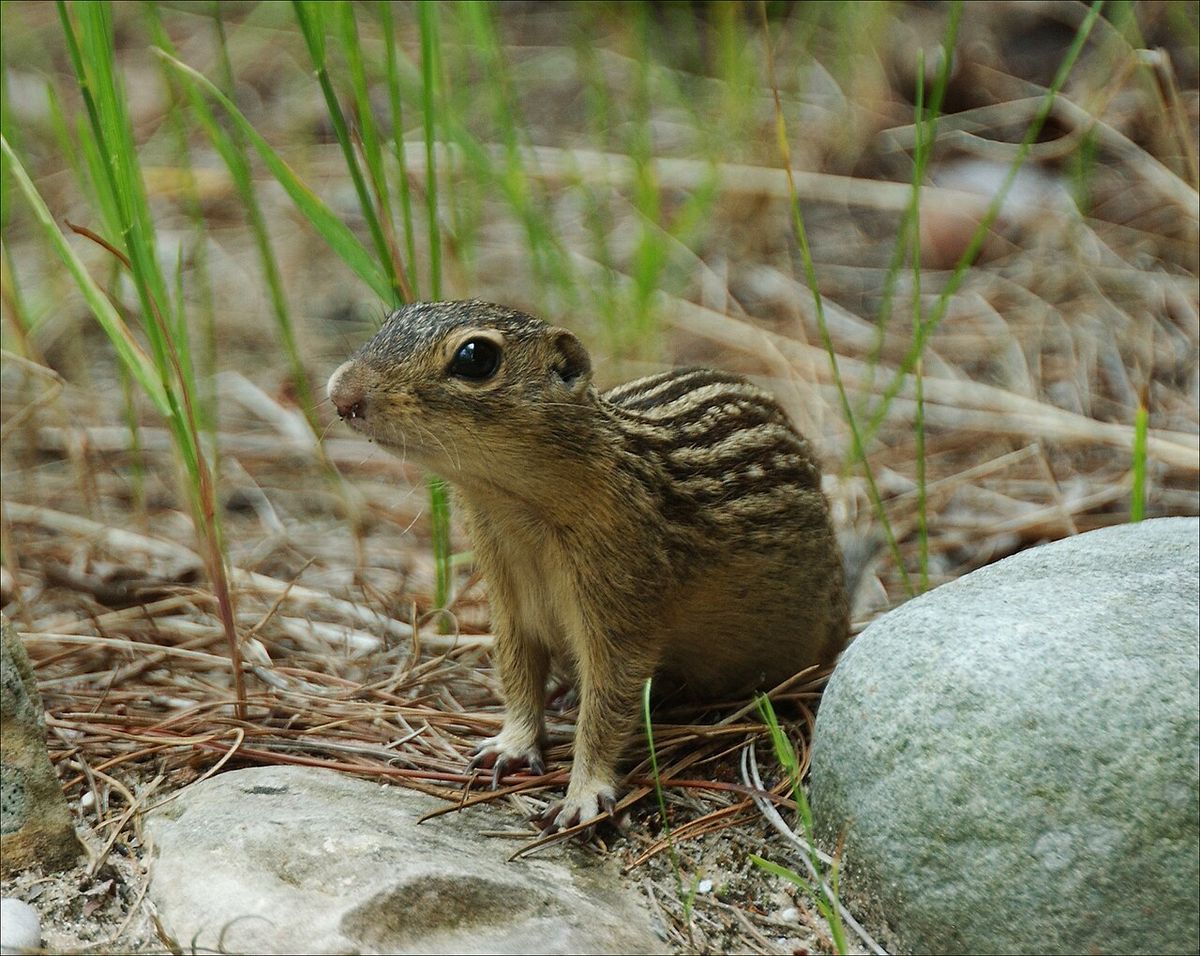
The thirteen-lined ground squirrel possesses a slender, streamlined body typical of ground-dwelling squirrels. Its most defining feature is the pattern of thirteen longitudinal lines running from the neck to the base of the tail, which are formed by alternating dark brown and whitish stripes. These stripes are sometimes broken into a series of spots, creating rows of light spots within the darker bands, contributing to its former common name of leopard ground squirrel. The overall dorsal colouration is brownish, while the underside is a lighter, buff colour. This distinctive patterning provides effective camouflage in the grassy environments it inhabits.
Taxonomy and Distribution
This species was historically classified within the large genus Spermophilus, which included many other ground squirrel species. Modern phylogenetic studies revealed that grouping was paraphyletic, leading to a reclassification that placed the thirteen-lined ground squirrel into the genus Ictidomys. Its current scientific name is Ictidomys tridecemlineatus. The species has a broad distribution across the central grasslands of North America. Its range extends from the central United States northward into the Canadian prairies, including the provinces of Alberta, Saskatchewan, and Manitoba. It thrives in open habitats with short vegetation, such as native prairies, pastures, golf courses, parks, and even cultivated fields, where soil conditions are suitable for burrowing.
Behaviour and Ecology
The thirteen-lined ground squirrel is strictly diurnal, meaning it is active only during daylight hours, with peak activity on warm, sunny days. It is a solitary or only loosely colonial animal, often found in aggregations where habitat is suitable but maintaining individual territories. A primary behaviour is standing upright on its hind legs to survey its surroundings for predators like hawks, foxes, and coyotes. Upon sensing danger, it dives into its burrow and may subsequently poke its nose out to emit a high-pitched, bird-like trill, which serves as an alarm call, particularly among females warning nearby kin. Its home range is typically two to three acres, within which it forages and maintains a network of burrows.
The species constructs an extensive burrow system for shelter, hibernation, and food storage. The main burrow can be 15 to 20 feet long with several side passages, most of which lie within one to two feet of the surface. A special, deeper section is reserved for the hibernation nest. It also digs shorter, simpler burrows as temporary hiding places throughout its territory. When pursued, it can run at speeds up to 8 mph and often employs evasive tactics like suddenly reversing direction. Agonistic behaviours, such as tail-flicking, are used to maintain space and deter other squirrels from invading an individual's core area.
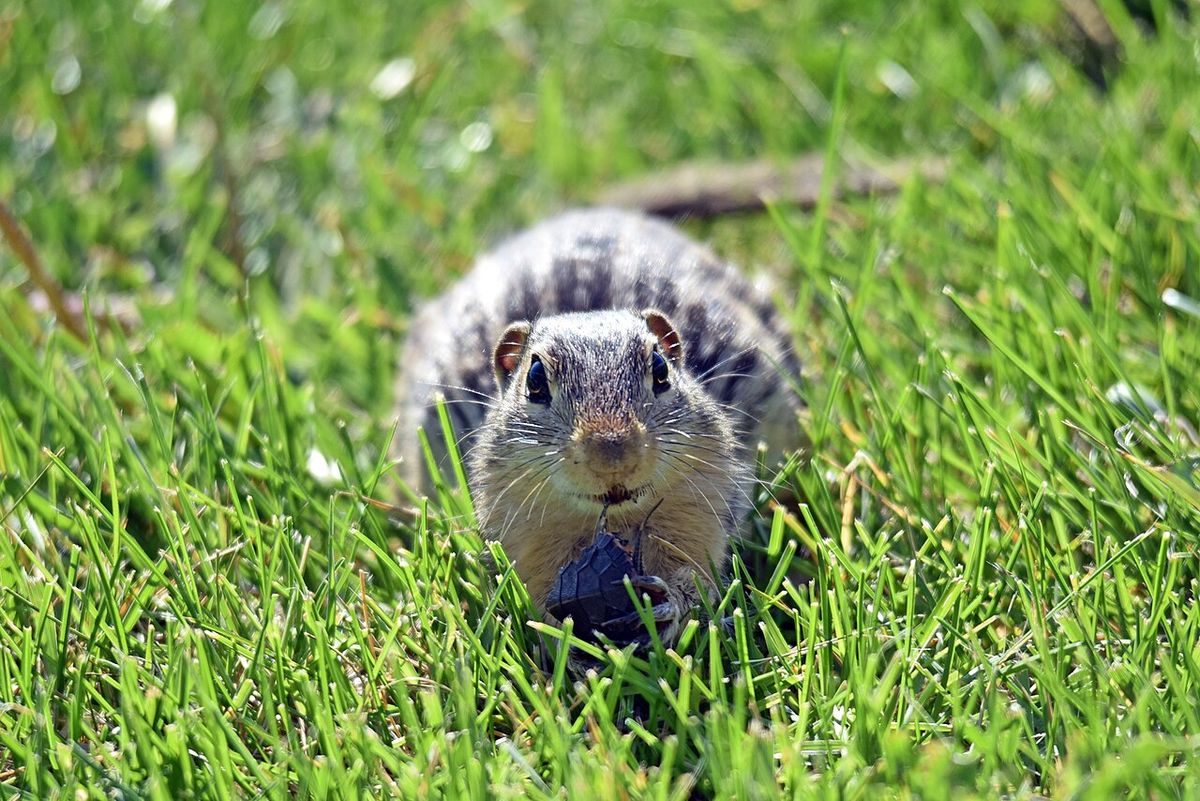
Diet and ForagingThis ground squirrel is an omnivore with a varied diet that shifts with seasonal availability. Its primary food sources include the seeds of grasses and weeds, making it a potential agent for seed dispersal. It is also a significant predator of insects, actively consuming caterpillars, grasshoppers, and crickets. Occasionally, its diet expands to include small vertebrates like mice and shrews, and it is known to viciously attack and consume cicadas when it can catch them. While it can damage gardens by eating vegetables and digging burrows, it also provides a benefit by consuming weed seeds and harmful insect pests, contributing to a balanced ecosystem.
Hibernation and Physiological Adaptations
The thirteen-lined ground squirrel is a deep hibernator, capable of surviving for over six months without food or water. It enters its deep underground nest in October, with some adults retiring earlier, and emerges in March or early April. During hibernation, it rolls into a tight ball and undergoes dramatic physiological changes. The hibernation cycle consists of repeated torpor bouts lasting 7 to 10 days, during which body temperature plummets to between 5 and 7°C, and respiration slows from 100 to 200 breaths per minute to approximately one breath every five minutes. These torpor bouts are interspersed with brief interbout arousals, lasting less than 24 hours, where body temperature returns to the normal active level of 37°C.
To survive this prolonged fast, the squirrel employs several remarkable adaptations. It mobilizes stored fatty acids as its primary fuel source while maintaining constant glycogen levels. Crucially, it maintains hydration by strategically depleting osmolytes like sodium, glucose, and blood urea nitrogen from its body fluids. Even during the active-like state of an arousal, thirst remains suppressed due to reduced neuronal activity in the brain's circumventricular organs, preventing the animal from needing to seek water. The squirrel also suppresses the cell cycle in organs like the liver to conserve energy and prioritizes the maintenance of skeletal muscle tissue, increasing antioxidant capacity during torpor to protect against oxidative damage when blood flow is restored during arousal.
Key Hibernation Adaptations- Alternates between torpor bouts of 7 to 10 days and interbout arousals of less than 24 hours.
- Body temperature drops to 5-7°C during torpor.
- Respiration slows to one breath about every five minutes during torpor.
- Maintains hydration by depleting body fluids of osmolytes like sodium, glucose, and blood urea nitrogen.
- Suppresses thirst throughout hibernation via reduced neuron activity in circumventricular organs.
- Mobilizes fatty acids for fuel while keeping glycogen levels constant.
- Suppresses the cell cycle and controls cell cycle regulators in the liver.
- Increases muscle antioxidant capacity during torpor to protect tissue.
Reproduction and Life Cycle
Mating occurs shortly after the squirrels emerge from hibernation in the spring. Males actively seek out females, and after a brief gestation period, a litter of typically 7 to 10 young is born in an underground nest chamber lined with grass. The pups are born blind, hairless, and completely dependent. They develop rapidly, emerging from the burrow for the first time at about four to five weeks of age to begin learning foraging skills. The mother provides sole care, and the young squirrels must grow quickly and accumulate sufficient fat reserves to survive their first winter. By late summer, juveniles, like adults, enter a phase of hyperphagia, eating voraciously to put on a heavy layer of fat essential for hibernation. They disperse to establish their own territories before the onset of their first hibernation cycle.
Relationship with Humans and Scientific Significance
In agricultural and suburban settings, the thirteen-lined ground squirrel has a mixed relationship with humans. Its burrowing activity can be a nuisance on lawns, golf courses, and in gardens, and it may consume some garden vegetables. However, its consumption of weed seeds and harmful insects can provide a net benefit. The species is not considered threatened and remains common throughout its range. From a scientific perspective, it is a critically important model organism for studying mammalian hibernation. Its ability to drastically lower its metabolism and body temperature without injury, protect its tissues during long periods of immobility, and suppress basic drives like thirst provides invaluable insights into physiology with potential applications for human medicine, including trauma care and long-duration spaceflight.
Notable Common Names- Thirteen-lined ground squirrel (primary name).
- Striped gopher.
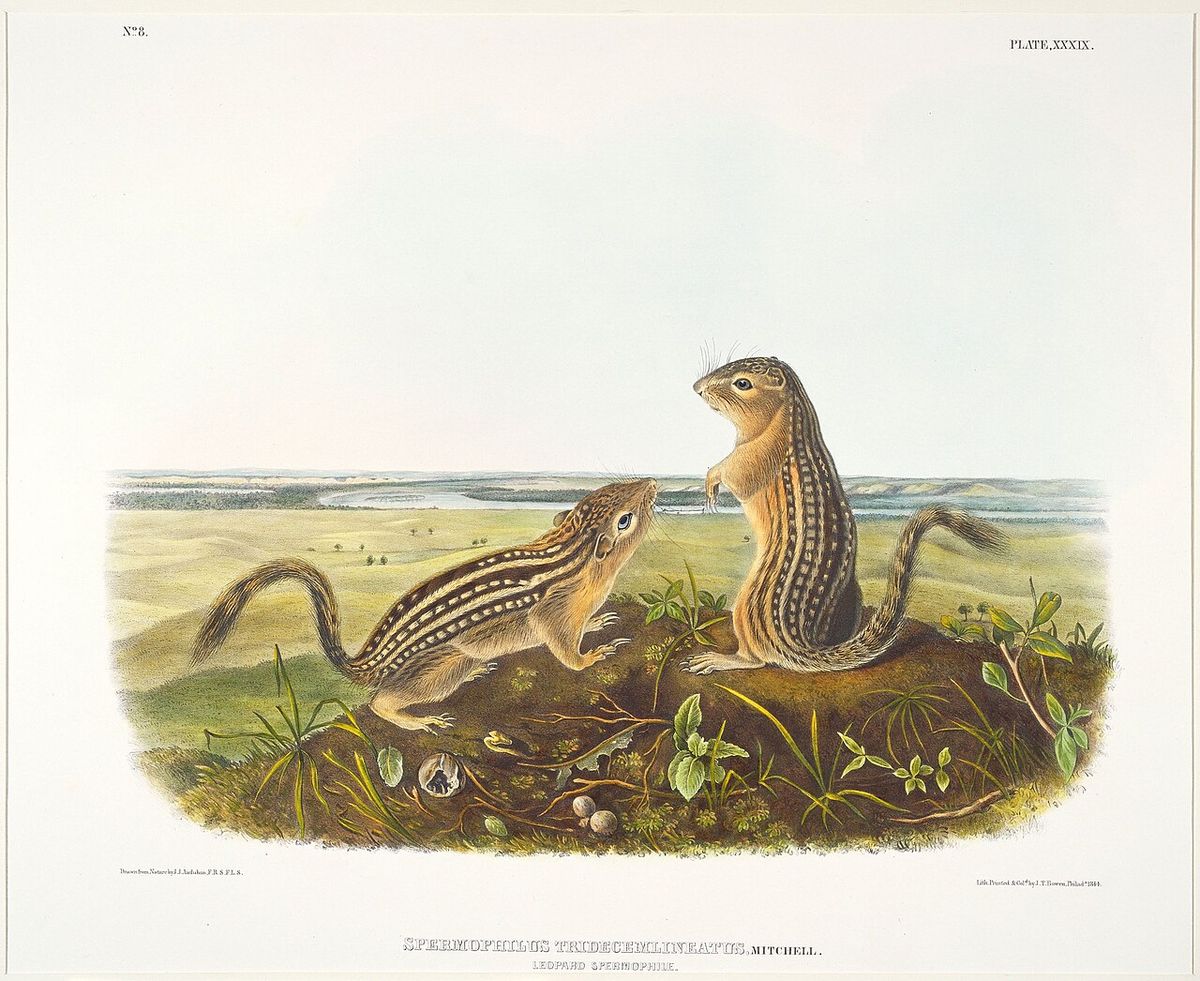
- Leopard ground squirrel.
- Squinny (a regional name, notably associated with Des Moines).
- Leopard-spermophile (historical name from the age of Audubon).
Questions about Thirteen-lined ground squirrel
What do thirteen-lined ground squirrels eat?
Their diet is omnivorous and varies seasonally. The primary components are grass and weed seeds, along with insects such as caterpillars, grasshoppers, and crickets. They will also occasionally eat small vertebrates like mice and shrews, and are known to actively hunt and consume cicadas. While they may eat garden vegetables, they also help control weed seeds and insect pests.
Are thirteen-lined ground squirrels dangerous or aggressive?
They are not dangerous to humans. They are generally shy and will retreat to their burrows when approached. They can be aggressive towards other ground squirrels that invade their territory, using agonistic displays like tail-flicking. Their primary defence is escape, and they will only bite if physically caught and handled.
Where do thirteen-lined ground squirrels live in Canada?
The thirteen-lined ground squirrel is widely distributed over grasslands and prairies of North America. In Canada, this includes the prairie provinces where it inhabits open grasslands. A solitary or somewhat colonial hibernator, it often occurs in aggregations in suitable habitats. Its home range is two to three acres. The squirrel digs burrows that may be 15 to 20 feet long, with most of the burrow within one to two feet of the surface and a deeper section for the hibernation nest.
How long do thirteen-lined ground squirrels hibernate?
Thirteen-lined ground squirrels can survive in hibernation for over six months without food or water. They enter their nest in October and emerge in March or early April. During hibernation, they alternate between torpor bouts of 7 to 10 days and interbout arousals of less than 24 hours. Special physiological adaptations allow this, including suppressing thirst and mobilizing fatty acids for fuel instead of glycogen. They rely on stored body fat and do not eat or drink during this entire period.
Why is it called a thirteen-lined ground squirrel?
It is called a thirteen-lined ground squirrel due to the 13 alternating brown and whitish longitudinal lines on its back and sides. This pattern creates rows of whitish spots within the dark lines. The stripes are its most distinctive feature, though they are sometimes partially broken into spots. This spotted appearance also led to the common name leopard ground squirrel. The squirrel is brownish overall with this characteristic striping.
What is the trilling sound they make?
The trilling sound is an alarm call that is most often used by females to warn nearby relatives. It is a bird-like trill given after the squirrel senses danger and dives into its burrow. The squirrel is well known for standing upright to survey its domain and then sometimes poking out its nose to give this call. This behaviour helps communicate the threat to others in the area. The call is part of their solitary habits, which include agonistic behaviours towards invading squirrels.
Sources and further reading
- Thirteen-lined ground squirrel (Wikipedia)
- Spermophilus tridecemlineatus (thirteen-lined ground ... (animaldiversity.org)
- Thirteen-lined ground squirrel (dnr.state.mn.us)
- The Thirteen-Lined Ground Squirrel: Controlling Damage (extensionpubs.unl.edu)
- Thirteen-lined Ground Squirrel (naturesmart.com)
Checked by the Your Space Hamilton desk. Last updated 2026-11-02.