Pieris rapae
Pieris rapae, commonly known as the cabbage white butterfly or imported cabbageworm, is a small-to-medium-sized butterfly species of the Pieridae family. Recognizable by its creamy white wings with black tips and spots, it is a significant agricultural pest across Canada, particularly for cruciferous crops like cabbage, broccoli, and kale. Accidentally introduced to North America in the 1860s near Montreal, it has since spread to every province and territory, becoming one of the most familiar and economically damaging garden insects. Its larval form, a velvety green caterpillar, is responsible for annual crop damage worth hundreds of thousands of dollars, making its management a critical concern for Canadian farmers and gardeners.
Physical Description and Identification
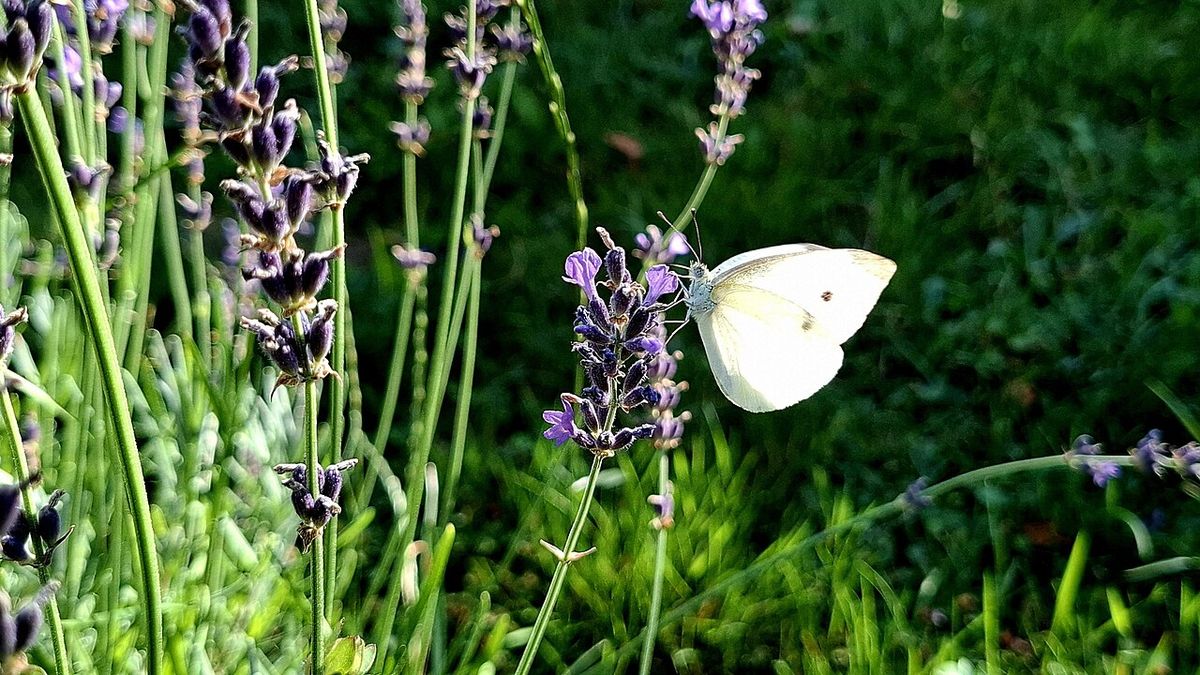
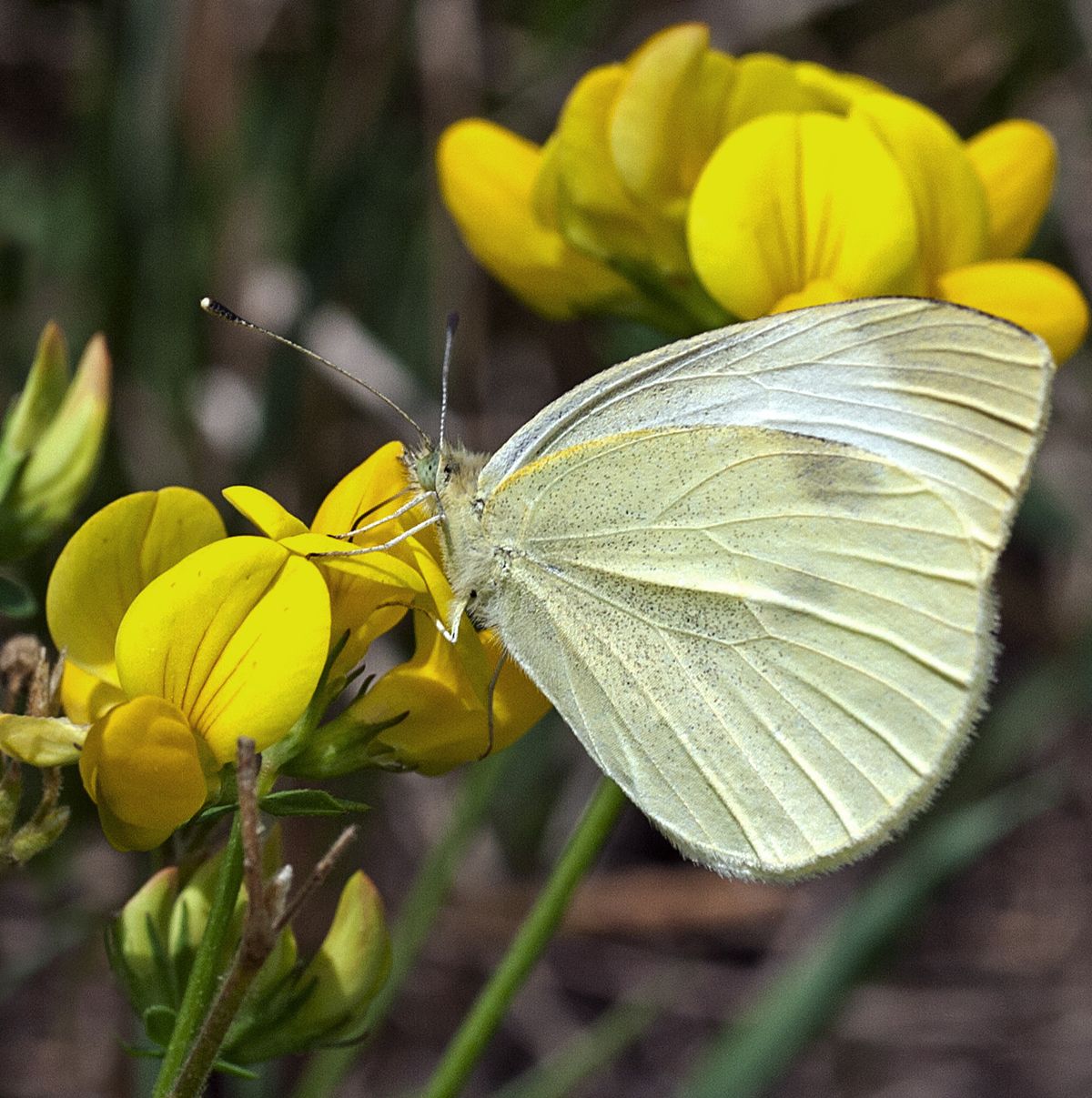
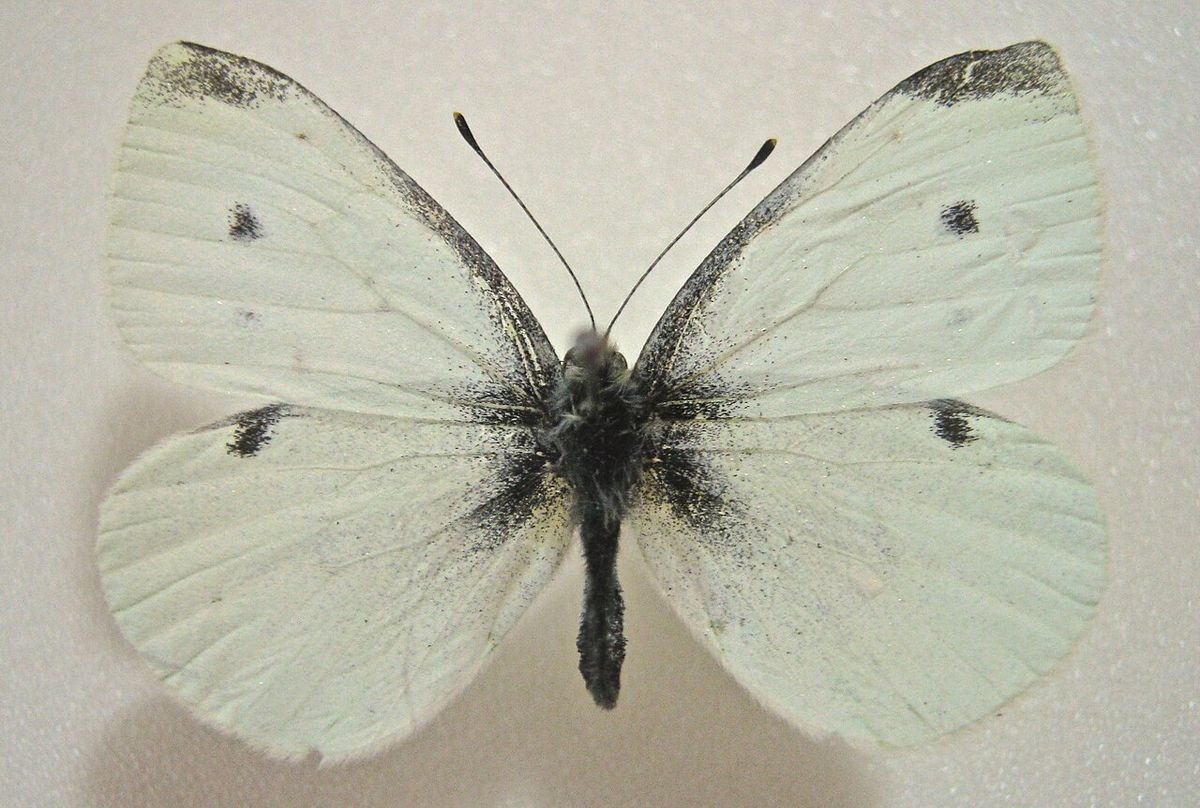
The cabbage white butterfly is a medium-sized insect with a wingspan typically ranging from 32 to 47 millimetres. The upperside of the wings is creamy white with black tips on the forewings. A key identifying feature is the presence of black spots: females possess two black spots in the centre of their forewings, while males have only one. The underside of the wings is yellowish with fine black speckles. The species can be distinguished from the similar large white (Pieris brassicae) by its smaller size and the lack of a broad black band at the forewing tips. The adult butterfly has a wingbeat frequency averaging 12.8 flaps per second and is diurnal, flying throughout the day. The larval form, known as the imported cabbageworm, is a velvety-green caterpillar that grows up to 35 millimetres long. It features a faint yellow dorsal stripe, a lateral row of yellow dashes, and tiny black spots, with a black ring around its spiracles. The caterpillar's head colour changes through its growth stages, progressing from entirely black in early instars to having yellow markings in later stages.
Global Distribution and Introduction to North America
Pieris rapae is believed to have originated in the Eastern Mediterranean region of Europe, spreading across Eurasia with the diversification of brassicaceous crops and human trade. Its global invasion accelerated over the past two centuries through accidental introductions. It was established in North Africa by about 1800 and reached Hawaii in 1897, New Zealand in 1930, and Australia in 1937. The species was accidentally introduced to Quebec, Canada, around 1860, specifically in the Montreal area. From this point, it spread rapidly throughout North America, inhabiting all life zones from the southern United States to Canada. It is absent or scarce only in true desert regions and is not found north of the Canadian life zone. By the late 19th and early 20th centuries, it had become a continent-wide pest. The species thrives in any open area with diverse plant life, including towns, meadows, fields, and valley bottoms, and has even been observed entering small forest clearings in recent years.
Life Cycle and Development
The life cycle of Pieris rapae is continuous in North America, with adults being one of the first butterflies to emerge in spring and flying until a hard freeze in autumn. In Britain, it has two distinct flight periods, but in Canada, it is continuously brooded. The female lays between 300 and 400 eggs in her lifetime, depositing them singly on the undersides of host plant leaves. The eggs are oblong, white to cream-coloured, turning yellowish with age, and have about 12 longitudinal ridges. They hatch in 4 to 8 days. The larval stage consists of five instars over approximately 15 days, during which the caterpillar feeds voraciously. Pupation occurs in a chrysalis attached to the host plant or nearby debris. The pupa is 19-20 mm long and can be grey, green, yellow, or brown, providing camouflage. Metamorphosis lasts from 11 days to a few weeks, with pupae formed late in the season overwintering. The complete development from egg to adult requires 3 to 6 weeks, leading to multiple generations per year: 3 in New England, 3-5 in California, and up to 6-8 in the southernmost parts of its range. Female butterflies mate once early in adulthood, and the number of annual generations is highly dependent on climate, with warmer regions supporting more cycles.
The life cycle of Pieris rapae includes the egg, larval, pupal, and adult stages. The caterpillar, known as the imported cabbageworm, is a pest to crucifer crops. The pupa is the overwintering stage, which allows the species to survive cold winters. Adults are diurnal and are strong flyers, with the British population being increased by continental immigrants in most years.
- Egg: Laid singly on leaf underside. Yellowish with ridges. Hatches in 4-8 days.
- Larva (Caterpillar): Five instars over ~15 days. Velvety-green with yellow markings.
- Pupa (Chrysalis): 19-20 mm. Colour varies for camouflage. Metamorphosis takes 11+ days.
- Adult: Emerges, mates, and lays eggs. Lives approximately 3 weeks.
In North America, Pieris rapae is continuously brooded, being one of the first butterflies to emerge in the spring and flying until hard freeze in the fall. The species was accidentally introduced to Quebec, Canada, around 1860 and spread rapidly throughout North America. It has spread to all North American life zones from Lower Austral to Canada. The pupa is the overwintering stage, which is a key factor in its survival and success as an invasive species.
Ecology and Host Plant Relationships
Pieris rapae has an intimate and damaging relationship with plants in the family Brassicaceae, also known as crucifers or cole crops. All known host plants contain natural chemicals called glucosinolates, which serve as primary cues for female egg-laying. The list of host plants is extensive, including both cultivated and wild species. Cultivated hosts crucial to Canadian agriculture include cabbage (Brassica oleracea), broccoli, cauliflower, kale, Brussels sprouts, radish, and horseradish. Wild hosts like charlock (Sinapis arvensis) and hedge mustard (Sisymbrium officinale) also support populations. The female's host selection is a three-phase process involving searching, landing, and contact evaluation. Gravid females search in open areas, using visual cues like colour, with a strong preference for green and blue-green surfaces with maximal reflectance around 550 nanometres. They tend to prefer older, darker green plants for oviposition, even though larvae perform better on younger plants. Upon landing, they use a "drumming" reaction with their forelegs to assess the plant's surface texture and chemical cues via tarsal chemoreceptors. A key adaptation is that females lay eggs disproportionately on peripheral or isolated plants, a behaviour thought to prevent larval starvation by not over-exploiting a single resource. This behaviour may have evolved to exploit the original brassica vegetation in the Eastern Mediterranean.
Feeding Behaviour and Role as a Pest
The ecological impact of Pieris rapae shifts dramatically between its life stages. Adult butterflies feed exclusively on nectar, acting as pollinators for a variety of flowers. They show a preference for purple, blue, and yellow blossoms and use both visual and olfactory cues to find nectar. Some flowers, like Brassica rapa, have ultraviolet guides that aid the butterfly's search. In contrast, the larval stage is a voracious and destructive feeder. Upon hatching, the caterpillar eats its own eggshell and then bores into the interior of cabbage heads or feeds on leaves, creating round holes. Larvae adjust their feeding rate to maintain constant nitrogen uptake, feeding faster in low-nitrogen environments. They feed mostly during the day and disperse their damage across the plant, an adaptive behaviour believed to hide visual cues from predators. Larval growth is highly temperature-dependent, with optimal growth occurring around 30.5°C in lab conditions, though they can survive a wide range. As a pest, the caterpillar causes significant economic damage. In commercial farming, larvae that crawl into developing broccoli heads contaminate the harvest, leading to the rejection of entire loads and financial losses of thousands of dollars for farmers. For home gardeners, feeding damage can reduce yields and contaminate produce with frass (excrement). The larvae's dark brown and green frass leaves discolouration on leaves, further reducing crop quality.
Other caterpillar pests can also affect Brassica crops. The imported cabbageworm is the larval stage of the cabbage white butterfly, Pieris rapae. This caterpillar is considered a serious pest for the commercial growth of cabbage and other Brassicaceae. The larvae are voracious and bore into the interior of cabbages to feed on new sprouts.
- Diamondback Moth (Plutella xylostella): Small, pointed-end caterpillar that wriggles violently when disturbed.
- Cabbage Looper (Trichoplusia ni): Has white lines defining body segments and moves in an inchworm fashion.
- Cross-Striped Cabbageworm (Evergestis rimosalis): Eggs laid in clusters. Caterpillar has distinct horizontal black, white, and yellow stripes.
The larvae of Pieris rapae cause damage to cultivated cabbages, kale, broccoli, and other related crops. This feeding damage can be significant, with the caterpillar known to be responsible for annual damage worth hundreds of thousands of dollars. The adult cabbage white butterfly is diurnal and flies throughout the day. It is commonly seen fluttering in gardens, where it uses visual and olfactory cues to identify flowers for foraging.
Predators, Parasitoids, and Population Control
Pieris rapae faces natural controls from a suite of predators and parasitoids, though these are often insufficient to prevent economic damage. Bird predation is significant in British town and city gardens, with species like the house sparrow, goldfinch, and skylark known to prey on them. In rural areas, arthropod predators have a larger influence. These include shield bugs, ambush bugs, vespid wasps, European wasps, harvestmen, and hoverflies. The caterpillars are cryptically coloured green and rest on the undersides of leaves to avoid detection. Unlike the large white, they are not distasteful to bird predators. Several parasitoid species provide biological control, attacking various life stages. These include small wasp species and tachinid flies that target eggs, larvae, and pupae. A group known as "white butterfly parasites" specifically attacks cabbage worms. Despite the presence of these natural enemies, they rarely suppress populations below economically damaging levels, necessitating active management by growers and gardeners. The caterpillars remain exposed in the sun for most of the day rather than hiding, relying on their cryptic coloration and dispersed feeding patterns for protection.
Management in Agricultural and Garden Settings
Managing Pieris rapae is essential for protecting cruciferous crops in both commercial and home garden contexts. A multi-faceted approach is most effective. Cultural controls are a first line of defence, including the management of Brassica-family weeds that can serve as alternate hosts for increasing pest populations. Exclusion netting, deployed immediately after planting or transplanting, can physically prevent adult butterflies from accessing plants to lay eggs. For direct control, the bacterial insecticide Bacillus thuringiensis (Bt) is a common and effective biological option. It must be applied weekly to plant leaves after larvae first appear. In commercial farming, scouting is critical. Recommendations suggest inspecting 100 leaves from across a field at the "button" stage (just before broccoli or cauliflower buds expand). Action thresholds are conservative due to the high quality standards for processed vegetables. If no worms are detected at the button stage, a single "clean-up" spray 7-10 days before harvest may be justified. If an average of two or more medium-sized worms per ten leaves is found, a two-spray program is recommended. The financial risk of contamination is high, as the discovery of larvae in harvested broccoli at a processing plant leads to the rejection of the entire load. This makes proactive, threshold-based management a financial necessity for commercial growers.
| Management Method | Application | Notes |
|---|---|---|
| Exclusion Netting | Physical barrier post-planting | Prevents egg-laying. Must be secured immediately. |
| Bacillus thuringiensis (Bt) | Spray on foliage weekly | Biological control. Targets caterpillars specifically. |
| Cultural Control (Weed Management) | Remove Brassica weeds | Reduces alternate host plants. |
| Conventional Pesticides | As per scouting thresholds | Used in commercial settings. Timing is critical. |
| Scouting & Action Thresholds | Inspect 100 leaves at button stage | Threshold: 2+ worms/10 leaves triggers spray program. |
Questions about Pieris rapae
When was the cabbage white butterfly introduced to Canada?
The cabbage white butterfly was accidentally introduced to Canada around 1860. The introduction point was Montreal, Quebec. From this initial foothold, the species spread rapidly throughout North America, inhabiting all life zones from the southern United States to Canada. It is now one of the most widespread and familiar butterflies on the continent.
What plants do cabbage white caterpillars eat?
Cabbage white caterpillars are specialist feeders on plants in the Brassicaceae family. This includes major cultivated crops like cabbage, broccoli, cauliflower, kale, Brussels sprouts, radish, and horseradish. They also feed on wild species such as charlock and hedge mustard. The caterpillars contain chemicals called glucosinolates in these plants, which guide the female butterfly to lay her eggs on them.
How can I tell a male and female cabbage white butterfly apart?
You can distinguish the sexes by the number of black spots on their forewings. Female cabbage white butterflies have two black spots in the centre of their forewings. Males have only one black spot in the same area. Both sexes have black tips on their forewings, and the underside of their wings is yellowish with black speckles.
How many generations does the cabbage white have per year in Canada?
The number of generations per year varies with climate. In regions like New England, which shares a climate with parts of Eastern Canada, there are typically three generations per year. In warmer areas like California, there can be three to five generations. In the southernmost parts of its range, up to six to eight generations can occur. In Canada, the active season is from spring until September.
What is the best way to control cabbage worms in my garden?
Several integrated methods are effective for garden control. Using fine exclusion netting over your plants immediately after planting prevents the butterflies from laying eggs. The biological insecticide Bacillus thuringiensis (Bt) is safe and effective when sprayed on leaves weekly after caterpillars appear. Manually removing caterpillars and eggs is also helpful. Managing weeds in the cabbage family around your garden can reduce local pest populations.
Why is the cabbage white butterfly a serious problem for farmers?
For commercial farmers, especially of broccoli and cauliflower, the caterpillar poses a severe contamination risk. Larvae crawl into the developing heads, where they are impossible to remove during processing. If a load of harvested broccoli arrives at a processing plant and is found to be contaminated, the entire load is rejected. This results in direct financial losses of thousands of dollars for the farmer, making proactive pest management essential.
Sources and further reading
- Pieris rapae (Wikipedia)
- Pieris rapae | INFORMATION (animaldiversity.org)
- Insect Spotlight: Cabbage White Butterfly (Pieris rapae) (vegcropshotline.org)
- Cabbage White Butterfly | Horticulture, Oregon State University (horticulture.oregonstate.edu)
- White Cabbage Butterfly (kats-garden.nz)
Checked by the Your Space Hamilton desk. Last updated 2026-10-27.