North American porcupine
The North American porcupine (Erethizon dorsatum), also known as the Canadian porcupine, is a large, quill-covered rodent native to the forests and wildlands of Canada, the United States, and northern Mexico. It is the second largest rodent in North America after the beaver, a familiar presence in Canadian boreal, coniferous, and mixed forests. This solitary, nocturnal herbivore is instantly recognizable by its coat of nearly 30,000 sharp, barbed quills, a formidable defense system that defines its interactions with the natural world. Porcupines play a role in forest ecology through their feeding habits and have a long history of cultural significance and practical use for Indigenous peoples.
Physical Description and Quills
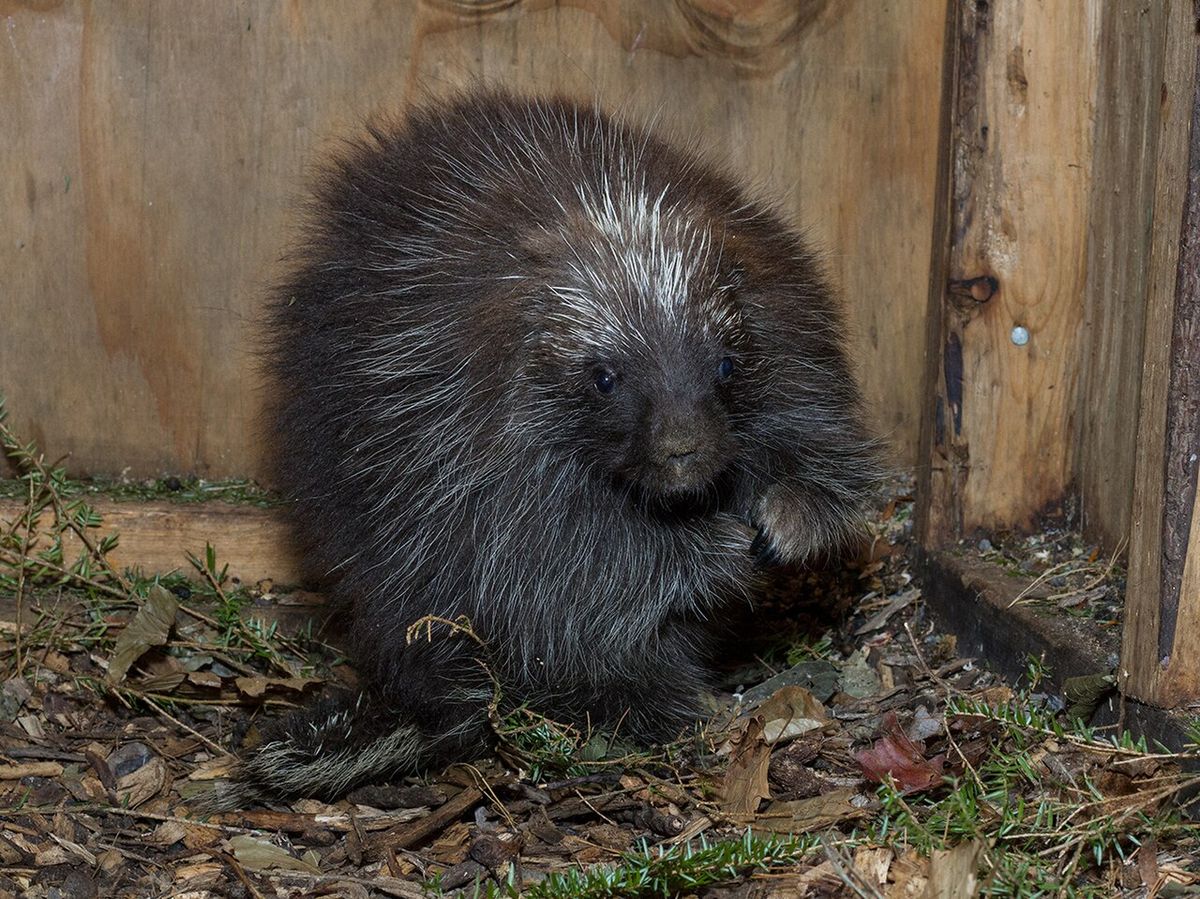
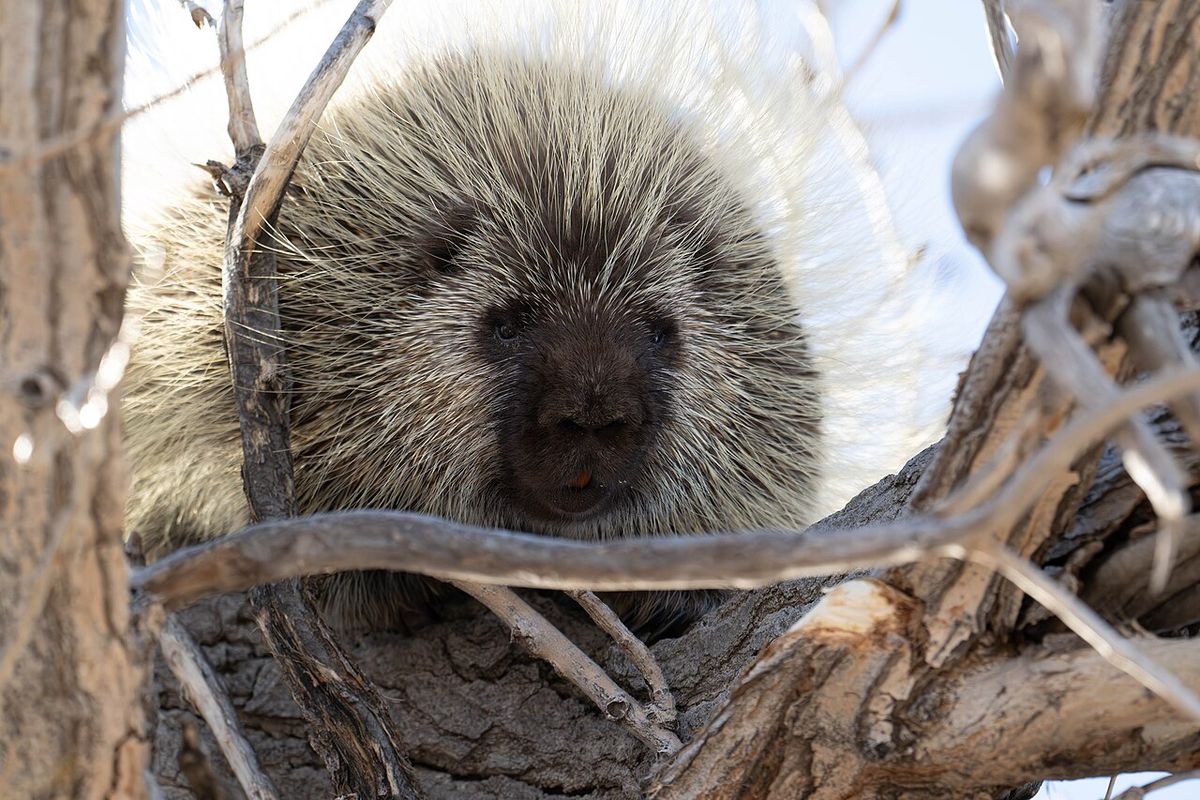
The North American porcupine is a stout, short-legged mammal with a stocky body, a small face, and a short, thick tail. Its head-and-body length ranges from 60 to 90 centimetres, not including a tail of 14.5 to 30 centimetres. Adult weight varies significantly from 3.5 to 18 kilograms, with males averaging heavier than females. The animal's fur is usually dark brown or black with white or yellowish highlights, providing a contrasting black-and-white coloration that acts as a warning signal. The most famous feature is its coat of quills, which are modified hairs formed into sharp, hollow spines. An adult porcupine possesses about 30,000 quills covering its back, sides, and tail, but not its underbelly, face, or feet. These quills are normally flattened against the body but can be erected when the animal is threatened. Each quill has microscopic, backward-facing barbs at the tip, which cause it to lodge firmly and painfully in an attacker's skin and work deeper over time. The quills also have a fatty acid coating with antibiotic properties, which helps protect the porcupine from infection if it is accidentally stuck with its own quills.
Physical proportions can vary across the continent. In the Pacific Northwest, members of the subspecies E. d. epixanthum sometimes exhibit a recognizable yellow coloration in their quills. The tail is extremely muscular and adapted for climbing and defense, with the upper surface covered in quills and the underside covered in stiff bristles used for grip. The porcupine's front claws are long and curved, aiding its arboreal lifestyle. Despite their formidable armour, porcupines have excellent senses of smell, hearing, and taste, but they are nearsighted, which contributes to their slow, deliberate movements.
Evolution, Taxonomy, and Subspecies
The North American porcupine is a caviomorph rodent whose ancestors are believed to have crossed the Atlantic Ocean from Africa to Brazil approximately 30 million years ago. These ancestors then migrated into North America during the Great American Interchange after the Isthmus of Panama formed about 3 million years ago. The genus Erethizon appeared in North America shortly after the two continents joined in the later Tertiary period, and it was the only hystricomorph rodent to survive north of Mexico. The earliest uncontested fossils of E. dorsatum date to the Middle Pleistocene, around 130,000 years before present, and were found in the Conard Fissure of Arkansas. There are seven recognized subspecies of Erethizon dorsatum, subdivided by different ranges across the continent.
- E. d. dorsatum: The most common subspecies, ranging from Nova Scotia to Alberta and from Virginia to the Yukon.
- E. d. picinum: Occupies a small range in northeastern Quebec and Labrador.
- E. d. couesi: The most southern subspecies, ranging from northern Mexico to Colorado.
- E. d. bruneri: Found in the midwest from Arkansas to Montana.
- E. d. epixanthum: Found in the western United States.
- E. d. nigrescens: Found in the western United States and Canada.
- E. d. myops: Found in the western United States and Canada.
The North American porcupine's scientific name, Erethizon dorsatum, can be loosely translated as "the animal with the irritating back." The word "porcupine" comes from the middle or old French word porcespin, which means 'thorn pig'. Its roots derive from the Latin words porcus or pig and spina meaning thorns. Other colloquial names for the animal include quill pig, and it is also referred to as the Canadian porcupine or common porcupine. Indigenous terms for it include the Lakota name pahin meaning quill, the Ho-Chunk name waxąhį, and the Chipewyan name tsʼl.
Habitat and Distribution
The North American porcupine has an extensive range across the continent. In eastern North America, it is found from Canada south to the Appalachian Mountains in West Virginia and Maryland, with its range extending no farther south than northern New Jersey east of the Appalachians. In western North America, its range stretches from Alaska down to the northern mountains of Mexico. The porcupine is commonly associated with coniferous and mixed forested areas but is a highly adaptable animal that can also thrive in harsh environments including shrublands, grasslands, desert scrub communities, and even tundra. They make their dens in natural cavities such as hollow trees, hollow logs, rock crevices, caves, or thick tangles of vegetation and roots. These dens provide shelter from snow and rain, but porcupines do not hibernate and remain active throughout the winter, often travelling between dens and feeding trees within a home range. Studies have shown home ranges varying from 25-35 acres to as much as 70 acres depending on the region and food availability.
Diet and Behaviour
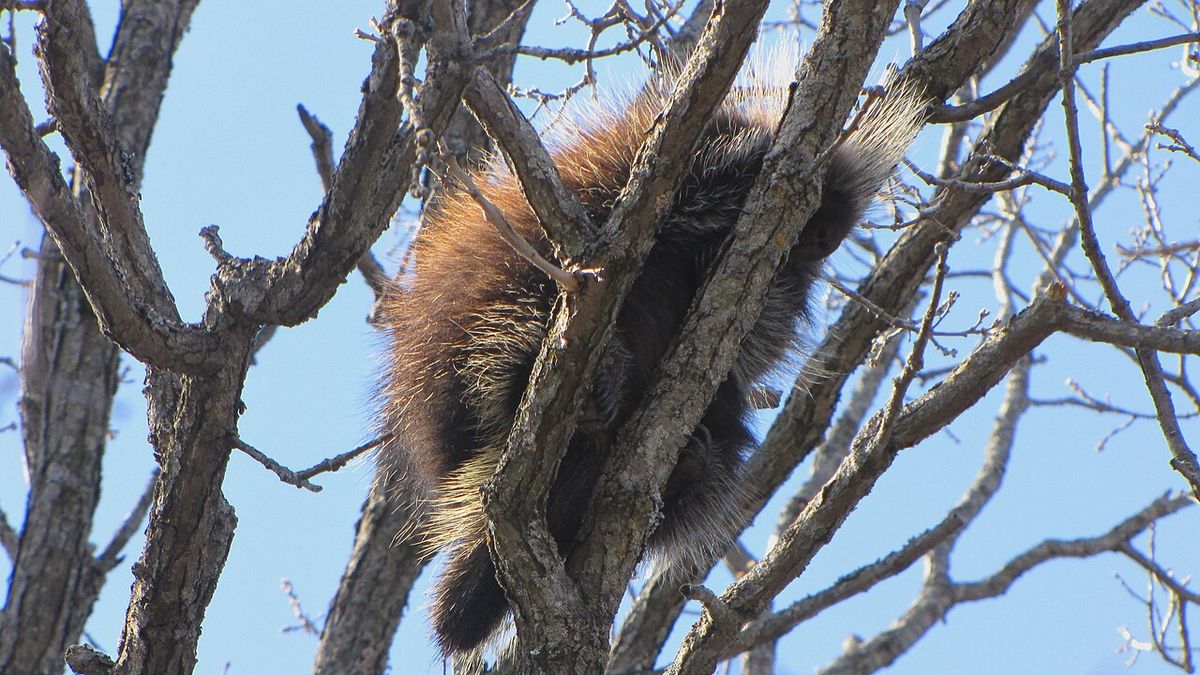
The North American porcupine is a herbivorous generalist, but its diet changes significantly with the seasons. In winter, when other vegetation is scarce, it feeds primarily on the inner bark (cambium) and evergreen needles of trees, often concentrating on a single tree which can lead to damage or death. In spring and summer, its diet diversifies to include berries, seeds, grasses, leaves, roots, stems, and fruits like apples. It has even been documented swimming to eat water lilies. In autumn, it consumes beechnuts and acorns. This flexible, non-selective eating helps it survive but can bring it into conflict with forestry and agriculture. Porcupines are primarily nocturnal, sleeping during the day in trees, hollow logs, or among rocks. They are excellent, powerful climbers and spend much of their time in trees, but they do fall fairly often, with studies showing about thirty percent of individuals have evidence of healed fractures from falls.
They are solitary animals for most of the year, a lifestyle enabled by their potent defensive quills. Mothers and young, called porcupettes, form the only consistent social unit. Porcupines are known for their strong learning and memory capabilities, with research indicating "an extraordinary ability to learn complex mazes and to remember them as much as a hundred days afterward." They are also infamous for their craving for salt, which leads them to chew on sweaty tool handles, gloves, road salt-covered boots, and even plywood, which contains salts added during manufacture.
Defence and Predators
The porcupine employs a multi-stage defensive strategy based on aposematism, using olfactory, visual, and auditory warnings before resorting to its physical quills. When threatened, it can emit a strong odour from a specialized skin patch called the rosette on its lower back. This smell, generated by the R-enantiomer of delta-decalactone, has been compared to strong human body odour, goats, or some cheeses. If agitated further, the porcupine will erect its quills, displaying a white stripe down its back, and chatter its teeth as a warning. The final defensive manoeuvre is to turn its back to the attacker, tuck its head, and swing its muscular, quill-laden tail. Contrary to popular myth, porcupines cannot throw or shoot their quills. The quills detach easily upon contact, and their barbed tips embed in the attacker's skin, working inward and causing significant pain and potential injury.
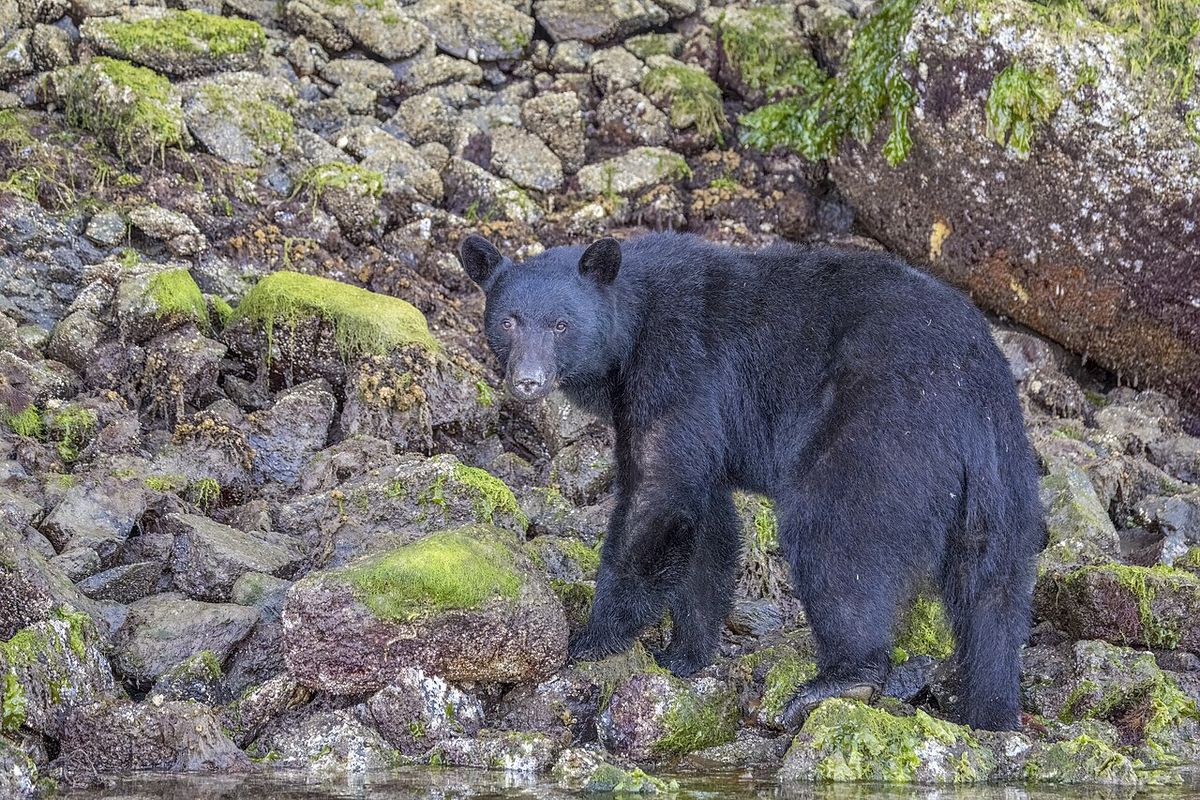
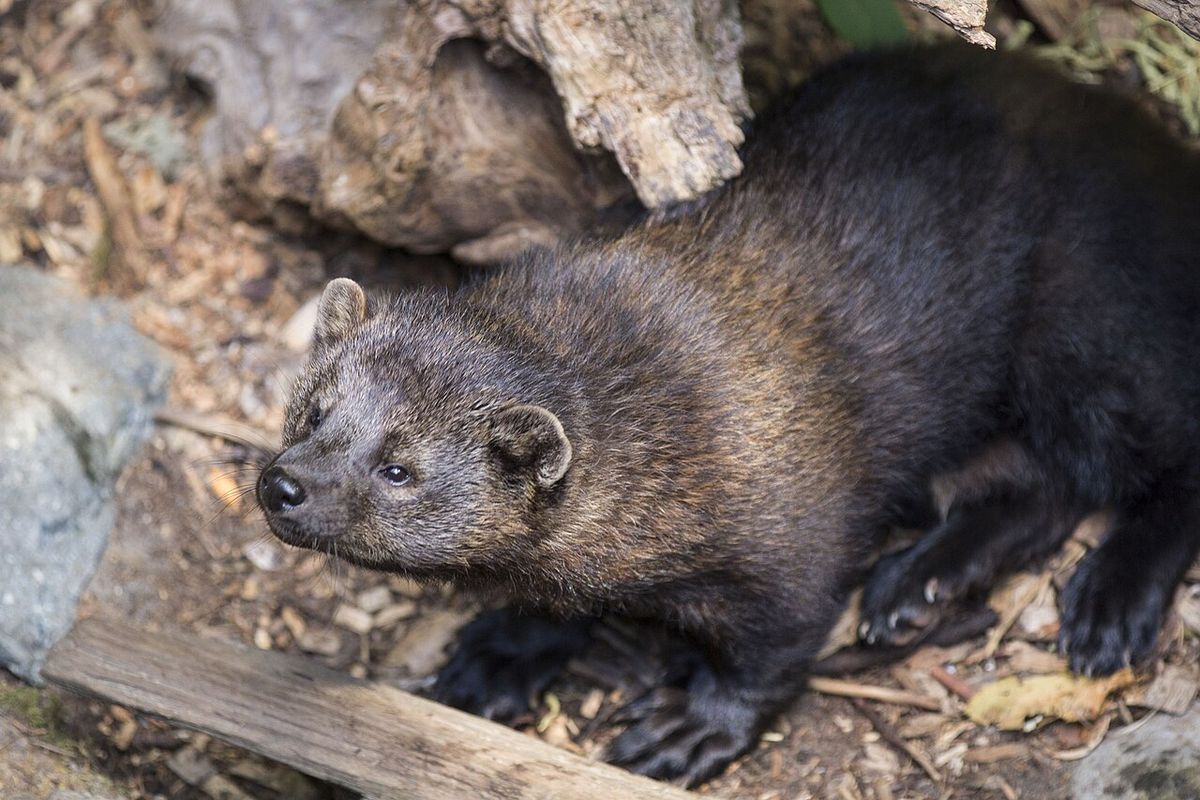
Despite this defence, several predators successfully hunt porcupines. The fisher (Pekania pennanti) is its most effective natural predator. This agile, cat-sized mustelid can climb trees to force a porcupine to the ground, where it repeatedly attacks the face until the porcupine is weakened, then flips it over to attack the unprotected belly. Male fishers, being larger, are more likely to hunt porcupines than females. Cougars are also significant predators, often positioning themselves below a porcupine in a tree to knock it to the ground. Some cougars have been found with dozens of quills embedded in their gums with no ill effects, although porcupine quills have killed cougars in some instances. Other predators include wolves, coyotes, American black bears, wolverines, golden eagles, and great horned owls. In many cases, even successful predators may suffer injury or death from embedded quills.
Reproduction and Life Cycle
Breeding season occurs in the fall, typically from September to November. Female porcupines, solitary for most of the year, secrete a thick mucus that mixes with urine to produce an odour that attracts males. Males expand their home ranges to seek females and will fight other males using their teeth and quills for mating rights. The dominant male then showers the receptive female with urine before mating. Mating occurs on the ground, with both animals tightening their skin and holding their quills flat to avoid injuring each other. The North American porcupine has an exceptionally long gestation period for a rodent, averaging 202 to 217 days. By comparison, the similarly sized beaver has a gestation of about 128 days. In the spring or early summer, the female gives birth to a single young, called a porcupette. Twins are rare. At birth, the porcupette weighs between 450 grams and 1 kilogram, has its eyes open, and is covered with long hair and soft quills that harden within hours.
The female provides all parental care. The young can follow its mother shortly after birth and begins to eat vegetation within a few weeks, but it continues to nurse for three to four months. Porcupettes learn to climb within their first week and are weaned by the time the female mates again in the fall. They then disperse to live independently, with female porcupettes more likely to disperse than males, which is unusual among mammals. Porcupines have a relatively long life expectancy in the wild, often living up to 18 years, with some individuals reaching 30 years. Common causes of mortality include predation, starvation, falls from trees, and collisions with motor vehicles, especially in winter when they are attracted to salted roads.
Relationship with Humans and Conservation
Porcupines have a complex relationship with humans. They are sometimes considered pests due to their habit of damaging trees, wooden structures, plywood, leather objects, and even injuring curious domestic dogs. The timber and agriculture industries may target them for these destructive behaviours. However, they hold significant cultural value. For millennia, Indigenous peoples across Canada have utilized porcupine quills for decorative art on baskets and clothing. The animals were also an important source of food, especially in winter, for peoples of the boreal forest. Their quillwork remains an active traditional art form. From a conservation perspective, the North American porcupine is listed globally as a species of Least Concern by the International Union for Conservation of Nature (IUCN). It remains common throughout most of its Canadian and northern U.S. range.
However, populations are threatened at the southern edges of its range. It is listed as a species in need of conservation in Maryland, and as of 1994, it was listed as an endangered species in Mexico. As of 1999, only fifteen remnant populations were known in north-central Mexico, threatened by hunting and habitat loss. In Canada, a primary modern threat is vehicle collisions, as porcupines are attracted to road salt and their defensive behaviour causes them to freeze rather than flee from approaching cars. Their nocturnal nature and poor eyesight further increase this risk, particularly during colder months.
Notable Individuals in Captivity
Several North American porcupines serve as educational ambassadors in zoos across North America, helping the public learn about this unique species. Individual animals often have distinct histories and characteristics that aid in their care and public presentation. For example, Jeffery is a male porcupine born on April 5, 2020, at the Staten Island Zoo in New York. He arrived at his current institution in May 2021 and is described as having a blacker coat and being the smaller of his pair. His favourite snacks are nuts and corn on the cob. His companion, Khaleesi, is a female born on April 28, 2015, at the Elmwood Park Zoo in Pennsylvania. She arrived in June 2024 as a breeding partner for Jeffery. Khaleesi has been trained to participate in voluntary ultrasounds to monitor potential pregnancies and is larger with a browner coat than Jeffery. Her favourite treats include nuts and cooked sweet potato mash. Another notable individual, Betty, was featured as an education ambassador porcupine demonstrating her skills in 2026. These animals help illustrate the species' behaviours, diet, and unique physiology to visitors, and their specific care requirements, such as a diet of herbivore pellets, fruits, vegetables, greens, and browse, are managed by zoo professionals.
Questions about North American porcupine
Can a porcupine shoot its quills?
No, porcupines cannot shoot or throw their quills. This is a common myth. The quills are loosely attached to the porcupine's skin. When threatened, the animal contracts muscles to make the quills stand erect. If a predator makes contact, the quills detach easily and become embedded in the attacker's skin due to their microscopic, backward-facing barbs.
What should I do if my dog gets quilled by a porcupine?
If your dog is quilled, seek immediate veterinary assistance. Do not attempt to pull the quills out yourself. The barbs make removal difficult and painful, and breaking a quill can lead to infection or allow the fragment to migrate deeper into the body. A veterinarian will safely sedate the animal and remove all quills completely.
What do porcupines eat?
Porcupines are herbivores with a diet that changes seasonally. In winter, they eat primarily the inner bark and needles of evergreen trees. In spring and summer, they consume a wider variety including leaves, grasses, roots, stems, berries, and fruits like apples. They are also known for their craving for salt, which leads them to chew on sweaty tools, gloves, and road salt.
Are porcupines endangered in Canada?
No, the North American porcupine is not endangered in Canada. Globally, it is listed as a species of least concern. It is common throughout its range in Canada, which includes coniferous and mixed forested areas. It is listed as a species in need of conservation in some U.S. states like Maryland, but not in Canada.
What is a baby porcupine called?
A baby porcupine is called a porcupette. North American porcupines give birth to a single young. At birth, porcupettes weigh about 450 grams. Their quills harden soon after birth. Female porcupines provide all parental care, and the young continue to nurse for up to four months.
What are the main predators of the North American porcupine?
Natural predators of the North American porcupine include fishers, wolverines, coyotes, wolves, American black bears, and cougars. The only known avian predators are golden eagles and great horned owls. The porcupine is most at risk from the fisher, which is an agile tree climber. Another predator is the cougar, which can climb trees to attack.
Sources and further reading
- North American porcupine (Wikipedia)
- North American porcupine (nationalzoo.si.edu)
- North American Porcupine Species Profile, ... (adfg.alaska.gov)
- Wildlife Spotlight: North American Porcupines (cvc.ca)
- Porcupines (nationalgeographic.com)
Checked by the Your Space Hamilton desk. Last updated 2026-10-27.