Little brown bat
The little brown bat (Myotis lucifugus) is a small, insectivorous bat species native to North America, including widespread distribution across Canada. Recognizable by its glossy brown fur and mouse-like ears, it is a colonial species that historically formed large hibernating and maternity groups. The bat is ecologically significant for its role in controlling nocturnal insect populations, consuming vast quantities of pests like mosquitoes and agricultural insects. However, since 2006, its populations have been devastated by white-nose syndrome, a fungal disease that has caused catastrophic mortality, leading to its classification as endangered. Its adaptability to human structures brings it into frequent contact with people, making its conservation a matter of public interest and ecological importance.
Taxonomy and Subspecies
The little brown bat was first described as a new species in 1831 by the American naturalist John Eatton Le Conte, who initially placed it in the genus Vespertilio with the binomial name Vespertilio lucifugus. The species was later reclassified into the genus Myotis, a name derived from Greek words meaning 'mouse-eared'. Its specific epithet, lucifugus, comes from Latin, translating to 'light-shunning', which reflects its nocturnal habits. The holotype specimen's origin is disputed but may have been collected in Georgia near the Le Conte Plantation near Riceboro, though the initial record lacked detail on the collection location. Within the family Vespertilionidae, it belongs to the subfamily Myotinae, which contains all mouse-eared bats of the genus Myotis. Genetic studies from 2007 using mitochondrial and nuclear DNA place it within a Nearctic clade of mouse-eared bats, with its sister taxon being the Arizona myotis (Myotis occultus). As of 2005, five subspecies are recognized: M. l. lucifugus, M. l. alascensis, M. l. carissima, M. l. pernox, and M. l. relictus. Formerly, the Arizona myotis and the southeastern myotis were considered subspecies but are now recognized as full species. A 2018 study by Morales and Carstens concluded the five subspecies are independent, paraphyletic lineages that may each warrant specific status. There is ongoing debate over potential hybridization with the Yuma myotis in western North America and southern British Columbia, though a 1983 study found no morphological, genetic, or ecological evidence to support this.
Physical Description and Identification
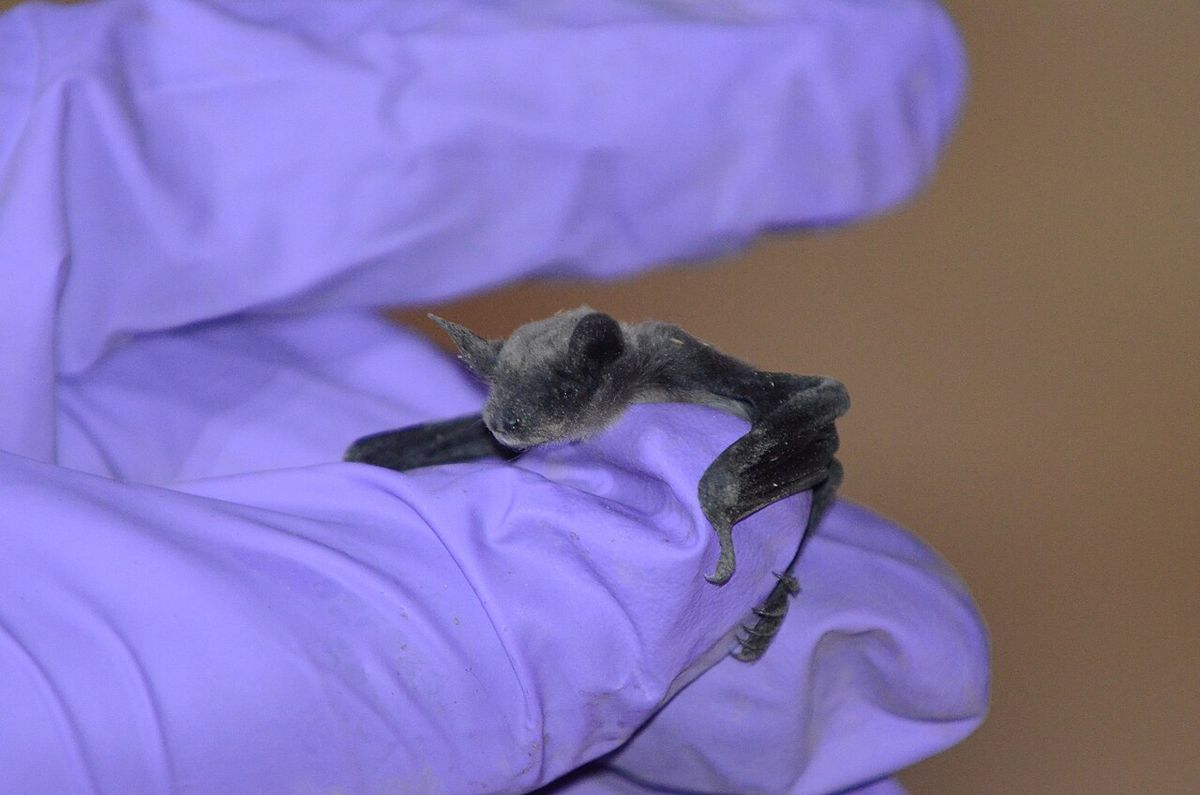
The little brown bat is a small, sexually dimorphic species, with females generally larger than males. Adults have a total body length of 8.0 to 9.5 centimetres and a wingspan ranging from 22.2 to 26.9 centimetres. Body mass varies from 5.5 to 12.5 grams, with individuals being lightest in spring after emerging from hibernation. The forearm length is a key measurement, typically between 36 and 40 millimetres. Its fur is glossy and can range in colour from pale tan or reddish to dark brown, with the belly fur being noticeably lighter. The species exhibits various pigmentation disorders, including albinism (total lack of pigment), leucism (partial lack), and melanism (over-pigmentation). The head features a relatively short snout and a gently sloped forehead, and it lacks a sagittal crest, a feature that helps distinguish it from the similar Arizona myotis. Its skull length is 14 to 16 millimetres, and the braincase appears nearly circular though somewhat flattened when viewed from the back. Its ears are 11.0 to 15.5 millimetres long, while the tragi (cartilaginous flaps that project in front of the ear openings) are blunt at the tips and 7.0 to 9.0 millimetres long. The dental formula for adults is 2.1.3.3 over 3.1.3.3, for a total of 38 teeth, while the milk teeth formula is 2.1.2.0 over 3.1.2.0 for a total of 22 teeth. Newborn pups are born with 20 milk teeth which becomes 22 when the final upper premolars emerge, and tooth replacement is usually complete once a juvenile reaches 80 millimetres in length. Identifying the little brown bat requires distinguishing it from similar species like the Indiana bat, which has a keeled calcar, and the northern long-eared bat, which has much longer ears and sharply pointed tragi.
Senses, Physiology and Torpor
The little brown bat possesses dichromatic vision that is likely sensitive to both ultraviolet and red light, based on genetic analysis showing the genes SWS1 and M/LWS are present and functional. This ability to see ultraviolet light may be useful in capturing insects, as 80% of nocturnal moths' wings reflect UV light, though the advantage of seeing red light is unclear. Its eyes are adapted for low-light conditions, and it lacks eyeshine. The species has a reduced olfactory epithelium and small eyes compared to fruit-eating bats like the Jamaican fruit bat, reflecting its greater reliance on echolocation for navigation and hunting. It lacks a vomeronasal organ entirely. To conserve energy, the bat enters a state of torpor daily when ambient temperatures are below 4°C throughout the year and below 0°C in winter, allowing its body to cool and physiological activity to slow. While in torpor, its heart rate can drop from up to 210 beats per minute to as few as 8 beats per minute. The exception to this rule is females at the end of pregnancy, which no longer have the ability to thermoregulate and therefore must roost in warm places. During daily roosting, it can cope with high levels of water loss of up to 25%. In winter, it enters prolonged hibernation, with individuals capable of remaining in uninterrupted torpor for up to 90 days to limit energetically costly arousals. Despite this energy-saving state, bats lose about a quarter of their pre-hibernation body mass over the winter.
Life Cycle and Reproduction
The little brown bat has a promiscuous mating system, with both males and females taking multiple partners, a structure also called polygynandrous. Mating occurs in the fall during swarming behaviour at hibernation sites, where individuals of both sexes congregate. Males produce sperm from May through August, and like several other bat species, males exhibit homosexual behaviours, mating indiscriminately with torpid, roosting bats regardless of sex. Fertilization is delayed until the spring due to sperm storage. Gestation lasts 50 to 60 days, resulting in a single pup born in early summer. At birth, pups weigh approximately 2.2 grams and have a forearm length less than 17.2 millimetres, which can be up to 30% of the mother's postpartum weight. Their eyes and ears are closed at first but open within a few hours of birth, and they exhibit rapid growth. By about three weeks old, young bats begin flying and start the weaning process, reaching a similar size to adults in forearm length but not weight. Weaning is complete by 26 days of age. Females can become sexually mature in their first year, while males mature in their second. This species is notably long-lived for its size, with a maximum recorded lifespan of 34 years in the wild, though the average is around 6.5 years. Annual survival rates vary by sex and region, with one colony in Ontario showing male and female survival rates of 81.6% and 70.8% respectively, and a colony in southern Indiana showing rates of 77.1% for males and 85.7% for females.
Key stages in the life cycle of the little brown bat include mating, birth, and growth to adulthood. Mating takes place in the fall before hibernation, but fertilization does not occur until the spring due to sperm storage. After a gestation of 50 to 60 days, females give birth to a single pup annually. Pups grow rapidly, beginning to fly and wean at around three weeks old, and they are totally weaned by 26 days old.
- Fall: Mating occurs during swarming at hibernation sites before annual hibernation.
- Spring: Delayed fertilization takes place after hibernation ends.
- Early Summer: After a 50-60 day gestation, a single pup is born.
- 3 Weeks Old: Pups begin flying and the weaning process starts.
- 26 Days Old: Pups are fully weaned.
- 1 Year Old: Females may reach sexual maturity.
- 2 Years Old: Males reach sexual maturity.
Ecology, Diet and Foraging Behaviour
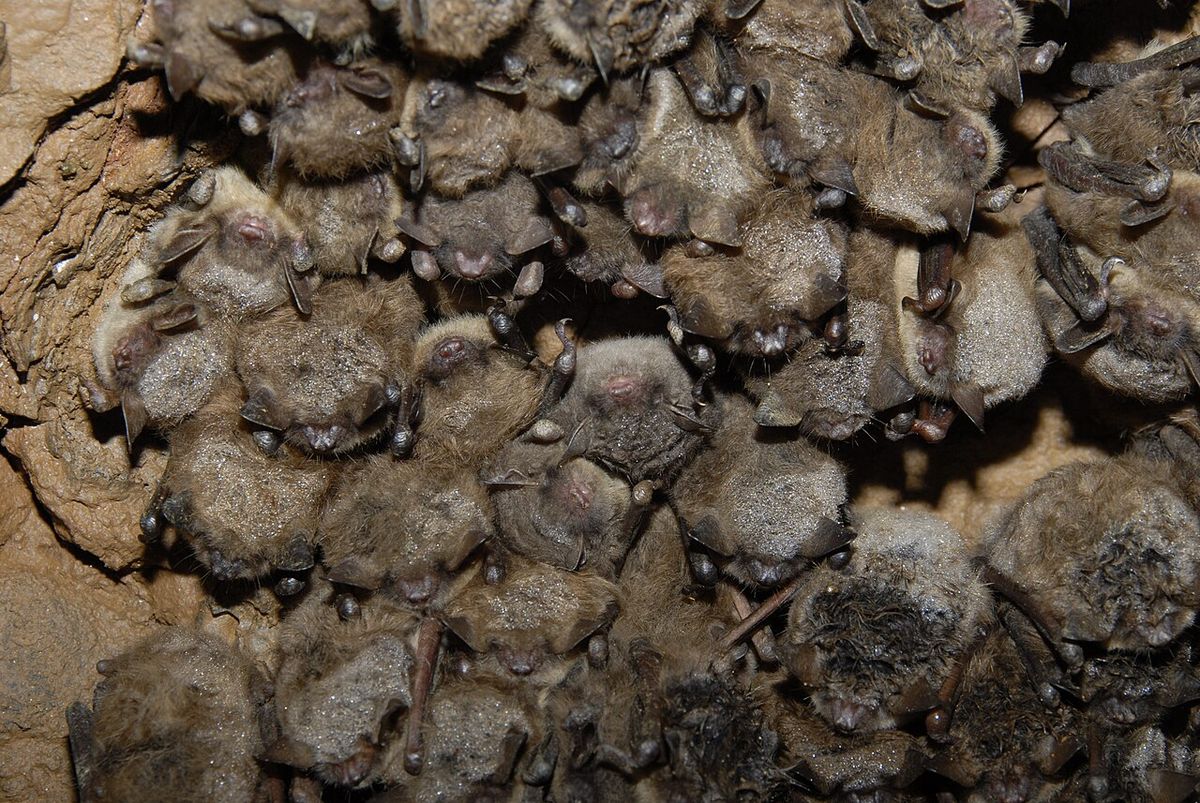
The little brown bat is a colonial, nocturnal species that rests during the day and forages at night. Individuals typically emerge from roosts at dusk, foraging for 1.5 to 3 hours before stopping, with a second foraging bout usually occurring later in the night and ending at dawn. Based on wind tunnel tests, it flies at approximately 5.5 kilometres per hour, increasing to 8.9 kilometres per hour when flying over the surface of water. Home range size is variable. In one study of 22 females in Canada, pregnant females had an average home range of 30.1 hectares and lactating females averaged 17.6 hectares. It uses high-intensity frequency-modulated echolocation calls that last from less than one millisecond to about 5 milliseconds, with a sweep rate of 80-40 kHz and most energy at 45 kHz, emitting approximately 20 calls per second when in flight. The species forms large colonies, with hibernating groups historically containing up to 183,500 individuals, though the average hibernation colony size is just over 9,000, and white-nose syndrome is making solitary hibernation more common. In spring and summer, females form maternity colonies of several hundred almost all-female individuals, while males and non-reproductive females roost alone or in small aggregations, with these maternity colonies breaking apart in late summer. Its diet consists of a wide variety of arthropods including beetles, flies, mayflies, true bugs, ants, moths, lacewings, stoneflies, caddisflies, spiders and mosquitoes.
Prey species consumed by the little brown bat include a variety of insects and spiders. Its diet consists of beetles, flies, mayflies, true bugs, ants, moths, lacewings, stoneflies, and caddisflies. The little brown bat also consumes mosquitoes, with one study finding mosquito DNA in most guano samples. Pregnant and lactating females have particularly high energetic demands, consuming large amounts of insects nightly relative to their body weight.
- Beetles, flies, and mayflies
- True bugs, ants, and moths
- Lacewings, stoneflies, and caddisflies
- Spiders and mosquitoes
One study across twelve colonies in Wisconsin found mosquito DNA in 71.9% of all little brown bat guano samples. Energetic demands are extreme during reproduction. Pregnant females consume about 5.5 grams of insects nightly, equating to 61% of their body weight given an average mass of 9.0 grams. Lactating females consume even more, up to 6.7 grams nightly or nearly 85% of their body weight, with demands potentially peaking at 9.9 grams per night (125% of body weight) when the pup is around 18 days old. While often credited with eating 1000 mosquitoes per hour, controlled experiments where bats were put in rooms full of mosquitoes found capture rates of 1.5 to 5.7 mosquitoes per minute. Extrapolating these numbers suggests a maximum of about 340 mosquitoes per hour under ideal, confined conditions, with no assurance such high efficiencies occur in natural settings with variable prey density.
Predators, Parasites and Diseases
The little brown bat faces mortality from a limited number of natural predators and several significant diseases and parasites. Known predators include owls such as the eastern screech owl, northern saw-whet owl, and great horned owl. Raccoons are opportunistic predators, picking individuals off cave walls in hibernacula or eating fallen bats. The bat hosts a variety of parasites internally and externally. The presence of helminth parasites in the gastrointestinal tract is most common in spring and fall, with digenetic trematodes like Ototrema schildti and Plagiorchis vespertilionis being the most common. Ectoparasites include bat fleas such as Myodopsylla insignis, chiggers like Leptotrombidium myotis, and bat mites Spinturnix americanus. Bat mites synchronize their reproductive cycle with the host's pregnancy hormones, and lactating females have a higher intensity of parasitization, which may promote vertical transmission to pups. The species is susceptible to rabies, specifically the MlV1 strain, though it can also be infected by strains from the big brown bat and silver-haired bat. The virus can be present in saliva 12-18 days before symptoms appear, but not all exposures lead to disease. One study found no little brown bats developed rabies after subcutaneous exposure to the MlV1 strain, and some wild individuals have antibodies. The most devastating threat is white-nose syndrome, caused by the fungus Pseudogymnoascus destructans, which affects bats during hibernation when their body temperatures are within the fungus's ideal growth range of 1-15°C.
White-nose syndrome is the first known pathogen that kills a mammal host during its torpor. Fungal growth erodes the skin of wing and tail membranes, muzzles, and ears, and causes physiological disruptions like higher blood carbon dioxide leading to acidosis and hyperkalemia. Infected bats burn energy reserves twice as fast, have increased arousal frequency and water loss, and ultimately starve. Mortality begins about 120 days after hibernation starts and peaks around 180 days. Survivors tend to have longer bouts of torpor, lower body temperatures during torpor, and genetic predispositions for larger fat reserves. Since 2006, the disease has killed over one million little brown bats, causing average population losses of 90% in surveyed northeastern hibernacula in the United States and fundamentally altering social hibernation behaviour.
Conservation Status and Human Interaction
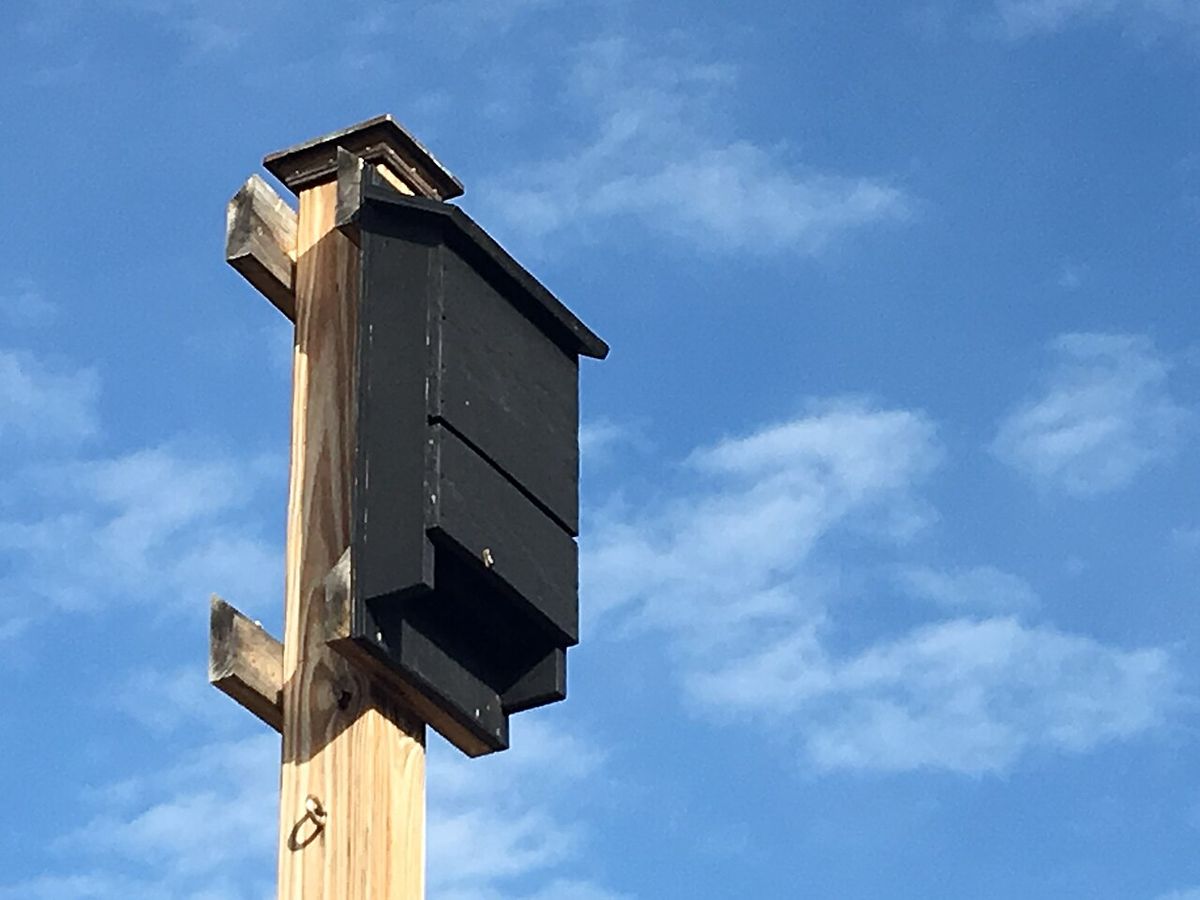
The little brown bat is classified as an endangered species in Canada due primarily to catastrophic declines from white-nose syndrome, first noted in 2006. This fungal disease has caused extreme population losses, particularly in the northeastern parts of its range, fundamentally altering its social hibernation behaviour. The bat's habit of roosting in buildings, such as attics, barns, and other hollow structures, leads to frequent human encounters. Colonies in structures are often considered pests due to guano accumulation and concerns about rabies transmission, though the species rarely tests positive for the virus. Conversely, some people actively encourage bats on their properties by installing bat houses to benefit from their insect-control services, while attempting to exclude them from living spaces. Conservation efforts focus on monitoring surviving populations, protecting critical hibernation sites (hibernacula), and researching treatments for white-nose syndrome. The species' dramatic decline from a once common mammal to an endangered one highlights the vulnerability of North American bat populations to novel pathogens and affirms the importance of its ecological role in controlling insect pests that affect forestry and human health.
Questions about Little brown bat
Are little brown bats dangerous? Do they carry rabies?
Little brown bats are not aggressive and pose minimal danger to humans. They can carry the rabies virus, specifically the MlV1 strain, but they rarely test positive for it. The virus can be present in saliva 12-18 days before symptoms appear, but exposure does not always lead to the disease developing, and some individuals have antibodies. Encounters with bats in buildings should be handled cautiously without harming the bat, but the primary conservation concern is the bats' endangerment, not a significant public health risk from rabies.
What is white-nose syndrome and how does it affect little brown bats?
White-nose syndrome is a deadly disease caused by the fungus Pseudogymnoascus destructans. It affects bats during hibernation when their body temperature is ideal for fungal growth between 1 and 15°C. The fungus erodes the skin on their wings, muzzles, and ears, causing physiological disruptions like acidosis and hyperkalemia. Bats arouse from torpor more frequently, burning through their fat reserves twice as fast, leading to starvation and death before spring. Since 2006, it has killed over one million little brown bats, with some hibernation sites in the Northeastern United States losing 90% of their population, and it is making solitary hibernation more common.
How many mosquitoes can a little brown bat eat?
While often cited as eating 1000 mosquitoes per hour, this is an extrapolation from controlled laboratory experiments. In these settings, little brown bats captured an average of 1.5 to 5.7 mosquitoes per minute for durations up to 31 minutes. The most efficient individual caught 14.8 fruit flies per minute. Extrapolating these maximum rates suggests a potential of about 340 mosquitoes or 890 fruit flies per hour under ideal, confined conditions with dense prey. In the wild, prey density and foraging efficiency vary greatly, so actual consumption is likely lower and more diverse across many insect types.
Where do little brown bats live in Canada?
The little brown bat is widespread across Canada, inhabiting every province and territory. It roosts in a variety of natural and human-made structures. In summer, females form maternity colonies in hollow trees, under bark, or in buildings, while males and non-reproductive females roost alone or in small aggregations. In winter, they hibernate in caves, mines, and other subterranean sites known as hibernacula. Their range extends into southern British Columbia, where their distribution overlaps with the similar Yuma myotis, leading to some documentation of individuals with intermediate appearance in some regions.
How long do little brown bats live and what is their survival rate?
The little brown bat is remarkably long-lived for a small mammal, with a maximum recorded lifespan in the wild of 34 years. However, the average lifespan is considerably shorter, at around 6.5 years. High mortality from white-nose syndrome has drastically reduced average longevity in recent years. For example, one colony in Ontario had a male survival rate of 81.6% and a female rate of 70.8%, while a colony in southern Indiana showed 77.1% for males and 85.7% for females.
How can you tell a little brown bat from a big brown bat?
Despite its name, the little brown bat is not closely related to the big brown bat, which belongs to a different genus. The little brown bat is a small species with a total body length of 8.0-9.5 cm, a wingspan of 22.2-26.9 cm, and a weight of 5.5-12.5 grams. It has glossy brown fur, and its belly fur is lighter than its back fur. In contrast, the big brown bat is larger and belongs to the genus Eptesicus. The little brown bat can also be distinguished from similar mouse eared bats like the Indiana bat by its lack of a keeled calcar, which is a pronounced cartilaginous spur on its flight membrane, and by the presence of hairs on its toes and feet that extend beyond the length of the digits.
Sources and further reading
- Little brown bat (Wikipedia)
- Little Brown Bat (nwf.org)
- Little Brown Bat, Forestry, Agriculture and Lands (gov.nl.ca)
- Little brown myotis (sierraclub.bc.ca)
- Little brown myotis (ontario.ca)
Checked by the Your Space Hamilton desk. Last updated 2026-11-02.