Kokanee salmon
The kokanee salmon (Oncorhynchus nerka) is the nonanadromous, freshwater form of the sockeye salmon, spending its entire life in lakes and rivers rather than migrating to the ocean. Native to many lakes across western North America, including significant populations in British Columbia, Yukon, and Alberta, it is a culturally and ecologically important fish species in Canada. The kokanee is distinguished from its sea-going relative primarily by its smaller size, a result of the different nutrient availability in freshwater habitats. While its conservation status varies regionally, some native populations have faced significant declines, prompting targeted recovery efforts in Canadian parks and watersheds.
Etymology and Distribution
The name 'kokanee' originates from Interior Salish languages, meaning 'red fish' in Sinixt and 'silver trout' in Okanagan. This name reflects the fish's distinctive breeding coloration. The species is native to numerous lakes in western North America, with a core native range encompassing Alaska, Washington, Oregon, California, Idaho, British Columbia, and Yukon. Populations also exist naturally in Japan and Russia. Beyond its native range, the kokanee has been widely introduced to other water bodies to support recreational fisheries. In the United States, introductions have occurred in states including Montana, Wyoming, Nevada, Utah, Colorado, Arizona, New Mexico, some New England states, New York, and North Carolina. In Canada, kokanee have been introduced to lakes in southern Alberta and Saskatchewan, expanding their presence beyond the western cordillera. The widespread introductions demonstrate the fish's popularity as a sport fish and its ability to adapt to new freshwater environments where conditions are suitable.
Genetic Relationship to Sockeye Salmon
The evolutionary relationship between the kokanee and the anadromous sockeye salmon is a subject of ongoing scientific debate. Genetic evidence indicates that the landlocked form likely evolved from lake-type sockeye salmon ancestors multiple times independently, with the divergence event estimated to have occurred around 15,000 years ago following glacial retreat. This process represents a relatively recent and ongoing example of sympatric speciation, where two forms occupy the same geographic area but exhibit reproductive isolation. The degree of genetic distinction between cohabitating sockeye and kokanee varies significantly by region. Studies in systems like Okanagan Lake in British Columbia and Lake Sammamish in Washington show that while the two forms can interbreed, they often do not, supporting the argument for separate species status. Genetic data from the Fraser and Columbia River drainages confirm the kokanee's ancestry lies with lake-type sockeye, and also suggest a complex history where some kokanee populations may have re-evolved anadromous tendencies. The genetic distinction is not uniform, with some populations showing clear divergence and others showing very little, indicating the speciation process is incomplete and context-dependent.
Physical Characteristics and Identification
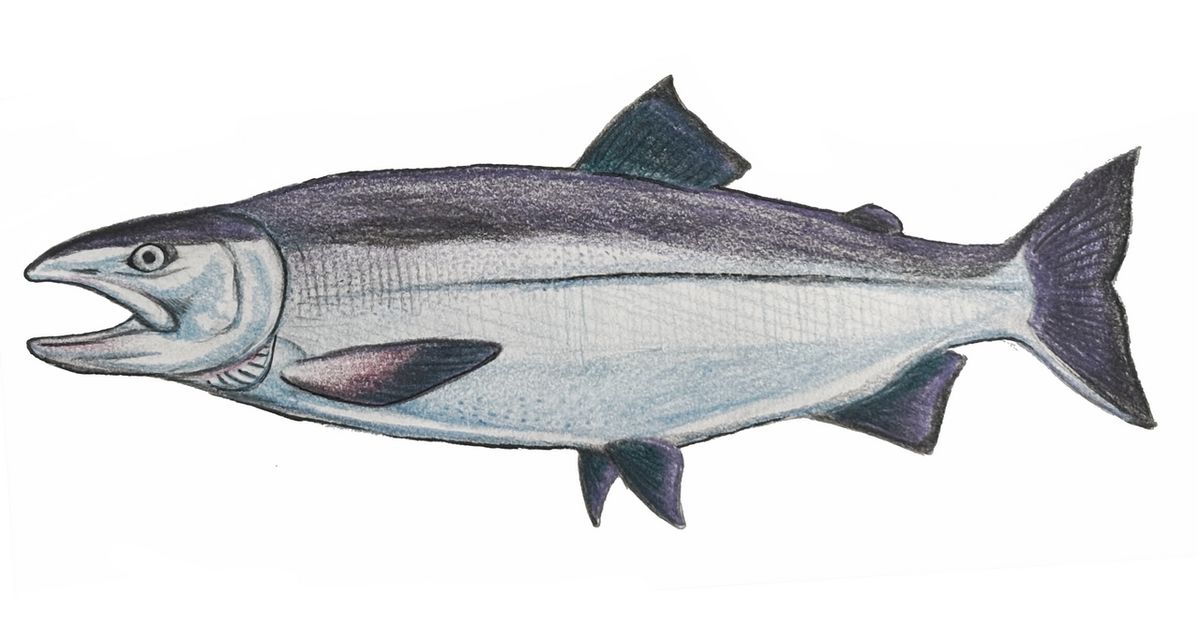
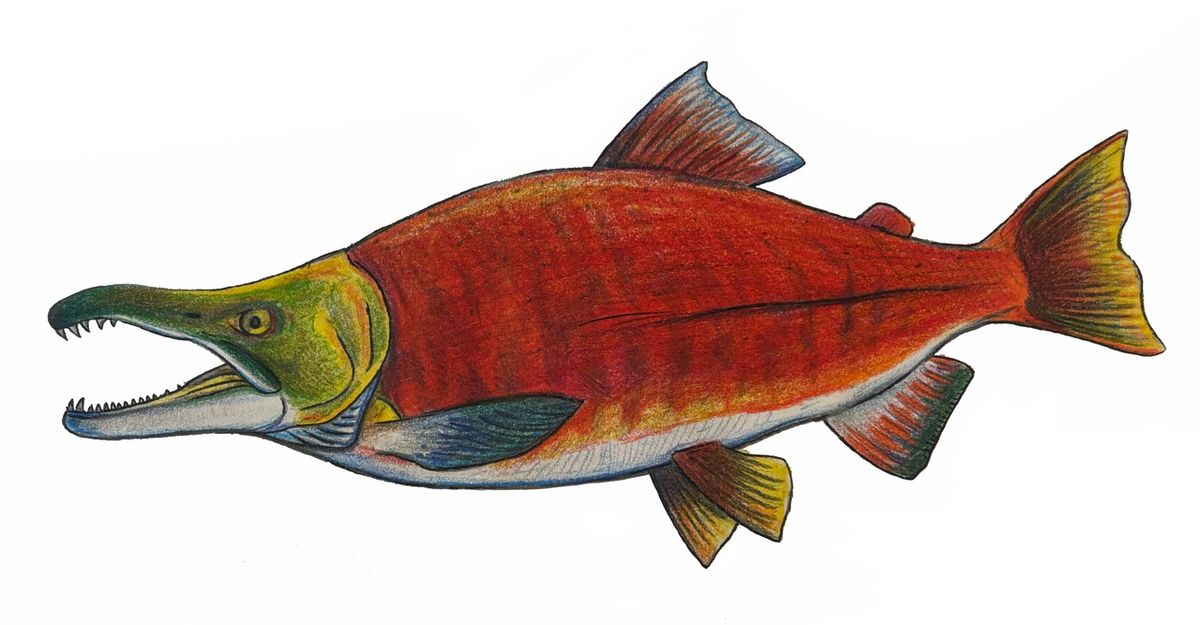
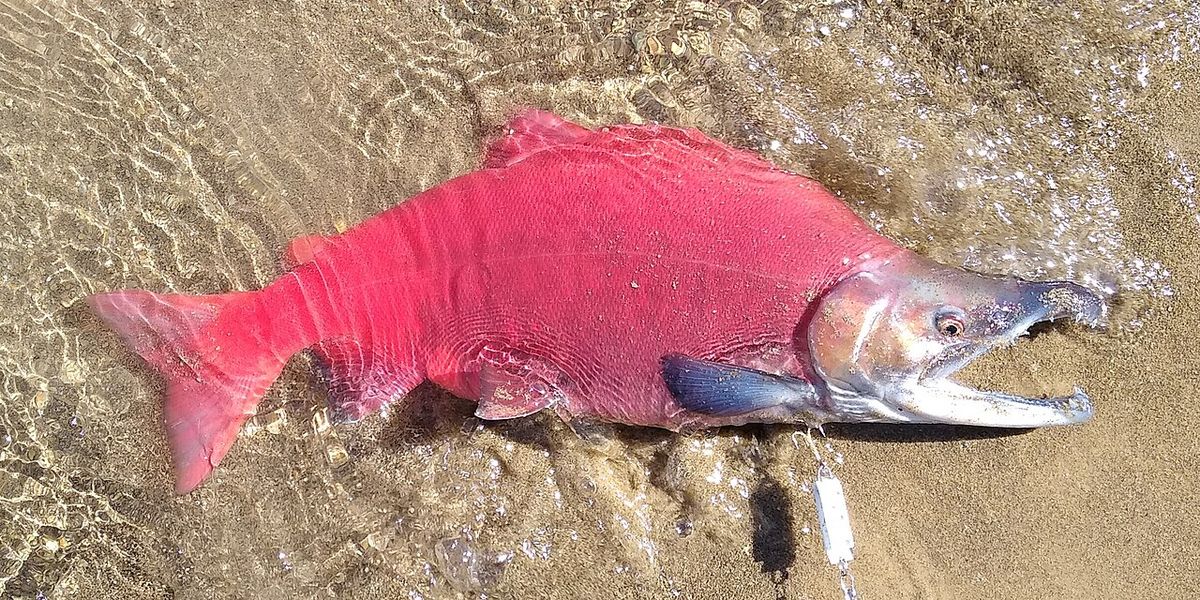
Kokanee salmon are typically smaller than their sea-going sockeye relatives, a direct consequence of the lower nutrient availability in freshwater lakes. In typical populations, adults measure 23 to 30 centimetres in length and average about 0.45 kilograms in weight. In exceptionally productive waters, they can grow up to 51 centimetres and weigh between 1.4 and 2.3 kilograms. The largest documented kokanee, caught by hand in British Columbia's Lower Arrow Lake in 2015, weighed 5.5 kilograms. For most of their lives, kokanee exhibit a blue back and silver sides, with finer scales, larger eyes, and a deeply forked tail. A key identifying feature, shared with sockeye and chum salmon, is the lack of distinct dark spots on their backs and tail fins. During the spawning season, males undergo a dramatic transformation, developing a bright red body, a humped back, and an elongated jaw, while females turn a darker red hue. Internally, kokanee often possess higher gill raker counts (ranging from 29 to 40) compared to some sockeye populations, an adaptation for filter-feeding on their primary food source: plankton. Other morphological differences include the kokanee's failure to develop the osmoregulatory changes needed for saltwater transition and a lower mean swim velocity in juveniles compared to juvenile sockeye.
Life Cycle and Habitat
The kokanee lifecycle is a fully freshwater version of the classic salmonid pattern. They hatch in gravel stream beds, and the juveniles then migrate to a lake where they will spend the majority of their lives. Kokanee typically inhabit the open water of lakes, preferring the thermocline where water temperatures are around 10 degrees Celsius. They are planktivores, efficiently filtering zooplankton from the water column using their specialized gill rakers. Most kokanee live for four years before undergoing a final migration back to their natal streams or shoreline areas to spawn and die, though lifespans can range from two to seven years. Spawning runs are highly variable, occurring from August through February, with some rare instances of April spawning observed. Individual lake populations can have multiple distinct spawning runs within this period. A female excavates a nest, called a redd, in the gravel and deposits roughly 1,000 eggs, though this number is influenced by her size and the lake's productivity. The eggs incubate for approximately 110 days before hatching. This lifecycle makes them vulnerable to changes in lake ecology, particularly the introduction of non-native predators. Studies have found that kokanee can extract carotenoids from their food more efficiently than sockeye, which contributes to their strong red pigmentation during spawning and is linked to sexual selection and mate choice.
Several key factors threaten kokanee populations across their range. Predation by introduced species, notably lake trout, which accounted for an 83 to 88 percent decline in the kokanee population of Lake Chelan, Washington, is a major pressure. Competition for food resources with other fish species can limit growth and survival. Habitat loss and degradation of spawning streams from development or water diversion directly impact reproductive success. Pollution from agricultural and urban runoff can affect water quality and plankton communities. The effects of climate change, including warming lake temperatures that can disrupt plankton dynamics and oxygen levels, pose a long-term threat to their cold-water habitat.
Conservation Status and Efforts
The conservation status of kokanee salmon is highly variable, differing from lake to lake and watershed to watershed. In the United States, the Ozette Lake population in Washington is listed as threatened under the Endangered Species Act. Other distinct populations, such as those in Lake Sammamish, have been studied for separate species status by the Lake Sammamish Kokanee Work Group, but a formal listing was not granted as they did not meet all US Fish and Wildlife Service criteria for being a distinct species. The current IUCN red list standing for sockeye salmon, which does not distinguish the kokanee, is Least Concern. In Canada, notable declines have been recorded in protected areas. For instance, in Kluane National Park and Reserve, the native kokanee population plummeted from approximately 2,800 fish to just 88 by 2007. In response, the park implemented a complete ban on kokanee fishing, making possession of the fish illegal. This and other habitat restoration measures proved successful, with the spawning population rebounding to 4,660 fish by 2015. Similar proactive conservation is seen in Washington's King County, where partnerships between local government and the US Fish and Wildlife Service have enacted stream restoration, hatchery breeding programs, and fishing bans. These efforts helped reverse a critical decline that saw as few as 150 spawners in the 2007 to 2008 season. Conservation strategies are therefore localized, focusing on habitat protection, predator management, and sometimes hatchery supplementation to bolster native stocks.
Specific conservation actions have been implemented in various jurisdictions to protect kokanee salmon. In King County, Washington, conservation measures were issued in partnership with the US Fish and Wildlife Service. These measures include the restoration of streams and habitats, hatchery breeding, and a ban on fishing for kokanee. In Kluane National Park and Reserve in Canada, fishing for kokanee has been outlawed, and possession of a kokanee salmon is illegal. These actions have contributed to population increases in some areas.
- A complete fishing ban and possession law in Kluane National Park and Reserve, Canada.
- Stream restoration projects in King County, Washington.
- Hatchery breeding programs to supplement wild stocks in Washington.
- A fishing ban on kokanee in areas of Washington with declining populations.
- Habitat restoration efforts in spawning streams across the species' range.
The Japanese Kokanee (Kunimasu)
In Japan, a unique form known as the kunimasu salmon or black kokanee exists. Some taxonomists classify it as a subspecies of sockeye, while others argue it is a separate species, Oncorhynchus kawamurae. This fish was originally native to Lakes Akan and Chimikeppu on Hokkaido. It differs from North American kokanee in several ways, including a much darker coloration, a spring spawning season in March at depths of 30 to 40 feet, and differing gill raker counts. Dam construction that altered lake pH was believed to have caused its extinction in the 1940s. However, in a remarkable discovery in 2011, a small population was found surviving in an isolated lake on Mount Fuji. The genetic distinctiveness of the Japanese kokanee has been diminished by commercial captive-breeding programs, the introduction of non-native Canadian kokanee stocks, and population bottlenecks, which have also contributed to declines in native populations. The black kokanee has been introduced to various lakes around Japan for commercial fishing, further complicating its genetic integrity and conservation.
Regional Population Trends and Management
Kokanee population health is not uniform across their range. Some introduced kokanee fisheries are thriving, while many native stocks are struggling. For example, kokanee in Lake Chelan, Washington, experienced an 88 percent decline largely due to lake trout predation. In contrast, kokanee have been successfully introduced to many lakes across the western and eastern United States and parts of Canada. This variability necessitates tailored management approaches for different populations.
| Location | Population Trend / Event |
|---|---|
| Kluane National Park, Canada | Declined from ~2,800 to 88 fish |
| Kluane National Park, Canada | Recovered to 4,660 spawning fish |
| Lake Chelan, Washington, USA | 83-88% decline due to lake trout predation |
| King County, Washington, USA | As few as 150 spawners recorded |
| Lower Arrow Lake, BC, Canada | Record 5.5 kg kokanee caught |
| Ozette Lake, Washington, USA | Listed as Threatened (ESA) |
| Lake Sammamish, Washington, USA | Failed USFWS listing as distinct species |
These examples show the localized nature of kokanee conservation. Management actions like predator control, fishing closures, and habitat work must be tailored to individual lake ecosystems. The cause of the severe mid-2000s crash in Kluane remains an area of study, highlighting the complex challenges in managing freshwater salmonid populations. Successful recoveries, as seen in Kluane by 2015, demonstrate that protective measures can be effective when implemented decisively. The failure to list the Lake Sammamish kokanee shows the regulatory hurdles in protecting genetically distinct but not formally recognized populations.
Morphological and Reproductive Diversity
Beyond size, several other morphological and reproductive traits distinguish kokanee and show variation among populations. Gill raker counts are a key diagnostic feature, with kokanee typically having between 29 and 40, which is often higher than in sea-going sockeye. This count itself can vary from one kokanee population to another. Egg size presents another point of difference. Theory suggests smaller fish like kokanee should produce smaller eggs to maximize fecundity, but in reality, kokanee egg size varies, and the energetic cost of producing larger eggs can actually limit the total number of eggs a female can produce. The Japanese black kokanee exhibits even more pronounced differences, with its unique dark colour, spring spawning timing, and specific depth preferences for breeding. These variations in morphology and life history across the kokanee's range reflect adaptations to local freshwater conditions and evolutionary histories separate from anadromous sockeye.
Key morphological divergences exist between the kokanee and its sea-going relative, the sockeye salmon. The most noticeable difference is size, as kokanee are often smaller due to less nutrient availability in fresh water. Other differences include higher gill raker counts in kokanee and their failure to develop the physiological changes that allow sockeye to transition between fresh and salt water. Juvenile kokanee also have a lower mean swim velocity compared to juvenile sockeye.
- Smaller average body size in kokanee due to freshwater nutrient limitations.
- Higher gill raker counts, often between 29 and 40.
- Failure to develop physiological adaptations for saltwater transition.
- Lower mean swim velocity in juvenile kokanee compared to juvenile sockeye.
- Variable egg sizes, with larger eggs potentially limiting fecundity.
- Enhanced ability to extract carotenoids from food for spawning colour.
Notable Introductions and Records
The kokanee has been introduced to many lakes outside its native range to establish sport fisheries. These introductions have created new populations, some of which have produced notable specimens. The record for the largest kokanee, a 5.5 kilogram fish caught in 2015, comes from one such productive environment in British Columbia. The following list details some of the key regions where kokanee have been introduced in North America.
- Montana, United States
- Wyoming, United States
- Nevada, United States
- Utah, United States
- Colorado, United States
- Arizona, United States
- New Mexico, United States
- Southern Alberta, Canada
- Southern Saskatchewan, Canada
- Various New England states, United States
- New York, United States
- North Carolina, United States
Kokanee salmon have been introduced to many lakes beyond their native range. These introductions demonstrate the fish's adaptability to new freshwater environments. They also highlight the kokanee's value to recreational anglers across North America. However, such introductions can carry ecological risks for native species in the recipient waters. The fish has been introduced to states like Montana, Wyoming, and New York, as well as to provinces like Alberta and Saskatchewan.
Questions about Kokanee salmon
What is a kokanee salmon?
The kokanee salmon is the freshwater, non-migratory form of the sockeye salmon. Unlike its anadromous relative that travels to the ocean, the kokanee spends its entire lifecycle in inland lakes and rivers. It is native to western North America and parts of Asia, and is characterized by its smaller size, blue-silver colouration for most of the year, and its bright red spawning hue. The name 'kokanee' comes from Interior Salish languages meaning 'red fish' or 'silver trout'.
Where can you find kokanee salmon in Canada?
In Canada, kokanee are native to many lakes in British Columbia and Yukon. They have also been successfully introduced to lakes in southern Alberta and Saskatchewan to create recreational fisheries. Significant native populations exist in systems like the Okanagan Lake region and the watersheds of Kluane National Park. Record-sized kokanee have been caught in British Columbia lakes, such as the 5.5 kilogram fish from Lower Arrow Lake in 2015.
How is a kokanee different from a sockeye salmon?
The primary difference is life history: sockeye migrate to the ocean, while kokanee remain in freshwater. This leads to a major size difference, with kokanee being significantly smaller on average due to less abundant food. Morphologically, kokanee often have higher gill raker counts and lack the physiological adaptations for saltwater transition. During spawning, both turn red, but kokanee males develop a humped back and elongated jaw similar to, but often less extreme than, male sockeye.
Are kokanee salmon endangered?
The overall species is not globally endangered, but specific native populations are at risk. In the United States, the Ozette Lake kokanee in Washington is listed as threatened. In Canada, populations like those in Kluane National Park have experienced severe declines, leading to strict fishing bans. Conservation status varies greatly by lake, with some introduced populations thriving while others, particularly native stocks facing habitat loss and non-native predators, require active protection.
How long do kokanee salmon live?
The typical kokanee lifespan is four years. They hatch in streams, migrate to a lake to feed and grow for several years, and then return to spawn once before dying. However, this can vary based on environmental conditions, with some individuals living as little as two years or as long as seven years. The spawning migration, which occurs from late summer through winter, marks the end of their lifecycle, similar to other Pacific salmon.
What do kokanee salmon eat?
Kokanee salmon are planktivores, meaning their primary diet consists of plankton. The main food source of this fish is plankton. They are efficient filter feeders, using their numerous gill rakers to strain small organisms from the water. They typically inhabit open water areas of lakes where plankton concentrations are highest, particularly around the thermocline which is around 10 degrees Celsius. This specialization on plankton is a key aspect of their lifecycle as they spend their entire adult lives in freshwater lakes. Their diet contributes to their generally smaller size compared to sea going sockeye salmon due to less nutrient availability in freshwater environments.
Sources and further reading
- Kokanee salmon (Wikipedia)
- A Guide to Trolling for Kokanee Salmon in Lakes, Go Fish ... (gofishbc.com)
- All About Kokanee, Jason Brooks (salmontroutsteelheader.com)
Checked by the Your Space Hamilton desk. Last updated 2026-11-01.