Hyalophora cecropia
The cecropia moth ( Hyalophora cecropia ) is the largest native moth species in North America, a distinction that makes it a spectacular and recognizable insect across much of Canada. As a member of the Saturniidae family, or giant silk moths, it is characterized by its impressive wingspan of up to 18 centimetres and striking reddish-brown wings adorned with white and red crescent-shaped spots. Its range extends throughout the eastern half of the United States and into southern Canada, where it can be found as far north as the 50th parallel and east to Nova Scotia. The moth's annual life cycle, from a large, colourful caterpillar to a short-lived but magnificent adult, is a remarkable example of metamorphosis that fascinates naturalists and gardeners alike.
Physical Description and Identification
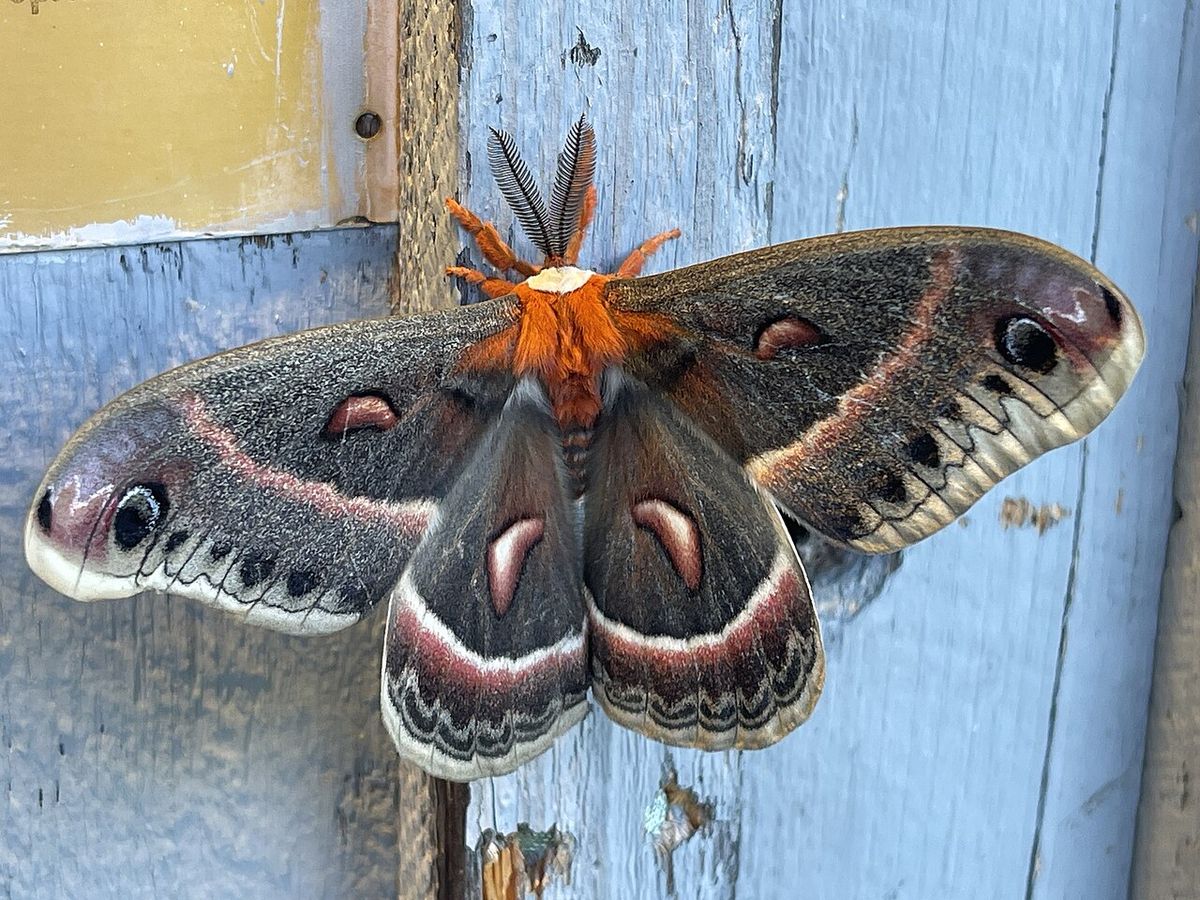
The adult cecropia moth is an unmistakable insect due to its substantial size and distinctive colouration. Its wings are a rich, brownish base colour with noticeable red shading near the base of the forewings. All four wings feature prominent crescent-shaped spots that are red with whitish centres, with these spots being larger on the hindwings. Beyond a postmedial line running down the centre of the wings, there are bands of whitish and reddish shading. The moth's body is hairy, with reddish colouring on the anterior that fades to a mix of reddish and white, and the abdomen displays clear alternating bands of red and white. Males and females are similar in colour, but males possess much larger, feathery quadripectinate antennae which they use to detect female pheromones. The species completely lacks functional mouthparts and a digestive system as an adult, so it does not feed. The legs are stout and hairy, and the body is covered in soft scales giving a velvety appearance. A key taxonomic feature of the Saturniidae family, which includes the cecropia, is that the cubitus vein in the forewing branches into three veins that continue to the wing's edge.
Distribution and Habitat in Canada
In Canada, the cecropia moth's range covers the southern regions of many provinces, extending as far north as the 50th parallel and eastward to include Nova Scotia. It is not native to Newfoundland, though an accidental importation of a caterpillar from Ontario occurred in St. John's in 2012. The moth inhabits temperate deciduous forests and is highly adaptable to human-altered landscapes. It is commonly found in rural woodlands, suburban backyards, urban parks, orchards, and even in areas of new housing development where young hardwood trees are present. The caterpillars feed on a wide variety of deciduous trees, which supports their presence in diverse environments across their range. Within these habitats, cocoons are often spun on the branches of trees but a significant number are also found under trees in tufts of grass or shrubs, a behaviour thought to help avoid predation by animals like squirrels. Elevation data for this species is not specifically recorded in its range documentation.
Annual Life Cycle and Development
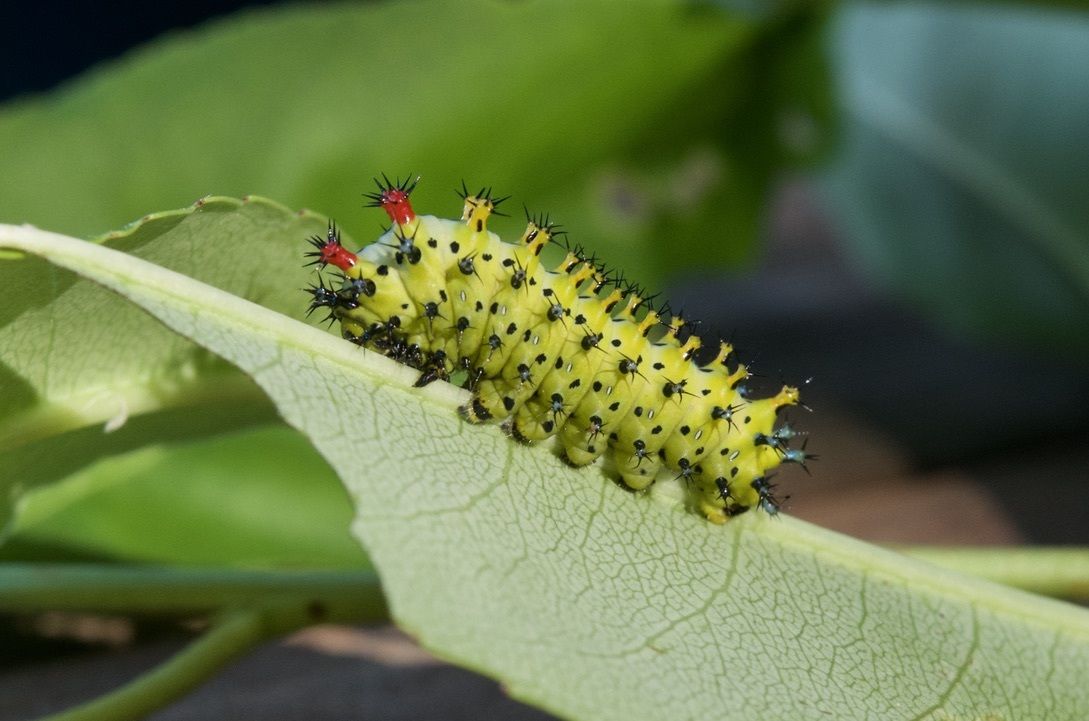
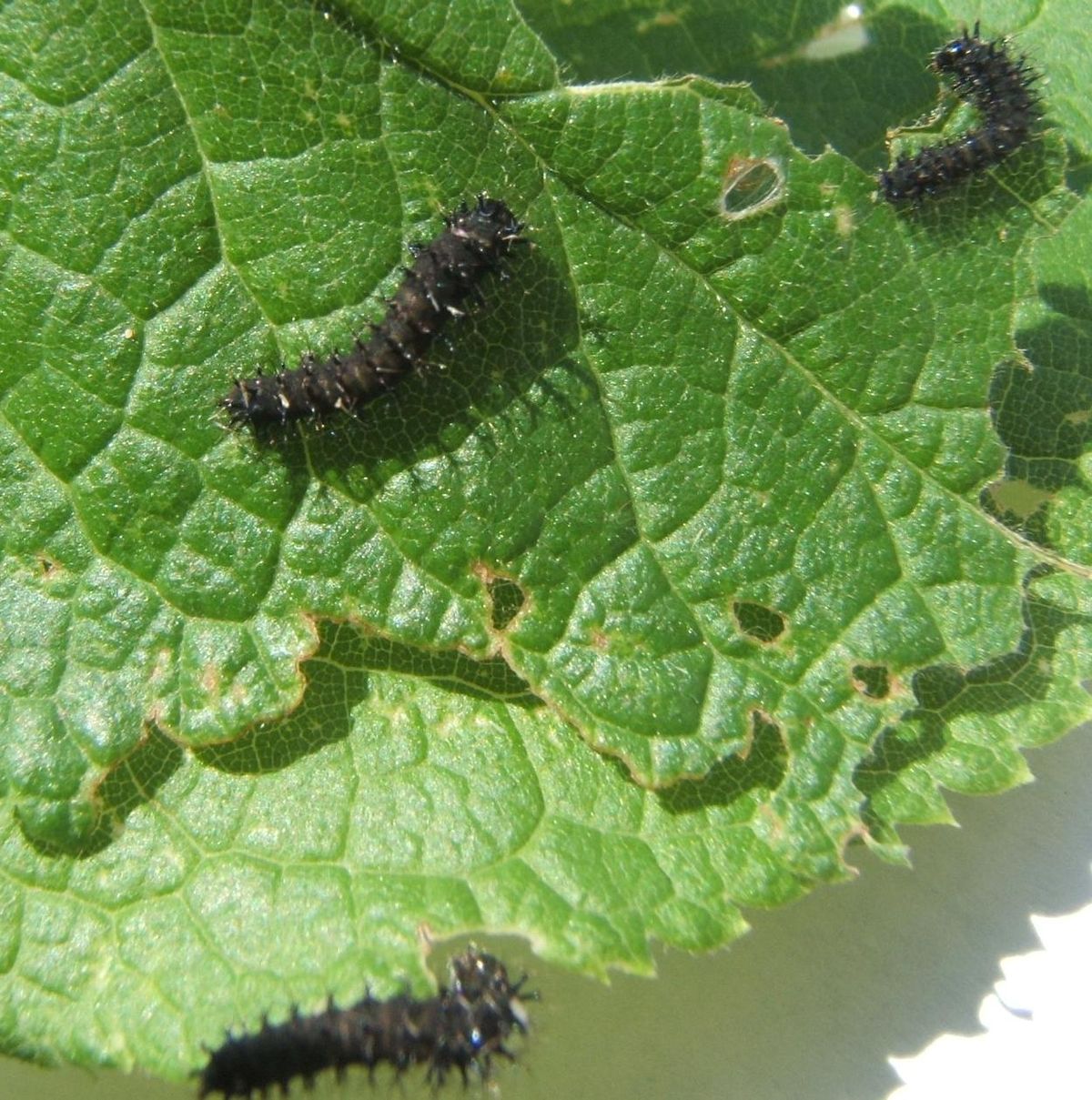
The cecropia moth completes one generation per year, a lifecycle strategy known as being univoltine. The cycle begins when a female lays up to 100 mottled reddish-brown eggs, typically on the leaves of a host plant. These eggs hatch into tiny, black caterpillars that will undergo five larval stages, or instars. Each instar lasts about one week, and the caterpillar's appearance changes dramatically as it grows. The first-instar larvae are black with small hairs growing from tubercles across their bodies. At the second instar, they become yellow-green. During the third, fourth, and fifth instars, the caterpillars become large and bluish-green, with the tubercles developing into blue, yellow, or orange projections while the black hairs are lost. By autumn, the mature caterpillar, which can reach over 10 centimetres in length and achieve a 2760-fold increase in size from its hatching weight of 3.7 milligrams, spins a large, double-layered brown silk cocoon. It pupates inside this cocoon, entering a dormant state called diapause to survive the winter. The pupa requires a period of chilling, typically eight to ten weeks below 15°C, to properly time its emergence. Between 5 and 20 percent of pupae will end diapause and begin development as soon as temperatures warm, while the remainder require a month or more of warm temperatures. In late May or early June of the following year, the adult moth emerges, lives for about two weeks to mate, and then dies, having relied entirely on fat stores accumulated during its larval stage.
The progression through the five larval instars involves distinct physical transformations. The first-instar larvae are black in color due to small, black hairs growing from tubercles all over their bodies. As the caterpillars grow larger in the second instar, they become yellow green. During the third, fourth, and fifth instars, the caterpillars become rather large and bluish green. At these final stages, the tubercles become blue, yellow, or orange, depending on the location on the body, while the black hairs are eventually lost.
- First instar: Larvae are black with small, black hairs growing from tubercles.
- Second instar: Caterpillars become yellow-green in colour.
- Third instar: Larvae become large and bluish-green with colourful tubercles.
- Fourth instar: The bluish-green colour deepens, and tubercles become more pronounced.
- Fifth instar: Mature larvae reach about 100 to 110 mm in length with blue, yellow, or orange tubercles.
Host Plants and Larval Feeding
Cecropia moth larvae are polyphagous, meaning they feed on the leaves of many different deciduous tree and shrub species. This dietary flexibility is key to their wide distribution and success. While maple trees are the most commonly recorded host, the caterpillars readily consume foliage from a broad array of other plants. Their feeding, while noticeable, rarely causes significant damage to healthy trees. The primary host plants for cecropia caterpillars include maple, cherry and plum, birch, apple, willow, oak, and dogwood. The caterpillars feed upon many common trees and shrubs, and their ability to utilize such a wide menu allows them to thrive in diverse habitats from deep forests to suburban gardens.
Documented host plants for the cecropia moth caterpillar include a wide variety of common North American trees. Cecropia moth larvae are most commonly found on maple trees. They have also been found on cherry and birch trees, among many others. These larvae feed upon many common trees and shrubs, including maple, birch, and apple.
- Maple (Acer species)
- Cherry and plum (Prunus species)
- Birch (Betula species)
- Apple (Malus species)
- Willow (Salix species)
- Oak (Quercus species)
- Dogwood (Cornus species)
Reproduction and Mating Behaviour
The sole purpose of the short-lived adult cecropia moth is reproduction. To find a mate, the female emits powerful pheromones into the air. The male, using his exceptionally large and sensitive antennae, can detect these chemical signals from up to a mile away. A searching male may fly up to seven miles while tracking a pheromone plume to locate a female. Mating typically begins early in the morning and can last until evening. After mating, the female lays her eggs, usually on either side of a host leaf, completing her reproductive role. The species is polygynous, meaning a single male may mate with multiple females. The entire adult phase is a race against time, as the moths have no ability to feed and must complete mating and egg-laying before their energy reserves, stored from the caterpillar stage, are depleted.
Threats and Population Pressures
Despite their size, cecropia moths face several significant threats that can impact local populations. A major natural threat comes from parasitoid wasps and flies, such as the introduced species Compsilura concinnata. These insects lay eggs on or in the young caterpillars, and the emerging parasitoid larvae consume the caterpillar's internal tissues, ultimately killing it. The parasitoids release chemicals that override the caterpillar's regulatory mechanisms, eventually inducing it to pupate prematurely so the parasitoid larvae themselves can pupate, killing the cecropia pupa. Squirrels are also known predators that consume the pupae within their cocoons. Human activities contribute substantially to population pressures. The widespread use of pesticides in agricultural and residential areas can directly kill caterpillars and adults. Pruning or removing trees eliminates both food sources and cocoon attachment sites. Perhaps one of the most pervasive modern threats is light pollution from outdoor lighting, which can disorient the nocturnal adults and severely disrupt their mating behaviours, as males rely on following pheromone plumes to find females.
Cocoon Structure and Pupal Development
The cocoon spun by the mature cecropia caterpillar is a complex, two-layered structure made of brown silk. The space between the inner and outer layers is filled with silk, and each layer contains an exit valve oriented skyward and perpendicular to the horizontal plane. Interestingly, the outer layer of the cocoon is spun in one of two distinct forms, either baggy or tight. Laboratory tests indicate that environmental factors do not determine which form a larva produces, and both types contain the same amount of silk. Researchers theorize this may be an evolutionary strategy to wager against the unknown conditions of the upcoming winter. Once inside the cocoon, the caterpillar molts for a final time into a pupa. This pupal stage is where diapause occurs, halting development to survive winter. The requirement for a cold period ensures the moth does not emerge during an unseasonably warm autumn spell, timing its appearance for the favourable conditions of early summer.
Scientific Significance and Notable Events
The cecropia moth has played a notable role in scientific research. In 1956, the original description of insect juvenile hormone was published by Carroll Williams in the journal Nature, based on work with the cecropia silkworm. The insect's large size provided enough of the hormone in a single specimen's abdomen to allow for its extraction and study. A major antimicrobial protein involved in insect immunity, named cecropin, was first isolated from and named after Hyalophora cecropia. A documented accidental transport event occurred in August 2012, when a cecropia caterpillar was shipped from Ontario to St. John's, Newfoundland, on dogwood shrubs. Within 48 hours of arrival, it began spinning its cocoon. The pupa overwintered at a federal Agriculture and Agri-Food Canada research facility in St. John's. On May 29, 2013, the predominantly black and red female moth, named Georgina by the staff, emerged with a roughly 20 centimetre wingspan. After living out her natural lifespan, she was pinned and preserved for future scientific study, highlighting the moth's status as a subject of both accidental introduction and deliberate research.
Key scientific and documented events related to the cecropia moth include specific milestones and occurrences. The species was first described by Carl Linnaeus in his 1758 10th edition of Systema Naturae. The original description of the insect juvenile hormone by Carroll Williams in Nature in 1956 is from the cecropia silkworm. Cecropin, a major protein involved in the humoral immunity of most insects, was first isolated from and named after Hyalophora cecropia. In August 2012, a cecropia moth caterpillar was accidentally imported from Ontario to St. John's, Newfoundland, via a shipment of dogwood shrubs.
- 1758: First described by Carl Linnaeus in the 10th edition of Systema Naturae.
- 1956: Carroll Williams publishes the original description of insect juvenile hormone using the cecropia silkworm in Nature.
- August 2012: A caterpillar is accidentally imported from Ontario to St. John's, Newfoundland.
- May 29, 2013: The imported moth, named Georgina, emerges in St. John's with a 20 cm wingspan.
- 2026: BugGuide gathering events are scheduled for Big Bend National Park, Texas, and a previous 2025 gathering in Louisiana noted the species.
Observing and Conserving Cecropia Moths
For Canadians interested in observing these magnificent insects, late spring and early summer are the best times to look for newly emerged adults. They are attracted to lights at night, so checking around well-lit porches or streetlights may yield sightings. Searching for their large, silvery-brown cocoons in winter on the branches of deciduous trees or in nearby shrubbery is another rewarding activity. Conservation efforts for the cecropia moth primarily involve habitat preservation and mindful gardening practices. Planting native host trees like maple, cherry, and birch provides essential food for caterpillars. Reducing or eliminating pesticide use protects all life stages of the moth. Perhaps the simplest and most effective conservation action is to turn off unnecessary outdoor lights during the moth's flight season in June and July, helping to ensure they can successfully find mates and perpetuate the next generation. Allowing leaf litter and understory plants to remain provides safer sites for cocoon spinning and pupation, supporting the completion of their annual life cycle.
Questions about Hyalophora cecropia
How big is the cecropia moth?
The cecropia moth is the largest native moth in North America. Its wingspan typically ranges from 13 to 18 centimetres (5 to 7 inches), with some individuals documented with even larger spans. The mature caterpillar can also grow quite large, reaching lengths of 10 to 11 centimetres (about 4 to 4.5 inches) before it pupates. The caterpillar achieves a 2760-fold increase in mass from its tiny hatching size to its mature weight of roughly 10 grams.
Where can you find cecropia moths in Canada?
In Canada, cecropia moths are found across southern regions, extending north to approximately the 50th parallel. Their range includes provinces from Ontario eastward to Nova Scotia. They inhabit deciduous forests, suburban areas, parks, and anywhere their host trees, such as maple, birch, and cherry, are present. They are not native to Newfoundland, though a single specimen was accidentally transported there in 2012.
What do cecropia moths eat?
Adult cecropia moths do not eat at all, as they lack functional mouthparts and a digestive system. They survive for their brief adult life on fat reserves stored from their larval stage. The caterpillars, however, are voracious leaf-eaters. They feed on a wide variety of deciduous trees, with maple, cherry, birch, apple, willow, and oak being among their preferred host plants. They are classified as polyphagous, meaning they consume many different plant species.
How long does a cecropia moth live?
The total lifespan from egg to adult death is one year, as they are univoltine. The adult stage is very short, lasting only about two weeks. During this time, the moth's sole purpose is reproduction. The majority of its life is spent as a developing caterpillar during the summer and as a pupa inside its cocoon throughout the autumn and winter months. The pupal diapause requires eight to ten weeks of temperatures below 15°C to properly time emergence.
Are cecropia moths endangered?
The cecropia moth is not currently listed as endangered or threatened across its broad range. However, local populations face pressures from habitat loss, pesticide use, and light pollution, which can disrupt their nocturnal mating. A specific biological threat is the introduced parasitoid fly Compsilura concinnata. Conservation efforts focus on planting native host trees, reducing pesticide application, and minimizing artificial lighting during their flight season.
How do cecropia moths find each other to mate?
Cecropia moths locate mates using pheromones. The female releases these chemical signals into the air. The male has extraordinarily large, feathery antennae that are highly sensitive to these pheromones. He can detect a female's scent from a distance of up to one mile and may fly up to seven miles while searching. This system is efficient but vulnerable to disruption from artificial light pollution, which can interfere with the male's ability to follow the scent trail accurately.
Sources and further reading
- Hyalophora cecropia (Wikipedia)
- Cecropia Moth: the Life Cycle of the Largest Moth in North ... (ourwildyard.com)
- Hyalophora cecropia | INFORMATION (animaldiversity.org)
- Hyalophora cecropia: A Giant Among Silk Moths (davethebugguy.org)
Checked by the Your Space Hamilton desk. Last updated 2026-10-27.