Great black-backed gull
The great black-backed gull (Larus marinus) is the world's largest gull species and a formidable apex predator of North Atlantic coastal ecosystems. This aggressive hunter, pirate, and scavenger breeds on the coasts and islands of northern Europe and northeastern North America, including extensive stretches of the Canadian Atlantic coastline. Its adaptability to human-altered environments, such as garbage dumps and urban rooftops, has led to a significant population increase and range expansion in recent decades. For Canadians, the great black-backed gull is a common and conspicuous seabird that plays a complex role in coastal ecology, sometimes coming into conflict with other wildlife and human activities.
Description and Identification
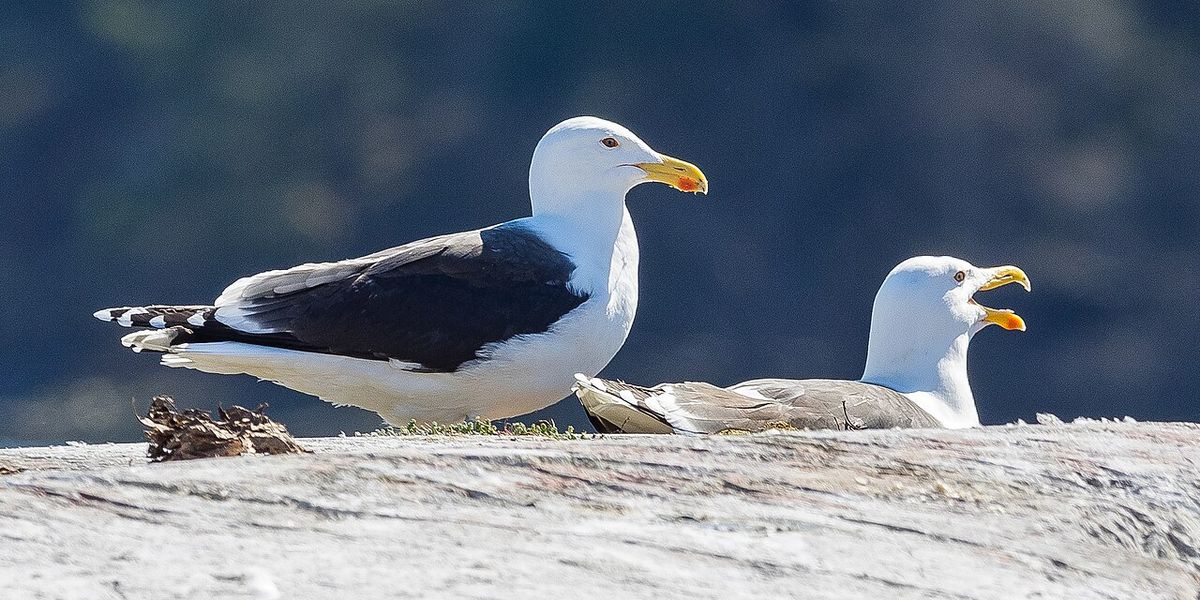
The great black-backed gull is a bulky and imposing bird, distinctly larger than the familiar herring gull. Its size is a key identifier, with a body length ranging from 64 to 79 centimetres and a wingspan stretching from 1.5 to 1.7 metres. Adult males from the North Atlantic average 1,830 grams in weight, while females average 1,488 grams, though individuals with access to rich food sources like fisheries can weigh up to roughly 2.5 kilograms. The adult plumage is striking, featuring a clean white head, neck, and underparts contrasted with dark greyish-black wings and back, which gives the species its common name. The wingtips show conspicuous white 'mirrors,' the legs are pinkish, and the powerful bill is yellow with a red or orange spot near the tip of the lower mandible. Juvenile birds under a year old have scaly, checkered black-brown upper parts, a streaked head and underparts, and a neat wing pattern with a white tail marked by zigzag bars and a broken blackish band near the tip. As they age over four years, this brown colour fades through a streakier, dirtier-looking version of the adult before reaching the crisp contrast of mature plumage. The species' call is a deep, laughing 'kaa-ga-ga,' with the first note sometimes drawn out, and the voice is distinctly deeper than most other gull species.
Only two other gulls globally come close to matching its size: the glaucous gull and Pallas's gull, but neither shares its North Atlantic range. The adult lesser black-backed gull is a common source of confusion but is distinctly smaller, typically weighing about half as much, and has yellowish legs and a mantle that is never as dark. The great black-back's standard measurements include a bill length of 5.4 to 7.25 centimetres, a wing chord of 44.5 to 53 centimetres, and a tarsus of 6.6 to 8.8 centimetres. These physical proportions contribute to its powerful and aggressive appearance, setting it apart from all other white-headed gulls in its habitat.
Distribution and Habitat in North America
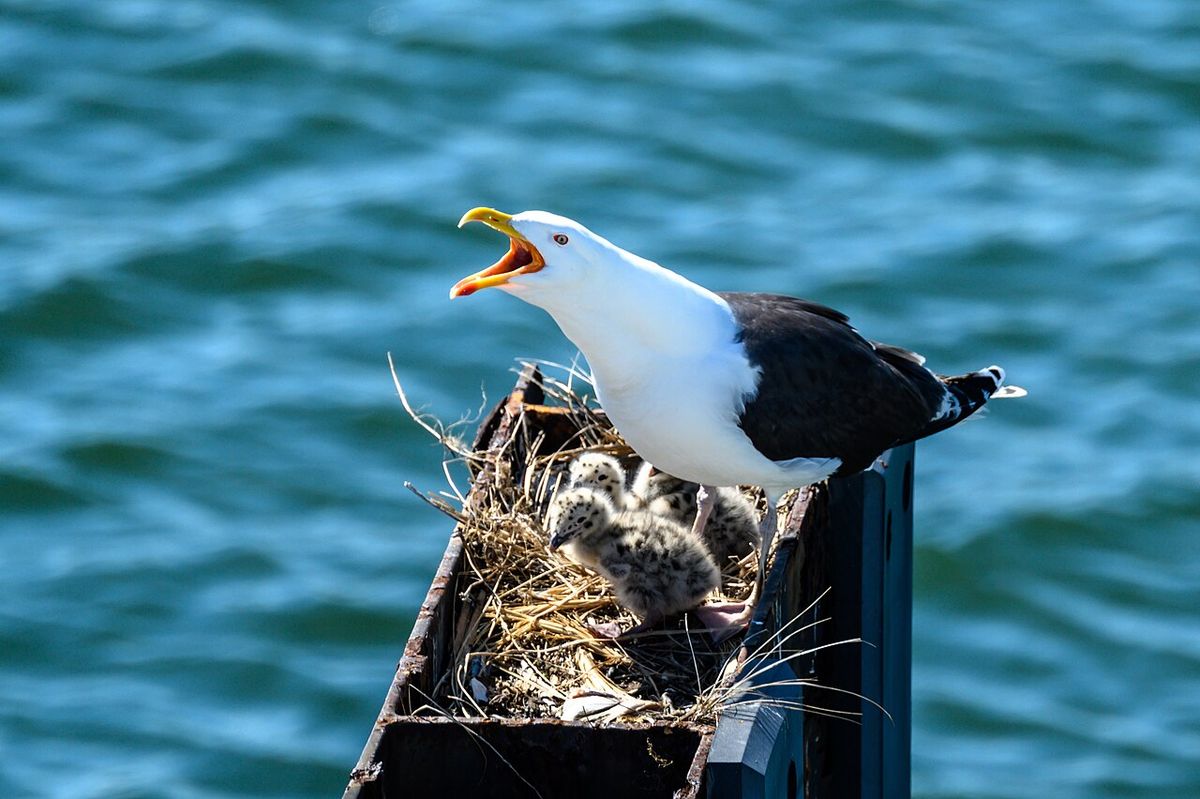
In North America, the great black-backed gull breeds along the Atlantic coast from southern Greenland and Iceland down through the Canadian Maritimes and Newfoundland. Its range has expanded significantly southward over the past century, and it now breeds in colonies throughout New England and as far south as North Carolina, whereas it was formerly mainly just a non-breeding visitor south of Canada. During the winter, birds from northern breeding areas migrate south, regularly reaching coastal Florida, with exceptional records from the Caribbean and off the coast of northern South America. This gull inhabits a wide variety of coastal environments, including rocky and sandy shores, estuaries, and offshore islands. It also readily exploits human-made habitats, becoming a common sight at landfills, fishing ports, and dredge spoil sites, which in places like New Jersey are their most prevalent nesting sites. Inland, it can be found on large lakes, ponds, rivers, wet fields, and moorland, though it generally remains within striking distance of substantial bodies of water. For nesting, it seeks out sites safe from terrestrial predators, such as vegetated islands, sand dunes, flat-topped sea stacks, and increasingly, the rooftops of buildings in coastal towns and cities where previous years' nests are often reused.
During the winter in the Baltic Sea, the great black-backed gull usually stays close to the ice boundary. North of the Åland islands, the sea often freezes all the way from Sweden to Finland, and then the bird migrates to open waters. The proliferation of garbage or refuse dumps has become a major attractant to this and all other non-specialised gull species in its range. Today, it is a common fixture at refuse dumps both along coasts and relatively far inland. During the winter, the great black-backed gull often travels far out to sea to feed.
Diet and Predatory Behaviour
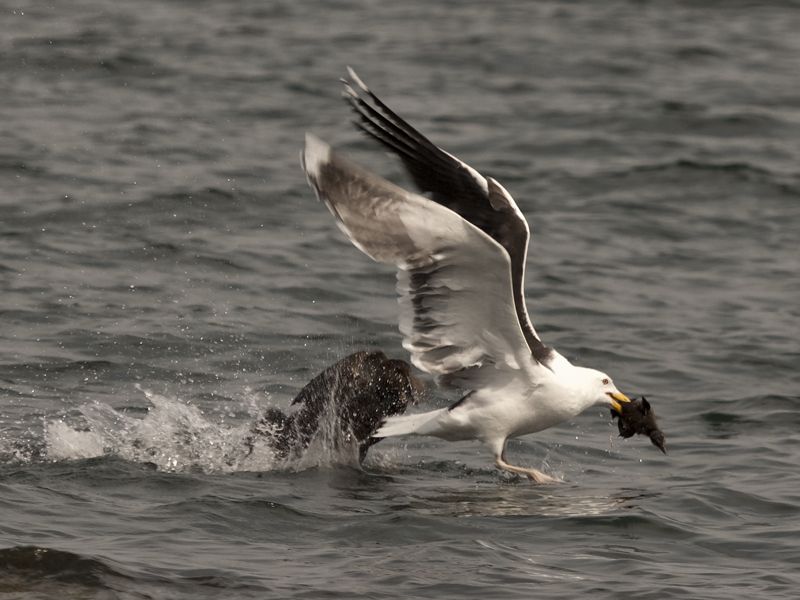
The great black-backed gull is an opportunistic and highly predatory omnivore, often acting as an apex predator in its coastal environment. A significant portion of its diet, often more than half in some areas, comes from scavenging human refuse at landfills and fishing docks. A study in Massachusetts found they spent only 19% of their time at dumps actively foraging, eating less garbage than other gulls, and spent most of their time roosting. Their natural diet is diverse and demonstrates their powerful hunting abilities. Fish are a primary food source, especially for feeding chicks. On Sable Island, Nova Scotia, fish made up 25% of adult stomach contents but 96% of regurgitations fed to young, while on Great Island, Newfoundland, fish constituted 25% of stomach contents and 68% of regurgitants. Commonly consumed fish include capelin, Atlantic cod, Atlantic tomcod, Atlantic mackerel, Atlantic herring, and sand lance. Unlike most other Larus gulls, great black-backs are highly predatory and frequently hunt and kill live prey, behaving more like a raptor than a typical gull, though they lack the sharp talons and curved beak of a raptor and instead rely on aggression, strength, and endurance.
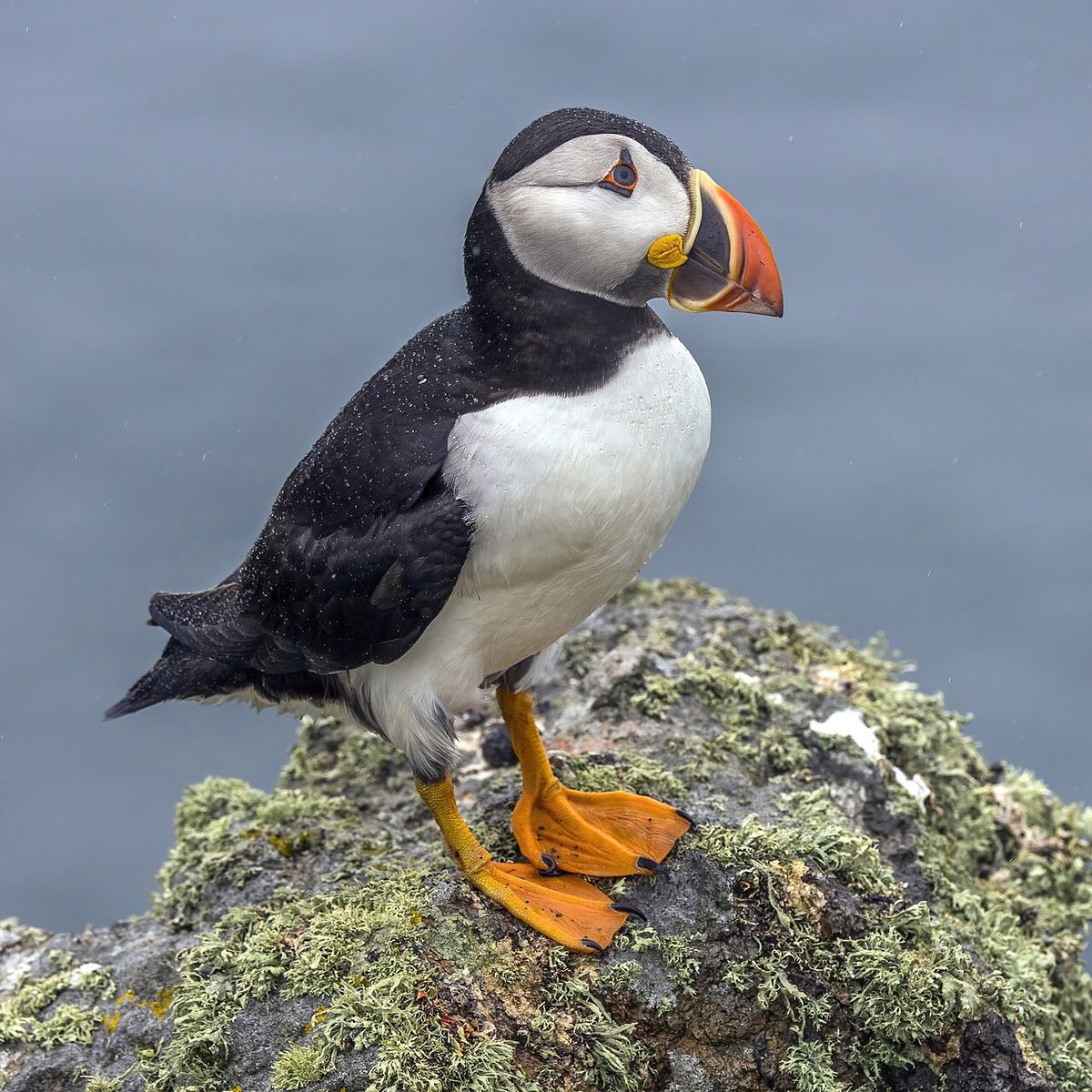
They are major predators of other seabirds, particularly targeting the eggs, chicks, and fledglings of terns, smaller gulls, eiders, and alcids like the Atlantic puffin. In Newfoundland and Nova Scotia, birds made up 10% of stomach contents, and tern eggs alone constituted a further 17%. They have also been recorded killing healthy adult birds in flight or on the ground, including various ducks, ruddy ducks, buffleheads, Manx shearwaters, pied-billed grebes, common moorhens, little auks, coots, glossy ibises, rock doves, and even predatory birds like hen harriers. They may kill healthy adult birds weighing up to at least 750 grams but take only the small young of larger birds like common eiders and cormorants, and they will also catch exhausted migrating passerines and swallow them immediately. Their hunting technique often involves pursuing birds in flight and jabbing at them repeatedly until the victim is brought down by injury or exhaustion. They also consume a wide range of other prey, including various squid, Jonah crabs, rock crabs, green crabs, sea urchins, and starfish. From observations in northern New England, 23% of observed prey was echinoderms and 63% was crustaceans. Land animals like rats, rabbits, and even sickly lambs are also taken when the opportunity arises.
Great black-backed gulls are opportunistic feeders and are very curious. They get much of their dietary energy from scavenging, with refuse, most provided directly by humans, locally constituting more than half of their diet. They regularly capture fish, and any fish smaller than themselves found close to the surface of the water are potential prey. Unlike most other Larus gulls, they are highly predatory and frequently hunt and kill any prey smaller than themselves. Most foods are swallowed whole, but when foods are too large, they will sometimes be shaken in the bill until they fall apart. They are skilled kleptoparasites who will readily pirate fish and other prey captured by other birds.
- Swallowing small prey, including fish and small birds, whole.
- Shaking larger items in the bill until they fall apart.
- Dropping hard-shelled prey like molluscs or eggs onto rocks from the air to crack them open.
- Exploiting chum lines from fishing boats and surface activity caused by large marine animals like bluefin tuna and humpback whales.
As skilled kleptoparasites, they frequently pirate food from other birds, using their large size to intimidate and dominate species like herring gulls. At tern colonies in Maine, herring gull catches were often immediately stolen by great black-backs. They have been observed robbing a peregrine falcon of a gadwall and fighting a northern goshawk off its kill. This combination of scavenging, hunting, and piracy makes them a dominant and often disruptive force in the ecosystems they inhabit, earning them the descriptor of a 'merciless tyrant.'
Breeding and Life Cycle
Great black-backed gulls breed singly or in small colonies, sometimes nesting within larger colonies of European herring gulls. Young adult pair formation occurs in March or April, and established pairs typically reunite at the previous year's nest site each spring. If one bird does not return, the other seeks a new mate and a single bird usually does not breed successfully that season. The nest is a lined scrape on the ground, often on top of a rocky stack, fallen log, or other obstructing object for protection from the elements, and is lined with grass, seaweed, moss, or debris like rope or plastic. In urban environments on roofs, previous years' nests are often reused repeatedly. The female lays a clutch of usually three greenish-brown, dark-speckled eggs between late April and late June, and when only two eggs are found it is almost always because one has been destroyed. Incubation, shared by both parents, lasts for about 28 days, and because it does not start until the last egg is laid after about a week of egg production, all chicks typically hatch on the same day, which helps ensure all three chicks can be raised successfully. Both parents are devoted to brooding the chicks, defending the nest, and gathering food, attempting to stay silent and avoid notice during incubation.
The young gulls leave the immediate nest area at around 50 days old but may remain associated with their parents for an overall period of around six months. Most fledglings, however, choose to congregate with other immature gulls in search of food by fall. They acquire adult plumage and reach breeding maturity at four years of age, though development is somewhat slower than in other large gulls, and many may not breed successfully until they are six years old. This extended juvenile period and high parental investment contribute to the species' relatively low reproductive rate but high survival rate once maturity is reached.
Population Status, Threats, and Human Interactions
The great black-backed gull has undergone a dramatic population recovery and expansion since the early 20th century. Historically, it was heavily persecuted for its feathers for the hat-making trade and shot as a hunting trophy after about 1850 when it was considered a prize worth displaying, leading to local extinctions in southern parts of its range. Today, its remarkable adaptability to human presence has fueled a rapid increase in numbers. The proliferation of landfills and fisheries waste, particularly from increasing winter fishery activities in the North Sea, provides a reliable, year-round food source. Urban structures like flat rooftops offer safe, predator-free nesting sites that were not previously available. This success has led to the species being viewed as a pest in certain contexts. Their large size poses a significant bird-strike risk to aircraft near coastal airports. More critically, their predatory nature can have severe impacts on colonies of rarer, threatened seabirds, such as terns and Atlantic puffins, possibly resulting in conservationist intervention to protect these species.
Although there are no known major threats to the species' overall survival, specific local pressures exist. High levels of toxic pollutants, ingested with contaminated prey, are often found in individuals and eggs, reducing reproductive success. Human disturbance at nesting sites also remains a threat, as it can lead to nest abandonment, leaving eggs and chicks vulnerable to exposure and predation by crows, cats, other gulls, raccoons, and rats. The species' status as a relatively long-lived bird, with a maximum recorded age of 27.1 years and the potential for longer lifespans suggested by captive herring gulls living over 44 years, means populations can be slow to respond to negative impacts, but its current trend is one of abundance and range expansion facilitated by human infrastructure.
Predators, Mortality, and Ecological Role
Despite being a top predator, great black-backed gulls face threats from a limited number of species. Mortality is highest in the egg and chick stage due to starvation, harsh weather conditions like flooding, and predation. Eggs and young are taken by crows, rats, raccoons, cats, and other gulls. Only the largest avian predators pose a threat to healthy, fully grown adults. Bald eagles and white-tailed eagles are known to habitually prey on them. In one Norwegian study, great black-backs were the fifth most frequent prey item for white-tailed eagles. Golden eagles are also potential predators. Great black-backed gulls will often mob these huge eagles in an attempt to drive them away and have been observed engaging in aerial combat with bald eagles, attacking them and chasing them away. In Europe, they have also been reported as prey for Eurasian eagle-owls. At sea, killer whales and large sharks may occasionally take juvenile or adult birds. A great skua was filmed in Scotland unsuccessfully attempting to kill a second or third year gull. In ecosystems where these large eagles are absent, the great black-backed gull may be considered the apex predator.
The species' ecological role is complex. As an apex predator and scavenger, it helps control populations of other seabirds, fish, and invertebrates, and it cleans up carrion and waste. However, its success in human-altered environments can disrupt natural balances, particularly through intense predation on sensitive colonial seabirds. Its interactions with other species highlight its position at the top of the food web, contested only by the very largest raptors and marine mammals, and it is naturally attracted to the surface activity of large marine animals to capture driven fish.
Comparative Gull Species in Canada
The great black-backed gull is the largest gull in the world, considerably larger than a herring gull. The adult has a white head, neck and underparts, dark blackish-grey wings and back, pink legs and a yellow bill with a red spot. The adult lesser black-backed gull is distinctly smaller, typically weighing about half as much, and has yellowish legs and a mantle that is never as dark. In other white-headed North Atlantic gulls, the mantle is generally a lighter grey. The great black-backed gull is bulky and imposing in appearance with a large, powerful bill.
| Species | Size Relative to Great Black-back | Mantle (Back & Wing) Colour | Leg Colour | Key Distinguishing Features |
|---|---|---|---|---|
| Great Black-backed Gull | Largest | Dark greyish-black | Pinkish | Very large size, dark mantle, pink legs, deep call. |
| Glaucous Gull | Similar or slightly smaller | Very pale grey to white | Pink | Pale, frosty appearance, no black wingtips. |
| Herring Gull | Significantly smaller | Light to medium grey | Pink | Grey mantle, yellow bill with red spot. |
| Lesser Black-backed Gull | Much smaller (approx. half weight) | Slate-grey to brownish | Yellow | Yellow legs, mantle never as dark as great black-back. |
| Iceland Gull | Smaller | Very pale grey | Pink | Small, gentle appearance, rounded head. |
While the glaucous gull can approach the great black-back in sheer bulk, its strikingly pale plumage makes confusion unlikely. The most common confusion is with the smaller, yellow-legged lesser black-backed gull, which has a distinctly different mantle colour. Observing size, leg colour, and the darkness of the wings provides reliable identification. Dark-backed gulls like the slaty-backed, western, and kelp gull occur in the Pacific or tropics and are generally far outside the great black-back's normal North Atlantic range.
Taxonomy and Nomenclature
The great black-backed gull was formally described by Carl Linnaeus in his 1758 10th edition of Systema Naturae, and it retains its original scientific name, Larus marinus. The genus name Larus appears to have referred to a gull or other large seabird, while the specific epithet marinus means 'marine,' together forming 'sea gull.' This name predates Linnaean taxonomy, as the bird had been called Larus ingens marinus by Carolus Clusius. The species is sometimes referred to as the greater black-backed gull. Historically, it has been known by various local names, particularly in northern Europe. In the Shetland Islands, it was called swaabie (from Norn 'swartbak' meaning black back), baagie, and baigie (from Old Norse 'bak' for back). In the 17th century, Francis Willughby called it the great black and white gull, noting it was called the swarth-back in the Faroe Islands. These historical names reflect its distinctive appearance and long-standing presence in human coastal communities across the North Atlantic.
Questions about Great black-backed gull
Where can you see great black-backed gulls in Canada?
This species can be found breeding on the Atlantic coasts of Canada. Across the northern portion of the Atlantic, this gull is distributed in southern Greenland and on the Atlantic coasts of Canada and the United States. It is found in a variety of coastal habitats, including rocky and sandy coasts and estuaries. They are generally found within striking distance of large bodies of water while ranging inland. Today, it is a common fixture at refuse dumps both along coasts and relatively far inland.
What do great black-backed gulls eat?
They have a highly varied, opportunistic diet. A large portion comes from scavenging at landfills and fishing ports, with refuse often constituting more than half of their diet. Naturally, they are skilled predators of fish like capelin, cod, and mackerel, and they are notorious for preying on other seabirds, eating eggs, chicks, and even healthy adults of species like terns, puffins, and ducks. They also eat squid, crabs, sea urchins, starfish, rats, and rabbits. They frequently steal food from other birds, including smaller gulls and raptors like peregrine falcons.
Are great black-backed gulls dangerous to humans?
They are not typically dangerous to humans, but they are large, powerful, and aggressive birds, especially when defending their nests. It is advisable to keep a respectful distance during the breeding season to avoid dive-bombing attacks. Their primary human-related risks are as a bird-strike hazard to aviation near coastal airports and as potential vectors for spreading pollutants and bacteria from garbage dumps. They are also considered a pest in some coastal areas due to their predation on rarer seabird species.
How can you tell a great black-backed gull from a herring gull?
Size is the most obvious difference. The great black-back is considerably larger and bulkier. Its back and wings are a dark, slate-grey to black colour, while the herring gull's mantle is a much lighter grey. Both have pink legs, but the great black-back has a more massive, powerful bill. The great black-back's deep, gruff 'laughing' cry is also distinct from the higher-pitched calls of the herring gull. Juvenile great black-backs are more heavily checkered and streaked than juvenile herring gulls.
Why are great black-backed gull populations increasing?
Population increases are largely driven by human activities. The availability of abundant, predictable food from landfill sites and fishery waste, particularly from winter fisheries in the North Sea, has reduced winter mortality and increased breeding success. The use of urban rooftops, dredge spoils, and other human structures provides safe, predator-free nesting sites that were not previously available. These factors have allowed the species to expand its range southward along the eastern United States to now breed as far south as North Carolina.
Do great black-backed gulls migrate?
Migration patterns vary by population. Birds breeding in the far north of their range, such as in northern Norway and northwest Russia, migrate farther south in winter. North American populations are partially migratory. Many birds from Canadian breeding grounds move south to winter along the northeastern U.S. coast, regularly down to coastal Florida, with some reaching the Caribbean. Southern populations are generally more sedentary. Some individuals also move inland to large lakes and reservoirs in winter. During winter in northern seas like the Baltic, they stay near the ice boundary and move to open water if freezing occurs.
Sources and further reading
- Great black-backed gull (Wikipedia)
- Great Black-backed Gull Larus marinus (ebird.org)
Checked by the Your Space Hamilton desk. Last updated 2026-11-02.