Feral pigeon
The feral pigeon (Columba livia) is a ubiquitous bird species in urban environments worldwide, derived from domesticated populations of the wild rock dove that have escaped or been released to live independently. In Canada, these birds are a common sight in city centres, parks, and around buildings, where they have adapted to thrive alongside human populations. They are often considered a pest species due to their potential to cause property damage and act as reservoirs for certain diseases, leading to various municipal control efforts. Despite this, feral pigeons are a subject of scientific interest for their remarkable adaptability, navigation abilities, and role in urban ecosystems.
Description and Origins
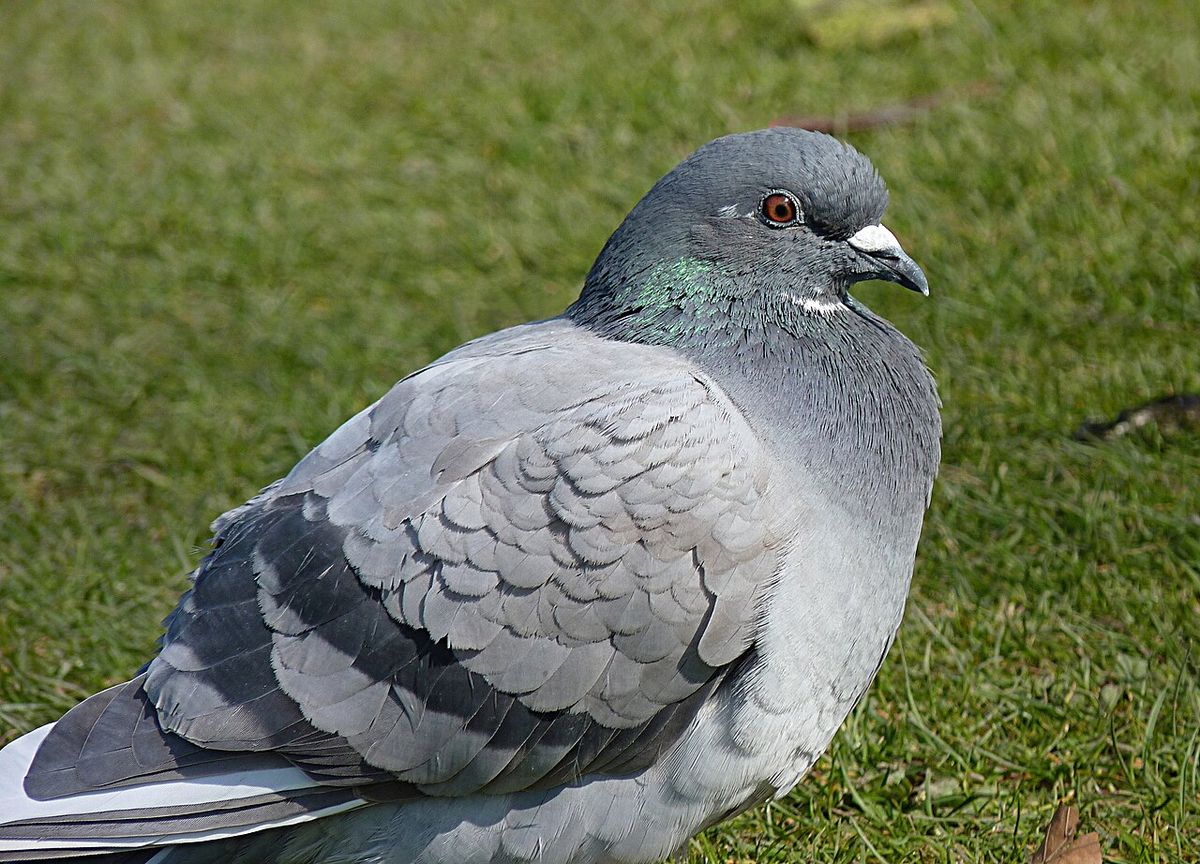
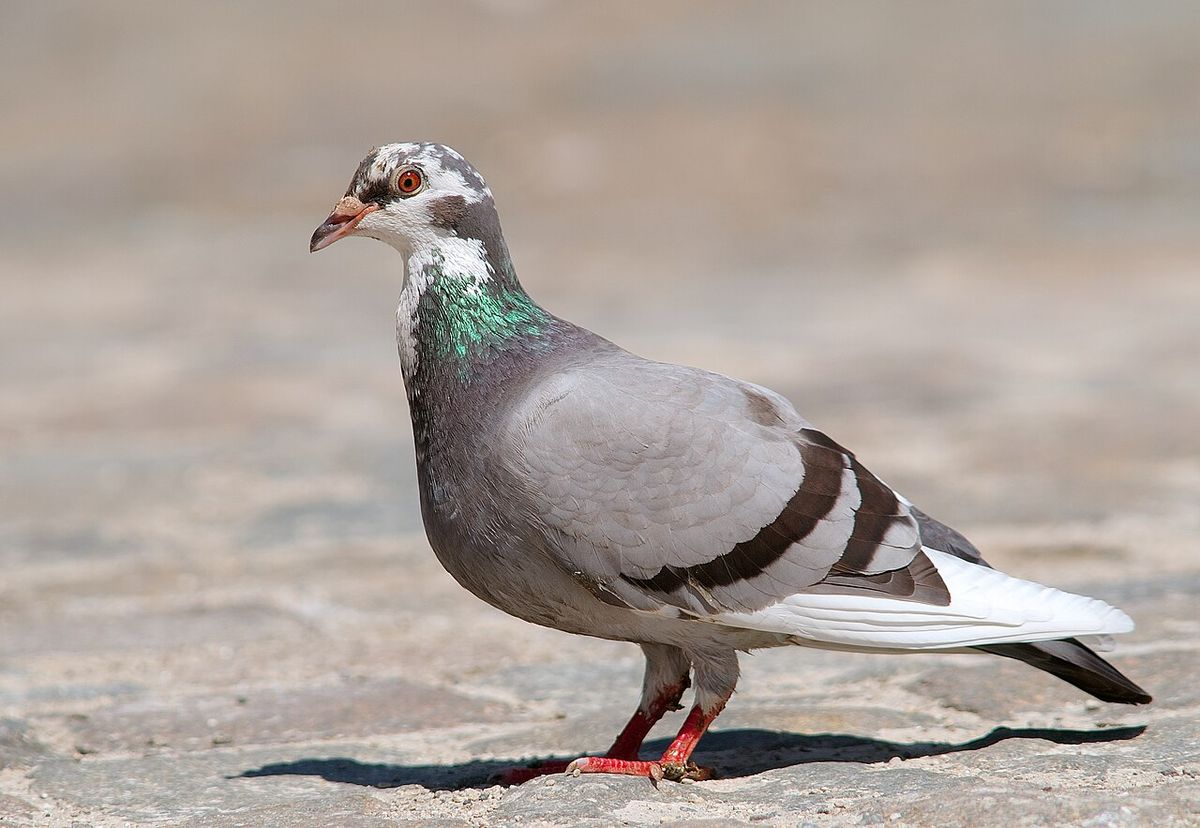
The feral pigeon is the same species as the wild rock dove and the domestic pigeon, all classified as Columba livia. These birds are descendants of domesticated rock doves that have escaped or been released over millennia, establishing free-living populations. While they share the same general size and shape as their wild ancestors, feral pigeons exhibit far greater variation in colour and pattern due to their domestic genetic heritage. This variation includes shades of grey, black, reddish-brown, white, and combinations thereof, influenced by the distribution and concentration of two melanin pigments: eumelanin and pheomelanin. Urban pigeons often have darker plumage, which may help them store trace metals commonly found in cities. Despite detectable inbreeding depression, studies have found that feral pigeons often mate with close kin, suggesting potential inclusive fitness benefits that outweigh the costs.
A key behavioural trait distinguishing feral pigeons from truly wild birds is their lack of fear towards humans, a legacy of their long history of domestication. They are extremely trusting and tolerant of people, which facilitates their life in densely populated urban centres. Their conformity to the wild rock dove's shape and size is considered a result of natural selection acting upon free-living populations, shifting them closer to the form of their distant ancestor. Local selective pressures are believed to explain some of the geographical variations observed in feral pigeon populations across different regions.
Habitat and Global Distribution
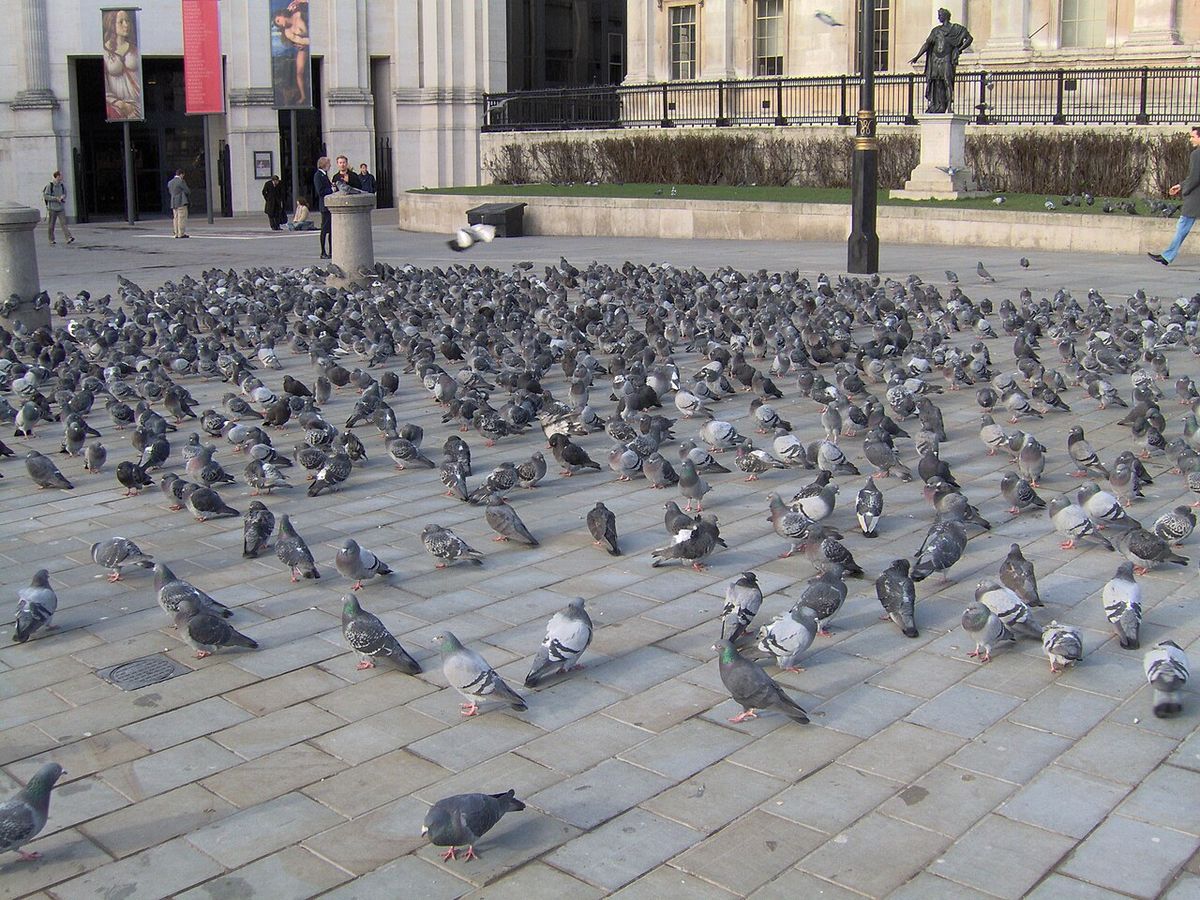
Feral pigeons have successfully colonized urban environments across the globe, with an estimated total population of around 400 million birds. They are found to some extent in nearly all urban areas, reaching their highest densities in the central portions of cities. Their domestic ancestry predisposed them to living near humans, and they have become perfectly adapted to urban life, using buildings and other structures as substitutes for the cliffs and rock formations favoured by their wild ancestors. A nook in a building's architecture is functionally comparable to a ledge on a rugged cliff face. This adaptation has allowed them to become one of the most common bird species in cities worldwide. For example, the breeding population in Sheffield, England, was estimated at 12,130 individuals in a city of about 500,000 people. In North America, major cities like New York are estimated to host pigeon populations exceeding one million birds. Their success is intrinsically linked to human activity and the built environment.
Diet and Feeding Behaviour
Feral pigeons are opportunistic scavengers with highly flexible diets, a critical factor in their urban success. They primarily feed on discarded human food, scavenging from garbage bags, leftovers on the ground, and waste bins. In cities, unprocessed grain can be scarce, so they typically resort to scavenging human garbage. Studies in semi-rural areas, such as one in Kansas, found their natural diet could consist of 92% maize, 3.2% oats, and 3.7% cherry, along with small amounts of other plants and insects. In urban parks and gardens, they may eat grass seeds and berries, especially in spring. Pigeons often feed in large, dense flocks, and within these groups, there is a division between 'producers' that locate food and 'scroungers' that feed on what others find, with scroungers typically outnumbering producers. This digestive flexibility is permitted by favourable enzymatic activity that allows efficient processing of a wide variety of scraps. Some people, often tourists or residents, actively feed pigeons for reasons such as empathy, fun, or tradition, though many cities have banned the practice to help control populations.
Health, Diseases, and Human Interaction
Feral pigeons can be reservoirs for various pathogens, though the risk of disease transmission to humans is generally considered low. Analysis has shown they can harbour up to 60 different human pathogenic organisms, including bacteria, viruses, fungi, and protozoa. However, only a handful are routinely transmitted to people. Notable diseases associated with pigeons include psittacosis (caused by Chlamydophila psittaci), which is generally transmitted from handling birds or their droppings, and various Salmonella species. Pigeons are not a major vector for West Nile virus, and studies have shown adult pigeons are not clinically susceptible to highly pathogenic strains of avian influenza like H5N1. Their droppings can pose a minor risk for histoplasmosis and cryptococcosis and have been implicated as a contributing factor in rare infections. Beyond disease, pigeon faeces cause substantial economic losses through property damage, as the corrosive droppings can damage stone edifices and metal structures. Pigeons also frequently suffer leg and foot injuries from entanglement with hair or string, which can cut off blood supply.
Pigeons host a diverse parasite fauna, including intestinal worms like Capillaria columbae and various ectoparasites such as lice and mites. The hippoboscid fly Pseudolynchia canariensis is a typical blood-sucking ectoparasite in tropical regions. While avian mites can occasionally infest human dwellings and bite people, a condition known as gamasoidosis, cases of them infesting mammals are relatively rare. The health risks, while sporadic, contribute to their reputation as pests and inform public policy on population control.
Population Control and Management
Due to their status as a public nuisance and potential pest, many municipalities employ methods to control feral pigeon populations. The most effective long-term strategy is reducing the food supply through public education, legislation against feeding, and proper garbage control. Deprivation leads to a steady population decrease over several years. Other artificial control methods include installing bird spikes or optical gel deterrents on buildings to prevent roosting. Some cities use artificial pigeon houses where eggs can be regularly removed to limit reproductive success, sometimes replacing real eggs with dummy eggs. A significant innovation in control is the use of avian contraceptives. The compound nicarbazin, marketed as OvoControl P, interferes with egg viability and is an EPA-registered, non-hormonal contraceptive supported by several animal welfare groups. Poisoning with substances like 4-aminopyridine (Avitrol) is generally ineffective and problematic, as it kills predators and surviving birds quickly re-establish populations with more available food. In cities with peregrine falcon conservation programs, poisoning pigeons is typically illegal.
Predators play a role in natural population control of feral pigeons. Several bird species prey on feral pigeons in urban areas. Peregrine falcons have adapted to city skyscrapers and often feed exclusively on feral pigeons. Other predators include Eurasian sparrowhawks, crows, and large gulls. Larger birds of prey like goshawks and red-tailed hawks also take advantage of these pigeons.
- Peregrine falcons have adapted to city skyscrapers and often feed exclusively on pigeons, with some cities actively encouraging them through breeding programs like the Unibase Falcon Project and the Victorian Peregrine Project.
- Red-tailed hawks have returned to cities like New York due to the abundance of prey, including the notable individual known as Pale Male.
- Eurasian sparrowhawks (Accipiter nisus), crows (Corvus spp.), and large gulls (Larus spp.) are also recorded predators.
- Goshawks have been known to specialize on feral pigeons even outside of urban settings.
- In North America, other common predators include raccoons, opossums, great horned owls, and eastern screech owls.
- In London, the population of great white pelicans at St. James's Park has been recorded killing and consuming pigeons.
However, consuming infected pigeons can transmit diseases to their consumers. Raptors may contract diseases like trichomoniasis, also known as frounce or canker. They can also contract Columbid Herpesvirus-1 from pigeons. Columbid Herpesvirus-1 has a near 100 percent mortality rate in raptors. These diseases may prove to be fatal to the predatory birds.
Distinguishing Feral from Domestic Pigeons
It is important to distinguish feral pigeons from lost or abandoned domestic pigeons, as the latter often lack survival skills. Domestic pigeons may be pets, racing birds, or fancy breeds and frequently need human assistance. Several visual cues can help identify a domestic pigeon. A leg band is a definitive sign of a domestic bird, often from racing or breeding. Unusual physical characteristics not seen in typical feral birds also indicate domestication.
- Feathered feet or a head crest are traits of fancy breeds.
- A puffy chest, giant fantail, or abnormal beak shape are clear indicators.
- Solid white or albino colouration is very rare in feral populations. White birds are often released homing pigeons or escaped King pigeons bred for meat.
- Birds that are significantly larger or smaller than the average feral pigeon are likely domestic.
- Pigeons with a very long or short beak are typically domestic.
- If a pigeon has a rescue band on its leg, it may be someone's lost pet.
Behaviourally, a pigeon that attempts to land on people or walks directly up to humans separately from a flock is likely a domestic bird. This domestic bird has not integrated into the feral population. These birds have a very low survival rate in the wild. They often succumb to predators, starvation, or injury within weeks. Recognizing these signs can help ensure domestic pigeons receive the rescue and care they require.
Ecological Role and Scientific Interest
Despite being considered pests, feral pigeons play several roles in urban ecosystems and are valuable subjects for scientific research. They contribute to seed dispersal by consuming fruits and plant material, aid in cleaning up waste food, and consume insects, providing a degree of natural pest control. Their widespread presence and adaptability make them excellent indicators for studying how wildlife responds to urbanization, food availability, and environmental conditions. Pigeons have been extensively used in research on animal cognition, including studies of learning, memory, vision, and complex decision-making. Their remarkable homing ability, allowing them to travel up to 5 km from the city to forage and return using navigational cues, has been of particular interest. A recent study revealed a novel navigation mechanism involving iron-rich crystals in liver macrophages that rearrange in response to magnetic fields, directly involving the immune system in direction finding. This unique adaptation, combined with their dietary flexibility and comfort around humans, explains their exceptional success in urban environments compared to other wild animals attempting to colonize cities. Their comfort is a legacy of 5000 years of domestication.
Legal and Conservation Status
The legal status of feral pigeons varies by country, reflecting their dual nature as both a familiar city dweller and a managed species. In the United States and Canada, they are not protected under the Migratory Bird Treaty Act of 1918, which safeguards native birds, because they are an introduced species. The USDA classifies them as an invasive species in North America. It is generally legal to control their populations, though methods like poisons may be regulated. In the United Kingdom, pigeons are covered under 'General Licences' allowing landowners or agents to humanely cull them for specific reasons, including preventing the spread of disease. In India, pigeons receive broader protection under Section 428 and 429 of the Indian Penal Code, and wild pigeons are further protected under the Wildlife Protection Act, 1972. The scarcity of the true wild rock dove is largely attributed to interbreeding with widespread feral populations, creating a conservation concern for the ancestral species. In cities, their control often balances concerns about public nuisance, property damage, and disease with animal welfare considerations and the value of native predator species that rely on them for food.
Questions about Feral pigeon
What is the difference between a feral pigeon and a regular pigeon?
The term 'feral pigeon' specifically refers to descendants of domesticated rock doves that live independently in the wild, primarily in urban areas. They are the same species as both wild rock doves and domestic pigeons (all Columba livia) and will interbreed. The pigeons commonly seen in cities are feral pigeons. 'Regular' pigeon could refer to any of these, but in a city context, it almost always means the feral variety, distinguished by its free-living state and adaptation to human environments.
Are feral pigeons dangerous to human health?
While feral pigeons can be reservoirs for various pathogens, the overall risk of disease transmission to humans is low. They can harbour bacteria like Salmonella and Chlamydophila psittaci (which causes psittacosis), but transmission typically requires close contact, such as handling birds or their droppings. For the general public, the health risk is considered sporadic and minor. The primary concerns from a public health perspective are usually related to property damage from their corrosive droppings and the potential for large flocks to be a nuisance.
Why are there so many pigeons in cities?
Cities provide an ideal habitat for feral pigeons. Buildings mimic the cliff faces of their ancestral rock dove habitat, offering ample nesting and roosting sites. An abundant, year-round food supply exists from human garbage, discarded food, and intentional feeding. Their long history of domestication has made them unafraid of humans, allowing them to thrive in close proximity. They also face fewer natural predators in urban centres compared to wild settings, though predators like peregrine falcons are adapting to cities. These factors combine to support dense, successful populations.
What should I do if I find an injured or lost-looking pigeon?
First, try to determine if it is a feral or domestic pigeon. Look for leg bands, unusual colours (like solid white), or fancy features (feathered feet, crests). Domestic pigeons need rescue as they lack survival skills. Contact a local wildlife rehabilitator, bird rescue, or animal control for guidance. If it appears to be a standard feral pigeon, you can still contact wildlife services for an injured bird. Avoid handling the bird directly if possible. Wear gloves if necessary due to disease concerns. Do not attempt to care for it long-term without proper knowledge and permits.
How do cities control pigeon populations?
Cities use integrated pest management strategies. The most effective long-term method is reducing food availability through public education campaigns, anti-feeding bylaws, and secure garbage management. Physical deterrents like spikes, nets, and optical gels prevent roosting on buildings. Some programs use artificial nesting structures where eggs can be removed or replaced with dummy eggs. Avian contraceptives like nicarbazin (OvoControl P) are increasingly used as a humane population control method. Encouraging natural predators, such as peregrine falcons, is another strategy. Poisoning is generally discouraged as it is non-selective, harms predators, and is ineffective long-term.
How do pigeons find their way home over long distances?
Pigeons possess a legendary homing ability, historically used for messenger services. They use a multi-modal navigation system. They can use the sun as a compass for direction. Remarkably, recent research has discovered a unique mechanism involving their immune system. Iron-rich crystals within liver macrophages rearrange in response to Earth's magnetic field, sending signals to nerve fibres to inform direction. This magnetic sense, similar to that used by some other animals, allows them to travel even on overcast days when the sun is not visible, enabling them to forage far from their roost and return reliably.
Sources and further reading
- Feral pigeon (Wikipedia)
- The Ecological Secrets of the Feral Pigeon (kinesismagazine.com)
- Fascinating Pigeon Facts and Figures: 2026 Insights (ovocontrol.com)
- Pet or Wild? How To Tell A Domestic vs. Feral Pigeon (dreamingofachance.com)
Checked by the Your Space Hamilton desk. Last updated 2026-10-27.