DeKay's brown snake
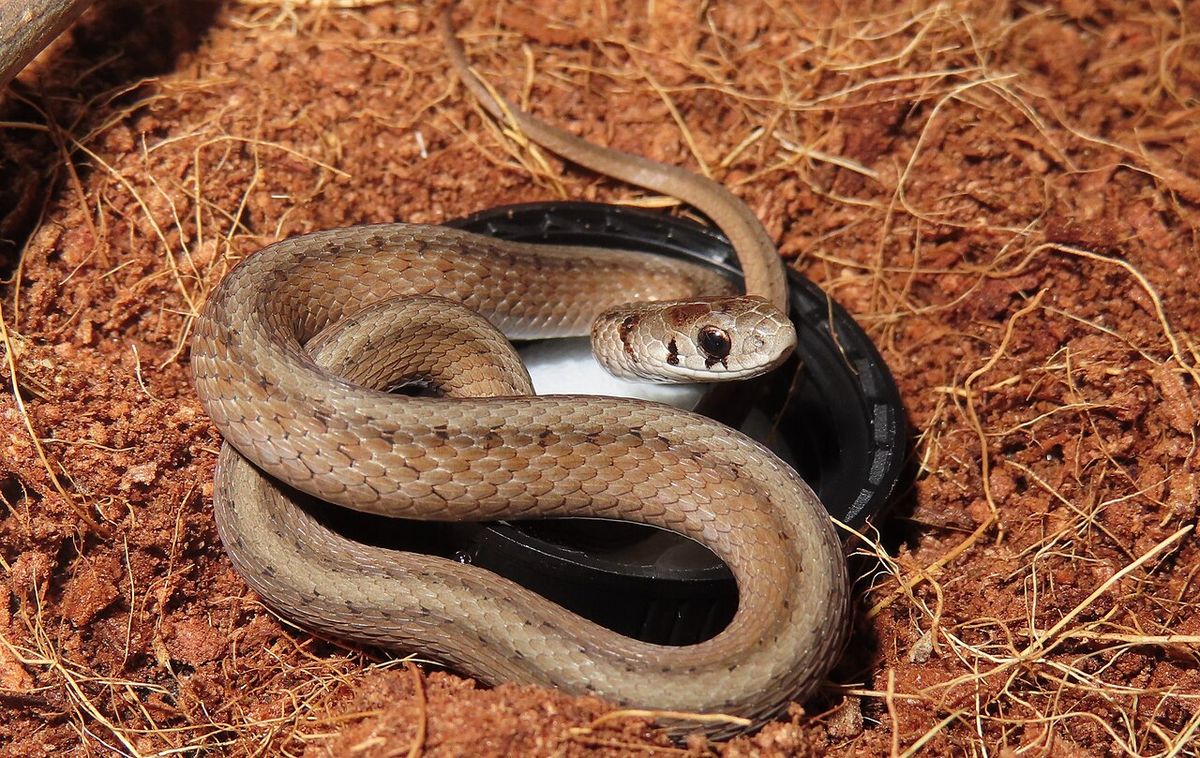
DeKay's brown snake ( Storeria dekayi ) is a small, non-venomous colubrid snake native to North and Central America. In Canada, its range is limited to southern Ontario and a small part of southwestern Quebec, where it inhabits a variety of environments from forests and wetlands to urban areas. This common but often overlooked species plays a role in controlling invertebrate populations, feeding primarily on slugs, snails, and earthworms. It is distinguished by its modest size, keeled scales, and a characteristic pattern of two parallel rows of small dark spots bordering a lighter stripe down its back.
Description and Identification
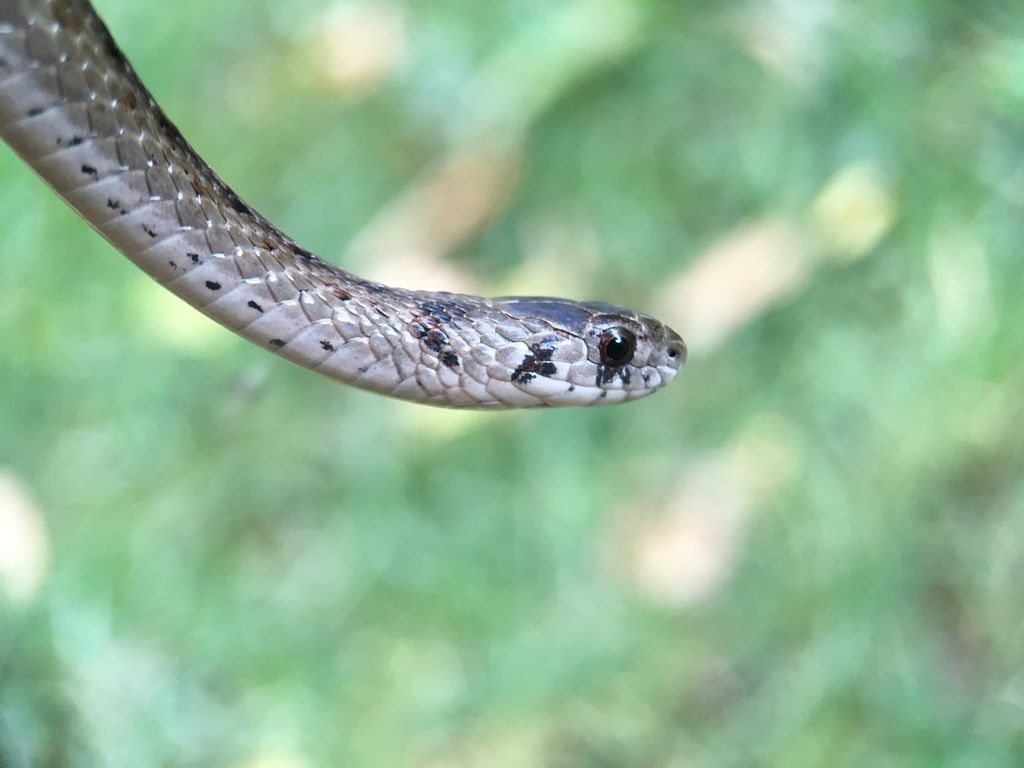
DeKay's brown snake is a small, slender serpent with a relatively stout body. Adults typically measure between 23 and 33 centimetres in total length, though the record length is just over 49 centimetres. The dorsal colouration ranges from brown and grey to less frequently pinkish or reddish. The most distinctive identifying feature is the pattern on its back, which consists of a faint, wide, lighter-coloured stripe bordered on each side by two parallel rows of small black spots. On some individuals, these paired spots may appear connected by thin crossbars. The belly is usually light brown, pink, or tan and is outlined with small black flecks at the edges of the ventral scales. The head is blunt with a dark stripe on both sides of the neck behind the eyes and another below each eye. All dorsal scales are keeled, meaning they have a raised ridge down the centre, and the anal plate is divided. Newborn snakes are darker, often black or dark grey, and possess a noticeable light-coloured ring or collar on the neck, which can cause confusion with juvenile ring-necked snakes. Sexual dimorphism is present, with mature females generally having greater snout-to-vent length and more ventral scales, while males have longer tails, larger heads, and a higher average number of subcaudal scales.
Habitat and Distribution
This species has an extensive geographic range, stretching from southern Canada through most of the eastern United States and into Mexico, Guatemala, and Honduras. In Canada, DeKay's brown snake is found in southern Ontario and a small portion of southwestern Quebec. Its occurrence can be patchy, with populations abundant in some locales and absent in seemingly suitable neighbouring areas. The snake is a habitat generalist with a notable tolerance for human-altered landscapes. It frequents a diverse array of environments including deciduous forests, wetlands, grasslands, rocky alvars, forest clearings, and the edges of fields and beaches. Notably, it is often associated with urban and suburban areas, frequently found in city parks, gardens, and under debris in lots. The snake is secretive and spends the majority of its time hidden under cover objects such as logs, flat rocks, boards, and leaf litter. It seeks underground refuges for overwintering, often communally in animal burrows, rock crevices, or building foundations, sometimes alongside other snake species like garter snakes. Its most active period above ground is from March or April through to October.
Diet and Feeding Behaviour
DeKay's brown snake is a specialized predator of soft-bodied invertebrates. Its diet consists overwhelmingly of slugs, snails, and earthworms. The primary prey item can vary geographically, with earthworms being more common in the southern parts of its range and slugs predominating in northern areas like Canada. The snake possesses specialized jaw adaptations that allow it to extract snails from their shells efficiently. While other invertebrates such as insects, woodlice, or millipedes are occasionally found in their stomach contents, these are generally considered to be ingested accidentally, often adhering to a primary prey item like a slug. This dietary specialization makes the brown snake a beneficial presence in gardens and agricultural areas, as it helps control populations of potential pests. Feeding activity aligns with the abundance of prey, and the species' viviparous reproductive strategy is timed so that young are born in late summer when invertebrate prey is plentiful.
Reproduction and Life Cycle
DeKay's brown snake is a viviparous species, meaning the females give birth to live young rather than laying eggs. Mating occurs in the spring, shortly after the snakes emerge from their communal winter hibernacula. Males employ pheromone-based mate searching to locate receptive females. Females have the ability to store sperm seasonally, which allows for delayed fertilization and helps synchronize the timing of birth with optimal environmental conditions. The young develop internally, nourished by the mother, and are born in late summer. Litter size is highly variable, ranging from as few as 3 to as many as 41 offspring, though typical litters contain between 12 and 20. The newborn snakes are quite small, measuring between 8 and 11 centimetres in length at birth. They receive no parental care after birth, though they may remain near the mother for a short time. Sexual maturity is reached at two to three years of age. While maximum longevity in the wild is not precisely known, captive individuals have lived for more than seven years, and wild snakes may live for over a decade.
Behaviour and Ecology
Primarily nocturnal and secretive, DeKay's brown snake is seldom seen in the open. Its behaviour is centred around concealment and predator avoidance. When threatened, it employs several defensive tactics. It may flatten its body against the ground to appear larger or more formidable. A more dramatic behaviour involves coiling the front portion of its body and swaying it from side to side while attempting to flee. If captured or handled, it will almost invariably release a foul-smelling musk from its cloaca as a deterrent. Despite its solitary nature, aggregations are common, especially during hibernation. The species is an important component of the food web, serving as prey for a variety of larger animals. Documented predators include larger snakes such as milksnakes, birds of prey, large frogs and toads, and mammals like weasels, raccoons, and domestic cats. Its abundance and broad habitat preferences have allowed it to remain a common species, though it faces localized threats from road mortality, habitat loss, and predation from subsidized predators in urban areas.
Conservation Status and Relationship with Humans
Globally and in Canada, DeKay's brown snake is considered a species of Least Concern. The Committee on the Status of Endangered Wildlife in Canada (COSEWIC) assessed it as Not at Risk in 2002, a status that was confirmed in 2012. In Ontario, it has no specific protection under the provincial Fish and Wildlife Conservation Act. The snake's adaptability to human-dominated landscapes has been key to its continued prevalence. It often thrives in gardens, parks, and other urban green spaces where cover and invertebrate prey are available. This relationship is generally beneficial to humans, as the snake assists in controlling slug and snail populations. However, human activities also pose significant threats. Major causes of mortality include vehicle traffic on roads, especially during seasonal migrations to and from hibernation sites, and the use of pesticides which can reduce prey availability or poison the snakes directly. Encouraging stewardship, such as leaving natural cover like logs and rocks in place and being vigilant for snakes on roads, can help support local populations of this harmless and ecologically useful reptile.
Key threats to DeKay's brown snake in Canada include predation by birds, mammals, and other snakes. Road mortality is a significant threat to this species. Pesticide use in urban areas can also negatively impact its populations. These threats are present despite the species being fairly tolerant of human disturbances to the landscape.
- Road mortality during seasonal movements in spring and fall.
- Habitat loss and fragmentation from urban and agricultural development.
- Predation from subsidized predators such as raccoons and feral domestic cats.
- Pesticide use reducing prey availability and causing potential secondary poisoning.
- Accidental persecution by humans who mistake it for a more dangerous species.
Public education is important for conservation, as understanding its beneficial role and non-venomous nature can reduce unnecessary harm. This species is a small, non-venomous snake that primarily feeds on invertebrates like slugs and earthworms. It is shy and rarely found in the open, usually hiding under cover for safety. Educating the public about these facts can help foster coexistence and reduce deliberate persecution.
Taxonomy and Etymology
The species was first scientifically described as Coluber dekayi by American naturalist John Edwards Holbrook in 1836, based on specimens from Massachusetts, New York, and Louisiana. It was later placed in the genus Storeria by Spencer Fullerton Baird and Charles Frédéric Girard in 1853. The current accepted binomial, Storeria dekayi, represents a double honorific, a rarity among North American snakes. The specific epithet, dekayi, honours James Ellsworth De Kay (1792 to 1851), an American zoologist who collected the first specimen on Long Island, New York. Recent molecular studies have suggested the existence of several genetic lineages within the species, but morphological evidence currently supports maintaining it as a single, widespread species without recognized subspecies.
Similar Species in Canada
Within its Canadian range, DeKay's brown snake can be confused with a few other small, non-venomous species. Careful observation of key characteristics is necessary for accurate identification. It is most often mistaken for the ring-necked snake and the red-bellied snake. The following table outlines the primary distinguishing features between these similar species.
| Species | Key Distinguishing Features | Back Pattern | Belly Colour | Scale Texture |
|---|---|---|---|---|
| DeKay's Brown Snake | Two rows of black spots bordering a light stripe. Dark neck stripes. | Spots on a brown/grey background. | Light brown, pink, or tan with black flecks. | Keeled |
| Ring-necked Snake (Diadophis punctatus) | Prominent yellow or orange ring around neck. Uniform back. | Solid grey, blue-grey, or black. No spots. | Bright yellow or orange, sometimes with black dots. | Smooth |
| Red-bellied Snake (Storeria occipitomaculata) | Three light spots on neck. Thin stripes on back. | Three faint longitudinal stripes (often hard to see). | Bright red, orange-red, or pink. | Keeled |
| Smooth Earthsnake (Virginia valeriae) | Very plain appearance. Small, pointed head. | Uniform grey, brown, or reddish. May have faint spots. | Plain cream or white. | Smooth |
Juvenile DeKay's brown snakes, with their dark colour and light neck collar, are most commonly mistaken for ring-necked snakes. The keeled scales of the brown snake are the most reliable feature to differentiate them, as ring-necked snakes have perfectly smooth scales. The red-bellied snake is another Storeria relative but is easily identified by its vivid red or orange ventral colouration and thin stripes down the back. In contrast, the smooth earthsnake lacks the distinct dorsal spotting and has a more pointed head and smooth scales.
Questions about DeKay's brown snake
Are DeKay's brown snakes venomous?
No, DeKay's brown snakes are completely non-venomous and pose no threat to humans. They are small, secretive snakes that will always attempt to flee or hide when encountered. If picked up, they may release a foul-smelling musk as a defence mechanism, but they do not bite aggressively. Their primary diet consists of invertebrates like slugs and worms, and they have no biological need for venom to subdue their prey.
Where can you find DeKay's brown snakes in Canada?
In Canada, DeKay's brown snakes are found only in southern Ontario and a very small portion of southwestern Quebec. Their distribution within this range is often patchy. They inhabit a wide variety of environments including forests, wetlands, fields, rocky areas, and, notably, urban and suburban spaces like gardens, parks, and vacant lots. They are most often discovered under cover objects such as logs, rocks, or pieces of debris.
What do DeKay's brown snakes eat?
DeKay's brown snakes are specialized feeders that primarily consume soft-bodied invertebrates. Their diet is dominated by slugs, snails, and earthworms. They have specially adapted jaws that allow them to extract snails from their shells efficiently. This diet makes them beneficial to gardeners and farmers, as they help control populations of these often-unwanted invertebrates. They rarely, if ever, eat vertebrates like mice or frogs.
How can you tell a DeKay's brown snake from other small snakes?
Look for a small, slender brown or grey snake with two parallel rows of small, dark spots running down its back, bordering a lighter central stripe. The belly is light-coloured with small black flecks, and there are dark stripes on the sides of the neck. Its scales are keeled (ridged). It is most confused with the ring-necked snake, which has smooth scales, a solid-coloured back, and a bright neck ring, and the red-bellied snake, which has a vivid red belly and faint stripes instead of spots on its back.
Are DeKay's brown snakes endangered?
No, DeKay's brown snakes are not considered endangered. The Committee on the Status of Endangered Wildlife in Canada (COSEWIC) assessed them as Not at Risk in 2002. Globally, the International Union for Conservation of Nature lists them as a species of Least Concern. Their adaptability to human environments has helped maintain stable populations, though they face localized threats from road mortality, habitat loss, and predation by domestic animals.
What should I do if I find a DeKay's brown snake?
If you encounter a DeKay's brown snake, the best action is to observe it from a distance and allow it to move on undisturbed. If it is in an area of immediate danger, such as a busy pathway, you can gently encourage it to move to a safer, nearby cover using a long stick or by carefully guiding it into a container for relocation. Remember, it is a harmless, native species that provides natural pest control. Never handle it unnecessarily, as this causes the snake stress and may provoke it to release its defensive musk.
Sources and further reading
- DeKay's brown snake (Wikipedia)
- » Dekay's Brownsnake (ontarionature.org)
- Dekay's Brownsnake (Storeria dekayi) (virginiaherpetologicalsociety.com)
- Storeria dekayi (canadianherpetology.ca)
- Storeria dekayi (Brown Snake) | INFORMATION (animaldiversity.org)
Checked by the Your Space Hamilton desk. Last updated 2026-10-26.