Chimney swift
The chimney swift (Chaetura pelagica) is a medium-sized, sooty gray migratory bird belonging to the swift family Apodidae, known for its distinctive cigar-shaped body and remarkable aerial agility. It is a summer breeding visitor to much of eastern North America, including southern regions of eastern Canada, where it has become closely associated with human-built structures, particularly chimneys, for nesting and roosting. The species is a monogamous, insectivorous bird that feeds exclusively on the wing, consuming vast quantities of flying insects and playing a significant role in controlling pest populations. In recent decades, chimney swift populations have declined precipitously, leading to its classification as a vulnerable species by the International Union for Conservation of Nature and its listing as threatened in Canada, making it a significant focus of conservation efforts.
Taxonomy and naming
The chimney swift was first described by Carl Linnaeus in 1758, who mistakenly classified it as a swallow, naming it Hirundo pelagica. This misconception persisted well into the 1800s, with notable naturalists like John James Audubon referring to it as the 'Chimney Swallow' and Mark Catesby calling it the 'American Swallow'. In 1825, James Francis Stephens correctly moved the species to the genus Chaetura, where it remains today, although some 19th-century authorities assigned it to various now-obsolete genera. The chimney swift has no subspecies and its closest relatives are Vaux's swift and Chapman's swift, with all three sometimes considered a single species in the past. Scientists believe the chimney swift and Vaux's swift evolved from a common ancestor forced into North America's southeastern and southwestern corners by glacial advances, separated for millennia by ice sheets. The genus name Chaetura derives from the Ancient Greek words for 'bristle' and 'tail', a reference to the sharp, protruding points on the bird's tail feathers. The specific name pelagica comes from the Greek for 'of the sea', thought to allude to its nomadic lifestyle rather than a maritime connection, a theory strengthened by the later assignment of the name pelasgia, after the nomadic Pelasgi tribe of ancient Greece, to the same species.
Physical description and flight
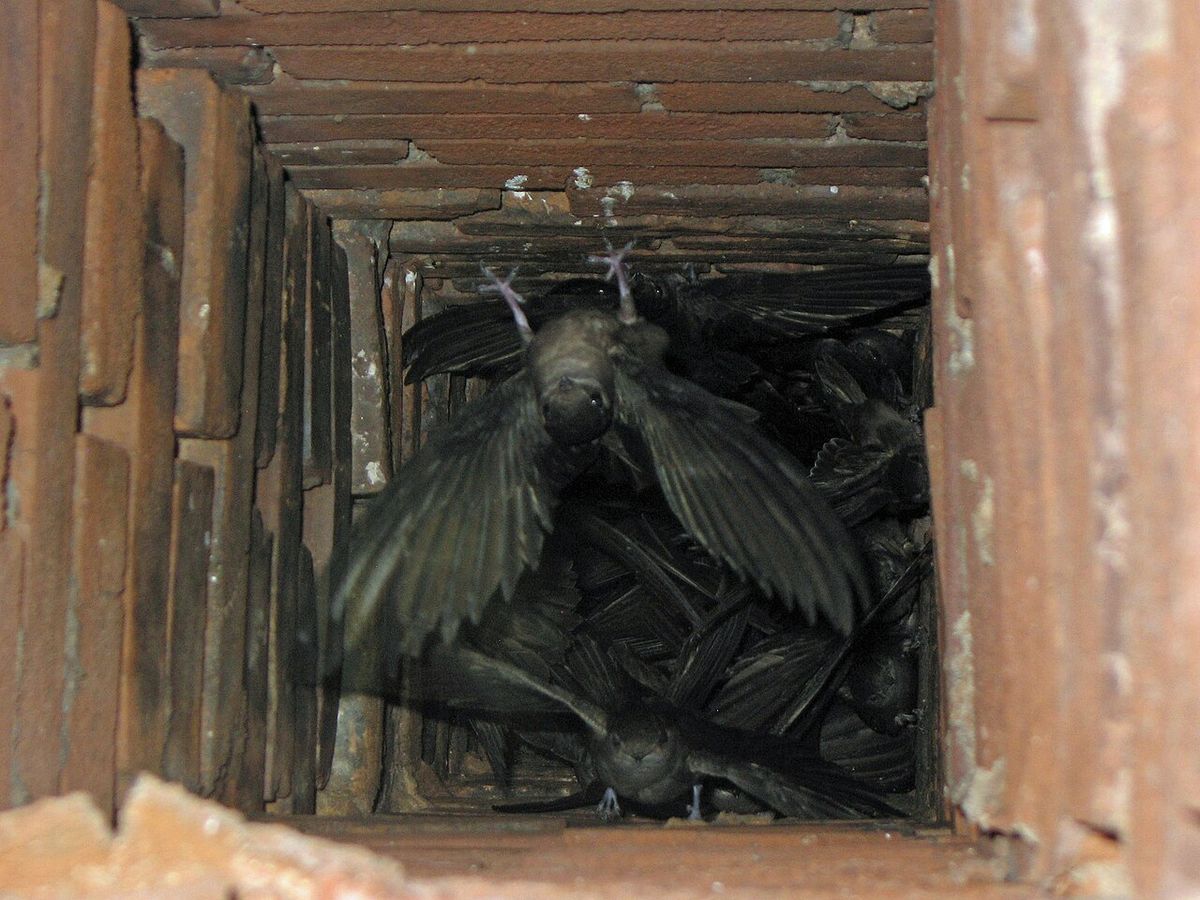
The chimney swift is a medium-sized bird, measuring 12 to 15 centimetres in length with a wingspan of 27 to 30 centimetres and a weight range of 17 to 30 grams. Males are slightly heavier on average than females, but the sexes are otherwise identical in plumage, which is a dark sooty olive above and grayish brown below with a paler throat and a slightly paler rump. The upperparts are the most uniformly coloured of all Chaetura swifts, showing little contrast between the back and rump. The juvenile plumage is very similar but has whitish tips to the outer webs of the secondaries and tertial feathers. The bird's wings are slender, curved, and long, extending up to 3.8 centimetres beyond the tail when folded, with pointed tips that help decrease air turbulence and drag. Its humerus bone is short while the distal wing bones are elongated, a combination allowing for very rapid flapping. In flight, it holds its wings stiffly, alternating between rapid, quivering flaps and longer glides, and its profile is widely described as a 'cigar with wings', a description first coined by Roger Tory Peterson. Although the bird often appears to beat its wings asynchronously, photographic studies confirm they beat in unison, an illusion created by its fast and highly erratic flight with many rapid directional changes.
The legs of the chimney swift are very short and its feet are small but strong, with very short toes tipped with sharp, curved claws. The toes are anisodactyl, but the bird can swivel its back toe (hallux) forward to get a better grip, and unlike most birds, its legs and feet have no scales, being covered in smooth skin instead. Its tail is short and square, measuring 4.8 to 5.5 centimetres, with all ten tail feather shafts extending up to 1.3 centimetres beyond the vanes into sharp, stiff points used for propping against vertical surfaces. The chimney swift has large, deep-set eyes protected by patches of coarse, black bristly feathers it can adjust to possibly reduce glare. It is far-sighted and bifoveal, possessing both a temporal and a central fovea in each eye for exceptional visual acuity, and can focus both eyes together or a single eye independently. Its bill is very small with a culmen of only 5 millimetres, but its gape is huge, extending back below its eyes, and it lacks the rictal bristles common in many insectivorous birds.
Similar species and identification
The chimney swift looks very similar to its closest relative, Vaux's swift, but is slightly larger with relatively longer wings and tail, slower wingbeats, and a greater tendency to soar. It can be up to 30 percent heavier than Vaux's swift, tends to be darker on the breast and rump, and its proportionately narrower wings show a pronounced bulge in the inner secondaries. Compared to the black swift, the chimney swift is smaller, paler, and shorter-tailed. In Central America, it is most similar to Chapman's swift but is paler, appearing matte olive rather than glossy black, and has a stronger contrast between its pale throat and the rest of its underparts than its more uniformly coloured relative. Identification in flight relies on noting its overall size, wing shape, flight style, and the subtle plumage differences, particularly the contrast of the throat against the sooty underbody.
Distribution, migration and habitat
The chimney swift is a widespread breeding visitor to the eastern half of the United States and the southern reaches of eastern Canada, including provinces like Ontario and Quebec. It migrates to South America for the winter, with its wintering grounds in Peru being discovered only in 1944 when bands from North American birds were recovered there, found being worn as a necklace by an Indigenous Peruvian. The species is a rare summer visitor to the western United States and has been recorded as a vagrant in locations such as Anguilla, Barbados, Greenland, Jamaica, Portugal, the United Kingdom, and the U.S. Virgin Islands. Historically, before European colonization, chimney swifts nested in hollow trees, including old pileated woodpecker holes, and a very few still do so today. The modern adaptation to human-built structures is nearly complete, with nests found almost exclusively inside chimneys, airshafts, cisterns, wells, or dark corners of lightly used buildings. They are found foraging over a variety of open habitats including open country, savanna, wooded slopes, and humid forests.
Behaviour and ecology
The chimney swift is a highly gregarious and aerial species, seldom seen alone or at rest. It hunts in groups of two or three, migrates in loose flocks of 6 to 20 individuals, and sleeps in huge communal roosts of hundreds or thousands of birds after the breeding season. It drinks and bathes on the wing, skimming water surfaces or briefly smacking its breast into the water before flying off shaking its feathers. Pilots have recorded chimney swifts flying at altitudes exceeding a mile above the earth, including one observation at 2,200 metres. The bird is physically incapable of perching upright and must cling to vertical surfaces. If disturbed while roosting, it will clap its wings loudly against its body once or twice, either in place or while dropping to a lower location, creating a 'thundering' sound in large colonies thought to startle predators like eastern screech-owls, eastern rat snakes, raccoons, or squirrels.
Feeding and dietThe chimney swift is an obligate aerial insectivore, foraging exclusively in flight. Studies indicate 95 percent of its diet consists of flying insects, including various species of flies, ants, wasps, bees, whiteflies, aphids, scale insects, stoneflies and mayflies. It also consumes airborne spiders drifting on their threads. The species is a significant predator of agricultural pests like the red imported fire ant and the clover root curculio. Researchers estimate a breeding pair provisioning a nest with three young consumes the weight equivalent of at least 5000 to 6000 housefly-sized insects per day, and like many birds, it periodically coughs up pellets of indigestible prey parts. During breeding, most foraging occurs within 0.5 kilometres of the nest, but it ranges up to 6 kilometres away, seizing most prey in aerial pursuit but sometimes gleaning from tree foliage by hovering near branch ends. It generally flies high but descends in cold or rainy weather, often feeds in small groups, and sometimes hunts with barn swallows and purple martins, typically flying lower in such mixed flocks. There is a record of one attempting to steal a dragonfly from a purple martin. It is primarily a diurnal feeder active into early evening, but during migration it has been observed feeding after dark over brightly lit buildings. The species shows annual weight peaks at the start of breeding and a higher one pre-migration, with its lowest weights during breeding when it also undergoes a complete molt, and its pre-migration weight gain is smaller than some passerines, indicating a need to refuel at stopover points.
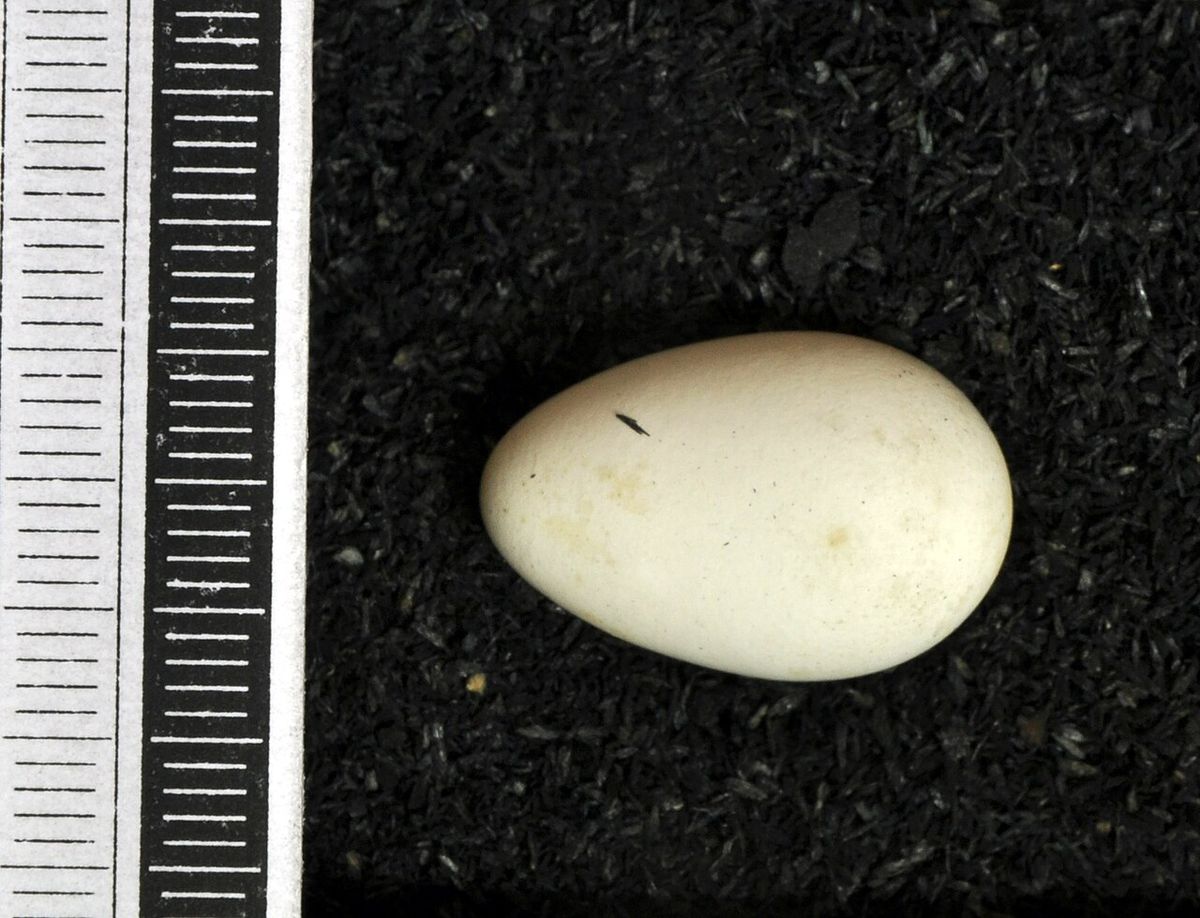
Breeding and life cycleThe chimney swift is a monogamous breeder which normally mates for life, though a small percentage of birds change partners. Pairs perform display flights together, gliding with their wings upraised in a steep 'V' and sometimes rocking from side to side. Breeding birds arrive as early as mid-March in the southern U.S. and late-April to mid-May in Canadian provinces. Nests are shallow brackets of twigs gathered in flight and cemented together and to a vertical surface with the bird's copious saliva, with each adult's salivary glands enlarging from 7 by 2 millimetres to 14 by 5 millimetres during the breeding season. Unlike some swifts, they mate while clinging to a vertical surface near the nest, copulating daily until the clutch is complete. The female lays a clutch of typically four to five white, elliptical eggs, though sizes range from two to seven, each measuring about 20 by 13 millimetres and weighing nearly 10 percent of her body weight. Both parents incubate the eggs for 19 days. The young are altricial, hatching naked, blind, and helpless, and fledge from the nest after about a month. The average lifespan is 4.6 years, but the longevity record is held by a bird originally banded as an adult and recaptured over 12.5 years later, indicating it lived more than 14 years.
Population threats and conservation status
The International Union for Conservation of Nature changed its status from Least Concern to Near Threatened in 2010, and then to Vulnerable in 2018. In Canada, the Committee on the Status of Endangered Wildlife in Canada has listed it as threatened for several years, with a likely future listing under Schedule 1 of the federal Species at Risk Act. In the United States, it is protected by the Migratory Bird Treaty Act of 1918, which prohibits the removal of birds or active nests from chimneys without a federally-issued permit. The primary causes of decline are largely unclear but are strongly believed to be related to the alteration of insect communities due to widespread pesticide use, particularly in the early 20th century. Paradoxically, populations may have initially increased historically with the introduction of chimneys by European settlers, which provided abundant nesting sites.
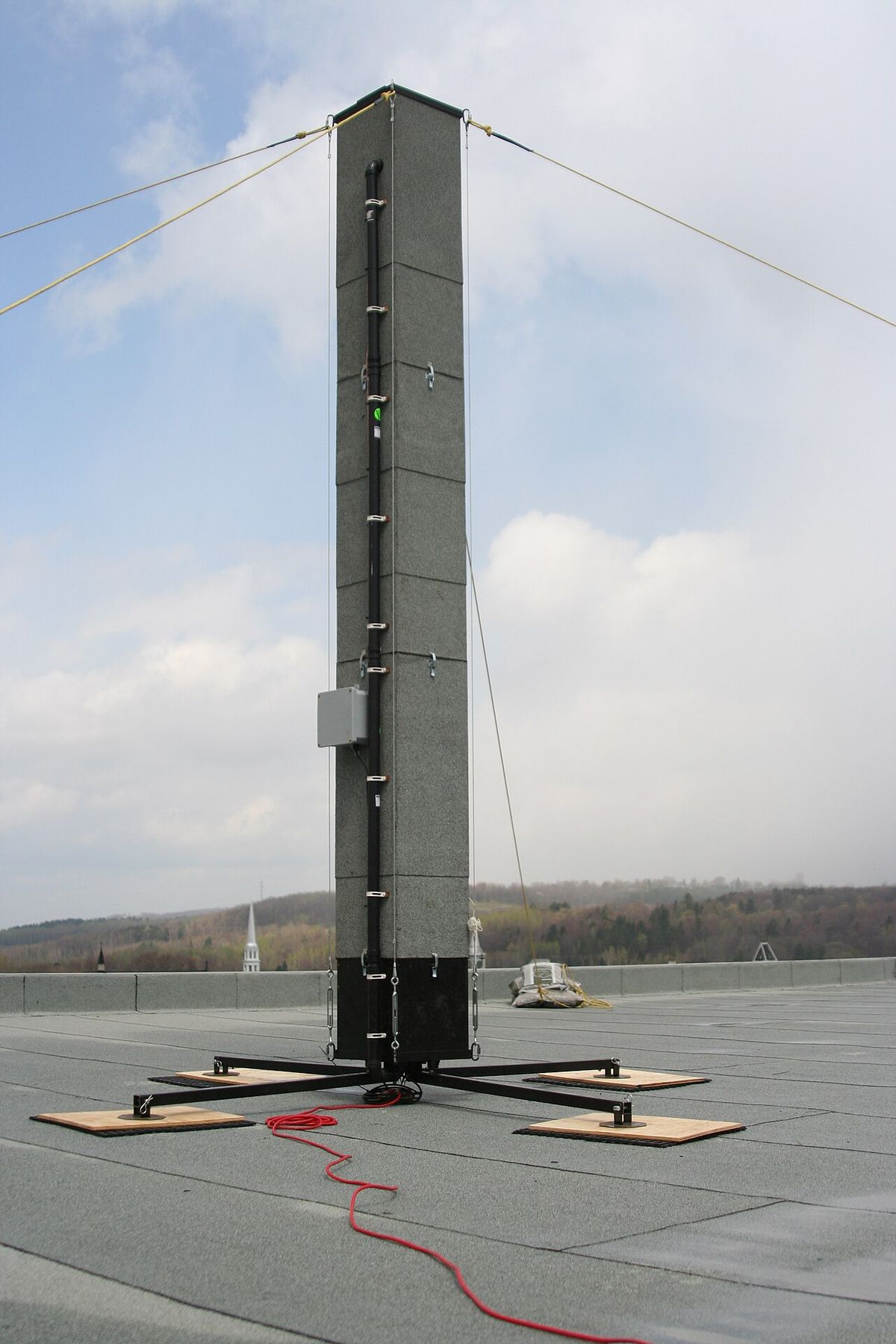
Modern adaptations to urbanization also expose the birds to new threats. Research on roosting sites along a light pollution gradient in New Jersey and the New York Metropolitan area indicates Artificial Light at Night significantly affects the entry behaviour of communal roosting chimney swifts. After sudden temperature drops, they may hunt low over warmer concrete roads, increasing collisions with vehicles. Severe storms encountered during migration, such as hurricanes, cause catastrophic mortality. Hurricane Wilma in 2005 swept swifts as far north as Atlantic Canada and Western Europe, with six reaching Great Britain and over 700 found dead. The following year, roost counts in Quebec showed a decrease of 62 percent, effectively halving the provincial population. Conservation efforts focus on protecting existing chimneys, creating and maintaining artificial nesting towers, reducing pesticide and light pollution, and public education. Key specific threats and mortality factors include:
- Reduction in aerial insect prey due to intensive pesticide use.
- Loss of nesting and roosting sites through chimney capping, lining, demolition, or renovation of old buildings.
- Disorientation and behavioural disruption caused by artificial light at night (ALAN).
- Increased vehicle collisions when feeding low over roads after cold snaps.
- Direct mortality from predators like Mississippi kites, peregrine falcons, merlins, and nest raiders like snakes and raccoons.
- Catastrophic die-offs during migration due to severe weather systems like hurricanes.
- Potential health impacts from parasites like the nematode Aproctella nuda and nest pests like Cimexopsis nyctali.
Predators, parasites and vocalizations
Despite their speed, adult chimney swifts are preyed upon by a select few raptors fast enough to catch them in flight, including Mississippi kites, peregrine falcons, and merlins. Eastern screech-owls have been seen attacking colonies, and non-avian predators such as eastern rat snakes, northern raccoons, and tree squirrels are most likely to take nestlings but may also capture nesting adults. The loud wing-clapping 'boom' or 'thunder noise' of disturbed adults and the loud, raspy calls of nestlings are considered anti-predator behaviours designed to startle attackers. The chimney swift is a host to several parasites, serving as the type host for the nematode Aproctella nuda, the feather mite Euchineustathia tricapitosetosa, and the biting louse Dennyus dubius, and it also carries the tapeworm Pseudochoanotaenia collocaliae. Its nests can harbour the hemipteran Cimexopsis nyctali, which is similar to a bed bug and can rarely become a pest in houses. The chimney swift's vocalization is a twittering call, consisting of a rapid series of hard, high-pitched chirps, and it sometimes gives single chirps.
History of scientific observation
Detailed scientific observation of chimney swifts began in the late 19th and early 20th centuries. In 1899, Mary Day of New Jersey observed a pair nesting in a chimney and was the first to document the 19-day incubation period. The first intensive, long-term study was initiated in 1915 by self-taught ornithologist Althea Sherman in Iowa. She designed and commissioned the construction of a 28-foot tall wooden tower, similar to a chimney, which included interior ladders and peepholes to facilitate observation. Chimney swifts nested in this tower, and for over fifteen years Sherman meticulously recorded her observations, filling more than 400 pages with detailed notes on their behaviour. Sherman concluded that although the tower had been designed with limited initial knowledge of swift behaviour, after years of study she believed the original design was ideal for the birds, providing crucial insights into their nesting ecology that inform conservation tower designs to this day.
Questions about Chimney swift
Where do chimney swifts live in Canada?
In Canada, chimney swifts are summer breeding residents in the southern regions of eastern provinces, including Ontario and Quebec. They arrive in late April to mid-May and depart for their South American wintering grounds in the autumn. They almost exclusively nest and roost in human-made structures like chimneys, airshafts, and old buildings within towns and cities across their Canadian range. Historically, they used hollow trees, but this is now exceptionally rare.
Why are chimney swifts declining?
Chimney swift populations are declining due to a combination of factors. The primary suspected cause is a reduction in insect prey availability linked to widespread pesticide use. The loss of nesting and roosting sites, as old chimneys are capped, lined, or demolished, is another major threat. Additional pressures include mortality from vehicle collisions, disruption from artificial light at night, and catastrophic die-offs during migration when storms like hurricanes blow them off course or kill them outright, as seen with Hurricane Wilma in 2005 which halved Quebec's population.
What do chimney swifts eat?
Chimney swifts eat almost exclusively flying insects and airborne spiders, which they catch during continuous flight. Their diet includes flies, ants, wasps, bees, aphids, mayflies, and stoneflies. They are important natural controllers of pest insects like the red imported fire ant and the clover root curculio. A breeding pair with three young can consume the weight equivalent of at least 5000 to 6000 housefly-sized insects in a single day, and they periodically regurgitate pellets of indigestible insect parts.
How can I help chimney swifts?
You can help chimney swifts by preserving existing, uncapped masonry chimneys on your property, especially from April to September. If a chimney must be capped, use a metal mesh cap that allows swifts to enter and exit while keeping other animals out. Support the construction and maintenance of artificial chimney swift nesting towers based on designs like Althea Sherman's. Participate in citizen science projects that monitor swift populations and roosts. Reduce pesticide use to protect their insect food supply and advocate for policies that protect migratory birds and reduce light pollution.
Where do chimney swifts go in the winter and how do we know?
Chimney swifts migrate to South America for the winter. Their specific wintering grounds were a mystery until 1944, when bands from birds banded in North America were recovered in Peru, found being worn as a necklace by an Indigenous Peruvian. This discovery pinpointed Peru as a key wintering area. They undertake a long, perilous migration each autumn to reach these areas, facing threats from severe weather along the way, and return to North America in the spring to breed.
How long do chimney swifts live?
The average chimney swift lives 4.6 years. However, one banded individual is known to have lived more than 14 years. This bird was originally banded as an adult and was recaptured in another banding operation some 12.5 years later. The species shows two weight peaks each year, one at the start of breeding and a higher one before autumn migration. Its lowest weights are typically recorded during the breeding season, when it also begins a complete molt. The chimney swift is a monogamous breeder which normally mates for life, though a small percentage of birds change partners.
Sources and further reading
- Chimney swift (Wikipedia)
- What to do about chimney swifts (humaneworld.org)
- Chimney Swift (naturetrust.nb.ca)
Checked by the Your Space Hamilton desk. Last updated 2026-11-02.