Hurricane Wilma
Hurricane Wilma was a catastrophic Category 5 hurricane that struck during the record-breaking 2005 Atlantic hurricane season. It holds the record for the most intense Atlantic hurricane ever recorded based on barometric pressure and set a basin record for the fastest 24-hour intensification. The storm caused widespread devastation across the Caribbean, Mexico, and Florida, resulting in at least 52 deaths and an estimated $26.5 billion in total damage. For Canadians, Wilma is notable as the storm transitioned into an extratropical cyclone southeast of Nova Scotia, marking its final dissipation over Atlantic Canadian waters.
Meteorological History and Records
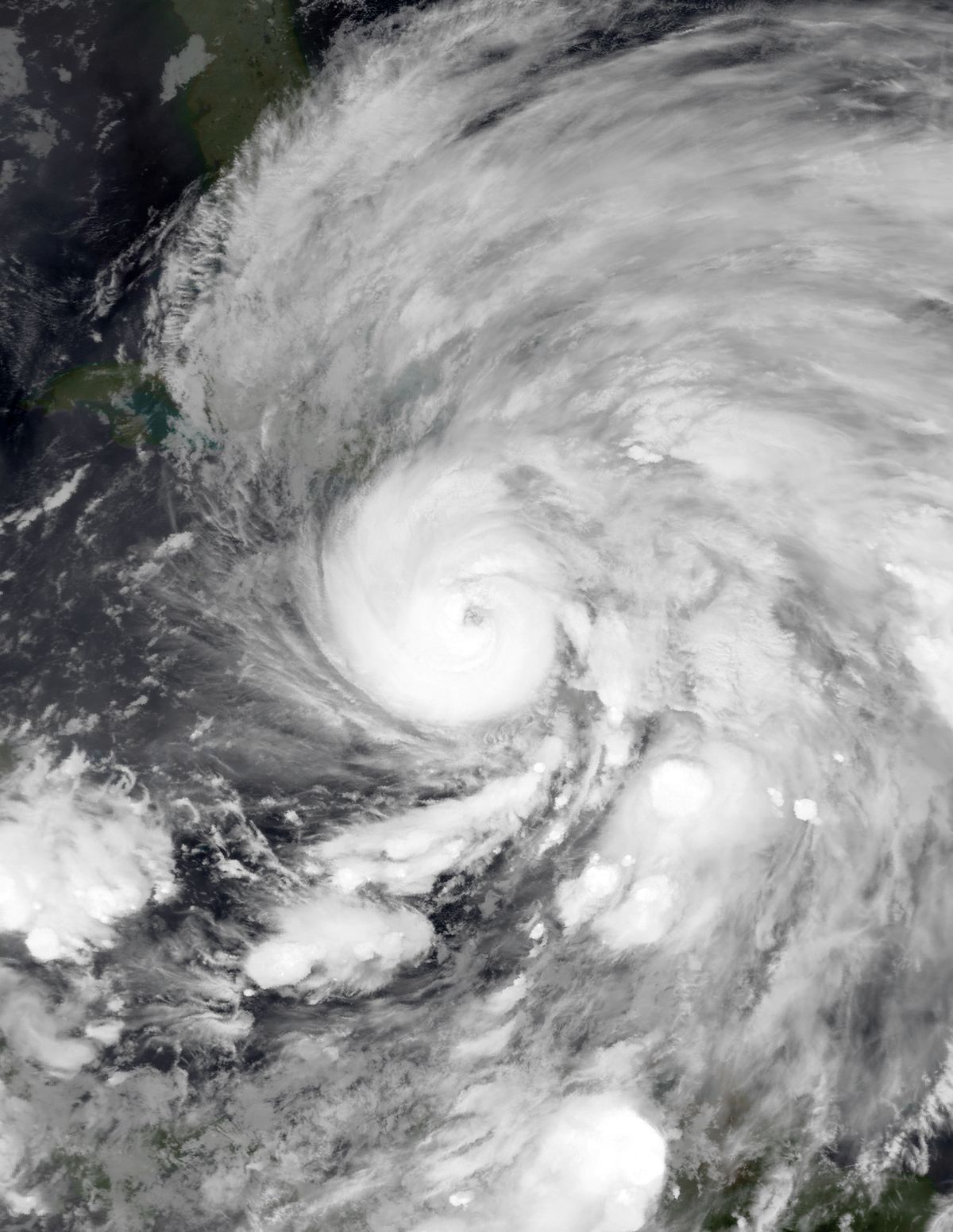
Hurricane Wilma originated from a broad low pressure system that developed in the Caribbean Sea in mid October 2005. The system was classified as Tropical Depression Twenty Four on October 15 east southeast of Grand Cayman. It drifted west southwestward, strengthening into Tropical Storm Wilma on October 17. Initial intensification was slow due to the storm's large size, but conditions soon became extremely favourable. On October 18, Wilma became a hurricane and began a period of explosive deepening over the open Caribbean waters. In a 30 hour period through October 19, the hurricane's central pressure plummeted from 982 millibars to a record low of 882 millibars, making it the most intense Atlantic hurricane ever recorded by pressure. During this intensification, winds increased to a peak of 185 mph, ranking Wilma as a Category 5 hurricane on the Saffir Simpson scale.
This rapid intensification set a new Atlantic basin record with a 24 hour pressure drop of 97 millibars. At its peak intensity, reconnaissance aircraft estimated the hurricane's eye contracted to a record minimum diameter of just 2.3 miles. After its peak, Wilma underwent an eyewall replacement cycle and weakened slightly. The storm then drifted northwestward, making its first landfall on the island of Cozumel, Quintana Roo, Mexico on October 21 with sustained winds of 150 mph. About six hours later, it made a second landfall on the Mexican mainland near Puerto Morelos with winds of 135 mph. Wilma weakened over the Yucatán Peninsula but gradually re strengthened once it moved into the Gulf of Mexico on October 22.
Accelerating to the northeast ahead of a powerful trough, Wilma re intensified into a Category 3 hurricane. After passing northwest of the Florida Keys, the hurricane made landfall in southwestern Florida near Cape Romano on October 24 with winds of 120 mph. Wilma rapidly crossed the Florida peninsula, emerging into the Atlantic Ocean near Jupiter as a Category 2 hurricane. The cyclone briefly re intensified to Category 3 status north of the Bahamas while absorbing the smaller Tropical Storm Alpha. The hurricane passed west of Bermuda on October 25. Increasing wind shear and cold air finally caused Wilma to lose tropical characteristics. It transitioned into an extratropical cyclone on October 26 approximately 230 miles southeast of Halifax, Nova Scotia, before being absorbed by another extratropical storm over Atlantic Canada a day later.
Preparations Across the Region
Governments across the Caribbean and North America issued extensive tropical cyclone warnings and watches as Wilma approached. In Mexico, officials declared a state of emergency in 23 municipalities across the Yucatán Peninsula and placed Quintana Roo and Yucatán under a red alert, the highest level. Approximately 75,000 people evacuated in northeastern Mexico, with about 45,000 people riding out the storm in 200 emergency shelters, many of them tourists. Schools were cancelled for up to 15 days in some areas, and the MTV Video Music Awards Latinoamérica, scheduled for Playa del Carmen, were cancelled.
All schools nationwide were closed, 41 hotels shut down, and passenger travel was halted for all trains and key ferry services in Cuba. In Florida, Governor Jeb Bush declared a state of emergency on October 19, allowing the deployment of the National Guard. Mandatory evacuations were ordered for the Florida Keys and for residents in parts of Collier County, with at least 400 evacuees from the Keys staying at a shelter in Miami Dade County. County offices, schools, and courts were closed on October 24, and many schools and universities across southern and central Florida closed for at least one day.
The storm's approach disrupted numerous events, forcing the postponement of Key West's Fantasy Fest and causing the rescheduling of several professional and collegiate sporting events. The government of The Bahamas issued a hurricane warning for the northwestern islands and ordered evacuations for parts of Grand Bahama, with an estimated 300 to 1,000 people going to shelters. The hurricane also halted film production, forcing the cast and crew of Disney's Pirates of the Caribbean: Dead Man's Chest to evacuate. Due to uncertainty about Wilma's structure as it moved north, the Bermuda Weather Service issued a gale warning for the island rather than a tropical storm warning to reduce potential public confusion.
Impact in the Caribbean
Wilma's outer rainbands dropped heavy rainfall on Haiti for several days during its formative stages, triggering river flooding and landslides that killed 12 people and forced 300 residents into shelters. Damage in Haiti was estimated at around $500,000. As a tropical depression, the system caused one death in Jamaica and pounded the island for three days, flooding communities and triggering mudslides. Almost 250 people stayed in emergency shelters, and total damage on Jamaica reached $93.5 million. In Cuba, Wilma produced high tides, gusty winds, and widespread rainfall across 11 provinces, with a peak gust of 84 mph recorded near Havana and peak rainfall of 8.8 inches in Pinar del Río province.
The Cuban government calculated the hurricane's economic cost, including preparation expenses and lost production, at $704.2 million. Nationwide, Wilma destroyed 446 houses and damaged another 7,149, mostly roof damage. High floodwaters in Havana required nearly 250 people to be rescued using inflatable rafts and amphibious vehicles. The hurricane damaged 410 acres of agricultural products, including fruit trees, bee colonies, and tobacco houses in Pinar del Río and Havana provinces. Flooding inundated parts of Havana and the northwest coast, damaging roads and rail lines, while landslides blocked two bridges and five roads in eastern Cuba. The storm also damaged 364 schools and three hospitals, and caused widespread power and water outages after officials cut electricity as winds increased, with 146 power poles and 8 miles of electric lines downed.
Impact in Mexico
Hurricane Wilma devastated Mexico's Yucatán Peninsula with torrential rainfall, a significant storm surge, and an extended period of strong winds that lasted nearly 50 hours in some areas. On the mainland in Cancún, a station recorded 10 minute sustained winds of 100 mph with gusts to 132 mph before the anemometer failed, with gusts estimated at 140 mph. The prolonged high waves severely eroded beaches and damaged coastal reefs. Across Mexico, Wilma killed eight people, seven in Quintana Roo and one in Yucatán. Total damage was estimated at 50 billion Mexican pesos, equivalent to about $4.6 billion US dollars at the time, making it the state's costliest natural disaster. This record stood until Hurricane Otis surpassed it in 2023.
Wilma damaged 28,980 houses across Mexico and destroyed or severely damaged 110 hotels in Cancún alone. In that city, about 300,000 people were left homeless. Storm surge and waves reaching 16 to 26 feet pushed water levels to the third story of some buildings. About 300 British tourists had to be evacuated when their shelter flooded, while American tourists were left in place. The hurricane also caused significant damage on the islands of Cozumel and Isla Mujeres. Approximately 300,000 people lost power, and 473 schools were damaged.
Impact in Florida and the Bahamas
Hurricane Wilma made landfall in Florida as a Category 3 hurricane with 120 mph winds, causing catastrophic damage across the southern portion of the state. Sustained hurricane force winds were observed in all areas except Hendry and Glades counties. Storm surge led to significant coastal flooding, particularly in Collier and Monroe counties. In Collier County, where the storm made landfall, damage was estimated at about $1.2 billion, with 16,000 businesses and homes impacted. In the Miami metropolitan area, Palm Beach County reported damage to nearly 59,000 businesses and homes. In Broward County, 5,111 residences were rendered uninhabitable, and in Miami Dade County, at least 2,059 homes became uninhabitable. Statewide, damage reached approximately $19 billion, and 30 deaths were attributed to the storm.
The storm caused extensive power outages, with some areas remaining without electricity for weeks. This prolonged recovery forced schools in Broward and Palm Beach counties to remain closed for two weeks because of the outages and some damage to school buildings. In the Bahamas, Wilma caused one death and damaged or destroyed hundreds of homes, mostly on Grand Bahama island. The storm's overall impact across all affected regions resulted in at least 52 total fatalities and damage totaling $26.5 billion, the majority of which occurred in the United States.
Historical Context and the 2005 Season
Hurricane Wilma was a central event in the historic and record shattering 2005 Atlantic hurricane season. When it formed as Tropical Storm Wilma on October 17, it became the 21st named storm of the season, breaking the previous record of 20 named storms set in 1933. After the season concluded, an additional unnamed subtropical storm was added to the official tally, making Wilma the season's 22nd storm. With Wilma's formation, the entire predetermined list of 21 alphabetic storm names was fully used for the first time ever. This necessitated the unprecedented use of letters from the Greek alphabet to name subsequent storms that year, beginning with Tropical Storm Alpha. No season would again require the use of the Greek alphabet or reach 22 storms until the equally active 2020 season.
Beyond its seasonal records, Wilma's meteorological extremes cemented its place in history. Its central pressure of 882 millibars remains the lowest ever measured in an Atlantic hurricane, breaking the record set by Hurricane Gilbert in 1988. Its 24 hour pressure drop of 97 millibars also broke Gilbert's record for the fastest intensification. The hurricane's remarkably small eye, measured at just 2.3 miles in diameter, set another record for the smallest eye observed. Twenty years after its landfall in Florida, Wilma is still remembered as one of the most powerful and destructive hurricanes to ever strike the region.
Questions about Hurricane Wilma
Why is Hurricane Wilma significant in hurricane history?
Hurricane Wilma holds several significant records in Atlantic hurricane history. It is the most intense Atlantic hurricane ever recorded based on barometric pressure, with a central pressure of 882 millibars. It also set the record for the fastest 24 hour intensification, with a pressure drop of 97 millibars. Furthermore, at its peak it had the smallest eye ever observed, measuring just 2.3 miles in diameter. Its formation also marked the first time the seasonal list of 21 predetermined storm names was fully exhausted, forcing the use of the Greek alphabet.
Where did Hurricane Wilma make landfall?
Hurricane Wilma made multiple landfalls. Its first landfall was on the island of Cozumel, Quintana Roo, Mexico on October 21, 2005, as a Category 4 hurricane with 150 mph winds. About six hours later, it made a second landfall on the Mexican mainland near Puerto Morelos with 135 mph winds. After crossing the Yucatán Peninsula and the Gulf of Mexico, Wilma made its final and most impactful landfall in southwestern Florida near Cape Romano on October 24 as a Category 3 hurricane with 120 mph winds.
How much damage did Hurricane Wilma cause?
Hurricane Wilma caused an estimated $26.5 billion in total damage across all affected regions. The majority of this damage, approximately $19 billion, occurred in the state of Florida. In Mexico, damage was estimated at $4.6 billion, making it the country's costliest hurricane at the time, a record later surpassed by Hurricane Otis in 2023. Additional significant damage occurred in Cuba ($704 million), Jamaica ($93.5 million), and other parts of the Caribbean.
What was Hurricane Wilma's connection to Canada?
While Hurricane Wilma did not make landfall in Canada, it did affect Canadian waters and weather. After wreaking havoc in Florida and passing the Bahamas, Wilma moved northward over the Atlantic. On October 26, 2005, it transitioned into an extratropical cyclone approximately 230 miles southeast of Halifax, Nova Scotia. The remnants of the storm were then absorbed by another extratropical system over Atlantic Canada a day later, marking the final dissipation of the historic hurricane.
How did Hurricane Wilma affect the 2005 hurricane season records?
Hurricane Wilma was a central storm in the record breaking 2005 Atlantic hurricane season. When it was named on October 17, it became the 21st named storm of the season, breaking the previous record of 20 set in 1933. This meant the entire annual list of 21 alphabetic storm names was used up for the first time, forcing the National Hurricane Center to use the Greek alphabet for subsequent storms, starting with Tropical Storm Alpha. Wilma was ultimately the season's 22nd storm, a tally not matched again until the 2020 season.
Sources: Wikipedia and current public reporting, checked by the Your Space Hamilton desk. Last updated 2026-10-18.