California sea lion
The California sea lion (Zalophus californianus) is a coastal eared seal native to western North America, ranging from southeast Alaska to central Mexico, including the Gulf of California. It is one of six species of sea lions and is known for its intelligence and trainability. These marine mammals are sexually dimorphic, with males being larger than females and possessing a thicker neck and a protruding sagittal crest. They frequently haul out on sandy or rocky beaches as well as manmade environments like marinas and wharves.
Taxonomy and Physical Description
The California sea lion was first described by the French naturalist René-Primevère Lesson in 1828. It is a member of the otariid family, or 'eared seals', which are distinguished from true seals by their visible external ear flaps and their ability to rotate their hind flippers forward to walk on land. The genus name Zalophus derives from Greek words meaning 'intensive crest', a reference to the prominent bony sagittal crest developed by adult males. Genetic studies have confirmed the California sea lion as a distinct species from its close relatives, the Galapagos sea lion and the extinct Japanese sea lion, with the Steller sea lion being its closest living relative. The species exhibits pronounced sexual dimorphism, meaning males and females differ markedly in size and appearance.
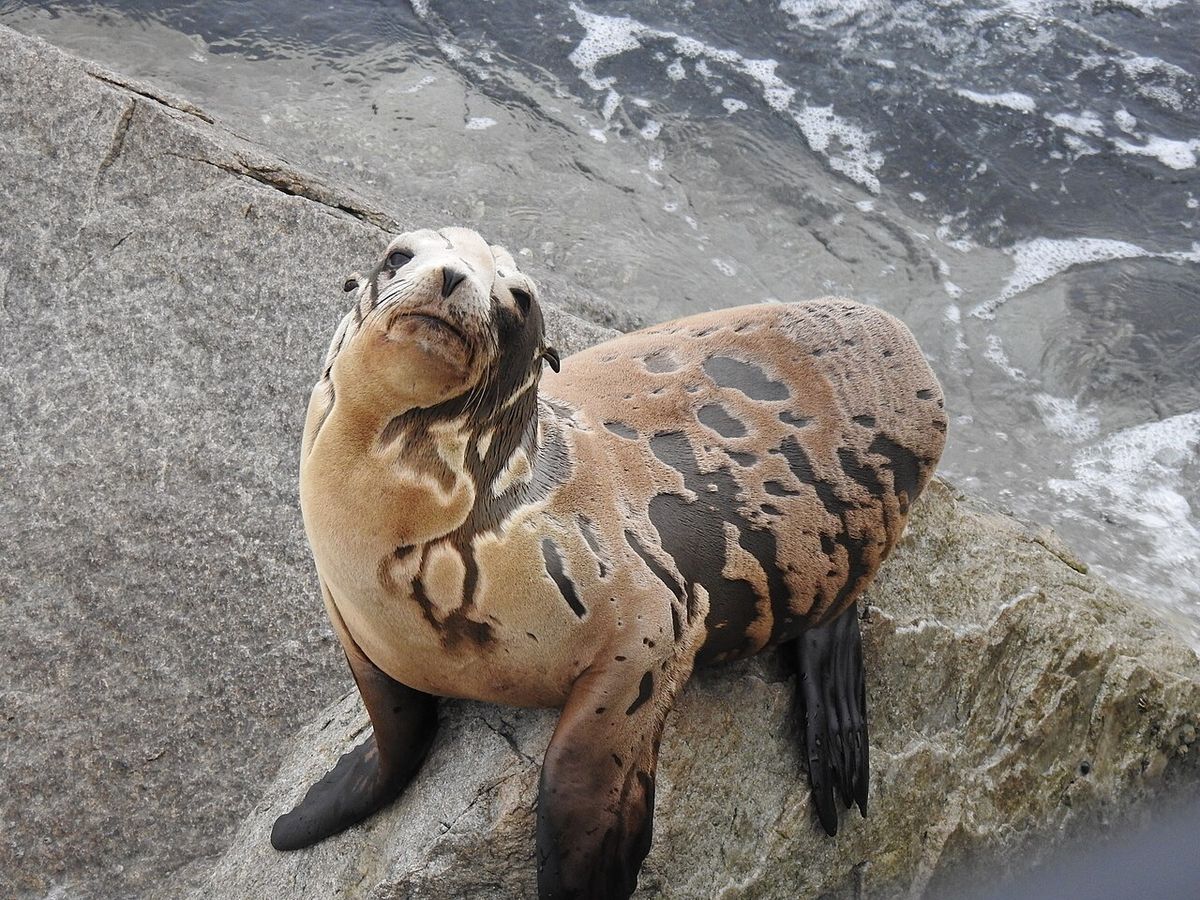
Adult males are substantially larger and bulkier than females, with recent studies noting they can exceed 1,000 pounds (454 kg) in weight and reach lengths of up to 8 feet (2.4 m). Males develop a distinctive, high domed forehead due to the sagittal crest, which is often topped with lighter-coloured hair. Their pelage ranges from dark brown to black. Pups are born with a dark brown or black coat, which they molt for a lighter silvery-brown coat at four to five months of age. Both sexes have long, narrow snouts, giving them a dog-like facial appearance.
Distribution, Habitat, and Population
The California sea lion inhabits coastal waters along the west coast of North America, with a range extending from Vancouver Island, British Columbia, south to the tip of Baja California, Mexico, including the Gulf of California. A separate, distinct population exists on the Galápagos Islands. Scientists and management agencies like NOAA Fisheries divide the population into three main stocks based on breeding rookeries: the U.S. (or Pacific Temperate) stock, the western Baja California (Pacific Tropical) stock, and the Gulf of California stock. The primary breeding colonies are located on offshore islands from Southern California's Channel Islands to central Mexico, though occasional births have been recorded as far north as California's Año Nuevo and Farallon Islands.
These sea lions are highly coastal and are seldom found more than 10 miles from shore. They haul out on a variety of substrates, preferring sandy beaches and rocky coves but having readily adapted to human-made structures like marina docks, wharves, piers, and navigational buoys. Famous haul-out sites include PIER 39 in San Francisco. Population estimates indicate a healthy and growing species, with the overall population estimated at around 257,000 individuals as of 2026. The U.S. stock has shown a strong recovery since protective measures were enacted, with annual growth rates previously recorded up to 7 percent. However, the Gulf of California population has experienced declines, and all populations face threats from human activity and environmental changes.
- U.S. Stock: Ranges from the U.S./Mexico border to Canada, breeding mainly in the Channel Islands.
- Western Baja California Stock: Breeds near Punta Eugenia and Isla Santa Margarita.
- Gulf of California Stocks: Comprises Northern, Central, and Southern stocks within the Gulf.
- Vagrant Range: Individuals have been recorded as far north as southeast Alaska and in freshwater systems like the Columbia River.
Behaviour and Ecology
California sea lions are gregarious, social animals often seen resting in tightly packed groups on land or floating together in 'rafts' on the water's surface. They are powerful and agile swimmers, using their large foreflippers for propulsion and achieving speeds of 25-30 mph (40-48 kph) when hunting or playing. Their flexible spines allow for tight, twisting turns underwater. On land, they walk on all four flippers, rotating their hind flippers forward. They are known for playful behaviours such as porpoising (jumping out of the water) and even surfing on waves.
The species has a polygynous breeding system. Between May and August, males establish and aggressively defend terrestrial territories on breeding rookeries, using vocalizations and physical displays to attract females. A dominant male may mate with up to 14 females. Females give birth to a single pup in June or July, typically weighing 13-20 pounds at birth. Mothers nurse their pups for about a year, recognizing them in crowded colonies through unique vocal calls and scent. After the breeding season, adult males migrate north to feeding grounds off the coasts of Washington, British Columbia, and Alaska, while females and pups generally remain closer to the breeding colonies.
| Prey Type | Examples |
|---|---|
| Cephalopods | Squid, octopus |
| Small Schooling Fish | Anchovies, herring, sardines, Pacific whiting |
| Larger Fish | Salmon, rockfish, hake, lamprey |
| Other | Clams, crustaceans |
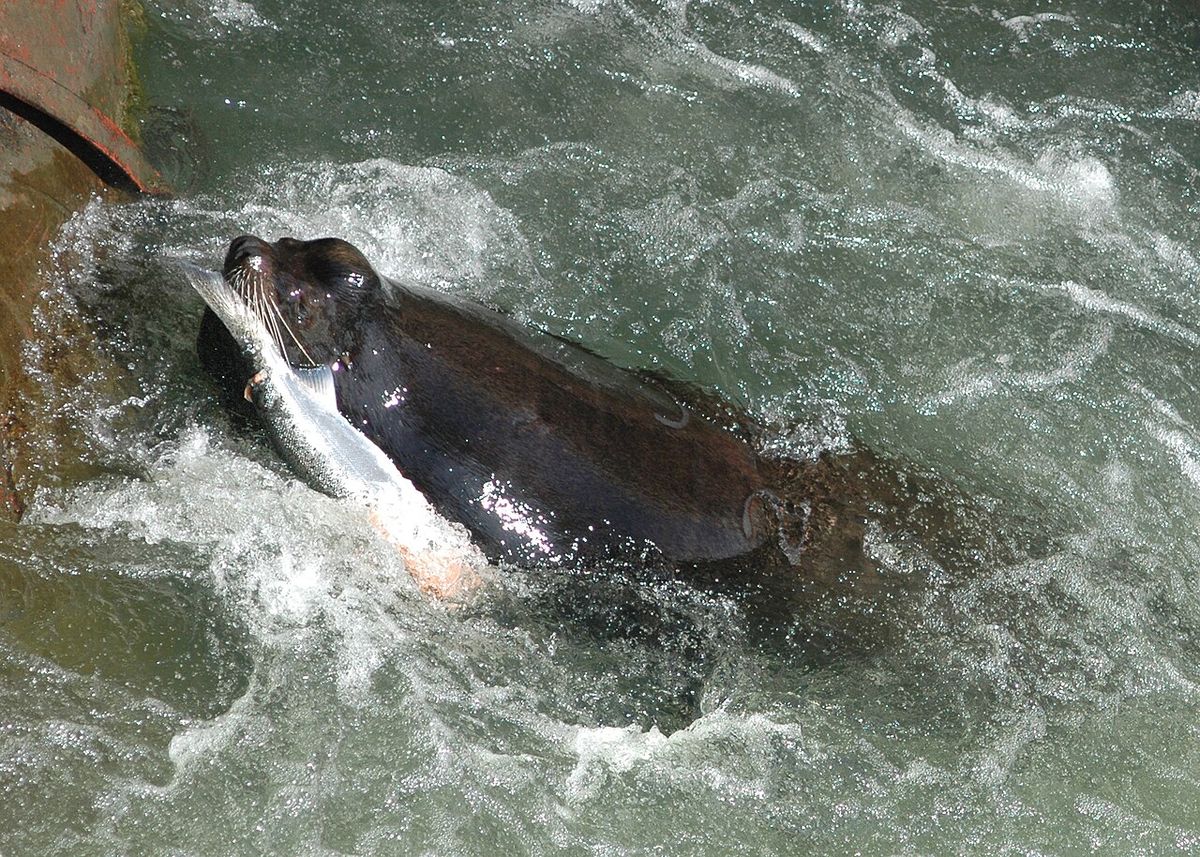
California sea lions are opportunistic feeders with a diverse diet. They often forage near the mainland coast, the continental shelf, and upwelling areas rich in nutrients. They sometimes hunt cooperatively with other predators like dolphins and seabirds to corral large schools of fish. A significant point of conflict with humans has been their learned behaviour of feeding on fish, such as steelhead and salmon, congregated below fish ladders at dams like the Bonneville Dam on the Columbia River. Their primary natural predators are transient orca whales and great white sharks, which often ambush them at the water's surface.
Senses, Intelligence, and Communication
California sea lions possess highly adapted senses for their aquatic life. Their eyesight is well-developed for underwater, low-light conditions, with pupils that can contract to a pinhole to protect against surface glare. They have good hearing both above and below water, with a range of 0.4-32 kHz, and their nostrils close when at rest. Their most remarkable tactile sense comes from their sensitive whiskers, or vibrissae, which can detect minute vibrations and movements in the water, allowing them to hunt effectively in darkness.
The species is renowned for its intelligence and cognitive abilities. Research has shown they can understand simple syntax and commands when taught a sign language and can recognize abstract relationships between stimuli. A famous example is a sea lion named Ronan, recorded in 2011 bobbing her head in time to musical rhythms, a skill known as rhythmic entrainment previously seen only in humans and some birds. This intelligence is central to their trainability, which has led to their use in public displays and specialized military roles. California sea lions are very vocal, using a repertoire of sounds for communication. Territorial males produce a loud, repetitive bark to assert dominance and attract mates. Females use higher-pitched barks and unique 'pup-attraction calls' to locate their offspring, with each mother-pup pair having a distinctive vocal signature.
Conservation Status and Human Interactions
The International Union for Conservation of Nature (IUCN) lists the California sea lion as Least Concern due to its large and increasing population size. In the United States, the species has been protected under the Marine Mammal Protection Act (MMPA) since 1972, which prohibits hunting, killing, and harassment. This legislation has been instrumental in the population's recovery from historic lows. However, an amendment to the MMPA in 1994 allowed for the limited lethal removal of pinnipeds, including California sea lions, that are documented to be preying on endangered salmonid stocks, leading to annual managed removal quotas in states like Oregon and Washington.
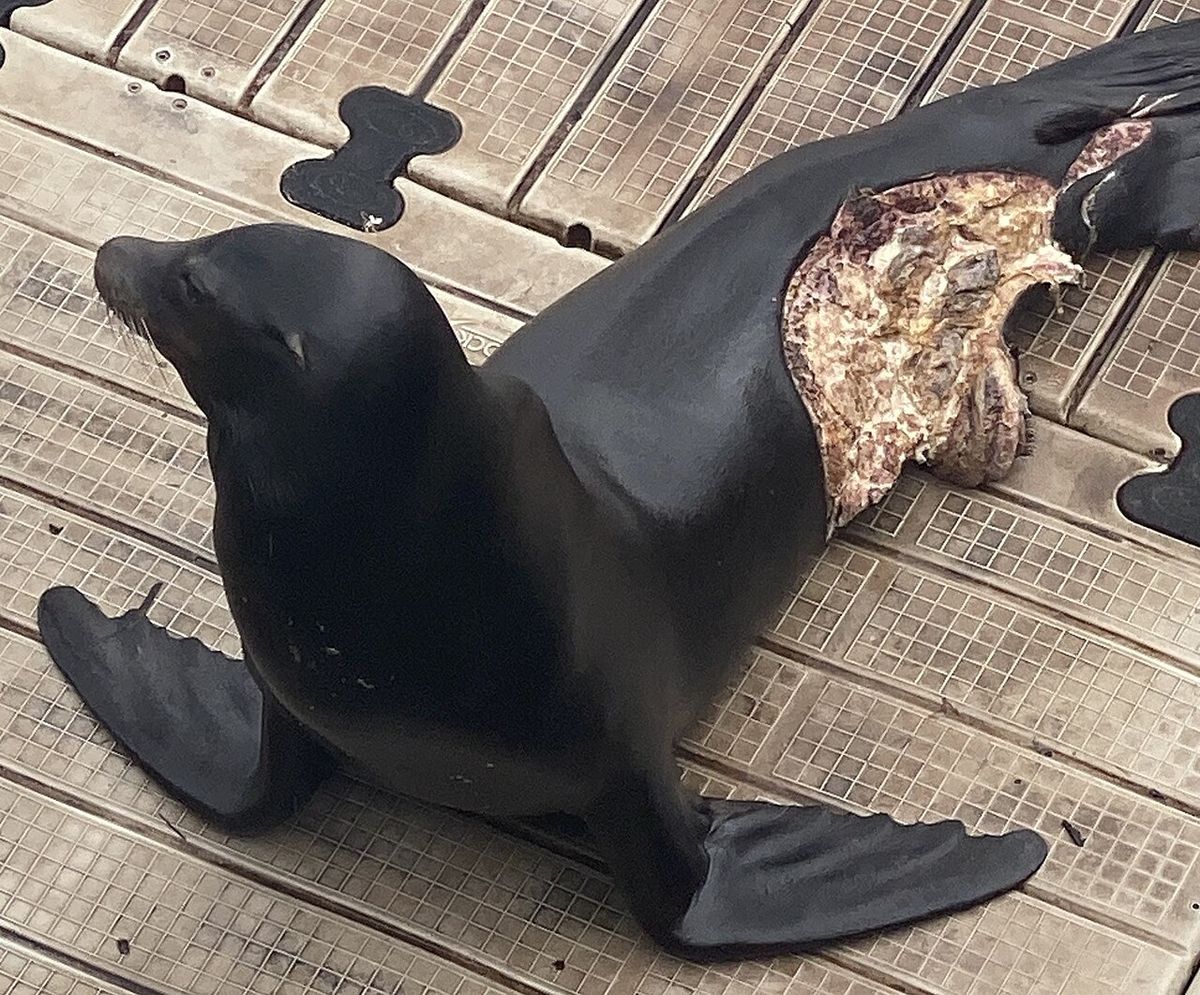
Despite legal protections, California sea lions face numerous ongoing threats. They are vulnerable to entanglement in marine debris and fishing gear, ingestion of pollutants like DDT and PCBs that accumulate in the food chain, and direct harm from humans, including shootings, as was the case with a sea lion named Bluegrass rescued in San Francisco. Climate patterns like El Niño pose a significant natural threat by disrupting prey availability, often leading to malnutrition and increased strandings of pups on beaches, which rescue centres like The Marine Mammal Center respond to annually. Their adaptability to human environments also leads to conflicts at fisheries and dams, requiring continued science-based management and public outreach to ensure coexistence.
Role in Human Culture and Research
Due to their intelligence, agility, and apparent comfort around humans, California sea lions have long been featured in human care for entertainment, education, and specialized work. They are a staple in zoos, circuses, and marine parks worldwide, where they are trained to perform behaviours like ball-balancing and horn-honking. Training is reward-based, typically using fish, and the animals' strong memory allows them to retain learned behaviours for months. Some animal welfare organizations criticize these displays, arguing they distort natural behaviours and occur in unnatural settings.
Beyond entertainment, California sea lions serve in the U.S. Navy's Marine Mammal Program, where their sophisticated diving and sensory abilities are utilized for tasks such as detecting underwater mines and apprehending unauthorized divers. The Navy states the animals are removed from danger after completing their missions. Scientifically, they are important subjects for marine mammal research. Current studies, as noted by institutions like The Marine Mammal Center, include investigating the loss of neuron connectors in sea lions with epilepsy, using tooth layers to determine age, developing new techniques for diagnosing lung parasites, and establishing proper drug dosages for medical treatments. This research contributes broadly to marine mammal medicine and conservation science.
- Entertainment: Trained for public performances in aquariums and oceanariums.
- Military Application: Used by the U.S. Navy for detecting mines and apprehending divers.
- Cognitive Research: Studied for understanding of language, rhythm, and abstract reasoning.
- Medical Research: Subjects for studies on epilepsy, aging, parasitology, and pharmacology.
Questions about California sea lion
Where can you see California sea lions in Canada?
In Canada, California sea lions are most commonly found along the coast of British Columbia, particularly around Vancouver Island. They are seasonal visitors, as adult males migrate north to these feeding grounds after the breeding season in California and Mexico. They can be observed hauling out on remote shorelines, rocky islands, and sometimes on man-made structures like docks. While not permanent residents, their presence is a regular part of the coastal marine ecosystem in western Canada.
Are California sea lions dangerous to humans?
California sea lions are not typically aggressive towards humans and often exhibit limited fear when accustomed to human presence. However, they are large, powerful wild animals, and during the breeding season, territorial males can be particularly aggressive in defending their space. It is important to observe them from a safe distance and never attempt to feed or touch them, as this can be dangerous for both people and the animals. Harassment of marine mammals is also illegal under laws like the Marine Mammal Protection Act.
Why do California sea lions bark so much?
Barking is a primary form of communication for California sea lions. Territorial males bark constantly and loudly during the breeding season to assert dominance and attract females. Females and pups also bark, using higher-pitched versions during social interactions or when distressed. Each mother and pup pair develops unique vocalizations, allowing them to identify each other in crowded, noisy rookeries. The barking serves essential social and reproductive functions within their colonies.
What is being done to help sea lions stranded during El Niño events?
During El Niño events, which warm ocean waters and disrupt prey availability, waves of starving sea lion pups often wash up on beaches. Organisations like The Marine Mammal Center in California and the Marine Mammal Care Center in Los Angeles actively respond to these strandings. They rescue malnourished and dehydrated pups, provide veterinary and rehabilitative care, and release them back to the wild once healthy. Public education and reporting of stranded animals are crucial components of these rescue efforts.
How can you tell a California sea lion from a seal?
California sea lions are 'eared seals' and have several key differences from true seals. Sea lions have visible external ear flaps, while true seals have only ear holes. On land, sea lions can rotate their large foreflippers forward to walk on all fours, whereas true seals move by undulating their bodies. Sea lions also have larger foreflippers used for powerful swimming, while seals primarily use their hind flippers. In behaviour, sea lions are generally more vocal and social on land than most true seal species.
What is the lifespan of a California sea lion?
However, they contain information indicating these animals can live for multiple decades. The species is protected under the Marine Mammal Protection Act, and populations are large and increasing, suggesting individuals can survive many years in the wild. Factors like predation by orcas and great white sharks, entanglement in garbage, and pollutants like DDT can influence their longevity. In managed care, with consistent nutrition and veterinary care, they can live even longer, as suggested by a note referencing an individual sea lion named Sakari documented over a decade apart from 2016 to 2026.
Sources and further reading
- California sea lion (Wikipedia)
- California Sea Lion (fisheries.noaa.gov)
- California sea lion (nationalzoo.si.edu)
- California Sea Lion (marinemammalcenter.org)
- El Niño could bring starving sea lion pups to California ... (latimes.com)
Checked by the Your Space Hamilton desk. Last updated 2026-10-26.