Black-tailed deer
The black-tailed deer (Odocoileus hemionus) is a medium-sized ungulate native to the coastal regions of western North America, including significant populations in British Columbia. This deer is a vital component of Pacific coastal ecosystems and a highly valued game animal for Canadian hunters. Two primary subspecies are recognized: the Columbian black-tailed deer, found from coastal British Columbia south to California, and the Sitka deer, which inhabits coastal British Columbia north through Alaska. Characterized by its smaller size and darker pelage compared to inland mule deer, the black-tailed deer thrives in the forest-edge habitats that define much of Canada's western coastline.
Taxonomy and Genetic Distinctiveness
All recent taxonomic authorities classify the black-tailed deer as a subspecies of the mule deer (Odocoileus hemionus). Within this grouping, two distinct black-tailed deer subspecies are recognized based on genetics and geography. The Columbian black-tailed deer (O. h. columbianus) ranges from the Pacific Northwest of the United States north through coastal British Columbia. The Sitka deer (O. h. sitkensis) occupies a disjunct range from mid-coastal British Columbia north through southeast and southcentral Alaska, including islands like Kodiak. Genetic studies reveal a significant divergence between black-tailed deer and inland mule deer, with mitochondrial DNA differences of 6-8%, among the highest reported within a single mammal species. This genetic evidence definitively supports the separation of the two black-tailed deer subspecies from the three recognized mule deer subspecies. A large hybrid zone exists where black-tailed deer and inland mule deer interbreed, primarily along the eastern and western slopes of the Cascade Range and Sierra Nevada mountains. The mitochondrial DNA of white-tailed deer and mule deer are similar to each other but differ from that of the black-tailed deer, a difference that may be the result of historical introgression, although hybrids between mule deer and white-tailed deer are rare in the wild and have low survival rates even in captivity.
Physical Description and Geographic Range
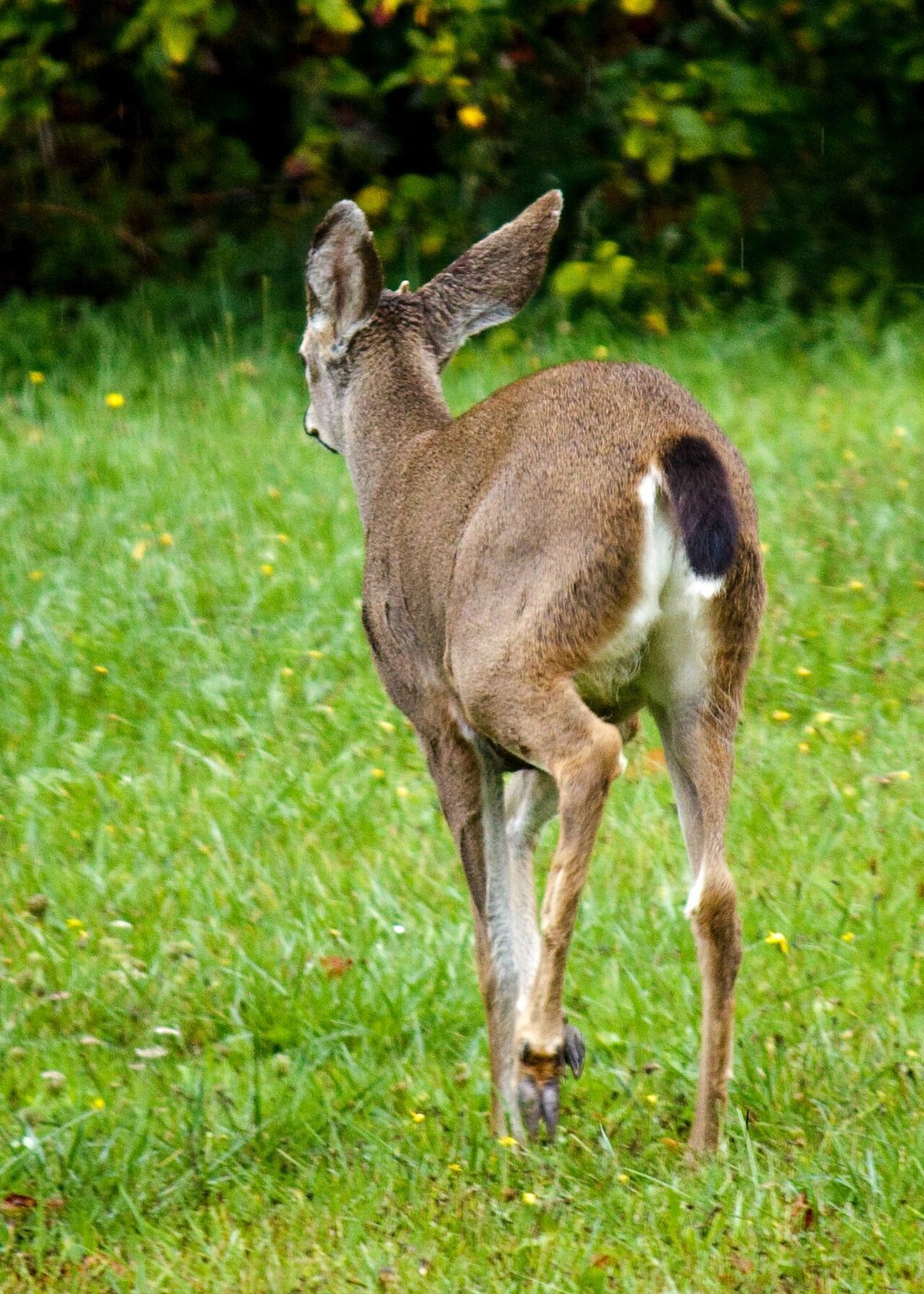
Black-tailed deer are notably smaller than their inland mule deer relatives, with adult live weights varying geographically. In California, weights range from 35 to 65 kilograms, while Alaskan deer can reach 43 to 74 kilograms. Their pelage is generally darker than that of mule deer, and they possess less prominent rump patches and smaller ears. The species occupies a long, narrow coastal range from Santa Barbara County, California, north to southeastern Alaska. In Canada, they are common in coastal and interior regions of British Columbia. East of the Cascade and Sierra Nevada ranges, black-tailed deer are replaced by the larger, lighter-coloured inland mule deer, which are phenotypically different with larger ears and more prominent rump patches. The deer have also been successfully introduced to Hawaii, where approximately 40 individuals from Oregon released between 1961 and 1966 have established a population of around 1,000 on Western Kauai and have become a fairly popular game species on the island.
Habitat Preferences and Behavioural Ecology
Black-tailed deer are creatures of the forest edge, requiring a mosaic of open areas for foraging and forest cover for protection and shelter during harsh weather. They avoid dense, dark forests which lack underbrush for food and completely open areas which lack hiding spots. This preference for ecotones often brings them into contact with human developments, including roadsides and golf courses, leading to frequent vehicle collisions. The deer are most active during crepuscular hours, dawn and dusk, and on moonlit nights, which are periods when they are frequently seen browsing. Their diet shifts seasonally, a critical adaptation for survival in their temperate coastal habitats. They are also a primary prey species for predators like the Alexander Archipelago wolf in Southeast Alaska, making their population health integral to broader ecosystem dynamics. Caution when driving is prudent in their habitat because often as one deer crosses a road, another one or two will follow closely behind.
Seasonal Diet and Foraging Strategies
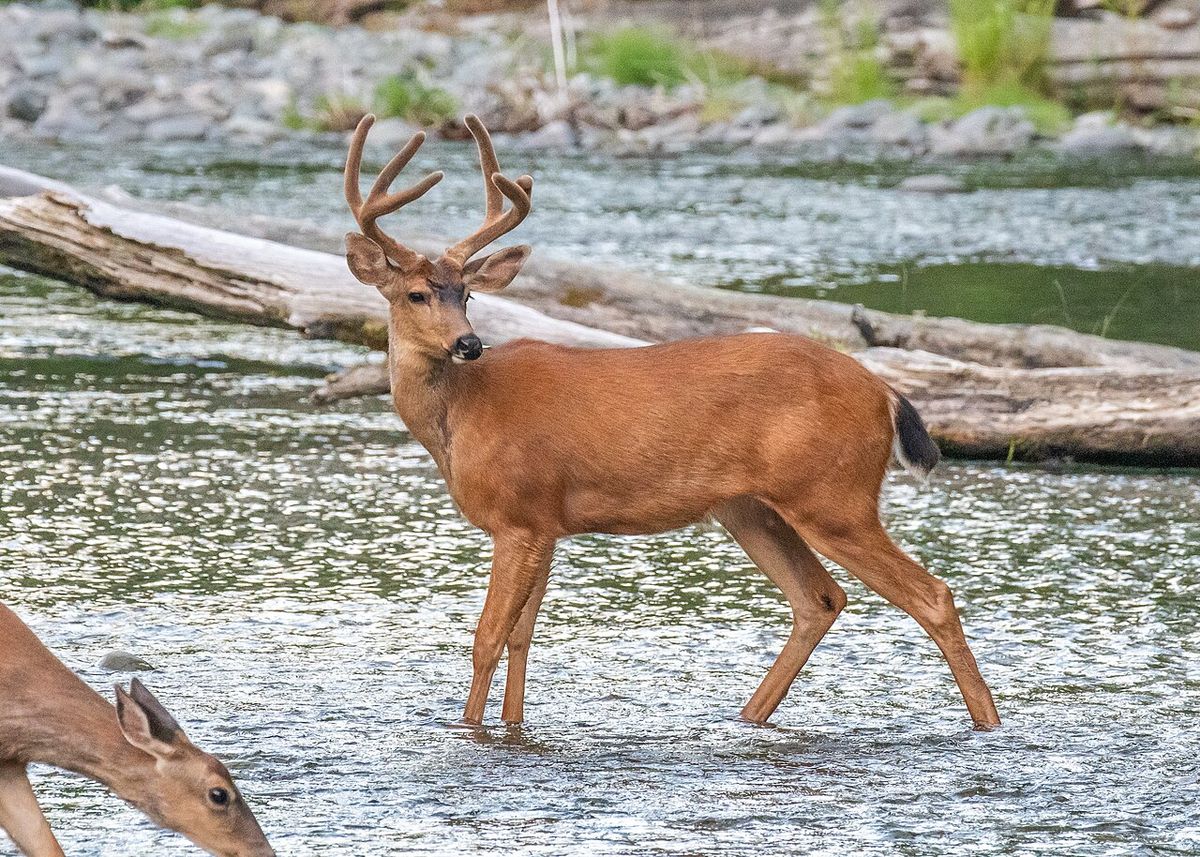
As browsers, black-tailed deer consume a wide variety of vegetation that changes with the seasons. Their winter and early spring diet consists largely of woody plants and epiphytes available when other food is scarce. From late spring through fall, they shift to richer, more succulent foods as they become available. Interestingly, they are known to browse on western poison oak despite its irritant properties. This seasonal dietary flexibility is key to their survival in regions with distinct wet and dry periods. The deer must find enough food not only to sustain themselves but also for does to produce sufficient milk for their fawns after the late spring births. The availability of foods like grasses, forbs, and berries in the warmer months is crucial for building fat reserves before winter.
Black-tailed deer are browsers whose diet changes with the seasons. During the winter and early spring, they feed on Douglas fir, western red cedar, red huckleberry, salal, deer fern, and lichens growing on trees. From late spring to fall, their diet shifts to include grasses, blackberries, apples, fireweed, pearly everlasting, forbs, salmonberry, salal, and maple. They also browse on western poison oak despite its irritant content.
Reproduction, Life Cycle, and Mortality
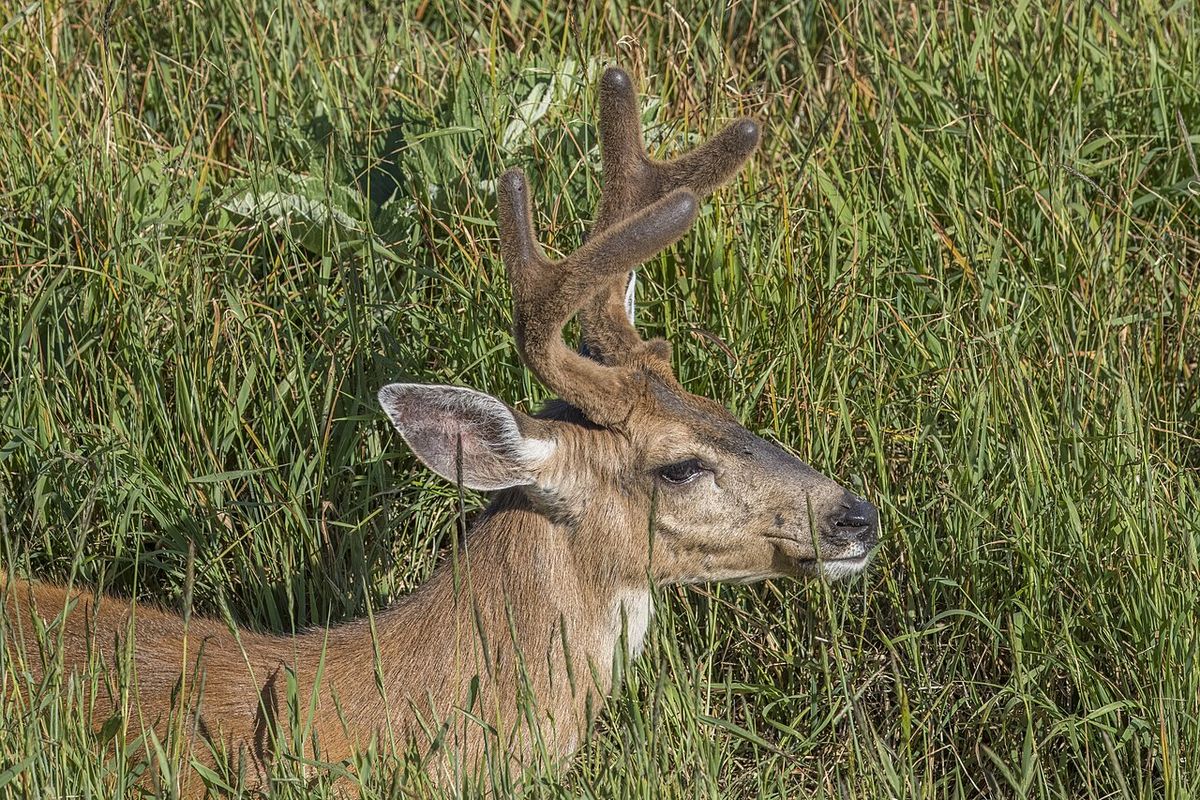
The mating season, or rut, occurs during November and early December. During this time, bucks aggressively pursue does and can often be seen running back and forth across roads, leading to increased vehicle collisions. After the rut, bucks are typically exhausted, often nursing wounds from fights, having lost weight, and they frequently suffer broken antlers. They shed their antlers between January and March, which then provide a source of calcium and other nutrients for other forest inhabitants. Antler regrowth begins in April and continues through August. The gestation period for does is six to seven months, with fawns born in late May and June. Twin fawns are most common, though young does often have singles and triplets can also occur. Newborn fawns weigh between 2.7 and 4 kilograms and have virtually no scent for their first week, a defence mechanism that allows the mother to leave them hidden while she forages to replenish her body and produce milk. Despite the protective nature of does, who view humans as predators, fawn mortality is high, ranging from 45 to 70 percent. The mother must balance her own nutritional needs with the need to hide and protect her vulnerable young, a challenge that contributes to the significant mortality rate in the first months of life.
Sensory Capabilities and Communication Systems
Black-tailed deer possess acute senses and a sophisticated chemical communication system. They have excellent sight and smell, and their large, independently mobile ears can pick up any unusual sounds that may signal danger. Communication is heavily reliant on scent glands located on their legs. The metatarsal gland on the outside of the lower leg produces an alarm scent. The tarsal gland inside the hock serves for mutual recognition among individuals. The interdigital glands between the toes leave a scent trail as deer travel, which allows other deer to follow their path. This suite of adaptations is crucial for predator avoidance, social interaction, and movement within their forested habitats. Deer communicate with the aid of scent and pheromones from these several glands, creating an invisible network of information across their home range that helps coordinate behaviour and warn of threats.
Conservation Role and Habitat Management Controversy
In Southeast Alaska, the Sitka black-tailed deer is the main prey for the Alexander Archipelago wolf, a rare subspecies endemic to the region. This relationship has placed the deer at the centre of significant habitat management disputes, primarily concerning logging in the Tongass National Forest. The United States Forest Service's Forest Plan included standards to protect deer winter habitat to ensure wolf viability and maintain an adequate supply of deer for hunters, with a specified carrying capacity originally set at 13 and later corrected to 18 deer per square mile. However, the agency's implementation was controversial for many years. The data set used in its deer habitat model, known as Vol-Strata, was known through the agency's own 2000 study to overestimate carrying capacity and underestimate logging impacts, as it measured total timber volume rather than forest structure relevant to deer. A separate error in applying a 'deer multiplier' caused by itself a 30 percent overestimation of carrying capacity. This led to a 2008 lawsuit by Greenpeace and Cascadia Wildlands over four logging projects. In 2011, the Ninth Circuit Court of Appeals ruled unanimously in favour of the plaintiffs, remanding the timber sale decisions and criticizing the Forest Service's irrational use of data. The court noted the model's failure to account for forest structure, which is critical for deer habitat, and stated the agency had failed to explain how it allowed a potential carrying capacity of 130 deer per square mile when its table identified 100 as a maximum. Plaintiffs argued these errors applied to every significant Tongass timber sale decision between 1996 and 2008. Despite corrections in a 2008 revised forest plan, litigation continued over issues like cumulative impacts from logging on nonfederal lands, particularly on Prince of Wales Island, as seen in the separate Logjam timber sale lawsuit. Activity on the four disputed timber sales remained suspended, and in September 2013, under the same litigation, a U.S. District Court made a second remand to the Forest Service because the agency's further work had not resolved the modeling issues.
Population Data and Management Metrics
Black-tailed deer are common in their native range from California to Alaska and are a very popular game animal. Approximately 40 deer from Oregon were introduced to Western Kauai, Hawaii, between 1961 and 1966, where they thrived and now number around 1,000. In conservation planning for the Tongass National Forest, habitat carrying capacity for deer is a key metric, originally specified as 13 deer per square mile and later corrected to 18. Legal controversies have arisen from overestimations of this carrying capacity, with one project claiming 21 deer per square mile while unpublished corrections indicated it was actually about 9.5.
| Location | Population Status/Detail | Notes |
|---|---|---|
| California to Alaska (Native Range) | Common | Core range extends from Santa Barbara County, CA, to southeastern AK. Replaced by mule deer east of the Cascades/Sierra Nevada. |
| British Columbia, Canada | Common | Found in coastal and interior regions. Includes both Columbian and Sitka subspecies. |
| Western Kauai, Hawaii (Introduced) | Approximately 1,000 | Founded by 40 deer from Oregon released between 1961 and 1966. A popular game species on the island. |
| Tongass National Forest, AK (Management Target) | 18 deer per square mile | Corrected carrying capacity target for winter habitat to support Alexander Archipelago wolves and hunting. |
| Traitors Cove Project EIS (Claimed vs. Corrected) | Claimed: 21 deer/sq mi. Corrected: 9.5 deer/sq mi | Example of overestimation from lawsuit. Corrected figure was about half the Forest Plan requirement. |
Questions about Black-tailed deer
Where can you find black-tailed deer in Canada?
In Canada, black-tailed deer are found primarily in British Columbia. The Columbian black-tailed deer subspecies inhabits coastal regions from the Pacific Northwest border southwards, while the Sitka deer subspecies ranges from mid-coastal British Columbia northwards along the coast and up into Alaska. They occupy both coastal and interior forest-edge habitats within the province, making them a familiar species to residents and a popular game animal for hunters. Their range extends as far north as the Alaskan panhandle from Canadian coastal territories.
What is the difference between a black-tailed deer and a mule deer?
Black-tailed deer are a subspecies of mule deer but are distinctly smaller and darker. An adult black-tailed deer typically weighs between 35 and 74 kilograms, whereas inland mule deer are larger. Black-tailed deer also have smaller ears and less prominent white rump patches. Genetically, they show a significant 6-8 percent divergence in mitochondrial DNA from inland mule deer, one of the highest divergences reported within a mammal species. The two groups meet and hybridize in a large zone of admixture along the slopes of the Cascade and Sierra Nevada mountain ranges.
What do black-tailed deer eat?
Black-tailed deer are browsers with a diet that changes seasonally. In winter and early spring, they feed on woody plants like Douglas fir, western red cedar, and shrubs such as red huckleberry and salal, along with lichens and deer fern. From late spring to fall, their diet shifts to include grasses, forbs, and fruits like blackberries, apples, fireweed, pearly everlasting, and salmonberry. They are even known to consume western poison oak despite its irritant properties. This foraging strategy requires them to move between forest cover and open grasslands.
When is black-tailed deer hunting season?
While specific seasons are set by provincial and state wildlife agencies, the biology of the deer informs these dates. The mating season or rut occurs in November and early December, a period when bucks are most active and visible as they pursue does. Hunting seasons are often scheduled around this time or in the fall. After the rut, bucks are depleted, hide and rest, and shed their antlers between January and March. Hunters typically seek bucks with antlers, so seasons conclude before or during this shedding period. The deer are a very popular game animal throughout their range.
Are black-tailed deer dangerous?
Black-tailed deer are not typically aggressive towards humans but can be dangerous in specific contexts. Does are very protective of their fawns and may perceive humans as predators. The most significant danger comes from vehicle collisions, as deer are frequently active at dawn, dusk, and on moonlit nights and are attracted to roadside vegetation and open areas like golf courses. They often cross roads in small groups, so caution is advised when one deer is seen, as another one or two often follow. Bucks can also be unpredictable during the November and December rutting season.
Why are black-tailed deer important to the ecosystem?
Black-tailed deer play several crucial ecological roles. They are a primary browser, shaping the plant communities in their forest-edge habitats. Their shed antlers provide a source of calcium and other nutrients for other forest dwellers. Most significantly, in Southeast Alaska, the Sitka deer is the main prey species for the rare Alexander Archipelago wolf, making deer population health directly linked to the survival of this endemic predator. This relationship has made them a focal point for conservation and habitat management debates, particularly regarding logging in the Tongass National Forest, where deer carrying capacity models directly influence wolf protection plans.
Sources and further reading
- Black-tailed deer (Wikipedia)
- Introducing the Black-tailed Deer (crittercarewildlife.org)
- Odocoileus hemionus columbianus (Blacktails, Black-tailed ... (10000thingsofthepnw.com)
- Columbian Black Tailed Deer (sierraclub.bc.ca)
- Blacktail Deer, Olympic National Park (U.S. ... (nps.gov)
Checked by the Your Space Hamilton desk. Last updated 2026-11-02.