American toad
The American toad (Anaxyrus americanus) is a common amphibian species found throughout eastern Canada, from the Maritimes to Ontario and parts of Manitoba. It is a familiar sight in Canadian forests, grasslands, and gardens, recognized by its warty skin and distinctive high-pitched trilling call during the spring breeding season. The species contributes to ecological balance by controlling insect populations and serves as an important indicator of environmental health in wetland ecosystems. Three subspecies are recognized, including the widespread eastern American toad and the rare Hudson Bay toad, which has isolated populations in northern Ontario.
Description and Identification
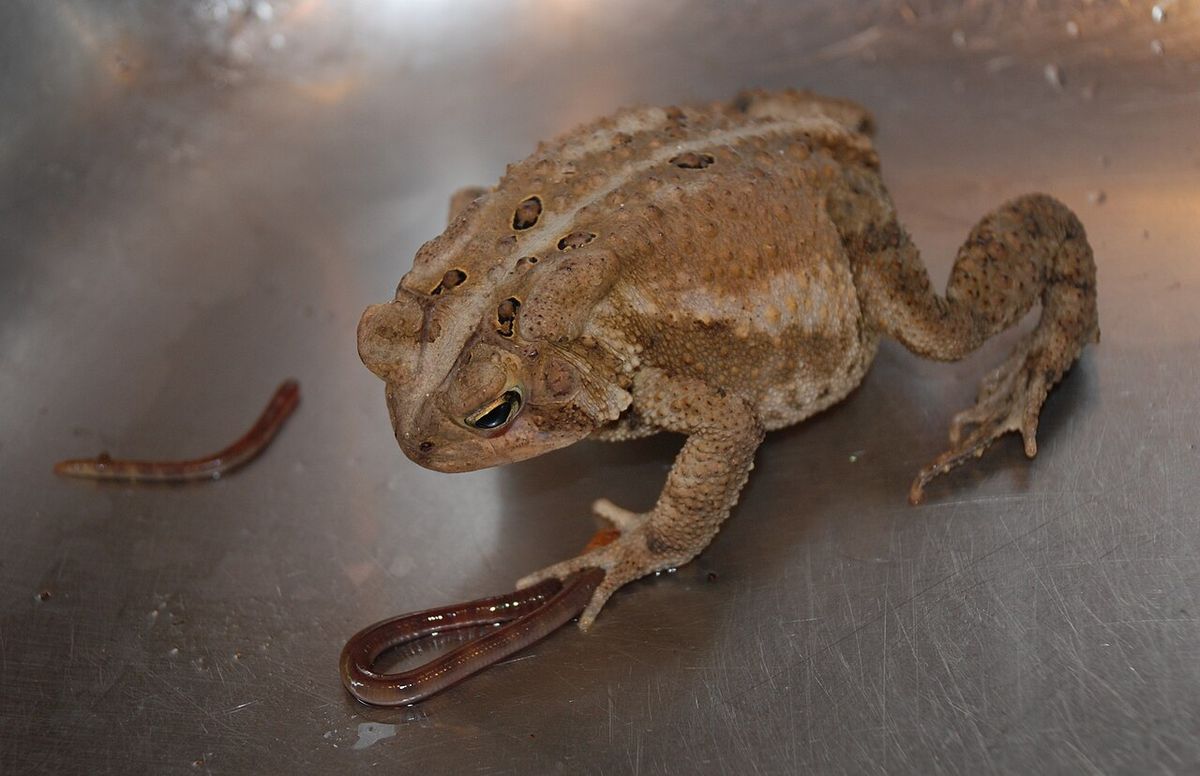
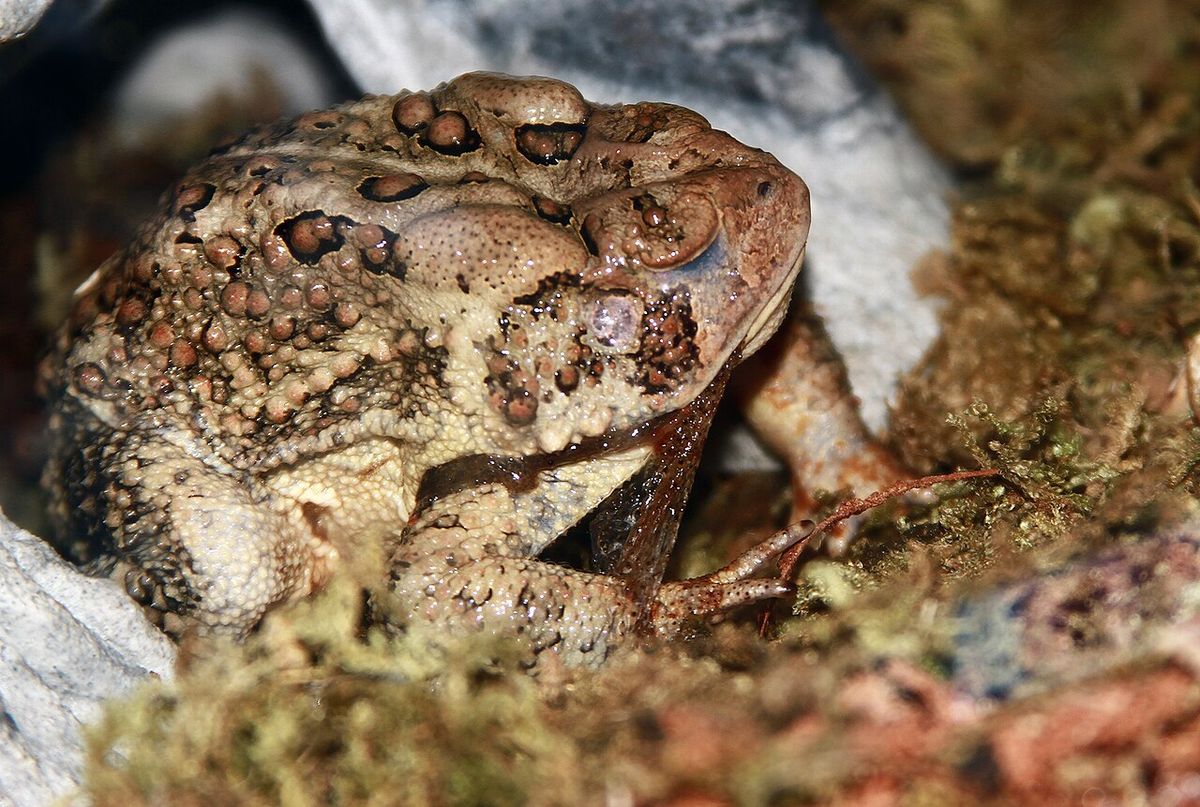
The American toad is a medium-sized amphibian with considerable variation in colour and pattern, particularly among females. Skin colour can range from yellow and brown to black, often with speckles, and can change based on habitat, humidity, stress, and temperature. The eastern American toad, the most common subspecies in Canada, typically measures between 5 and 9 centimetres in length, with a record specimen reaching 11.1 centimetres. Key identification features include warts within its dark spots, enlarged warts on the tibia, and parotoid glands behind the eyes that are usually the same colour as the surrounding skin. The belly is often spotted, especially on the forward half, though some rare individuals may have few or no spots. The spades on its back legs are blackish, and some individuals exhibit a pervasive red and deep brown colouration with red warts. The cranial crests on its head almost never touch the parotoid glands, a key feature distinguishing it from Fowler's toad, whose crests do touch the glands, and from the Canadian toad, which has crests that join to form a raised boss.
American toads possess parotoid glands that secrete bufotoxin, a mild poison meant to deter predators. This substance can irritate human eyes and mucous membranes and is dangerous to smaller animals like dogs if ingested. In comparison to other poisonous toads and frogs, the toxin is relatively mild but effective. The species exhibits sexual dimorphism in the size of these glands, with females having slightly longer and wider parotoid glands compared to males, and both gland length and width have a positive linear relationship with overall body size. Locomotion is typically lethargic, involving casual hopping and walking, which contrasts with the very fast, bursting hops of the similar-looking Fowler's toad. When caught, females are generally silent and adapt more readily to captivity, while smaller males are more communicative and do not adapt well to terrarium life.
Subspecies and Geographic Range
The American toad is divided into three distinct subspecies, each with unique characteristics and ranges within North America. The eastern American toad (A. a. americanus) is the widespread subspecies found throughout eastern Canada and the United States. The dwarf American toad (A. a. charlesmithi) is a smaller variant, reaching about 6 centimetres, and is generally a dark reddish colour with reduced or absent spots on its back. The Hudson Bay toad (A. a. copei) is a rare Canadian subspecies with isolated populations in northern Ontario, often displaying red colouring on its sides and an unusually high number of warts. These subspecies can hybridize with the closely related Anaxyrus woodhousii (Woodhouse's toad) in areas where their ranges overlap, leading to some morphological blending.
DNA sequence comparisons suggest that Anaxyrus americanus and other North American Anaxyrus species are descended from toads that invaded from South America prior to the formation of the Isthmus of Panama land bridge, likely via rafting across water. The dwarf American toad's southwestern range overlaps with that of the Gulf Coast toad, which can be distinguished by a dark lateral stripe and a deep valley between its prominent cranial crests. Interbreeding with eastern American toads in northern regions has caused the Hudson Bay subspecies to lose the distinctive red colouring on their backs. The eastern American toad's range also overlaps with the southern toad in some areas, but the latter has cranial crests that form two unique knobs.
- Eastern American toad (A. a. americanus): The common, medium-sized subspecies found across eastern Canada.
- Dwarf American toad (A. a. charlesmithi): A smaller, often reddish subspecies.
- Hudson Bay toad (A. a. copei): A rare subspecies with isolated populations in northern Ontario.
Life Cycle and Reproduction
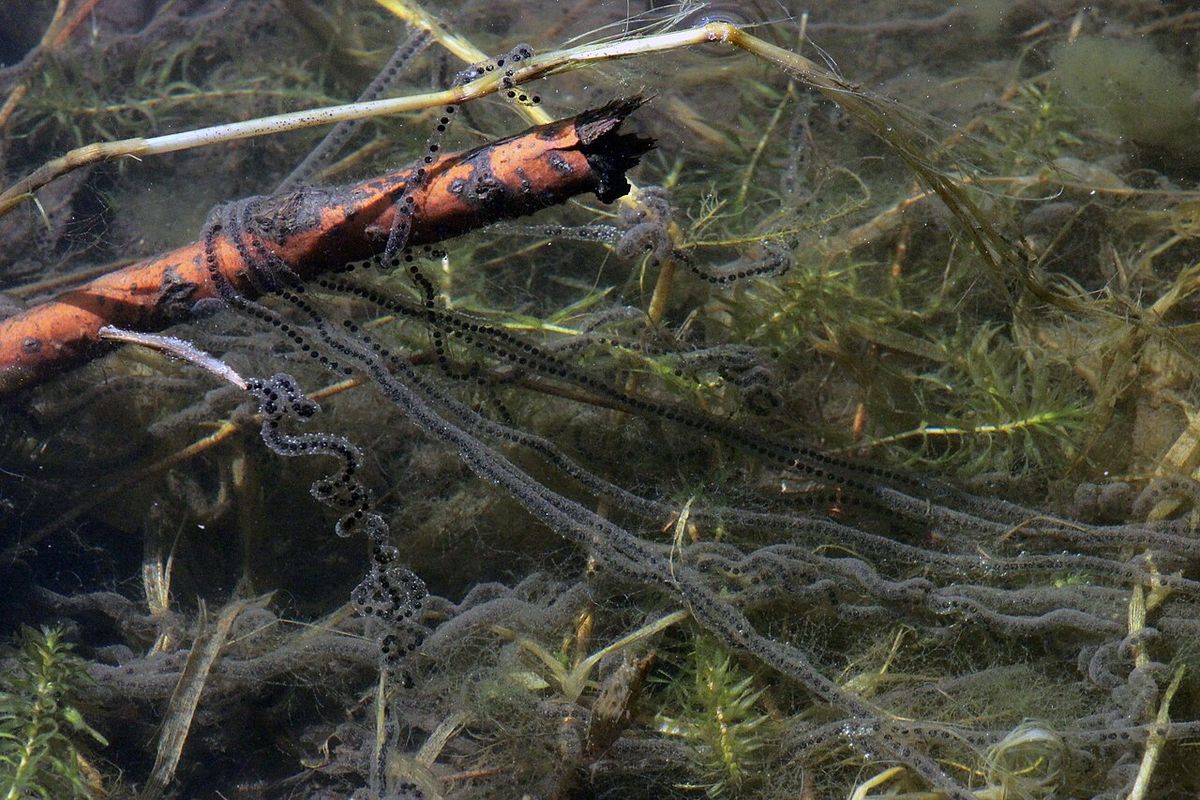
The life cycle of the American toad begins with breeding in semi-permanent freshwater ponds or pools with shallow water. Breeding males produce a high trilling call, similar to a ringing telephone, that lasts between 6 and 30 seconds to attract females. Males call for an average of 6 to 7 nights during the breeding period, and females show a preference for call effort, which is the rate multiplied by the duration, but not for call frequency itself. Females lay eggs in two long gelatinous strings, each containing between 2,000 and 20,000 small black eggs that are 1 to 2 millimetres in diameter. These strings are typically entwined around aquatic vegetation or lie on the pond bottom in shallow water. The eggs hatch into tadpoles within 3 to 12 days, beginning the aquatic larval stage.
Newly hatched tadpoles have skinny tails and round black bodies. They undergo metamorphosis into toadlets in 50 to 65 days, often in synchronized groups that result in mass migrations to shaded, higher ground in mid-range and upland forests bordering their natal marshes. Tadpoles possess several anti-predator adaptations, including swimming in very shallow water with thick vegetation, forming schools during the day, and producing toxic chemicals in their skin that can be lethal to fish that are not yet conditioned to avoid them. Studies have shown a mutualistic relationship with Chlorogonium algae, which accelerates tadpole development. However, leaf litter from invasive plants like autumn olive or purple loosestrife in nursery ponds can increase trematode parasite infestations, possibly due to faster development rates compared to ponds with native vegetation like black huckleberry.
| Life Stage | Duration | Key Features |
|---|---|---|
| Egg | 3-12 days | Laid in gelatinous strings of 2,000-20,000 eggs. |
| Tadpole | 50-65 days | Black body, forms schools, produces skin toxins. |
| Toadlet | Variable | Mass migration to upland forests after metamorphosis. |
| Adult | Up to 30+ years | Nocturnal, terrestrial, returns to water to breed. |
Habitat and Behaviour
American toads are adaptable creatures that require two primary habitat features: a semi-permanent freshwater source for breeding and hydration, and dense vegetation for cover and hunting. Given these, they can inhabit a wide range of environments from forests to flat grasslands. They are largely nocturnal as adults, although juveniles are often active during the day, especially during rainy weather when they emerge to eat worms and insects. They exhibit strong site fidelity, often living within an acre of wooded forest near a water source for soaking, and commonly seek cover under boardwalks, flat stones, logs, wood piles, or in burrows. When cold weather arrives, they dig backwards to bury themselves in the soil of their summer homes or select another site to hibernate through the winter.
These toads are 'creatures of habit' with a diet consisting mainly of small invertebrates. Their foraging grounds are the dense vegetation patches where they hunt. They display breeding site fidelity, meaning they often return to their natal ponds to breed. This behaviour increases the likelihood of encountering siblings as potential mates, but the toads actively avoid inbreeding. Males' advertisement vocalizations appear to serve as cues that allow females to recognize and avoid close kin. This kin recognition helps maintain genetic diversity within populations despite their strong homing instinct.
Diet and Ecological Role
The American toad is an insectivore that consumes invertebrate populations in Canadian ecosystems. Its diet is diverse and includes a wide array of small creatures found in its terrestrial habitat. As both juveniles and adults, they consume substantial quantities of these invertebrates, influencing the food web. Toadlets begin by eating microscopic bugs but quickly graduate to larger prey. The toad's foraging affects populations of many common insects and other invertebrates.
The specific prey items consumed reflect the toad's habitat and seasonal availability. Their hunting strategy involves waiting patiently and using their sticky tongues to capture passing prey. This diet provides the necessary energy for growth, reproduction, and surviving hibernation. By consuming insects like crickets and moths, and other invertebrates like slugs, they also affect gardens and agricultural areas.
- Crickets and mealworms
- Earthworms and ants
- Spiders and centipedes
- Slugs and moths
- Various other small insects
Defense Mechanisms and Predation
American toads employ a multi-layered strategy for defense against predators throughout their life cycle. Their most famous adaptation is the production of bufotoxin, a milky, irritating substance secreted from the parotoid glands located behind the eyes. This toxin makes the toad unpalatable to many would-be predators, though it is milder than the poison of some other toad and frog species. It can cause irritation to human eyes and mucous membranes and is particularly dangerous to small domestic animals if ingested. The toxin's presence is advertised by the toad's warty appearance, which serves as a visual warning to predators that have learned from experience.
During the tadpole stage, defense mechanisms are equally crucial for survival. Tadpoles produce toxic chemicals in their skin that can deter or even kill predatory fish, though fish quickly learn to avoid them. Tadpoles also use behavioural defenses, such as swimming in very shallow water with thick vegetative cover and forming tight schools during daylight hours to reduce individual risk. Their black coloration may provide some camouflage against pond bottoms. These combined strategies, chemical, behavioural, and morphological, significantly increase survival rates from egg to adult in environments teeming with predators.
Longevity and Notable Specimens
American toads are relatively long-lived amphibians, with many individuals surviving for well over a decade in the wild. Some documented specimens have lived for more than 30 years, demonstrating the species' resilience when conditions are favourable. A notable female specimen, measuring over 13 centimetres in length, was reported to be living healthily into her late 30s, which is exceptional for a wild amphibian. Another large female toad, measuring 17 centimetres, was known to have existed on Washington Island in Lake Michigan, Wisconsin. These records highlight the potential lifespan and size the species can achieve, likely due to a combination of genetic factors, ample food supply, and low predation pressure.
The longevity of American toads contributes to their ecological success, as older, experienced individuals can breed over multiple seasons, ensuring population stability. Their long lifespan also allows them to act as persistent controllers of insect populations in their home ranges. The size and age records, particularly for females, suggest that larger body size may be correlated with increased longevity, a common trend in many animal species. These long-lived individuals illustrate the toad's effective defense mechanisms and adaptability to various environmental conditions across eastern North America.
Questions about American toad
Where are American toads found in Canada?
American toads are found throughout the eastern half of Canada, from the Maritime provinces through Quebec and Ontario, and into parts of Manitoba. The widespread eastern American toad (A. a. americanus) is the most common subspecies across this region. The rare Hudson Bay toad (A. a. copei) has a few isolated populations in northern Ontario. They inhabit a variety of environments including forests, grasslands, and gardens, always near a semi-permanent freshwater source for breeding.
What do American toads eat?
American toads are insectivores with a diverse diet. Adults primarily eat small invertebrates such as crickets, mealworms, earthworms, ants, spiders, slugs, centipedes, and moths. Juvenile toadlets start by consuming microscopic bugs but quickly begin eating the same prey as adults. Their foraging helps control insect and other invertebrate populations, making them beneficial for gardens and natural ecosystems. They hunt by waiting patiently and using their sticky tongues to capture passing prey.
Are American toads poisonous to dogs or humans?
Yes, American toads secrete a mild poison called bufotoxin from their parotoid glands as a defense mechanism. This substance can irritate human eyes and mucous membranes if handled. It is more dangerous to smaller animals like dogs if ingested, potentially causing drooling, vomiting, or more serious symptoms. The toxin is milder than that of some other poisonous toads and frogs, but it effectively makes the toad unpalatable to most predators. It's advisable to prevent pets from mouthing or eating toads.
How can you tell an American toad from a Fowler's toad?
Distinguishing an American toad from a Fowler's toad involves examining key features. The cranial crests on the head of an eastern American toad almost never touch its parotoid glands, whereas in Fowler's toad, the crests do touch the glands. Fowler's toad also has three or more warts in its largest dark spots, and it never has a spotted belly. Behaviourally, Fowler's toads are very fast hoppers, moving in bursts of 5-10 quick hops, while American toads have a more lethargic, casual hopping and walking locomotion.
How long do American toads live?
American toads are relatively long-lived amphibians. Many individuals live well over a decade, and some documented specimens have lived for more than 30 years. A notable female over 13 centimetres long was reported to be living healthily into her late 30s. Another large female of 17 centimetres was known from Wisconsin. Their longevity contributes to population stability, as older individuals can breed over multiple seasons and continue their role as insect controllers in their habitat.
What is the call of an American toad like?
The breeding call of a male American toad is a high-pitched, musical trill that lasts between 6 and 30 seconds, often described as sounding similar to a ringing telephone. Males call to attract females, vocalizing for an average of 6 to 7 nights during the breeding season. Females show a preference for call effort, which is the call rate multiplied by its duration, but not for the call frequency itself. These vocalizations also appear to serve as cues that help females recognize and avoid mating with close kin.
Sources and further reading
- American toad (Wikipedia)
- Anaxyrus americanus (American Toad) | INFORMATION (animaldiversity.org)
- American Toad (thecanadianencyclopedia.ca)
- » American Toad (ontarionature.org)
Checked by the Your Space Hamilton desk. Last updated 2026-11-01.